Doom’s Clones & Killers – Pt1

In this, the first of a four-part retrospective, FBT goes back to the best era in gaming (so he says) – The 1990s explosion and implosion of First Person Shooters

Part One: Gott im Himmel

They say in the Sixties everyone remembered where they were when JFK was shot. In the Eighties, everyone remembered where they were when John Lennon was shot. But in the Nineties, we remember doing the shooting – on December 10th, 1993, id unleashed Doom.

Built by gamers for gamers, Doom may have been underground but like an earthquake its impact was seismic, sending shockwaves through the gaming world and eventually reaching the real world; referenced in The Simpsons, Friends and ER, Doom was part of the nineties zeitgeist, gaming’s Nevermind or Pulp Fiction and in modern terms, it was bigger than Facebook, affecting workplace productivity and causing issues on company networks.

Doom even slowed Microsoft’s world domination; When their ads for Windows 95 asked ‘where do you want to go today?’ Gamers replied ‘DOS’ – the platform W95 was replacing and the only sure-fire way to game on PC. Gamers weren’t going to risk losing Doom (it was rumoured Doom was installed on more PCs than W95) and Microsoft, realising Doom’s dedicated fanbase was the future, developed Direct-X which allowed games to play ‘as’ a Window. It was a watershed moment; Doom was ported to Windows (by some bloke called Gabe Newell), and Bill Gates appeared ‘in’ Doom during a W95 Expo to prove Windows was the future – a video game created by a bunch of lads made Bill Gates, at the height of his power, say ‘if you can’t beat’em…’ It gave Gabe Newell some ideas too.

And Doom pissed off parents, like every good trend should. Doom wasn’t the first game to show death but this time you really were in there, up close – with a chainsaw. Stories of players passing out, getting motion sickness and post-traumatic stress triggered Parent Groups who classified Doom as top-tier evil alongside Ren & Stimpy. ‘Killology researcher’ David Grossman coined the phrase ‘murder simulator’ and it was said this new era of games could turn kids into killers; Doom was held accountable for the Columbine Massacre.

But none of that mattered to the gamers who discovered Doom that day; we had no idea we were loading up the You’re Gonna Need A Bigger Boat moment of gaming; we were in the Aliens Hive scene screaming ‘its game over man, game over!’ – And for any other game, it was. Doom was the new standard, and it launched a whole new race to be the biggest, baddest First Person Shooter – gamers couldn’t be happier. Parents, less so.

Games back then, loaded up through that DOS prompt and the shareware warning were way more exciting that anything around now. You really had no idea what you were getting into, even with a Doom Clone. It took commitment to finish a game in the nineties; we didn’t have any of your fancy auto-saves or mission skips, no walkthroughs; you had to really love a game to finish it and that stays with you. We sweated for the exit, got your head down and tapped spacebar until something opened. And the joy of finding the secret that had an exit! That meant secret level, that meant bragging rights, that meant pranks on friends. It was a great time. So, what happened? The FPS genre is awful now. Generic reheats, remakes, reboots; story-led, watered-down, XP-driven, gimmick-ridden bastard-childs of RPG. Thinking back to Doom, when is something gonna come out of nowhere and make us think ‘the fuck just happened?’ I’m going to replay FPS from Wolfenstein onwards until I track down Doom’s killer. Where it all went wrong.

Mein Leben! In May 1992 Wolfenstein 3D landed. We’d barely gotten over the Freddie Mercury Tribute concert and now we were blasting Nazis. Not sure what the connection is, but I admit I might have been listening to Extreme at the time. More than words can say how much I played Wolf back in the day; the only German I know is from Wolf (and Die Hard…) Replaying Wolf doesn’t just bring back embarrassing adolescent musical choices (I was also into Mr.Big for a while; don’t judge me, I liked Guitar Shredders at the time, Steve Vai rocks. Totally not a power-ballad phase), but it has fondly reminded me of Shareware; ripping a disk off the cover of a magazine I didn’t read and excitedly loading up every demo, game and crappy screensaver. Then borrowing the full game from mates. I think one of those mates still has me To Be With You CD single.

Wolf was Gamer’s You Know When You’ve Been Tango’ed moment. When we weren’t suffering tinnitus from ear-clapping each other in the playground, we were amazed at the fast-moving, unforgiving gameplay. It was exhilarating; Wolf wasn’t the first FPS but it was the first to get it right, to make you feel like you were there. I played Wolf endlessly, least when Gladiators wasn’t on. But unlike Jet, it’s not aged well. Really, Wolf is a maze layout fighting through pixelated Nazis over and over. I don’t know what I was expecting but once you’re through the first level you’ve played them all really, but you can appreciate the work, feel the energy that went into building this. It’s kinda quaint now and has that arcade feel but still, it’s fast and unforgiving – I expected years of digital shooting would make this a cake-walk but I spend as long reloading the game as I do the guns. If they had reload.

Wolfenstein is best left in the past; while it had me smiling, once those memories of singing Ebeneezer Goode stop flooding, the lack of ceilings and floors and the repetitiveness make Wolf a bit of a slog, but you must pay homage to the OG of FPS, the calm before the storm. What Wolf has done for me is get me excited for what’s coming next.

What came next was Blake Stone. I feel sorry for Blake, sent to a mad scientist’s space-station to stop his evil experiments; like the rest of us, he didn’t know what was coming. Released in December 1993, just before Doom landed, BS was completely steamrolled and I was mid-way through it when my friend appeared, waved a floppy and yelled ‘get ready to shit your pants’ – I remember it because I did shit my pants; that disc had Doom shareware on it. I also I never went back to BS. It felt like a kiddie game after Doom.

As I play it now, I realise I owe Blake an apology; it’s a really good game. It does look rough but there are some surprising touches absent from the others of the era; Blake gains health at vending machines and you’ll find scientists who give info – one of several ways this reminds me of Half-Life. Like all games of the era you’re looking for a key to progress but more logically, the keys unlock floors accessed via an elevator and you can return to a floor to further explore when better armed, rather than exit never to return – the floor layout, while basic is much more interesting than Wolf and the art design has a nice 50s Sci-Fi style to it, the antithesis of Doom’s slimy atheistic. It’s a lot more busy that Wolf’s basic look and while it may not have been intentional, BS feels like it was just having some fun; the monsters wouldn’t look out of place in a Goosebumps book and it has an Indy-inspired adventure feel to it. But that was exactly what we didn’t want at the time – Doom created the perfect run n’ gun; who wants to talk to Scientists, use vending machines, go back instead of relentlessly pushing forward? But there’s a lot to it, it’s harder than it looks and it’s crying out for an app re-release. It fun and worth a go if you’re bored of shitting your pants.

So this was it, September 12, 1993 – A moment I’ll never forget. Terri Hatcher in Lois & Clark. Three months later, Doom landed and nothing was the same again.

As the years passed I left Doom behind. I played it endlessly at first, but eventually recalled it becoming hollow once you’d gotten over shitting your pants and, especially after the Wolf and Blake experiences, I expect to find Doom equally dated – I’ve not played for at least ten years yet as soon as I get going, I remember secrets, barrels just around corners, which exit doors have an Imp behind them. Doom is so entrenched in my DNA, my first-born’s first word will be an Imp growl; and that familiarity isn’t the only thing I’m responding to – this is really good. Not in its scares or firefights, but the rhythm. I hadn’t appreciated how well balanced a game Doom is, how it subtly ratchets up the tension instead of exhausting you into giving up. Twenty plus years and modern shooters could still learn from this. Doom was like when you were a kid and found a wasps’ nest. You still poked it with a stick even though you knew better. Doom gave you a shotgun instead of a stick and there was no Mum with the Savlon and a scolding afterwards but you still went for it. That’s a good game.

Doom does, honestly, still have it. It isn’t even in my top ten but it should be; I realise now, Doom formed my opinion on every gun-orientated game since. It’s one thing to remember how good a game was, it’s another to be realising just how good it is. Doom 3 sucked because it went for the jump-scare. That’s not good level design or pacing, that’s lazy. No, worse than that, it’s a misunderstanding of Doom, where you hear the imp behind the door and you have to open it. That’s far scarier than something leaping out at you. You’re so into it that the minimal pixels and blocky movement melt into a pure visceral experience and while modern shooters may look the shit, they’re not In The Shit like Doom is – this is just a bunch of pixels, how is it triggering some caveman-survival instinct?

There’s a real subversive simplicity in Doom; you can describe it in a sentence, but you have to experience it to understand; Modern Shooters are nothing compared to your first Tour of Duty in Doom – take down a horde of invisible pinkie demons, then we’ll talk about your kill-streaks. Some of the impact has been lost, but when it all kicks off I’m still as mesmerised as when Terri Hatcher said “They’re real … and they’re spectacular.”

I wouldn’t have called Doom art back then, I do now.

Of course, Doom didn’t stop at the exit. The biggest shock was Deathmatch. Seeing your pal as a little Doomguy then fragging them with a rocket launcher was something gaming hasn’t ever surpassed; Multiplayer, co-op, online is a standard now but that’s nothing compared to LAN games where the only smacktalking was from your friend sitting opposite – this was just fun scrapping about, not a dickhead half-way round the word being a little big man on his mic. Fuck those guys, I miss the Doom Parties. Even when you were hilariously murdering each other, Doom brought us together. Nothing has ever topped that, and nothing ever can.

Replaying Doom does bring back some awesome memories, especially the best prank of all time on my ‘shit your pants’ mate – the secret level in episode 3. It’s a remake of the first level and I found it when I was playing alone. I saved it for future fun and at our next hang-out, suggested we speedrun episode 3. I went first and reached the exit … Then, when he was busy mocking my attempt, I loaded the secret level instead and let him have at it. His face when he hit the exit and sat back to crow but the Cyberdemon appeared instead – he actually jumped as if it was in the room with him. But then he sucked it down and got on with shooting, his voice trembling as he called me names. That’s Doom – panic and pals. I’ll admit the panic has waned, but it’s replaced with appreciation and the excitement is still there – Doom is brilliant. Who killed you? I shall avenge you. Just as soon as I’ve humped my rig over to my mate’s house and LAN’ed it up for old time’s sake.

By 1994, UK society was on the brink of collapse. Ch4 aired a lesbian kiss on Brookside and Frances Ruffle flashed Union Jack knickers (take that Ginger Spice) during a Top of the Pops performance; the children of Mary Whitehouse screamed the place down – they also felt affronted by Frances’ hip-swinging. The outrage. Hips! Swinging! Did we learn nothing from Elvis’ gyrations, sending an entire generation into an uncontrollable sexual frenzy? Good job that Brookside kiss turned us all homosexual otherwise it doesn’t bear thinking about. Society was at an end apparently though; our most beloved TV character (besides Beth Jordache) was Mr. Blobby?! How did he get a Christmas single and Zig n’ Zag didn’t?

There was little to do in the wake of Doom, except on Wednesdays when you’d get rudely awakened by the Dustmen. There was Pie in the Sky; while their game engine PitS was a bit Poundland, it was offered as an off-the-shelf product making PitS the archetype of Doom Cloning; dozens of PitS-powered shooters popped up and while they’re long-forgotten now, PitS should be remembered for filling many a floppy on the cover of PC Gamer while we waited, and watched Brookside.

And it was Doom II we were all waiting for. Released in September 1994, I was more excited about Doom II than Rachel’s haircut. I rushed it home and at first I was shrieking and screaming at the scale and intensity of it, but then I started to feel like I was playing mods of the original. And that bloody ending with the Icon of Sin – I do recall cheating and finding Romero’s head, although then I had no idea who it was. I had high-hopes for DII when I restarted this time, hoping for a new appreciation like the original, and to begin it is heart-stoppingly brutal; Those damn chain-gunners, that rocket-launching blob, the missile-launching skeletons, the goddamn Arch Vile, all (and more) between me and an exit that took effort to reach alive. Those are big levels. But then, that energy starts to dip. The expanded level-sizes are all good but it’s more of a survival game than an exhilarating rush like the original, and while the layouts are good, the larger size starts to be betray how little art design id had to work with – as good as it is, it gets samey; Doom was never a game to stand around and look at the wallpaper. It’s just not as much fun, like the id guys were distracted by what Carmack was cooking up for Quake. There’s some brilliant levels, and it’s still an awesome yardstick game, but it just doesn’t feel fresh. I’m never happy – had DII been a departure I likely would have moaned too, but DII should have been more than just more. For me, besides further improving the Deathmatching, DII greatest contribution was the killer Aliens Doom mods, complete with facehuggers, plasma rifles and Hudson as Doomguy; they’re better than Aliens Colonial Marines. But then, what isn’t?

Most games from this era punted out quickie sequels; Blake Stone turned in Planetstrike, Wolf repeated itself in Spear of Destiny – using left-over level designs, those retweaked remakes were low-cost, high-sell games and I would dismiss DII as just a Clone, but it was more than that; Doom might have been game-changing, but Doom II was industry-changing; no longer an underground, mythical thing traded in playgrounds like fuzzy VHS copies of Evil Dead, Doom II was a grown up, on the shelves game and a phenom on release – it netted id millions and cemented FPS as a major genre; it was everywhere, like that Meat Loaf song. I’d do anything for Doom but I won’t do that. It was so big even my parents knew it. I recalled my Mum saying she’s “read about some horrendous game that lets you chainsaw people, you’d better not be playing that” / “No mum, I just wanna listen to Mr Big. Did you buy the Radio Times with Lois and Clark on the cover?” – we have our first suspect in the Doom murder. Not Terri Hatcher, Doom II! The motive? DII brought FPS into the mainstream; every publisher that saw shareware as rinky-dink suddenly went ‘that could’ve been us’ and while the music industry was busy signing up every band that wore a checked shirt, publishers descended on devs and demanded more Doom. Doom II didn’t kill Doom with innovation, it killed it with success. Clone after clone followed, each a copy of a copy, until the pure Doom experience got fuzzy.

FPS was out now, there was no stuffing that demonic genie back in the bottle. As Doom II cleaned up, others were about to make things messy. But which game dealt Doom the killing blow? I had a few more suspects to question; Lo-Wang and Duke to name a few.

Check out part two of FBT’s ‘investigation’/excuse where he continues to blast his way through the best 90’s FPS had to offer while watching Earth 2 and Seaquest.

#FPS #Shooter #blastfromthepast #playthrough #FBT #GOAT #extendedplay #Doomera
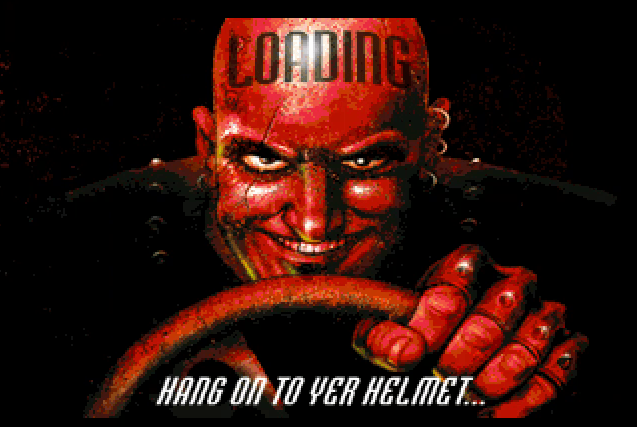
Carmageddon

A Blast from the Past review

FBT’s review of Carmageddon, the best racer of the 90s so he says – but he said that about Monster Truck Madness and Road Rage too so who knows.

The Past

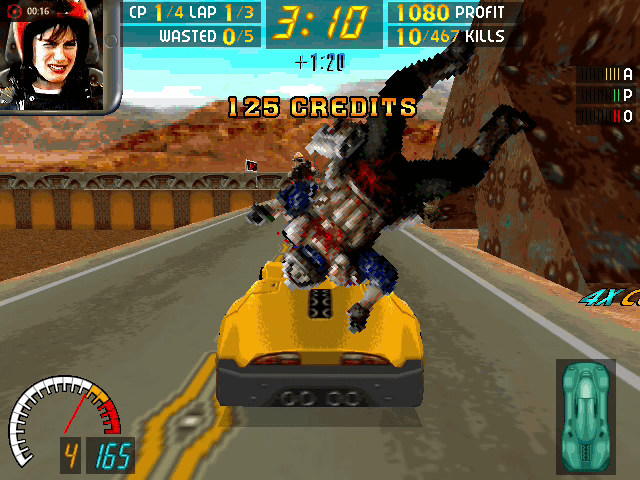
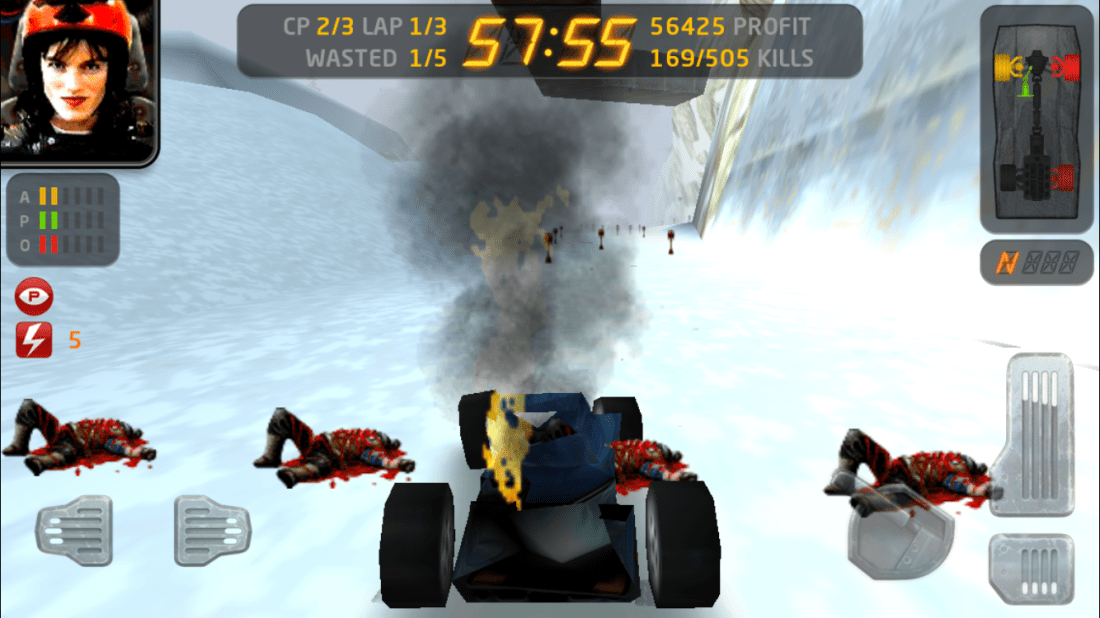
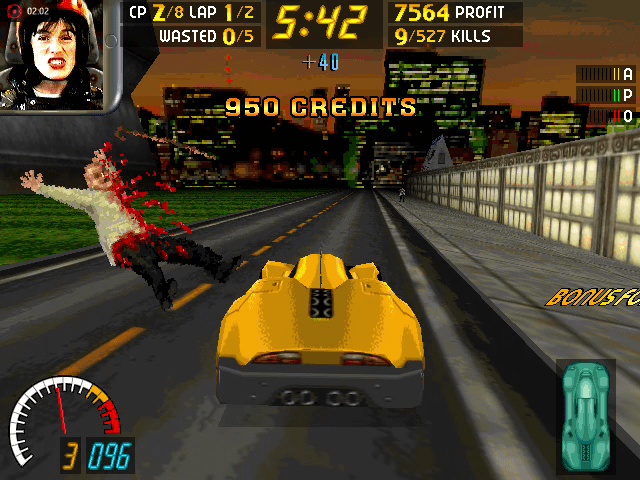
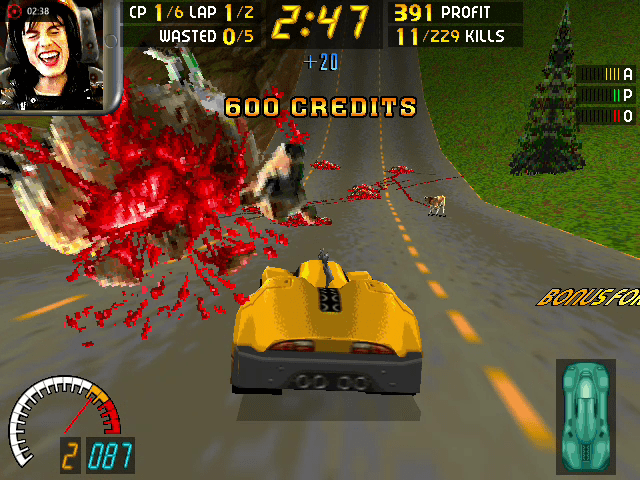
I’d always disliked racer games. But Carma was different; originally envisioned by devs Stainless as a demolition derby, it shifted to sandbox when they pursued the Mad Max licence. People-mushing was added after they tried to licence Deathrace instead. Finally, they came up with their own world, ripped from 70s/80s dystopia movies; Rollerball meets Nascar, cars race through slums winning by crossing the finish or stopping anyone else from doing so; running over the ‘peds’ gained you more time to race. It was great. But what made it even greater was the free-roam element. My mates and I would chalk up a healthy amount of ped-death time then go looking for trouble. We would analyse the layout, work out if we could reach building tops, find hidden areas … We’d spend hours on a single level. Of course, you could attempt to win without running anyone over and that had its own challenges. The biggest of which was not giving in and handbrake-turning into a crowd of people.

The Daily Mail trembled with horror on it’s release and demanded Carma be banned, going so far as to claim the character Die Anna was a ‘sick’ reference to the people’s princess. That’s … okay I wouldn’t put it past Carma, except Princess Di died after its release, but don’t let that stop a headline. Building on the controversy, publishers SCi, decided to submit it to the BBFC … which hugely backfired. The BBFC weren’t exactly open-minded in the nineties and they banned it, supposedly because they enjoyed it so much that suggested people would emulate – what? Stainless released it with zombies instead, who spewed green blood. But what we knew, and the morally-panicked didn’t, was that new internet. From there, Stainless’ own mod quickly made its way to floppies and magazine disks, providing a way to turn the zombies human again. We were back in business. When not one child mowed anyone down in their Dad’s car, the protesters moved on to being dismayed at GTA instead.

In today’s moral-choice driven and heartfelt emotional gaming, there’s nothing out there that celebrates your pure homicidal side. Time to Die Anna again.

Still a Blast?

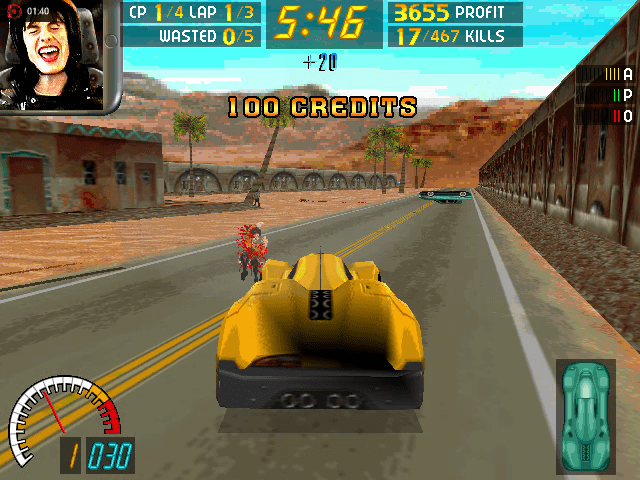
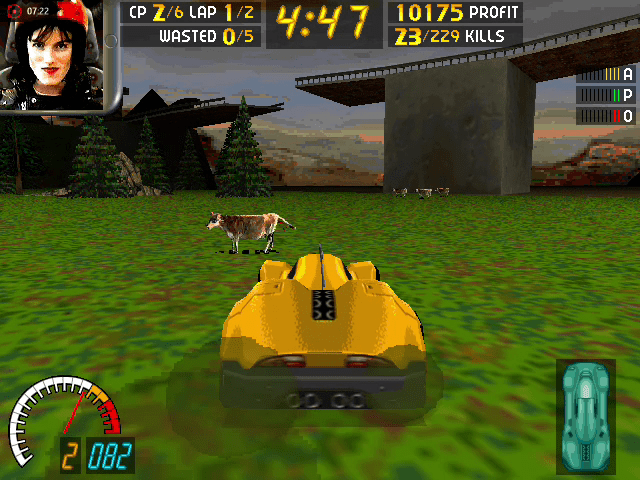
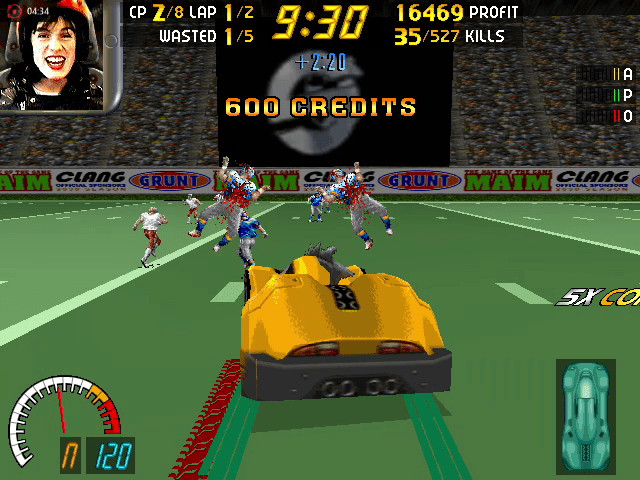
As I race along ‘Maim Street’, the first of thirty-odd races, memories come back and I take off, aiming for the stadium where I mow down NFL teams, then shoot down the road knocking peds for six, blood and body parts spinning. I mistime a corner and obliterate my car, then get rear-ended which causes me to shunt a mailbox that skids off and takes out a passing OAP and earns me a ‘good shot, sir’ bonus. Holy crap this is good. And not in that ‘I want to try this in the real-world’ way. Chasing after the peds is fun, they squeal and take off, yell and swear at you, while hitting the cows in the countryside levels, listening to their Moo turn into a Goo is always a giggle. Although there’s only four or five locations – inner city, coastal, a mine, countryside and industrial areas, each race opens up different or expanded areas, so the races always feel bigger rather than just longer or repetitive. Plus, it gives you another chance to get somewhere you couldn’t earlier. Completing a course gives you points, alongside the points you gain in-game to buy upgrades and unlock your position, which in turn unlocks the races. And more dangerous opponents…

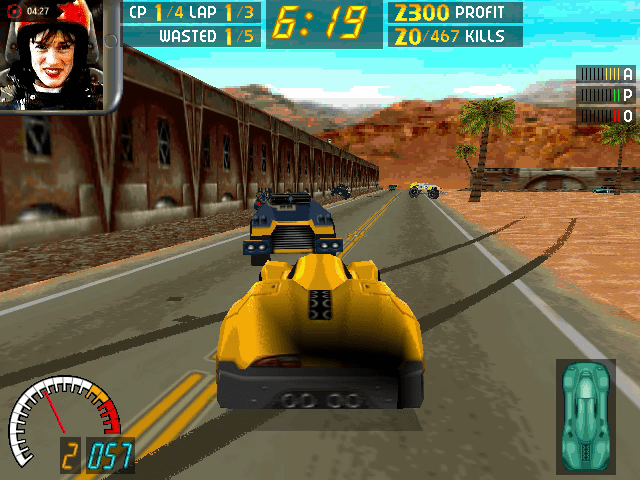
As I crash around, I realise just how much genuine fun I’m having, how exhilarating, exciting and intense it all is. Yes, it’s blocky and dated but that soon disappears because you’re so into it. I miss this, most modern games don’t have this reckless abandon and most of it is my own doing rather than the game manipulating me into a scripted experience. As soon as I finish one level, I’m revving to get onto the next. Carma is just so exciting – that’s not the controversy talking; it’s a really good game. The physics and engine are amazing and the levels are laid out in a way that maximises freedom so you can really take control of the way you play; you quickly learn how much you can push it, anticipate its reactions and gauge when to turn, slide or break. I’d forgotten about Die Anna’s face in the corner, reacting to the mayhem as we went, the on-screen congrats as we made good kills, the noises the peds make, the way the levels are filled with things to trip you up or give you the chance to let loose. As the game progresses you get the opportunity to steal opponent’s cars once you’ve wasted them, and they each have their own feel and ability. There’s a caddy with a cattle-catcher, driven by ‘Otis P Jivefunk’ that makes short work of any head-on attacks but is like driving a bouncy castle, Vlad with his hotrod car which will impale yours and there’s OK Stimpson (renamed Juicy Jones in rereleases) who drives what looks a lot like a white-topped Ford Bronco … The opponents and their cars are all very different although their tactics are largely the same – ram you.

There’s not much in the way of in-car fighting and early on it’s a war of attrition as you just batter each other, but later you’re cutting through them like bloody butter; except for the big boys (and girls) like The Plow and Heinz Faust’s tank-car. They’re nightmares, but not as bad as the cops.

Cops do serious damage and constantly ram you, siren screaming, holding you in place while the timer ticks down. The only downer is the cops only go after me. It’s not until at least mid-way through and several armour, power and offensive upgrades that I can even think about taking them on. It’s a hugely gratifying moment when the car is tricked out and you grab the solid granite powerup then spy a copper in the distance. Revenge. Of course, there’s that damn super-cop car sitting on a roof in later levels. When that thing lands, it’s game over. Except it’s not. The great thing about Carma was you can’t die – your car can get disabled, but you just repair and live to maim again, giving you the freedom of just putting your foot down and seeing what happens. They removed this invincibility from the sequels and they suffered because of it; once you get nervous about accelerating in Carma, it’s not Carma anymore. I remember discovering this in Carma 2 and being so disappointed I sacked it off.

The only way to lose in Carma was to run out of time. So long as the timer is ticking, you’re okay. You gain time in three ways – passing checkpoints, battering opponents or running over peds. You can even win by killing all the peds, but even with a power-up that reveals their location it’s incredibly difficult to do. Other powerups include instant handbrake, good for anyone chasing you, damage magnifiers, and the insanely annoying Bouncy Bouncy. The big one is Pinball, which as the name suggests sends you – and everything else you touch – careening around the map. They’re huge maps too, Carma doesn’t scrimp on the experiences; so many areas to explore, so many opportunities to cause mayhem. I’m attempting to drive up the sides of buildings, ramming things to see what happens, taking huge chances and accelerating so hard Die Anna starts screaming. Skimming past opponents, setting up games of chicken (they never falter), grabbing powerups then rushing to use them before they run out, clobbering cop cars then taking off … Carma is basically like school playtime, when you realise the teacher’s about to herd you all in so you suddenly go mental trying to have all the fun at once before you’re forced back into class.

It’s amazing that Carma didn’t have more influence on race gaming. Series’ like Flatout, Midtown Madness and Road Rage shared the anarchic DNA of Carma but without the murder or black humour – Monster Truck Madness did have open world opportunities but you still had to hit checkpoints rather than the crowds to win. But I realise now Carma isn’t really about running people over, it was the racing without rules, and along with the swearing, cheeky level names, the ‘Pratcam’ and the on-screen congrats for outlandish kills, it all adds up to a game that’s dedicated to you finding your own fun. So few games let you have your own fun anymore, least of all the racing genre.

Even a decade after release the protesters never let it go; That bastion of family values Keith Vaz was still using Carmageddon in 2005 to prove a point about video game violence, stating in a commons debate that Carma’s ‘sounds of cracking bones adds to the realistic effect’ – did he ever play it? He also noted “Duke Nukem hones his skills by using pornographic posters of women for target practice and earns bonus points for shooting naked and bound prostitutes and strippers” – Really? There’s been so many re-releases of Duke that I must have missed the ‘moral outrage edition’. He also talked about Postal and even mentioned the ‘Postal Dude’ – A politician using the word Dude in the Houses of Parliament? Games rock. Yet Vaz, The Daily Mail and pressure groups like Mediawatch seem to miss their own point when they panic hysterically about video games; twenty years on and still no one’s ran anyone over because Carma told them too. Carma was rebooted in 2015 and the Daily Mail was there for it, reporting that “ultra-controversial video-game Carmageddon might be unleashed on another generation of teenagers” as if the terror alert should be raised to severe after the original nearly brought society to its knees via rampaging teenagers with learner plates, before screaming about the original being banned (But not ‘unbanned’). Let it go.

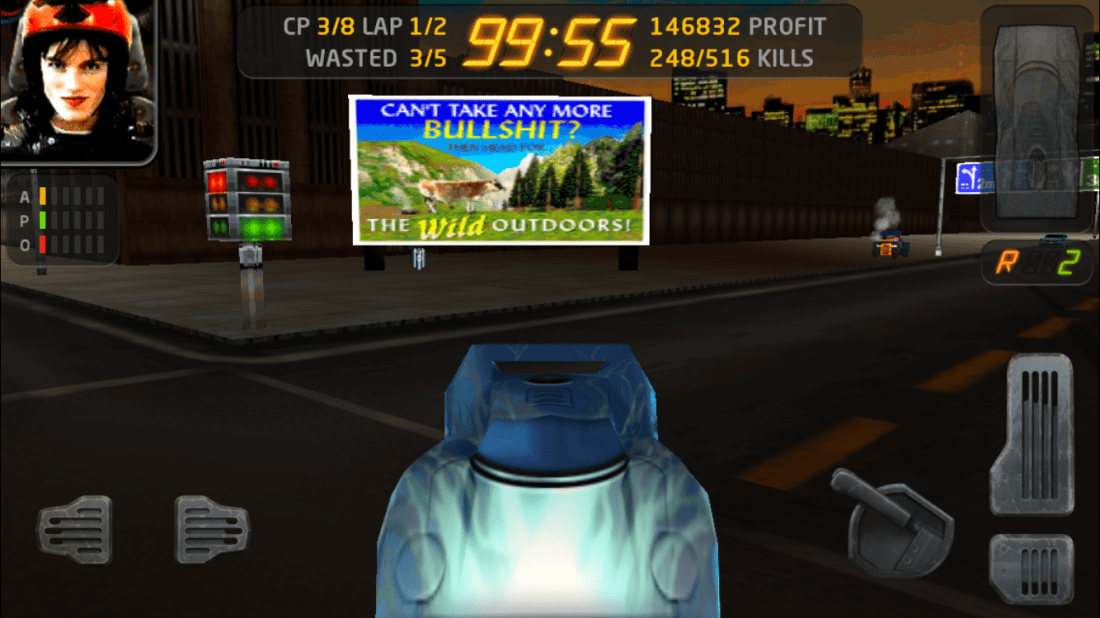
Like Doom, the thing about Carma wasn’t the violence, it was the perfect experience – it wasn’t real, anyone except Daily Mail readers could tell the difference, but I could anticipate the car’s movements, how hard to push it, where it would end up – when I missed a ped I could yell the game was cheating but really, I’m just not that good a driver. There’s nothing ‘real’ about it, but it was a brilliant game and one that you could tell the devs had fun making and that shines through. It wants you to have a good time. It’s blocky and the sprites animate through two or three stills and you can’t really see what’s going on. But once we’re off, the gloves are off too and I’m barrelling down the road, bashing my fellow drivers and pulling handbrake turns into peds like I’m twenty years younger. Pixels don’t matter when a game’s this good. Carma is a brilliant game on every level – to play and to offend. The sequels weren’t as good and that includes the 2015 reboot which veered into arcade silliness and lost the original’s black humour in favour of smut, but the original still plays great and it’s even available on iOS/Android. There’s no excuse. Play it, just to annoy the Daily Mail.

Die Anna, the gamer’s princess.

Developer Stainless Games | Publisher Sci / Interplay Productions

Platforms; Win | iOS/Android

Agents of Mayhem

A SECOND WIND REVIEW

A Saints Row game that isn’t a Saints Row game that wants to be a Saints Row game that FBT wishes was a Saints Row game too. Saints Row.

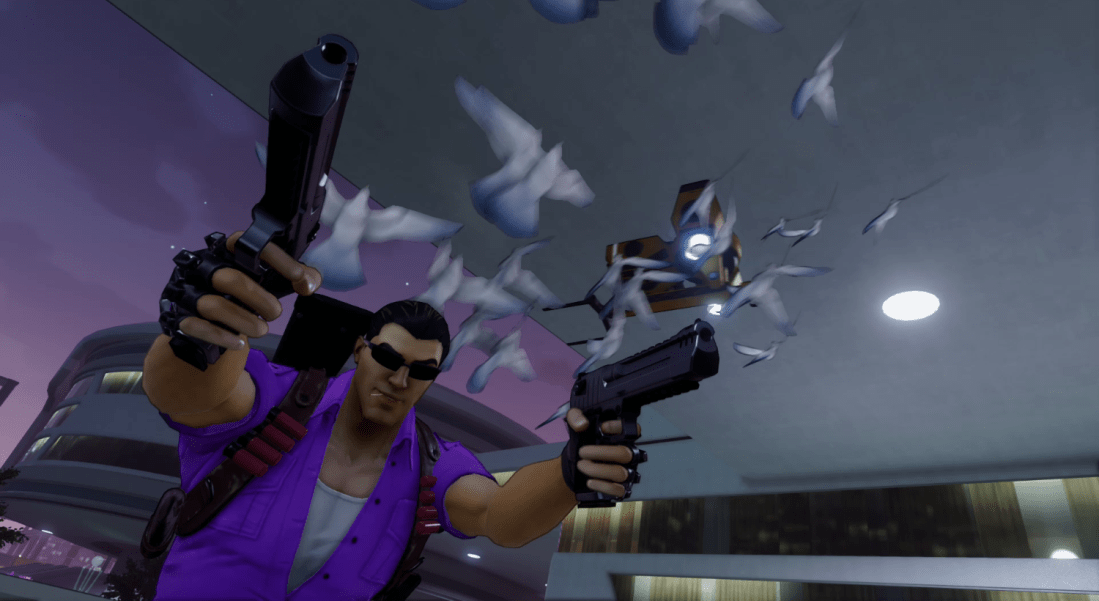
Agents of Mayhem is a spin-off, side-quel, alternate universe, continuation, whateva of Volition’s mighty Saint Row series. Following the ‘good’ ending to Gat out of Hell, the earth has been rebuilt only to be attacked again; it’s not the Saints behind the mayhem though, it’s super-villains L.E.G.I.O.N who destroyed every major city and government in preparation for something even more nefarious. M.A.Y.H.E.M, a group dedicated to disrupting LEGION’s plans arrive in Seoul to … disrupt their plans.

In the eighties, someone in marketing realised just because kids couldn’t see R-rated movies that doesn’t mean they couldn’t sell to them; Rambo had an animated tv show and toy-line, as did Robocop, The Toxic Avenger, even Police Academy; Alien had a toy as well (Complete with spring-action jaws) and was followed by a (Flying) Alien Queen, now with Spitting Action; Aliens even had a kids show but it never made it to air. I bet it included a baby Alien that made friends with the kid character, just like Uni in D&D and Godzooky. Man, the 80s were amorally great. Nowadays it’s different, they target the toys at adults. Sorry, collectable figurines. And that, in a beautiful tangent, is AoM; a Saturday morning cartoon version of Saints Row. Not in look – it’s clearly is intended to emulate that Filmation meets Toei style we all grew up with – but in style. It’s the bounciest, most bloodless, shiniest, inoffensive game to ever let you murder people. Apart from the occasional ‘motherfucker’ there’s no reason why an AoM playthrough couldn’t air on a Saturday morning straight after Mr.T’s tv series where he pitied the fool who took drugs.

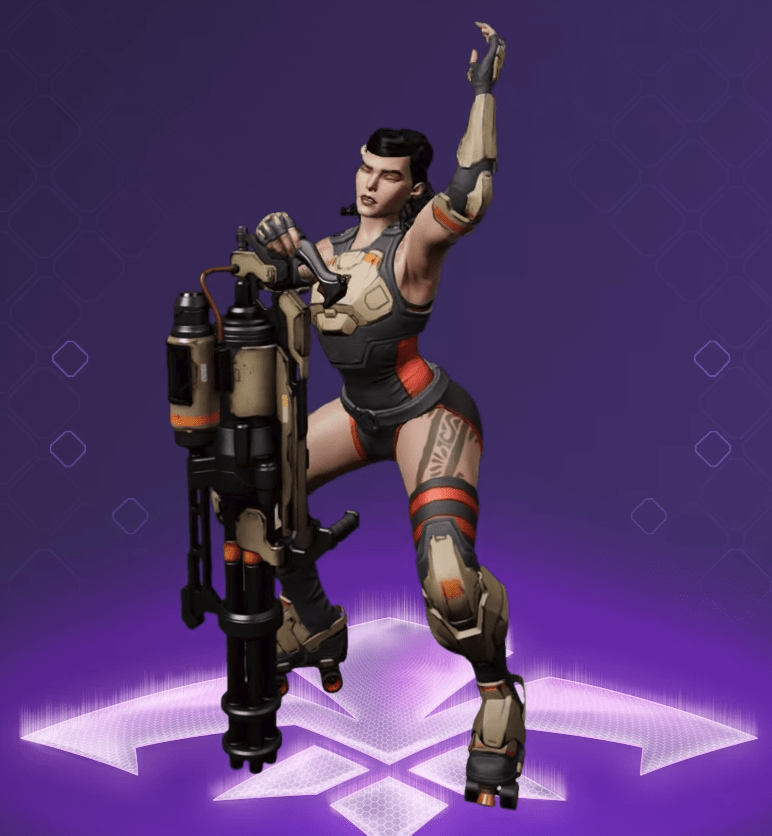
A little like The Avengers, MAYHEM is the brainchild of Persephone. Originally one of the LEGION Supervillains, she defected and took the ‘Ark’ with her, a floating fortress where she assembled a group of mercs to end LEGION’s plans. As an Agent of Mayhem, you’re actually twelve to fifteen agents of Mayhem, including Saints Row stalwarts Pierce and Oleg and Saints Row superstars Johnny Gat and Kinzie (sold separately). The agents operate in groups of three but once in the world there’s only one active and it becomes basically the same as scrolling through weapon choices. If you’re in close-quarters swap to the tank with the shotgun; long distance enemies? Scroll to the one with the sniper-like weaponry and so on. Later groups specialise but often it’s not until you’re deep into a mission that you realise what you need now is a Roller-Derby chick with a mini-gun. Shame you brought the spunky hacker with a peashooter.

They’re all cool and have distinct personalities and one-liners, but they’re completely redundant as characters in-game, it’s purely about their weapons and powerups; once you settle on your preferred loadout, the rest never see the light of day and it’s frustrating if you take a liking to one but can’t stand their compatriots or their loadout isn’t to your playing style. If they can each ‘beam-in’ on a whim, why can’t an entire team? Why is the safety of the world hinging on three heroes out of fifteen? Not actually having one to call your own also removes you from the struggle, further making AoM feel like something you watch not play and you realise how well Mass Effect’s dirty dozen balanced it; squad-mates were cool but they were the support act; you were the hero. In AoM, everyone’s the sidekick, including you.

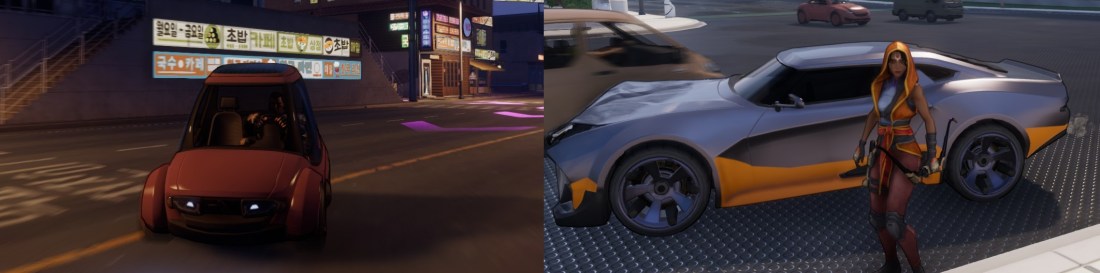
The agents can alter and upgrade to improve their chances via xp unlocking level-ups, or in-game objects that unlock further improvements and each has a special ability which itself can be honed, and chaining events unlocks another show-stopper ability. Problem is, with this much choice across this many characters it gets messy and confusing. We also get our very own car, which can be called whenever it suits. While you can nick cars pootling around Seoul, they’re horrible and slow compared to our own K.I.T.T car and it’s one of the best things in the game. Not just for the always positive AI who doesn’t seem to mind you constantly wrecking it, or that it’s the only cool thing on the roads, but because it’s one of the few times in AoM where you get to really cut lose and not feel like you’re playing Saints Row The Fisher Price edition.

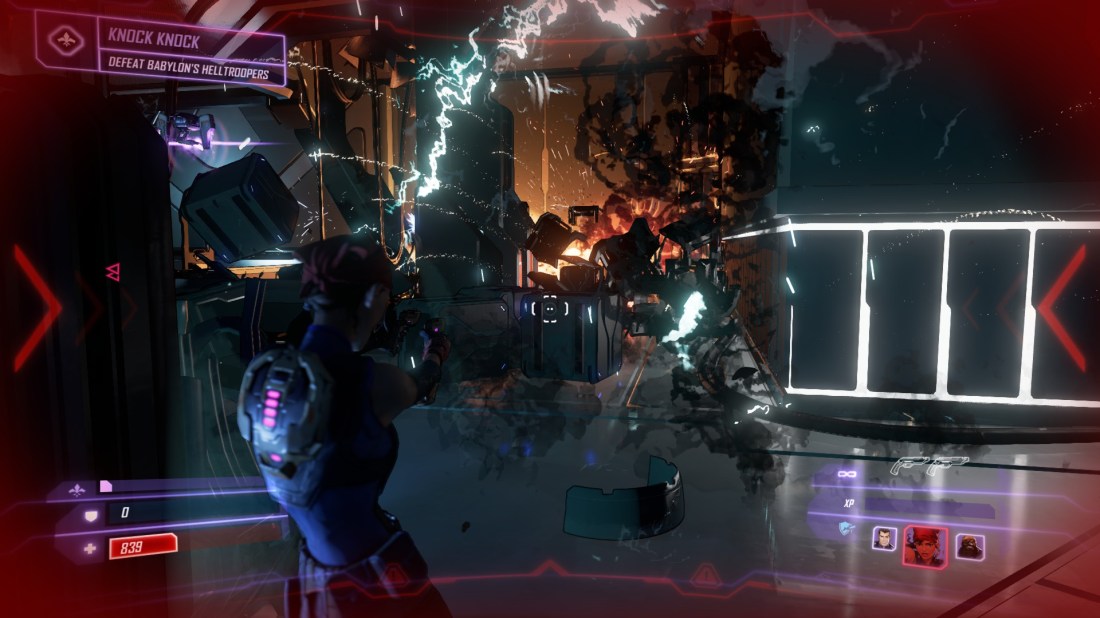
As you scally about in Seoul, there’s standard mini missions; drive out LEGIONs troops, retake bases, claim areas. Mostly those entail Saints Row 4 reskin events – LEGION troops warp in, you smack them silly for xp, money and health drops and the more mayhem you cause the more dangerous the opponents until you reach the big mini-boss and reset your wanted level. It just feels so pleasantly familiar, a daytime version of a late-night show where you keep noticing they cut out the good bits – but fatally, when you’re not distracted by fond memories of SR, you realise there’s not a lot to Seoul. Instead of carrying on the cartoon look of the cut-scenes, the future looks like an Apple Store, all shiny and neat with no real depth or involvement and you never get stuck in, which is key to an open world game –you never get tempted to ignore the missions and have a muck about, and since there’s another twelve agents to unlock, most of the first third is finding them so you lose momentum; LEGION’s looking to rule the world, if the Agents are that cool can’t they find their own way to the Ark? Just look up, it’s big enough.

The thing is, it doesn’t seem sporting to knock AoM. It’s only here for shit and giggles, and there are a lot of giggles. It’s a solid world and everything you expect is present, Gat is an absolute highlight and clearly shows that’s where Volition’s heart is, especially in his personal mission where he takes out a squad of AI Bots all imbued with his personality, not to mention his John Woo-tacular special skill, while early Agent ‘Hollywood’ is SR3’s Josh Birk turned up to 11; he’s a lot of fun before he gets side-lined by better agents – his special move is firing grenades from his groin, how can that not be fun – and all of them are up there in terms of cool. The problem is, SR had that level of fun from the get-go and then kept layering it with jokes, set-pieces and increasingly insane behaviour from a narcissistic, anarchistic, psychopathic hero – AoM starts as a light muckabout with interchangeable playables, and never progresses. When you’re putting yourself in harms’ way by constantly playing as Kinzie and Gat instead of better suited teams, your core game is clearly not bringing it, but the biggest miss-step of AoM is there’s no Co-Op, let alone followers. How can you have fifteen agents and force you to play them one by one, not even as an on-screen team? AoM’s high-point is its characters and there’s not a dud amongst them but they’re criminally underused so to ignore a co-op/follower situation where they all get an airing is a huge misstep. I get that they’re tools to be used when necessary, but we’re MAYHEM not ORDERLY QUEUE.

In the end, you never shake the feeling this is another nutso Volition Saints Row DLC – it would have worked awesomely alongside Gat Out of Hell or Enter the Dominatrix with the Saints crew trapped in a Saturday morning cartoon. It feels like a holding game while Volition and latest step-parents Deep Silver get a grip on what to do next. What happened next is Agents of Mayhem tanked and DS laid off a ton of staff. That’s a shame, cos Volition were the only ones capable of knocking the smug smile off GTA’s face; hopefully they’ll return to 3rd Street and bring it like only the Saints know how. I miss Mayor Burt -edit- Reynolds.

2017 | Developer, Volition | Publisher, Deep Silver
Platforms; Win | PS4 | XO

Mass Effect 1 vs 2

An Agree To Disagree review

FBT & TheMorty fall out over who has the best Mass Effect

Mass Effect – FBT

This seems like a tough one, but it isn’t. Mass Effect is better than Mass Effect 2. ME3 we’ll leave alone for now, it’s suffered enough but ME2 is a Michael Bay remake of David Fincher’s Mass Effect; it’s all shouty and sexy, missing the subtlety and sinister tone of ME1. In ME2, when we’re not fighting robots (never, ever exciting) it’s oversized midges. When we’re not ignoring the fact that Shep’s thrown in with terrorists, we’re helping our squad get over their daddy issues. ME1 is a slow burn spin through a galaxy that just gets bigger, grander, a true role-playing experience. ME2 is a bombastic, set-piece-driven shooter with too much filler, it’s Independence Day to ME1’s Close Encounters; instead of delving deeper it’s just louder, bigger, shoutier … and it opens with your hero dying but then getting better…

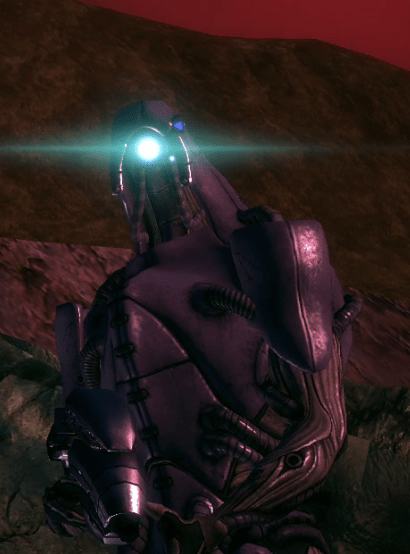
And who are we fighting in ME2? Saren was a complex character aptly supported by the Matriarch, and then there’s the Geth; self-aware machines searching for their God? Brilliant. There was the Thorian and the Rachni, Sci-Fi characters at their purest. ME2 has roaches. We even had a much cooler Reaper; Sovereign. Epic and arrogant whereas ME2’s Harbinger is all off-screen ‘puny humans’ speeches; Sovereign makes good on his threat and rocks up to kick ass, unlike Harbinger, hiding behind a gnat.

And Shep’s taking orders from a bloke called TIM (The Illusive Man’s initials are Tim? Tim?!). We all know Tim’s a villain but what does Shep do about it? Just contemptuously folds his arms at him. Did they forget to clone his balls? This is why I play as Femshep. Cerberus were ultra-evil in ME1, now they’re just misunderstood? Did he forget what they did to General thingie, the experiments? ME1 Shep woulda nicked the new Normandy and hightailed it back to Anderson. And what’s with the Alliance anyway? Shep; ‘yeah, I was dead, I’m not now. I am working with a supremacist group who tortured my own squad’ / Alliance; ‘Oh okay, here’s some side missions’. Shep basically signed up with Britain First ‘cos they gave him a new ship. And Joker too, the voice of sarcastic reason throws in with Cerberus cos he was grounded while Doc Chakwas joined a terrorist group cos she missed serving on a spaceship? There’s a few others knocking about in the Alliance. And Liara sells Shep’s body to them. It’s because I chose Ash isn’t it.

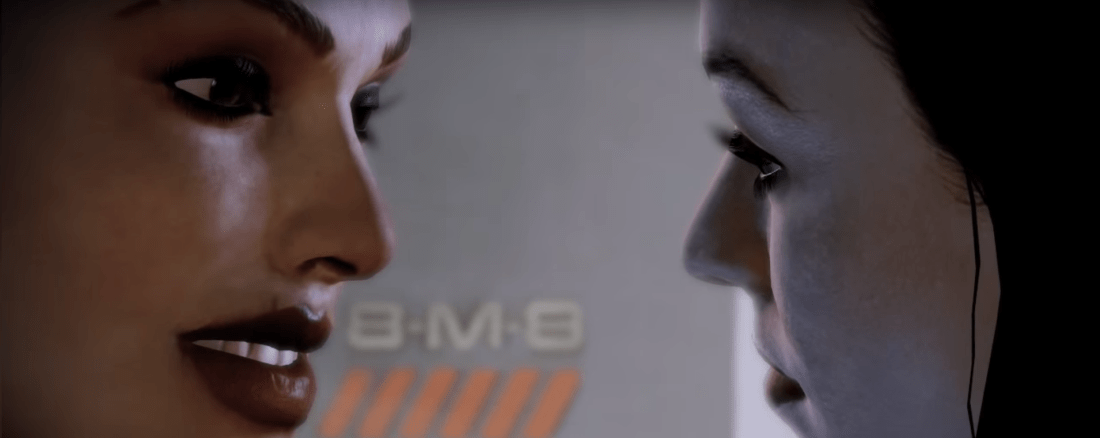
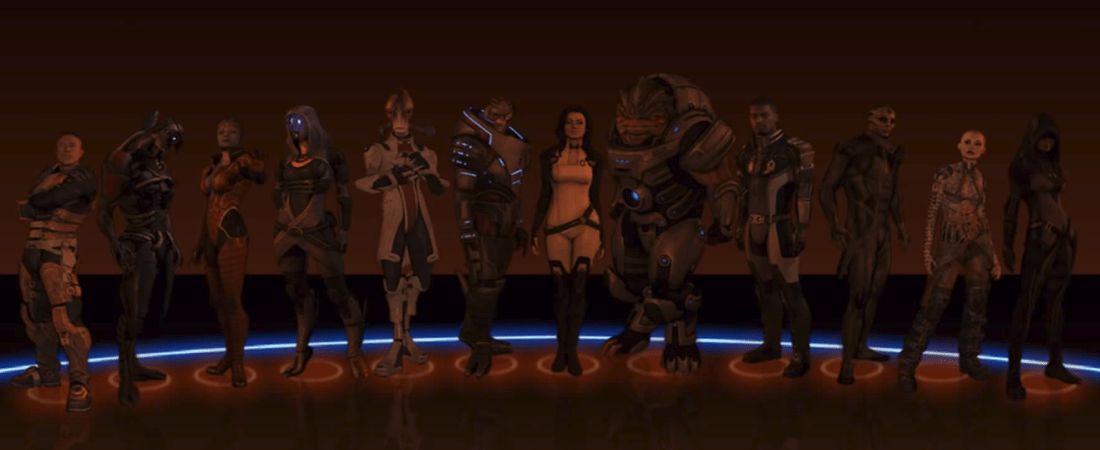
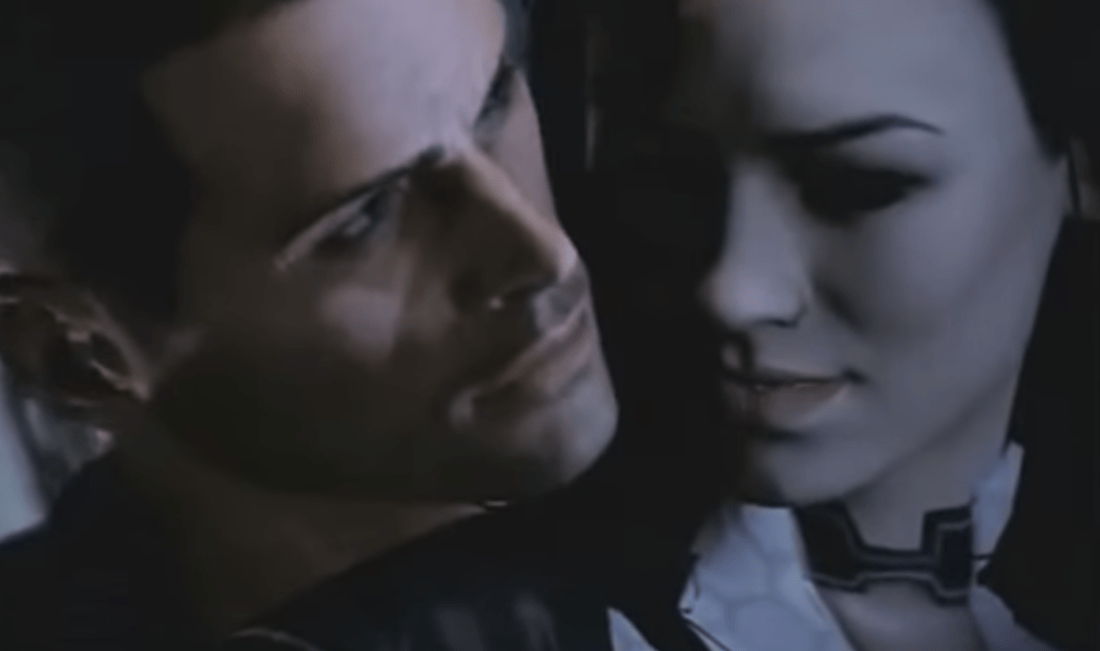
There’s no Ash in ME2! She has one scene before grumping off – it’s great that she refuses to join Cerberus because of the Commander’s influence; She had pro-human leanings, perfect for Cerberus but the cap inspires her to see beyond it and yet here he is; without Ash – Miranda is no substitute for being called Skipper. I can’t even be swayed by her catsuits. I can’t. Totally not swayed at all. Oh, hey Miranda, just stopping by again … so are we flirting yet, cos if not Jack’s looking kinda hot. As is Tali, Kelly, Samara… ME1 is intimate, personal; with six companions, you spend time with them whereas ME2’s frat-party means most get completely sidelined – they’re all great and that makes it worse. You end up going ‘Oh I’d better take Grunt, he’s not been out for a while’. The closeness of ME1’s crew lends itself to the story, this small band taking on the universe – and the relationships that develop feel more natural. In ME2 everyone’s getting jiggy; that place is like Porky’s.

And how does Shep chose to fill his spare time in ME2 when he’s not skulking around Miranda’s office? Scanning planets. He has a ship full of people and an AI onboard, can’t anyone else fire the probes?! Even EDI sounds fed up with it. And what the hell is Joker doing? Why am I piloting the ship about?! ME1 made it all about your command decisions; surprised Shep’s not on latrine duty in ME2. And there’s Mako-time. Granted, most of the time you’re just rolling back down the mountain again and the planets are sparse, but it’s a change of scene and an occasional Thresher. Admittedly, Shep needing to do a hack on a lump of gold you found makes no sense though.

ME2, flying ants aside, is a great thrill-ride but it’s a game trying to be a movie whereas ME1 is a great game, period. Some serious shit goes down in ME1 – you earnt that determined hero-walks-offscreen final shot. ME2 is just padding until a final boss reveal. Okay, I’m not even convincing myself; I’m arguing my Ferrari is better than TheMorty’s Lambo. ME2 is pretty darn close to perfect. But ME1 does get a little closer.

Mass Effect 2 – TheMorty
ME2…or as I like to call it, The Magnificent Seven in Space. Good ol’ Commander Shepard strolls into Dodge to take on the seemingly impossible task of preventing a vicious band of outlaws from enslaving the townsfolk. Of course, he can’t do it alone and immediately sets out to recruit his own band of expendable misfits. His McQueen, Coburn and Bronson are Turian, Asari and Krogan but pack an equally weighted, heavyweight punch in an incredible final mission where one wrong move and it’s more like you’re playing Massacre Effect.

How anyone could dispute that ME2 is by far and away not only the best of the trilogy but also one of the all-time greatest games ever is baffling. Firstly, your squad is over double the size, meaning you can tailor your arsenal to suit the mission – unlike ME1 where you’re pretty much just going into every fight with Wrex and *insert love interest here*. Having the same conversation no matter who you choose and going into cut scenes knowing that they’ll repeat the same Renegade/Paragon drivel like the classic angel and devil on your shoulder. Give me ME2 any day where you have to think carefully about who you take so that Jack doesn’t kick off in the Cerberus base or that two girls you want to sleep with aren’t going to get wise to your polygamous plan.

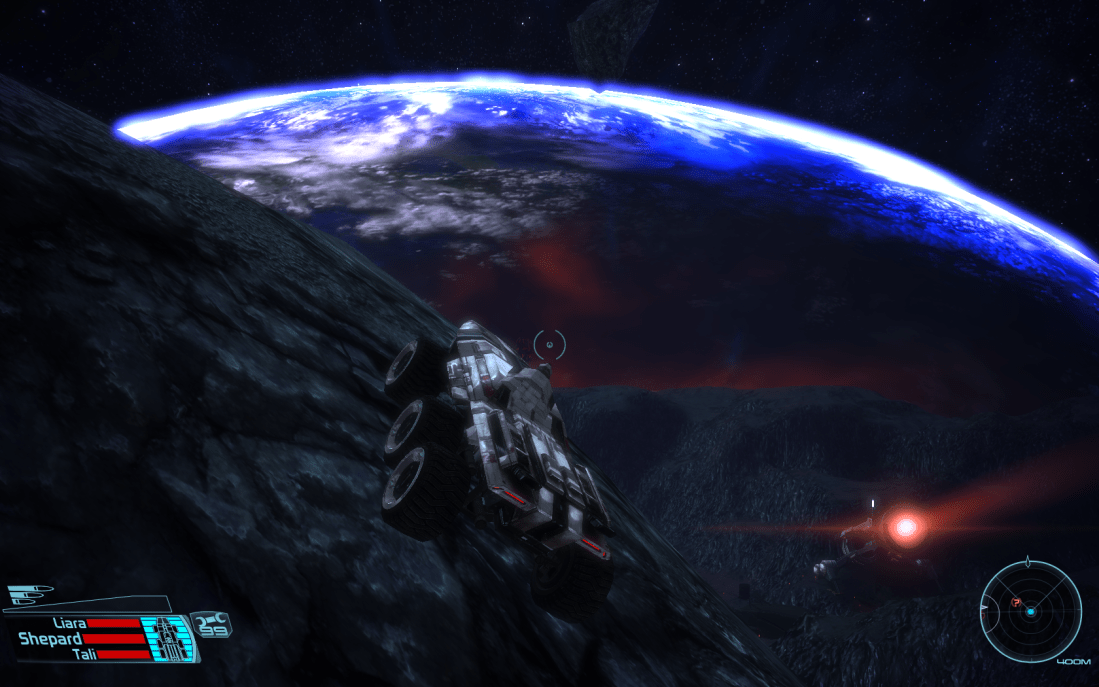
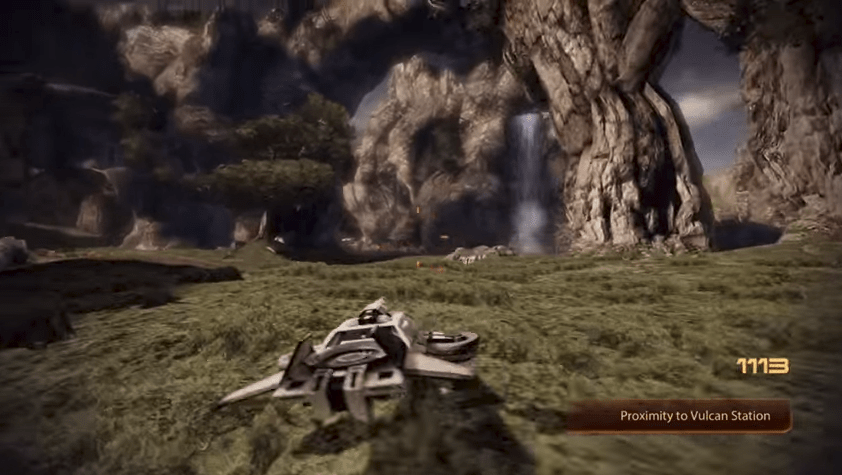
When you’re not doing very linear missions that are pretty much just a copy and paste job of the last mission you did, you’re travelling in the Mako – the most pointless and boring vehicle in gaming history. I mean, it’s the year 2183, we’ve discovered faster than light travel, have fully aware synthetic AI and can scan an entire planet using a fancy holographic wrist watch. So why in this age are we riding around in a 6-wheeled, saloon version of the 60s moon-landing buggy? It’s so dull but not as dull as the planets you’re driving round at snail pace. I preferred wasting 20 minutes of valuable gaming time trying to take a shortcut over a mountain because it was infinitely more interesting than the unattractive, soulless journey around it – even if that trip would have taken half the time. Never have I played a game where driving felt more slow and painful than the M25 at rush hour. ME2 though, blew that boring piece of scrap out of the water when it gave us the Hammerhead. A hovering jet that was faster, quicker and more agile and manoeuvred with a distinct panache.

Don’t even get me started on the antagonists. A firefight with Saren on Virmire has him running for the hills like Bowser at the end of every Mario level ever – hardly putting the fear of God into the gamer. The Matriarch battle has the most pointless of endings where she dies no matter what choice you make and as for the Rachnii… it just reminded me of fighting radroaches in Fallout. In ME2 you take down a half-human half-reaper. yep REAPER. I mean, beats a bloke possessed. When you take down Sovereign, it’s pretty much just a mind-controlled husk…hardly comparable.

Thank God there’s no Ash in ME2. How on Earth are you supposed to save the universe with a nagging wife over your shoulder… imagine every time you pick Miranda or Jack having her moan “oh, you’re going out with HER again are you?” and making you feel guilty just because you need someone with the Shockwave biotic skill. No thanks. That’s all she did in ME1, whine. About how she got Kaiden killed, about how her father always wanted a boy about how she’s not good enough for you. Have some self-respect woman. I’m the first human spectre, lack of confidence isn’t exactly a turn-on. In ME2 though, you have to work for it as everyone plays hard to get. Much better than fishing in a very small pond where you pretty much have the choice – white or blue…?

Having this argument is like saying Alien is better than Aliens or Judgement Day is better than Terminator. In reality you couldn’t have the action-packed sequel without the taut, suspenseful original that sets the mood. Maybe ME2 is better but even if it is, and it’s a BIG if, it’s only because it had an almost perfect game to pick apart and try it’s best to improve on. At least there’s one thing FBT and I agree on – both are a million times better than ME3.

Mass Effect 1, 2007 | Mass Effect 2, 2010

Developer BioWare | Publisher Electronic Arts

platforms; win, PS3, XBox360

Bioshock Infinite Pt2

In part two of FBT’s scathing Bioshock Infinite review, he basically rants for pages about how infuriating the game is. TLDR; FBT hates Infinite.

* Spoiler Alert – Plot-points and character fates are mentioned throughout *

Thus far Infinite has us shooting through a quantum physics-based plot murdering racist religious fanatics -and those who oppose them- while hop-scotching around multiverses to escape a floating city with a Disney Princess who can alter reality and pass through dimensions with her mind but not conjure an exit. While being chased by a giant mechanical crow.

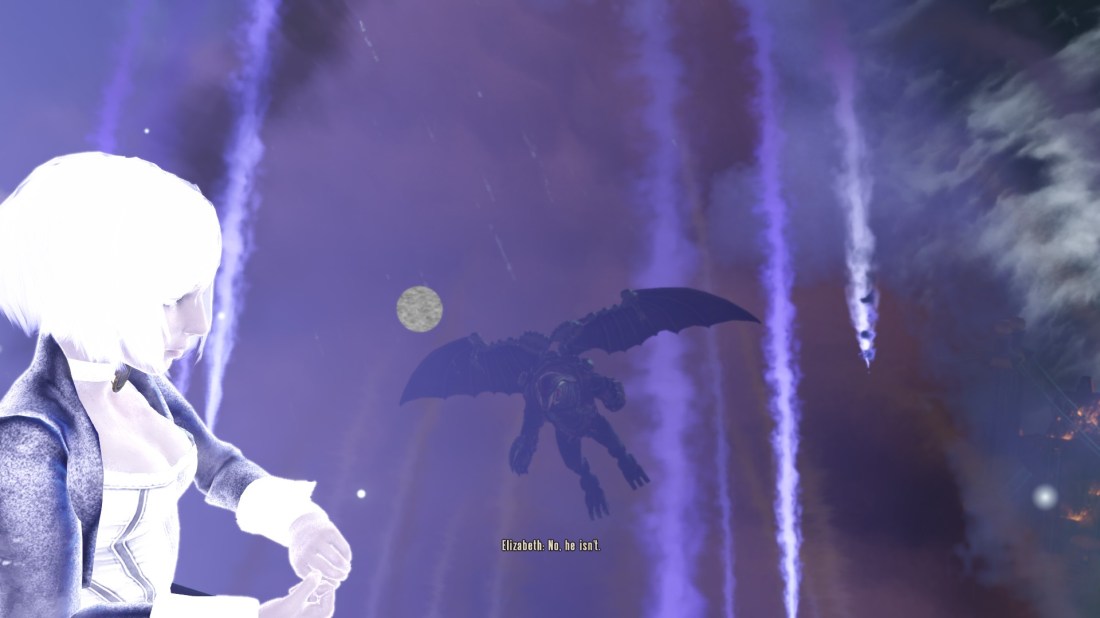
Having reached Comstock’s airship, there’s nothing stopping us escaping so Songbird swoops down and swipes Liz. Then we’re in the future. 1984 to be clichéd exact. Without Booker to protect her, the years of conditioning turned Liz into the superweapon Comstock prophesied; Columbia is the Ark and Elizabeth the flood. We finally see what her potential really was … directing the Columbia airships to launch missiles. What? Comstock said she was God’s instrument, we’ve seen elements of her power and this is it? I wanted to see her tears pouring death from above, real fire and brimstone stuff, Sleeping Beauty become Maleficent. Nope. No Tear in sight. Just ‘drop a bomb there’. Not even Songbird!

Turns out Old Liz pulled us into this time to stop it happening. Okay, (deep breath) I thought she was on Comstock’s side now? She can’t be brain-washed and aware it’s wrong; Why not have a mini-boss battle with her? Save her, break the conditioning. Imagine that. And, she can time-tear? Oh and, because Old Liz sent us back with a clue to stop Comstock, that means not only can we affect the timeline but that this future won’t happen so we won’t get the clue which means … oh phew, here comes Levine waving his Quantum Theory for Dummies book, now with an all-new Grandfather Paradox Explained chapter!

Back to reality. We arrive just in time to see Young Liz’s super-charged powers open a tear to a tornado which wipes out everyone experimenting on her. THAT’S what I’m talking about! Go Liz! Then she NEVER does it again. So, with zero help from Tornado Liz, we storm Comstock’s airship. Comstock’s got to be impressive, charismatic, commanding, convincing to have pulled all this off; with the scene of Ryan playing golf while Rapture crumbles in mind, we wonder if we’ll meet the Devil or a con-man.

One good thing about this scene; I’ll never again be lost for an example of a game let-down. Comstock could have been one of the most complicated villains in gaming history; he seems to believe in his Old Testament sermons, but we also know he faked his Prophet-like status, using the Tears to gain knowledge. He was building an army to wipe clean the earth but because God told him to or a power-mad desire? And what of his segregation/slavery beliefs? We’ll never know because no sooner have we got past the pleasantries when Booker inexplicably kills him. Just like that. There’s only one reason why that happened. There’s a twist coming. Why is this entire game acting like it’s a ‘previously on’? Comstock, the Luteces, they all know but won’t let on – unless withholding the reveal is key to our final success, this game will be an unconscionable cheat. Before we have a chance to realise we got cheated, the game quickly spirals into an aggravating wave battle while Liz realises the clue from her future-self lets her control Songbird – that’s awesome cool! Sod Comstock, I wanna play Songbird! Wait … Why am I playing Serious Sam with the Vox while Songbird is relegated to background attacks in a hurried point and click? Why can’t we just fly Songbird about?! Massive Crow. Check. Remote control for Crow. Check. Tons of revolutionary, down with the racist and religious nut Vox soldiers to uncomfortably slaughter? Check. Instead I’m busy shooting like I’ve done throughout?

So, given Songbird was the thing stopping us leaving and we have control of it, there’s nothing stopping us leaving – Yes, there is. Booker DROPS the remote over the side. That’s a moment of sickeningly bad, lazy storytelling. Songbird comes in for the kill and Liz opens a tear and transports us to … Rapture! The game already (desperately) justified the Vigors by showing they were Plasmids stolen through a tear so it seemed like we might visit. It’s nice, apart from watching Songbird die outside in the crushing water. It’s really quite sad; Songbird was such a tragic, disturbing creature and not just some automaton, it was a mix between Kong and a Big Daddy and it loved Liz, it’s only joy was looking after her. It’s a beautiful, heart-breaking, touching scene and completely out of place in the rest of this shitty, cheating story. God I hate this game.

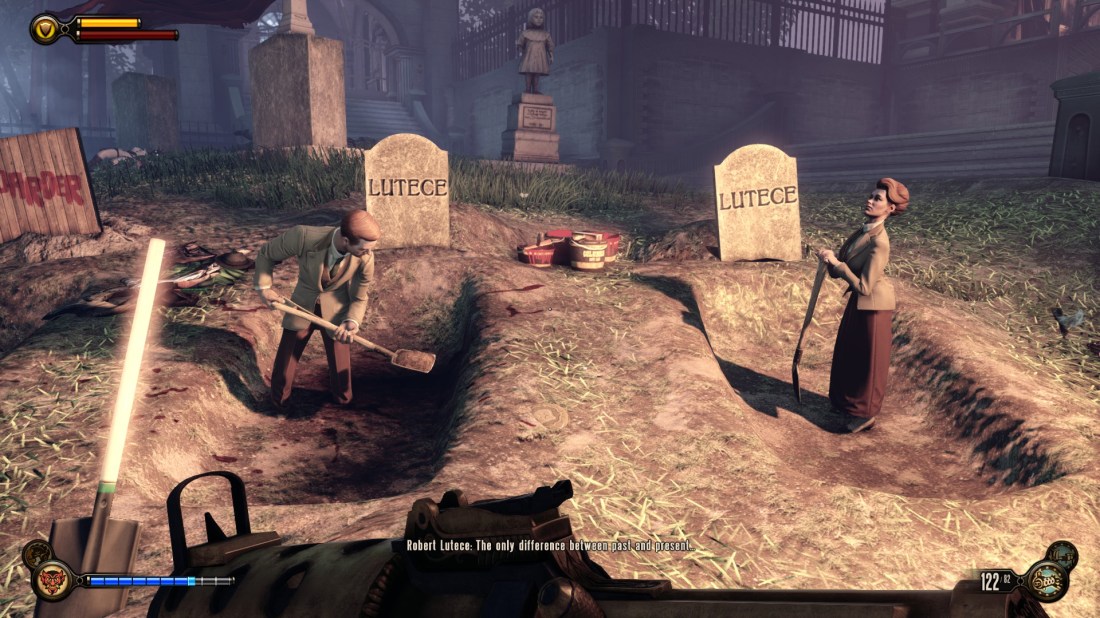
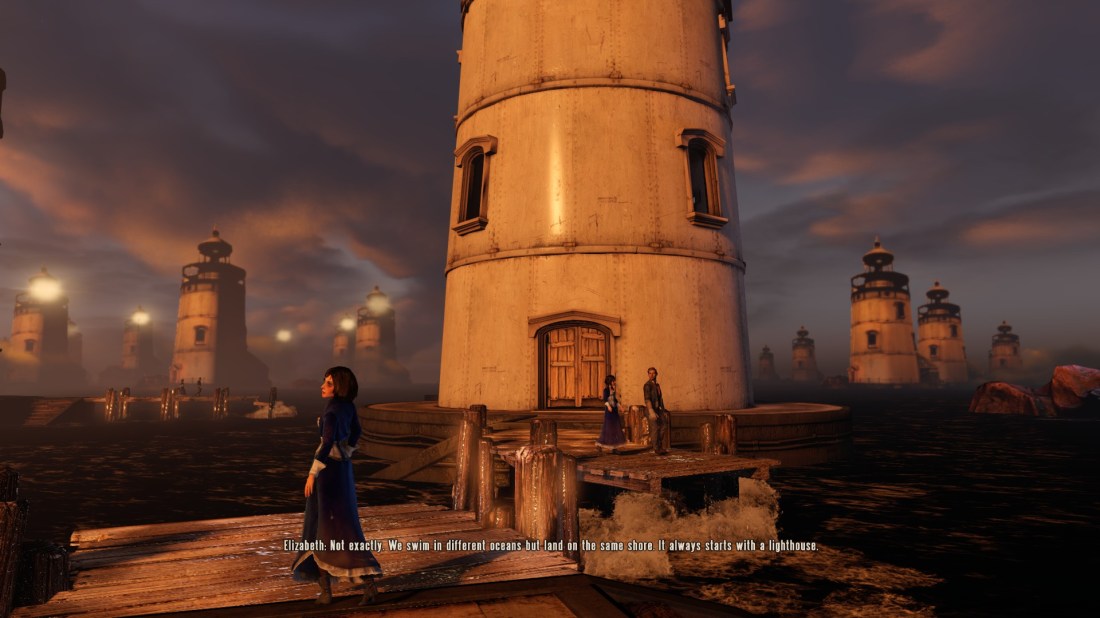
So, Comstock dead, Songbird gone, free of Columbia; we’re all good, right? Roll the credits. Wrong. Liz’s full powers are unleashed and that gives her … the power to become a know-it-all. We float toward the surface catching a glimpse of Rapture as we go, but of course the moment is spoilt; Booker smirks ‘a city under the sea? Ridiculous’. You’ve just been on a floating … oh I’m done with you. Once by the lighthouse, Liz continues to ramble on; just like Comstock and the Luteces, she knows something she’s not telling me.

Remember that scene in the Matrix when the little kid explains reality; ‘There is no spoon’? and we understood; back to the bullet-time. If you ask Liz she’d talk about a bowl from the spoon’s perspective. Infinite has become Levine’s half-term paper on Quantum Theory and he’s just padding it to reach the word-count. There’s an apocryphal Feynman quote, “If you can’t explain it to a six-year-old, you don’t really understand it.” And here we are. Infinite isn’t hard to understand until they explain it, then you realise they don’t know either.

The biggest surprise though is why huge plot twists deserved to be left until the end. We sit through moments that are completely drained of impact because we literally just walking behind Liz who explains everything. It’s like a magician explaining their trick, the power, the wonder is drained out of it.

Comstock is Booker in this reality. Whoa! Imagine working up to meeting yourself?! Questioning yourself, what your doppelganger did, wondering if you were capable. That would have been horrible; it’s not now, being told after the fact just makes you go ‘oh’. The moment Jack sees the ‘would you kindly’ quote on Ryan’s wall, that blew your mind. It was in front of you the whole time, a masterful twist, but Infinite never gives you that realisation. Next!

Comstock’s tear use aged him. Why? Oh of course, so the game wouldn’t tip it’s hand and let me recognise him. It also caused him to become infertile. Jeez you weren’t kidding when you said anything’s possible with Quantum Theory. Oh god, that means … Liz is my daughter! I don’t seem to react to that whatsoever. Neither does she. I get reunions are difficult but come on. Again, that could have been an interesting reveal midway through, change Booker’s opinion of her, from a payday to his daughter, revaluate himself while they awkwardly get to know each other. But hang on, this throws up all sorts of ques – Oh god, it’s the Luteces isn’t it.

Comstock made them open a tear to another reality where Booker, a burn-out after acts he committed in the war, sells the Luteces his daughter, Anna; but at the last second he regrets it and the tear closes and she loses a finger. That is an incredibly strong, shocking scene. But the game panics; we’re sitting there going ‘how did I forget all this?’ and it hurriedly explains Booker lost key memories passing through the tear at the beginning due to his mind trying to reconcile being in Comstock’s reality. Quantum Theory is so bloody convenient. I remember my acts in the war but not a daughter I regretted selling to pay off gambling debts? No sense.

Then there’s the finger thing. It’s because of that Liz can tear between realities? Not just those two, all realities? See, if her Pinkie is in our dimension and her body in Comstock’s why multiverses? Why not just the two? That would have been clean and concise; Comstock universe, Booker universe. Missing daughter, found daughter. Exciting game, emotional game. There’s ironically more potential in two universes than in infinite ones.

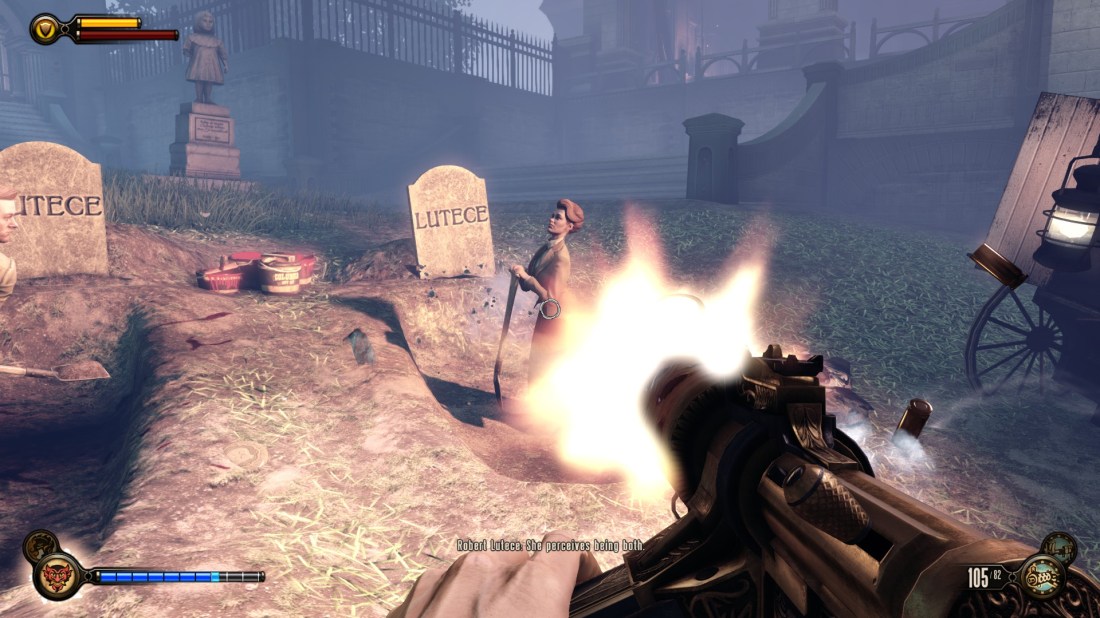
The first bit of good news is the fate of the Luteces; after being murdered (yay!) by Comstock to cover his plot, they were spread across all known realities and realised what Comstock had in store for the girl. They resolved to find a Booker and send him into the world to rescue the girl, and hundreds of Bookers later it was our turn, explaining all the see, saw, seen guff. If they wanted to break the cycle why did they continue with their non-sequitur ‘if only you knew’ bants?! They had critical info that would have helped, not knowing didn’t change the outcome just made it harder to achieve! The dicks. The Luteces are the only ones who could have tortured the lighthouse keeper to get the access code at the start. So they themselves can alter and affect things, they didn’t even NEED a Booker or at the very least, they had no reason to keep it from him. It was all for this twist. Bad, cheaty storytelling. Dead. Died. Die.

Eventually Liz leads us back to a baptism that our Booker refused while that Booker took and became Comstock, setting him on his floating-city journey. Somehow. The only way to stop the cycle is for Comstock to never exist. As in, kill Booker to ensure Comstock never lives. Thing is, her thinking is flawed – we’re in a game called Infinite, so that means endless Comstocks; that means there’s a Columbia that helped to usher in world peace, a reality where Booker and Anna lived happily and at least one where Comstock wasn’t an extremist – not every believer is a religious terrorist and you want to kill them too? When you think about it, killing Booker only saves the Luteces. Godamnit! Although, that would be an ending; the whole thing was them just saving themselves. And what’s to stop them giving the tear concept to someone else who is equally nefarious? They’re the villains. We just get Liz joined by other-reality Liz’s for no reason except it looks cool and they drown me. Good.

Of course, there’s one final cheat; Mid-credits, Booker awakes to the sound of Anna crying. Did Infinite just imply it was all a dream?! If not, that undermines the entire game. Liz, open a tear to the exit menu.

Infinite is an incredibly offensive game; raising religious extremism and racism then jettisoning them – you do not use such contentious subjects as filler – having the Vox suddenly become the villains because they’re violent, casting Comstock as a religious zealot and imply he’s a fake – not to mention that his conversion to religion caused all of this; it’s just wrong. And then there’s the plot holes; What about Comstock’s vision, why did they fire on China and why did he prepare the citizens for the coming of the False Shepard; he had no reason to assume the Luteces would turn on him, he killed them to make sure Booker couldn’t follow him. And of course the unresolved issue that that the game lets me be racist; in Bioshock we could murder little girls but you made that call and lived with it and the consequences – it’s as if the stoning scene is an in-joke; something so horrible has no consequences after-all; haha, you thought it was a moral choice, tricked you. Well fuck you Infinite, stoning a mixed-race couple is not a punchline.

There’s so many ways it could have gone; Comstock be a deadhead controlled by the Luteces and we’re just rats in their lab, or Liz even; planned it all to gain her full power. If this game wanted to explore any social issue it should have been the cult of personality; Why folks follow someone like Comstock, we see it in the real world every day. That would have justified almost all of it. It’s not even a very good shooter.

DLC

Clash in the Clouds is the worst kind of DLC – an arena battle. You expect something more; liberating the Vox, a tear-based experience, anything but this. I’d half expect it to just be surviving waves of non-sequitur exposition from the Luteces.

The second and third DLC though, Burial at Sea, seemed more like it. Set in Rapture as a prequel, this was going give us what we wanted in the first place, before it all happened.

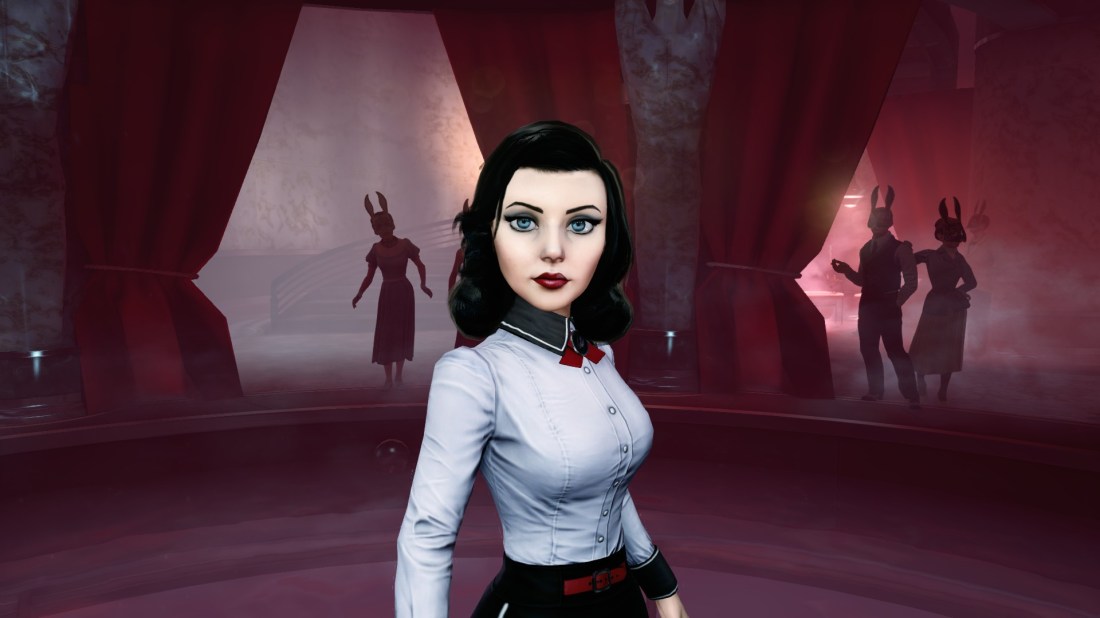
Pre-War Rapture. Into Private Eye Booker’s office sashays femme-fatale Liz – in Infinite she was a waifish Disney Princess, in Burial she’s an hourglass-figured Kitty Collins. Liz engages Booker to find Sally, one of several little girls who’ve gone missing recently, and as we follow her Rita Hayworth walk to the door … there is Rapture. In it’s prime, right when life couldn’t get any better beneath the waves. It is absolutely beautiful and I spend an age just taking it in. We light Liz’s cigarette with a click of our fingers, a waiter uses his Houdini plasmid to deliver drinks quicker, it’s amazing. I’m not triggering any story-related stuff, I’m just going to live here.

But it’s short-lived. After a cameo from Sander Coen, we’re headed for Fontaine’s Department Store, where Sally was last seen. This place is unfortunately the Rapture we know; decrepit and looted after Ryan sunk it to banish Fontaine’s followers. There’s no splicers but we do have weapons and plasmid-Vigors to batter Fontaine’s men with; Once we find Little Sister Sally (it was obvious) Booker is surprisingly offed by her Big Daddy. For the first third, that was an awesome run through Rapture and felt like pure, honest fan-service. But never fear, the Luteces are here to ruin it all.

In brief, this Booker’s Anna was killed during an attempt to steal her. Taking pity on him, the Letuces wiped his memory and deposited him in Rapture. He tries to apologise to Liz for cutting his her in half but she’s having none of it and it turns out she’s only here to see another Booker bite the dust. This girl’s got Daddy issues.

So we’ve missed an entire sequence where this Liz became some sort of inter-dimensional time-traveling assassin systematically killing surviving Bookers/Comstocks? Because that would have been awesome; an Assassin’s Creed Infinite? Although, if there’s one surviving Booker then the drowning didn’t work? Still, with Booker very dead where’s part two going? Where doesn’t it go!

Part two picks up almost straight away, after a blatant dream sequence – GET ON WITH IT. Once over, a dazed Liz watches as Atlas captures Little Sister Sally. Awesome, we’re Liz?! We’re gonna get to play God and use tears and run rampant! Then Booker reappears and coaches Liz to say what Atlas needs to hear before he kills her. Kills her? Wait …

Because Irrational missed sexism off their list of bungled social issues in the main game, Burial pt2 strips Liz of everything that made her special, different, powerful. Through whiny monologues, Liz explains to her dead dad conscience (shouldn’t he know?) that she felt guilt about using Sally to expose Booker and the Big Daddy subsequently killed her; the Luteces sent dead Liz back through a tear to rescue Sally but due to reasons, she now has no tears and no foresight. Sigh. Aside from the loss of her powers, Pt2 is primarily a stealth game – Liz can’t take down a Big Daddy, doesn’t get anywhere near the destructive level of Plasmid-Vigors that Booker did, nor does she have any heavy weaponry; Liz even has some non-lethal weapons – she drowned her own dad, I don’t think murder is a problem for Liz.

After helping Atlas reach Rapture, he of course betrays us then puts her through some unnecessary torture during which Liz passes out and misses the war. Goddamnit. She’s awakened just as Atlas is on the ropes and saves herself by offering to find the ‘ace in the hole’. Now weapon-less, Liz has become as much a Little Sister as Sally, driven by the will of men and its uncomfortable given Infinite was all about her freedom. She just walks through the ‘previously on Bioshock’ backstory, getting Atlas Jack’s trigger phrase. We couldn’t just have her finding Sally and the two escaping Rapture, have a mini-adventure, a self-contained view of the war? No, because that would have been great. Instead, it’s got to be all so epic and worthy; Liz realised the only way to save Sally is Jack; by ensuring Jack is brought to Rapture, Sally will be saved. At least she didn’t go back and drown Ryan who turned out to be Jack who was also her dad.

As a return to Rapture, Burial is a total con. We already know the story; Liz’s meddling isn’t interesting to play/watch as we never had any questions about Atlas’ rise. We barely spend any time in the period we’re most curious about and unforgivably miss the key defining moment, the 1959 New Year’s Eve War. The stealthing to avoid a Big Daddy does feel more realistic given their reputation but it would have been better during Booker’s part not Liz; she just jumps through hoops instead of tears and its a shame she’s reduced to a victim – turning Liz into a tragic character betrays her and makes a mockery of the main game’s own ending; plus, what if we played Jack as a bad-guy and killed all the Little Sisters? If the ‘good’ ending to Bioshock is the franchise cannon, then you’ve undermined that game as well. Even Bioshock 2 was kind enough to avoid Jack’s actions beyond the show down with Ryan/Fontaine. Not even an argument that Burial is Irrational’s love poem to where it all started holds water because it betrays everything Bioshock stood for. Ryan would call Infinite a parasite.

Developer; Irrational Games | Publisher; 2K games

platforms; Win | PS 3/4 | X360/One

Bioshock Infinite Pt 1

A SECOND WIND special REVIEW

In this, the first part of FBT’s all-inclusive trip to Columbia, he wrestles with quantum physics and his quantum of patience. *as a complete playthrough review, this contains spoilers*

Bioshock is one of my favourite games. So when that teaser trailer for Infinite showed a Big Daddy as an aquarium ornament and us trapped by sky not sea, I was concerned. Is Infinite going to sing Rise, Rapture, Rise or get in the sea?

At the opening, all the Bioshock references are here – It’s night, we have a box with a gun and a photo and we’re headed for a lighthouse. This time, we’re on our way to ‘get the girl and wipe away the debt’. My name is Booker DeWitt, I’m a private eye – in a rowing boat, with two people in yellow sou’westers. Very noir. This is nowhere near the dizzying impact of Bioshock’s opening; sitting comfortably on a plane hearing “They told me, ‘Son, you’re special. You were born to do great things.’ You know what? They were right.” Then the sounds of screaming and the plane crashing. That was an opening. Instead, Infinite gives us a rowing boat and the rowers chatting;


“One goes into an experiment knowing one could fail.

But one does not undertake an experiment knowing one HAS failed.

Can we get back to the rowing?

I suggest you do, or we’re never going to get there.

No, I mean I’d greatly appreciate it if you would assist.

Perhaps you should ask him. I imagine he has a greater interest in getting there than I do.

I suppose he does…but there’s no point in asking.

Why not?

Because he doesn’t row.

He doesn’t row?

No. He doesn’t row.

Ah. I see what you mean”


So do I. It means you’re pretentious. And that’s just a slice of what we endure during the game. The rowers are The Luteces and as our guides, they pop up just to aggravate you. They’re award-winning characters with a strong fanbase who think they’r

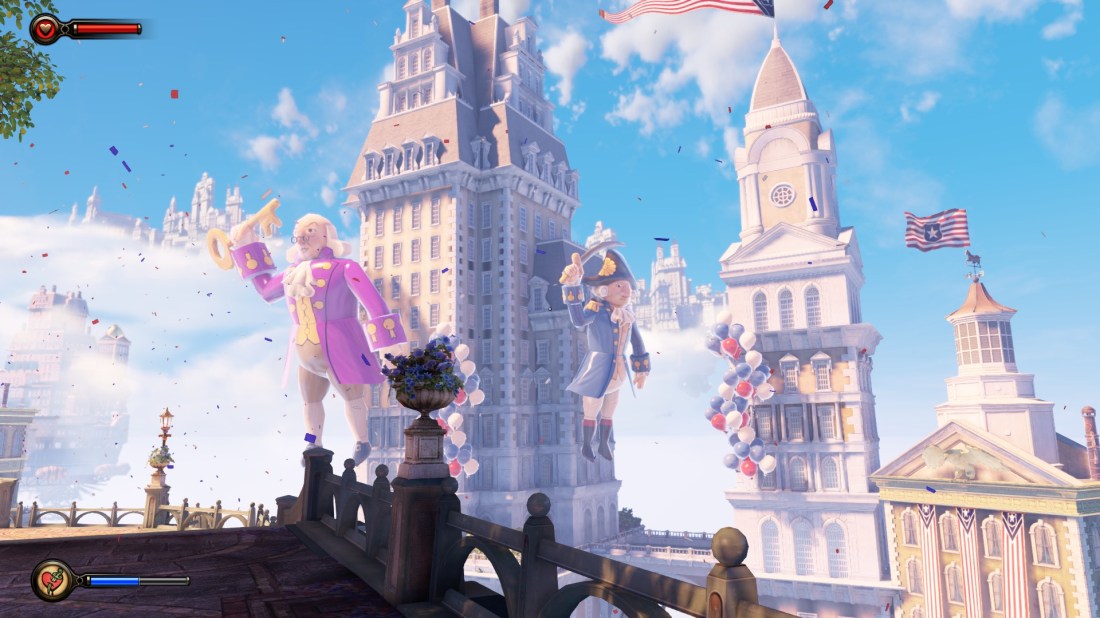
e brilliant and subversive. They’re not. Freed of the Luteces (or as they would say; freed, free, will be free – sod, sods, sod off), I head into the lighthouse where I find a dead body and a warning not to fail. I get launched up into the sky rather than sink into the depths and I’m … I’m in Pixar’s Up the Video Game? It’s kinda cool and surreal, it looks like Bake-Off. I’m forced into a baptism and emerge from the purifying waters to see statues of the American founding fathers. Welcome to Columbia; worship and submission vs Rapture’s self and laissez-faire lifestyle. Why is this called Bioshock? If Infinite is yet another ‘spiritual successor’ to Systemshock (let it go), why not call this Godshock? Skyshock?

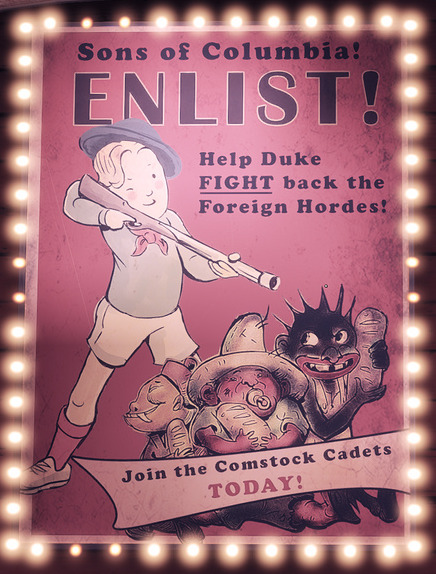
By now I’ve wandered into a fair, with stalls and candy-floss. I like the walking with the enemy style, I don’t even have a weapon or see any threat; but there’s a rot creeping in; I notice white people enjoying the day and POC cleaning up after them, deeply offensive advertising that encourages kids to fear the minority races below. How did we get above though?

Rosalind Lutece discovered how to make an atom float or something and for some reason shows it to God-botherer Comstock, who wants to build a floating city he saw in a vision. They do so, and Columbia is proclaimed a new state of America. It goes on a world tour, announcing the USA’s new superpower status but after firing on China, Columbia is disavowed then disappears. Comstock becomes a Prophet, able to see sins and the future, gaining the devotion of Columbia’s people while his daughter is set to lead the Prophet’s flock to the Promised Land. I bet that’s the girl we need.

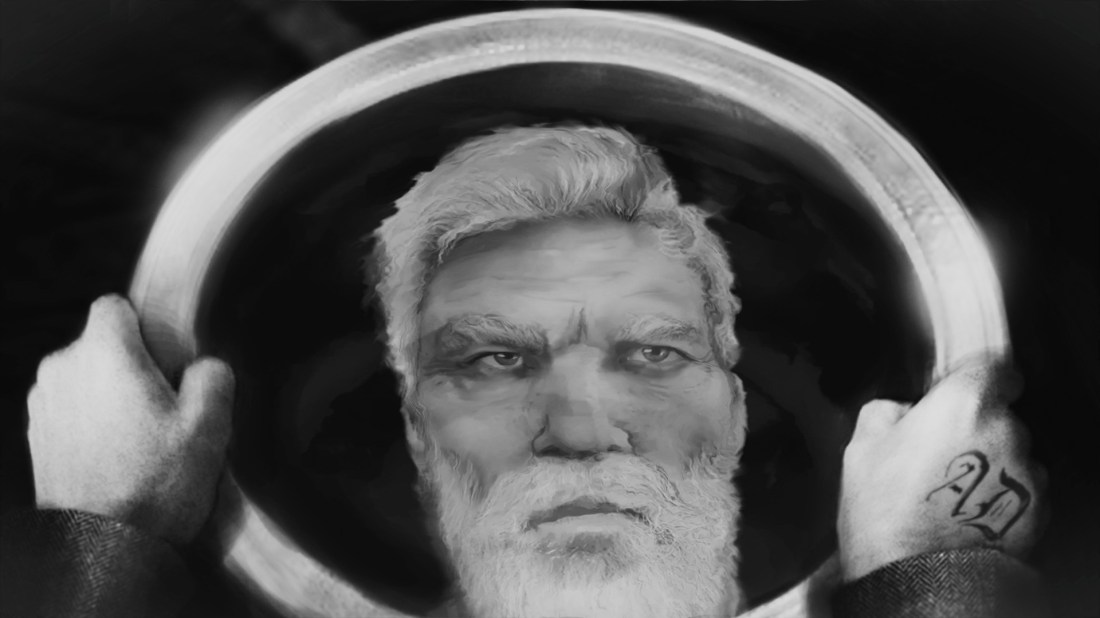
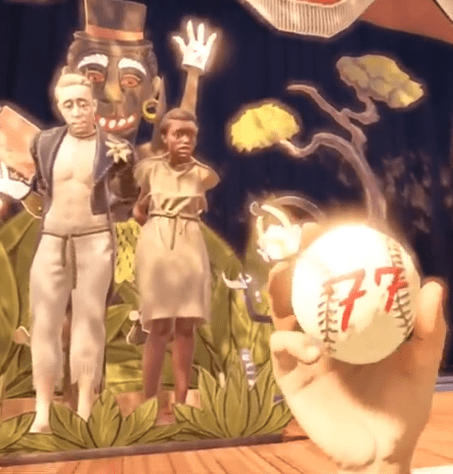
While I am itching to start putting things right as violently as possible, I kinda hope I have to keep up the pretence rather than everything go black and white (as it were) shooter style. I take in a show … and see a mixed-race couple wheeled onto the stage to be stoned (with that symbol of America, the baseball). It falls to me of course, to make the Ceremonial first throw. He winds into the pitch and … the game actually gives me the option to fastball the couple. What? I choose not to and risk blowing my cover; I aim for the ringmaster instead but get stopped before making the pitch by a conveniently placed policeman, who spotted a brand on my hand – ‘AD’ – apparently, the mark of the ‘False Shepherd’ prophesied to steal the daughter. You’d think the Luteces would have warned me about that. Booker even spots it on a poster, warning the populace – but he doesn’t try to hide the mark because too easy. In the panic I murder the policeman with his own melee weapon; the ‘skyhook’. A wrench with gears on it, the Skyhook allows me to beat them to death or pop their heads off like a cork. It’s gory and extreme but they’re racists so it’s okay. The rest of Columbia has scarpered rather than stop the false shepherd, so I guess they’re not evil after all. They even left their baseballs behind. But before I carry on, I could stone a mixed-race couple?

I reload and reach this point again, and this time aim for the couple. Same result; same copper stops me, same branding, same mayhem. That’s unsettling. I expected to remain unknown if I did it. I’m guessing this has a future impact – It is Bioshock afterall, master of the moral choice and this can’t go unanswered; you just play as racist or not? I reload again, feeling a bit disgusted and aim for Ringmaster to set things right. Later, the couple offer me a power-up as a thank you. That was it? I was originally reminded of Sherley Jackson’s The Lottery as that scene started, and an isolated, extreme community that’s lost its humanity, a futuristic paganism-style Wicker Man instead of Atlas Shrugged could make for a good game, but now I’m unsure Infinite is going that way; soon after, the Luteces’ block my way and demand I flip a coin, which lands the same side as has done dozens of times before. Before? Ohho, we’ve done this before haven’t we. It’s about constants and variables isn’t it. That suspiciously suggests all this class-struggle, racism and religious extremism is a smoke-screen for something ‘mind-bending’. The only mind-bending I’m doing is how that justifies being allowed to stone someone. It just bothers me, and it bothers me that this is based in the game series where choice means something; again, call it something else because if this doesn’t have key themes of Bioshock – self-determination for one, it’s going to start annoying me.

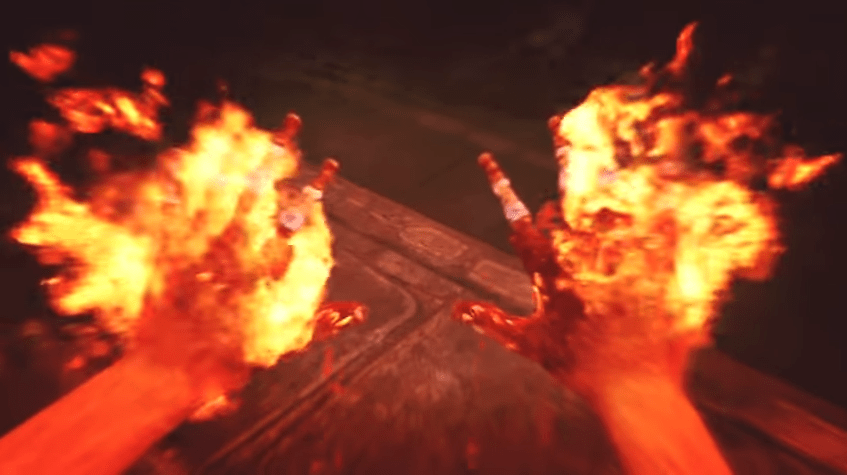
Still, hoping there’s more to it, I press on, now weaponised. Weapons in Columbia follow a standard loadout but you can only carry two at a time because Booker is a pussy. Jack, who was technically a toddler could carry eight weapons. But, we have Vigors.

Why do we have Vigors? Because you’re in a Bioshock game. When you wandered Rapture, you saw advertising for the Plasmids – Incinerate’s ad showed a man lighting his date’s cigarette; they were fads, the protein shakes and slimming pills of Rapture. That they became weapons during the war showed the desperation and ingenuity of Rapture’s people but Columbia’s Vigors already are weapons. Who are they defending themselves against, pigeons? A Murder of Crows to peck people apart; freeze, fireballs, bullet shields; what does your everyday Southern Belle need with a bullet shield? While we meet the occasional copper or mini-boss who’s full of Vigor, not one regular opponent or by-stander has them – so why can I buy them from vending machines?

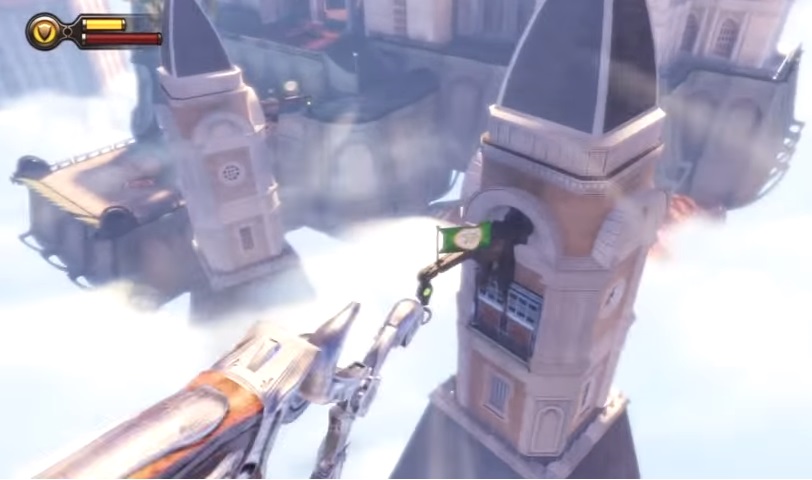
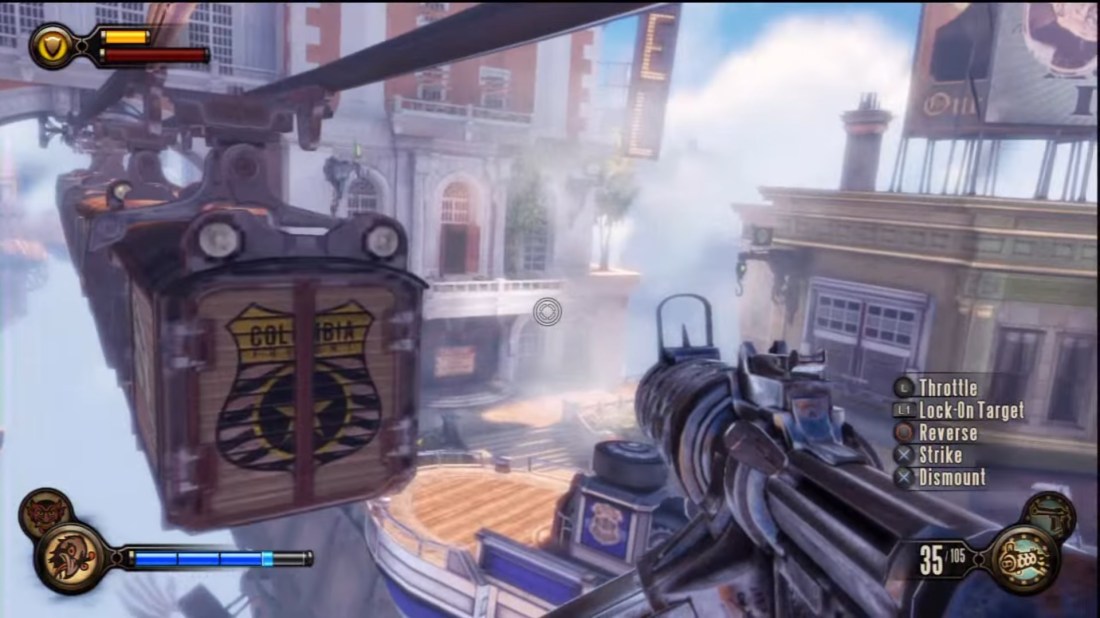
Now public enemy number one, everyone wants to kill us so we return the favour. Tramlines snake around the buildings to ferry goods and you can use the Skyhook to travel on them, leap from building to building or swing to higher ground. Should be great, yeah? It’s not.

Fighting in Infinite is the same as fighting in any FPS – as in, being miles in the sky makes no difference. The Skyhook doesn’t add the aerial combat you’d hope for. Scratch that; it doesn’t add the aerial combat that absolutely should have been key to the entire game; the tracks contain you within the fight and since you’re always flying over cloud it’s not particularly exciting or nerve racking – Booker’s 30ft leaps are explained by the Skyhook being magnetic (?!) and if it’s highlighted he’ll make it, meaning there’s no thrill, no hope-for-the-best leaps. Fighting across floating buildings should be more thrilling than not at all thrilling. I should be leaping through neighbourhoods like Ferris Buller meets Jason Bourne, scrambling from building to building, desperately grasping for edges and ledges and making nerve-shredding jumps – Assassin’s Creed without the ground. And why isn’t there a Flying Vigor?! If I can summon crows surely I can float? There’s not even a stealth or parkour element to it. But the biggest let-down is that you can’t be let down; neither you nor the bad guys can fall off the edge and if you do manage a swandive, you’re mysteriously and conveniently transported back! How can I never feel scared of heights?! The fights are standard as it is, if being in the air doesn’t actually offer anything beyond the standard FPS fare what is Infinite offering? At least the story has some depth. Right?

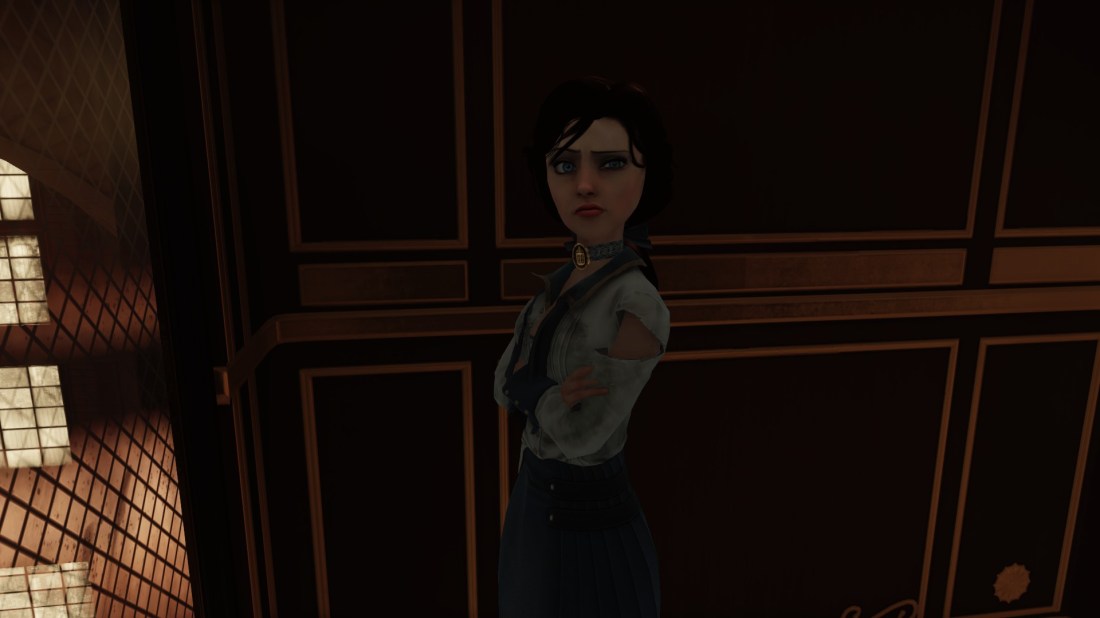
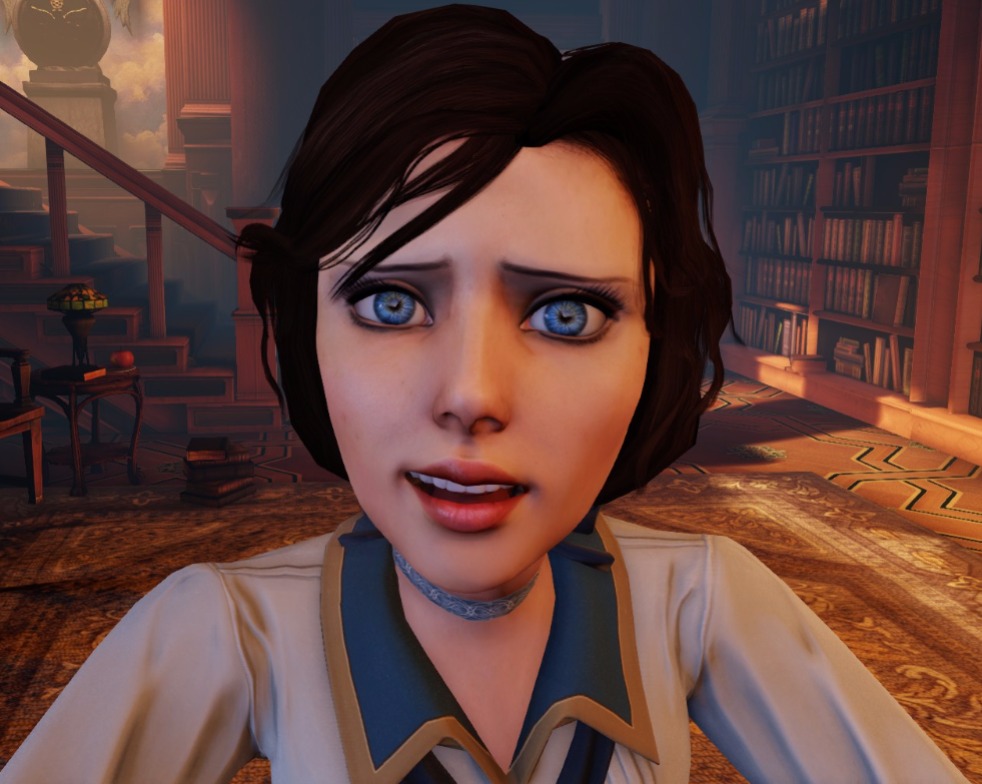
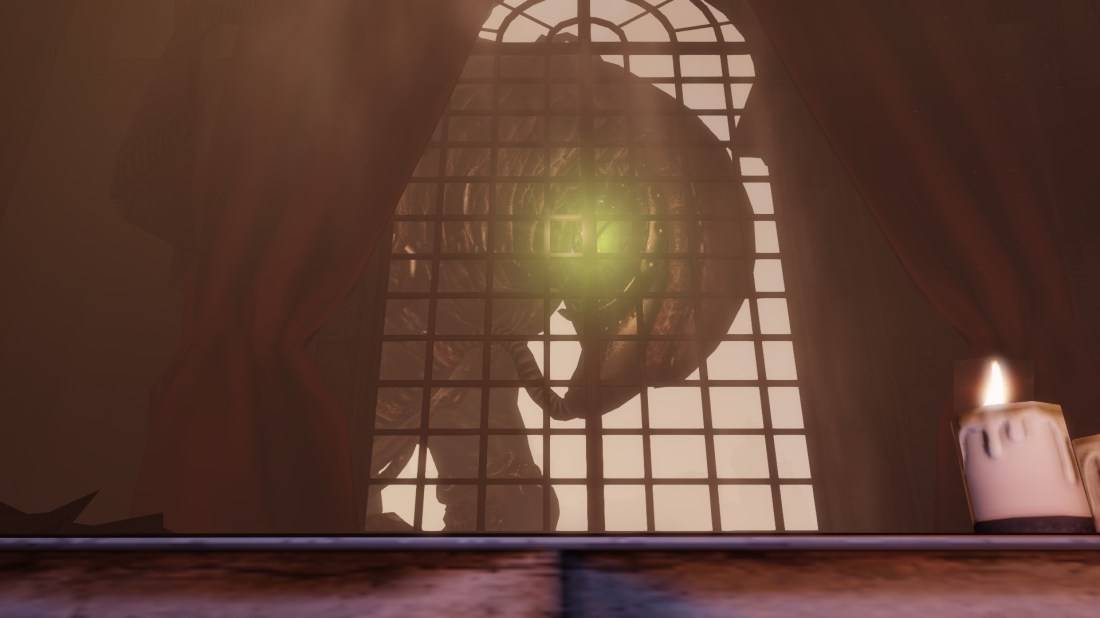
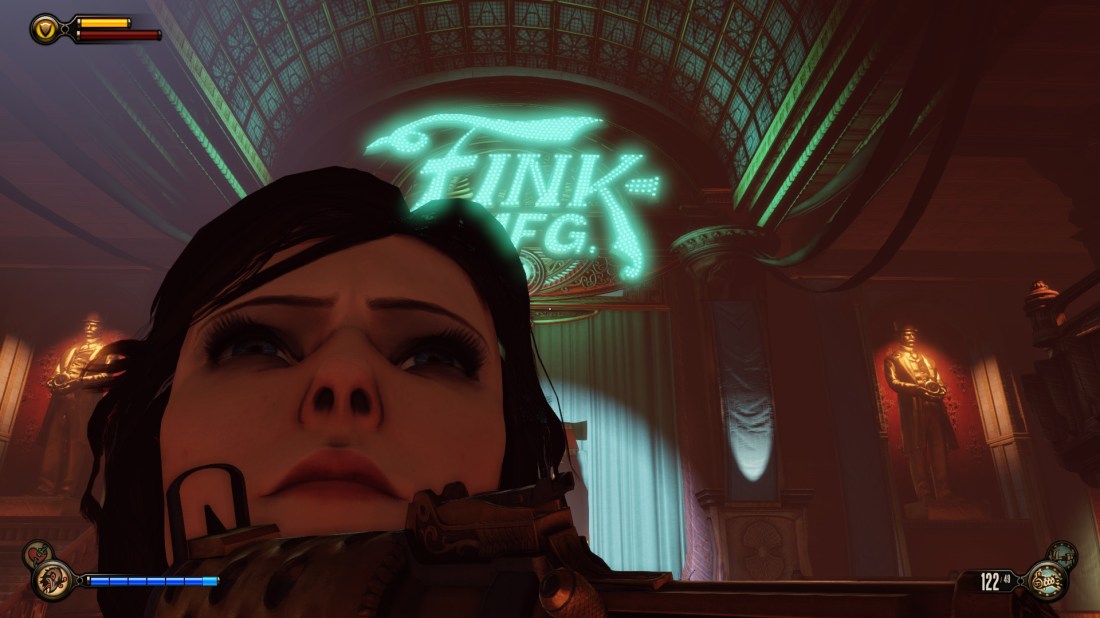
When we finally reach the daughter, Elizabeth, it turns out we’re saving a Disney Princess – huge eyes, over-exaggerated movements and reactions. It’s Belle. Before we can rescue Rapunzel from her tower though, we must get Songbird out of her hair. A huge raven-like mech, Songbird is utterly devoted to Elizabeth. The first time you see him you’re staggered. He’s steampunk Goth and a tragic character because you assume there’s the Big Daddy-style remnants of man inside; his love for Elizabeth is heart-breaking and scary – it’s the best thing in the game until it becomes clear Songbird will only get in the way when we find an exit, and it loses all threat. They’re always great moments but Songbird is as terrifying as it is incredible as it is underused as it is frustrating.

Liz meanwhile, is cute, care-free and excitable now we’ve freed her, and it is fun trying to keep tabs on her as she discovers the world outside her prison tower. The game, at least early on, is split between battle arenas and peaceful spots we navigate through, and during those times we learn more about Liz’s backstory and Comstock’s rise to power, how he’d been baptised and born again, determined to return the world to a God-fearing place. Liz knows she’s a part of that plan, but we don’t have a picture of how; yet. But Liz’s little parlour trick might have something to do with it.

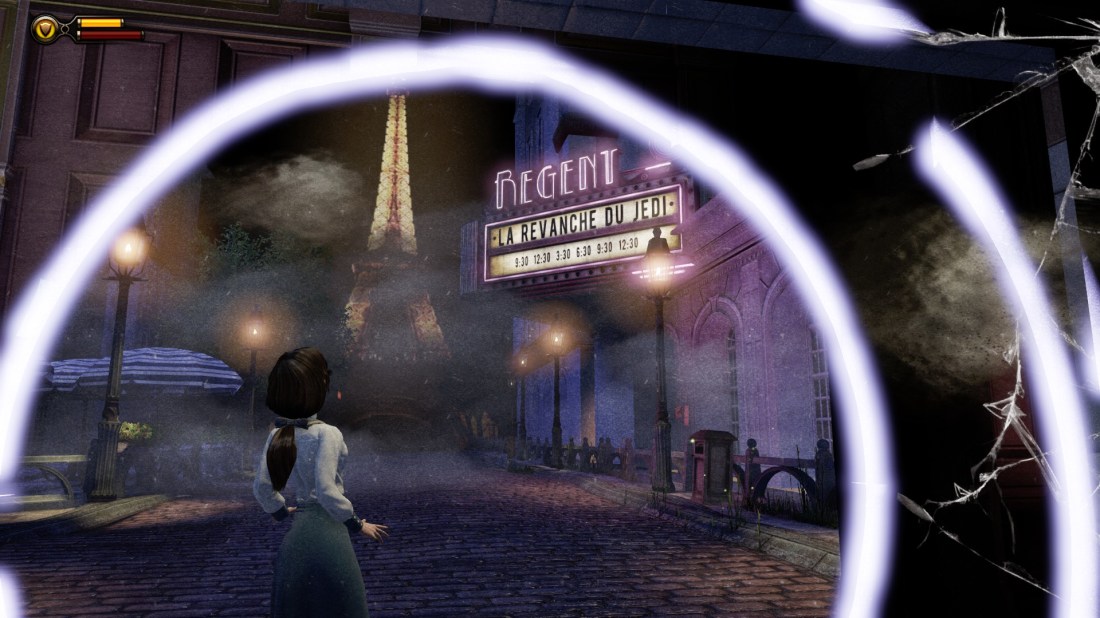
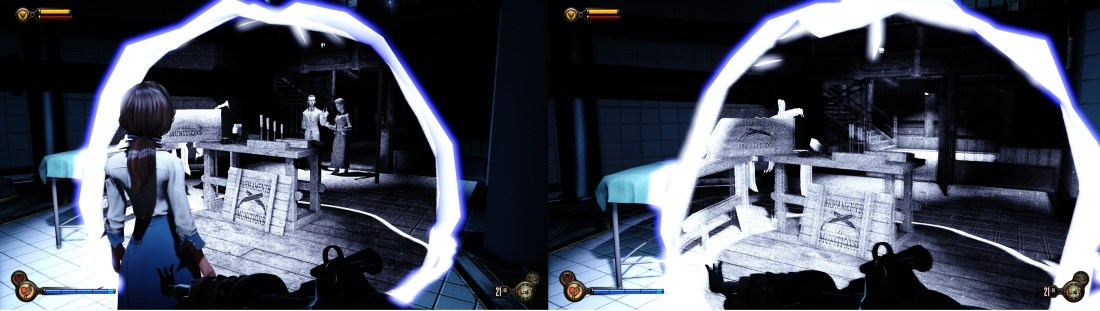
Throughout Columbia we find rips, supposedly in the space-time continuum or something. Most folks ignore them, but our little princess can open and control them. And that means escape! That means we have a weapon! No it doesn’t mean those things. And this is where the stupidity of the Vigors really comes to the fore –why not have Liz open tears like Plasmids, dropping ice, rocks, the sea, storms, lightning, hurricanes, random things that could make the fights better or worse; imagine how thrilling that would be, or tears we can fight through like a shooter Portal, asking her to open them behind bad guys to give us any edge, oh the fun we don’t get to have with this. All Liz can muster is hooks, ammo or an occasional turret and they just signal there’s a battle ahead like an suspicious Auto-Save.

On top of that, Liz herself is a huge disappointment. Firstly, she can’t be killed. Second, if you get killed she nurses you back to health then nicks money off you (She steals from her saviour while he’s unconscious? Why!?) yet points out money on the floor. Thirdly, since she can’t get involved in battles Liz is reduced to passive ammo-finder and shrieker. She’s a little sister with mega-plasmids at her fingertips and all she can do is hide? At one point, she opens a tear into a corn field. To let out a bee. And we still don’t escape. A bee. Meanwhile I’m hanging off an imaginary hook in the middle of a firefight. That makes no sense. But never fear, the Luteces are here. They explain the tears as rips into parallel universes. Okay cool, got it. They continue by using a coin to explain; Heads, tails, two sides, same coin (Gotcha, let’s go) Someone might be dead in our universe but in the other he’ll be alive (Okay!) It’s a matter of perspective (I KNOW), it’s like riding a bicycle, you – Why? WHY?! Why go on about it, it’s not rocket science to a gamer, we’ve been pissing about with portals since Jet Set Willy. The perspective I see is padding – you’ve still not explained why Liz can also create portals to places other than Columbia but only Bees can use them. This is a major fault in Infinite, it seems to thoroughly enjoy telling you how mind-bending it all is, but the more it does it the more you pull your ‘bullshit’ face.

Liz opens a tear into another Columbia where we find a revolution in full swing. The Vox Populi, an under-class uprising is taking the city by force; so we’re gonna fight alongside those guys to explore and tear down nationalism, extremism and racism right? Nope. We were sent into this dimension to get ‘our’ Vox Populi some weapons to begin their revolution in return for access to the airship and escape. I think. We reach the gunsmith but he’s a ghost – Liz explains it thusly; ‘remember we found him dead? How would you reconcile that?’ Well, I’d lie down and, wait … what? Levine smugly claimed theorist Max Planck once said ‘If thinking about quantum mechanics doesn’t make you angry, you’re doing it wrong.’ But Levine is making me angry. Quantum mechanics can make no sense but the game has to; you’re making it all up as you go. That would make Planck angry but what makes me angry is Liz then papers over it with; ‘I don’t know if I brought us to a world or created one’ – where are you getting that from?! You think can create alternative universes with your mind? So think of Paris and get us TF out of here. FFS don’t create an opportunity then ignore it, it’s like Doom giving you the BFG but no ammo.

It’s all forgotten anyway because soon after we have the head of the Vox blocking our exit. She’s holding a child hostage. Now they’re the villains? We’re putting down the revolution? And I kill every Vox that appears, yet the theocracy-loving, isolationist slaver population can’t be shot? Is there a reality where this game isn’t misjudged?

As we fight towards the Airship and our escape, Liz carries on with her wild assumptions and even wilder actions such as reanimating her dead mother. Liz explains the ghost is actually her own feelings of resentment for her father; you what now? And the Mother makes us follow her about opening tears to past events – So not only are the tears interdimensional but Liz can conjure key events from the past she didn’t witness. At one point Liz says ‘I don’t understand it either’. Oh for fucks sake. The only reason this isn’t a Rage Quit review is I want to see what bullshit they come up with next.

We’ll take a breather here and let FBT calm down. But read part two where he completely loses it (Nobody tell him about the DLCs being set in Rapture)

Prey 2017

A SECOND WIND REVIEW

FBT plays Total Recall … in Space.

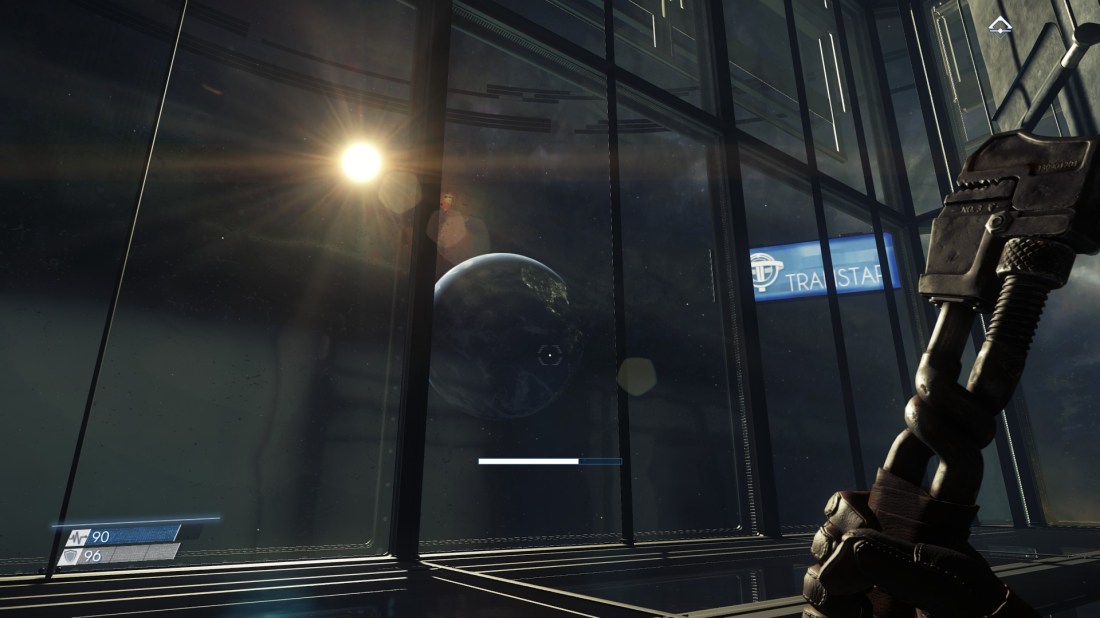
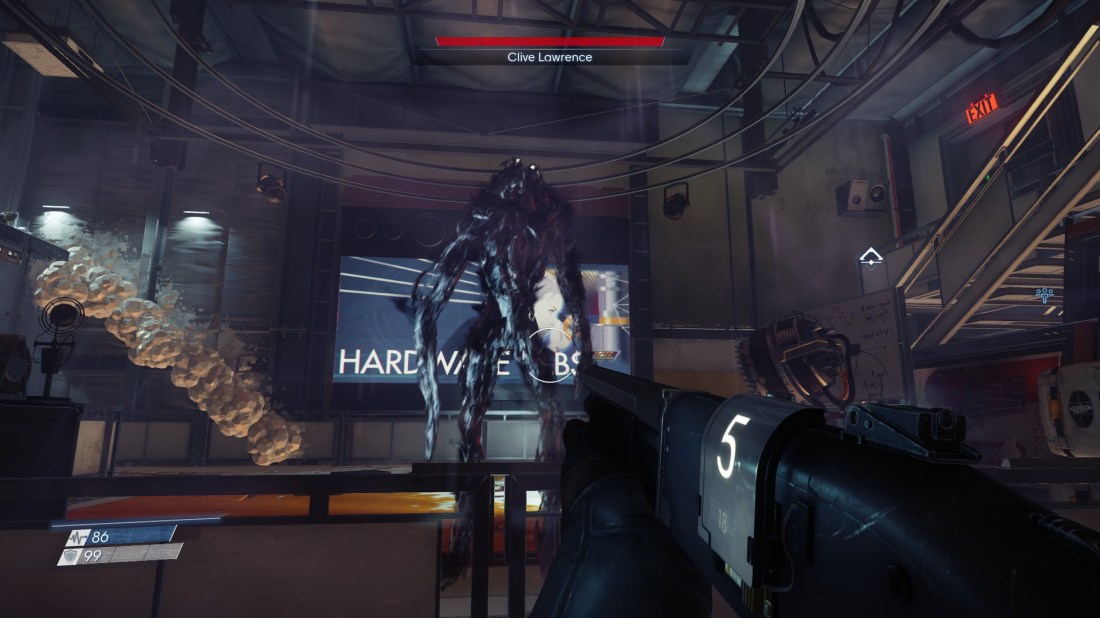
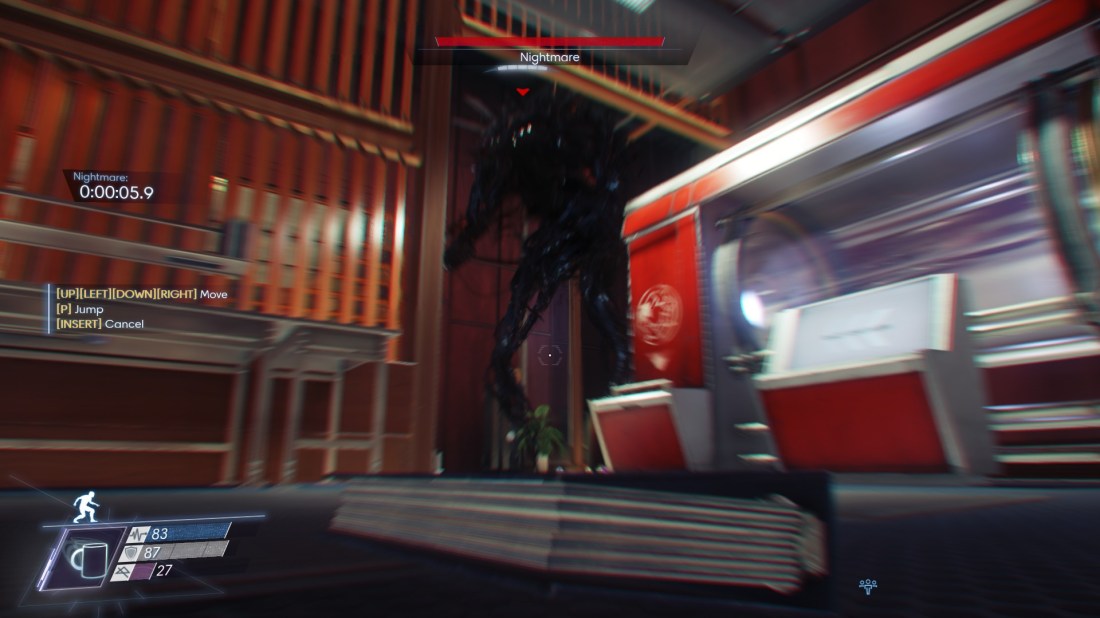
The Prey franchise has the most convoluted history. The 2006 original started in the 90s as a Doom clone. The trailer for the unreleased Prey II showed a Bounty Hunter chasing aliens through Blade Runner. And now this, the 2017 version, a ‘spiritual sequel’ to SystemShock. It might be Prey in name only, but it’s got a lot to live up to.

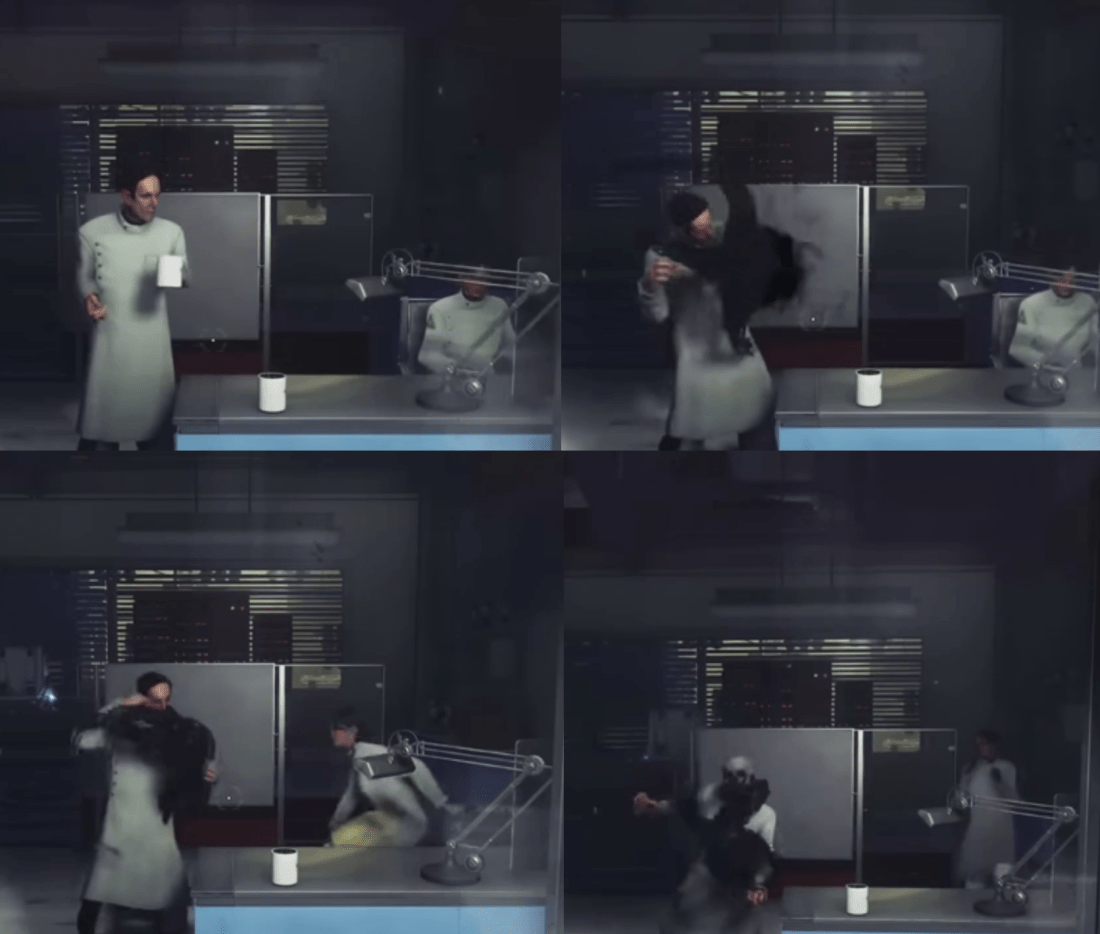
In the near future, Morgan Yu is in the final stages of preparing to board Talos I, an orbiting science station managed by her/his brother, Alex. As she performs a psych test, something attacks the testing team, and Morgan finds herself back in her apartment like it never happened; the apartment was just a façade and Morgan a test subject aboard the station. Breaking out, she discovers the station housed an alien species, the Typhon whose abilities Alex was engineering into products sold back on earth. But now they’re loose and Morgan, with no memory before waking, is the only thing stopping them reaching Earth.

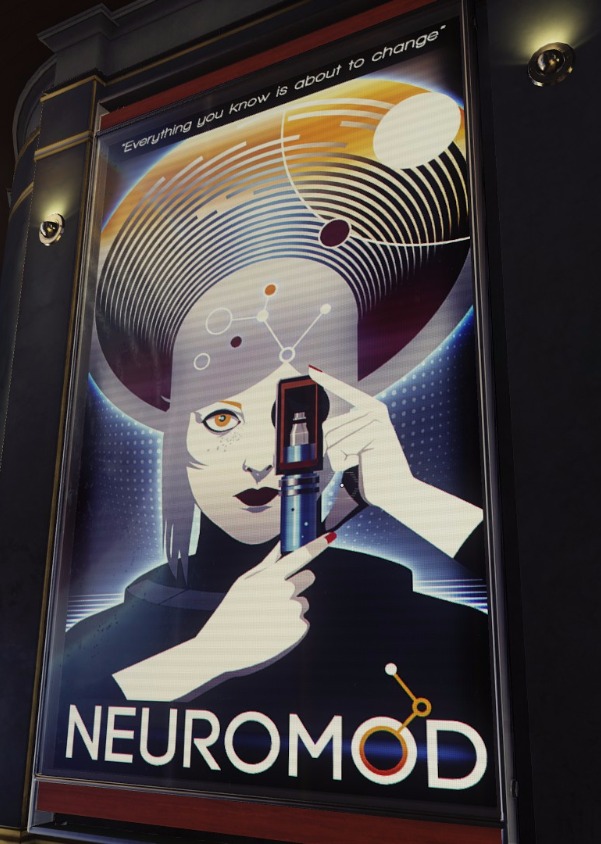
Morgan’s missing memory is explained by Prey’s version of Psi Powers/Plasmids/Vigors; this time, Neuromods, implanted into her brain and allowing super-human abilities, but removing it causes all memories since it’s insertion to be lost, hence Morgan not remembering what happened or suspecting she was a lab rat. But who made her a rat? What’s Alex’s role, and what are the Typhon up to? While Morgan tries to make sense of it all, the station’s owners send a team to put down the Typhon threat the old-fashioned way – and silence any survivors.

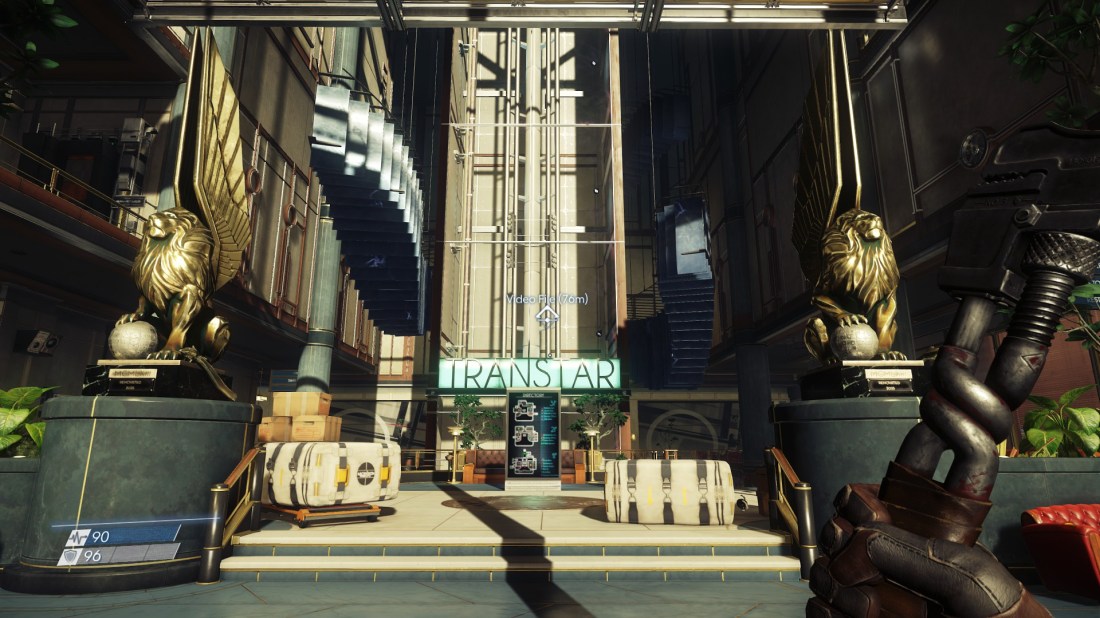
Exploring the station, which is somewhere between Rapture and 60’s-era Star Trek, Morgan is helped/hindered by Alex, contacting her to claim the station is their life’s work and too valuable to destroy while AI-bots Morgan left as clues insist she realised the threat was too great and everything –including her- needs to be destroyed. It’s up to Morgan to navigate the station, save (or ignore) various other survivors and stop the Typhon however she sees fit.

At times, Prey is the best game ever made; but after every great moment –and there are a lot– it flatlines into a trudge until the next set-piece. And there’s something else taking the edge off Prey; we’ve played it before. Not the original, regrettably, but it endlessly calls to mind other games; Bioshock, Portal 2, Fallout 3, Half-Life, Arkane’s own Dishonored – and that’s before we get into the similarities with System Shock 2 (Let it go). It just all feels so familiar that Prey never quite comes into its own no matter how strikingly original it seems.

The Typhon are awesome to begin with. The smallest, the Mimic are the size of a cat but their ability to morph into any similar-sized shape leaves you nervous about approaching almost everything. Calling to mind The Thing, it’s a great to see one scuttle away then notice two boxes on the floor – wasn’t there only one box there a second ago? NO! It was the coffee mug on the table! Panic! They’re really good – and unscripted, they’ll make their own choices dependant on how you might have altered the room, where you are, and you can return to an area hours later and get jumped, cursing yourself for not noticing a desk has two chairs. But the later and larger Typhon can’t shapeshift; they just attack, and while they unnervingly wander unscripted, they always use the same tactic. The Mimics are the most fun because you swap roles; hunted and hunter. The big boys just treat you as prey so you fight or flee; never getting to turn the tables and it’s odd to be more intimidated by this game’s headcrabs than their big bros; it’s not a horror game but the Mimics keep you jumpy and make you waste a lot of ammo, shooting toilet rolls just to be sure.

What we have to shoot with varies. There’s the security team’s pistols and shotguns which can be upgraded and they have a lovely art-deco fused with tech look to them. There’s that scourge of the office, a foam-arrow crossbow – redundant against the Typhon but invaluable for firing arrows through gaps and triggering touch-screens. The big one is the Goo gun though. Firing fast-drying gel, it can then be used to clamber to hidden or inaccessible areas and momentarily slow down the Typhon, but after a while you kinda wish you could take on the Typhon a little differently than point and shoot.

It’s not all shooting though. The Neuromods are broadly split into two groups, human and alien skill tress. Human level-ups are fairly typical; carry more crap, better hacking, weapon upgrades and so on. But the alien side is both brilliant and woefully underused. Early on Morgan recovers the Psychoscope, which allows her to scan the Typhon and learn its weaknesses – like the camera in Bioshock. Once unlocked, you can gain Typhon abilities such as mimicking the Mimic. Anything roughly Mimic sized you can morph into and fully upgrading lets you move as the item; I even managed to get past a security door by turning into a mug on a shelf then rolling under the security glass. It’s brilliant and a crime this doesn’t become a major part of the gameplay rather than just an alternative or stealth option; others such as mind-control, fire traps and kinetic blast are plasmid-tastic but they mostly support weapons for the guns. Interestingly though, the more Morgan uses those, the more Typhon she becomes; eventually security sentries and the like attack you on sight as Morgan starts to lose her humanity. Not that she had a great deal to begin with.
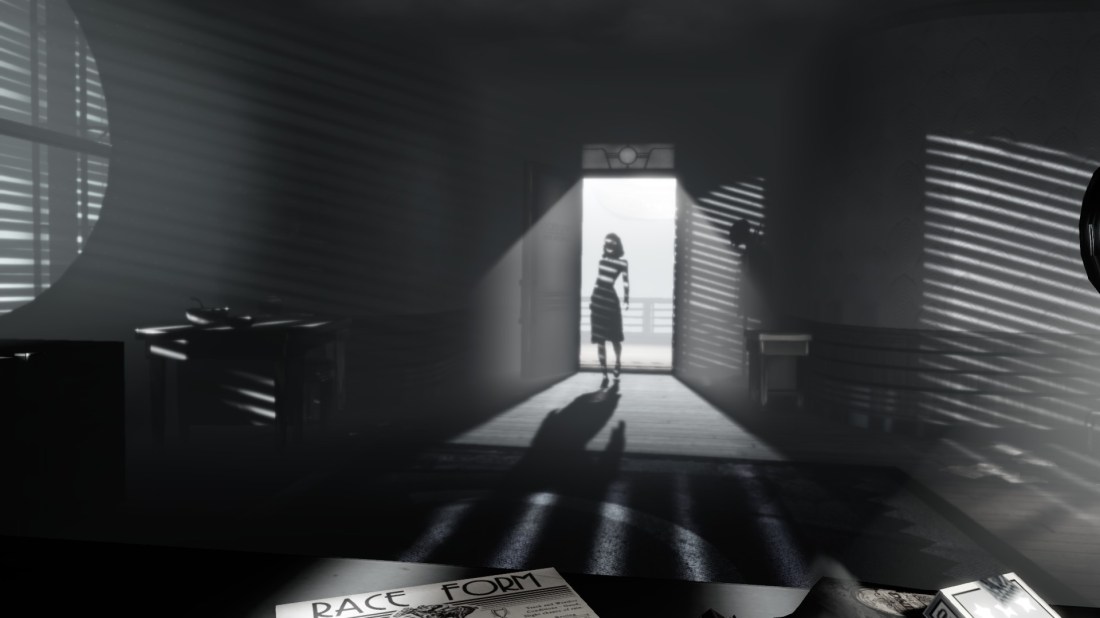
A standard silent hero, we learn Morgan’s backstory from the AI and snippets of recordings, but she never really comes into her own. Obviously, much like Jack in Bioshock, that allows us to play her as we see fit but whereas Jack was ostensibly a stranger in a strange land, Morgan is tied into all of this, even if her mind is now a blank and we should be discovering as much about her as the world she created. There’s strong implications that she wasn’t the pleasantest of people, but the game doesn’t seem to know if it’s her redemption or not; and the whole piece around her choosing to go through the procedure at the start is muddled; or maybe I missed a diary entry. Additionally, as the game progresses we get some serious Would You Kindly vibes and you start to guess where all this is going but it’s just not paced urgently enough to press on – there’s too much non-linear wandering going on.

The station is huge and varies in look and style, reflecting the station’s history, but a lot of the time you’re not doing a lot. A prominent element is recycling. Morgan can pick up almost any waste scattered about to feed a recycler which reconstitutes it into more useful materials. Those can then be added to a Fabricator which generates ammo, neuromods, and you can create or recycle weapons, letting you change your loadout – if you have the rubbish handy. It’s great at first, until you realise you’re spending hours just tidying up the station; it’s not very heroic to get excited at finding a banana peel, and all the traipsing back to the nearest machine to get some bullets gets wearisome. The idea that you have to purge a space station of shape-shifting aliens intent on invading earth should be a sobering, singular thought. Not checking bins for orange peels. Somehow the RPG elements work against Prey, it’s should have been more urgent; Morgan is trying to convince herself blowing up the station with her on it is the only option, shouldn’t we be focused on that?

Further RPG elements appear in the shape of mini-side missions and helping those you meet, and you return to the same areas often, especially the station lobby – it just makes the game feel meandering. But if you get bored of the inside, you can always pop out. You can shortcut around areas by going outside and using airlocks, fix ruptures to decompress areas to explore once back inside again. Floating around in space is a good metaphor for Prey; that seems to be partly down to the game’s obsession with multiple approaches to problems; that shouldn’t be a criticism but it needs to keep the pressure on – turns out I’m not the guy to save the world from an alien invasion, I’m too easily distracted digging through bins.

There’s one standout though and it’s literally a nightmare; the Nightmare Typhon. I was so thankful I met it after getting the mimic power-up; pretending to be a file binder and holding my breath, watching it hunt the room it chased me into is one of the most thrilling moments in the game. But, even that gets samey after a while; depending on how you best it, the Nightmare can return in the space of time it takes you to walk to a Recycler and back.

Having finally reached the ending, forcing myself to stop recycling and actually shoot something, I was surprised at how it ended. There were some curiously tender moments as I made my choices. It wasn’t what I expected. But then, after the credits, we get the true ending which was exactly what I expected. Who watches game credits? This isn’t Marvel. Escape and quit, that’s the gamer way. It is a much more honest way for it all to end but it’s diluted by being ‘hidden’, as if the game wasn’t sure it should have gone that way after-all. But then, Prey as an entire experience is constantly diluted, either by its lax pacing or being so reminiscent of other games. Still, it’s a great ending, and even if you expected it, the way it plays out is the stuff of Bioshock legend.

On the surface Prey is pure class; the station is astonishingly beautiful, the Typhon are terrifying and it’s very believable; the Groundhog Day moment was so effective I assumed I’d died, placed back at the last auto-save and the overall plot is epic. Had it been a little more linear, made more of Morgan and made the Neuromods so powerful you were fighting the Typhon on their terms instead of popping back to recycle some shotgun shells, it could have been a great game; it just tries to be everything to everyone and ends up never feeling like anything more than a Mimic.

2017 | Developer; Arkane Studios | Publisher; Bethesda Softworks
Platforms; Win | PS4 | XO

F.E.A.R

A Blast from the Past review

FBT’s not scared of Alma. Honest. Leave the lights on.

The past

In 2005, society almost collapsed because an idiot released a hack that unlocked a ‘hidden’ sex game in the already contentious GTA San Andreas. Hidden! Secretly adding sex into games for little children to find? The outrage. It was the end times. GTA SA was rated Mature so kids shouldn’t be playing it anyway and the unfinished sex element was removed before release, the hack just reactivated it but Politicians and the Papers ignored that; they had Moral Outrage to peddle. F.E.A.R, released at the height of the Hot Coffee spill, is a perfect example of a game not for kids. Not just because of the gameplay intensity but the tone, the story was pure grown-up’s time – A deep, unsettling physiological mindfuck about a solider being harassed by a Carrie-like little girl while fighting telepathically-linked super-soldiers under the charge of a cannibal trying to find the girl. Not exactly a Teletubbies episode.

The Hot Coffee whohah did one good thing; games were recognised as entertainment like movies or music and should be considered accordingly. The morally outraged moved on to being horrified by the internets. Meanwhile, FEAR scared the hot coffee out of me.

FEAR was like being armed and in a horror film. But you’re not fighting Freddy. This was pure Japanese horror; Ringu, Dark Water, The Grudge. The increasingly horrible story just freaked you out – learning who she was and worse, what had happened to her. The scares often aren’t threatening and that was somehow worse; you’d be terrified, but she … She was just curious. The ‘Unknown Origin’ noise, a little like the sound of Saddako approaching, first seemed a bit of spoiler but became psychological torture; she’s here. Somewhere. You just cowered and hoped she went away. I still remember swinging around on a ladder and she was right there. FEAR’s over ten years ago and I still get jumpy using a ladder in a game. That time I saw her bloody footprints walking towards me but not her. That time I saw her on the monitor – a monitor that was showing what’s behind me. Waa! And the screaming banshee, all spindly and screaming, matted hair, rushing at you, trying to – *Shivers*

I haven’t played FEAR in a long time, but I haven’t played anything that got to me like FEAR. Lots of games made me jump, but FEAR kept me jumpy. It is my favourite shooter from the Half-life to Bioshock period but I’ve not played it since then. I think I’m actually nervous. Time to face … Alma. Even typing her name is triggering.

Shoulda Stayed There?

Oh god, even the loading screen has that screeching sound. Just gonna go pop the lights on.

I’d forgotten FEAR actually stood for something; First Encounter Assault Recon, a spec-ops team investigating paranormal activities. It’s a shame the series didn’t make more of this, the sequels confined themselves to the fallout from the first game so FEAR as an idea was largely ignored. A series about a bunch of Spec Ops investigating the paranormal could have been awesome, The X-Files with a shotgun.

I am The Pointman, a hero so silent Gordon would be proud. I don’t even have a name, just a squad position. I’m all for silent heroes, but given what Pointy goes through you think at least the occasional ‘WTF!’ would be uttered. Pointy is the new kid to the team, and after some friendly joshing from a teammate and some promising interest from Jin, the team’s Agent Scully, we’re off to investigate some mysterious goings on.

What’s been going on is Fettel, a man who’s escaped from a lab at the ATC Corporation, a tech company with government defence contracts. Fettel didn’t escape alone though; he is telepathically linked to an entire legion of ‘Replica’ soldiers and they are tearing through ATC offices looking for something – or someone. He’s also capable of projecting himself wherever he likes. So not just a disgruntled employee with a gun then.

Pointy, who has the odd ability to move faster than bullets, is sent in to scope the place out. Besides Jin, the team we’re Pointing for includes our CO who directs things from a safe distance and another Operator who mysteriously disappears, only to reappear as a ghostly image warning she’s interested in me. Could you stop that mate? Not helping. There’s some nice moments early on, overheard conversations about how weird The Pointman is and the legitimacy of FEAR’s work. It’s a slow burn game, unlike most shooters where you’re dropped into a firefight and head to the opposite side, FEAR unfolds like a novel or film, drawing you into the story not just the bullets.

As we progress, more story elements come to light. We discover the little girl we keep glimpsing – and by glimpsing, I mean witnessing her murdering entire squads with her mind – is ‘Alma’, the daughter of a ATC scientist who discovered she has psionic abilities. Turned into a lab rat, Alma is subjected to various experiments and tests, but quickly grows bored and instead fills her time making the scientists kill or mutilate themselves. Sounds like she’s played the Hot Coffee mod. Fettel is interested in helping her escape, and also starts to take an interest in you. He’s not your battlefield nemesis, goading or chatting on the mic. He just appears right in front of you, says something cryptic then disappears. Usually with blood around his face. Because he’s also a goddamn cannibal who eats ATC employees as a novel way to get info. This game …

It’s not just Alma that drives the game; for much of the time, that’s just background. It’s great how we’re just in the middle of several greater stories – as well as Fettel, there’s ATC’s attempts to cover up the incident and Alma’s father; so much going on conspiracy-wise, Mulder would have a field day. Phone messages, conversations, laptops reveal the depth of ATC’s experiments – it’s so involving that finding power-ups like injectors that extend Pointy’s health and bullettime makes you wonder what else ATC has been experimenting with – and why does Pointy already has the ability? Stick around for the last phone call during the credits. It’s a zinger that would make the Smoking Man proud.

While tangling with Fettel’s Replica soldiers, we also contend with ATC security and later their black ops team; melee fighters with invisibility cloaks. Anything else? Yeah, there’s also manifestations of Alma’s, disembodied demons that come out of the blackness ready to rip you to pieces. Think that’s it. Oh, and the harpy that screams and scampers towards you. Don’t let her touch you, that’s if you can keep your tremblingly finger on the fire button.

As a shooter, FEAR is way, way up there. We’re more than a decade after its release and the firefights easily match anything the latest CoD clone’s managed. The Replicas in particular – you do get a sense they’re linked, and you know they’re just clones but they’re real. They get scared, yell at each other (‘get to cover!’/’where?!’) and act so lifelike it’s unnerving. They stumble and trip if you clip them in the leg, scramble to get away from fire, run for it, act aggressively and it doesn’t feel scripted or manipulated. Obviously walking into areas triggers their appearances, and events are scripted but they don’t seem to be; It’s like playing Online – and you’re the Newbie. They’ll work around you, sometimes taking such long routes to reach you, you’ve forgotten and you just run into them randomly – which seems to make them jump too. They react to teammate’s positions and actions, duck under obstacles, vault over things, change their minds, get intimidated by your tactics – they’re incredible just to watch let alone try to hit. It’s also unnerving how they’re completely compliant but have free will.

Pointy is no slouch with the bullets either. The bullettime he possesses is one of the best I’ve played. Similar to The Matrix, we can see bullets flying about and the detail is amazing as they ricochet off walls and bodies. We’re running through clouds of blood and sparks, real John Woo stuff. The firefights are always frantic, you get constantly battered and bloody, dust and debris fly everywhere ruining your shots, everyone’s hurling grenades about, it’s practically a schoolyard scrap. Pointy can carry health packs and pick up vests; neither last long.

The best/worst thing in FEAR of course is Alma. When she’s not shocking or observing you, she’s making you experience her life at the hands of ATC. It’s terrifying, but you develop pity for her. Then you see her kills littered about, bodies melted to the bone and get nervous again. You never quite know if she’s on your side or not. Some of her actions seem hostile, others helpful. Hearing that Unknown Origin noise hasn’t lost its power, and while the game does occasionally lapse into quickie shocks they’re more than made up by Alma’s other appearances and behaviours. That scene where she’s on the other side of the glass just staring at you and all you need to do is open the door is just terrifying. She’s a ghost, she could just walk through but she doesn’t. She just wants to see what you’d do. You have to walk towards her and that’s just insanely scary. But there’s so much more than scares going on. Alma does draw heavily from J-Horror – Alma is the daughter of Saddako and Ikuko with possibly a bit of Don’t Look Now thrown in, but the abuses she suffers and the story behind it are all hers and as a character, Alma is practically without peers; this isn’t just some entity stalking you – you start to wish you weren’t uncovering her story because you understand why she’s so angry. Just, leave me out of it yeah? No such luck.

The only let down in FEAR, and it is a sizeable one, is the never changing environment. You’re always, with very few and very brief exceptions, fighting through offices and industrial areas. It makes sense for the story, Fettel is storming ATC’s properties looking for Alma and this kind of story works best in places you can’t just turn tail and run out of. But while the intensity of the story can get fatiguing and the Replica’s onslaught tiring, it’s the locations that makes you reach for the Main Menu button. Perhaps had it had more going on within those locations it might have felt fresher, but while the level designs are good, with multiple approaches, interesting obstacles and multi-level areas perfect for smart-arse soldiers and scary children to creep up on you, the environments all merge. I recollected shoot-outs and Alma-scares, but never the locations and as I replayed, I realised without the loading-screen updates I’d have little idea about where I was, where I was going or why.

As we reach the final destination (and really feel nervous doing it, I remember now what’s coming; I think I blocked it from my mind) it’s amazing that even now, ten years after the release, FEAR can still pack such a punch – it’s novel-quality story, terrifying experiences and insane gameplay marks FEAR as one of the greats, either to replay or discover for the first time. Maybe the original Bioshock came close two years later, but FEAR makes you despair at the state of modern shooters.

Alma and her revenge are The Exorcist of gaming – you just want it to stop, catch your breath, remind yourself it’s only a bloody game. Add in the Replica’s AI and the conspiracy that weaves through the plot and FEAR is a masterclass in gaming. It taps into that feeling you get when you’re alone in the house and hear a noise … It’s a good job the moral crusaders got distracted by the internets, I’d hate to think what they’d make of a psychotic little girl melting people with her mind. Turn on the lights and fear Alma.

After FEAR, there were two add-ons. Those were the days. Not money-grubbing DLCs but actual mini-games. The first, Extraction Point continues the story as the FEAR team attempt to escape the repercussions of the main game. It starts off well enough, but quickly descends into more typical horror-survival territory and FEAR elements feel crowbarred in, while Perseus Mandate tries something different. Set alongside the first FEAR, we play a Sergeant who inexplicably has the same bullettime powers as Pointy. This FEAR team is tasked with investigating the ATC coverup and the events of the main game spill over into this one. You’re largely fighting against a splinter group within ATC who use the event to grab the data the original project was based on. Alma makes a few cameos, but otherwise this is largely a straight shooter. It’s fast and fun, the black ops team are a lot more gobby than the Replicas (calling me a pussy for backing off for example) and there’s a great standout where you’re chased by an ED-209 through the office, but otherwise it’s typical shooter stuff. Both were created by TimeGate Studios and aren’t considered ‘cannon’ to the main series – shame, they’re both better than the FEAR sequels and Extraction Point ends things in a more satisfying way than they do; it would have freed FEAR to go investigate other scares. Pointy would have made a great Mulder.

And that fricking ladder scene is even scarier than I remember.

2005 | Developer Monolith | Publisher Sierra

Platforms; Win, PS3, X360

Homefront

A SECOND WIND REVIEW

FBT joins the resistance in Kaos Studios’ Red Dawn-like shooter. Wolverines!

Homefront was Kaos Studio’s do-over after Frontline. More mature than that game’s overwrought gameplay and undercooked war study, the strictly linear Homefront was released in 2011, the year of the open-world sequel; Assassin’s Creed Revelations, Batman AC, Crysis 2, Saints Row 3, Witcher 2, Skyrim – it took most of 2011 to complete those, plus there were reboots Deus Ex HR and Duke Nukem Forever, new starters L.A. Noire and Rage and established shooter stalwarts Gears of War 3 and CoD MW 3; Kaos had the worst luck with their release cycles. Homefront got buried as was Kaos soon after. Is it even worth going Home?

In the 2010s, and using real-world events as a back-drop, North and South Korea form the Greater Korean Republic (GKR) as a war in the Middle East triggers a global economic collapse and oil shortage. The USA withdraws from all non-US soil and unchallenged, the GKR expands across the Pacific and eventually invades America, annexing the Western States and leaving the rest of the US in chaos. Years later, the GKR begins to march again, starting with our town on the American-Korean border. Jacobs, a retired US Marine Pilot is bundled onto a bus headed for a ‘re-education’ camp.

From the bus window we watch the GKR soldiers brutally take apart the town. We see folks beaten and shot – fairly typical for this kind of oppressor storyline and reminiscent of Half-Life 2’s opening scenes, but as the bus corners we hear a woman pleading for her child to close his eyes. We corner just in time to see the tyke’s Mum and Dad lined up and shot, and as he runs to their bodies, the GKR soldiers saunter off. This is going to be a tough one.

Suddenly, the bus is attacked by ‘Resistance’ members Connor (Another ex-Marine, gleefully in the ‘only good Korean is a dead Korean’ camp) and Rianna (a spunky woman who has managed to maintain her humanity and midriff during the occupation). Conner explains they broke me out because they need a pilot to halt the GKR’s advance. I’d better not tell them how badly I fly ‘copters then.

Homefront is a linear shooter in the CoD mold (Conversely CoD Ghosts owes it a debt) but it tries really hard to be more than a set-up followed by a bulletfest; Kaos found time in between the firefights to remind you what you’re fighting for and our actions cause horrible retaliations by the GKR – it’s not shoot, cutscene, move on; everything has impact in Homefront not just the bullets. It’s a world which presents Connor’s resistance as possibly futile rather than ultra-heroic; at one point, while infiltrating one of the ‘re-education’ camps, we’re betrayed by a collaborator but he only cut a deal with GKR if his kids weren’t sent to the camp – the camp he is in. Connor kills him anyway. He doesn’t really care about collateral damage, seeing his mission as one for the country not the individual; he has no pity for those not taking up arms. The closest he gets to grief is angrier. Although he is an asshole, he’s the asshole we need. During that same infiltration mission, we pass a school playing-field to find it’s now a mass grave – and one we end up hiding in. Connor just couldn’t stand to watch them tractoring bodies into ditches and opened fire, causing a helicopter to investigate; the only place they’d not look is in a ditch filled with rotting corpses. It doesn’t come across as a gratuitous or a No Russian moment though; Connor is just a survivor and when he orders us to hide in the bodies, it’s horribly right; whatever it takes. Later, trying to reach oil tankers which are Connor’s goal he uses White Phosphorous to clear the troops; Rianna is disgusted while Connor gets angry if we put any of the GKR soldiers out of their misery.

Rounding off our resistance is a Korean-American, Hopper. A techie, this guy controls ‘Goliath’, the coolest bit of mech-tech since the Godzillabot in Bulletstorm. Goliath is an AI controlled Ground Drone, like a monster-truck with a minigun, emulating D0g from HL2 – but without the cuteness. It’s awesome as it crashes through buildings, runs over GKR soldiers and guns them down. You control its rocket systems, but it’s not just a side-kick; while some missions revolve around ‘protecting’ it, Goliath is a kickass thing to have around and actually saved my life a few times, unscripted. It was great having Goliath trundle alongside.

In look and tone, Homefront feels Half-Life 2; replace the Combine with the GKR and it’s pretty close bar the Headcrabs. There’s no cut-scenes, everything is detailed in real-time and while Jacobs is a Gordon-style Silent Hero he has Conner screaming every five minutes to fill in the silence. Homefront is well paced too. It is the usual two weapons load out, duck and cover, getting shot hurts scenarios where the GKR are smart opponents and better shots, but the firefights are very well staged and its skin-of-your-teeth survival rate makes it just the right side of tough. From decimated suburbia and shopping malls to survivalist camps, there’s not an ounce of fat on Homefront; it’s lean and desperate without becoming shallow. It’s one of those games you find yourself caught up in and can’t stop, like a season of 24. Unlike 24 The Game. The Survivalist mission is a nervy standout, and not just because we’re there to negotiate the use of their chopper (yeah, about that piloting thing…). The negotiations don’t go so well, and as we stealth through the compound looking for the chopper there’s sly commentary on Survivalists being right after all and how possibly, we’re not much better than the GKR given the measures we stoop to. Eventually we get to de chopper and as Connor yells at me to get it in the air, I’m all set to rage-quit , bitching about shooter’s terrible piloting missions. But…

The chopper mission is one of the best flying missions I’ve ever played. It’s like a Fast and the Furious set-piece, completely impossible and insane and I’m finally a Flying Ace. This is what Jacobs is here for, the reason the resistance rescued me and the game makes sure you prove you were worth the trouble. I’m zipping through tunnels, avoiding SAMs and skimming the tarmac as the team jump aboard and hijack the tankers (Hopper and Rianna just throw the drivers out their cabs; Connor stabs and beats his driver). We’re taking out tanks, Humvees – nothing original but the chopper is such fun to fly and fight with as we go through a mountain range, tunnels, freeways, through a town and over/under bridges, defending the tankers and making Connor holler as I blow shit up. I actually miss the chopper once I land. That’s a first.

With that, we join the military for their last stand on the Golden Gate Bridge, and what a stand it is. A non-stop fight to the end, worthy of Michael Bay on a good day – Humvee chases, GKR-controlled Goliaths, jets and ‘copters blasting the hell out of everything, it’s insanely heroic. It couldn’t have ended any other way and I’m glad it comes through. I feel … patriotic.

John Milius was involved as a story consultant and it does have his jingoistic Red Dawn paws all over it; it’s a Boys Own adventure with completely outrageous heroism and extreme moments, but there’s commentary on what it means to be a patriot, on unchecked regimes and superpowers’ role as deterrents. As a shooter, Homefront doesn’t add anything new to the genre but it is a rarity; an engrossing CoD era shooter, and one that doesn’t feel like a tutorial for the multiplayer. It’s a great game.
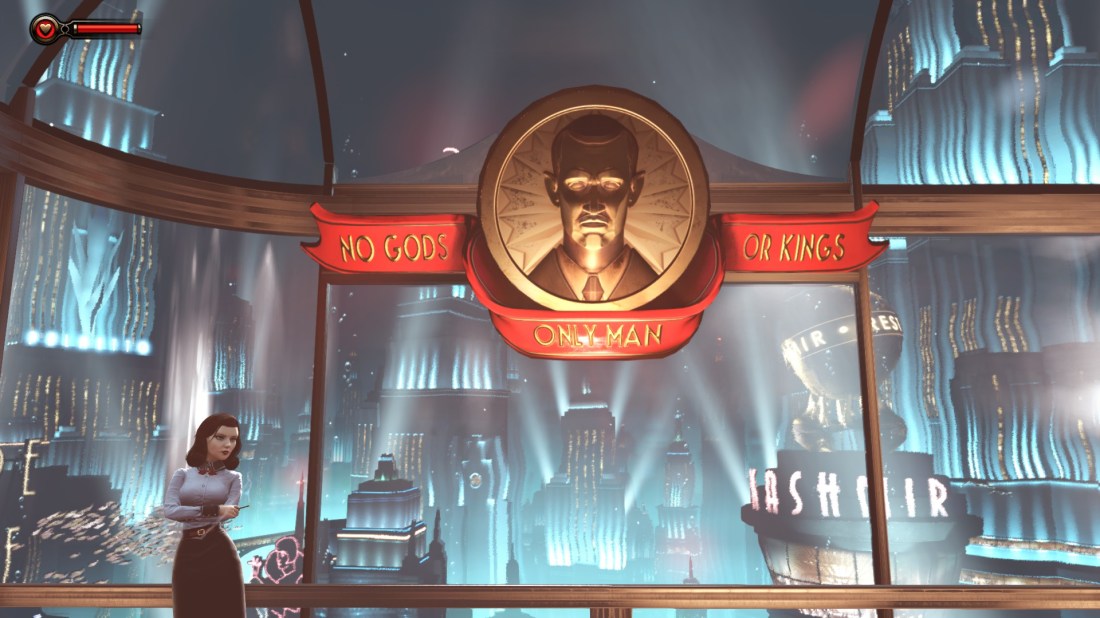
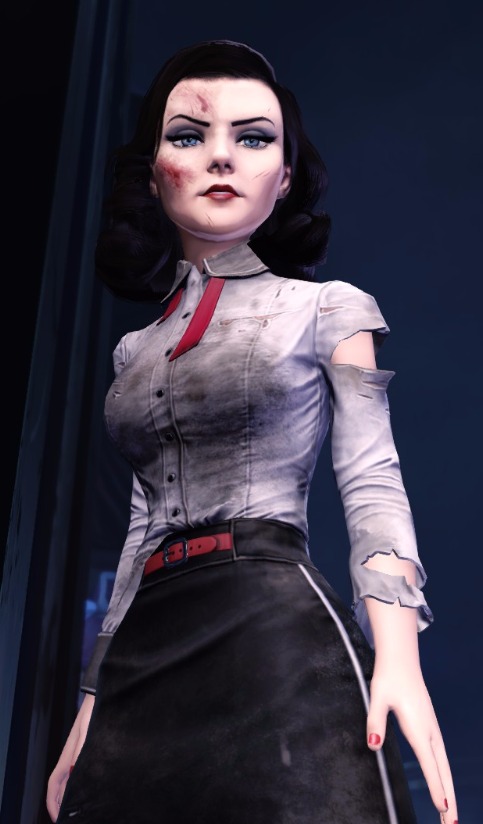
Homefront was Kaos’ swansong after their first, Frontlines. It’s a shame they didn’t get another outing; Homefront shares Frontlines’ DNA but it’s no refined reskin; this game is immeasurably better and Kaos could have come up with something even better third time out. It wasn’t the end for Homefront though, the rights were picked up during THQ’s firesale by Deep Silver, who rebooted it as an open-world game, focusing more on the guerrilla tactics of a resistance. Homefront The Revolution got mixed reviews and missed the all-or-nothing point of the original. Give the reboot a miss and come Home.

2011 | Developer Kaos Studios | Publisher THQ

Platforms Windows | PS 3 | Xbox 360

Postal 2

A Blast from the Past review

FBT remembers Postal 2 as an ironic giggle n’ guns-fest through life’s little annoyances.

He was looking forward to this one.

The Past

The original Postal, taking the phrase for a mid-eighties spate of postal workers gunning down co-workers, featured an insane lead character killing his way through his home town. It generated so much controversy the United States Postal Service tried to sue developers Running with Scissors and it was proclaimed public enemy number one; well, one of three enemies in Liebermann’s ‘worst things in America’ (the others were Marylin Mason and Calvin Klein ads). It’s no surprise then that the sequel, even before hitting the shelves was considered the most dangerous game ever released; this time you’d be murdering in a free-form, open world 3D environment and in first person; up close and personal, just like in real-life the campaigners panicked. It was the end times.

While Rockstar’s Manhunt largely owned 2003 as the game everyone loved to hate, Postal 2 still cooked up some outrage; it was blamed for some unrelated violence, banned from most US supermarkets and even appeared in the Black-Eyed-Peas’ Where is the Love video, showing kids playing it while the band watched sadly (Rather than responsibly taking it off the kids). Fair enough, the BEP’s music makes me go Postal. Briefly known as the most violent and notorious game ever released, Postal 2’s reputation has faded over time, replaced with better, more efficient murder-simulators but for a while it was the Moral Campaigners poster-child. After a poster of Marylin Manson in some Calvin’s, presumably.

Of course, the efforts to ban Postal 2 did the opposite; I heard about PII through reputation not reviews and bought for that reason. Friends and beers gathered around to snigger and giggle as we rampaged and were utterly uninspired to do the same in the real world. I remember PII as a game that tricked you into revealing your psychopathic urges; it wasn’t evil, you were – you could complete it without harming anyone, something the morally outraged ignored (Or more likely didn’t know, since it’s doubtful they played what outraged them so much) – but you weren’t going to play Postal peacefully. It really got the idea that hell is other people and it explored exactly what you’d do if life’s everyday annoyances came with a shotgun. With the world the way it is and me a lot less patient than I was in 2003, I can’t think of a better time to go Postal 2 again.

Still a Blast?

I’d forgotten how PII’s levels are broken out into days, each getting progressively worse. I, The Postal Dude, wake on Monday to the sound of a wife nagging me to fulfil her to-do list; get paid, cash paycheck, get milk. Easy.

I launch myself in Monday ready to let humanity do its worst. Paradise, the town we’re in, looks 15yrs old and while it’s basic even for 2003, it works and it doesn’t take long to get the lay of the land. The inhabitants of Paradise though, are insane and asking for it. They yell, shout, walk into you, flip the bird, vomit, drink, dance, stop dead, turn suddenly, dawdle; standard everyday people. At one point my progress is hindered by a marching band. But I don’t feel like going Postal.

As I head through town, I grab various other weapons and a cat, which takes me back. The Cat silencer, which triggered hysterics back in the day, consisted of sticking its butt on the machine gun or pump-action and it muffled the gunfire. I start to recall PII had many an immature moment but I always defended those as subversive or cynical moments; Smoking crack gives Dude a huge health bump but he also gets addicted and loses more health if you don’t keep using them. That’s obvious, but there’s a nice touch in the way Dude will keep changing the selected inventory item back to a crackpipe. Miss the change and you find yourself accidently smoking it even when your health is totally maxed. After a pleasant enough walk, I reach work; the Running with Scissors office. Meta. Once I’ve found RwS’ boss man the office is stormed by anti-game protestors. Postal 2 had pre-scripted shooting sequences where you’d trigger some violent act by a 3rd party and have to fight your way out and it’s a bit of a shame to have forced enemies, I was enjoying getting from A to B and testing my patience. The groups you encounter will turn hostile whenever they spot you after that scene too, increasing the postal oppotunities.

Besides the protestors, we also draw the ire of book burners, Rednecks and Survivalists amongst others plus there’s the corrupt cops and later FBI/Swat guys and the National Guard, all with itchy trigger fingers. Random fights can break out at any time and ‘Dude’ can catch a bullet or the blame. There’s also the trifling matter of Al-Qaeda who are given to suicide bombings and almighty shoot-outs. The game’s tagline was ‘ever had one of those days’ but I’ve never had a day where Vegetarians shoot me for killing cows. I’ve had days where I seem to spend forever queuing, which seems to be the main source of annoyance in the game but I queue for my milk, pay and walk out then go ‘Oh?’. It never occurred to me to pull the trigger; my patience never wore thin and I wonder if I’ll ever go Postal unprovoked.

This looks tough

About the only kind thing you can say about PII’s FPS aspect is it’s of its time. During the RwS fight the protesters all got stuck in the office door allowing me (and the boss) to mow down most of them. Shooting is very hit/miss and clunky. There’s a huge array of weapons to choose from, melee through to rocket launchers including gross out stuff like an Anthrax-infused Cow’s head. One of PII’s melee weapons is Dude’s penis. He can whip it out and piss on people. Hit them in the face and they’ll stop to throw up. If he leaves it unzipped you can flash people, which sometimes triggers a gunfight; the game often tries to prod a hidden juvenile streak, but after a while you want a hidden satire streak to begin. It can be argued using piss as a melee weapon isn’t supposed to be taken seriously (and if I do, the jokes on me) or that it’s a comment on other game’s weapon choices, but I think I’m reaching; RwS just think pissing is funny.

I reach Wednesday’s chores without really feeling aggrieved enough to brutalise anyone and I’m starting to think PII doesn’t have the balls to go through with its own outrage. It’s just gross-out not sly sarcasm, like they watched South Park and completely missed the subtlety, and that’s not me misreading PII the way some thought Fight Club was about violence – I want the tension, the frustration of everyday life to wear me down and snap; that’s a dangerous game, one that explores or exposes what we’d do if pissed off and armed. A game that really does satirise the moral panic and the righteous right, explore supposed game addiction and the contested causal link between games and anti-social behaviour. P1 was blamed for all that and more, heralded as downright evil and inspiring people to murder; PII should have answered those accusations; and I thought it did. I had in mind an original, cunning black-comedy beneath some media-baiting, a game was both making a comment and not to be taken seriously but … it’s actually just infantile. At first I wondered if modern games had ruined PII for me; thanks to the huge worlds of Skyrim, Mass Effect and GTA it’s no big deal to walk for an hour, take on thankless tasks, wait an age for an NCP to stop talking; queue for five minutes? Completed it mate. But it’s not that. PII just isn’t antagonistic in the way it thinks it is. There’s nods to politics, mass media and moral outrage, but it’s unexplored and buried under offensive and misjudged moments. I can take insults and over-the-line commentary if it has some guts to it, but this is just crass. It’s not social satire to have an arcade game called Fag Hunter, unless I get to blast those playing it – but no one’s playing it but Dude. It’s like PII took lessons from the Howard Stern school of Offend Everyone Equally but failed the exam.

satire.

Without any demonstrable wit or comment there’s a lot to be offended by and with no subtext, no commentary it comes off as nasty; The Al-Qaeda terrorists are not a satire on Bush’s reactionary and directionless War On Terror, they’re caricatures and generalisations; The local convenience store is run by an Apu (Hindu) rip-off yet it’s is revealed he runs an Al-Qaeda base. We visit Uncle Dave’s compound and there’s an FBI/ATF-style cordon around it, a nod to the Branch Davidians siege but what’s it saying? A parody of the government’s handling of it? No, and that massacre is not something to make funnies about without also saying something serious. Homophobia is present in a DLC level that brings Fag Hunter to life. Dude’s wife is known as ‘The Bitch’ and the women are either overweight or seemingly scanned from the pages of RwS’s porn collection. When compared to its peers PII just comes across as late to the party, telling dad jokes. To think Manhunt was the same year; for all its horrors, it truly had something to say about violence as entertainment. PII has a level where Dude catches Gonorrhoea.

By the time I’d reached Friday (Or Sunday if you picked up the Apocalypse Weekend add-on) I’d been murdering and mayhem’ing my way through Paradise for a few days, mostly because everyone by this point is armed and pissed off making it impossible and pointless to even try to do the chores peacefully. Basically, everyone but me has gone Postal. I’ve battled a scrotum-shaped Kids TV Character, got Gary Coleman’s autograph, been forced to become a Redneck’s gimp and pissed on Dad’s grave. Somehow none of it was fun. Even if you ignore the wasted opportunity, the unforgivable tone, the schoolboy humour and the bargain-basement shooter mechanics, Postal 2 even fails at going Postal; There’s a million mini frustrations in everyone’s day, how is it that the only frustration in the game is queuing?! PII just doesn’t have anything to say and with nothing to add to the debate; it’s aged into something insulting not timely; it would have been incredible to revisit PII and find it’s themes more relevant today than 15yrs ago but now I can’t see anything worth defending let alone playing; Worst of all, it failed to make me go Postal.

boss-level queuing

RwS does maintain a strong and dedicated band of fans, and they remain active on their website (which no longer features a Postal Babe of the Day, they’re growing up) – the games continuously get updated and upgraded. 2015 saw another PII add-on and 2017 had a Postal Redux release; which generated zero outrage. RwS just seem to be recycling the same piss for the same fans. But with so much to be really outraged at those days, a Postal 4 done right could be a return to form; Trump, Corruption, Big Business, a nation divided; but it’ll inevitably make fart jokes, feature ISIS and have a mission where you queue up to use a gender-neutral bathroom. And, sadly, it’ll barely cause a ripple. It’s really saying something about the state of the world if a game all about raging against society doesn’t provoke a reaction – RwS should make a game about that moral decline.

As I try to find something nice to say about PII, a game I loved on release, one that I defended and celebrated until now, I find myself arguing I’ve fallen for a meta-satire. The original Postal put you in the bloody shoes of a delusional maniac who kills his way towards an elementary school. A satire on the media hysteria around spree-shooting, hidden as a celebration of it? Postal was RwS’s first game; it’s as if a satirist chose the very medium blamed for spree-shooters to make their point. In Postal 2, every possible contentious subject is literally pissed on; It’s a mockery of hysterical reactions and exposes people’s own prejudices; if you weren’t offended, you were the problem. Postal III was unfinished and unplayable; But, RwS didn’t develop it, they outsourced it – a comment on labels forcing devs to release unfinished games? Its plot encouraged you to follow the peaceful route to get the ‘good’ ending; considering Postal’s entire point, surely a parody on choice-based games like Bioshock and Mass Effect. RwS followed PIII with an apology DLC where PIII was just a dream and Dude teams up with his old enemies – Al Qaeda included – A commentary on game franchises being inconsistent and forgetting their roots. And they sold the movie rights to Uwe Boll. That’s a subversive comment on publishers selling out their games. I get it now, Postal is a digital art installation, a massive social comment on gaming and we fell for it at every turn; both fans and haters are the punchline. Wait, I think I’ve finally gone Postal.

2003 | Developer Running With Scissors I Publisher Whiptail Interactive / RWS

Platforms; Win