Doom's Clones & Killers – Pt3

FBT survived Doom and Hailed the Build engine, baby. With Quake first on the list, is FBT’s quest to find the Doom Killer at an end? (Clue; there’s a part four)

Part Three: and I don’t love Jesus

It’s 1996, and- shut up, TFI Friday’s on. I can’t hear it over all your zigazig-ha’ing. And doesn’t Tony Blair seem nice? When we weren’t distracted by Loaded Magazine or giggling at Viz, we were cheering Cocker ruining Michael Jackson’s Earth Song at the BRITs and watching Oasis make history at Knebworth. Twice. We fell in love with the Spice Girls (well, their Say You’ll Be There video) and cried when Gabby left Big Breakfast. And cried again as mums kept buying Robson & Jerome singles. Just get back on Solider Solider. Or was it London’s Burning? We had Trainspotting, The Girlie Show, Dennis Pennis, Katie Puckrik in Pyjama party, Bizarre magazine, Kate Moss was Heroin Chic and amidst all this creativity and change the only Clone was Dolly the sheep?! Who, weirdly, has a twitter account (@dollyat20) and we still hadn’t had a Doom Killer, now three years old. The only FPS game to gain any momentum wasn’t found in your local Our Price, it was at the bottom of cereal packets. id had gone on a licensing frenzy, milking the Doom engine before it became obsolete and Chex Quest turned the best game of the decade into a commercial for a breakfast cereal and copies are still traded today.

Finally, in June 1996 we had something that kept us up so late we missed breakfast. I disliked Quake intensely on release – all the technological achievements were lost on me; I didn’t care about polygons and 3D, I wanted – expected, demanded – the shock and awe of Doom. Only id could do that, reclaim the FPS mantle after so many clones but to me, their return felt clinical and clean – It might have been a giant leap for game engines but it was small step for shooters; Quake was half the game Doom was.
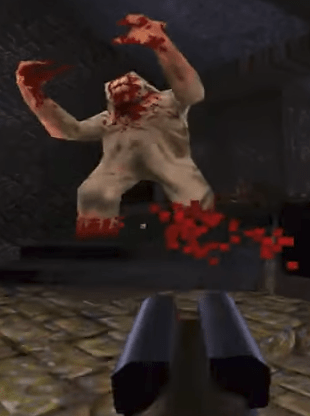
When I restart Quake with a massive clip on my shoulder, I realise it is a thing of beauty. After all those minimal pixels, the similar environments, Quake is incredible, nothing short of genius at work. You can’t exist in this world and go back to Doom and think it’s better. But then, after a few hours play … I was right the first time. Quake is so polished, so perfect, so boring. You never feel like you won a level, that you pulled off a fast-one, a lucky streak, dragged a bloodied Doomguy to the exit hoping the next level has health at the start.

There’s four different worlds to fight through, but that’s not as refreshing as it might seem. It creates a disconnect – Doom had no real plot but you descended deeper into hell as you went, whereas four different worlds feels like starting over and over, relearning the world. It’s four mini-games not one epic gun-fest. The creatures move in realistic ways, the weapons are more varied and the world is full of stuff but you’re never really there. Quake feels at arms-length; Doom reached through the monitor and grabbed you by the scruff.

A key element to Doom was that feeling you were outnumbered, that you weren’t going to survive this; Quake may not have been able to replicate that original experience but it could easily have bettered the against-the-odds, breathless victory you got after beating a Cyberdemon. Quake is Blink-182 to Doom’s The Pistols; I don’t see how it’s considered one of the most influential games of all time. The Quake engine yes, but not the experience. Yet again I find new appreciation for what Doom did.

Quake didn’t kill Doom, it killed the single player. Quake’s multiplayer was an undeniable quantum leap – towards Single Player missions being little more than a five-hour tutorial for the online experience. There’s nothing wrong with Multiplayer – clearly that’s what id thought, given Quake III was MP only and it was done right in Quake – but Single Player was compromised. This is where the rot set in.
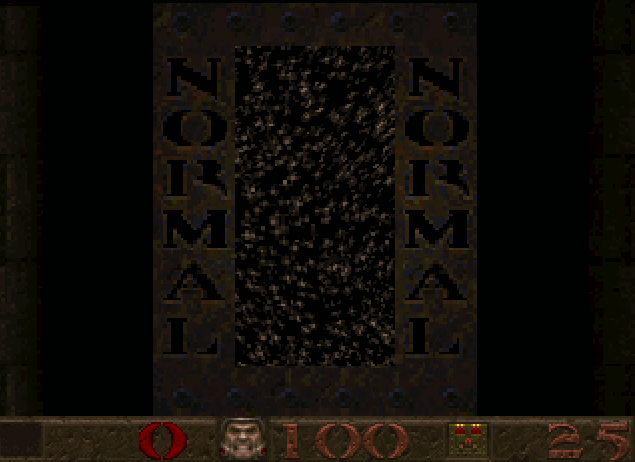
Meanwhile, genres other than FPS were stepping up their games. The Elder Scrolls proved they weren’t just a dungeon crawler with Daggerfall while Tomb Raider kicked off in October of ’96. If Doom was the King then the Queen was Lara Croft, easily the most iconic image of 90s gaming – but it didn’t change things in the way it should; we didn’t see a sudden shift to female leads, women treated any more equally or non-sexually in games. For all of Tomb Raider’s advancements it was Lara’s pixelated adolescent dream-figure that everyone remembered. 1996 also saw the beginning of the Resident Evil series and some company called Valve. It was a hell of a digital year, and what was FPS up to? Chasing a pig called Bessie. What, you too nervous about Y2K to build games?
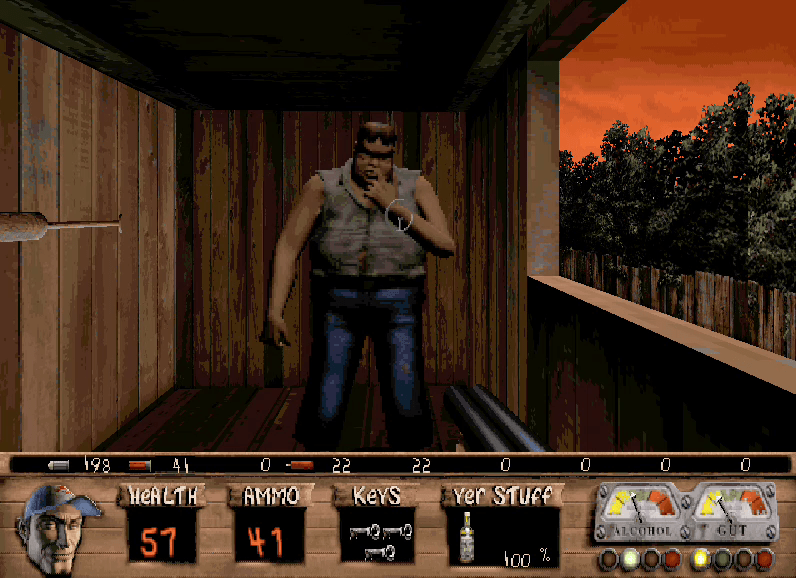
I remember mucking about in Redneck Rampage (April 1997) and not really getting it; two brothers looking for their pig, stolen by aliens who have cloned their neighbours? Now I’m rescuing a pig? How far are those Doom Clones going to push their luck? Back then I found it too silly, sacked it off as undermining a genre that was just starting to get interesting. But after the deathly dullness of Quake, when I load up RR and hear a ‘yeehaw’ I think ‘Let’s do this’.

The opening level, where you cross a road while avoiding a car zipping around running over chickens, gives you an idea of what you’re up against and while I watch the car I get shotgunned by a Bubba in overalls screeching something in Redneck. I start again, trying to work out where the Redneck came from, and get run over. Man, being a redneck is hard.

Soon though, I get my eye in – which isn’t easy as RR is set at night and the blocky graphics of Build are grating after Quake’s smoothness, but there’s something to RR I hadn’t previously got wind of (not the fart-o-meter) – actual fun; we had Duke’s bluster, but otherwise FPS is a very serious affair; what we needed was pure nutso insanity and that’s what RR is; out of nowhere I discover a game I didn’t expect – a really good one. What in tarnation? I’m yeehawing like a good ol’boy.

There’s loads going on, to look at, to press and break, and instead of regular level layout we’re stumbling through farms, shacks, grain stores and trailers – it isn’t nonlinear but there’s a nice open world feel to it, something Duke also touched on and a further step from Doom’s corridors – later levels start to feel familiar once you’re in the towns but it maintains a quirky feel; a little unhinged level-design is refreshing and the enemies – classic rednecks alongside the aliens, including a dominatrix are great fun. Take heed RotT, this is how you do daft.
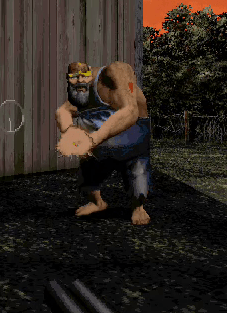
There’s the in-jokes too, and not all are aimed at the redneck caricature; while we’re somewhere between Deliverance and The Beverley Hillbillies, there’s a poster for a Troma movie, references to the artists on the soundtrack and typical alien tropes like crop circles and cows being mutilated – and tons of deep-south wisecracking from the heroes and the rednecks you gun down. The weapons are typical but there’s some homemade, jury-rigged backwoods style changes to the usual line-up, while a new trick is the burp and fart meters. Not exactly classy but they’re a fun way to add a penalty to using health powerups – drinking gets you drunk and impossible to control, eating makes you fart, giving you away. Redneck is really starting to stand out as something else; you can call it a hillbilly Duke but I’m having fun ya varmint – but not too much; it’s a subtly strong game, a lot more unforgiving than earlier FPS. Its psychobilly soundtrack (‘You Can’t Kill Me’ by Mojo Nixon is a standout as is Beat Farmers’ ‘Gettin’ Drunk’, proper psychobilly stuff not yer Cotton’Eye Joe, although now I have that stuck in my head) adds a new level too – instead of Doom’s dirge you merrily sing-along, to the point you don’t end a level ‘till the song’s finished. And you end levels by finding your dozy bro and clobbering him with a crowbar … it’s great to have a hero who instead of being heroic, complains ‘Ma head hurts, ma feet stank and I don’t love Jesus’.
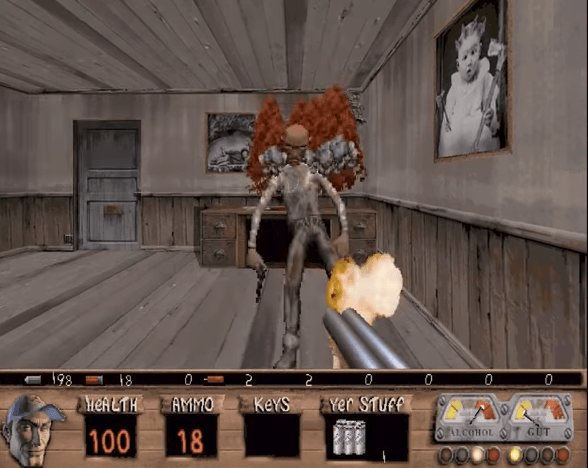
You get the sense developers Xatrix had fun and it’s infectious – Saints Row and Borderlands owe RR a nod; it paved the way for the ridiculous to slip into shooters. It had sequels but RR was perhaps too silly to be remembered; I was equally guilty of dismissing it, but I missed out; open a can of whoopass and get ready to don’t love Jesus. It’s a great Doom-era shooter. Just remember those rednecks pack a punch; it’s not all banjo playing.

Redneck Rampage reminded me of another thing missing from modern games – extras. Games used to include entire Windows themes, screensavers, audio clips, pictures, all sorts. You just don’t get that kind of thing anymore, but I still have the ‘Cuss pack’ from RR; and now I have “I’m on you like flies on shee-it” as my ringtone.

Now, who want-a som Wang?
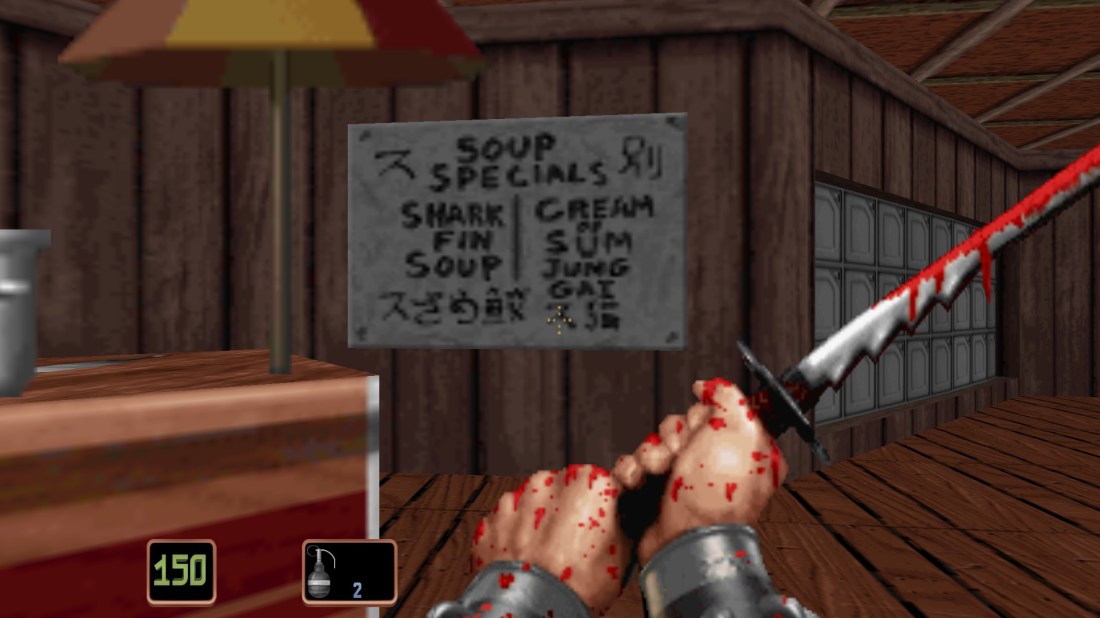
I recall Lo-Wang and Duke as buddies, equal in their abilities, including getting girls to show them their boobies. I’ve been looking forward to Shadow Warrior (May 1997) as I think I preferred Lo-Wang to Duke; he was a bit more mischievous, less Jock more Mock. SW was a straight-faced comedy, like a game based on some 1980s Ninja flick from Cannon Films. An Asian character – the kind created by a bunch of people who are not Asian – Lo-Wang revels in the innuendo of his name and doesn’t take anything seriously. Even when his old boss, Zilla, sends hordes of underworld forces to stop him, LW still treats it all like shit and giggles.
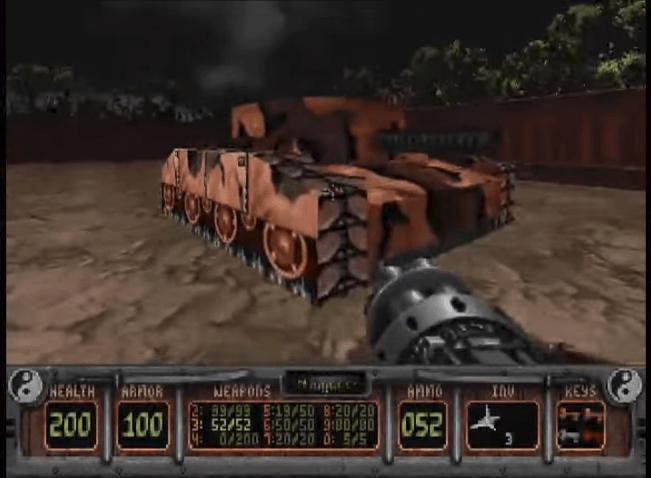
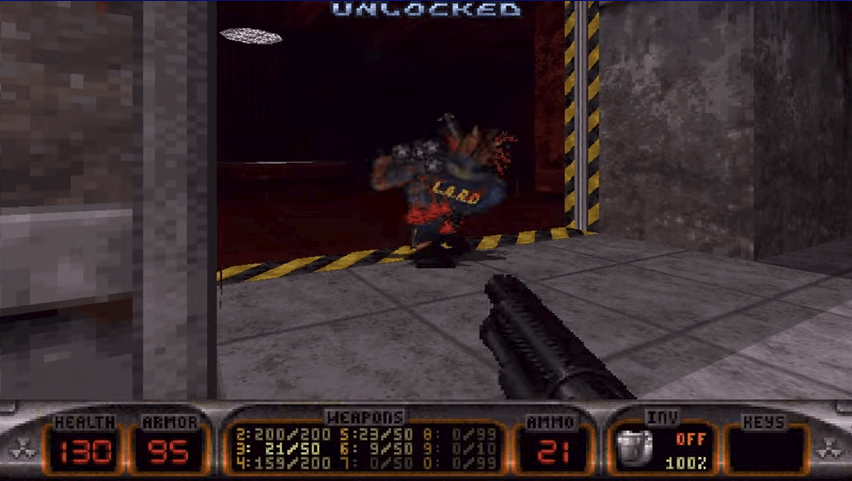
Much like Duke, Lo-Wang inhabits a world that’s fast leaving Doomguy’s behind – Build’s interactivity is at the fore in SW; LW can find repair kits to chug around in tanks, forklifts and boats, there’s puzzles and secrets that require some figuring out and he can muck about with little RC cars – we’re in the world more than ever before. It’s interesting that Quake far exceeds Build in terms of capability and environment, but SW just feels alive, immersive. The art design, which is Japanese influenced is detailed and like DN3D there’s loads going on. But Shadow Warrior starts to wear thin and one of the most important parts, one I previously loved, is to blame – Lo-Wang. Once he gets tiring, the game does. When he’s not making groan-worthy jokes about his name/manhood, he’s commenting on everything – ‘ohhh sticky bomb likes you’, ‘You are tiny grasshopper’, ‘You move like-a pregnant yak’ – he just goes on and on; an Eraser-inspired railgun is ruined by LW saying ‘you got Erased’ Every. Single. Time. And when he’s not commentating, he’s making Bruce Lee noises or giggling to himself. Super-health comes in the form of Chinese fortune cookies, which are puns like ‘man who farts in church sits in his own pew’. Okay I sniggered too and after nothing but ‘Ger, gah, uuugh’ sounds from my heroes, I should be happy to have a Chatty-Cathy for company but Lo-Wang is sidekick elevated to annoying hero.
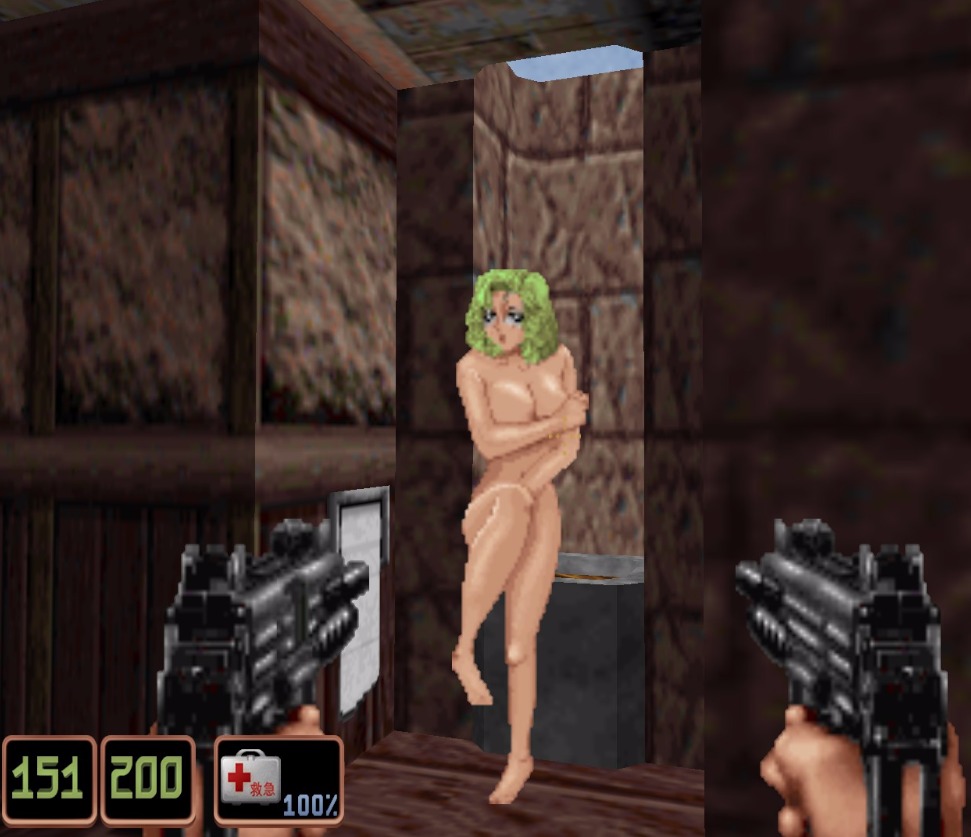
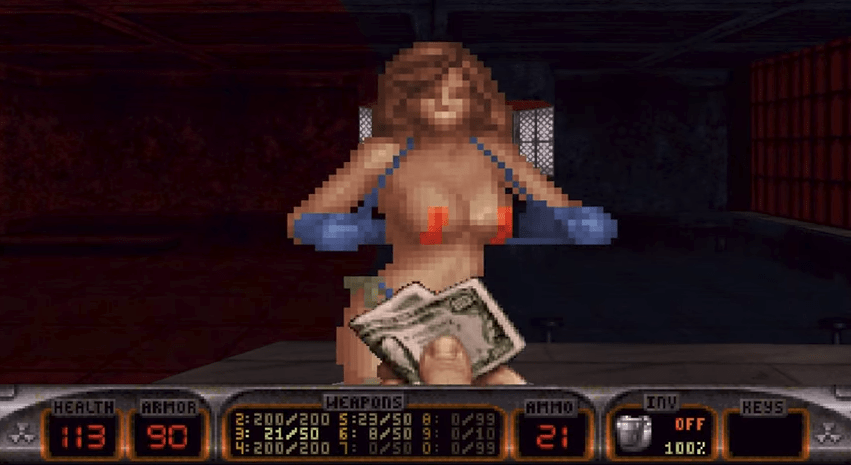
Shadow Warrior is a case of diminishing returns – this is from 3DR again and like Duke, level design isn’t their forte. There’s a lot in it but it doesn’t go anywhere; it’s too reliant on the novelties but whereas Duke saved DN3D, once Lo-Wang grates some misgivings start to creep in. 3DR just cloned Duke thinking that would be enough, amping up his juvenile antics but Lo-Wang perpetuates the Asian stereotype with his ‘Engrish’ accent, Fu-Manchu moustache and kung-fu bants, and his Duke-lite persona falls into misogyny; Lo-Wang just accosts random girls – ‘Lo Wang drop soap,’ he says to a girl he corners in a shower, ‘you bend over and get it’ or telling a girl mechanic ‘chicky, you tighten my nuts’ – Plus, the girls all seem to love his attention, including one he interrupts on the toilet. In one secret area he comes across Sailor Moon on a bed – and asks ‘peaches’ if she’d consider Mooning him. Dick. Duke had an old spice swagger that justified his ladykiller ways and, politically correct or not, he paid strippers for a flash in a strip club; he didn’t sleaze.

I haven’t been this disappointed since my Tamagotchi died. I’m saddened Lo-Wang turned out to be Lo-rent, but it really is the weakest of the ‘Big Four’ Build games; and it’s 3DR’s fault again. They should have just licensed the Build engine and left the design to those who knew what they were doing. It bleeds the Build engine dry, making SW the most interactive, touchy-feely (Sailor’s Moon aside) game so far. But the only one really enjoying himself is Lo-Wang.
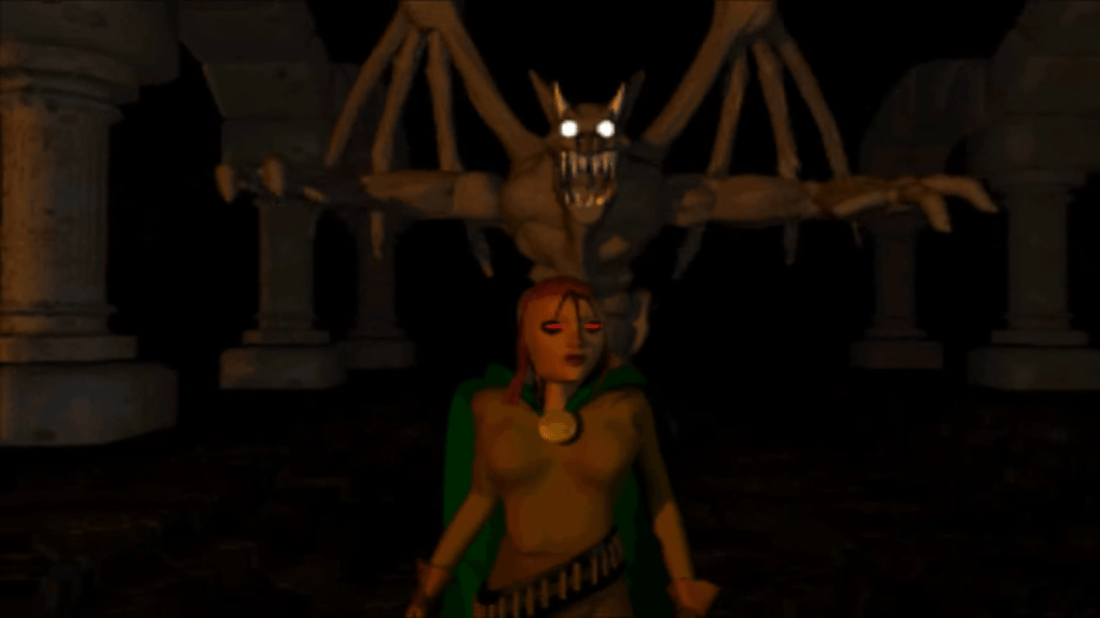
Stand back ladies and gents, we’re about to play the game that, if asked, I would have accused of killing Doom. Blood (May 1997) was the last notable game on the Build engine. Because nothing could top it, obviously. Blood’s Caleb was the Snake Plisskin of the gaming world; pissed-off, dangerous and with a singular purpose. He was awesome – the bleaker, darker anti-hero of the era who sounded a bit unhinged, muttering Evil Dead references and singing Frank Sinatra as he killed indiscriminately. I’ve been looking forward to this. Don’t let me down Caleb.
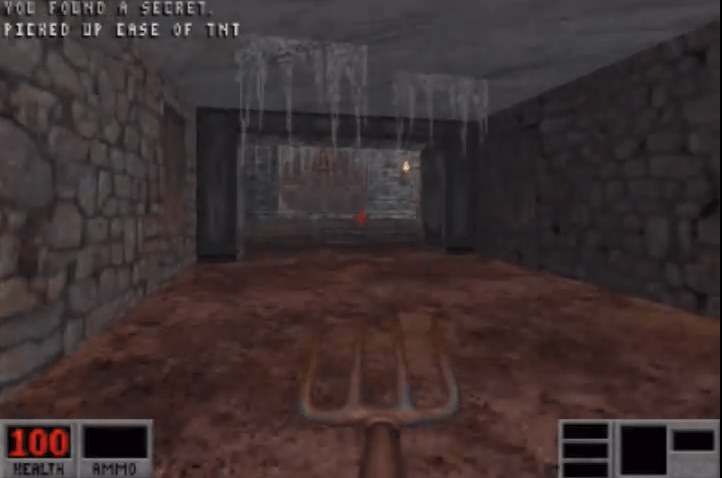
Blood has something all the others didn’t – a reason. This is where FPS actually got a story, a motive to maim your way to the end; The CGI opening sets the scene in a horribly morbid and cool way; Caleb, a brutal wild-west killer-for-hire was initiated into a dark cabal by his wife. Inexplicably, their dark god punishes them for some slight, and Caleb is buried alive after witnessing his beloved maimed by a demon. Escaping, Caleb goes on a rampage in the most imaginative levels we’ve blasted through so far.
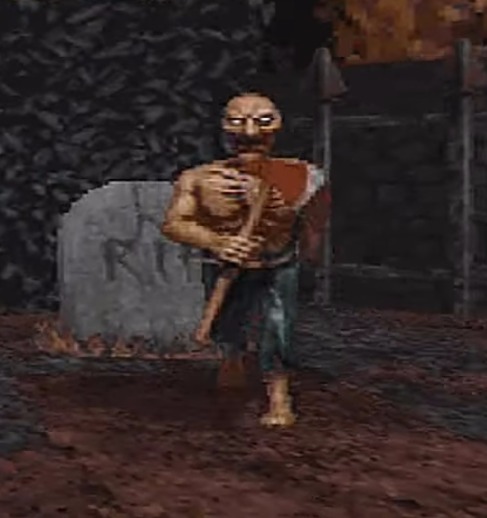
One minute you’re in Camp Crystal Lake, the next fighting through a moving train, the mazes of the overlooked hotel, a fairground-circus, a remake of Dawn of the Dead; each level is a world we recognise from our VHS collection not Doom – Every other FPS you’d struggle to recognise one level from another if they were in a line-up; But Blood’s levels are all unique and fantastic to maim through. You never get bored in Blood – the story, level design, references, there’s so much going on yet it isn’t a distraction from some killer action; Blood is relentless, and the boss-fights for the first time are not OTT arena fights – they take some strategic foot-work and weapon-picking. The weapons too are nicely macabre – voodoo dolls, tommy-guns, his melee weapon is a pitchfork. When he lobbed dynamite with bloody results, Caleb cackles maniacally. Now that’s a hero sound, not Lo-Wang’s ehehehehe kid-being-tickled gurgle. Elsewhere Caleb’s rasping voice quotes everything from The Crow to a Harrison Ford The Fugitive/Air Force One mash-up … and he’s got sarcastic putdowns; upon finding a dead Duke Nukem, he double zings with ‘looks like I got time to play with you’ followed by ‘shake it baby’. If Shadow Warrior was an ill-conceived nod to Big Trouble in Little China, then this is John Carpenter’s The Thing with a nice sideline in They Live.

What is interesting though, is Blood’s story; something we’d not needed or wanted before. But Caleb had his reasons, and each episode ended with his avenging his wife and friends, headed towards a finale -with a god no less- only to leave empty-but-bloody-handed.

Of all the Build developers, Monolith is the one to really make the engine sing; sitting perfectly between SW’s novelty distractions and Duke’s outrageous set-pieces, Blood is brilliant and should be played just see how a shooter should work. Mindless killing and a mindful plot, it’s a perfectly balanced FPS and one of the best shooters of all time.
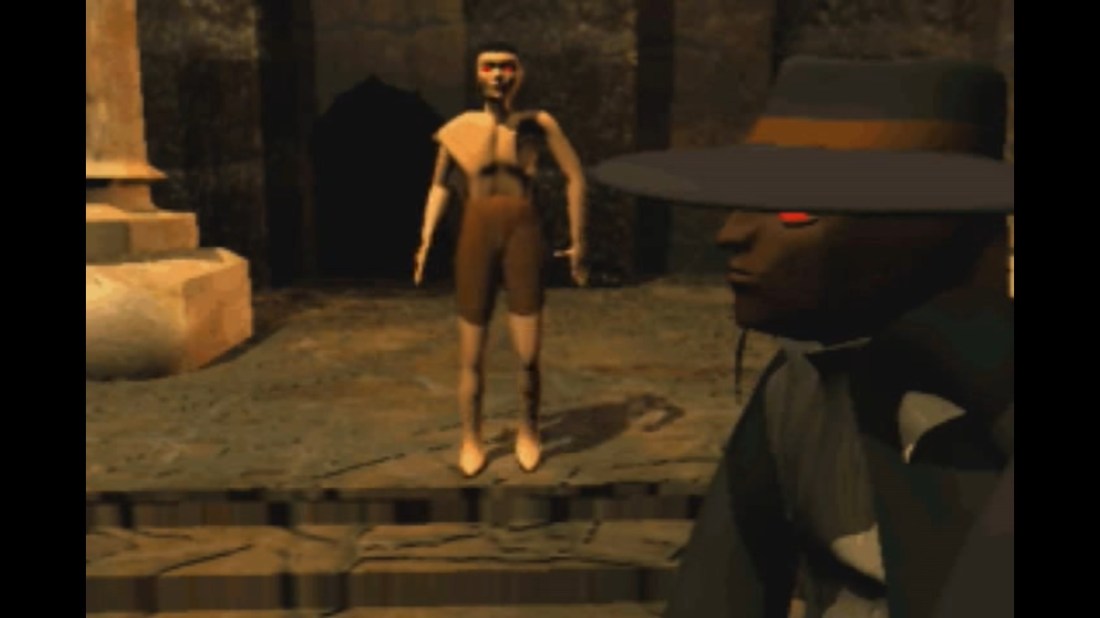
Blood didn’t kill Doom, the story-driver concept only really exists in the cutscenes and it still owes a debt to Doom but it provided that little edge as the endless blasting of FPS starts to get a little tiring. Blood is the first to seriously wound Doom.
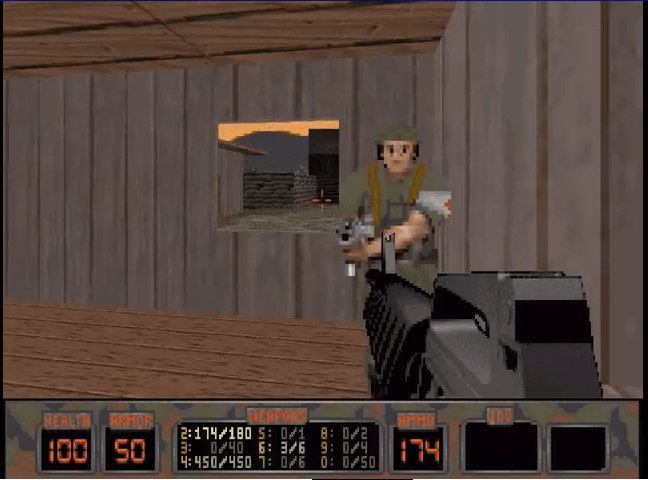
There were Build games after Blood; TNT Team released Nam in July 1998, a reskin/mod of Duke with RotT-style scanned photos and flat environments. It did have some nice touches, like picking up orders from NCPs and having followers. Oddly, I didn’t see a heads-up display. But it had a semi-sequel in ’99, WWII GI. There was also Extreme Paintbrawl in 1998; let’s not talk about that. One thing to talk about though, is the argument that Build weakened the sincerity of FPS; that as soon as we were able to ask strippers to shake it baby, it became a battle of novelties and distractions; the visceral experience got watered down. I don’t think Build is to blame for that, indeed Blood’s bare-bones plotting makes it the best of the bunch – but 3DR were to blame; they just weren’t natural level designers like Romero – instead of using Build to enrich the Doom experience, they made theme parks; Romero raised level design to an art form, able to imagine not just the world, but you in it and then make it exciting to fight your way out. 3DR settled for boobs.
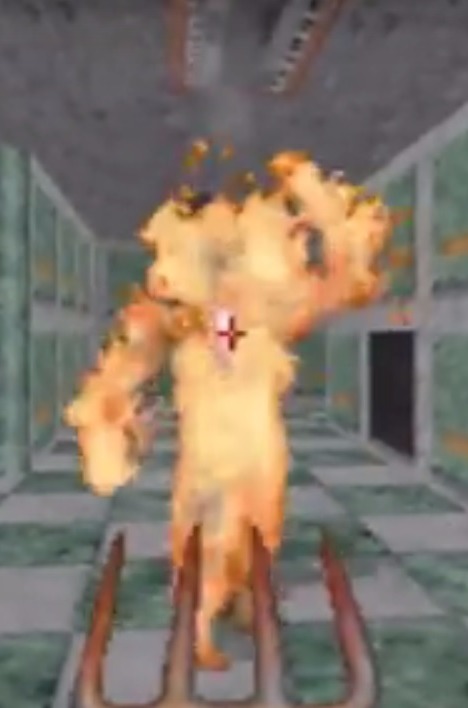
And that was it for Build, which really disappoints me; besides the technical marvels, Build games made you feel like anyone Kurt Russell played in the 80s; they were filled with refs to Evil Dead, John Carpenter, Sly & Arnie’s best 80s characters, even Elvira; so much was threaded through Build’s games that you felt as if the developers were mates; they were into what we were into – this was back when being a gamer was looked down on by Jocks and their new extreme sports like surfing on snow – Build let us know we weren’t alone. Build let us be heroes.

It’s a shame 3DR decided to spend all of their cash and good-will on the twelve-year development of Duke Nukem Forever; to piss away Duke Nukem was one (upsetting) thing, but to ignore what they’d achieved with Ken Silverman was unforgivable; just imagine what could have come next. Instead, Silverman stepped away from the gaming industry and became “CTO of Ardfry Imaging, responsible for the PNG Compression tool PNGOUT” which doesn’t sound like something Duke or Caleb would say. But I’m sure it’s had an effect on my digital life. He only made one engine, yet Silverman’s contribution was massive and it entertained and impacted beyond the games it powered; All hail the real king, baby.

So, Build was a shot across the bow, but no Doom-killing cigar. Onward. Maybe Elexis Sinclair has something to do with it. I’d better frisk her.

In Part Four of this increasingly indulgent look at the classic FPS era, FBT trades in his Portable CD player for a MP3, invents conspiracy theories to explain Doom’s death and spends most if the review trying to get in an Anna Nicole Smith reference.
Doom’s Clones & Killers Pt2

In the second part of Previous Weapon’s FPS retrospective, FBT makes like David Suchet and questions the clones about the identity of the Doom Killer.

Part Two: All hail the King, baby

Doom was out, and everything had changed. Even over at Apple. Bungie’s Marathon kept them going instead of Doom. It was a shooter with a storyline – a what? We don’t have time for that, Netscape Navigator was out and that meant 0.5% of us had access to the WWW – when we weren’t watching a Ford Bronco drive down the freeway that is. But the biggest news of ‘94 was still 93’s Doom. No one had touched it; well, there had been some inappropriate touching – a Doom Community sprung up thanks to the web, trading their own levels and mods; id’s decision to let gamers mess with Doom’s level design was another innovation and it turned kids into level designers and FPS into a multi-faceted hobby; playing, building and deathmatching. Doom also popularised web-chat, file-sharing and encouraged the uptake of the net; the world was changing, for us anyway. While our parents watched Blind Date and Beadle’s About, we had Terry Christian egging someone on to eat a sandwich of toenail clippings, were frothing to go on Nemesis at Alton Towers, whispered “UVAVU” while watching Geri and Kylie snog and the 11.30 Diet Coke break advert. The nineties were in full swing.

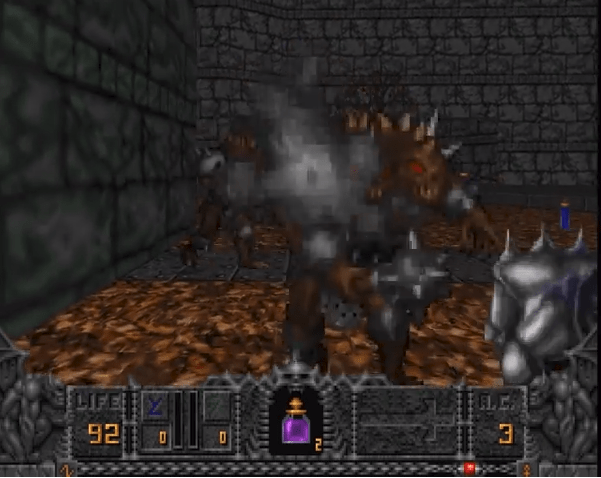
Released in December 1994, Heretic was the first Doom Clone but it wasn’t a cash-in; created by Raven, built on the Doom engine and exec-produced by Romero, it was less a clone and more a companion. You charged around locations taken over by a Saruman type, using magical weapons (a bow standing in for the shotgun, a claw that fired spells is your chaingun) while taking out Fantasy versions of Doom’s hell creatures. Okay, Heretic must have seemed a bit twee back then, a bit D&D; who wants to be in Dad’s Lord of the Rings when we had our Doom?

While Heretic is Doom reskinned, the art design is great and it’s learnt a lot about pacing and level design – It doesn’t have Doom’s aggression, you’re an elf waving a magical staff around medieval villages so not as cool as being a squad member from the Sulaco like Doomguy, but it’s good to have an alternative to Doom’s military setting which was replicated by most of the other clones.

Once I’ve got my eye past the minimal pixels and basic movement, I realise Heretic is really good; it has a great ambient feel – we hear groans and grumbles, chains rattling and whispers, the art design is really nice and it’s not stuffed with creatures; there’s areas and secrets to explore rather than just blast through, and it features an inventory (including a spell that turns creatures into chickens) – it gives Heretic an adventurer feel as we stalk through cathedrals and Mordor-like locations. When we do meet the bad guys though, they’re top notch; glamorous, chanting Wizards, giant skulls and the screeching little imps. It’s a lot further from Doom than I remembered, and while it’s possible they just got to work before Doom clone fever really gripped, maybe Raven are really good devs – they did go onto Star Trek Elite Force and Jedi Knight Outcast. Heretic doesn’t immediately call Doom to memory surprisingly enough, it stands up well despite its age and it’s got its own personality; I’m enjoying it for what it is rather than running on memories; it’s a great shooter and worth a replay. Heretic is memorable for another reason – It’s retail disk included DWANGO, the first programme to let you dial-up n’ deathmatch with folks further away than an LAN cable could reach. Online gaming was here.

I really liked Heretic. It’s one from this era that didn’t get a remaster and that’s a massive shame. Reboots you can keep but a refined Heretic would be awesome. One from this era that did get a reboot was Rise of the Triad (Feb 1995) and I have no idea why.

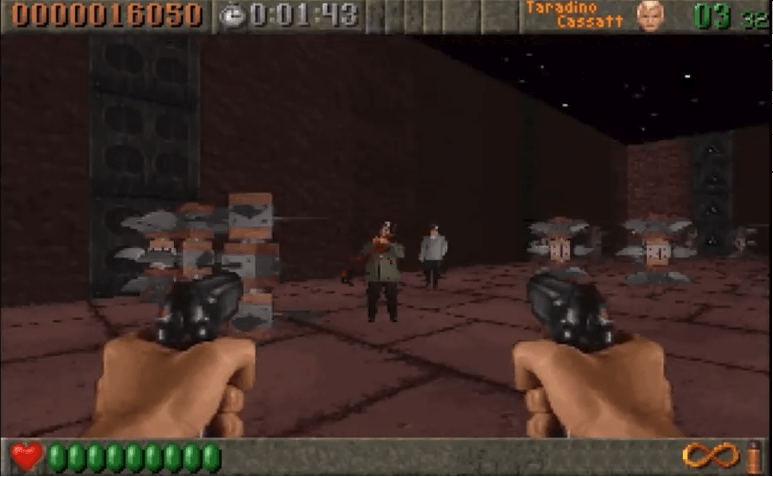
It starts off well enough; we’re the HUNT team on the, erm, hunt for bad guys who are on an island. Let’s go get those bad gu – wait, why are there trampolines in their secret lair? And why is everywhere filled with spinning coins like a Mario game, and platforms to reach them dotted around the castle? My god, RotT is awful. I thought we’d left this arcade kiddie nonsense behind. RotT came from 3DRealms and id co-founder Tom Hall; they knew intimately what Doom was and this isn’t it. Maybe that’s the point, but there’s different and then there’s daft.

I might have liked it at the time, back then you’d take anything you could get once you’d rinsed Doom but jeez this is annoying. There’s some progress here, you could dual -wield pistols and machine guns and had an assortment of explosive weapons rather than tons of oddities, there’s auto-aim too but it’s all buried under the silliness and digitised elements that don’t work; we’re being attacked by cardboard cut-outs – the sprites of Doom were 2D but they animated and moved in semi-convincing ways while those screengrabs look like a stiff breeze would blow them over. The weapons too look like photos which seem less believable. And there’s crushers, revolving walls, traps and spikes everywhere for no reason; one thing about Doom, it played by its rules – an invading force that you were repelling, but this gang’s gaff is a gauntlet the bad guys run as well. Half the time the traps kill the bad-guys for me. RotT is part Looney Tunes, Wolf-clone, arcade, platformer and forgets the FPS part. It’s so cheap looking you’d think it’s a quickie knock-off called Doomed. It’s not a Doom clone, it’s a first person Manic Miner. An Uwe Bol adaption of Doom.

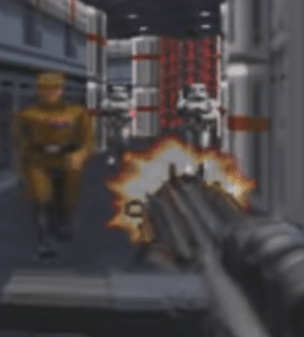
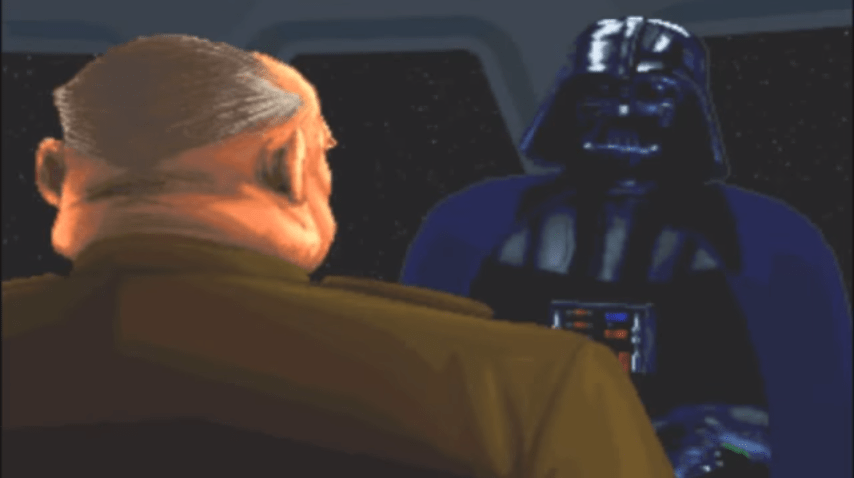
Happy New Year, 1995. The year we all got to enjoy Toy Story, and Tommy Lee and Pammy’s honeymoon. The biggest clone of 1995 was a game we’d already played – not just in Doom mods but with our own toys; Star Wars Dark Forces (Feb 1995). Released by Lucasarts, a company that could punt out instant classics like Last Crusade and Monkey Island for breakfast, for them bettering Doom must be as easy as pulling an X-Wing out of a swamp. But always with Doom it cannot be done; while SWDF provided major advancements within the world and game play, this is just Doom with a John Williams score. There’s text explaining non-cannon events to tie it in but SWDF is the best example of a Doom clone yet. It’s not a bad game and playing Star Wars is always going to carry you some of the way, but it’s lacking Doom’s dangerous quality and fatally, keeps reminding you of it. It’s just a reproduction, not an innovation. Plus, the Stormtroopers can actually hit you, how unrealistic is that? It’s Doom on the Death Star and that’s not as cool to play as it sounds – Doom is still one in a million, kid. Sad to say but the Star Doom mods were better. Leave it back in a more civilized age, when Han shot first.

Dark Forces’ biggest contribution to the gaming world was its sequels – Freed of the beat Doom mentality, the first sequel Jedi Knight was a rocking Star Wars shooter with an add-on (remember those) called Mysteries of the Sith. The second sequel, Jedi Outcast got it right; it’s a fantastic SW game and FPS in its own right, and the final sequel, Jedi Academy is a solid game that got lightsabers so spot on they turned into John Woo-level ballet. Dark Forces started as a Clone but it forged its own path to become a classic series with a better legacy than Doom.

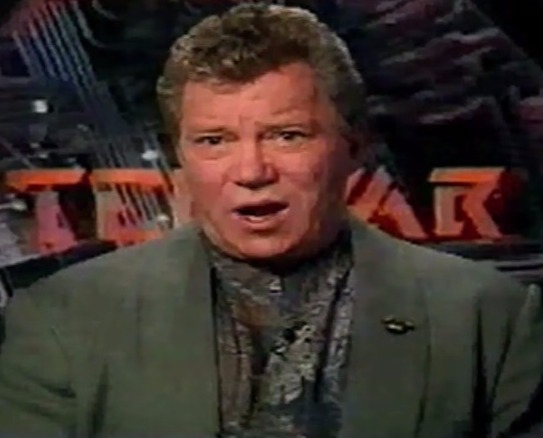
Build, the engine that would go onto power Duke Nukem launched its first game in 1995, Witchaven, a Heretic-style goth shooter. It didn’t have much in the way of smart-arse heroes or the level of interaction that later Build Engine games did, but it had a charm to it. Like Wolf, it was a warm up for what Build could do – and what it did next was present someone so legendary, so grand and awesome it’s tough to believe a simple game could contain such an iconic hero – William Shatner. Who were you thinking of? 1995’s Tekwar brought his sci-fi novels to shooter-life and included a digitised Shat; that gives you some idea of how powerful Build was.

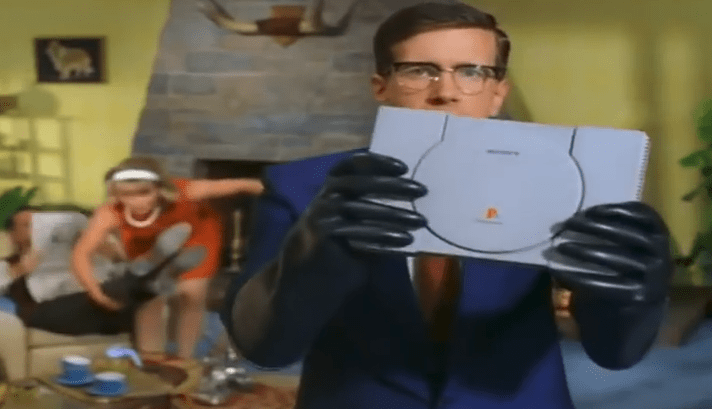
In September 1995, the gaming world was shaken again. Not by a game, but by a new way to play, station. Sony’s “Live in your world. Play in ours” campaign was aimed squarely at the Doom generation; aka the MTV Generation (PlayStation sponsored the 1995 MTV Music Awards to prove exactly who PS was aimed at – gaming is not for the kiddiewinks anymore) and the PS made gaming as cool as the Music and Movies of the era. We had our console, our games, we were Sorted for E’s n Wizz and wondering who is Keyser Söze? Perfect.

Meanwhile, briefly distracting us from Xena Warrior Princess was Hexen: Beyond Heretic (October) and this time we weren’t a silent hero. We were three of them. A Fighter who is melee mostly, a Mage who uses long-range magic and a Cleric who uses lower-powered versions of both. Hexen is pretty much Heretic, although not a re-heat; aside from character classes, you also transport back and forth between areas to progress (why I’m not sure, I don’t have the manual) and while the sounds and certain art is the same there’s additions like breakables, leaves falling off trees and more detailed levels. Hexen is fun to play; while it feels Doom-like, unlike Heretic, the character class is a refreshing change; RotT had characters but they made no real change to the experience, whereas in Hexen each character provides a different experience; first time FPS had replay value. I chose the fighter class and melee’ing about is a welcome change from guns again. If Heretic was Legolas prancing about then Hexen lets us play as John Rhys-Davis, and what’s wrong with that? The magnificent wizards are back too, although according to a Heretic Wiki they were ‘Disciples’. Whatever they were, they rule. But they’re not the king, baby.

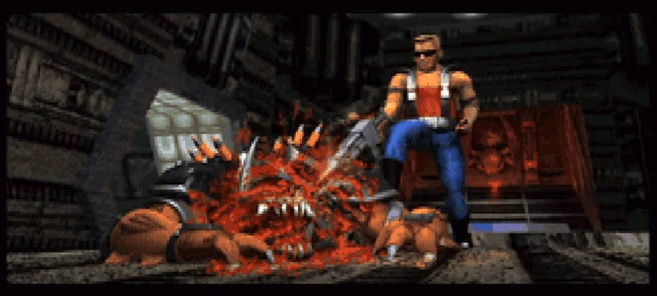
Doom was loud. Apart from the gunfire and exploding barrels there was screaming, shouting, growling, howling, all underpinned by the constant industrial score yet one thing was largely quiet – Doomguy. 3DReams, already a part of the id family as their shareware distributors, called in Ken Silverman to step things up after Doom. He gave them the Build Engine and that gave us giggles alongside the guts, rock-stars instead of serious and silent. While Carmack would disagree, Build was a huge improvement on the Doom engine; for gamers anyway – it let us misbehave; if Doom was the Father of FPS then Build was the uncle who gave you sweets and let you stay up late, and in January 1996, Duke Nukem 3D gave shooters a voice – Duke was the spokesperson for FPS, it’s ambassador, the entire experience distilled into one badass with a big mouth and bigger guns. Duke was mightily pleased with himself, had every girl at his feet and paused for one-liners before doing battle. Everyone remembers when Duke told a mini-boss he was going to rip off his head and shit down his neck, and when the battle was won, promptly pulled down his trousers, took out the paper and sat on the corpse, whistling. I remember Duke more than DN3D, so to attend a reunion now is a worry; if I find out the school hero who dated the cheerleaders is now a regional manager for an insurance company and bald instead of bold I’m gonna be crushed.

I start playing and he’s really not that bad. Phew. Sure, tipping strippers for a peek is juvenile and the pigs dressed as cops isn’t subtle, but DN3D is nowhere near as insulting as I expected it to be. Just shows how horrific Duke Nukem Forever was that it’s tainted Duke Nukem 3D as well. The earthbound locations he shoots through like Porn Theatres and strip-clubs are what they are and while girls in underwear dancing, the strippers, the women used as incubators and Duke being rewarded for his hard work with a three-way during the end credits are all tough to defend, Duke is a parody of those Bond-like heroes who seduced women through sheer masculinity. It is sexist but crucially it’s not misogynistic or mean-spirited like DNF – there’s no Boob-growths in the walls to slap, glory holes to stick little Duke through or incestuous twins dressed as schoolgirls who share Duke and joke about rape and abortions before dying as Duke comforts them with ‘looks like … you’re fucked’ – I’m not saying DN3D is acceptable because it’s not as appalling as DNF, but DN3D treaded that celebration vs parody line perfectly. Duke is still the voice of a genre and generation; Silent Heroes always felt a bit awkward, especially when they’re in cut-scenes. I wouldn’t want the quiet one saving the world, I want someone who’s going to be all out of gum. I feel like a Hollywood hero, shrugging off bullets and being the only guy for the job. Duke’s gabbing does dilute some of the tension and it’s hard to take it seriously, but it’s not supposed to be taken seriously; everything up to now has been bleak, against-the-odds stuff, but this is Cobra or Commando time. Duke enjoys the challenge. And so do I.

DN3D has some good opponents to battle against and Build gives them a fighting chance rather than id’s walk-this-way AI; in Doomworld monsters walked or floated toward you but Duke’s adversaries do both; they fly, leap, hover and hide, and they react to your attacks – we have to be a little more tactical but thankfully, Build has us covered – the pipe-bomb and mines lets us get sneaky. While Heretic had timed mines you dropped as you were chased by one of the splendid wizards and hoped it went off under his cloak, in DN3D we can set traps and lob controlled pipe-bombs; and Duke would reward your game-play with a one-liner worthy of Arnie. As is standard, DN3D has episode-ending mini-bosses but this being Duke’s world, mini means massive and besting them gets you a cutscene showing just how cool and heroic Duke is, as if there was any doubt. In order to combat such extreme monsters, Duke has the kind of arsenal only a super-hero could wield; aside from the standard there’s various explosive weapons and the freeze gun which lets you shatter opponents, and the shrinker – stomping on a now-tiny bad guy is a new one.

It’s not all Mr Bombastic though – it can be a slog to get through an episode and the first, set in downtown LA is largely the same design rejigged. The Lunar levels get dull very quickly and the third mission is a disappointing return to earth and the same look again; it gets very samey once you’re over the distractions. One reason I struggled to recall the gameplay of DN3D is how much it relies on the boss; this is Duke’s show. You can imagine Duke’s Superior yelling he’s caused more destruction than the bad guys, only to have Duke wink and walk off, taking the boss’s wife with him. There’s great fights, creatures and interactions but without the big man, DN3D would be a dull game – although Duke did get some cracking add-ons; Life’s A Beach had Duke holidaying with squirt guns and it’s worth a play just for the Pig Cops in Hawaiian shirts and the Octo-thingies in raybans.

There was another Build game in 1996, PowerSlave. Originally intended as a showcase for Build before Duke started to shape up, it was largely over-shadowed by its big brother, but remained popular enough for an unofficial remake.

DN3D is a huge improvement on what we’ve played so far, but the real show-stopper, the only thing to upstage Duke is the Build engine. Build provided a world to interact with, something we’d not had before. Doom was one thing only – serious about shooting. Besides the strippers, Duke could get distracted playing pool, staring at himself in mirrors, pinball games with him on the artwork (‘I haven’t got time to play with myself’), posters to look at, buttons to press, CCTV screens; we’re crawling through vents, sewers and diving under water, using powerups like holograms and the jetpack; I suspected DN3D would be where we leave Doom behind but while it’s the stuff that would make Don Simpson call Heidi Fleiss and celebrate, what DN3D did was diverge the FPS genre; from here the seeds of the more outlandish FPS game were sown. Down the pub, Doomguy is just Duke’s wingman but on the battlefield Doom still reigns. Case closed; Duke is innocent of killing Doom. Where is it? Man, finding Doom’s killer is hard. If she hadn’t been cancelled in 1996, I’d call Jessica Fletcher in on this. Maybe my Encarta CD has the answer.

In Part Three, FBT takes on the game convicted of killing Doom. But is Quake guilty as charged? And is all this just an excuse for FBT to play Blood again and google Dani Behr?

#Shooter #FPS #blastfromthepast #playthrough #FBT #extendedplay #Doomera

Doom's Clones & Killers Pt2

In the second part of Previous Weapon’s FPS retrospective, FBT makes like David Suchet and questions the clones about the identity of the Doom Killer.

Part Two: All hail the King, baby

Doom was out, and everything had changed. Even over at Apple. Bungie’s Marathon kept them going instead of Doom. It was a shooter with a storyline – a what? We don’t have time for that, Netscape Navigator was out and that meant 0.5% of us had access to the WWW – when we weren’t watching a Ford Bronco drive down the freeway that is. But the biggest news of ‘94 was still 93’s Doom. No one had touched it; well, there had been some inappropriate touching – a Doom Community sprung up thanks to the web, trading their own levels and mods; id’s decision to let gamers mess with Doom’s level design was another innovation and it turned kids into level designers and FPS into a multi-faceted hobby; playing, building and deathmatching. Doom also popularised web-chat, file-sharing and encouraged the uptake of the net; the world was changing, for us anyway. While our parents watched Blind Date and Beadle’s About, we had Terry Christian egging someone on to eat a sandwich of toenail clippings, were frothing to go on Nemesis at Alton Towers, whispered “UVAVU” while watching Geri and Kylie snog and the 11.30 Diet Coke break advert. The nineties were in full swing.

Released in December 1994, Heretic was the first Doom Clone but it wasn’t a cash-in; created by Raven, built on the Doom engine and exec-produced by Romero, it was less a clone and more a companion. You charged around locations taken over by a Saruman type, using magical weapons (a bow standing in for the shotgun, a claw that fired spells is your chaingun) while taking out Fantasy versions of Doom’s hell creatures. Okay, Heretic must have seemed a bit twee back then, a bit D&D; who wants to be in Dad’s Lord of the Rings when we had our Doom?

While Heretic is Doom reskinned, the art design is great and it’s learnt a lot about pacing and level design – It doesn’t have Doom’s aggression, you’re an elf waving a magical staff around medieval villages so not as cool as being a squad member from the Sulaco like Doomguy, but it’s good to have an alternative to Doom’s military setting which was replicated by most of the other clones.

Once I’ve got my eye past the minimal pixels and basic movement, I realise Heretic is really good; it has a great ambient feel – we hear groans and grumbles, chains rattling and whispers, the art design is really nice and it’s not stuffed with creatures; there’s areas and secrets to explore rather than just blast through, and it features an inventory (including a spell that turns creatures into chickens) – it gives Heretic an adventurer feel as we stalk through cathedrals and Mordor-like locations. When we do meet the bad guys though, they’re top notch; glamorous, chanting Wizards, giant skulls and the screeching little imps. It’s a lot further from Doom than I remembered, and while it’s possible they just got to work before Doom clone fever really gripped, maybe Raven are really good devs – they did go onto Star Trek Elite Force and Jedi Knight Outcast. Heretic doesn’t immediately call Doom to memory surprisingly enough, it stands up well despite its age and it’s got its own personality; I’m enjoying it for what it is rather than running on memories; it’s a great shooter and worth a replay. Heretic is memorable for another reason – It’s retail disk included DWANGO, the first programme to let you dial-up n’ deathmatch with folks further away than an LAN cable could reach. Online gaming was here.

I really liked Heretic. It’s one from this era that didn’t get a remaster and that’s a massive shame. Reboots you can keep but a refined Heretic would be awesome. One from this era that did get a reboot was Rise of the Triad (Feb 1995) and I have no idea why.

It starts off well enough; we’re the HUNT team on the, erm, hunt for bad guys who are on an island. Let’s go get those bad gu – wait, why are there trampolines in their secret lair? And why is everywhere filled with spinning coins like a Mario game, and platforms to reach them dotted around the castle? My god, RotT is awful. I thought we’d left this arcade kiddie nonsense behind. RotT came from 3DRealms and id co-founder Tom Hall; they knew intimately what Doom was and this isn’t it. Maybe that’s the point, but there’s different and then there’s daft.

I might have liked it at the time, back then you’d take anything you could get once you’d rinsed Doom but jeez this is annoying. There’s some progress here, you could dual -wield pistols and machine guns and had an assortment of explosive weapons rather than tons of oddities, there’s auto-aim too but it’s all buried under the silliness and digitised elements that don’t work; we’re being attacked by cardboard cut-outs – the sprites of Doom were 2D but they animated and moved in semi-convincing ways while those screengrabs look like a stiff breeze would blow them over. The weapons too look like photos which seem less believable. And there’s crushers, revolving walls, traps and spikes everywhere for no reason; one thing about Doom, it played by its rules – an invading force that you were repelling, but this gang’s gaff is a gauntlet the bad guys run as well. Half the time the traps kill the bad-guys for me. RotT is part Looney Tunes, Wolf-clone, arcade, platformer and forgets the FPS part. It’s so cheap looking you’d think it’s a quickie knock-off called Doomed. It’s not a Doom clone, it’s a first person Manic Miner. An Uwe Bol adaption of Doom.

Happy New Year, 1995. The year we all got to enjoy Toy Story, and Tommy Lee and Pammy’s honeymoon. The biggest clone of 1995 was a game we’d already played – not just in Doom mods but with our own toys; Star Wars Dark Forces (Feb 1995). Released by Lucasarts, a company that could punt out instant classics like Last Crusade and Monkey Island for breakfast, for them bettering Doom must be as easy as pulling an X-Wing out of a swamp. But always with Doom it cannot be done; while SWDF provided major advancements within the world and game play, this is just Doom with a John Williams score. There’s text explaining non-cannon events to tie it in but SWDF is the best example of a Doom clone yet. It’s not a bad game and playing Star Wars is always going to carry you some of the way, but it’s lacking Doom’s dangerous quality and fatally, keeps reminding you of it. It’s just a reproduction, not an innovation. Plus, the Stormtroopers can actually hit you, how unrealistic is that? It’s Doom on the Death Star and that’s not as cool to play as it sounds – Doom is still one in a million, kid. Sad to say but the Star Doom mods were better. Leave it back in a more civilized age, when Han shot first.

Dark Forces’ biggest contribution to the gaming world was its sequels – Freed of the beat Doom mentality, the first sequel Jedi Knight was a rocking Star Wars shooter with an add-on (remember those) called Mysteries of the Sith. The second sequel, Jedi Outcast got it right; it’s a fantastic SW game and FPS in its own right, and the final sequel, Jedi Academy is a solid game that got lightsabers so spot on they turned into John Woo-level ballet. Dark Forces started as a Clone but it forged its own path to become a classic series with a better legacy than Doom.

Build, the engine that would go onto power Duke Nukem launched its first game in 1995, Witchaven, a Heretic-style goth shooter. It didn’t have much in the way of smart-arse heroes or the level of interaction that later Build Engine games did, but it had a charm to it. Like Wolf, it was a warm up for what Build could do – and what it did next was present someone so legendary, so grand and awesome it’s tough to believe a simple game could contain such an iconic hero – William Shatner. Who were you thinking of? 1995’s Tekwar brought his sci-fi novels to shooter-life and included a digitised Shat; that gives you some idea of how powerful Build was.

In September 1995, the gaming world was shaken again. Not by a game, but by a new way to play, station. Sony’s “Live in your world. Play in ours” campaign was aimed squarely at the Doom generation; aka the MTV Generation (PlayStation sponsored the 1995 MTV Music Awards to prove exactly who PS was aimed at – gaming is not for the kiddiewinks anymore) and the PS made gaming as cool as the Music and Movies of the era. We had our console, our games, we were Sorted for E’s n Wizz and wondering who is Keyser Söze? Perfect.

Meanwhile, briefly distracting us from Xena Warrior Princess was Hexen: Beyond Heretic (October) and this time we weren’t a silent hero. We were three of them. A Fighter who is melee mostly, a Mage who uses long-range magic and a Cleric who uses lower-powered versions of both. Hexen is pretty much Heretic, although not a re-heat; aside from character classes, you also transport back and forth between areas to progress (why I’m not sure, I don’t have the manual) and while the sounds and certain art is the same there’s additions like breakables, leaves falling off trees and more detailed levels. Hexen is fun to play; while it feels Doom-like, unlike Heretic, the character class is a refreshing change; RotT had characters but they made no real change to the experience, whereas in Hexen each character provides a different experience; first time FPS had replay value. I chose the fighter class and melee’ing about is a welcome change from guns again. If Heretic was Legolas prancing about then Hexen lets us play as John Rhys-Davis, and what’s wrong with that? The magnificent wizards are back too, although according to a Heretic Wiki they were ‘Disciples’. Whatever they were, they rule. But they’re not the king, baby.

Doom was loud. Apart from the gunfire and exploding barrels there was screaming, shouting, growling, howling, all underpinned by the constant industrial score yet one thing was largely quiet – Doomguy. 3DReams, already a part of the id family as their shareware distributors, called in Ken Silverman to step things up after Doom. He gave them the Build Engine and that gave us giggles alongside the guts, rock-stars instead of serious and silent. While Carmack would disagree, Build was a huge improvement on the Doom engine; for gamers anyway – it let us misbehave; if Doom was the Father of FPS then Build was the uncle who gave you sweets and let you stay up late, and in January 1996, Duke Nukem 3D gave shooters a voice – Duke was the spokesperson for FPS, it’s ambassador, the entire experience distilled into one badass with a big mouth and bigger guns. Duke was mightily pleased with himself, had every girl at his feet and paused for one-liners before doing battle. Everyone remembers when Duke told a mini-boss he was going to rip off his head and shit down his neck, and when the battle was won, promptly pulled down his trousers, took out the paper and sat on the corpse, whistling. I remember Duke more than DN3D, so to attend a reunion now is a worry; if I find out the school hero who dated the cheerleaders is now a regional manager for an insurance company and bald instead of bold I’m gonna be crushed.

I start playing and he’s really not that bad. Phew. Sure, tipping strippers for a peek is juvenile and the pigs dressed as cops isn’t subtle, but DN3D is nowhere near as insulting as I expected it to be. Just shows how horrific Duke Nukem Forever was that it’s tainted Duke Nukem 3D as well. The earthbound locations he shoots through like Porn Theatres and strip-clubs are what they are and while girls in underwear dancing, the strippers, the women used as incubators and Duke being rewarded for his hard work with a three-way during the end credits are all tough to defend, Duke is a parody of those Bond-like heroes who seduced women through sheer masculinity. It is sexist but crucially it’s not misogynistic or mean-spirited like DNF – there’s no Boob-growths in the walls to slap, glory holes to stick little Duke through or incestuous twins dressed as schoolgirls who share Duke and joke about rape and abortions before dying as Duke comforts them with ‘looks like … you’re fucked’ – I’m not saying DN3D is acceptable because it’s not as appalling as DNF, but DN3D treaded that celebration vs parody line perfectly. Duke is still the voice of a genre and generation; Silent Heroes always felt a bit awkward, especially when they’re in cut-scenes. I wouldn’t want the quiet one saving the world, I want someone who’s going to be all out of gum. I feel like a Hollywood hero, shrugging off bullets and being the only guy for the job. Duke’s gabbing does dilute some of the tension and it’s hard to take it seriously, but it’s not supposed to be taken seriously; everything up to now has been bleak, against-the-odds stuff, but this is Cobra or Commando time. Duke enjoys the challenge. And so do I.

DN3D has some good opponents to battle against and Build gives them a fighting chance rather than id’s walk-this-way AI; in Doomworld monsters walked or floated toward you but Duke’s adversaries do both; they fly, leap, hover and hide, and they react to your attacks – we have to be a little more tactical but thankfully, Build has us covered – the pipe-bomb and mines lets us get sneaky. While Heretic had timed mines you dropped as you were chased by one of the splendid wizards and hoped it went off under his cloak, in DN3D we can set traps and lob controlled pipe-bombs; and Duke would reward your game-play with a one-liner worthy of Arnie. As is standard, DN3D has episode-ending mini-bosses but this being Duke’s world, mini means massive and besting them gets you a cutscene showing just how cool and heroic Duke is, as if there was any doubt. In order to combat such extreme monsters, Duke has the kind of arsenal only a super-hero could wield; aside from the standard there’s various explosive weapons and the freeze gun which lets you shatter opponents, and the shrinker – stomping on a now-tiny bad guy is a new one.

It’s not all Mr Bombastic though – it can be a slog to get through an episode and the first, set in downtown LA is largely the same design rejigged. The Lunar levels get dull very quickly and the third mission is a disappointing return to earth and the same look again; it gets very samey once you’re over the distractions. One reason I struggled to recall the gameplay of DN3D is how much it relies on the boss; this is Duke’s show. You can imagine Duke’s Superior yelling he’s caused more destruction than the bad guys, only to have Duke wink and walk off, taking the boss’s wife with him. There’s great fights, creatures and interactions but without the big man, DN3D would be a dull game – although Duke did get some cracking add-ons; Life’s A Beach had Duke holidaying with squirt guns and it’s worth a play just for the Pig Cops in Hawaiian shirts and the Octo-thingies in raybans.

There was another Build game in 1996, PowerSlave. Originally intended as a showcase for Build before Duke started to shape up, it was largely over-shadowed by its big brother, but remained popular enough for an unofficial remake.

DN3D is a huge improvement on what we’ve played so far, but the real show-stopper, the only thing to upstage Duke is the Build engine. Build provided a world to interact with, something we’d not had before. Doom was one thing only – serious about shooting. Besides the strippers, Duke could get distracted playing pool, staring at himself in mirrors, pinball games with him on the artwork (‘I haven’t got time to play with myself’), posters to look at, buttons to press, CCTV screens; we’re crawling through vents, sewers and diving under water, using powerups like holograms and the jetpack; I suspected DN3D would be where we leave Doom behind but while it’s the stuff that would make Don Simpson call Heidi Fleiss and celebrate, what DN3D did was diverge the FPS genre; from here the seeds of the more outlandish FPS game were sown. Down the pub, Doomguy is just Duke’s wingman but on the battlefield Doom still reigns. Case closed; Duke is innocent of killing Doom. Where is it? Man, finding Doom’s killer is hard. If she hadn’t been cancelled in 1996, I’d call Jessica Fletcher in on this. Maybe my Encarta CD has the answer.

In Part Three, FBT takes on the game convicted of killing Doom. But is Quake guilty as charged? And is all this just an excuse for FBT to play Blood again and google Dani Behr?

Doom’s Clones & Killers – Pt1

In this, the first of a four-part retrospective, FBT goes back to the best era in gaming (so he says) – The 1990s explosion and implosion of First Person Shooters

Part One: Gott im Himmel

They say in the Sixties everyone remembered where they were when JFK was shot. In the Eighties, everyone remembered where they were when John Lennon was shot. But in the Nineties, we remember doing the shooting – on December 10th, 1993, id unleashed Doom.

Built by gamers for gamers, Doom may have been underground but like an earthquake its impact was seismic, sending shockwaves through the gaming world and eventually reaching the real world; referenced in The Simpsons, Friends and ER, Doom was part of the nineties zeitgeist, gaming’s Nevermind or Pulp Fiction and in modern terms, it was bigger than Facebook, affecting workplace productivity and causing issues on company networks.

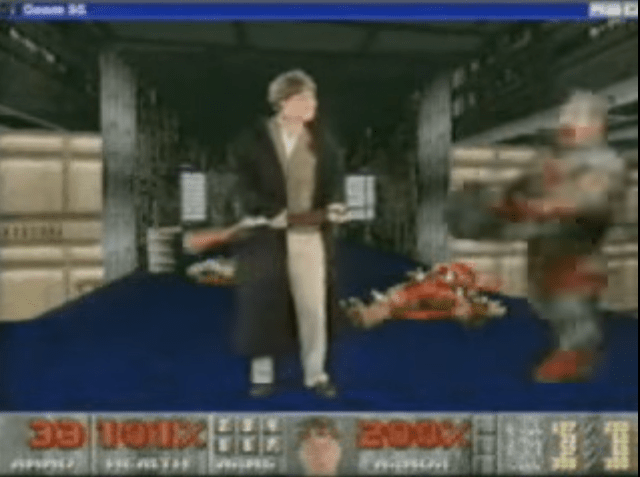
Doom even slowed Microsoft’s world domination; When their ads for Windows 95 asked ‘where do you want to go today?’ Gamers replied ‘DOS’ – the platform W95 was replacing and the only sure-fire way to game on PC. Gamers weren’t going to risk losing Doom (it was rumoured Doom was installed on more PCs than W95) and Microsoft, realising Doom’s dedicated fanbase was the future, developed Direct-X which allowed games to play ‘as’ a Window. It was a watershed moment; Doom was ported to Windows (by some bloke called Gabe Newell), and Bill Gates appeared ‘in’ Doom during a W95 Expo to prove Windows was the future – a video game created by a bunch of lads made Bill Gates, at the height of his power, say ‘if you can’t beat’em…’ It gave Gabe Newell some ideas too.

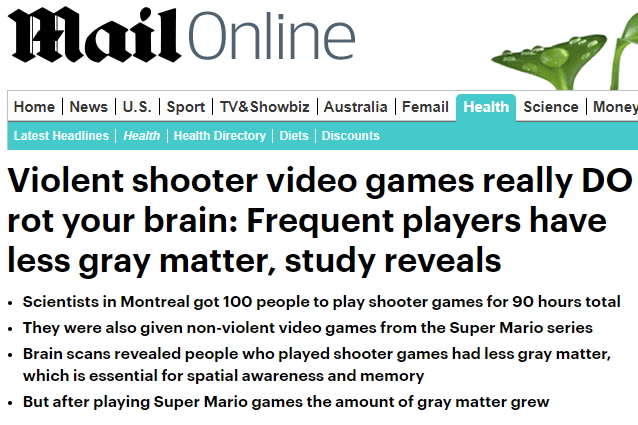
And Doom pissed off parents, like every good trend should. Doom wasn’t the first game to show death but this time you really were in there, up close – with a chainsaw. Stories of players passing out, getting motion sickness and post-traumatic stress triggered Parent Groups who classified Doom as top-tier evil alongside Ren & Stimpy. ‘Killology researcher’ David Grossman coined the phrase ‘murder simulator’ and it was said this new era of games could turn kids into killers; Doom was held accountable for the Columbine Massacre.

But none of that mattered to the gamers who discovered Doom that day; we had no idea we were loading up the You’re Gonna Need A Bigger Boat moment of gaming; we were in the Aliens Hive scene screaming ‘its game over man, game over!’ – And for any other game, it was. Doom was the new standard, and it launched a whole new race to be the biggest, baddest First Person Shooter – gamers couldn’t be happier. Parents, less so.

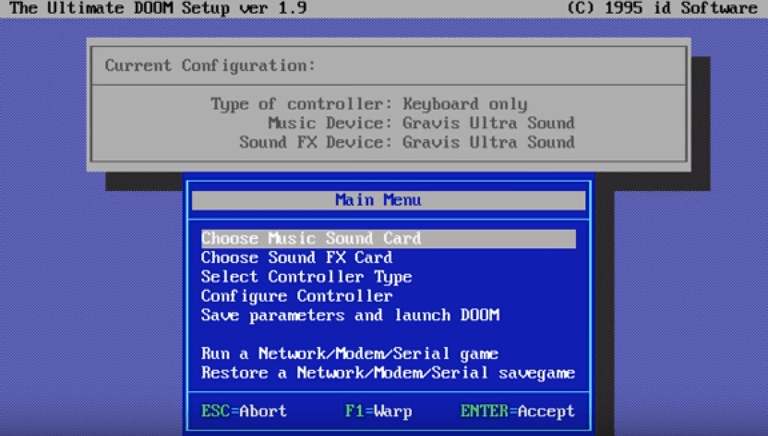
Games back then, loaded up through that DOS prompt and the shareware warning were way more exciting that anything around now. You really had no idea what you were getting into, even with a Doom Clone. It took commitment to finish a game in the nineties; we didn’t have any of your fancy auto-saves or mission skips, no walkthroughs; you had to really love a game to finish it and that stays with you. We sweated for the exit, got your head down and tapped spacebar until something opened. And the joy of finding the secret that had an exit! That meant secret level, that meant bragging rights, that meant pranks on friends. It was a great time. So, what happened? The FPS genre is awful now. Generic reheats, remakes, reboots; story-led, watered-down, XP-driven, gimmick-ridden bastard-childs of RPG. Thinking back to Doom, when is something gonna come out of nowhere and make us think ‘the fuck just happened?’ I’m going to replay FPS from Wolfenstein onwards until I track down Doom’s killer. Where it all went wrong.

Mein Leben! In May 1992 Wolfenstein 3D landed. We’d barely gotten over the Freddie Mercury Tribute concert and now we were blasting Nazis. Not sure what the connection is, but I admit I might have been listening to Extreme at the time. More than words can say how much I played Wolf back in the day; the only German I know is from Wolf (and Die Hard…) Replaying Wolf doesn’t just bring back embarrassing adolescent musical choices (I was also into Mr.Big for a while; don’t judge me, I liked Guitar Shredders at the time, Steve Vai rocks. Totally not a power-ballad phase), but it has fondly reminded me of Shareware; ripping a disk off the cover of a magazine I didn’t read and excitedly loading up every demo, game and crappy screensaver. Then borrowing the full game from mates. I think one of those mates still has me To Be With You CD single.

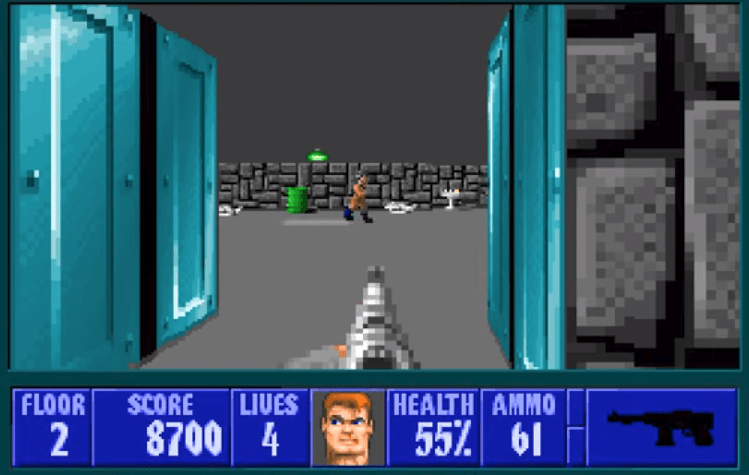
Wolf was Gamer’s You Know When You’ve Been Tango’ed moment. When we weren’t suffering tinnitus from ear-clapping each other in the playground, we were amazed at the fast-moving, unforgiving gameplay. It was exhilarating; Wolf wasn’t the first FPS but it was the first to get it right, to make you feel like you were there. I played Wolf endlessly, least when Gladiators wasn’t on. But unlike Jet, it’s not aged well. Really, Wolf is a maze layout fighting through pixelated Nazis over and over. I don’t know what I was expecting but once you’re through the first level you’ve played them all really, but you can appreciate the work, feel the energy that went into building this. It’s kinda quaint now and has that arcade feel but still, it’s fast and unforgiving – I expected years of digital shooting would make this a cake-walk but I spend as long reloading the game as I do the guns. If they had reload.

Wolfenstein is best left in the past; while it had me smiling, once those memories of singing Ebeneezer Goode stop flooding, the lack of ceilings and floors and the repetitiveness make Wolf a bit of a slog, but you must pay homage to the OG of FPS, the calm before the storm. What Wolf has done for me is get me excited for what’s coming next.

What came next was Blake Stone. I feel sorry for Blake, sent to a mad scientist’s space-station to stop his evil experiments; like the rest of us, he didn’t know what was coming. Released in December 1993, just before Doom landed, BS was completely steamrolled and I was mid-way through it when my friend appeared, waved a floppy and yelled ‘get ready to shit your pants’ – I remember it because I did shit my pants; that disc had Doom shareware on it. I also I never went back to BS. It felt like a kiddie game after Doom.

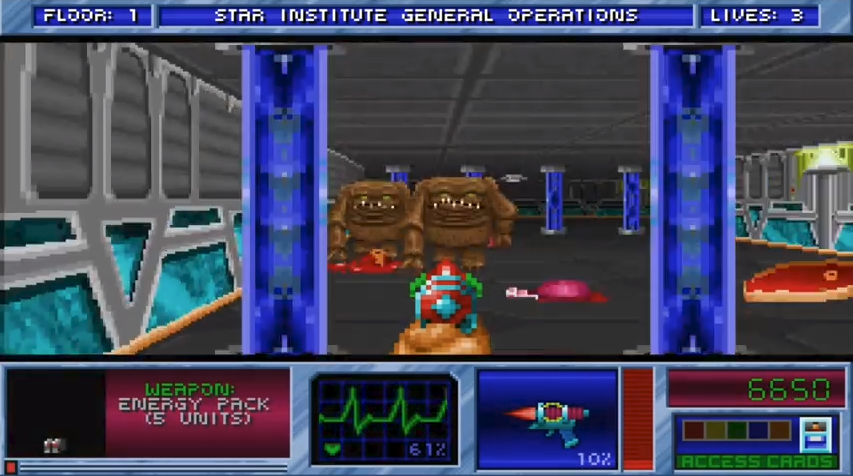
As I play it now, I realise I owe Blake an apology; it’s a really good game. It does look rough but there are some surprising touches absent from the others of the era; Blake gains health at vending machines and you’ll find scientists who give info – one of several ways this reminds me of Half-Life. Like all games of the era you’re looking for a key to progress but more logically, the keys unlock floors accessed via an elevator and you can return to a floor to further explore when better armed, rather than exit never to return – the floor layout, while basic is much more interesting than Wolf and the art design has a nice 50s Sci-Fi style to it, the antithesis of Doom’s slimy atheistic. It’s a lot more busy that Wolf’s basic look and while it may not have been intentional, BS feels like it was just having some fun; the monsters wouldn’t look out of place in a Goosebumps book and it has an Indy-inspired adventure feel to it. But that was exactly what we didn’t want at the time – Doom created the perfect run n’ gun; who wants to talk to Scientists, use vending machines, go back instead of relentlessly pushing forward? But there’s a lot to it, it’s harder than it looks and it’s crying out for an app re-release. It fun and worth a go if you’re bored of shitting your pants.

So this was it, September 12, 1993 – A moment I’ll never forget. Terri Hatcher in Lois & Clark. Three months later, Doom landed and nothing was the same again.

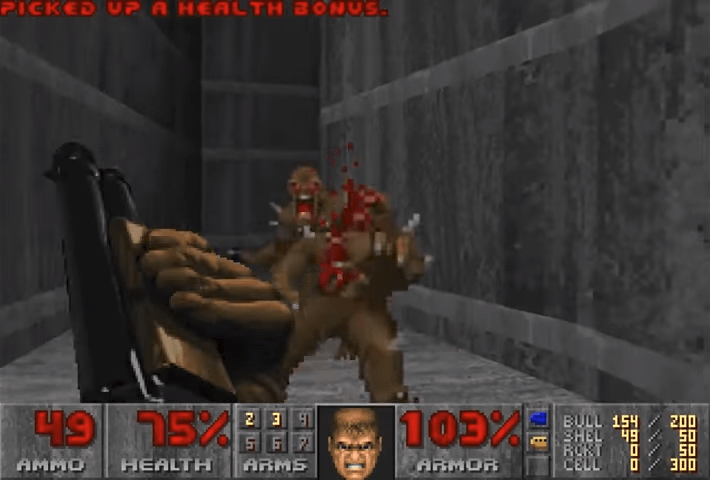
As the years passed I left Doom behind. I played it endlessly at first, but eventually recalled it becoming hollow once you’d gotten over shitting your pants and, especially after the Wolf and Blake experiences, I expect to find Doom equally dated – I’ve not played for at least ten years yet as soon as I get going, I remember secrets, barrels just around corners, which exit doors have an Imp behind them. Doom is so entrenched in my DNA, my first-born’s first word will be an Imp growl; and that familiarity isn’t the only thing I’m responding to – this is really good. Not in its scares or firefights, but the rhythm. I hadn’t appreciated how well balanced a game Doom is, how it subtly ratchets up the tension instead of exhausting you into giving up. Twenty plus years and modern shooters could still learn from this. Doom was like when you were a kid and found a wasps’ nest. You still poked it with a stick even though you knew better. Doom gave you a shotgun instead of a stick and there was no Mum with the Savlon and a scolding afterwards but you still went for it. That’s a good game.

Doom does, honestly, still have it. It isn’t even in my top ten but it should be; I realise now, Doom formed my opinion on every gun-orientated game since. It’s one thing to remember how good a game was, it’s another to be realising just how good it is. Doom 3 sucked because it went for the jump-scare. That’s not good level design or pacing, that’s lazy. No, worse than that, it’s a misunderstanding of Doom, where you hear the imp behind the door and you have to open it. That’s far scarier than something leaping out at you. You’re so into it that the minimal pixels and blocky movement melt into a pure visceral experience and while modern shooters may look the shit, they’re not In The Shit like Doom is – this is just a bunch of pixels, how is it triggering some caveman-survival instinct?

There’s a real subversive simplicity in Doom; you can describe it in a sentence, but you have to experience it to understand; Modern Shooters are nothing compared to your first Tour of Duty in Doom – take down a horde of invisible pinkie demons, then we’ll talk about your kill-streaks. Some of the impact has been lost, but when it all kicks off I’m still as mesmerised as when Terri Hatcher said “They’re real … and they’re spectacular.”

I wouldn’t have called Doom art back then, I do now.

Of course, Doom didn’t stop at the exit. The biggest shock was Deathmatch. Seeing your pal as a little Doomguy then fragging them with a rocket launcher was something gaming hasn’t ever surpassed; Multiplayer, co-op, online is a standard now but that’s nothing compared to LAN games where the only smacktalking was from your friend sitting opposite – this was just fun scrapping about, not a dickhead half-way round the word being a little big man on his mic. Fuck those guys, I miss the Doom Parties. Even when you were hilariously murdering each other, Doom brought us together. Nothing has ever topped that, and nothing ever can.

Replaying Doom does bring back some awesome memories, especially the best prank of all time on my ‘shit your pants’ mate – the secret level in episode 3. It’s a remake of the first level and I found it when I was playing alone. I saved it for future fun and at our next hang-out, suggested we speedrun episode 3. I went first and reached the exit … Then, when he was busy mocking my attempt, I loaded the secret level instead and let him have at it. His face when he hit the exit and sat back to crow but the Cyberdemon appeared instead – he actually jumped as if it was in the room with him. But then he sucked it down and got on with shooting, his voice trembling as he called me names. That’s Doom – panic and pals. I’ll admit the panic has waned, but it’s replaced with appreciation and the excitement is still there – Doom is brilliant. Who killed you? I shall avenge you. Just as soon as I’ve humped my rig over to my mate’s house and LAN’ed it up for old time’s sake.

By 1994, UK society was on the brink of collapse. Ch4 aired a lesbian kiss on Brookside and Frances Ruffle flashed Union Jack knickers (take that Ginger Spice) during a Top of the Pops performance; the children of Mary Whitehouse screamed the place down – they also felt affronted by Frances’ hip-swinging. The outrage. Hips! Swinging! Did we learn nothing from Elvis’ gyrations, sending an entire generation into an uncontrollable sexual frenzy? Good job that Brookside kiss turned us all homosexual otherwise it doesn’t bear thinking about. Society was at an end apparently though; our most beloved TV character (besides Beth Jordache) was Mr. Blobby?! How did he get a Christmas single and Zig n’ Zag didn’t?

There was little to do in the wake of Doom, except on Wednesdays when you’d get rudely awakened by the Dustmen. There was Pie in the Sky; while their game engine PitS was a bit Poundland, it was offered as an off-the-shelf product making PitS the archetype of Doom Cloning; dozens of PitS-powered shooters popped up and while they’re long-forgotten now, PitS should be remembered for filling many a floppy on the cover of PC Gamer while we waited, and watched Brookside.

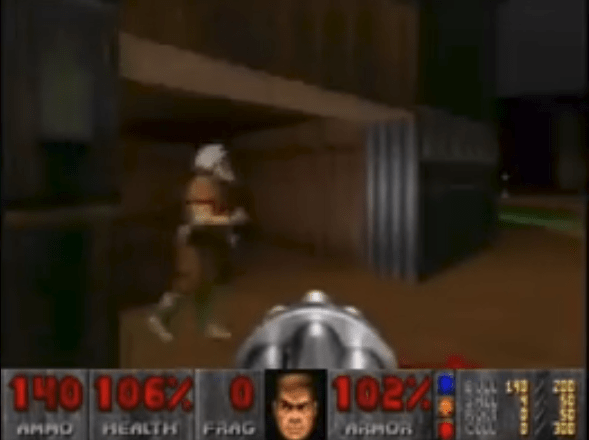
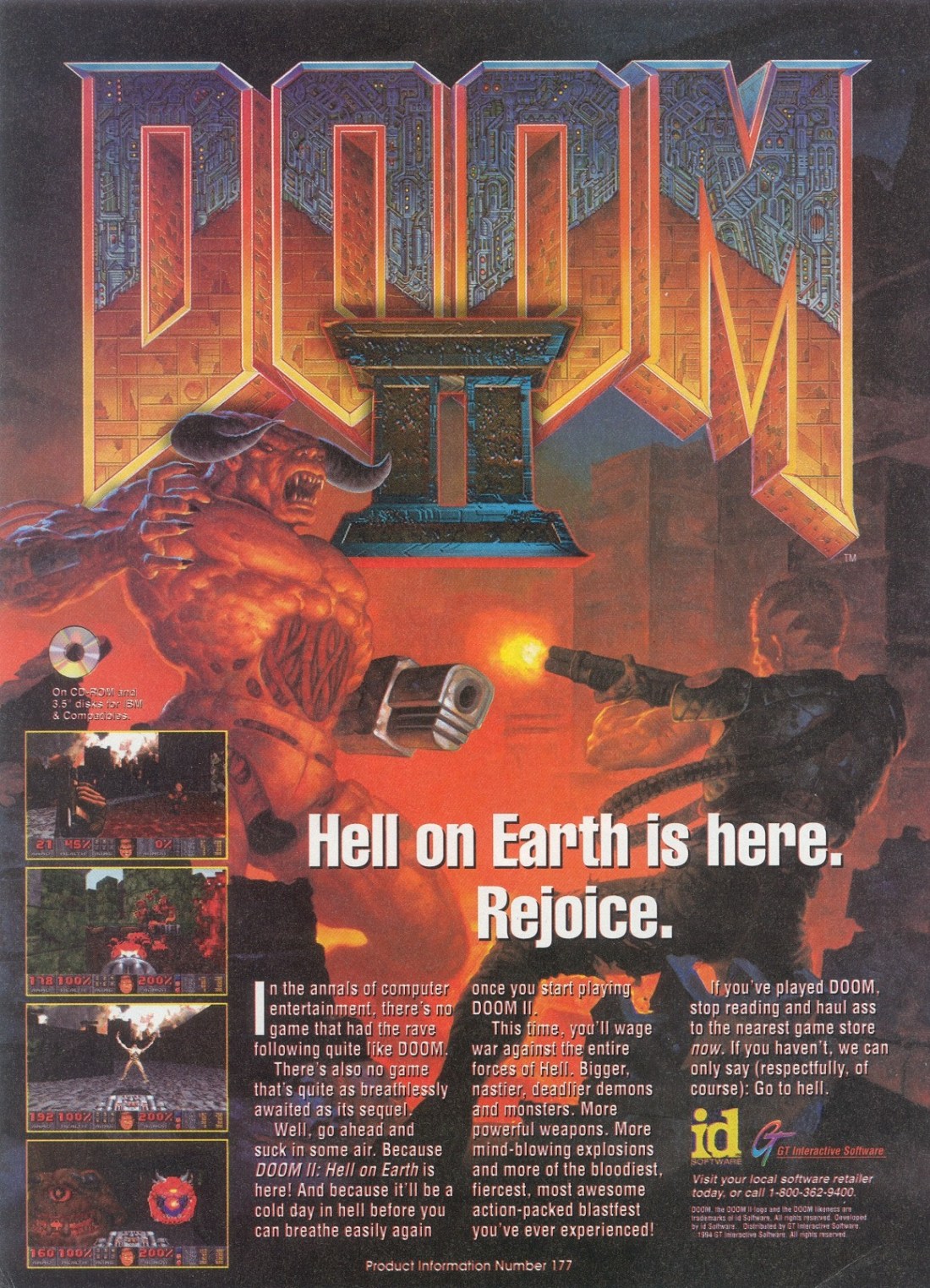
And it was Doom II we were all waiting for. Released in September 1994, I was more excited about Doom II than Rachel’s haircut. I rushed it home and at first I was shrieking and screaming at the scale and intensity of it, but then I started to feel like I was playing mods of the original. And that bloody ending with the Icon of Sin – I do recall cheating and finding Romero’s head, although then I had no idea who it was. I had high-hopes for DII when I restarted this time, hoping for a new appreciation like the original, and to begin it is heart-stoppingly brutal; Those damn chain-gunners, that rocket-launching blob, the missile-launching skeletons, the goddamn Arch Vile, all (and more) between me and an exit that took effort to reach alive. Those are big levels. But then, that energy starts to dip. The expanded level-sizes are all good but it’s more of a survival game than an exhilarating rush like the original, and while the layouts are good, the larger size starts to be betray how little art design id had to work with – as good as it is, it gets samey; Doom was never a game to stand around and look at the wallpaper. It’s just not as much fun, like the id guys were distracted by what Carmack was cooking up for Quake. There’s some brilliant levels, and it’s still an awesome yardstick game, but it just doesn’t feel fresh. I’m never happy – had DII been a departure I likely would have moaned too, but DII should have been more than just more. For me, besides further improving the Deathmatching, DII greatest contribution was the killer Aliens Doom mods, complete with facehuggers, plasma rifles and Hudson as Doomguy; they’re better than Aliens Colonial Marines. But then, what isn’t?

Most games from this era punted out quickie sequels; Blake Stone turned in Planetstrike, Wolf repeated itself in Spear of Destiny – using left-over level designs, those retweaked remakes were low-cost, high-sell games and I would dismiss DII as just a Clone, but it was more than that; Doom might have been game-changing, but Doom II was industry-changing; no longer an underground, mythical thing traded in playgrounds like fuzzy VHS copies of Evil Dead, Doom II was a grown up, on the shelves game and a phenom on release – it netted id millions and cemented FPS as a major genre; it was everywhere, like that Meat Loaf song. I’d do anything for Doom but I won’t do that. It was so big even my parents knew it. I recalled my Mum saying she’s “read about some horrendous game that lets you chainsaw people, you’d better not be playing that” / “No mum, I just wanna listen to Mr Big. Did you buy the Radio Times with Lois and Clark on the cover?” – we have our first suspect in the Doom murder. Not Terri Hatcher, Doom II! The motive? DII brought FPS into the mainstream; every publisher that saw shareware as rinky-dink suddenly went ‘that could’ve been us’ and while the music industry was busy signing up every band that wore a checked shirt, publishers descended on devs and demanded more Doom. Doom II didn’t kill Doom with innovation, it killed it with success. Clone after clone followed, each a copy of a copy, until the pure Doom experience got fuzzy.

FPS was out now, there was no stuffing that demonic genie back in the bottle. As Doom II cleaned up, others were about to make things messy. But which game dealt Doom the killing blow? I had a few more suspects to question; Lo-Wang and Duke to name a few.

Check out part two of FBT’s ‘investigation’/excuse where he continues to blast his way through the best 90’s FPS had to offer while watching Earth 2 and Seaquest.

#FPS #Shooter #blastfromthepast #playthrough #FBT #GOAT #extendedplay #Doomera

Doom's Clones & Killers – Pt1

In this, the first of a four-part retrospective, FBT goes back to the best era in gaming (so he says) – The 1990s explosion and implosion of First Person Shooters

Part One: Gott im Himmel

They say in the Sixties everyone remembered where they were when JFK was shot. In the Eighties, everyone remembered where they were when John Lennon was shot. But in the Nineties, we remember doing the shooting – on December 10th, 1993, id unleashed Doom.

Built by gamers for gamers, Doom may have been underground but like an earthquake its impact was seismic, sending shockwaves through the gaming world and eventually reaching the real world; referenced in The Simpsons, Friends and ER, Doom was part of the nineties zeitgeist, gaming’s Nevermind or Pulp Fiction and in modern terms, it was bigger than Facebook, affecting workplace productivity and causing issues on company networks.

Doom even slowed Microsoft’s world domination; When their ads for Windows 95 asked ‘where do you want to go today?’ Gamers replied ‘DOS’ – the platform W95 was replacing and the only sure-fire way to game on PC. Gamers weren’t going to risk losing Doom (it was rumoured Doom was installed on more PCs than W95) and Microsoft, realising Doom’s dedicated fanbase was the future, developed Direct-X which allowed games to play ‘as’ a Window. It was a watershed moment; Doom was ported to Windows (by some bloke called Gabe Newell), and Bill Gates appeared ‘in’ Doom during a W95 Expo to prove Windows was the future – a video game created by a bunch of lads made Bill Gates, at the height of his power, say ‘if you can’t beat’em…’ It gave Gabe Newell some ideas too.

And Doom pissed off parents, like every good trend should. Doom wasn’t the first game to show death but this time you really were in there, up close – with a chainsaw. Stories of players passing out, getting motion sickness and post-traumatic stress triggered Parent Groups who classified Doom as top-tier evil alongside Ren & Stimpy. ‘Killology researcher’ David Grossman coined the phrase ‘murder simulator’ and it was said this new era of games could turn kids into killers; Doom was held accountable for the Columbine Massacre.

But none of that mattered to the gamers who discovered Doom that day; we had no idea we were loading up the You’re Gonna Need A Bigger Boat moment of gaming; we were in the Aliens Hive scene screaming ‘its game over man, game over!’ – And for any other game, it was. Doom was the new standard, and it launched a whole new race to be the biggest, baddest First Person Shooter – gamers couldn’t be happier. Parents, less so.

Games back then, loaded up through that DOS prompt and the shareware warning were way more exciting that anything around now. You really had no idea what you were getting into, even with a Doom Clone. It took commitment to finish a game in the nineties; we didn’t have any of your fancy auto-saves or mission skips, no walkthroughs; you had to really love a game to finish it and that stays with you. We sweated for the exit, got your head down and tapped spacebar until something opened. And the joy of finding the secret that had an exit! That meant secret level, that meant bragging rights, that meant pranks on friends. It was a great time. So, what happened? The FPS genre is awful now. Generic reheats, remakes, reboots; story-led, watered-down, XP-driven, gimmick-ridden bastard-childs of RPG. Thinking back to Doom, when is something gonna come out of nowhere and make us think ‘the fuck just happened?’ I’m going to replay FPS from Wolfenstein onwards until I track down Doom’s killer. Where it all went wrong.

Mein Leben! In May 1992 Wolfenstein 3D landed. We’d barely gotten over the Freddie Mercury Tribute concert and now we were blasting Nazis. Not sure what the connection is, but I admit I might have been listening to Extreme at the time. More than words can say how much I played Wolf back in the day; the only German I know is from Wolf (and Die Hard…) Replaying Wolf doesn’t just bring back embarrassing adolescent musical choices (I was also into Mr.Big for a while; don’t judge me, I liked Guitar Shredders at the time, Steve Vai rocks. Totally not a power-ballad phase), but it has fondly reminded me of Shareware; ripping a disk off the cover of a magazine I didn’t read and excitedly loading up every demo, game and crappy screensaver. Then borrowing the full game from mates. I think one of those mates still has me To Be With You CD single.

Wolf was Gamer’s You Know When You’ve Been Tango’ed moment. When we weren’t suffering tinnitus from ear-clapping each other in the playground, we were amazed at the fast-moving, unforgiving gameplay. It was exhilarating; Wolf wasn’t the first FPS but it was the first to get it right, to make you feel like you were there. I played Wolf endlessly, least when Gladiators wasn’t on. But unlike Jet, it’s not aged well. Really, Wolf is a maze layout fighting through pixelated Nazis over and over. I don’t know what I was expecting but once you’re through the first level you’ve played them all really, but you can appreciate the work, feel the energy that went into building this. It’s kinda quaint now and has that arcade feel but still, it’s fast and unforgiving – I expected years of digital shooting would make this a cake-walk but I spend as long reloading the game as I do the guns. If they had reload.

Wolfenstein is best left in the past; while it had me smiling, once those memories of singing Ebeneezer Goode stop flooding, the lack of ceilings and floors and the repetitiveness make Wolf a bit of a slog, but you must pay homage to the OG of FPS, the calm before the storm. What Wolf has done for me is get me excited for what’s coming next.

What came next was Blake Stone. I feel sorry for Blake, sent to a mad scientist’s space-station to stop his evil experiments; like the rest of us, he didn’t know what was coming. Released in December 1993, just before Doom landed, BS was completely steamrolled and I was mid-way through it when my friend appeared, waved a floppy and yelled ‘get ready to shit your pants’ – I remember it because I did shit my pants; that disc had Doom shareware on it. I also I never went back to BS. It felt like a kiddie game after Doom.

As I play it now, I realise I owe Blake an apology; it’s a really good game. It does look rough but there are some surprising touches absent from the others of the era; Blake gains health at vending machines and you’ll find scientists who give info – one of several ways this reminds me of Half-Life. Like all games of the era you’re looking for a key to progress but more logically, the keys unlock floors accessed via an elevator and you can return to a floor to further explore when better armed, rather than exit never to return – the floor layout, while basic is much more interesting than Wolf and the art design has a nice 50s Sci-Fi style to it, the antithesis of Doom’s slimy atheistic. It’s a lot more busy that Wolf’s basic look and while it may not have been intentional, BS feels like it was just having some fun; the monsters wouldn’t look out of place in a Goosebumps book and it has an Indy-inspired adventure feel to it. But that was exactly what we didn’t want at the time – Doom created the perfect run n’ gun; who wants to talk to Scientists, use vending machines, go back instead of relentlessly pushing forward? But there’s a lot to it, it’s harder than it looks and it’s crying out for an app re-release. It fun and worth a go if you’re bored of shitting your pants.

So this was it, September 12, 1993 – A moment I’ll never forget. Terri Hatcher in Lois & Clark. Three months later, Doom landed and nothing was the same again.

As the years passed I left Doom behind. I played it endlessly at first, but eventually recalled it becoming hollow once you’d gotten over shitting your pants and, especially after the Wolf and Blake experiences, I expect to find Doom equally dated – I’ve not played for at least ten years yet as soon as I get going, I remember secrets, barrels just around corners, which exit doors have an Imp behind them. Doom is so entrenched in my DNA, my first-born’s first word will be an Imp growl; and that familiarity isn’t the only thing I’m responding to – this is really good. Not in its scares or firefights, but the rhythm. I hadn’t appreciated how well balanced a game Doom is, how it subtly ratchets up the tension instead of exhausting you into giving up. Twenty plus years and modern shooters could still learn from this. Doom was like when you were a kid and found a wasps’ nest. You still poked it with a stick even though you knew better. Doom gave you a shotgun instead of a stick and there was no Mum with the Savlon and a scolding afterwards but you still went for it. That’s a good game.

Doom does, honestly, still have it. It isn’t even in my top ten but it should be; I realise now, Doom formed my opinion on every gun-orientated game since. It’s one thing to remember how good a game was, it’s another to be realising just how good it is. Doom 3 sucked because it went for the jump-scare. That’s not good level design or pacing, that’s lazy. No, worse than that, it’s a misunderstanding of Doom, where you hear the imp behind the door and you have to open it. That’s far scarier than something leaping out at you. You’re so into it that the minimal pixels and blocky movement melt into a pure visceral experience and while modern shooters may look the shit, they’re not In The Shit like Doom is – this is just a bunch of pixels, how is it triggering some caveman-survival instinct?

There’s a real subversive simplicity in Doom; you can describe it in a sentence, but you have to experience it to understand; Modern Shooters are nothing compared to your first Tour of Duty in Doom – take down a horde of invisible pinkie demons, then we’ll talk about your kill-streaks. Some of the impact has been lost, but when it all kicks off I’m still as mesmerised as when Terri Hatcher said “They’re real … and they’re spectacular.”

I wouldn’t have called Doom art back then, I do now.

Of course, Doom didn’t stop at the exit. The biggest shock was Deathmatch. Seeing your pal as a little Doomguy then fragging them with a rocket launcher was something gaming hasn’t ever surpassed; Multiplayer, co-op, online is a standard now but that’s nothing compared to LAN games where the only smacktalking was from your friend sitting opposite – this was just fun scrapping about, not a dickhead half-way round the word being a little big man on his mic. Fuck those guys, I miss the Doom Parties. Even when you were hilariously murdering each other, Doom brought us together. Nothing has ever topped that, and nothing ever can.

Replaying Doom does bring back some awesome memories, especially the best prank of all time on my ‘shit your pants’ mate – the secret level in episode 3. It’s a remake of the first level and I found it when I was playing alone. I saved it for future fun and at our next hang-out, suggested we speedrun episode 3. I went first and reached the exit … Then, when he was busy mocking my attempt, I loaded the secret level instead and let him have at it. His face when he hit the exit and sat back to crow but the Cyberdemon appeared instead – he actually jumped as if it was in the room with him. But then he sucked it down and got on with shooting, his voice trembling as he called me names. That’s Doom – panic and pals. I’ll admit the panic has waned, but it’s replaced with appreciation and the excitement is still there – Doom is brilliant. Who killed you? I shall avenge you. Just as soon as I’ve humped my rig over to my mate’s house and LAN’ed it up for old time’s sake.

By 1994, UK society was on the brink of collapse. Ch4 aired a lesbian kiss on Brookside and Frances Ruffle flashed Union Jack knickers (take that Ginger Spice) during a Top of the Pops performance; the children of Mary Whitehouse screamed the place down – they also felt affronted by Frances’ hip-swinging. The outrage. Hips! Swinging! Did we learn nothing from Elvis’ gyrations, sending an entire generation into an uncontrollable sexual frenzy? Good job that Brookside kiss turned us all homosexual otherwise it doesn’t bear thinking about. Society was at an end apparently though; our most beloved TV character (besides Beth Jordache) was Mr. Blobby?! How did he get a Christmas single and Zig n’ Zag didn’t?

There was little to do in the wake of Doom, except on Wednesdays when you’d get rudely awakened by the Dustmen. There was Pie in the Sky; while their game engine PitS was a bit Poundland, it was offered as an off-the-shelf product making PitS the archetype of Doom Cloning; dozens of PitS-powered shooters popped up and while they’re long-forgotten now, PitS should be remembered for filling many a floppy on the cover of PC Gamer while we waited, and watched Brookside.

And it was Doom II we were all waiting for. Released in September 1994, I was more excited about Doom II than Rachel’s haircut. I rushed it home and at first I was shrieking and screaming at the scale and intensity of it, but then I started to feel like I was playing mods of the original. And that bloody ending with the Icon of Sin – I do recall cheating and finding Romero’s head, although then I had no idea who it was. I had high-hopes for DII when I restarted this time, hoping for a new appreciation like the original, and to begin it is heart-stoppingly brutal; Those damn chain-gunners, that rocket-launching blob, the missile-launching skeletons, the goddamn Arch Vile, all (and more) between me and an exit that took effort to reach alive. Those are big levels. But then, that energy starts to dip. The expanded level-sizes are all good but it’s more of a survival game than an exhilarating rush like the original, and while the layouts are good, the larger size starts to be betray how little art design id had to work with – as good as it is, it gets samey; Doom was never a game to stand around and look at the wallpaper. It’s just not as much fun, like the id guys were distracted by what Carmack was cooking up for Quake. There’s some brilliant levels, and it’s still an awesome yardstick game, but it just doesn’t feel fresh. I’m never happy – had DII been a departure I likely would have moaned too, but DII should have been more than just more. For me, besides further improving the Deathmatching, DII greatest contribution was the killer Aliens Doom mods, complete with facehuggers, plasma rifles and Hudson as Doomguy; they’re better than Aliens Colonial Marines. But then, what isn’t?

Most games from this era punted out quickie sequels; Blake Stone turned in Planetstrike, Wolf repeated itself in Spear of Destiny – using left-over level designs, those retweaked remakes were low-cost, high-sell games and I would dismiss DII as just a Clone, but it was more than that; Doom might have been game-changing, but Doom II was industry-changing; no longer an underground, mythical thing traded in playgrounds like fuzzy VHS copies of Evil Dead, Doom II was a grown up, on the shelves game and a phenom on release – it netted id millions and cemented FPS as a major genre; it was everywhere, like that Meat Loaf song. I’d do anything for Doom but I won’t do that. It was so big even my parents knew it. I recalled my Mum saying she’s “read about some horrendous game that lets you chainsaw people, you’d better not be playing that” / “No mum, I just wanna listen to Mr Big. Did you buy the Radio Times with Lois and Clark on the cover?” – we have our first suspect in the Doom murder. Not Terri Hatcher, Doom II! The motive? DII brought FPS into the mainstream; every publisher that saw shareware as rinky-dink suddenly went ‘that could’ve been us’ and while the music industry was busy signing up every band that wore a checked shirt, publishers descended on devs and demanded more Doom. Doom II didn’t kill Doom with innovation, it killed it with success. Clone after clone followed, each a copy of a copy, until the pure Doom experience got fuzzy.

FPS was out now, there was no stuffing that demonic genie back in the bottle. As Doom II cleaned up, others were about to make things messy. But which game dealt Doom the killing blow? I had a few more suspects to question; Lo-Wang and Duke to name a few.

Check out part two of FBT’s ‘investigation’/excuse where he continues to blast his way through the best 90’s FPS had to offer while watching Earth 2 and Seaquest.

Carmageddon

A Blast from the Past review

FBT’s review of Carmageddon, the best racer of the 90s so he says – but he said that about Monster Truck Madness and Road Rage too so who knows.

The Past

I’d always disliked racer games. But Carma was different; originally envisioned by devs Stainless as a demolition derby, it shifted to sandbox when they pursued the Mad Max licence. People-mushing was added after they tried to licence Deathrace instead. Finally, they came up with their own world, ripped from 70s/80s dystopia movies; Rollerball meets Nascar, cars race through slums winning by crossing the finish or stopping anyone else from doing so; running over the ‘peds’ gained you more time to race. It was great. But what made it even greater was the free-roam element. My mates and I would chalk up a healthy amount of ped-death time then go looking for trouble. We would analyse the layout, work out if we could reach building tops, find hidden areas … We’d spend hours on a single level. Of course, you could attempt to win without running anyone over and that had its own challenges. The biggest of which was not giving in and handbrake-turning into a crowd of people.
The Daily Mail trembled with horror on it’s release and demanded Carma be banned, going so far as to claim the character Die Anna was a ‘sick’ reference to the people’s princess. That’s … okay I wouldn’t put it past Carma, except Princess Di died after its release, but don’t let that stop a headline. Building on the controversy, publishers SCi, decided to submit it to the BBFC … which hugely backfired. The BBFC weren’t exactly open-minded in the nineties and they banned it, supposedly because they enjoyed it so much that suggested people would emulate – what? Stainless released it with zombies instead, who spewed green blood. But what we knew, and the morally-panicked didn’t, was that new internet. From there, Stainless’ own mod quickly made its way to floppies and magazine disks, providing a way to turn the zombies human again. We were back in business. When not one child mowed anyone down in their Dad’s car, the protesters moved on to being dismayed at GTA instead.

In today’s moral-choice driven and heartfelt emotional gaming, there’s nothing out there that celebrates your pure homicidal side. Time to Die Anna again.

Still a Blast?

As I race along ‘Maim Street’, the first of thirty-odd races, memories come back and I take off, aiming for the stadium where I mow down NFL teams, then shoot down the road knocking peds for six, blood and body parts spinning. I mistime a corner and obliterate my car, then get rear-ended which causes me to shunt a mailbox that skids off and takes out a passing OAP and earns me a ‘good shot, sir’ bonus. Holy crap this is good. And not in that ‘I want to try this in the real-world’ way. Chasing after the peds is fun, they squeal and take off, yell and swear at you, while hitting the cows in the countryside levels, listening to their Moo turn into a Goo is always a giggle. Although there’s only four or five locations – inner city, coastal, a mine, countryside and industrial areas, each race opens up different or expanded areas, so the races always feel bigger rather than just longer or repetitive. Plus, it gives you another chance to get somewhere you couldn’t earlier. Completing a course gives you points, alongside the points you gain in-game to buy upgrades and unlock your position, which in turn unlocks the races. And more dangerous opponents…

As I crash around, I realise just how much genuine fun I’m having, how exhilarating, exciting and intense it all is. Yes, it’s blocky and dated but that soon disappears because you’re so into it. I miss this, most modern games don’t have this reckless abandon and most of it is my own doing rather than the game manipulating me into a scripted experience. As soon as I finish one level, I’m revving to get onto the next. Carma is just so exciting – that’s not the controversy talking; it’s a really good game. The physics and engine are amazing and the levels are laid out in a way that maximises freedom so you can really take control of the way you play; you quickly learn how much you can push it, anticipate its reactions and gauge when to turn, slide or break. I’d forgotten about Die Anna’s face in the corner, reacting to the mayhem as we went, the on-screen congrats as we made good kills, the noises the peds make, the way the levels are filled with things to trip you up or give you the chance to let loose. As the game progresses you get the opportunity to steal opponent’s cars once you’ve wasted them, and they each have their own feel and ability. There’s a caddy with a cattle-catcher, driven by ‘Otis P Jivefunk’ that makes short work of any head-on attacks but is like driving a bouncy castle, Vlad with his hotrod car which will impale yours and there’s OK Stimpson (renamed Juicy Jones in rereleases) who drives what looks a lot like a white-topped Ford Bronco … The opponents and their cars are all very different although their tactics are largely the same – ram you.
There’s not much in the way of in-car fighting and early on it’s a war of attrition as you just batter each other, but later you’re cutting through them like bloody butter; except for the big boys (and girls) like The Plow and Heinz Faust’s tank-car. They’re nightmares, but not as bad as the cops.

Cops do serious damage and constantly ram you, siren screaming, holding you in place while the timer ticks down. The only downer is the cops only go after me. It’s not until at least mid-way through and several armour, power and offensive upgrades that I can even think about taking them on. It’s a hugely gratifying moment when the car is tricked out and you grab the solid granite powerup then spy a copper in the distance. Revenge. Of course, there’s that damn super-cop car sitting on a roof in later levels. When that thing lands, it’s game over. Except it’s not. The great thing about Carma was you can’t die – your car can get disabled, but you just repair and live to maim again, giving you the freedom of just putting your foot down and seeing what happens. They removed this invincibility from the sequels and they suffered because of it; once you get nervous about accelerating in Carma, it’s not Carma anymore. I remember discovering this in Carma 2 and being so disappointed I sacked it off.

The only way to lose in Carma was to run out of time. So long as the timer is ticking, you’re okay. You gain time in three ways – passing checkpoints, battering opponents or running over peds. You can even win by killing all the peds, but even with a power-up that reveals their location it’s incredibly difficult to do. Other powerups include instant handbrake, good for anyone chasing you, damage magnifiers, and the insanely annoying Bouncy Bouncy. The big one is Pinball, which as the name suggests sends you – and everything else you touch – careening around the map. They’re huge maps too, Carma doesn’t scrimp on the experiences; so many areas to explore, so many opportunities to cause mayhem. I’m attempting to drive up the sides of buildings, ramming things to see what happens, taking huge chances and accelerating so hard Die Anna starts screaming. Skimming past opponents, setting up games of chicken (they never falter), grabbing powerups then rushing to use them before they run out, clobbering cop cars then taking off … Carma is basically like school playtime, when you realise the teacher’s about to herd you all in so you suddenly go mental trying to have all the fun at once before you’re forced back into class.

It’s amazing that Carma didn’t have more influence on race gaming. Series’ like Flatout, Midtown Madness and Road Rage shared the anarchic DNA of Carma but without the murder or black humour – Monster Truck Madness did have open world opportunities but you still had to hit checkpoints rather than the crowds to win. But I realise now Carma isn’t really about running people over, it was the racing without rules, and along with the swearing, cheeky level names, the ‘Pratcam’ and the on-screen congrats for outlandish kills, it all adds up to a game that’s dedicated to you finding your own fun. So few games let you have your own fun anymore, least of all the racing genre.

Even a decade after release the protesters never let it go; That bastion of family values Keith Vaz was still using Carmageddon in 2005 to prove a point about video game violence, stating in a commons debate that Carma’s ‘sounds of cracking bones adds to the realistic effect’ – did he ever play it? He also noted “Duke Nukem hones his skills by using pornographic posters of women for target practice and earns bonus points for shooting naked and bound prostitutes and strippers” – Really? There’s been so many re-releases of Duke that I must have missed the ‘moral outrage edition’. He also talked about Postal and even mentioned the ‘Postal Dude’ – A politician using the word Dude in the Houses of Parliament? Games rock. Yet Vaz, The Daily Mail and pressure groups like Mediawatch seem to miss their own point when they panic hysterically about video games; twenty years on and still no one’s ran anyone over because Carma told them too. Carma was rebooted in 2015 and the Daily Mail was there for it, reporting that “ultra-controversial video-game Carmageddon might be unleashed on another generation of teenagers” as if the terror alert should be raised to severe after the original nearly brought society to its knees via rampaging teenagers with learner plates, before screaming about the original being banned (But not ‘unbanned’). Let it go.

Like Doom, the thing about Carma wasn’t the violence, it was the perfect experience – it wasn’t real, anyone except Daily Mail readers could tell the difference, but I could anticipate the car’s movements, how hard to push it, where it would end up – when I missed a ped I could yell the game was cheating but really, I’m just not that good a driver. There’s nothing ‘real’ about it, but it was a brilliant game and one that you could tell the devs had fun making and that shines through. It wants you to have a good time. It’s blocky and the sprites animate through two or three stills and you can’t really see what’s going on. But once we’re off, the gloves are off too and I’m barrelling down the road, bashing my fellow drivers and pulling handbrake turns into peds like I’m twenty years younger. Pixels don’t matter when a game’s this good. Carma is a brilliant game on every level – to play and to offend. The sequels weren’t as good and that includes the 2015 reboot which veered into arcade silliness and lost the original’s black humour in favour of smut, but the original still plays great and it’s even available on iOS/Android. There’s no excuse. Play it, just to annoy the Daily Mail.

Die Anna, the gamer’s princess.

Developer Stainless Games | Publisher Sci / Interplay Productions

Platforms; Win | iOS/Android

F.E.A.R

A Blast from the Past review

FBT’s not scared of Alma. Honest. Leave the lights on.

The past

In 2005, society almost collapsed because an idiot released a hack that unlocked a ‘hidden’ sex game in the already contentious GTA San Andreas. Hidden! Secretly adding sex into games for little children to find? The outrage. It was the end times. GTA SA was rated Mature so kids shouldn’t be playing it anyway and the unfinished sex element was removed before release, the hack just reactivated it but Politicians and the Papers ignored that; they had Moral Outrage to peddle. F.E.A.R, released at the height of the Hot Coffee spill, is a perfect example of a game not for kids. Not just because of the gameplay intensity but the tone, the story was pure grown-up’s time – A deep, unsettling physiological mindfuck about a solider being harassed by a Carrie-like little girl while fighting telepathically-linked super-soldiers under the charge of a cannibal trying to find the girl. Not exactly a Teletubbies episode.

The Hot Coffee whohah did one good thing; games were recognised as entertainment like movies or music and should be considered accordingly. The morally outraged moved on to being horrified by the internets. Meanwhile, FEAR scared the hot coffee out of me.

FEAR was like being armed and in a horror film. But you’re not fighting Freddy. This was pure Japanese horror; Ringu, Dark Water, The Grudge. The increasingly horrible story just freaked you out – learning who she was and worse, what had happened to her. The scares often aren’t threatening and that was somehow worse; you’d be terrified, but she … She was just curious. The ‘Unknown Origin’ noise, a little like the sound of Saddako approaching, first seemed a bit of spoiler but became psychological torture; she’s here. Somewhere. You just cowered and hoped she went away. I still remember swinging around on a ladder and she was right there. FEAR’s over ten years ago and I still get jumpy using a ladder in a game. That time I saw her bloody footprints walking towards me but not her. That time I saw her on the monitor – a monitor that was showing what’s behind me. Waa! And the screaming banshee, all spindly and screaming, matted hair, rushing at you, trying to – *Shivers*

I haven’t played FEAR in a long time, but I haven’t played anything that got to me like FEAR. Lots of games made me jump, but FEAR kept me jumpy. It is my favourite shooter from the Half-life to Bioshock period but I’ve not played it since then. I think I’m actually nervous. Time to face … Alma. Even typing her name is triggering.

Shoulda Stayed There?

Oh god, even the loading screen has that screeching sound. Just gonna go pop the lights on.

I’d forgotten FEAR actually stood for something; First Encounter Assault Recon, a spec-ops team investigating paranormal activities. It’s a shame the series didn’t make more of this, the sequels confined themselves to the fallout from the first game so FEAR as an idea was largely ignored. A series about a bunch of Spec Ops investigating the paranormal could have been awesome, The X-Files with a shotgun.

I am The Pointman, a hero so silent Gordon would be proud. I don’t even have a name, just a squad position. I’m all for silent heroes, but given what Pointy goes through you think at least the occasional ‘WTF!’ would be uttered. Pointy is the new kid to the team, and after some friendly joshing from a teammate and some promising interest from Jin, the team’s Agent Scully, we’re off to investigate some mysterious goings on.

What’s been going on is Fettel, a man who’s escaped from a lab at the ATC Corporation, a tech company with government defence contracts. Fettel didn’t escape alone though; he is telepathically linked to an entire legion of ‘Replica’ soldiers and they are tearing through ATC offices looking for something – or someone. He’s also capable of projecting himself wherever he likes. So not just a disgruntled employee with a gun then.

Pointy, who has the odd ability to move faster than bullets, is sent in to scope the place out. Besides Jin, the team we’re Pointing for includes our CO who directs things from a safe distance and another Operator who mysteriously disappears, only to reappear as a ghostly image warning she’s interested in me. Could you stop that mate? Not helping. There’s some nice moments early on, overheard conversations about how weird The Pointman is and the legitimacy of FEAR’s work. It’s a slow burn game, unlike most shooters where you’re dropped into a firefight and head to the opposite side, FEAR unfolds like a novel or film, drawing you into the story not just the bullets.

As we progress, more story elements come to light. We discover the little girl we keep glimpsing – and by glimpsing, I mean witnessing her murdering entire squads with her mind – is ‘Alma’, the daughter of a ATC scientist who discovered she has psionic abilities. Turned into a lab rat, Alma is subjected to various experiments and tests, but quickly grows bored and instead fills her time making the scientists kill or mutilate themselves. Sounds like she’s played the Hot Coffee mod. Fettel is interested in helping her escape, and also starts to take an interest in you. He’s not your battlefield nemesis, goading or chatting on the mic. He just appears right in front of you, says something cryptic then disappears. Usually with blood around his face. Because he’s also a goddamn cannibal who eats ATC employees as a novel way to get info. This game …

It’s not just Alma that drives the game; for much of the time, that’s just background. It’s great how we’re just in the middle of several greater stories – as well as Fettel, there’s ATC’s attempts to cover up the incident and Alma’s father; so much going on conspiracy-wise, Mulder would have a field day. Phone messages, conversations, laptops reveal the depth of ATC’s experiments – it’s so involving that finding power-ups like injectors that extend Pointy’s health and bullettime makes you wonder what else ATC has been experimenting with – and why does Pointy already has the ability? Stick around for the last phone call during the credits. It’s a zinger that would make the Smoking Man proud.

While tangling with Fettel’s Replica soldiers, we also contend with ATC security and later their black ops team; melee fighters with invisibility cloaks. Anything else? Yeah, there’s also manifestations of Alma’s, disembodied demons that come out of the blackness ready to rip you to pieces. Think that’s it. Oh, and the harpy that screams and scampers towards you. Don’t let her touch you, that’s if you can keep your tremblingly finger on the fire button.

As a shooter, FEAR is way, way up there. We’re more than a decade after its release and the firefights easily match anything the latest CoD clone’s managed. The Replicas in particular – you do get a sense they’re linked, and you know they’re just clones but they’re real. They get scared, yell at each other (‘get to cover!’/’where?!’) and act so lifelike it’s unnerving. They stumble and trip if you clip them in the leg, scramble to get away from fire, run for it, act aggressively and it doesn’t feel scripted or manipulated. Obviously walking into areas triggers their appearances, and events are scripted but they don’t seem to be; It’s like playing Online – and you’re the Newbie. They’ll work around you, sometimes taking such long routes to reach you, you’ve forgotten and you just run into them randomly – which seems to make them jump too. They react to teammate’s positions and actions, duck under obstacles, vault over things, change their minds, get intimidated by your tactics – they’re incredible just to watch let alone try to hit. It’s also unnerving how they’re completely compliant but have free will.

Pointy is no slouch with the bullets either. The bullettime he possesses is one of the best I’ve played. Similar to The Matrix, we can see bullets flying about and the detail is amazing as they ricochet off walls and bodies. We’re running through clouds of blood and sparks, real John Woo stuff. The firefights are always frantic, you get constantly battered and bloody, dust and debris fly everywhere ruining your shots, everyone’s hurling grenades about, it’s practically a schoolyard scrap. Pointy can carry health packs and pick up vests; neither last long.

The best/worst thing in FEAR of course is Alma. When she’s not shocking or observing you, she’s making you experience her life at the hands of ATC. It’s terrifying, but you develop pity for her. Then you see her kills littered about, bodies melted to the bone and get nervous again. You never quite know if she’s on your side or not. Some of her actions seem hostile, others helpful. Hearing that Unknown Origin noise hasn’t lost its power, and while the game does occasionally lapse into quickie shocks they’re more than made up by Alma’s other appearances and behaviours. That scene where she’s on the other side of the glass just staring at you and all you need to do is open the door is just terrifying. She’s a ghost, she could just walk through but she doesn’t. She just wants to see what you’d do. You have to walk towards her and that’s just insanely scary. But there’s so much more than scares going on. Alma does draw heavily from J-Horror – Alma is the daughter of Saddako and Ikuko with possibly a bit of Don’t Look Now thrown in, but the abuses she suffers and the story behind it are all hers and as a character, Alma is practically without peers; this isn’t just some entity stalking you – you start to wish you weren’t uncovering her story because you understand why she’s so angry. Just, leave me out of it yeah? No such luck.

The only let down in FEAR, and it is a sizeable one, is the never changing environment. You’re always, with very few and very brief exceptions, fighting through offices and industrial areas. It makes sense for the story, Fettel is storming ATC’s properties looking for Alma and this kind of story works best in places you can’t just turn tail and run out of. But while the intensity of the story can get fatiguing and the Replica’s onslaught tiring, it’s the locations that makes you reach for the Main Menu button. Perhaps had it had more going on within those locations it might have felt fresher, but while the level designs are good, with multiple approaches, interesting obstacles and multi-level areas perfect for smart-arse soldiers and scary children to creep up on you, the environments all merge. I recollected shoot-outs and Alma-scares, but never the locations and as I replayed, I realised without the loading-screen updates I’d have little idea about where I was, where I was going or why.

As we reach the final destination (and really feel nervous doing it, I remember now what’s coming; I think I blocked it from my mind) it’s amazing that even now, ten years after the release, FEAR can still pack such a punch – it’s novel-quality story, terrifying experiences and insane gameplay marks FEAR as one of the greats, either to replay or discover for the first time. Maybe the original Bioshock came close two years later, but FEAR makes you despair at the state of modern shooters.

Alma and her revenge are The Exorcist of gaming – you just want it to stop, catch your breath, remind yourself it’s only a bloody game. Add in the Replica’s AI and the conspiracy that weaves through the plot and FEAR is a masterclass in gaming. It taps into that feeling you get when you’re alone in the house and hear a noise … It’s a good job the moral crusaders got distracted by the internets, I’d hate to think what they’d make of a psychotic little girl melting people with her mind. Turn on the lights and fear Alma.

After FEAR, there were two add-ons. Those were the days. Not money-grubbing DLCs but actual mini-games. The first, Extraction Point continues the story as the FEAR team attempt to escape the repercussions of the main game. It starts off well enough, but quickly descends into more typical horror-survival territory and FEAR elements feel crowbarred in, while Perseus Mandate tries something different. Set alongside the first FEAR, we play a Sergeant who inexplicably has the same bullettime powers as Pointy. This FEAR team is tasked with investigating the ATC coverup and the events of the main game spill over into this one. You’re largely fighting against a splinter group within ATC who use the event to grab the data the original project was based on. Alma makes a few cameos, but otherwise this is largely a straight shooter. It’s fast and fun, the black ops team are a lot more gobby than the Replicas (calling me a pussy for backing off for example) and there’s a great standout where you’re chased by an ED-209 through the office, but otherwise it’s typical shooter stuff. Both were created by TimeGate Studios and aren’t considered ‘cannon’ to the main series – shame, they’re both better than the FEAR sequels and Extraction Point ends things in a more satisfying way than they do; it would have freed FEAR to go investigate other scares. Pointy would have made a great Mulder.

And that fricking ladder scene is even scarier than I remember.

2005 | Developer Monolith | Publisher Sierra

Platforms; Win, PS3, X360

Postal 2

A Blast from the Past review

FBT remembers Postal 2 as an ironic giggle n’ guns-fest through life’s little annoyances.

He was looking forward to this one.

The Past

The original Postal, taking the phrase for a mid-eighties spate of postal workers gunning down co-workers, featured an insane lead character killing his way through his home town. It generated so much controversy the United States Postal Service tried to sue developers Running with Scissors and it was proclaimed public enemy number one; well, one of three enemies in Liebermann’s ‘worst things in America’ (the others were Marylin Mason and Calvin Klein ads). It’s no surprise then that the sequel, even before hitting the shelves was considered the most dangerous game ever released; this time you’d be murdering in a free-form, open world 3D environment and in first person; up close and personal, just like in real-life the campaigners panicked. It was the end times.

While Rockstar’s Manhunt largely owned 2003 as the game everyone loved to hate, Postal 2 still cooked up some outrage; it was blamed for some unrelated violence, banned from most US supermarkets and even appeared in the Black-Eyed-Peas’ Where is the Love video, showing kids playing it while the band watched sadly (Rather than responsibly taking it off the kids). Fair enough, the BEP’s music makes me go Postal. Briefly known as the most violent and notorious game ever released, Postal 2’s reputation has faded over time, replaced with better, more efficient murder-simulators but for a while it was the Moral Campaigners poster-child. After a poster of Marylin Manson in some Calvin’s, presumably.

Of course, the efforts to ban Postal 2 did the opposite; I heard about PII through reputation not reviews and bought for that reason. Friends and beers gathered around to snigger and giggle as we rampaged and were utterly uninspired to do the same in the real world. I remember PII as a game that tricked you into revealing your psychopathic urges; it wasn’t evil, you were – you could complete it without harming anyone, something the morally outraged ignored (Or more likely didn’t know, since it’s doubtful they played what outraged them so much) – but you weren’t going to play Postal peacefully. It really got the idea that hell is other people and it explored exactly what you’d do if life’s everyday annoyances came with a shotgun. With the world the way it is and me a lot less patient than I was in 2003, I can’t think of a better time to go Postal 2 again.

Still a Blast?

I’d forgotten how PII’s levels are broken out into days, each getting progressively worse. I, The Postal Dude, wake on Monday to the sound of a wife nagging me to fulfil her to-do list; get paid, cash paycheck, get milk. Easy.

I launch myself in Monday ready to let humanity do its worst. Paradise, the town we’re in, looks 15yrs old and while it’s basic even for 2003, it works and it doesn’t take long to get the lay of the land. The inhabitants of Paradise though, are insane and asking for it. They yell, shout, walk into you, flip the bird, vomit, drink, dance, stop dead, turn suddenly, dawdle; standard everyday people. At one point my progress is hindered by a marching band. But I don’t feel like going Postal.

As I head through town, I grab various other weapons and a cat, which takes me back. The Cat silencer, which triggered hysterics back in the day, consisted of sticking its butt on the machine gun or pump-action and it muffled the gunfire. I start to recall PII had many an immature moment but I always defended those as subversive or cynical moments; Smoking crack gives Dude a huge health bump but he also gets addicted and loses more health if you don’t keep using them. That’s obvious, but there’s a nice touch in the way Dude will keep changing the selected inventory item back to a crackpipe. Miss the change and you find yourself accidently smoking it even when your health is totally maxed. After a pleasant enough walk, I reach work; the Running with Scissors office. Meta. Once I’ve found RwS’ boss man the office is stormed by anti-game protestors. Postal 2 had pre-scripted shooting sequences where you’d trigger some violent act by a 3rd party and have to fight your way out and it’s a bit of a shame to have forced enemies, I was enjoying getting from A to B and testing my patience. The groups you encounter will turn hostile whenever they spot you after that scene too, increasing the postal oppotunities.

Besides the protestors, we also draw the ire of book burners, Rednecks and Survivalists amongst others plus there’s the corrupt cops and later FBI/Swat guys and the National Guard, all with itchy trigger fingers. Random fights can break out at any time and ‘Dude’ can catch a bullet or the blame. There’s also the trifling matter of Al-Qaeda who are given to suicide bombings and almighty shoot-outs. The game’s tagline was ‘ever had one of those days’ but I’ve never had a day where Vegetarians shoot me for killing cows. I’ve had days where I seem to spend forever queuing, which seems to be the main source of annoyance in the game but I queue for my milk, pay and walk out then go ‘Oh?’. It never occurred to me to pull the trigger; my patience never wore thin and I wonder if I’ll ever go Postal unprovoked.

This looks tough

About the only kind thing you can say about PII’s FPS aspect is it’s of its time. During the RwS fight the protesters all got stuck in the office door allowing me (and the boss) to mow down most of them. Shooting is very hit/miss and clunky. There’s a huge array of weapons to choose from, melee through to rocket launchers including gross out stuff like an Anthrax-infused Cow’s head. One of PII’s melee weapons is Dude’s penis. He can whip it out and piss on people. Hit them in the face and they’ll stop to throw up. If he leaves it unzipped you can flash people, which sometimes triggers a gunfight; the game often tries to prod a hidden juvenile streak, but after a while you want a hidden satire streak to begin. It can be argued using piss as a melee weapon isn’t supposed to be taken seriously (and if I do, the jokes on me) or that it’s a comment on other game’s weapon choices, but I think I’m reaching; RwS just think pissing is funny.

I reach Wednesday’s chores without really feeling aggrieved enough to brutalise anyone and I’m starting to think PII doesn’t have the balls to go through with its own outrage. It’s just gross-out not sly sarcasm, like they watched South Park and completely missed the subtlety, and that’s not me misreading PII the way some thought Fight Club was about violence – I want the tension, the frustration of everyday life to wear me down and snap; that’s a dangerous game, one that explores or exposes what we’d do if pissed off and armed. A game that really does satirise the moral panic and the righteous right, explore supposed game addiction and the contested causal link between games and anti-social behaviour. P1 was blamed for all that and more, heralded as downright evil and inspiring people to murder; PII should have answered those accusations; and I thought it did. I had in mind an original, cunning black-comedy beneath some media-baiting, a game was both making a comment and not to be taken seriously but … it’s actually just infantile. At first I wondered if modern games had ruined PII for me; thanks to the huge worlds of Skyrim, Mass Effect and GTA it’s no big deal to walk for an hour, take on thankless tasks, wait an age for an NCP to stop talking; queue for five minutes? Completed it mate. But it’s not that. PII just isn’t antagonistic in the way it thinks it is. There’s nods to politics, mass media and moral outrage, but it’s unexplored and buried under offensive and misjudged moments. I can take insults and over-the-line commentary if it has some guts to it, but this is just crass. It’s not social satire to have an arcade game called Fag Hunter, unless I get to blast those playing it – but no one’s playing it but Dude. It’s like PII took lessons from the Howard Stern school of Offend Everyone Equally but failed the exam.

satire.

Without any demonstrable wit or comment there’s a lot to be offended by and with no subtext, no commentary it comes off as nasty; The Al-Qaeda terrorists are not a satire on Bush’s reactionary and directionless War On Terror, they’re caricatures and generalisations; The local convenience store is run by an Apu (Hindu) rip-off yet it’s is revealed he runs an Al-Qaeda base. We visit Uncle Dave’s compound and there’s an FBI/ATF-style cordon around it, a nod to the Branch Davidians siege but what’s it saying? A parody of the government’s handling of it? No, and that massacre is not something to make funnies about without also saying something serious. Homophobia is present in a DLC level that brings Fag Hunter to life. Dude’s wife is known as ‘The Bitch’ and the women are either overweight or seemingly scanned from the pages of RwS’s porn collection. When compared to its peers PII just comes across as late to the party, telling dad jokes. To think Manhunt was the same year; for all its horrors, it truly had something to say about violence as entertainment. PII has a level where Dude catches Gonorrhoea.

By the time I’d reached Friday (Or Sunday if you picked up the Apocalypse Weekend add-on) I’d been murdering and mayhem’ing my way through Paradise for a few days, mostly because everyone by this point is armed and pissed off making it impossible and pointless to even try to do the chores peacefully. Basically, everyone but me has gone Postal. I’ve battled a scrotum-shaped Kids TV Character, got Gary Coleman’s autograph, been forced to become a Redneck’s gimp and pissed on Dad’s grave. Somehow none of it was fun. Even if you ignore the wasted opportunity, the unforgivable tone, the schoolboy humour and the bargain-basement shooter mechanics, Postal 2 even fails at going Postal; There’s a million mini frustrations in everyone’s day, how is it that the only frustration in the game is queuing?! PII just doesn’t have anything to say and with nothing to add to the debate; it’s aged into something insulting not timely; it would have been incredible to revisit PII and find it’s themes more relevant today than 15yrs ago but now I can’t see anything worth defending let alone playing; Worst of all, it failed to make me go Postal.

boss-level queuing

RwS does maintain a strong and dedicated band of fans, and they remain active on their website (which no longer features a Postal Babe of the Day, they’re growing up) – the games continuously get updated and upgraded. 2015 saw another PII add-on and 2017 had a Postal Redux release; which generated zero outrage. RwS just seem to be recycling the same piss for the same fans. But with so much to be really outraged at those days, a Postal 4 done right could be a return to form; Trump, Corruption, Big Business, a nation divided; but it’ll inevitably make fart jokes, feature ISIS and have a mission where you queue up to use a gender-neutral bathroom. And, sadly, it’ll barely cause a ripple. It’s really saying something about the state of the world if a game all about raging against society doesn’t provoke a reaction – RwS should make a game about that moral decline.

As I try to find something nice to say about PII, a game I loved on release, one that I defended and celebrated until now, I find myself arguing I’ve fallen for a meta-satire. The original Postal put you in the bloody shoes of a delusional maniac who kills his way towards an elementary school. A satire on the media hysteria around spree-shooting, hidden as a celebration of it? Postal was RwS’s first game; it’s as if a satirist chose the very medium blamed for spree-shooters to make their point. In Postal 2, every possible contentious subject is literally pissed on; It’s a mockery of hysterical reactions and exposes people’s own prejudices; if you weren’t offended, you were the problem. Postal III was unfinished and unplayable; But, RwS didn’t develop it, they outsourced it – a comment on labels forcing devs to release unfinished games? Its plot encouraged you to follow the peaceful route to get the ‘good’ ending; considering Postal’s entire point, surely a parody on choice-based games like Bioshock and Mass Effect. RwS followed PIII with an apology DLC where PIII was just a dream and Dude teams up with his old enemies – Al Qaeda included – A commentary on game franchises being inconsistent and forgetting their roots. And they sold the movie rights to Uwe Boll. That’s a subversive comment on publishers selling out their games. I get it now, Postal is a digital art installation, a massive social comment on gaming and we fell for it at every turn; both fans and haters are the punchline. Wait, I think I’ve finally gone Postal.

2003 | Developer Running With Scissors I Publisher Whiptail Interactive / RWS

Platforms; Win

Monster Truck Madness

A Blast from the Past review

FBT relives a beer-soaked memory of crashing monster trucks in what he remembers as the best racing game of the nineties. How much beer did he drink?

The Past

Monster Truck Madness has a special spot in my gamer heart. Many nights were spent with friends and beers playing about in this game even though we shouldn’t have. Not because it was outside our age rating or we’d stolen it, but because it seemed too shiny and pleasant, a kids game. We were all about Doom and Road Rash, what was this doing on our rig? You couldn’t even run people over. We put it on for an ironic laugh, and then we were laughing for reals.

I remember MTM as a bright, silly, fun racer. A year later two racing games were released that spoke to me on a higher, more intellectual level – GTA and Carmageddon; Everything that MTM was not. But up ‘till then, MTM was the only racer I played that let me drive how I wanted; Like a maniac. Sure there were demolition derby-style games, but they kept within the confines of the track. MTM had tracks in an open environment; the game seemed to nudge you and say ‘go on, have a muck about’. You’re driving a monster truck – if there was ever a game that could break the rules, it’s this one.

While Carma’s violence and GTA’s criminal behaviour had me cackling at the mayhem, MTM made me giggle with sheer fun. The commentator’s dialogue, neatly tied to your actions just added encouragement to messing about; ‘Gravedigger is looking for a detour!’ he screamed when I drove off into a nearby field, ‘Gravedigger is doin’ it in the air’ he’d inform the crowd when I went airborne or ‘Leannnnnnnnn into it!’ if you looked set to tip your truck over. Oh we did lean into it, and how.

The trucks were mostly based on real-life machines – the Big Daddy Bigfoot featured along with other ‘famous’ monster trucks of the day. I don’t remember much about the tracks but that’s likely because I was rarely on them. The game didn’t really care what you got up to, it didn’t constantly flash ‘wrong way’ or auto place you back on the track if you ventured too far and the contestants didn’t pull over once they finished, they kept truckin’. As soon as we realised this, we stopped even trying to win a game. Much like Driver, released 3 years later, where we’d bump a copper then run for it and see who lasted the longest, in MTM we’d just hang a right as soon as possible then drive towards the other trucks to cause pile ups then relive our greatest moments in the replay menu. Because most of the environment was moveable, within minutes we’d be shunting caravans, bins, trees, anything possible into the path of the oncoming trucks. The AI wasn’t too smart but it knew to avoid something it could see, so we created a new genre – stealth monster trucking. We’d back Gravedigger up behind a billboard and wait, switching views (you could switch views!) to Bigfoot and watch to as it hammered around the track, blissfully unaware a competitor was not taking this seriously. ‘Bigfoot is hanging ten!’ the commentator would yell as it hit the portapotty I shunted into his path and span off. I don’t know why but we spent hours doing this. Hours planning traps and exploring the region looking for things to push miles back onto the track. It became a badge of honour to send an opponent into the abyss and hear the commentator yelling ‘Bigfoot is calling in the whirly bird’ and we knew we’d bested him. Name one other racing game where instead of hitting ‘reset’, you called in a helicopter to recover you?

I’m really excited to get back to the madness; if there was ever a game title I took to heart it was this one. I never won a race, but I never had so much fun losing.

Still a Blast?

So yeah, maybe alcohol played a part in this memory. The game is exactly how I remembered, but with a whole lot of rose-tint going on. Once the game starts, I am struck by one thing; I am old.

The commentator ‘Army Armstrong’ is there spouting encouragements and updates but it’s gotten hard to look at and control and what I remembered as the thundering sound of monster trucks now sounds like my phone vibrating on my desk. I justify it’s rough and ready feel as part of the charm, that it was never going to stand up graphically to modern games but even I’m surprised at how basic this looks, how clunky it feels. It’s 20yrs old I argue, age isn’t a barrier to playability I whine, but I have to consider that during this time, Playstation and N64 were at war and racing games were the battlefield – they had the genre down to a fine art and were pulling people away from PC. It seems as if Microsoft’s studios were trying to offer equally bright shiny fun with MTM and its stable mates Midtown and Motocross but graphically it looks like a port from the previous generation of consoles. This should have been a precursor to Carma or GTA but MTM looks like something you’d be playing down the arcade ten years earlier.

I shove caravans into Bigfoot’s path but he easily dodges them and when I do finally spring a trap it’s nowhere near as ballistic; there’s not the hysterics or the physics I remember. Mostly they back up and continue on. I wonder if we were so drunk we thought we were controlling the cutscenes.

When I do start to take it a little more seriously, MTM takes on a life of it’s own. The tracks are basic but you need to keep an eye on where they’re twisting and looping – and not get distracted by the giant dinosaur eating a car on the side of the track (A robosaurous I believe) – there’s jumps, shortcuts and loads of areas you get caught out by. I never get close to winning a race, but it’s really hectic, daft and great fun. There’s other modes I never tried before, and lost at as well – Drag and Rally as well as Circuit.

So MTM should definitely have stayed in the past? Maybe not. When I compare it to my memories, it’s a letdown but that’s unfair. When I play GTA5 I spend all my time stressing about scratching my delicate car or injuring myself. Like in real life. Games have become so life-like, so real they’re not an escape anymore. The moment I bring real-world worries into what’s supposed to be escapism it’s gone too far. Games didn’t used to be like that and MTM reminds me of that time. It makes me want to dig out Carma, GTA VC and Driver, drive it like I stole it not like I bought it on a payday loan. Only Saints Row 3 has come close to this level of nuts and MTM just really wants you to have fun – you can chose your truck, who you race against, the tracks; it doesn’t force you to win to unlock, you’re not scoring prize money to upgrade – it’s as up for fun as you are, which is also lacking in games nowadays. If there was ever a game to get a second life as a iOS racer app like Carmageddon did, MTM is it.

It may not be the game I remember, but as Army often yells; ‘That’s gonna leave a mark!’ He’s right, MTM did. MTM informed my expectations of racers for game-generations to come. It’s because of MTM I was disappointed in GTA5. That’s a memory, alcohol-infused or not. And who doesn’t want to drive Bigfoot? Or at least trick it into hitting a portapotty.

1996 | Developer Terminal Reality | Publisher Microsoft

Platforms; Win, N64

Total Overdose

A Blast from the Past review

FBT remembers when he was a Mexican not a mexican’t.

My memories of TO are good. I spout on about insane gameplay, a DGAF attitude and feeling like I was in a Mexican GTA. I also remember I picked it up solely because it’s tagline was ‘Chili Con Carnage’; You knew what you were in for. I recalled TO as the granddad of Bulletstorm and Saints Row III, games that let you play insane.

But when I try to remember specifics, I struggle. I take this to mean it wasn’t important, I was too busy living a Rodriquez movie; I can’t really remember what GTA 3 was about either, beyond the fact Claude never spoke (Or maybe he did and I don’t remember), so not recalling any detail doesn’t make a game unmemorable … it’s the experience you took from it and I would describe TO as great, but have no demonstrable specifics to back that up. It was great though, honest.

Thinking about it though, if I consider TO so great why’d I only play through once? It came out in 2005 and the budget edition a year later (big seller then) and within that time there were a few other distractions; Star Wars’ Republic Commando and Battlefront 2, FEAR, Quake 4, Gun, King Kong, Just Cause and TES Oblivion to mention a few, many of which are still being mentioned ten years on yet TO is long forgotten; was it Bulletstorm, one of those underground games only a few knew about or was it best forgotten? Deadline Games, the devs weren’t high-end but it was shepherded by Square Enix who’d overseen Tomb Raider and Thief so it had pedigree. Plus, my copy had avoided the great eBay purge of 2007 (when Steam started releasing major non-Valve games and I figured everything would be on there soon – Still waiting, NOLF) so something about TO stopped me from parting with it. Time to work out what’s going down in Mexico.

Shoulda stayed there?

So after two production credits that feature Day of the Dead characters dancing in skeleton outfits (one in a sombrero) I already wish I’d played this hundreds of times. I can tell this is going to be awesome. Mexican rap plays over the menu and I feel like I’m in Desperado. Then I’m into the story. I’m a DEA agent whose cover has been blown, attempting to escape some airfield and being shot at by drug runners. I begin by sliding down a zip-rope uzi’ing the smugglers and then take out everyone between me and my plane; which once aboard, I’m promptly thrown out of by my double-crossing extraction team, bought out by the drug kingpin I’ve sworn to bring down. Given how heroic I’ve just been, I expected to have expected this, but I didn’t and I’m actually dead. The action then switches to later and I’m now playing my son, also a DEA agent who is also in deep cover in the same kingpin’s crew to prove dad didn’t die of an ‘overdose’ – what kind of drug gets you so high you die from the fall? Let’s not worry about it, the game is either joking around or doesn’t care, and that’s part of its appeal – As the son, I’m instructed to drive a car towards a gas truck and use a ‘stunt exit’ option. I slo-mo out of the car as it crashes causing an explosion, then I wipe out everyone around me. Finally, down to me and one last guy who taunts me with a grenade, in cut-scene I shoot him between the eyes then stand about looking cool, before realising the grenade landed by a petrol pump. It goes up and so do I. Does every mission end with the death of my character?! No, I survive although with a broken leg. I’m then transported into the son’s wayward twin brother who has been released from prison on the understanding he’ll pretend to be who his brother was pretending to be and continue his (their father’s) work to bring down mr kingpin. Got it so far? In return, my sentence will be reduced (so, I’m in prison and the DEA sends me to a country with no extradition order and expects me to infiltrate a drug business filled with criminals in return for reducing my sentence? Again, don’t sweat the small stuff). Cue opening credits. What a start!

Once in the Mexican city, I do various small criminal jobs to attract the interest of the Kingpin then work my way to his side by doing missions alongside various side quests to build up health and xp. So far, so typically free-roam but the initial fun has worn off and I start to see how old this plays (despite being built on Renderware, the same engine that underpinned GTA SA the year before); the cars drive worse than Driver which was 6 years old and the on-foot sections are less refined than GTA 3, 4 years earlier. I try to remind myself it’s a decade old but it plays like a decade before that. It’s not from some deep-pocketed dev so you can forgive some creakiness, some unrefined gameplay but you’d expect more than this. By 2005 driving, running and general mayhem were, if not a fine art, past blocky characters and wobbly car behaviours. It’s just not fun to play and worse, not nice to look at.

Deadline Games seem to be on their first major free-roam game here, but whereas Stainless Games managed to pull off Carmageddon, DG seems to have made a vanilla GTA; but it’s actually softer than that; this is Midtown Madness meets Blake Stone; not mad or bad enough to actually be anything but a Clone and a largely inoffensive one at that. Worse, the world is tiny with very little to interact with or get lost in. There’s nothing to see and all too soon I give up wandering. You never feel like you’re in a Mexican town let alone one controlled by a drug cartel, it’s a bland featureless concrete area with no interaction, where running is preferable to driving and the side missions are all races or brawls, which get dull quick.

While many story missions are great in their layout (a level in an abattoir is a standout) and there’s some nice cinematic cut-scenes, they’re hamstrung not just by the featureless look but the shootouts themselves aren’t especially exciting. Baddies stand and shoot or run at you, they’re hidden in areas they couldn’t possibly have chosen to stand in unless they knew you’d walk past and every single door will have someone behind it; it’s so simple it’s like playing a shooter from the Doom era. To spice it up you have bullet-time and insane power-ups including reversing time, onscreen graphics congratulating good kills and comments from our hero (‘spicy move!’, his favourite phrase is uttered over and over) but it all comes across as set-dressing, gimmicky after a while and irritating soon after. This is one of those games where the engine and development just couldn’t compete with the concept and spirit and that’s best illustrated by the launch trailer that still makes TO look like the game you always wanted someone to make.

Maybe much of this banality could be overlooked if it was great shakes with storyline and characters – a gaming element not curtailed by budget or graphical constraints – but while in the game’s head you’re Antonio saving a feisty Salma-alike, the reality is a cliché story and strained, obvious dialogue.

When TO came out in 2005, Free-roam (Sandboxing, nonlinear, open-world, whatever) was in its most exciting period. We’d had three GTAs, Morrowind and Far Cry building up to Boiling Point, Oblivion, Gun and Just Cause and barely a year after that Assassin’s Creed, Crysis and STALKER. TO was dead in the centre but there’s none of the reckless enthusiasm that pervaded those games; if TO’s limitations were down to a budget constraint, then they should have constrained themselves to a clean linear game and dropped the free-roam. Released around TO was Call of Duty 2, FEAR and Doom 3 – not suggesting TO should have reached for those lofty heights but how much more immersive could TO have been as a straight shooter with all the free-roam work funnelled into a real Drug Cartel experience saving a Mexican town.

In the end, Total Overdose isn’t just dated, it was five years too late to the (open) world. Despite my disappointment at finding my memory lied to me, it had its moments; our hero yells lines other than Spicy on rare occasion that get a snigger, flies descend on your kills, if you shoot a guy wearing a hat, it’ll fly into the air. Position yourself under it and your hero will be wearing it until it gets shot off. It has flashes of brilliance that makes TO feel like an unfinished game, like it’s still in beta phase. It’s frustrating because it could have been so much more; it’s got a lot to give – but there’s no world to be given it in.

2005 | Developer Deadline Games / Square Enix | Publisher SCi / Eidos Interactive

Platforms; Win | PS2 | XBox