Call of Duty Playthrough Pt I – Call of Duty I & II

A second wind special review – Call of Duty

Part One, Call of Duty I & II

In this mega playthrough, FBT signs up for no less than 13 tours of duty

It seems as if Call of Duty has always been here. Since 2003 there’s been 14 main games plus some 10 spin-offs. But to me, there’s only ever been one CoD game. And I don’t mean one so good it eclipses the rest, I mean they’re all the same. Since Modern Warfare, CoD has been the same game rebadged, the story-mode reduced to a tutorial for the multiplayer. I could read the review of a CoD game and think “Haven’t I played that already?” Now Activision has finally dropped the pretence with Black Ops IIII; it’s multiplayer only. Those Fortnite band-wagon-jumping sellouts.

While I had no intention of playing BOIIII even if it had a story-mode, it got me thinking. Is story really that important once you get a gun in your hand? It’s the story that drives you through Bioshock but who cares when there’s a Big Daddy charging, while Doom has less of a plot than porn but I never complained about that. Do I really care why or what I’m shooting once the cut-scene ends? If I’m honest, for all my bleating on about immersion I am a fan of the ‘skip scene’ button. Is story really important if the shooting’s good enough?

What better series to test that theory than CoD? If I play enough plotless CoDs and enjoy them for what they are, I’ll accept story doesn’t matter; Private FBT reporting for duty, sir.

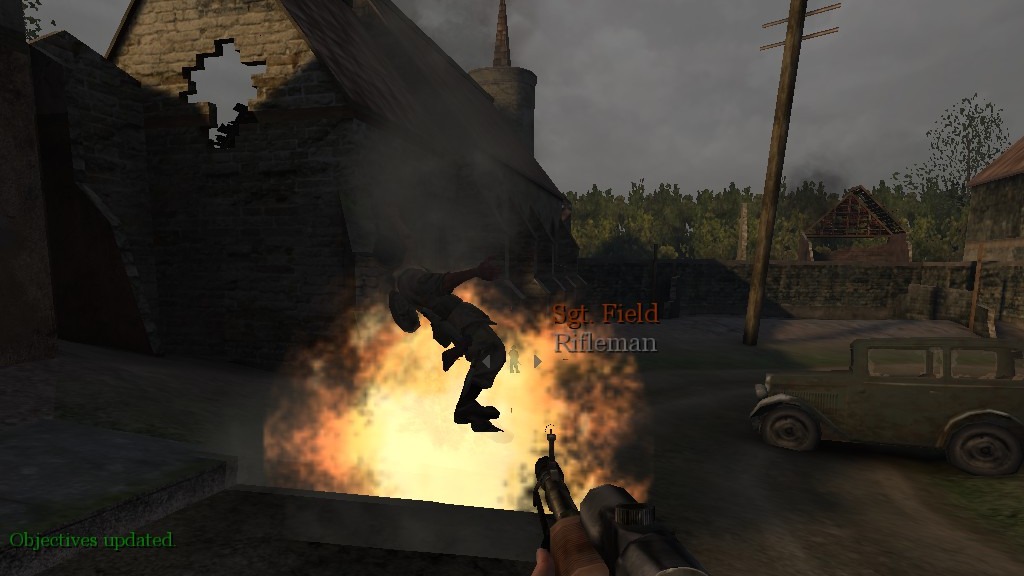
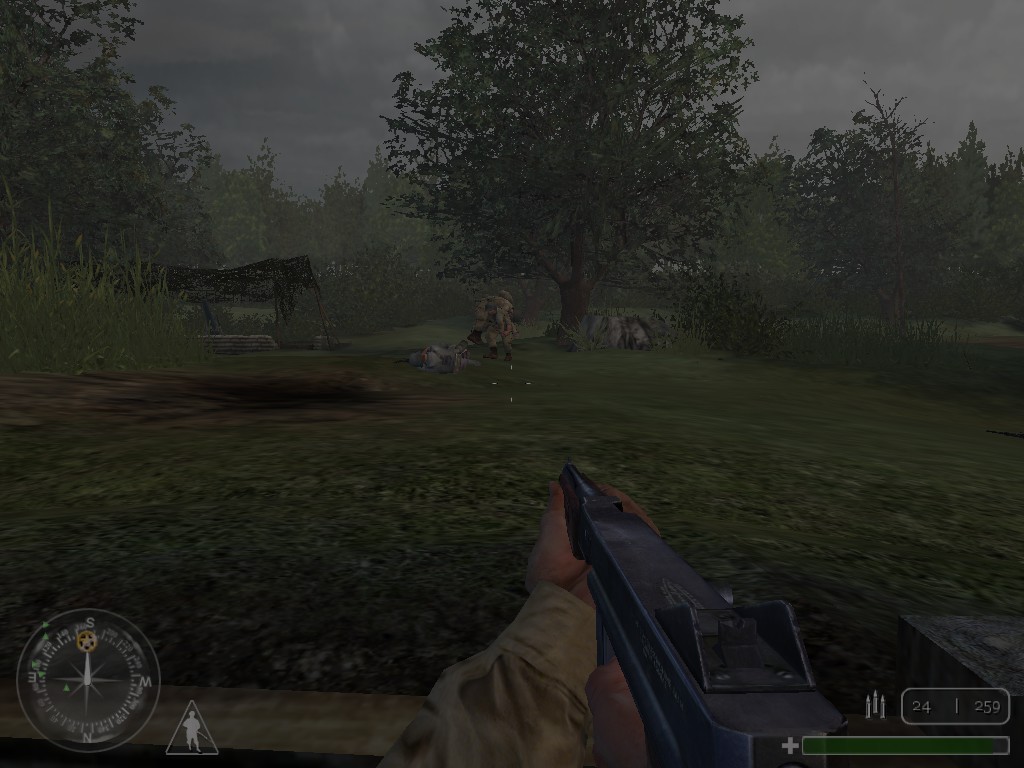
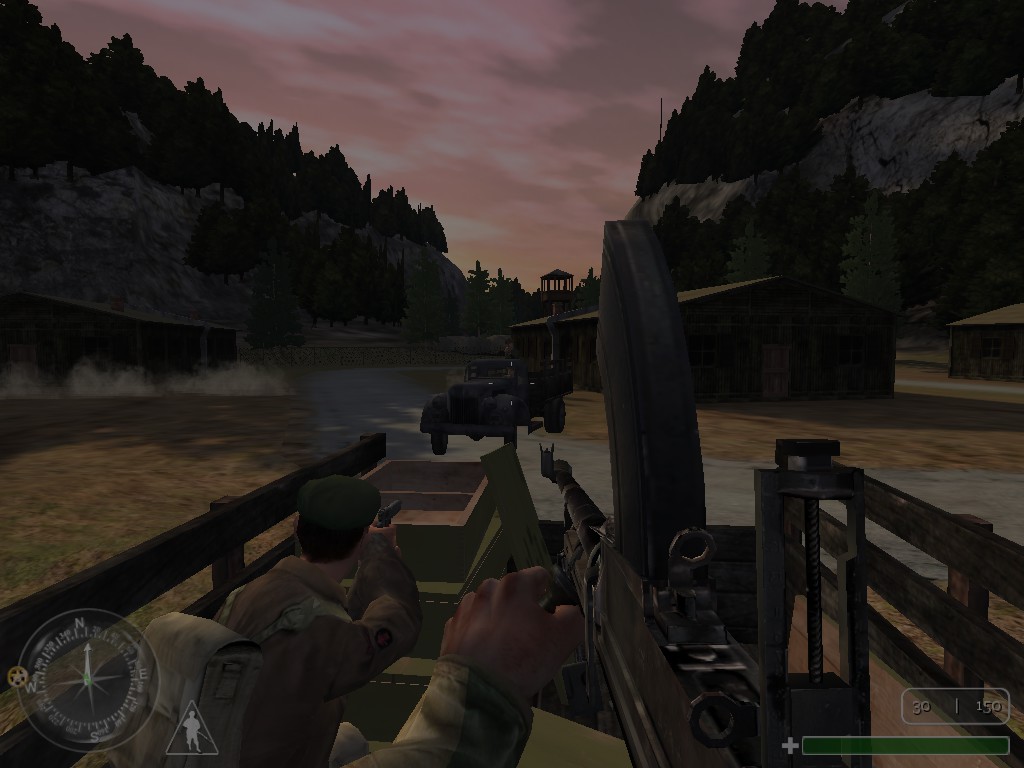
CoD I – This is it, where it all started. Released in 2003, it looks it, and plays it. Running on the good old Quake III engine, we’re in classic pre-Half Life 2 mode. After a now-quaint tutorial mission we’re split across three campaigns; as a US private clearing Germans out of towns and taking out anti-aircraft guns and emplacements, a Soviet solider doing basically the same but with NPCs calling me comrade instead and as a British chap doing sabotage and intelligence gathering. By clearing towns and taking out emplacements.

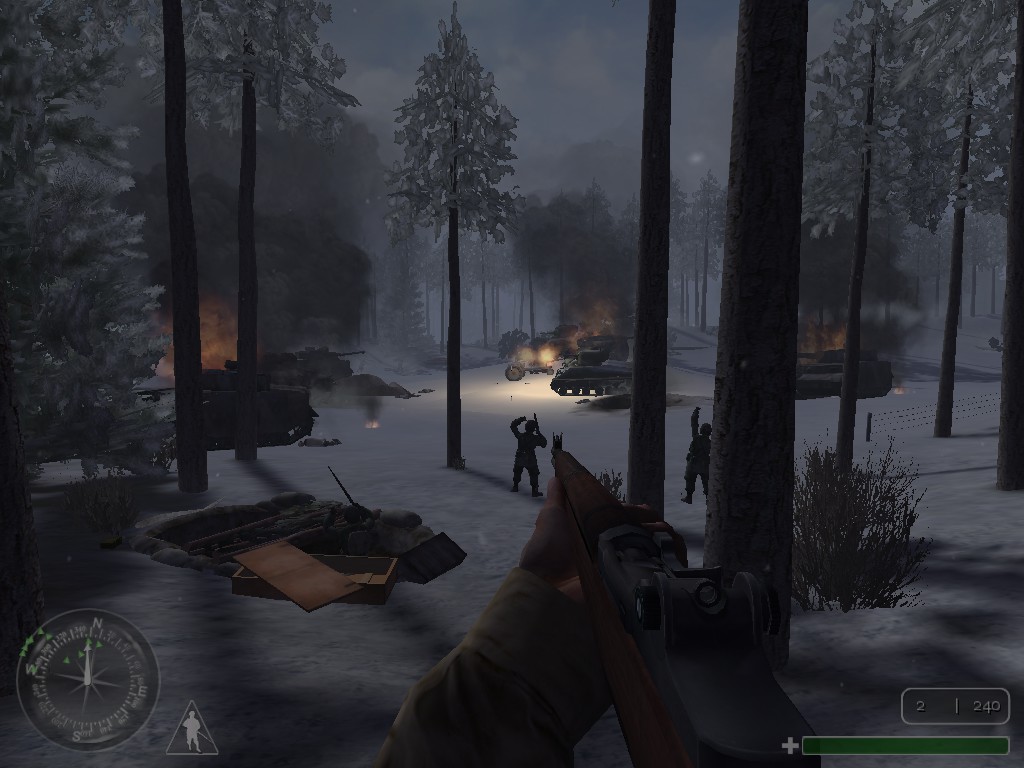
The add-on for CoD I, United Offensive is more of the same, but works well because we stay within single short campaigns. We battle through the Bastogne conflict before a plane gunner gets shot down and must escape occupied territory then make a last-stand as a Soviet solider holds a town until his pals with tanks can arrive. UO is actually a great little add-on, full of action and nice moments.

On the face of it, CoD I is just a regular post-Doom shooter that happens to be in a war setting – hold this area, rout troops, knock out AA Guns, find the documents, and lots of ‘isn’t there anyone else who can do this’ like suddenly being in control of tanks or being the only one who can snipe. Why are all FPS heroes odd-job men? There’s zero story beyond mission objectives, but CoD I has one important edge over other shooters of the era; watching old war films on a Sunday afternoon with your grandad.

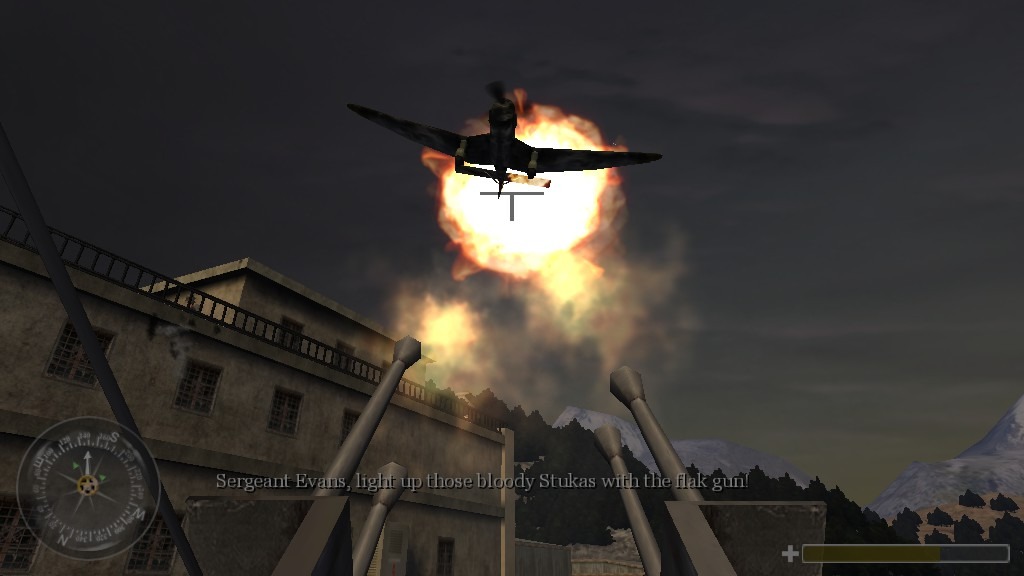
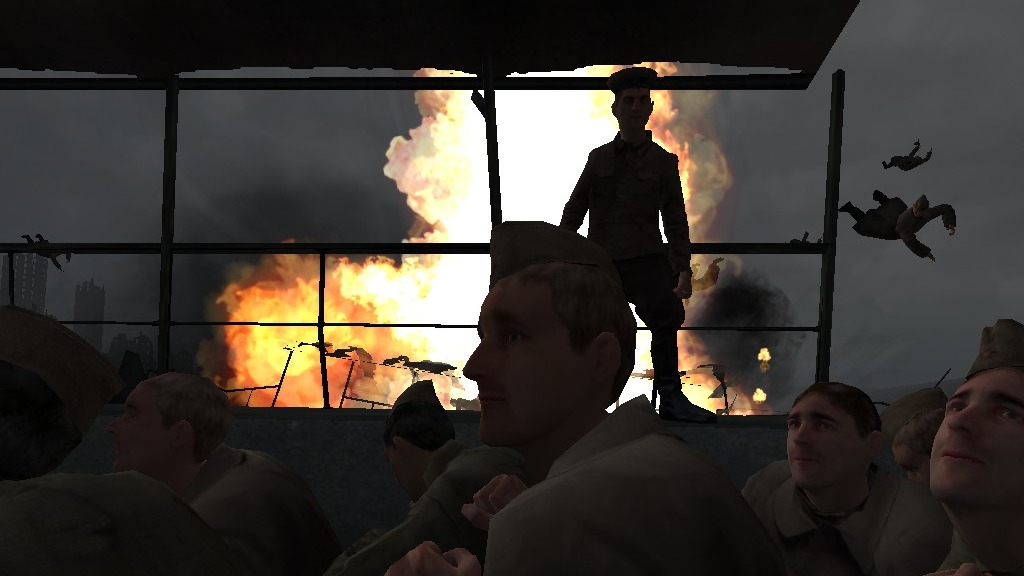
CoD I is pure old war movies; The Damn Busters, The Longest Day, A Bridge Too Far – it’s not about historical accuracy it’s about good old heroic grit and exciting set-pieces; we’re sent in cars to deliver messages while Germans try to take us out, firing bazookas at Germans on motorbikes, blowing up bridges, taking out Stukas, liberating soldiers from prison camps, sneaking onboard German boats, desperate last stands; we even have a mission at the dam the bouncing bombs took out. It just feels like we’re in an old war movie rather than war itself; I might be playing multiple characters, but I’m John Wayne.

I don’t get behind any of the characters or really understand half of what we’re doing, and the missions are compartmentalised with no bearing on each other; we’re just fighting through levels not a story. But I didn’t actually miss a story because I’m having a lot of fun. Almost every mission had a nice bit of adventure to it that I got caught up in and happily went along with. CoD I, Story 0. Maybe porn had the right idea.

CoD II – The first thing you notice about CoD II is how more advanced it is to CoD I. It’s almost unrecognisable from CoD I to look at; and to play it’s almost unrecognisable too.

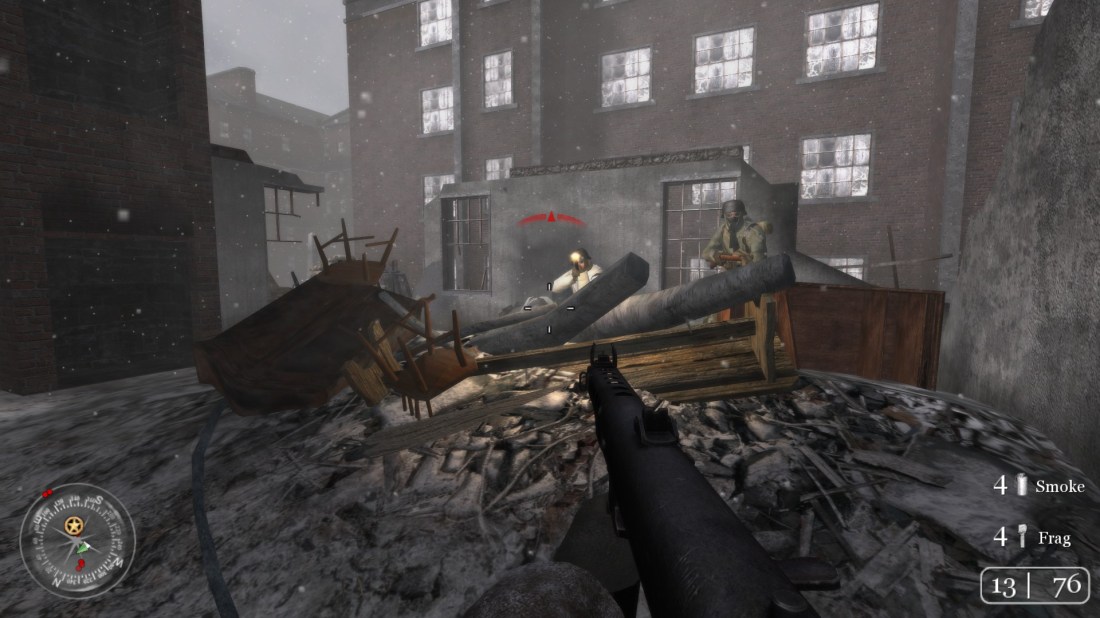
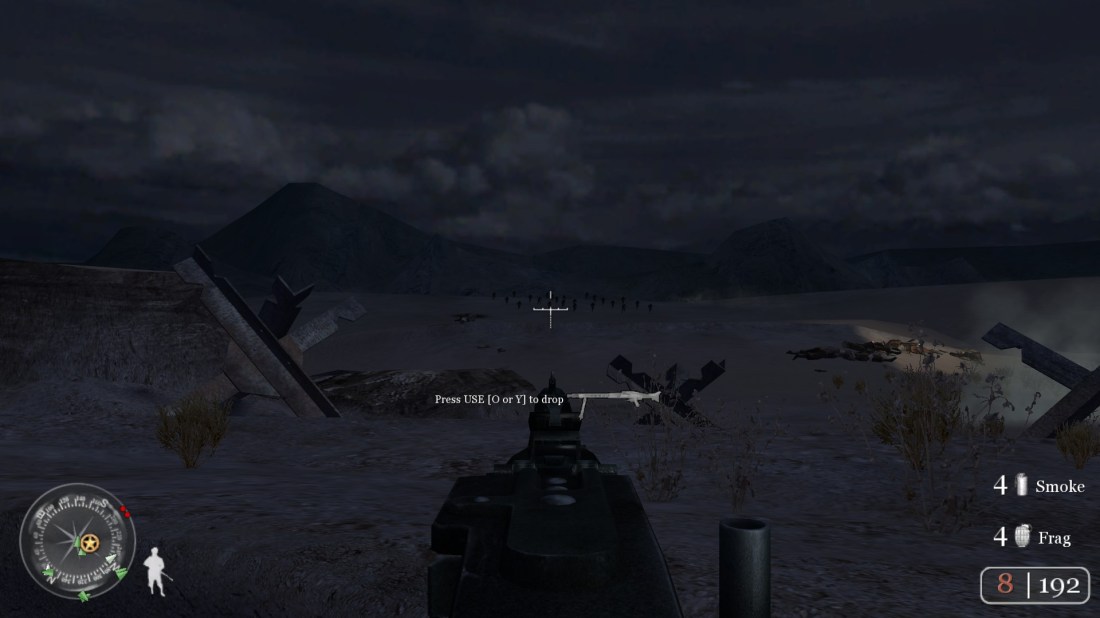
There’s a lot of advancement here – our silent heroes have consistent comrades that actually stick out from the other NPCs charging about, health packs have been replaced with replenishing health and the Germans are a lot more tactical and aggressive. The levels have great complexity and detail for the age – Germans emerge from smoke drifting up from explosions, there’s splinters and debris and the weapons have a meaty, realistic feel. It’s got a nice desperate panic to it. CoD II is a huge improvement. But it’s not nearly as much fun.

The British campaign is set in Africa where we’re putting down overwhelming German odds – early on it’s like we’ve wandered into Serious Sam as dozens of them rush the town we’re attempting to hold. The American campaign, which includes an element of storming Normandy on D-Day is more close-quarter re-enactments while the Soviet missions are often desperate skirmishes trying to push out embedded Germans. Again, there’s no story to speak of, just more real-world battles to act out, but without that derring-do that CoD I had, it’s lost that flair, the war-movie feel. There’s a nice Soviet level where we infiltrate a factory via steam-pipes which the Germans shoot at if they hear us, but in the open you notice the repetitiveness of it, that we’re largely confined to arenas where Germans respawn until we fulfil the same parameters over and over. How many emplacements do the Germans have?

It is action-packed but it gets a bit wearisome, especially when it falls back on Odd-Job Man so often; guess who’s the only one who can attach sticky bombs to tanks? I get that I’m here to be the hero, but I don’t feel like a hero. We just shoot. We’re interchangeable and there’s no personal story – we’re also jumping into another soldier on occasion, which is a first. And unfortunately, not a last. I’m surprised; I held the originals up as brilliant games that the MW ruined, but CoDII has all the makings of what irritated me about CoD. Still, it’s a bloody good shooter; as soon as I got my orders I was off and gunning. It’s just missing that Guns of Navarone tone. It’s missing a story, a purpose.

Both CoD I & II were good shooters and I did get caught up in the events, but I’m still not convinced there’s no need for a narrative in FPS. The war had one, but I didn’t. Maybe that’s part of the issue for CoD’s setting; no one person won the war, it’s not like CoD could have taken the Wolfenstein route and had a boss battle with a chain-gun wielding Hitler. It just never felt personal, like I was building towards something; every character ended just how they began. Then again, most shooters pre-Half-Life 2 were exactly the same so maybe it’s the era not the games. So what’s Modern Warfare’s excuse?

Next week, read part two of FBT’s call of duty playthrough as he signs up for The Modern Warfare Trilogy; a war that hasn’t happened. Yet. That will take some explaining surely…

Trials of the Blood Dragon

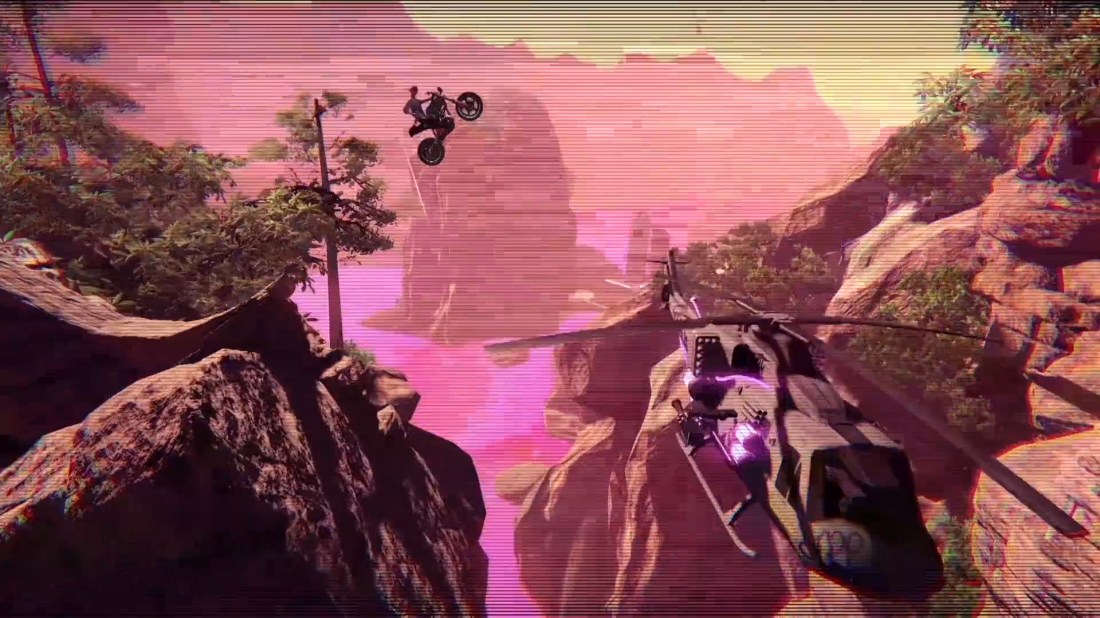
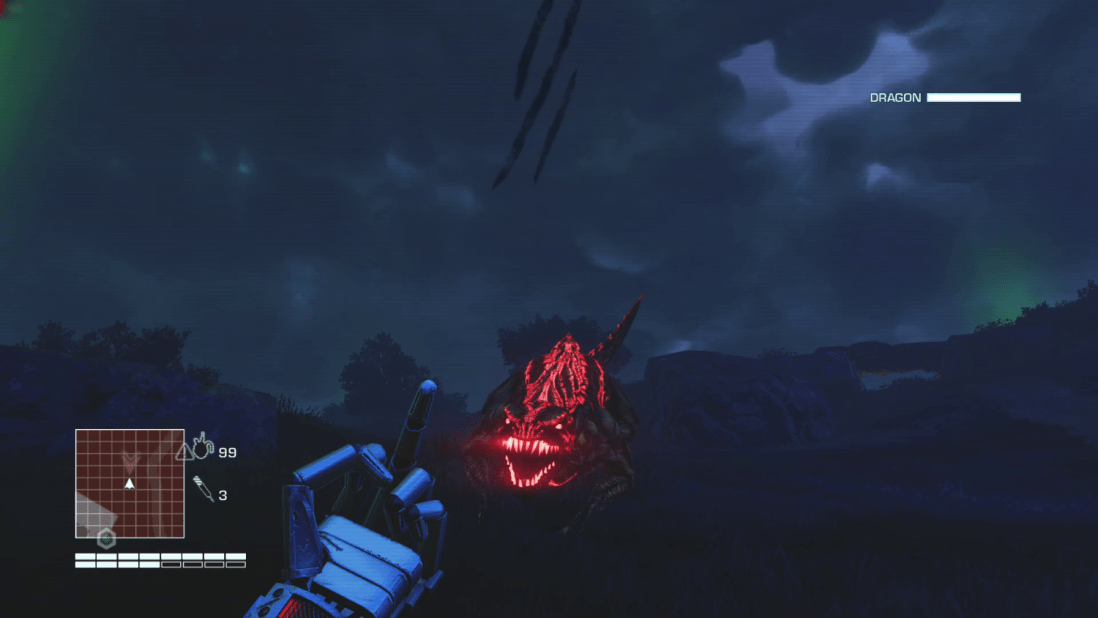
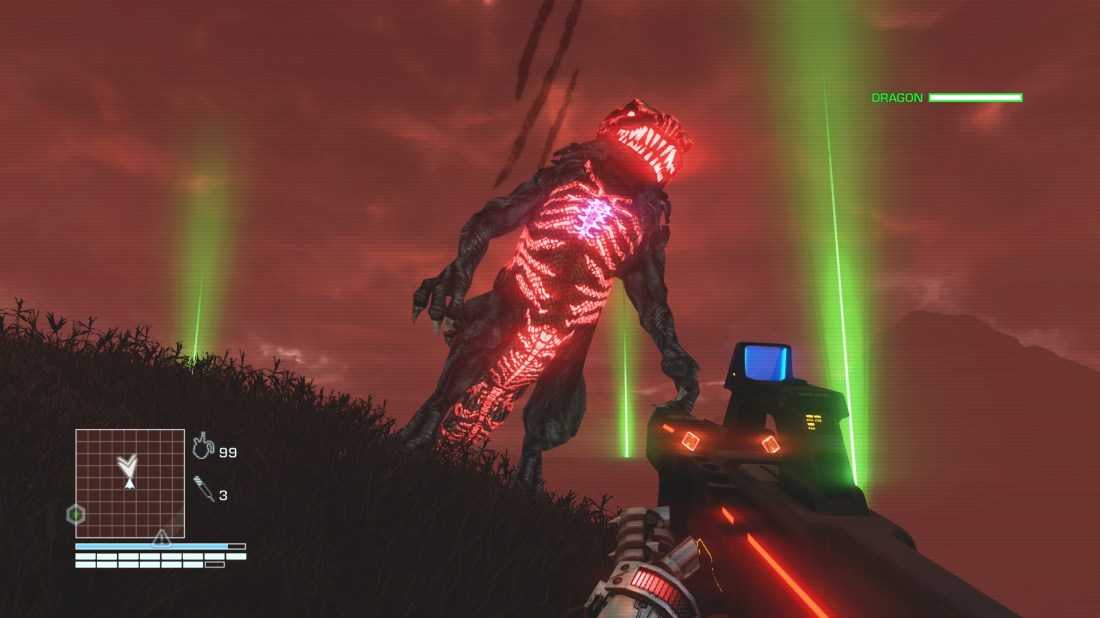
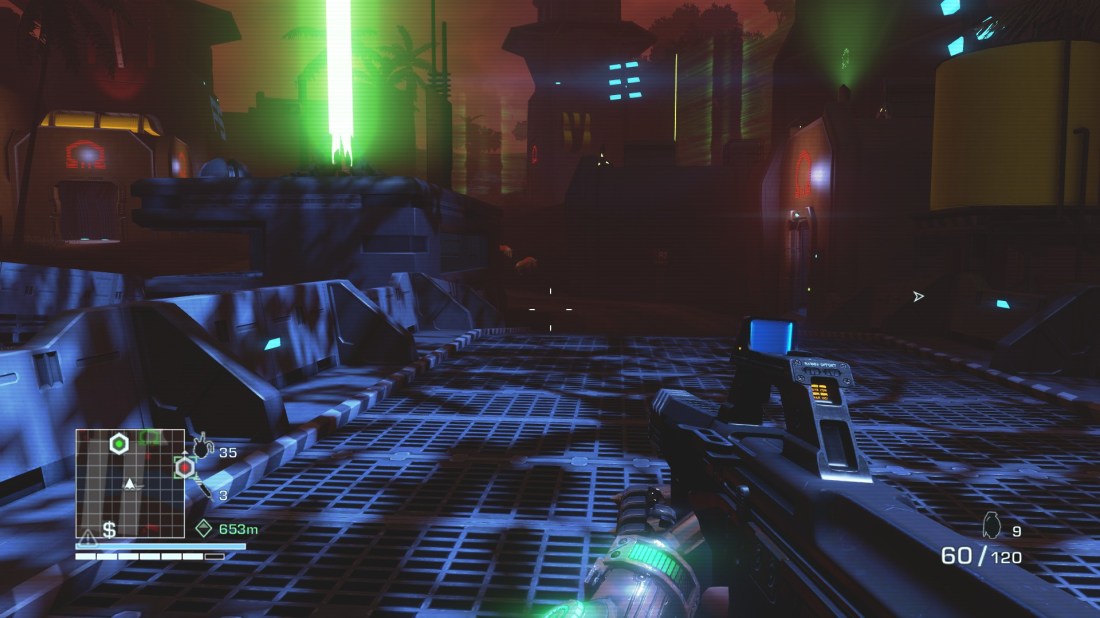
TheMorty gets distracted and ditches the sandbox for the saddle in Ubisoft’s full-throttle follow-up to FarCry: Blood Dragon.

“Blood Dragon… how the hell you not finished that yet tho!?” Having a chat with FBT about his latest FarCry review spawned an interesting question, as such a massive FarCry fan how had I not yet played the most fun and iconic game in the series?

The reason I never made it thought the Far Cry 3 DLC is a lengthy one. See, I did actually purchase and start playing it in 2014 on the Xbox 360 and I loved the first 50% of the game. It was fresh, funny and a light relief from the otherwise engrossing nature of the series. The problem came halfway through the playthrough when I received a knock at the door from Mr. Amazon Delivery Man who brought my shiny new Xbox One. Enamoured with my next gen purchase and the prospect of playing Titanfall and Forza 5, the battered old 360 went back in the box, never to be picked up again. Boxed with it, was my 50% complete save game for Blood Dragon.

Two years passed before Xbox released the DLC as a backwards compatible purchase, but by that point I’d already ventured through the Himalayas as Ajay Ghale and speared Sabre-tooth Tigers in Primal. It’s safe to say, I’d probably missed the boat. That said, when FBT gave me the latest in his long line of kick’s up the behind for not playing and finishing one of his top 50 titles, I felt the need to revisit. In I went to the store; Search: Blood Dragon. Returned: Two matches. One of those matches is the aforementioned sandbox title, but the second return was somewhat more appealing; A ‘Trials’ spin-off covered in glorious 80s neon.

I’m not much of a petrolhead, but I’ve always had a soft-spot for racing games, particularly those on two wheels. It stretches back to my very first console in the 90s and my in-the-box, single cartridge triple of ‘Mega Games II’ on the Sega Mega Drive. Alongside Columns and top down footy game Italia ’90, was a timed checkpoint arcade style racer game called ‘Super Hang On’. It wasn’t the easiest game for an 8-year-old kid – as you had to brake more than accelerate, but it was great fun and many a night I defied bedtime to try and pass that elusive finish line on the Expert European Stage.

I’d played previous games in the Trials series before, but they’d never really set the world alight. True to the ‘Kickstart’ nature of Trial biking, they’d always been a left-to-right platformer and while that was a decent yarn if you had a spare 20 minutes, you’d soon get bored with the lack of inventiveness. However, the same couldn’t be said for Trials of the Blood Dragon, this was something new entirely…

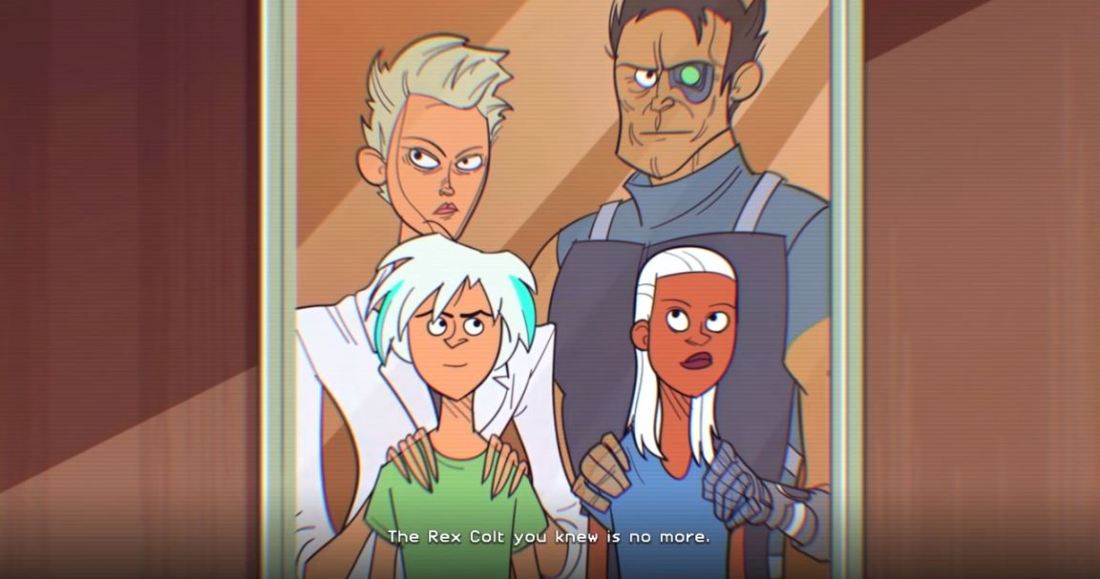
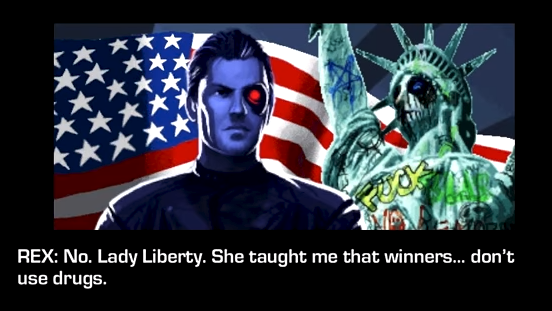
The game starts with the to-be-expected, classic tutorial level “Enter the Blood Dragon” (80s reference 1 of 167,893,640). Another tutorial, big whoop… Actually, yeah big whoop… It’s a level narrated by Mark IV Designated Cybercommando Rex ‘Power’ Colt, the protagonist from Far Cry! What’s not to love!? While I’m back-flipping my way to the finish line, over various hills, obstacles and huts, there’s some interesting insights in the narration that sets out to bind the two games together. The setting is quite some years after the ending of the Far Cry DLC and Rex is long gone. As Rex tells you, it’s not him on the bike – you’re playing as his Son. One of two twin-siblings, Slayter and Roxanne, that you get to control in the various assignments you’re about to undertake.

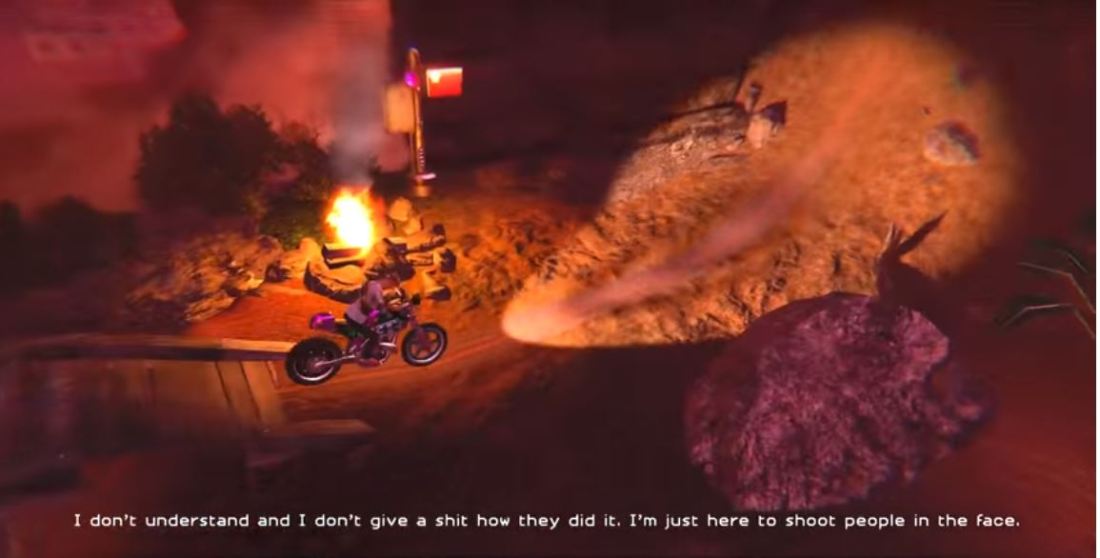
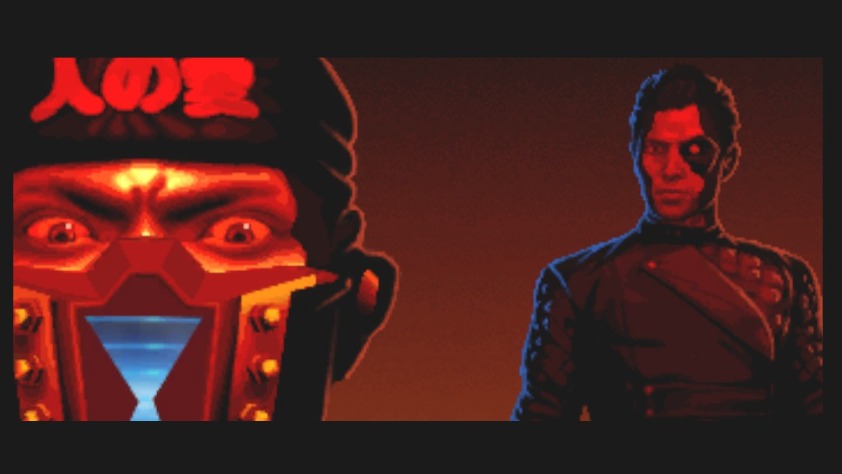
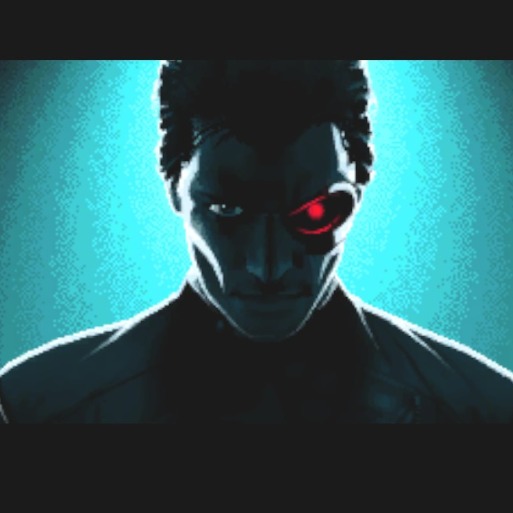
There’s the familiar comic-book cut-scene we’ve become accustomed to in the first Blood Dragon game but instead of that Shinobi meets Metal Gear Solid look, it’s drawn with a more limited palette. Re-using the same pink, yellows and reds as if it’s been animated in the style of Teen Titans Go!

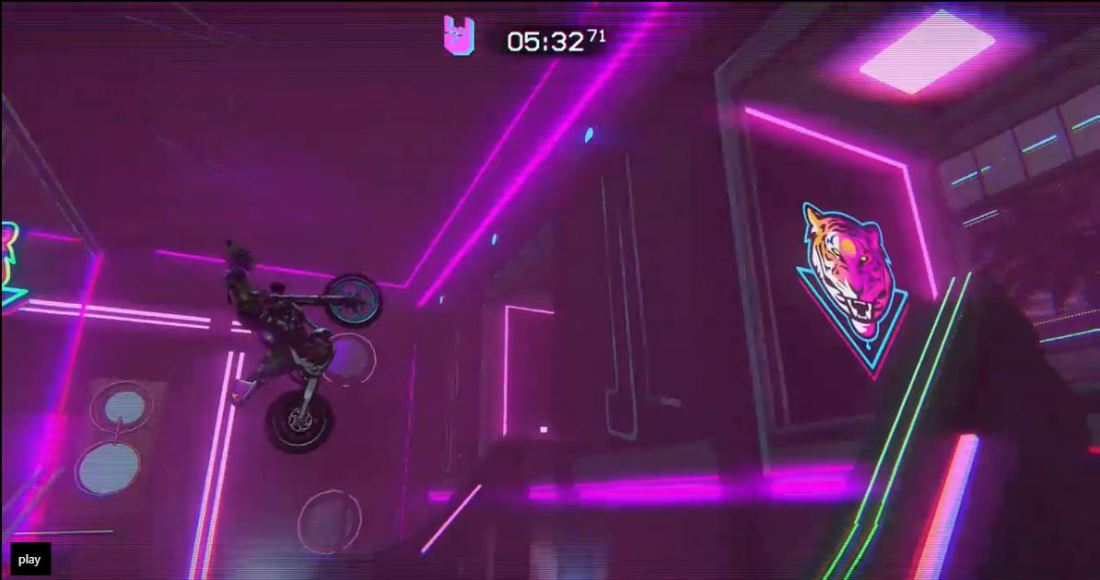
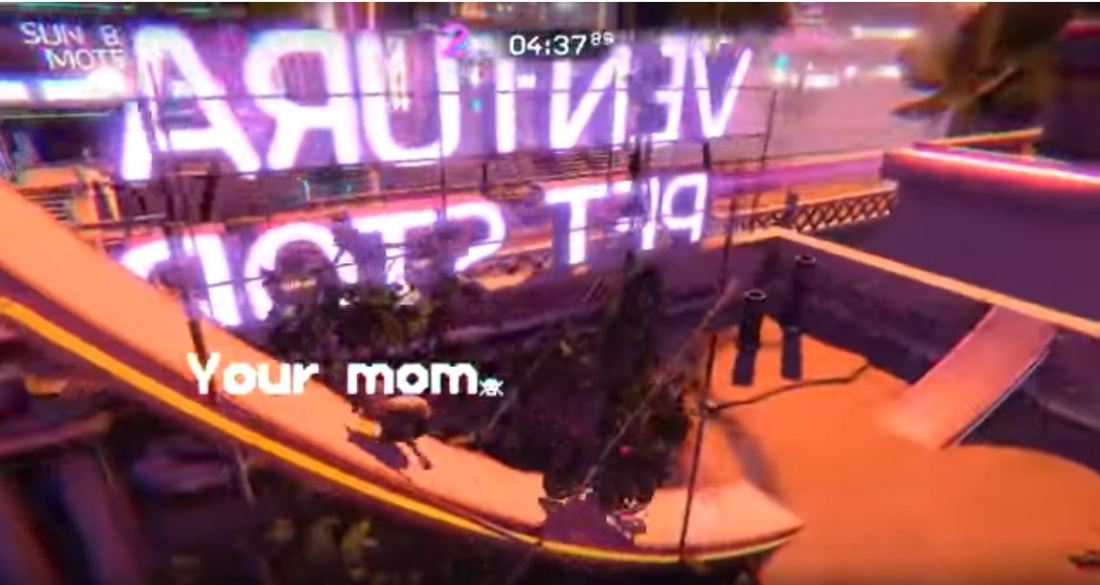
The first quartet of missions are in the familiar surroundings of a futuristic Vietnam. Rather than going prone crawling through the jungle, your goal is less stealth and more speed as we’re tasked with getting from one side of the map to the other within an achievable time limit –attempting not to frequently stack it en route. Trust me, that is a lot easier said than I can assure you is done. At first the narration is great, but after your 8th or 9th track restart it gets tedious

“My name is Rex…” STACK.

“My name is Rex Power Colt” STACK.

“My name is Rex Power. I’m a Cybercommando… my mission is to protect and serve the United States of America… for the past decade, I’ve…” STACK

Oh, for fu…

What I do love about stacking though is the taunts. The message that comes across screen as you die is a passive aggressive statement designed to infuriate you as much as it’s supposed to spur you on.

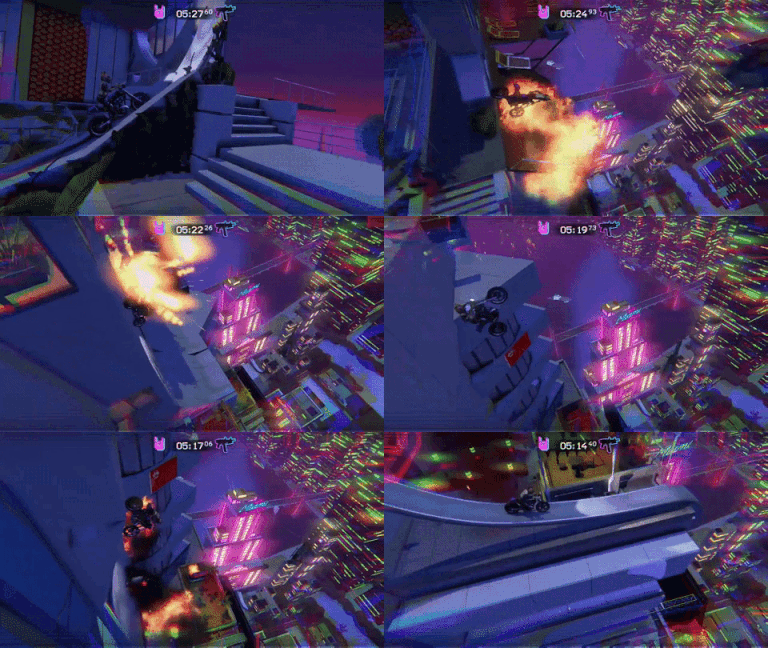
The gameplay itself stays true to the nature of trial biking. Your incentive is time and accuracy, the ‘Kickstart’ attitude and ethos. A well-timed brake gets you further ahead than gunning it and a tactical acceleration when landing can be like a mushroom boost in Mario Kart. There’s no extra points for BMX style flips and you’re not rewarded for pulling a trick like you would in ‘Matt Hoffman’s Pro BMX’ (the Tony Hawk of bike games). That said, it isn’t half fun attempting them.

It’s clear by this point in the game that Ubisoft’s are hoping to piggyback off the success of the popular FarCry DLC in order to boost another of its dying franchises – a trick all too familiar if you’ve followed their collaboration with Square Enix over the Assassins Creed/Final Fantasy XV DLC, just as the “remastered” AC games made their timely way to the current crop of consoles.

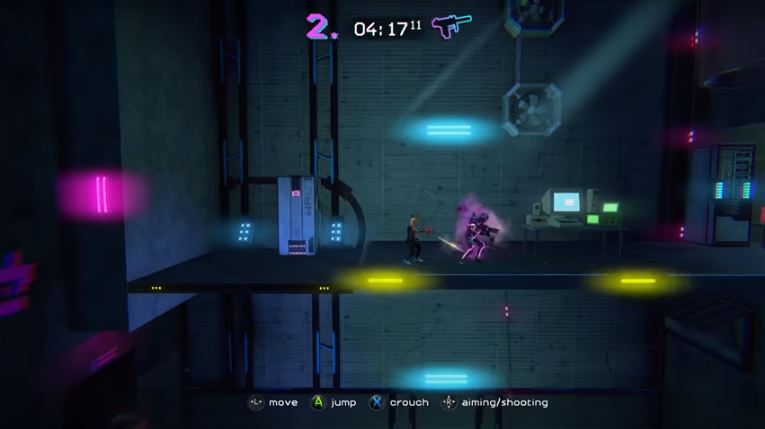
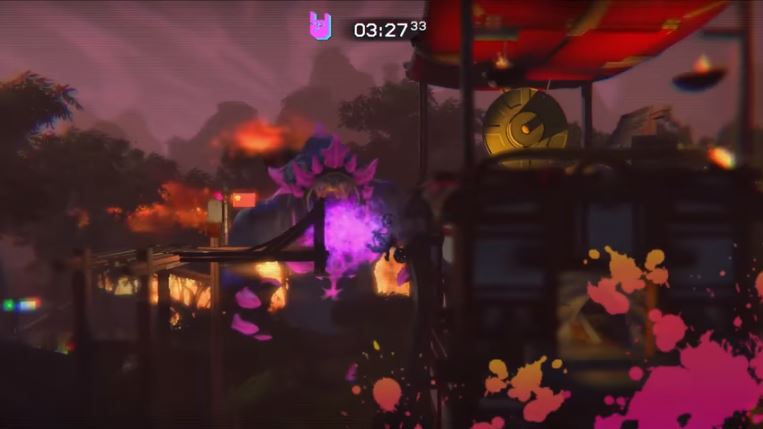
In-jokes about the 80s and Blood Dragon aside, by the second full mission it’s starting to get a little monotonous. Biking, not racing, doesn’t always have a good replay value and as a single-player game, the story is starting to wear thin. This is where the game is forced to mix it up. Roxanne gets off her bike half way through the trial run and we move into a 2D platformer, reminiscent of Assassins Creed Chronicles. As we navigate the classic traps and pitfalls of electric floors, bottomless pits and neon Lava, we make our way up to the control room and hit the switch before the time runs out. It gives it a bit of a different dimension and stops it from becoming plain.

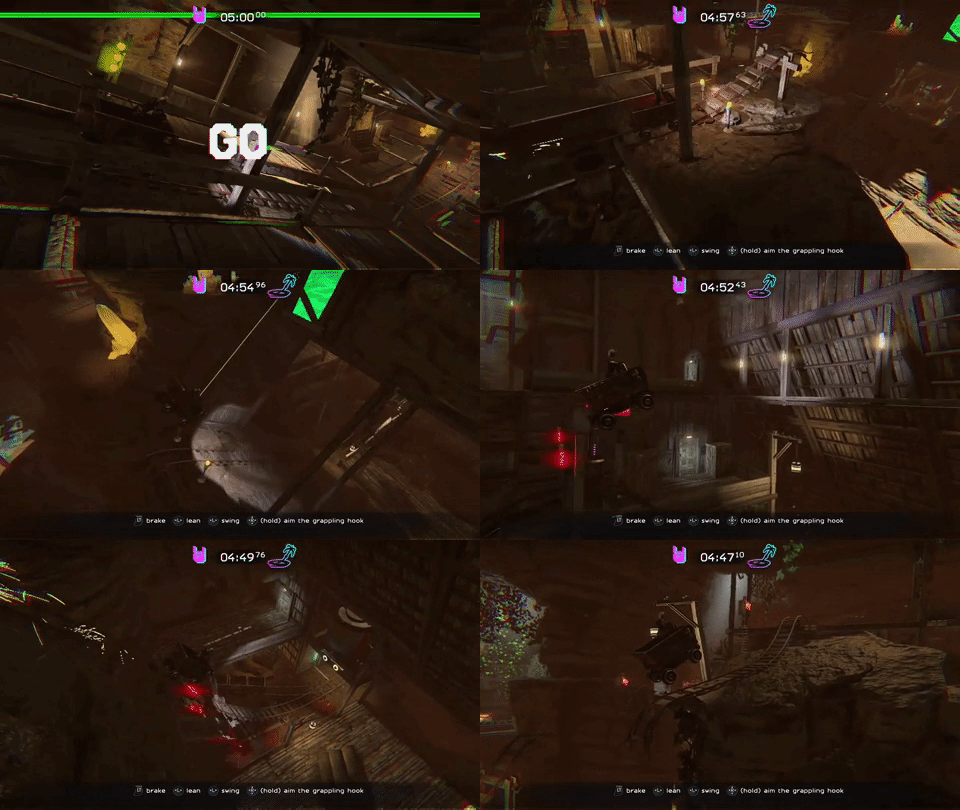
The game progresses in this way and there’s additional levels where you play an RC, a tank and even float around space wearing a jet pack. By level 3 you can fire a gun from your bike and later in the game even unlock a grappling-hook, where you can swing across the roof from one track to another – Batman-style. Something pretty fun when you’re darting through the rickety old mines on a clapped-out cart.

The game re-invents itself level-to-level and you’re never sure what to expect. While some of the tedium remains, the repetitive nature becomes a lot more palatable the more you progress. It gives itself a welcome break from the norm and the story itself provides a driver and a purpose to keep playing, something other time-trial based games fail to do.

The main issue with the game was its value for money. Unless you’re going for a 100% record on every track and aiming to get an A+ filled report card, you can beat the game in around 2-3 hours. Not great worth for a £15 purchase.

Arguably my biggest annoyance is the lack of Blood Dragons. I remember from my pathetic attempt at playing the original I was terrified when one stalked you into a camp and you spent most of your time hiding and trying to tactically take it down without being spotted. In this game, the Dragons are few and far between and when you do see one, it’s in the background or helping you out by wiping out the obstacles in your path – hardly living up to the game’s title.

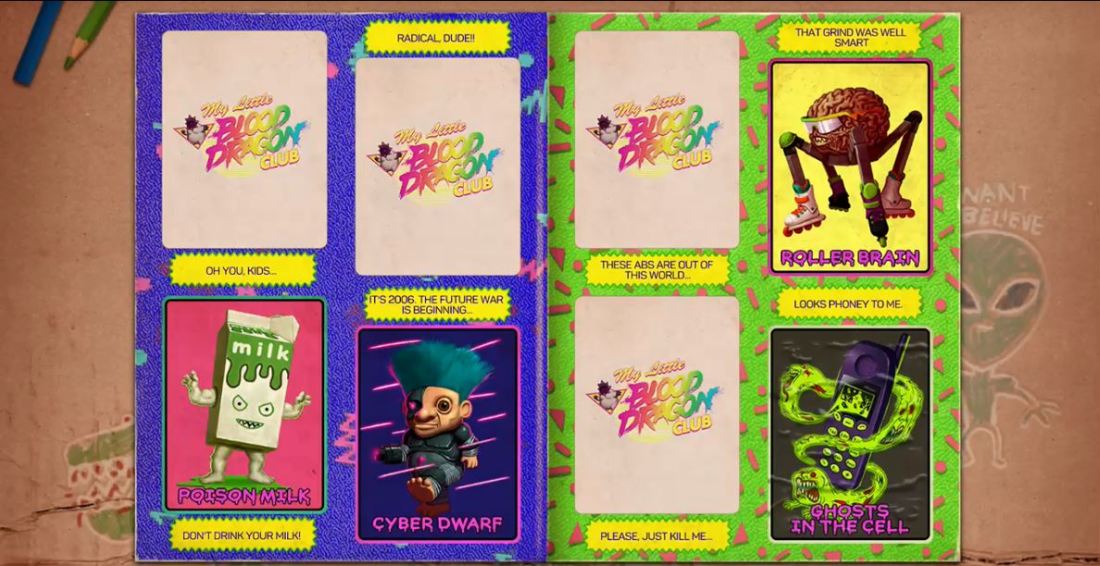
There are unlockable levels and collectable items in the form of stickers. Each carrying a vague, obscure and well before my time reference that I’m sure the older generation would love, but the game doesn’t really give you the opportunity to have a field day picking them apart. Figuring out where the developers were nodding might be a little giggle, but it still wasn’t enough to make me want to ace every level just to find them, by level 18 I was ready to just get from start to finish and move on to the next track.

The game’s biggest problem is it sits between two incompatible genres, it’s not quite good enough for motorbike-gaming enthusiasts and it’s nowhere near good enough as an action platformer. There’s no multiplayer and there isn’t a map creator/editor as you’d expect in other games in the trials or Motocross series – another thing which equally limits it’s replay value. There’s no character or vehicle customisation, what you see is what you get with this mid-market arcade game.

The pulsating soundtrack is good for the missions, but it’s not something you’d listen to on the daily commute to work. I’d argue the only way you’ll get something out of this game is if you’re an 80s Easter Egg hunter or if you’re a massive fan of Blood Dragon and are desperate to follow on Max’s story.

It’s a Far Cry from the original, but it’s a good effort and if you can pick it up for a fiver, it’s a decent way to kill a few hours. Go in with minimal expectations and you’ll probably find this is your cup of tea, but to me it just feels like a forced mess that bastardises two fantastic franchises into a soggy mess.

2016 | Developer; RedLynx | Publisher; Ubisoft

Platforms Win, PS4, X0

Daikatana

a second wind review

FBT is about to make Daikatana his bitch. But can’t without his buddy Superfly.

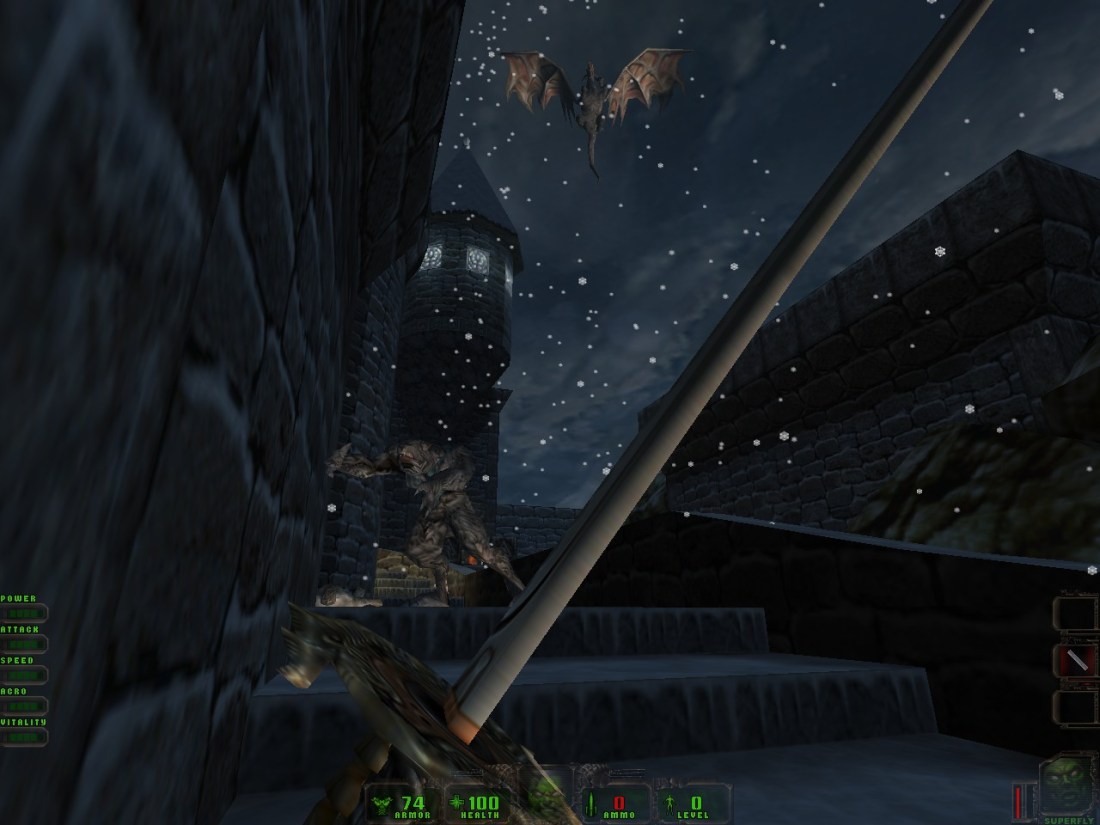
Daikatana is shorthand for “gaming fail”, but that’s as much it’s pained development as the actual game. It never had a chance; reviewers were gleeful in their takedowns after all the hype and baiting that came out of Ion Storm – 18 years on and contemporary reviews still include clumsy rewrites of Masters of Doom’s final chapters. It’s true, the development and the game are so linked it’s like playing Ion’s self-destruction but does it need that context now? Can you ignore all that baggage and play Daikatana purely on its own merits?

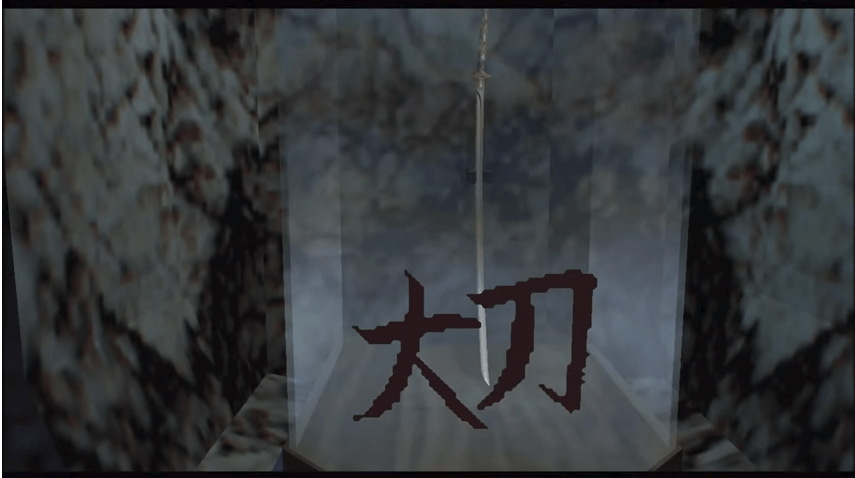
In the 25th Century the world is a disease-ridden place run by a single dictator, Mishima. Our hero, Hiro, is a sword-master (they still need swords in the Buck Rogers era?) is visited by an old man who explains Mishima wields a magical Daikatana and has been using it to alter history to his advantage. Why didn’t he just go back and buy a load of Apple shares if he wanted to rule the world? Hiro our hero is one of the few who could wield the Daikatana, so it’s off to fix the past and save the future, and maybe end up killing his own grandfather or something equally paradoxical.

At its core, Daikatana is great. The characters, twisting time-travel plot and the changing locations make for a great situation to find yourself shooting through. It does bear a resemblance to Quake; the changing time-zones and situations, but whereas Quake had only a quick “why we’re here” pep-talk for a narrative, Daikatana has a rich story experience; it really works as one of those post Half-Life era transitional shooters where we left Doom’s “find the red key” behind in favour of a story you wanted to see through.

Hiro must recover Mikiko, the old man’s daughter who disappeared in Mishima’s offices while searching for the Daikatana herself – problem is, Hiro has no idea where she is – but there is a guy who does, and he is one bad mother -*shut yo mouth*- talkin’ about Superfly.

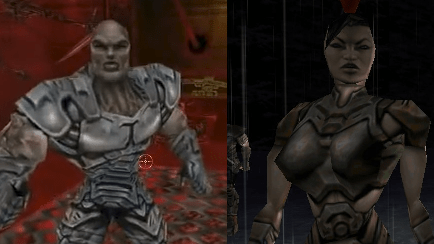
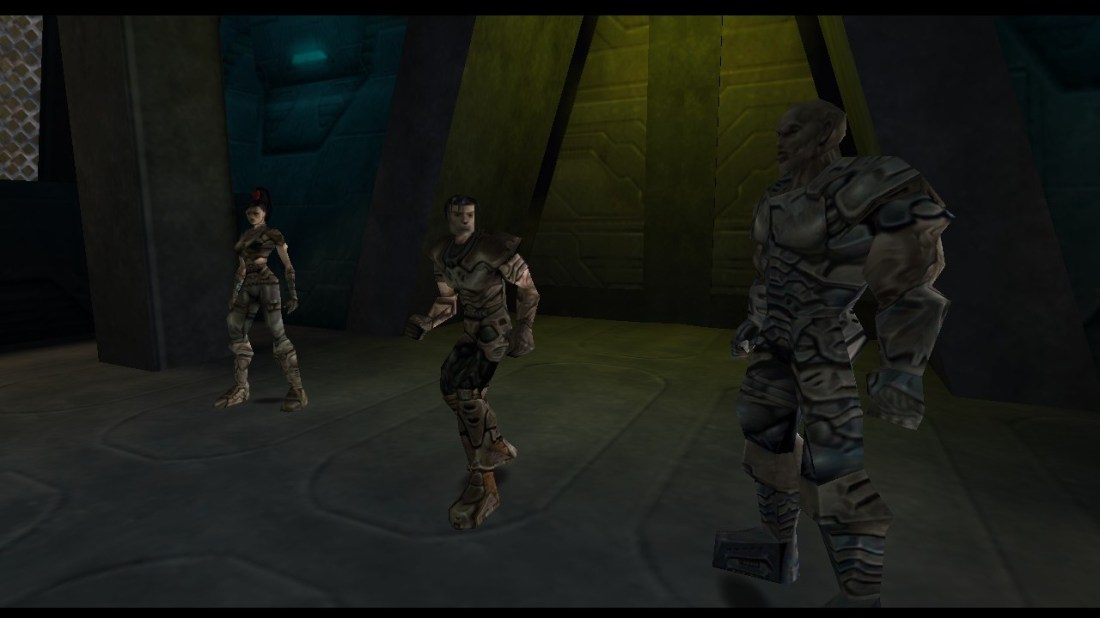
Superfly Johnson is basically Isaac Hayes with a shotgun. His voice is so bass it vibrated my speakers. And that’s not a euphemism. He is the ultra-cool, hip, honeyed-voice of reason, the ‘heart’ of the gang and the first to point out “what the hell” when things happen. And a lot happens. Once we recover the more taciturn Mikiko, who’s all business, it’s Daikatana time – but no sooner have we recovered it when Mishima rocks up and has it too, from an alternate timeline. Because both swords existing in the same timeline could cause the universe to implode if they touched (just like that Van Damme movie), Mishima can’t risk battling Hiro so uses his sword to bounce them around time, while Hiro learns how to wield its power.

Our first stop is Ancient Greece to battle Medusa before heading to the Dark Ages, where curing a plague is in order, before Mishima’s stronghold in the 2030s for a final showdown because, presumably, Mishima ran out of time-periods. Oh there’s also the ghost of that old man knocking about who helps Hiro master the Daikatana. Or maybe it’s not him; I was distracted looking for my buddy Superfly.

Superfly and Mikiko are perhaps the most derided sidekicks in gaming, more so than bloody Natalya. Yet, they have their own backstories, impact and presence; the way they and their motivations are threaded into the plot is better done than most modern games where sidekicks just tag along or act as our Hypeman; those guys are invested – Superfly to deliver a can of whoopass to those who wronged him, and Mikiko to avenge her father and put right her ancestor’s legacy. A tremendous amount of effort has gone into them, into making them a critical part of this adventure. And then the cut-scenes end and …

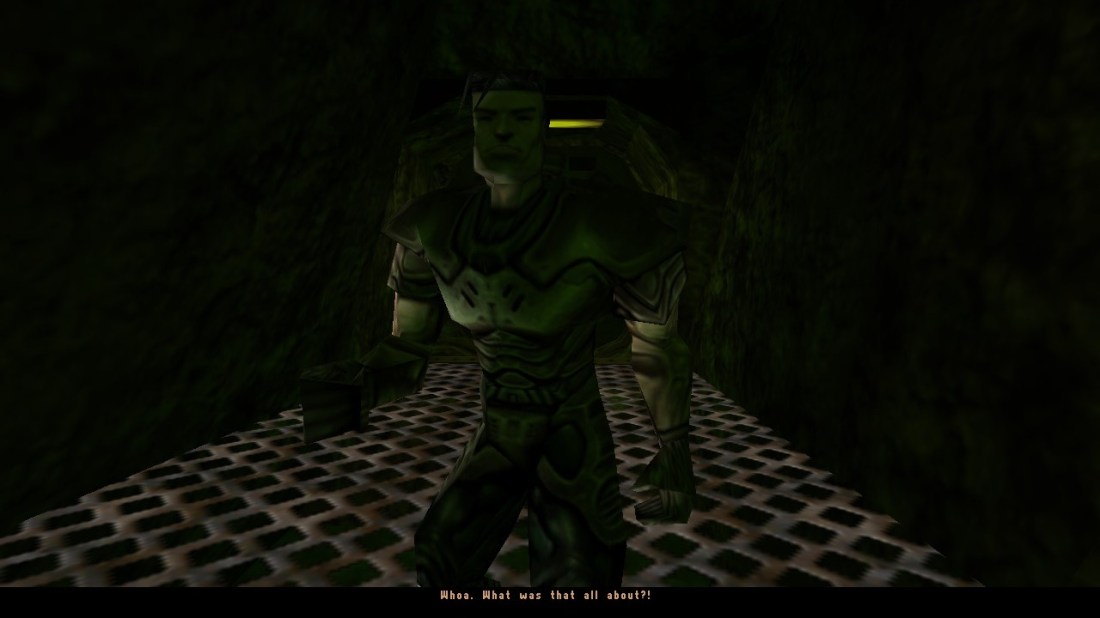
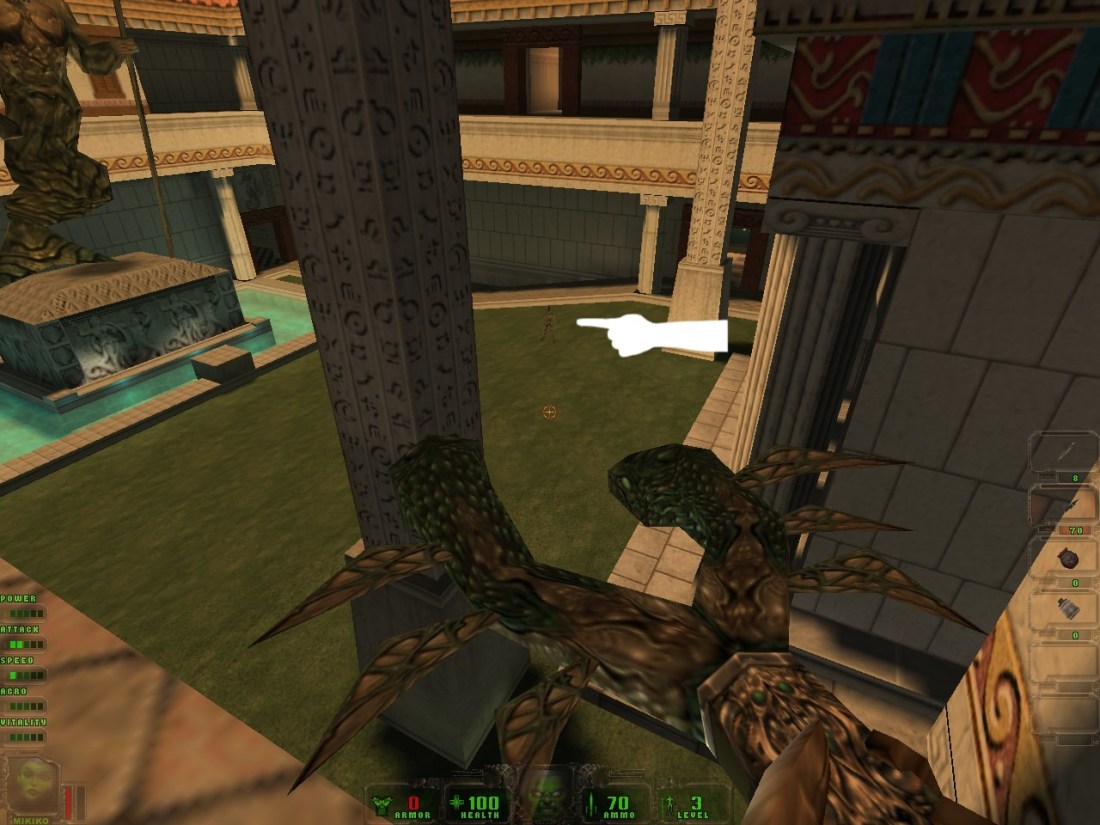
Once Superfly and Mikiko are free it all goes to hell. If we could get there. They pay you no attention, wander off, stop moving, get lost, fall off things or get stuck in them, walk into obvious dangers, refuse to take orders and even take off when the fighting starts. Then they come skulking back when the coast is clear. Having one errant sidekick is bad enough, but two? It’s impossible to corral them. You have four basic commands but they don’t really work and you have to switch between sidekicks so by the time you’ve stopped Superfly walking off a cliff, Mikiko’s disappeared. If anything, this game has given me a new appreciation of games like Mass Effect and how they managed sidekicks. Mikiko? Stay there, I’m just gonna go look for …

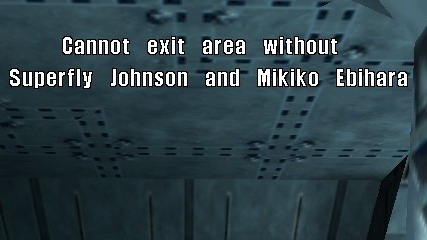
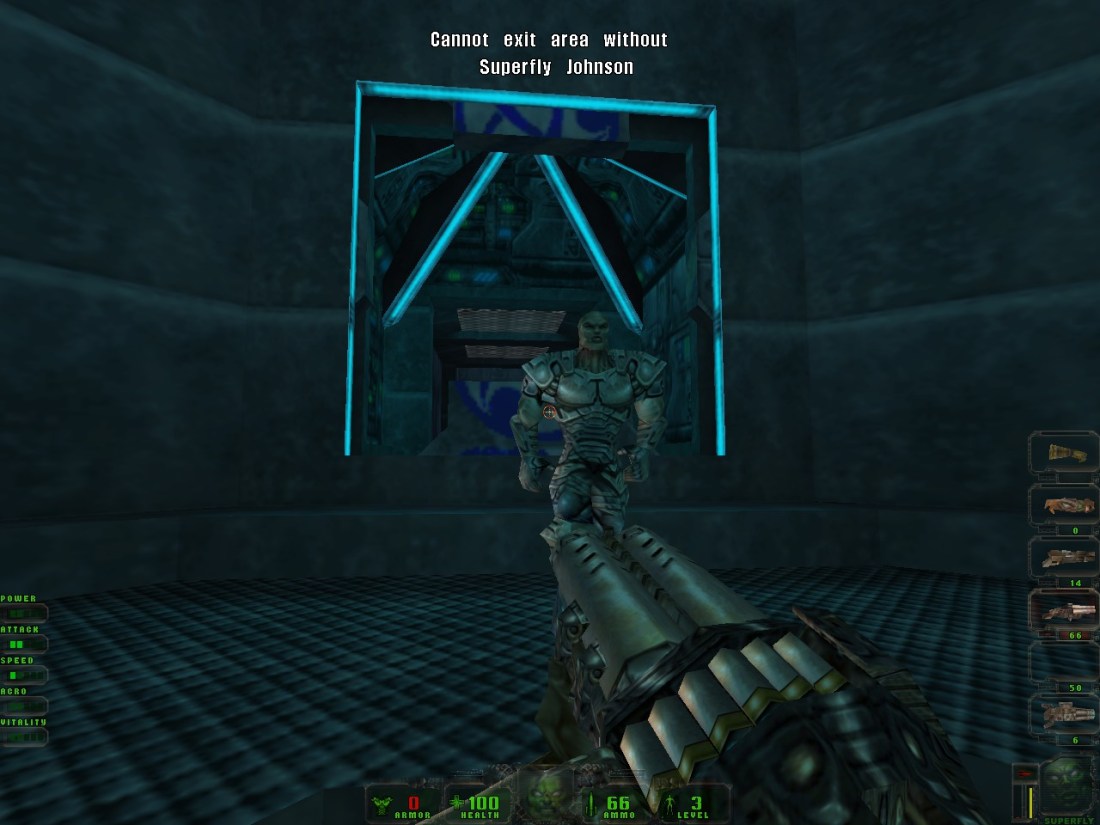
… you don’t even get a warning they’re under attack, just a Game Over (not that you’d be able to find them in time…) They misbehave too; they’ll promise “I’ll wait here” and when you return – they’ve gone. And they can go for miles – which leads to the biggest issue and one that surely must have occurred to the Devs at the time. You can’t pass through a loading screen without them, getting “I can’t leave without my buddy Superfly/Mikiko”. If they’re there, they’ll take their sweet-ass time to reach the exit, but if not … it’s backtrack time; it’s not an overstatement to say a quarter of my time was spent trying to find them. Daikatana is like a FPS Hide and Seek. Worse, you might have Superfly but not Mikiko so you go look for her, get lost, find her, walk her back only to find Superfly’s now gone … Shooters rely on quick thinking and quick moving. You can’t be in shooter mode and protect mode; I have a new-found respect for parents with toddlers, you look away for a second and they’re gone. Daikatana is one long escort mission and that overwhelms the fun. Fan-made mods remove or alter them to make it easier but come on, they’re ruinous. Oh, this level looks interesting, let’s …

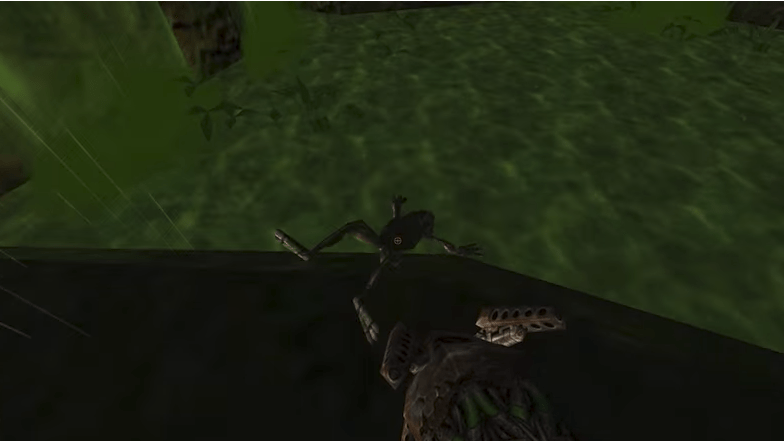
So the sidekicks are a major, game-breaking problem. But the huge variations of creatures, weapons and time-periods make up for it, right? Sure, but first we have to deal with frogs. Frogs!? What were they thinking? But they’re cyber-frogs. Okay. Cyber-frogs?! What were they thinking?! Why would a super-villain even think about wasting R&D time inventing Borgified Frogs? And then it’s mozzies dive-bombing you. Those things are worse than Fallout’s Botflies. Why is the first level just looking up at the sky or down at the ground?! To hide the fact that the opening levels are a murky brown, green, yellow as we push through a … I don’t even know where we are. I thought we were headed for Mishima’s building? You went via a swamp and the sewers? Can’t just find a side entrance Hiro?

Mishima’s building is fairly standard corridor shooter stuff, but throughout there’s NCPs that do nothing but blurt nonsensical lines and run screaming. There’s so many it’s like Serious Sam in reverse and the noise of their collective shrieking is deafening. Plus we meet scientists doing horrible experiments but they disregard Hiro even when I shoot a couple. Why do the janitors run screaming but the guys we’re more likely to be interested in ignore us? Then there’s the level design. It’s incredibly uneven. Some levels work quite nicely, others are a complete mess of backtracking and illogical layouts. And it doesn’t look great either. The art design is basic like you’re on low settings and the cut-scenes are jerky and ugly; I was never a fan of the Quake engines, finding the 3D actually made the world less vibrant than Doom or fluid like the Build Engine, but Daikatana is a game I imagined would have an energy to it, detail, but it’s often got a ‘fuck it’ look to it.

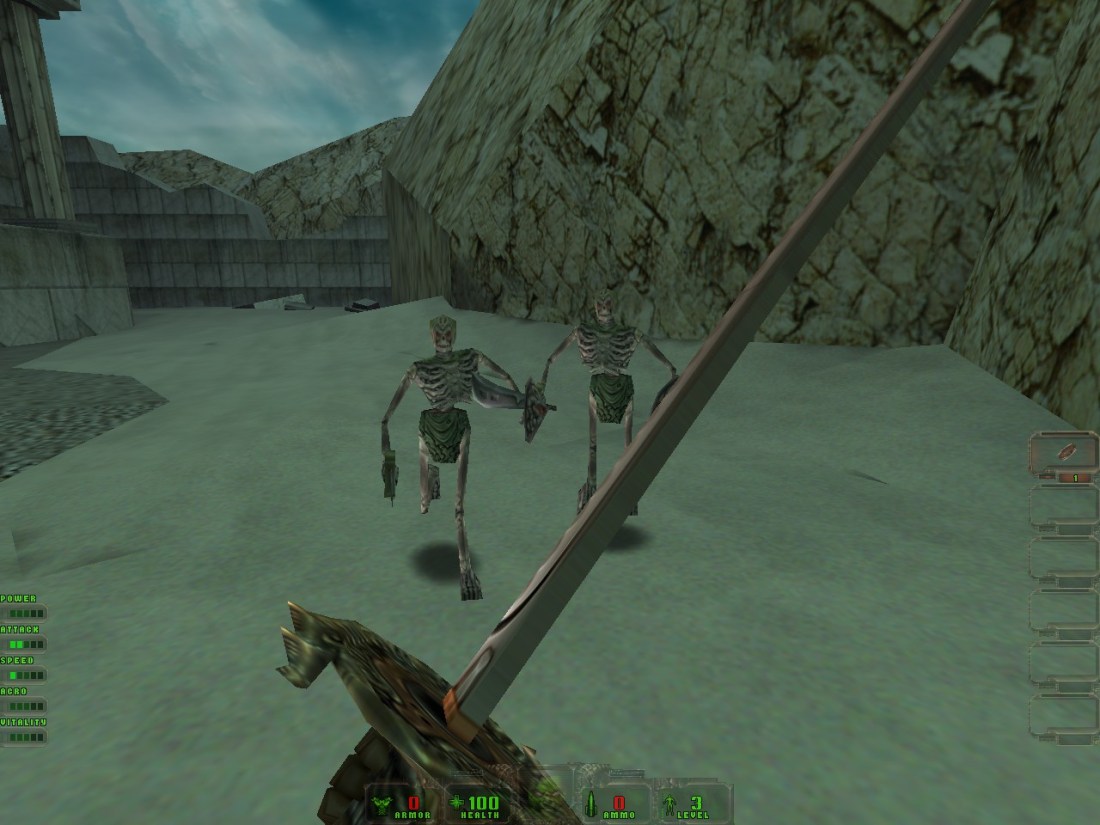
Ancient Greece is more like Ray Harryhausen’s Ancient Greece. We battle giant spiders, skeletons, iron gladiators – it’s by far the best episode, more open, interesting and experimental, and while Dark Ages is bleak and fantastical, the final sequence is largely a reheat of the first with more repeating NCPs and similar fights. The game had 24 levels all in, split between those 4 locations but they all outstay their welcome by 2-3 levels. If Mishima had just managed to squeeze in one more trip it might have flowed better. The main problem is they’re effectively reskins. While each is a different look and has its own set of weapons and nasties, your experience never varies – had Greece seen us doing swords only, Dark Ages had a bit of magic and the final base all sci-fi or facing the horrors that were implied in Mishima’s first headquarters it might have gotten interesting; or have the areas impact Hiro in some way so he’s prepared for his Shogun Showdown – not that it would matter, yo’re too busy looking for Laurel and Hardy anyway.

Like the Daikatana, I’m split on how I feel about this game. It’s both brilliant and frustrating. From a distance, Daikatana is pure genius; but when you get into it, nothing works; the cutscenes reveal a great story but go on for huge amounts of time draining any drama. The trio of heroes develop dynamics but never really build on them, the creatures are interesting but because of the level-sizes they get repetitive and each time-period is great to get into then dull mid-way through. And as a shooter, it’s effective but spoilt by the brats wandering off or getting their skulls split.

As much as I hate to admit it, Daikatana just isn’t very good. It reminds me of SiN – a well-intentioned failure that tried but didn’t quite land it, but Daikatana just crashes.

Although I said I’d ignore the development (and not rip off Masters of Doom) there are elements to Daikatana’s background that should be repeated more often; the game was made by kids Romero hired after playing their Doom WADs; for a Triple-A Development Studio to hire kids whose only skillset was killing it at Doom is huge (okay, maybe it was a folly, they had no idea what they were getting into, but neither did Romero when he made Doom) and many of those guys went onto great game careers. But most importantly, it shows that Romeo’s Ion Storm was all about the gamer in a time when the tech was becoming the most important thing. We care how it looks and how it plays, but what we remember is why we were there and what we did; one of my fave games is Indy and the Last Crusade (1989) and it’s not because of how it renders the fine leather jackets I’m selling. It’s the soul of a game you get, and that’s what Romero shot for – maybe we’d have less reskins and reheats if more Devs took his lead.

Daikatana, if I’m honest, is an awful game, but it’s heart was in the right place – and nowadays it seems there’s no place for heart in gaming. Ironically, games could do with more Superfly.

2000 | Developer Ion Storm, Publisher, Square Enix

Platform; Win (Steam)

Aliens: Colonial Marines

a second wind review

“Marines! We. Are. Leaving!” What about FBT? “Leave him, he likes Aliens Colonial Marines”

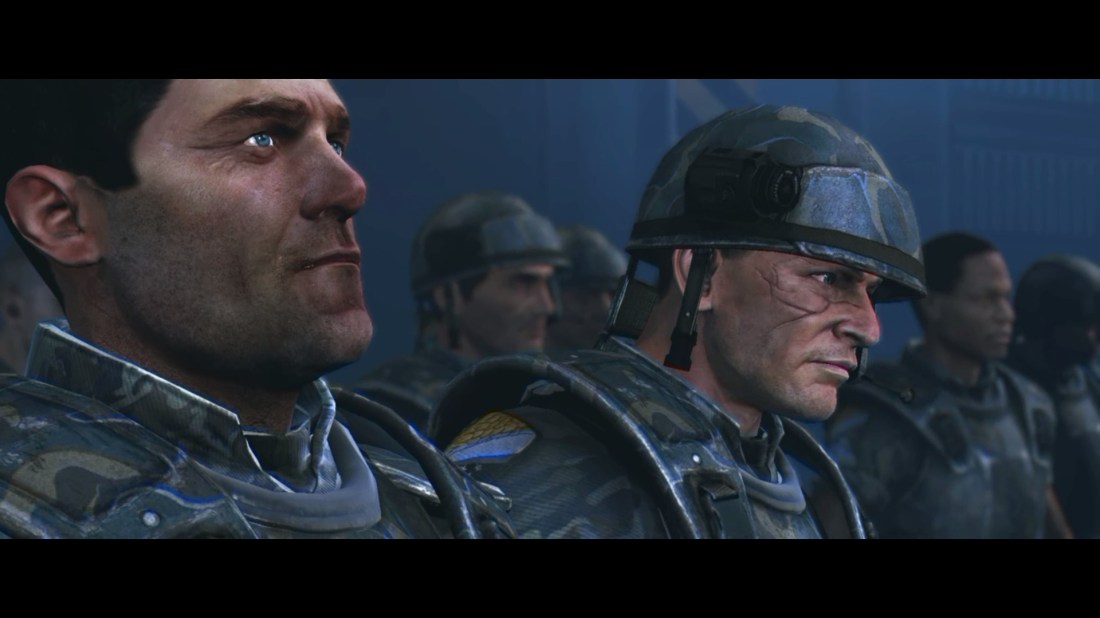
There’s few recent games with such a bad reputation as Gearbox’s Aliens: Colonial Marines. Except Gearbox’s Duke Nukem Forever. Some games fail because they don’t live up to the hype, some are mauled for being dated or half-finished and some are rightly slated for being shit, but A:CM was like a GOTY disaster; all fails included. Announced in 2008 and released in 2013, it was hammered by critics as an unfinished, generic FPS that skated by on the good will of its inspiration, it looked bad and it played worse; a buggy, glitchy CoD-wannabe wrapped in a hasty, nonsensical story – the whole thing stank. Then it got worse.

Those involved protested their innocence even though they looked more guilty than Burke holding a Facehugger over a sleeping Ripley; stories of a tortured production involving multiple developers and a Borderlands-distracted Gearbox there were recriminations, lawsuits and insider-leaks that made A:CM less a game and more an exposé of game production processes; developer hyperbole, publisher pressure and sly marketing culminated in a class-action that saw Sega paying a $1.25 million settlement to customers who bought it in good faith.

But, despite all that, I was curious about the Howard The Duck of gaming. Finding it on Steam for a fiver with all the DLC, I decided to try it for a laugh; expecting a quick Rage Quit, I was all set to ask “How do I get out of this chickenshit game”. And then …

Set as a sequel to Aliens, we open on a garbled distress call from Hicks, explaining the Aliens backstory. Several months later, a Colonial Marines rescue ship, the Sephora finds Sulaco, mysteriously back in orbit around LV-426. All right sweethearts, what are you waiting for, breakfast in bed?

To look at, you can see why folks back in 2013 were a bit disappointed. It does look very 2005. Even though it was built on Unreal 3 – the graphical marvel that powered worlds like Bioshock Infinite – this is a bit rough (one of the biggest criticisms; the trailers looked next-gen). But while it’s not breath-taking it’s not bland either. There’s references to Aliens’ Art Design, the layouts are nice and not too linear, there’s good light effects and detail. I do feel like I’m in Aliens. I’m Corporal Winter, just a grunt. No offence.

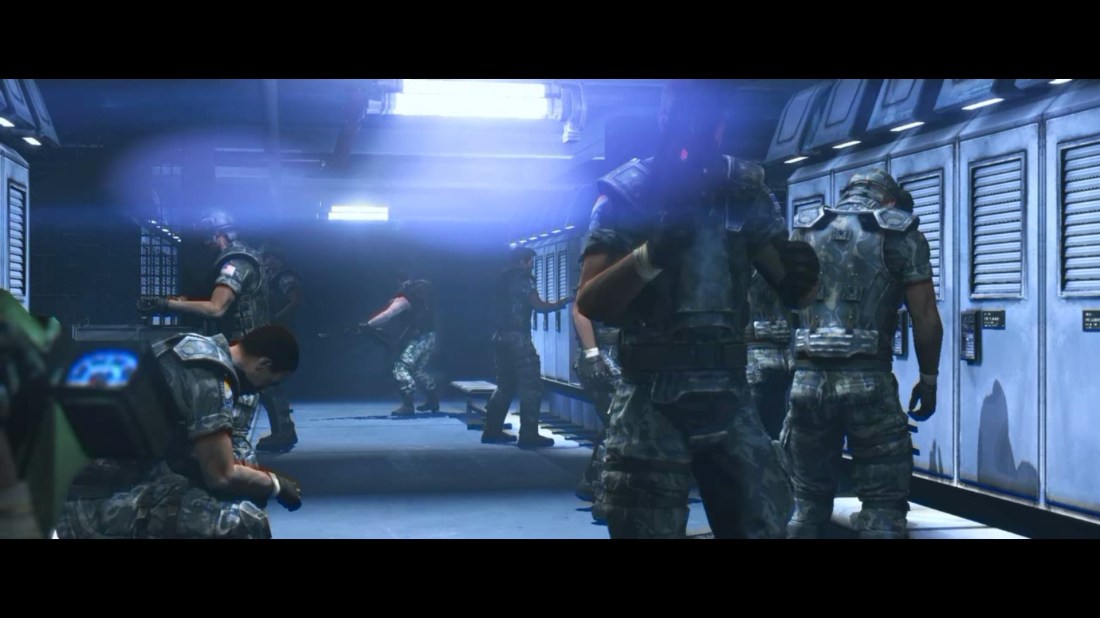
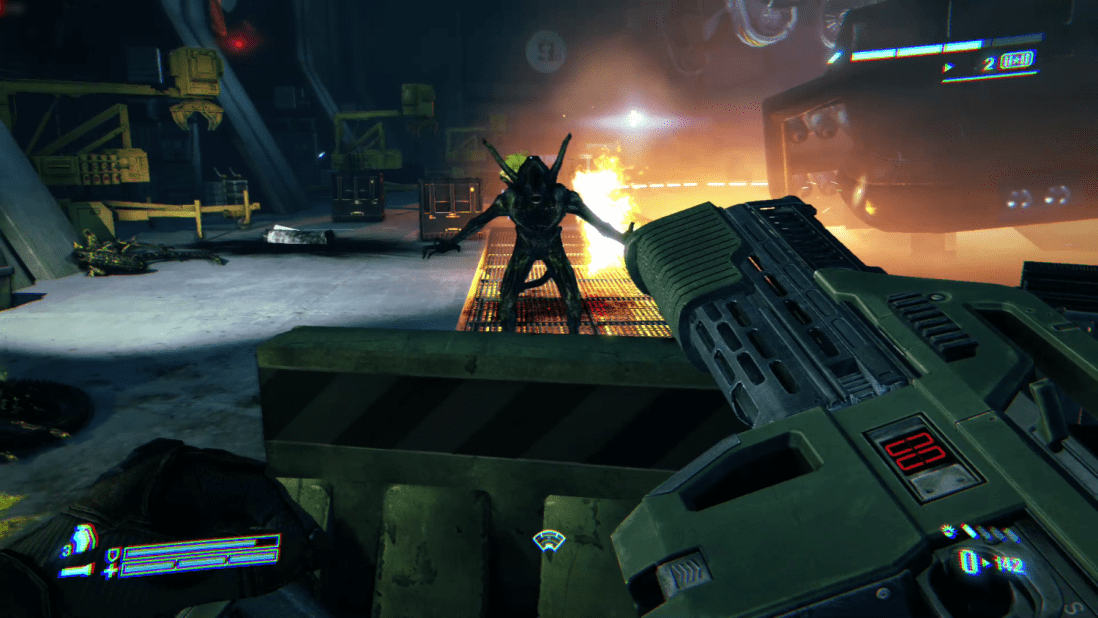
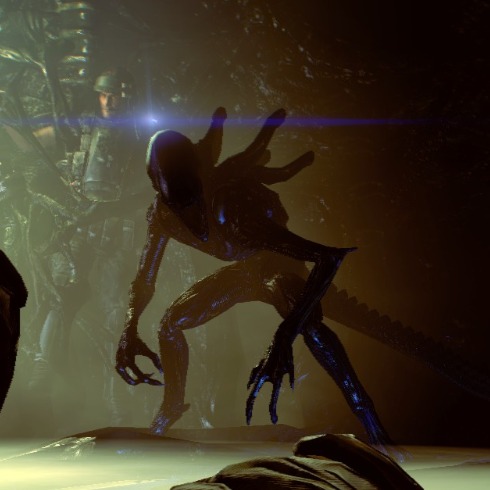
Expecting a bug-hunt, aboard the Sulaco we’re in a stand-up fight. Xeno’s come running, leaping and scratching consistently; it almost reaches Serious Sam levels of hissy mayhem. Don’t get attached to the armour you find, it lasts for seconds and health even less. Not sure if it’s the game being unbalanced or I’ve just gone full Gorman but I die a lot. We’re equipped with a motion sensor, but there’s so many aliens you rarely need to use it. Instead, it’s a handy mission marker as we scramble our way through a completely FUBAR’ed mission. Let’s just bug out and call it even.

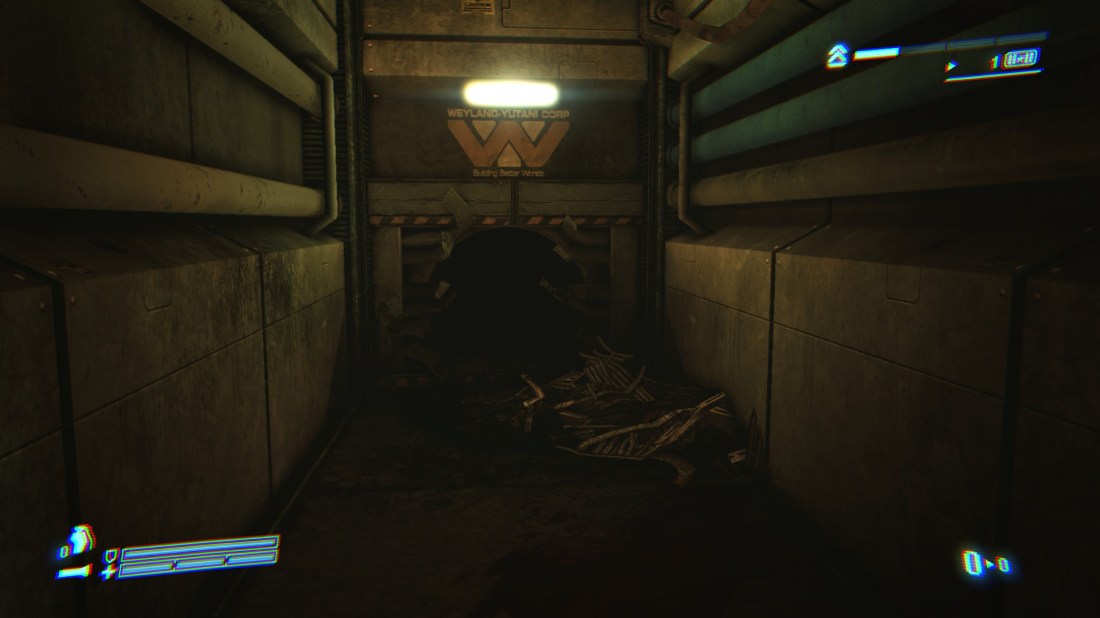
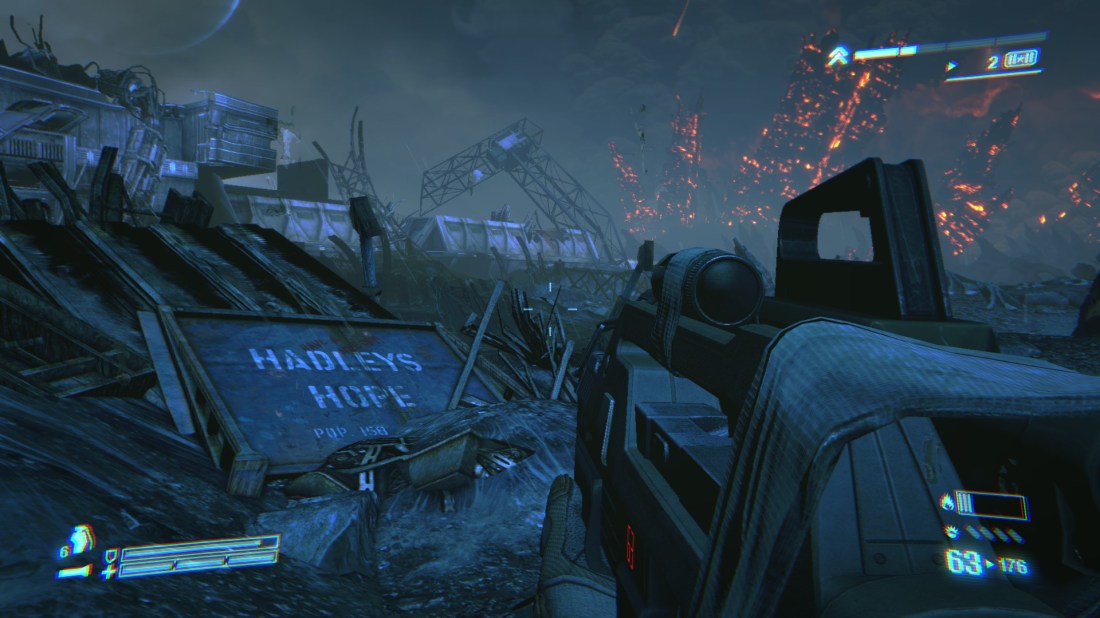
As if dozens of Xenos weren’t enough, Weyland-Yutani got to the Sulaco first, diverted it from Fiorina and returned to LV-426, using it as a self-contained research base for Xenomorphs. Do they ever learn? The outbreak is one thing, but WY are more concerned with Public Relations. They don’t want news of this getting out, and the Sulaco begins firing on the Sephora. Winter, along with Hudson-a-like O’Neal, Vasquez-a-like Bella, Apone-a-like Cruz and Bishop-a-like Bishop escape as both warships explode, stranding the Marines in the ruins of Hadley’s Hope. Which has become prime Xeno real estate.

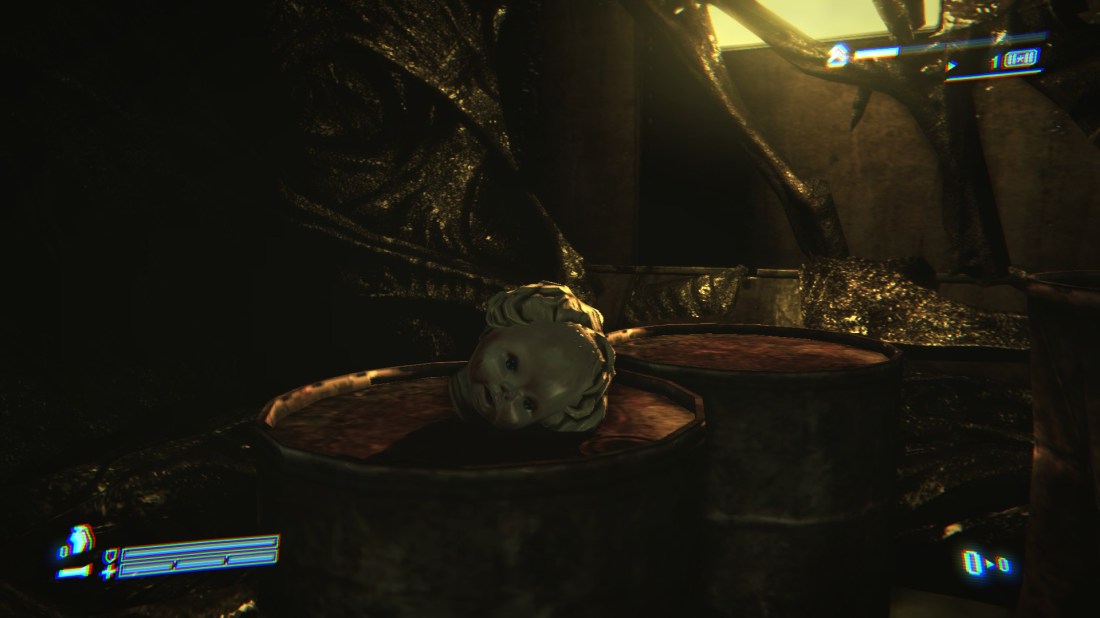
I keep expecting this to get really awful or just really crappy but it’s not. It’s not without it’s fair share of ‘quirks’; the Aliens tend to target you over any other marine – who don’t even block their path; the Aliens just pass right through them. Maybe because Marines haven’t fully woken from cryo-sleep. Often they stand placidly as Aliens pass by or fire at a distant Xeno while one slashes away right in front of them. There’s times where Aliens just pop into existence if I get past a trigger point before the game is ready, and I lost a lot of ammo firing at my own troops when they’d suddenly transport in in-front of me. This isn’t Star Trek. Stuff sinks into the floor, NCPs get stuck, ammo is unreachable and once I passed through a doorway only to see my team running against thin air, unable to catch up – it wasn’t a door, I’d walked through an unbreakable window. It is buggy but this is Aliens where it counts; Hadley’s Hope is a murky, rainy, muddy place full of tension and the Xenos are unforgiving foes – they seem to come from everywhere; indoors they’re bursting out of the vents and from the shadows, while outdoors you spot them clambering over rocks and walls, leaping across buildings; there’s enough to keep both your inner grunt and geek happy; we visit Bishop’s lab, spot the open floor Hudson got pulled through and even find Casey’s head. It’s not exactly taxing to add those iconic elements, but when you consider most game/movie tie-ins, A:CM is trying. At least this isn’t Starship Troopers the game. There’s even Prometheus references, thankfully subtle enough that you might miss them.

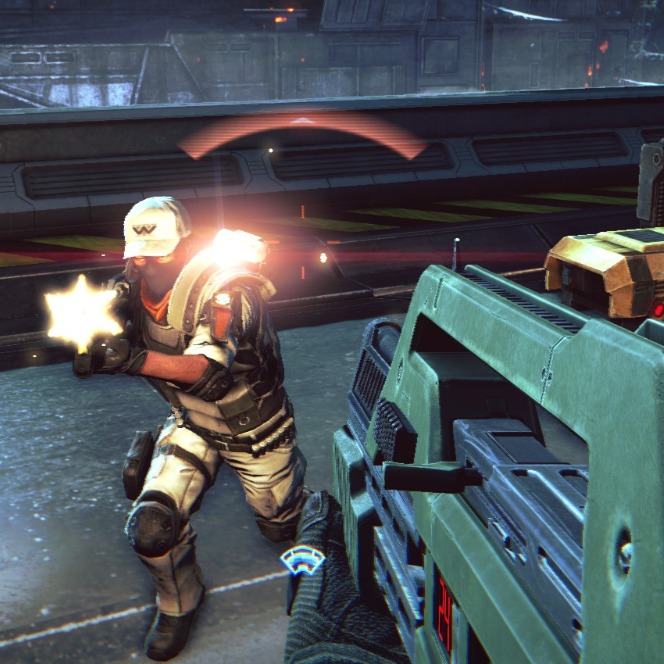
Structurally the game is broken into levels with performance results, book-ended by cut-scenes. How retro. The levels always work well though, be it the close-quarters of Sulaco or Hadley’s Hope (check those corners), or the open-space of LV-426. The Aliens always have the upper hand, but even when it falls into ‘watch my back’ waves to fight off, it’s still freaking Aliens and there’s some great cinematics including kills if you melee just at the right moment, and some nice scripted events too, like when an errant grenade in an umbilical tunnel causes it to ripple while you’re trying to run through it. Each level includes a legendary weapon like Hudson’s Pulse rifle that fires in short controlled bursts while DLC also gives us Ripley’s Pulse/Flamethrower combo, the phased plasma rifle (not sure if it’s within the 40-watt range), and the best backup weapon in the game, the ‘SHARP’ Rifle (aka “sharp sticks”) which fires explosive bolts; Alien Goo a-plenty (which of course, burns your armour). Although Winter can only carry two main weapons the entire loadout is available throughout, and level-ups allow attachments like grenade launchers or a shotgun under the rifle for close encounters.

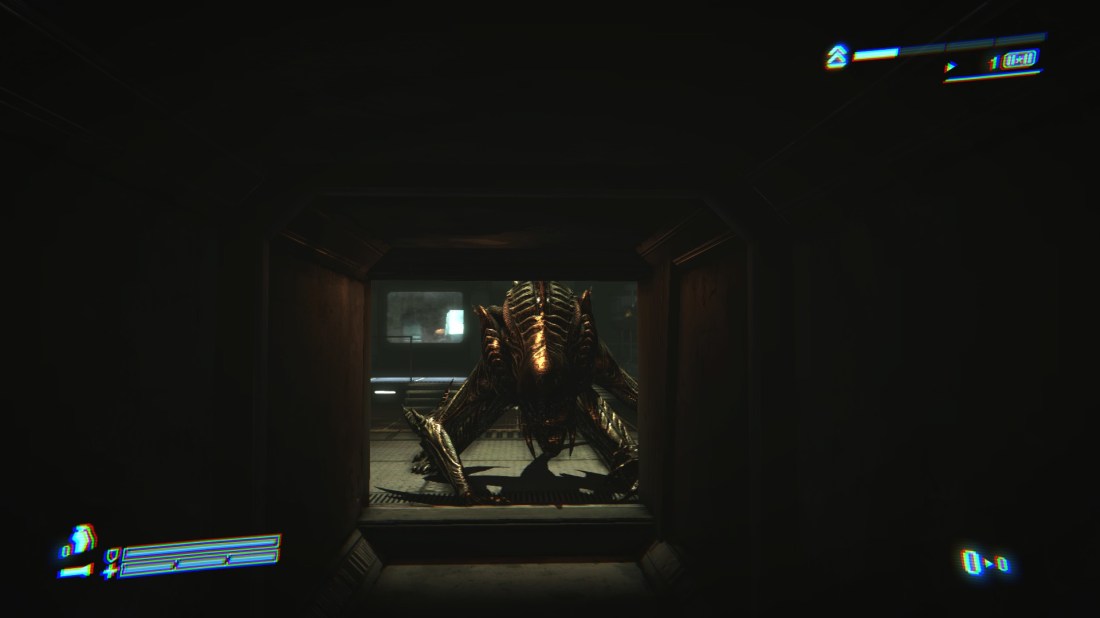
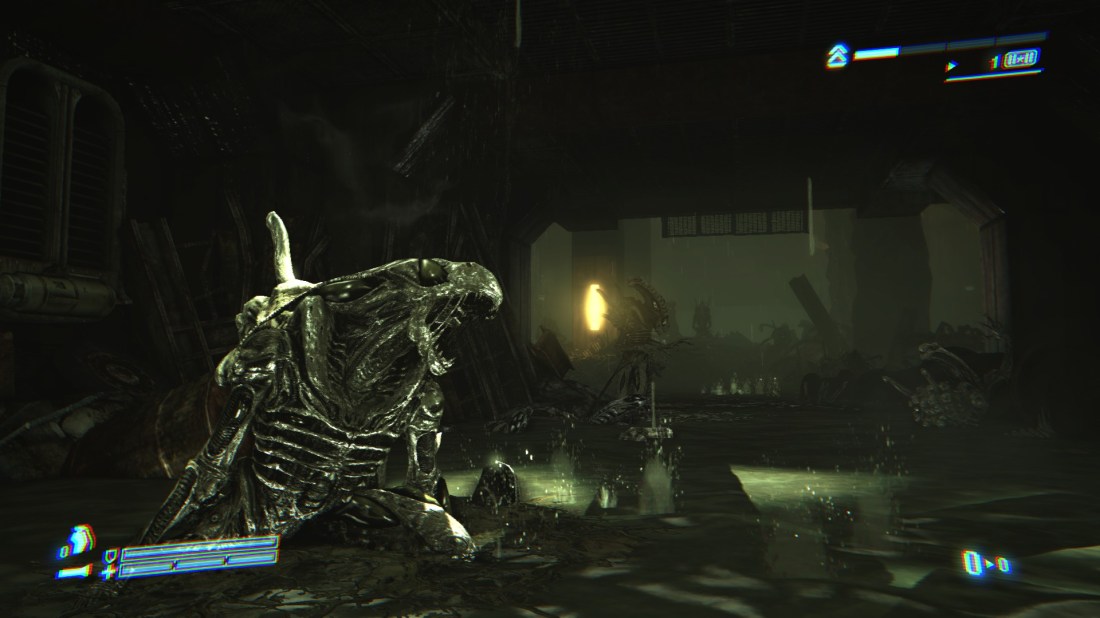
There are some new encounters too, courtesy of WY’s labs. There’s the Spitter alien who snipes you with acid, and the insane Crusher alien, a huge bull that charges – the one time I was thankful for a glitch, it got stuck in the scenery letting me circle around and sharp stick it from behind. A standout moment is a sewer level that features husks of long-dead aliens. Except not all of the husks are quite dead. Movement causes some to shamble around looking for the source of the noise; if they get too excited they explode. It’s a really good level that starts with an unkillable alpha Alien known as the Raven – avoiding it isn’t exactly the stuff of Alien Isolation but there’s some hairy moments as you desperately cut open/weld shut doors as it chases; that’s after a Newt reference where you scuttle through under-floor tunnels while Raven rips open the vents; it culminates in a mano-a-mano with you in a power-loader. You can take those references as derivative or a homage but either way, you can’t deny how much you wanted to experience Aliens as a kid; that’s what A:CM is, wish fulfilment. I LOVE the Corps!

Occasionally we get a break from the Aliens, only to have them replaced with WY Mercs. Then we’re into standard CoD fare with missions like take out AA Guns; certain levels are generic but the WY shenanigans turn the final quarter into a great little actioner. Turns out WY captured a survivor from Sulaco’s crew and we’re tasked with recovering them for their intel. The Aliens are also headed into the complex, creating some fun cross-fire battles between them and WY as it turns out our target is not the only prisoner WY has; there’s a new Queen on the block.

While the gameplay isn’t new it is an effective shooter, and as a continuation of the Aliens narrative, anything is better than Alien 3. While the new Queen reveal isn’t so much a shock as it is expected, the prisoner we free is a huge surprise. Because they’re very dead. It’s made worse by the game papering over the huge continuity hole it’s just created with ‘that’s a long story … anyway,’. As it happens it’s not a long story, it’s a DLC; ‘Status Interrupted’ where you play three different (and tragic) characters caught in events that led up to the Sephora’s arrival – it is a brave bit of retcon but it must have really pissed off the reviewers and fans who played the game on day one. Being expected to buy the Season Pass to find out how this reveal makes sense is not how you win back fans.

Our new friend explains our only chance is a supply ship that services the research base, which of course is next door to none other than the Engineers’ space craft. It’s is a great mash-up between Kane’s tense walk through the egg-filled mist and “they’re coming out the goddamn walls!” panic. This game is like an Aliens Greatest Hits Compilation. It might be the source material triggering the thrills, but A:CM never feels lazy and the final is a hectic chase to stop WY’s plans; it’s no spoiler to say it comes down to Winter vs the Queen – how could it not be? It’s a well-done boss battle (except if I get far enough away she uses the Marine’s teleporter …). As the credits roll I’m still waiting for A:CM to suck. This was worth waking up to Drake’s face for.

This doesn’t feel like the thrown-together cash-in originally reported. Perhaps the stories of its tortured development coloured the early reviews, but five years on, A:CM seems to have been unfairly judged. Its heart is in the right place even if it’s a little buggy and under developed in places, especially the storyline; having one of our team slowly succumbing to an alien embryo doesn’t land quite as emotionally as it should, and the prisoner recovery falls flat narratively (they just become a follower and an exposition expert) and the reveal takes you the gamer completely out of the moment because you’re going ‘wait, what?!’ While it’s a welcome return from the dead, there were other Aliens characters that would have made things more interesting when considering the WY element.

Based on the extended WY Merc scenes (and the open ending), clearly Sega wanted a CoD franchise; they also invested heavily in multiplayer (most of the DLC was MP levels including recreations of the movie locations) but we’re just here for the Aliens and it does succeed at putting you right in that hectic Hive scene. You’re never safe, never on top of things and almost everything goes wrong; A:CM takes the scene where Hudson says they won’t last 17 hours and makes a game of that panicked thought. I lasted 10 hours, and I had fun start to end. Get on this express elevator to Hell.

2013 | Developer Gearbox Software / TimeGate Studios | Publisher Sega

Platforms; Win (Steam), PS3, X360

SOMA

a second wind review

“who thought sending a Canadian to the bottom of the sea was a good idea?”

FBT thinks it was a very good idea.

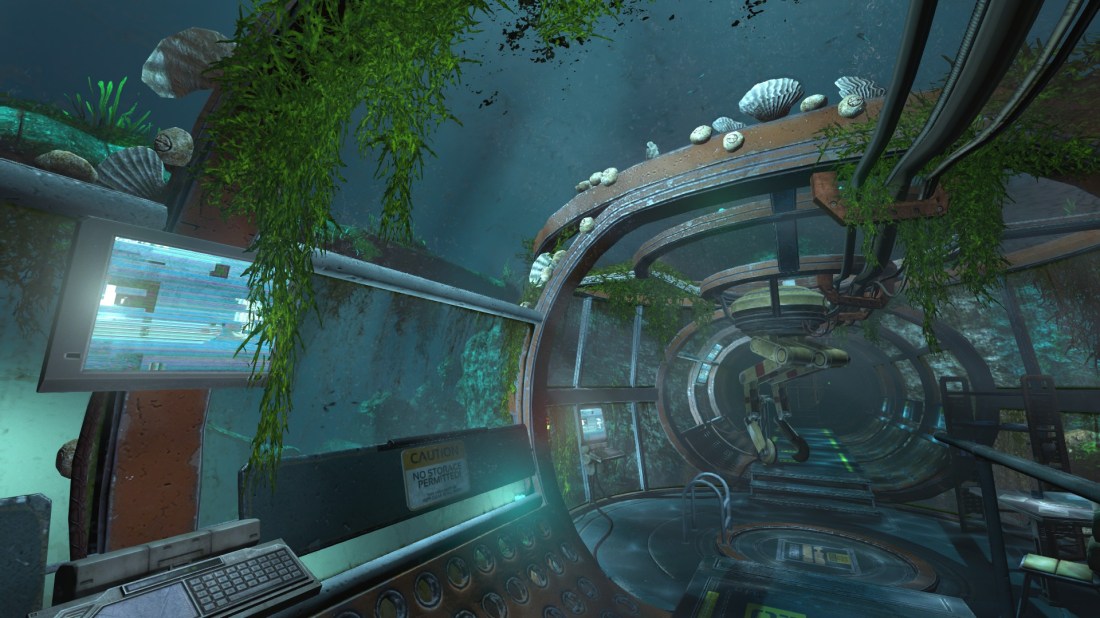
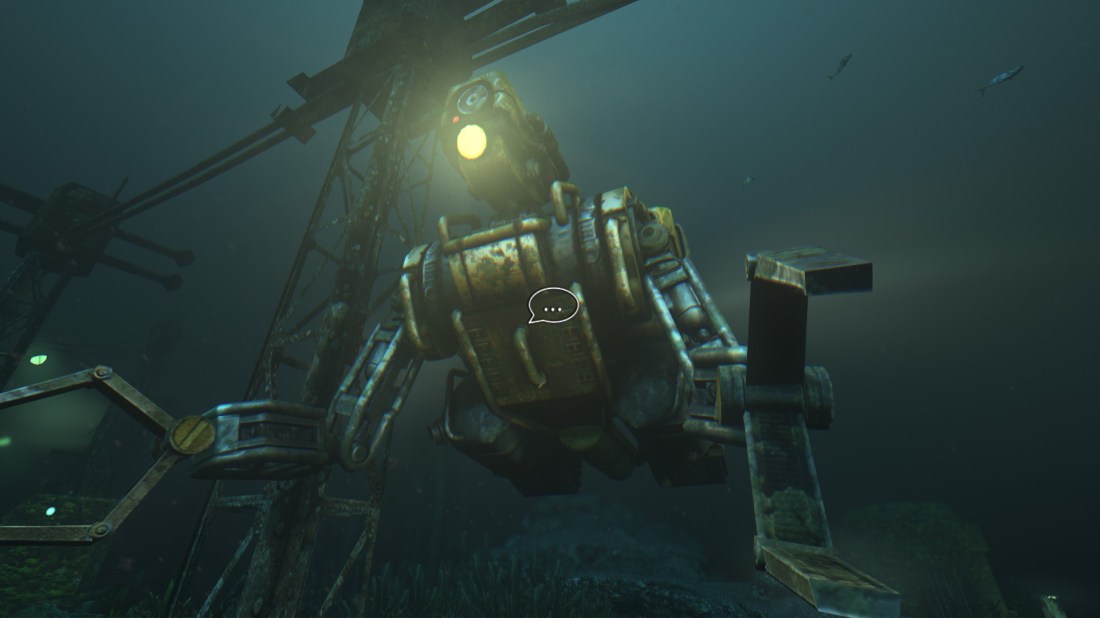
In 2015, comic-store clerk Simon Jarrett is involved in a car crash, losing his sweetheart and some of his skull; left with pressure on his brain that might kill him at any moment, Simon meets not-yet-a-Doctor Munshi, who is developing a radical way of scanning the human brain. Ignoring the suspect office and equipment, Simon agrees to be a lab-rat hoping the scan will allow surgery by revealing the pressure point. Unfortunately, Simon wakes to discover he’s under even more pressure – the entire Atlantic Ocean.

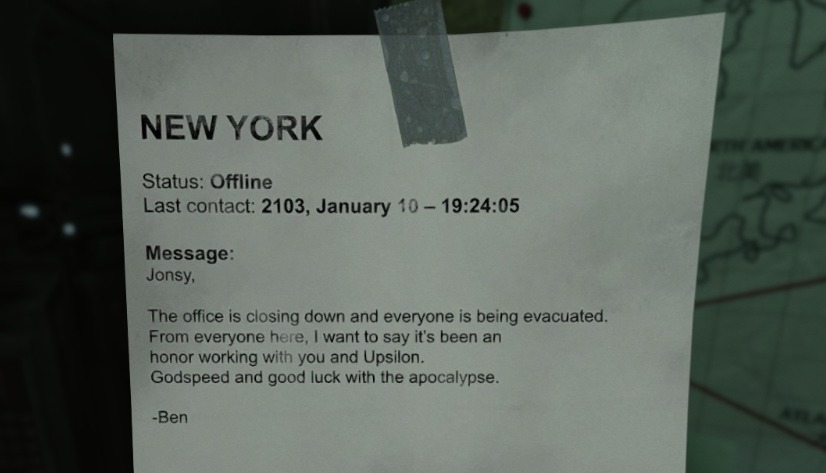
Worse, Simon’s not just woken up in the wrong place, he’s in the wrong time. It’s now 2104; contacted by a scientist called Cat, she explains things are even worse; a year earlier, a comet impacted earth and caused a nuclear winter. The only life left is what’s on Pathos-II, the undersea science lab they’re in; but is that life friendly … or even human? Doesn’t seem possible but I get the feeling it’s only going to get worse for Simon.

It’s an obvious comparison but SOMA does remind you of Bioshock, and other psychological games like Alan Wake, Silent Hill, Alien Isolation, Prey (both versions), System Shock pop into mind; we’ve got machinery moving suddenly, glimpses of things, doors opening, lights flashing, eerie noises, jump moments, dark rooms to enter; all very Survival-Horror, but rather than derivative, SOMA is something different. It’s in the story that SOMA steps out of those games’ shadows and into it’s own horrible place. It’s closer in experience to Hollywood’s recent spate of subtle-horrors; A Quiet Place, Cloverfield Lane, Annihilation; SOMA messes with your head not your trigger finger.

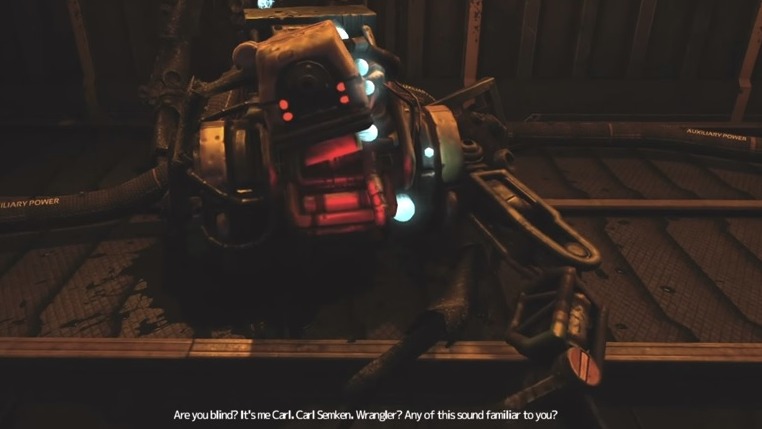
Taking in the desolated and decaying station, Simon quickly discovers it is not a nice place to be. The walls are covered in some encroaching, living goo that makes Pathos-II look like a mash-up between the Alien Hive and the Borg’s gaff. Early on I find a machine covered in the gooey tendrils, and disconnect it to turn on a switch. Then it cries out it “Don’t, I need it!” before dying. Should … should I have not done that? That wasn’t a machine’s voice that was … Human? Then I find a crippled machine that’s convinced it’s a man who suffered an injury and needs a medic. You need a mechanic, mate. But he thinks I’m the crazy one. Am I? What is going on here?

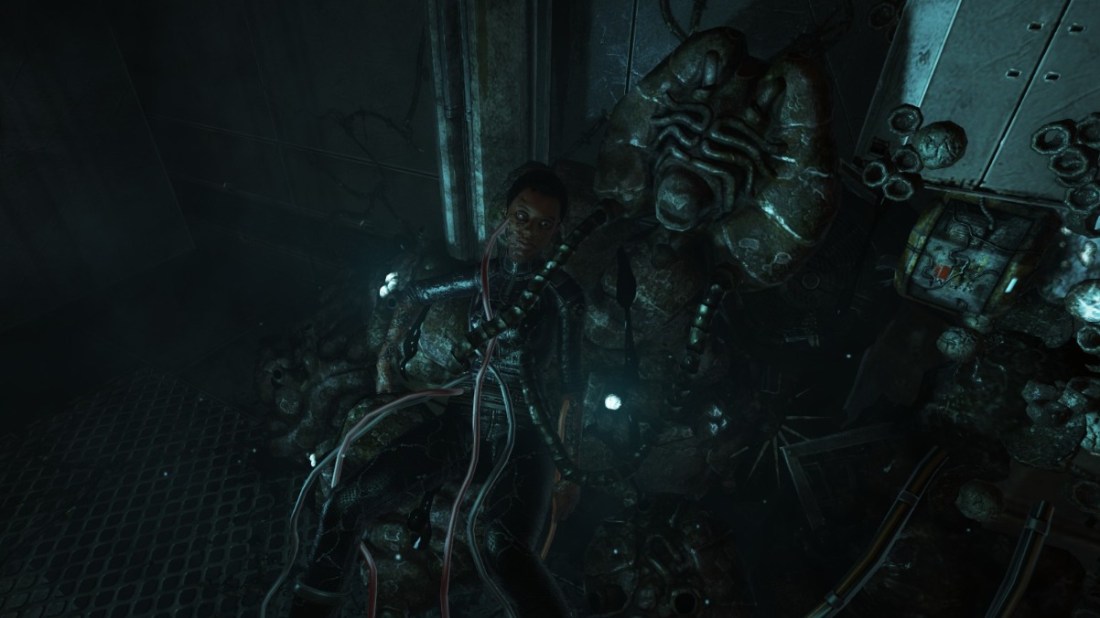
After the comet impact, Cat’s idle hobby – digitising brain patterns – became Pathos-II’s sole focus. They created the ARK, a digital representation of earth where their personalities can live for eternity and preserve something of humanity. Cat was almost there when survivor-guilt, psychosis and understandable madness overwhelmed the crew. Meanwhile, when Pathos-II’s AI, “WAU” learnt of the comet, it tried to fulfill its prime directive – protect mankind. Problem is, WAU couldn’t understand human nature, only survival so it used ‘Contact Gel’ – the goo we’re seeing – which is like a liquid circuit board, to bond the crew to life-supporting tech and keep them living, whether they want to or not. As if that wasn’t horrific enough, WAU also began activating ARK files, building the transferred personalities into the circuity and machines instead of their digital reality; anything to keep humanity going. The station is people.

WAU is arguably the main antagonist but it’s not evil like SHODAN or GLaDOS and we never converse with it; WAU is just desperately trying to save humanity and wants to help; humans are living, but you’d not call it life. But what is life? What are we trying to save? We’re leaving all those people to this agony? It looks like Cat and Simon will end up joining them anyway. The ARK runs on solar power, and thanks to the nuclear winter there’s no sun. If they leave it on Pathos-II, the power will eventually fail – or WAU will reach it. That means using a supergun at the end of the lab to fire the ARK into space. Easy. Except Cat doesn’t even know if it’s still here. If it was launched, they can’t Tron themselves into it and escape – if it’s still on Pathos-II, can a scientist and a shop clerk finish the ARK, digitise themselves, load it into a rocket, fire it out of the Atlantic Ocean through the nuclear winter to reach space and hit a safe orbit so they can live forever? They have no chance! But what else can Simon do but try? Because it was all too easy, turns out he can’t even take out WAU’s monsters.

Like Frictional’s previous game, Amnesia, when you do face off against a creature, your wits are your weapons; the best Simon can do is escape. Several of WAU’s abominations roam the station but it’s refreshing that they’re not common, keeping their impact at maximum ‘oh god!’ when they do appear. An early goo-filled machine is standard, but human-creatures are just … no. Some listen for you, or you have to stay out of their eye-line, others follow you unceasingly and you never really see the same monster twice, like you only meet mini-bosses. You never go ‘oh it’s a so-and-so, I just need to do this’. Each has its nightmarish ways to out-smart and they look so maddened and tortured you feel pity as much as fear – but the real monster is the story.

Simon’s situation, how he got there and the overwhelming odds he’s facing are the game’s biggest scares and Simon is not helping. Realising the human race is in the single digits, it’s not long before he’s on to the really big questions. Is the ARK immortality? Is it life, living in a machine? Will they be much different from what WAU is attempting? Are we just electrical impulses really? Is life just our perception? What is humanity? Does it matter, who cares? What is the point of it all, Goddamnit?! Simon’s frustration is palatable, his breakdowns understandable, but thankfully we have Cat to give some perspective. As in, Cat really doesn’t have time for his crap. Hurrying him through his realisations, getting exasperated at him for pondering the meaning of life when we have stuff to do, she’s like an impatient Alyx and easily one of the best sidekicks in a long while. The philosophical banter between the two is spot-on and her sark provides some very welcome comic relief. Simon wants to give meaning to all this; the only thing Cat clings to is the possibility that the ARK is still there. She’s even blunt about how Simon wound up here.

SOMA knows that question needs to be answered so rather than dragging it out, it’s revealed early – but SOMA doesn’t just do the reveal then expect Simon or us to shrug it off; instead, the revelation affects and alters everything, becomes the central theme. Plus, SOMA is packed with enough twists and tough choices that Simon’s situation is the least of our worries; there’s moments so debilitating I just walked off, needing a minute. SOMA really nails surviving death only to face no future. We’ve gamed through the Fallout-style apocalypse before but SOMA instead calls to mind the Cormack novel The Road, that sense that it’s just … over. Simon’s situation is so frustrating; he’d come to terms with death; now he has to survive? He’s a likeable guy, give him a break FFS. The shit he goes through …

Still, while Simon might be faltering, for us, progressing through Pathos-II is very focused. You’re not spoon-fed solutions, Simon needs to get his shit together sharpish. Nothing comes across as convenient or outlandish, the lab is a logical place and you do get a sense of progressing, even if it’s all on you – no mission markers, no hints, just you. Early on, interacting with the world is frustrating; Simon must be precise to progress, to the point of pushing or pulling doors – given my real-life inability to push/pull a door correctly even when it’s written on it I’m just adding to his woes. But after a while you get into it. The puzzles too are cleverly frustrating. Never explained, it’s up to you to figure out the process before you even attempt a solution.

The station is split into separate research labs Simon needs to navigate between; as in, across the seabed. And that bloody WAU-infested Gel has leaked into the ocean; as if deep-sea fish weren’t freaky enough. We even have a mutated giant squid circling while belligerent rovers and mechs chase us about. Or try to chat to us. Both are terrifying. There’s guide-lights that keep the fishes at bay, but storms swell up causing the lights to go out making it a terrifying, confusing trek along the sand; oh, I can see a light. Nope, that’s the lure from a goddamn mutated angler fish…

Reaching each lab we discover new horrors, and how each isolated group handled the event; some joined the ARK project, some just lived out what time they had left while others carried on as if the apocalypse would pass. Every new area is a new take on what humans would do in that situation.

Reaching the ‘abyss’, a deep-sea trench where the final lab and the likely resting place of the ARK are, Simon and Cat activate a deep submersible – and activate it’s personality; who, terrified, takes off. Can we just get a break?! Cat’s solution is f’ed up, but it’s not like Simon has a choice. On the plus side, what happens afterwards is far, far worse. And then it gets worse. And worse, and worse until you’re staring at the end-credits, aghast. This game should end with “if you’ve been affected by any of the subject matter …”

If you do make it, make sure you stick around until after the credits for the very definition of ironic bitter-sweet endings. SOMA is a very troubling game; you don’t want to say good bye to Simon and Cat, but you’re not sure you want to experience that again. If you do, you’ll spend forever trying to force a different outcome. But it was never going to go any other way.

It’s been weeks since I finished SOMA but Simon and Cat are still in my head, arguing over the definition of life – and death. And as a testament to that narrative, Frictional released an update called ‘safe mode’ that stops WAU from killing you. You’d think a God Mode would remove all the intensity but it doesn’t – it makes it worse because all you’re focused on is what Simon has to go through. A new entry in my all-time great games, SOMA might not reinvent the gaming wheel but as a thought-provoking experience, it’s as close to Cinema as gaming has gotten; SOMA is the game Stanley Kubrick would have made.

2015 | Developer/ Publisher, Frictional Games

Platforms; Win, X0, PS4

Far Cry Primal

a second wind review

FBT is the missing link in the latest Far Cry spin-off

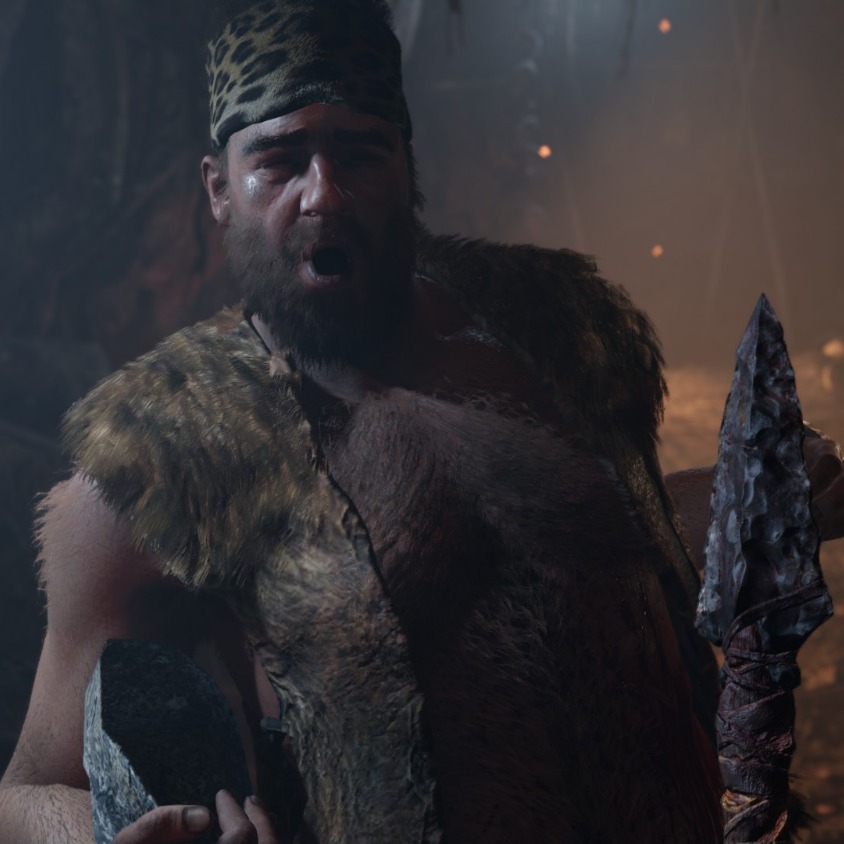
About the only series to recycle itself more than Far Cry is it’s stable-mate Assassin’s Creed. I’m amazed they’ve not created a cross-over or just merged them; Assaassin’s Cry. Since FC 3, it’s always the same, even repeating the plot – regular guy gets stranded, bonds with locals, sees off oppressor, gets shitty choice at end. But this Far Cry is set in pre-history, it can’t follow the routine that closely, can it? We are Ugg (actually Takkar but I prefer Ugg) who gets isolated when his hunting party is crashed by a Sabre-Tiger. Left stranded, Ugg discovers his people, the Wenja are hunted by other tribes and it’s up to Ugg to drive them off. That’s every other Far Cry. FC is becoming Groundhog Day the Video Game.

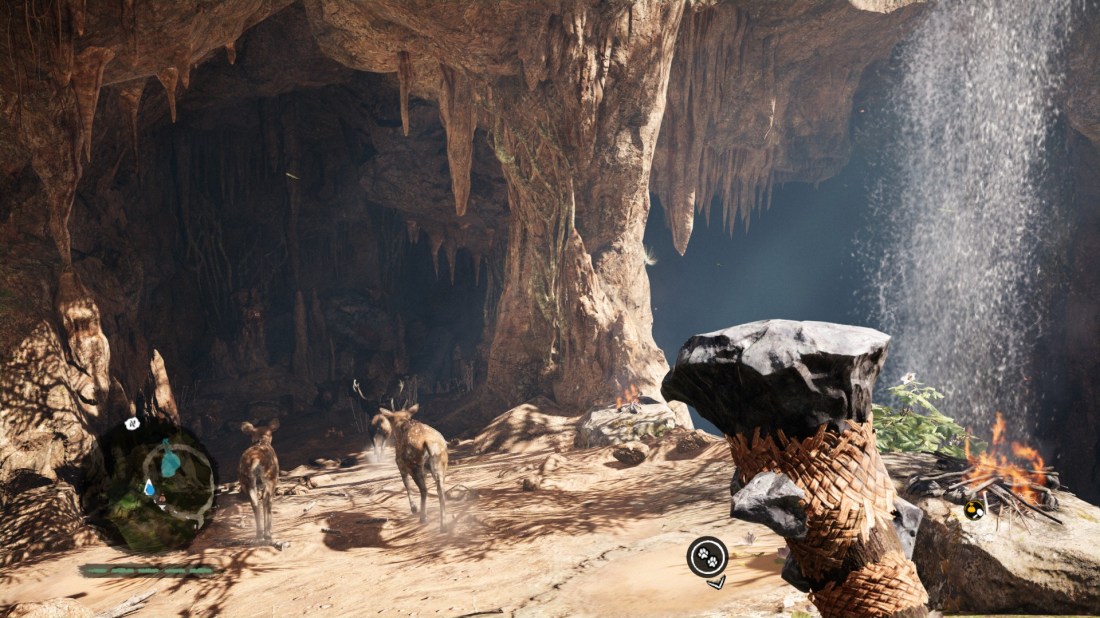
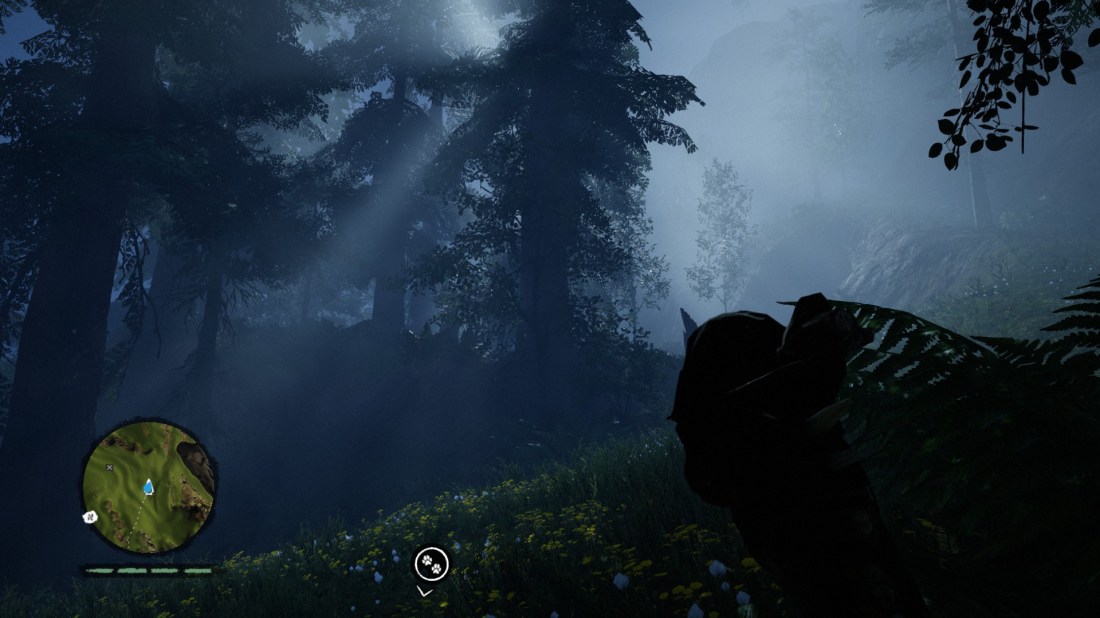
Actually, that’s a little unfair. FC:P is easy to dismiss as Far Cry in melee mode, but the setting does demand change and it’s there that Primal evolves into something interesting. There’s no machine guns or vehicles, so being out in the woodlands leaves you feeling exposed; you develop a tense, cautious approach. Whereas in typical FC gameplay you’d stomp through the undergrowth, confident a shotgun volley will put down a tiger or pirate, here you’ve got a bit of flint and a club. It’s a lot more, well … primal.

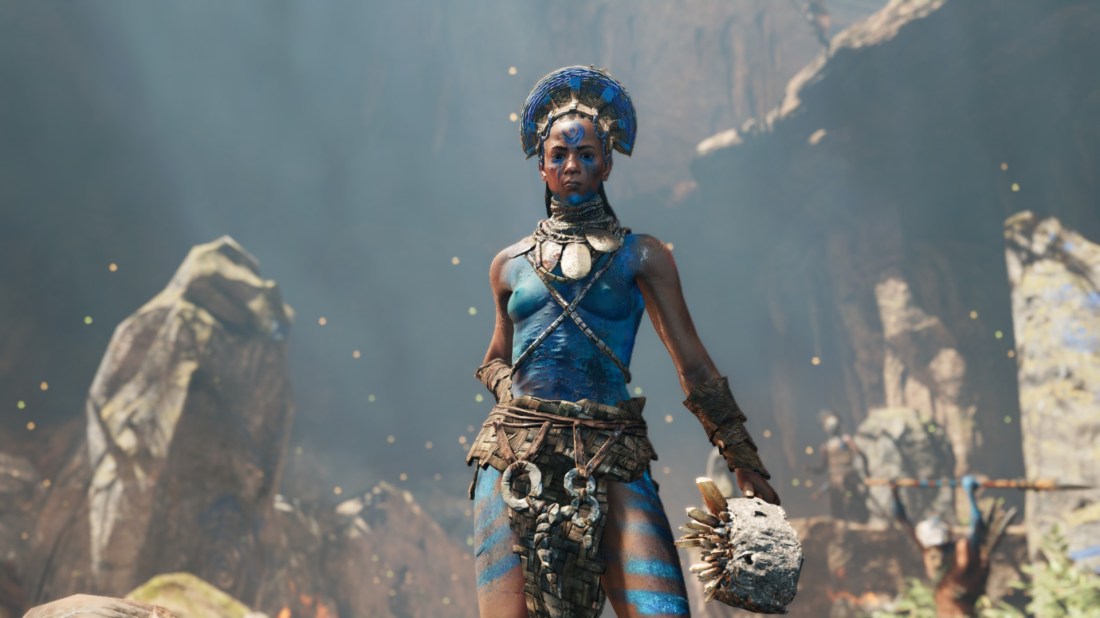
Ugg rescues Sayla, a lone Wenja medicine woman who explains the local tribe is being hunted by the Udam -for food- and has scattered. Determined to re-establish the clan, Ugg and Sayla begin building a village by saving Wenja from Udam hunting parties and the like. Soon, he’s got a little commune going and convinces a shaman with a wolf’s head for a hat to help. I’m sure there’s a wiki article justifying a caricature from some 80s game like Custer’s Revenge but the witch doctor is invaluable, teaching Ugg to tame an owl, which is the coolest thing in a Far Cry game since Jason had hallucinogenic sex with Citra.

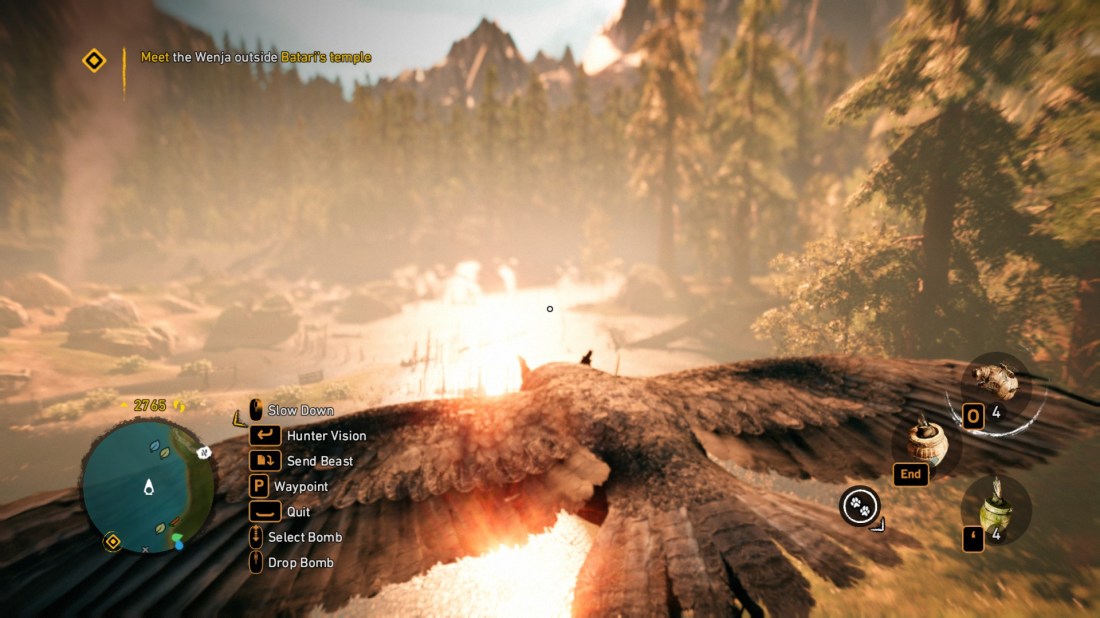
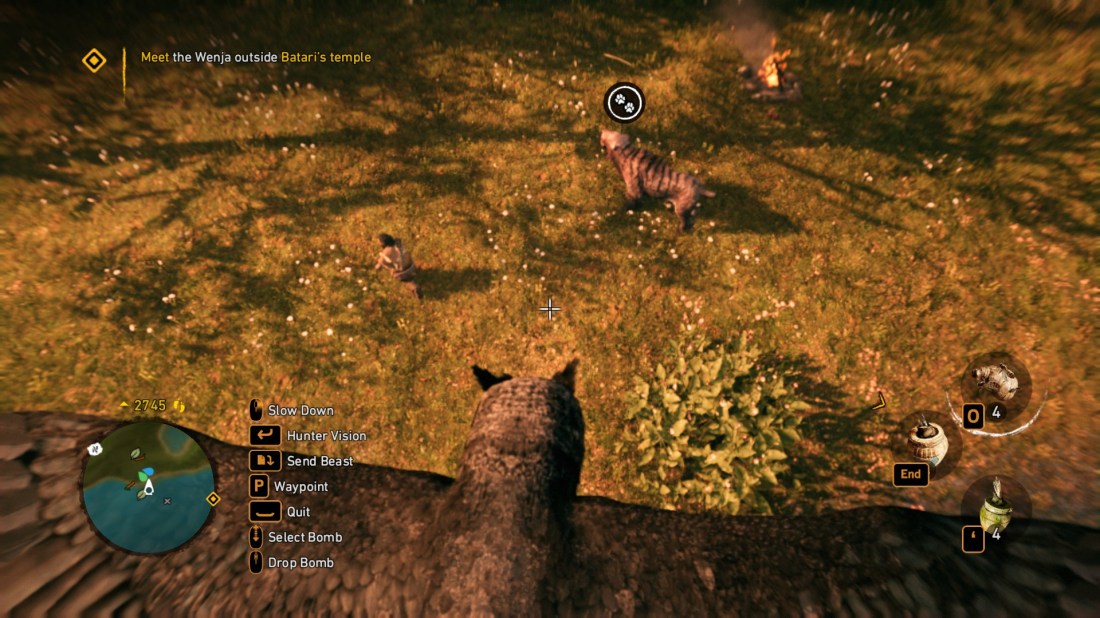
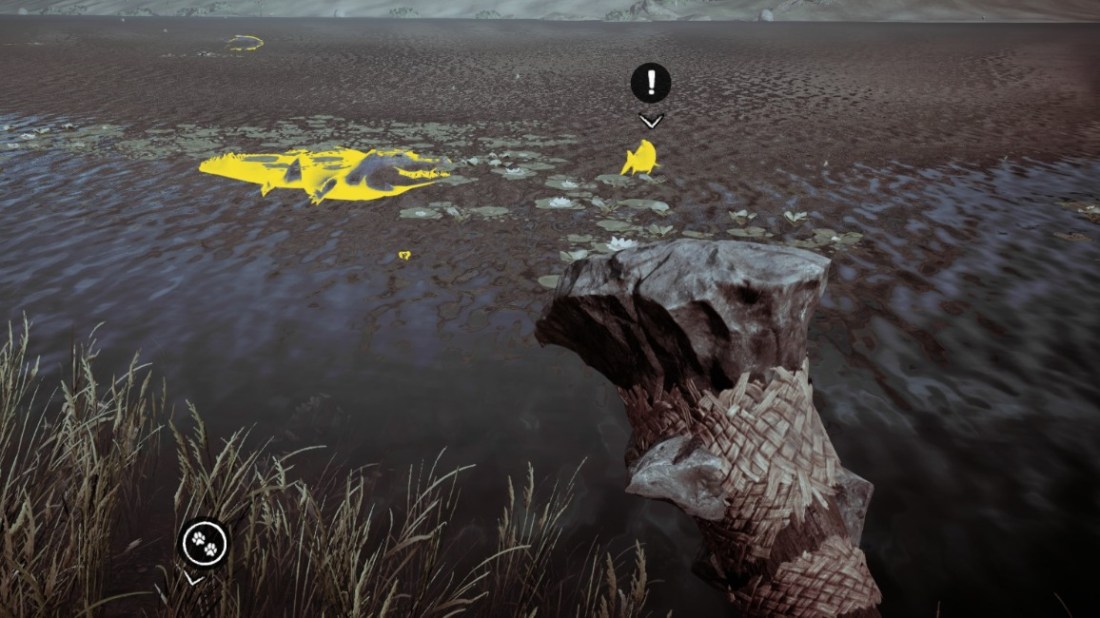
Essentially, Ugg has invented a Drone. The owl can circle ahead, tag objects and animals, roam around and best of all, dive-bomb. Lower-level enemies can be killed by it, while armoured ones weakened and eventually offed too. The Owl can even be weaonised, dropping smoke and crazy bombs which presumably it stole from a nearby Assassin’s Creed Sequence. It can also drop bee-hives and unlock caged animals; Droney the owl is easily one of the best things in FC:P, I can’t wait for it to reappear in every new Far Cry game. But Droney is just the first animal Ugg gets to grips with – alongside his burgeoning village, Ugg is setting up a petting zoo.

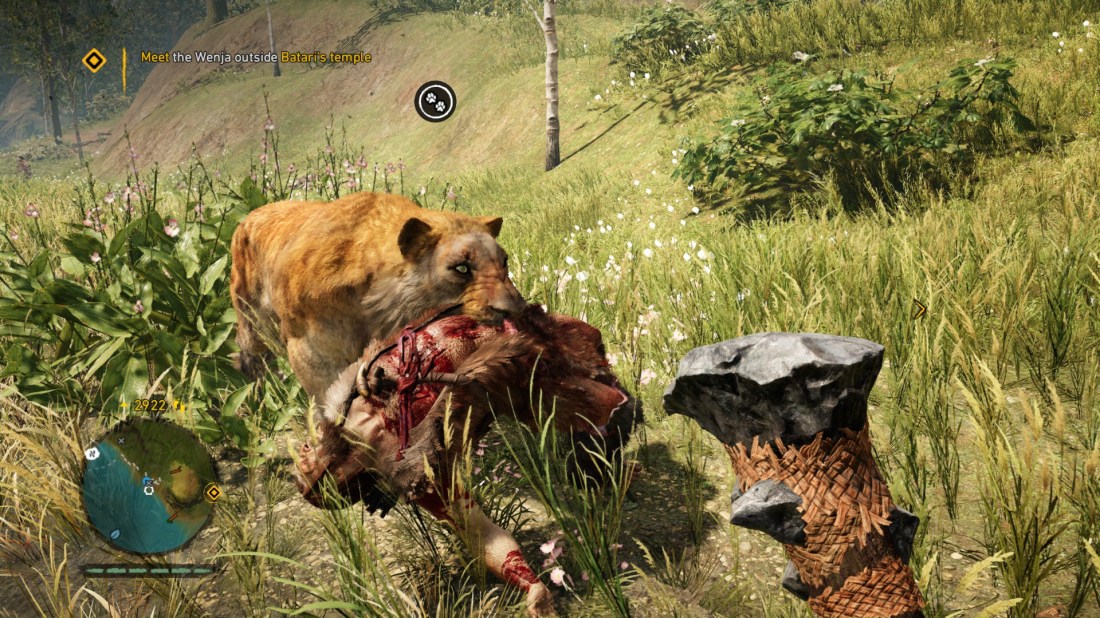
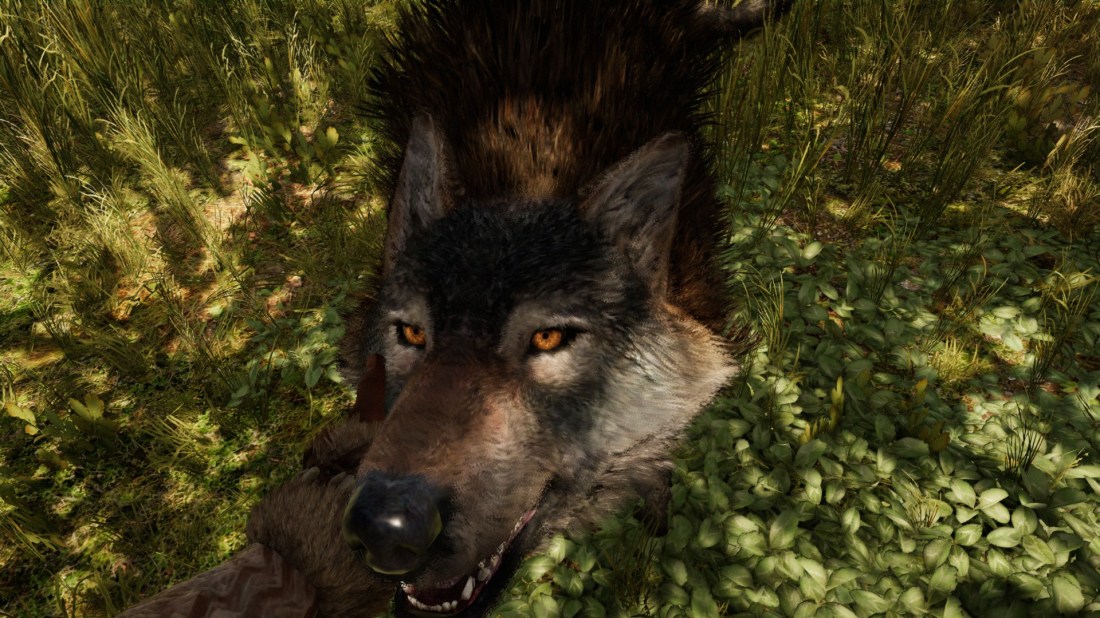
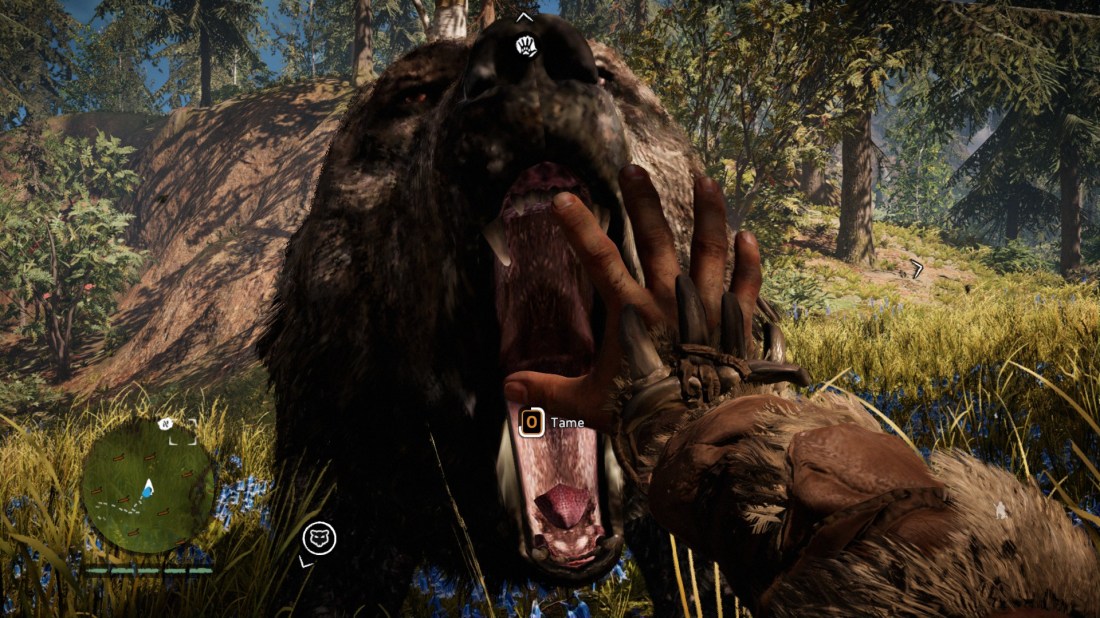
In Blood Dragon, our hero Rex could attract Dragons by lobbing a cyber-heart. In Far Cry 4, our hero (whatever his name was, Mum’s Ashes Guy) could attract animals by lobbing meat. In Primal, Ugg can attract animals by lobbing meat – and now tame them. You’d expect it to be a tricky, terrifying affair but it’s easy; just hold down a button. The result is a new furry friend – any equal or lower animal will scarper while you have your pal around, and it’s nice to have company too, I spent more time petting my wolf than I do exploring and I feel a pang of guilt when I upgrade it to a bigger animal (or smaller, in the case of the Crazy Nastyass honey badger. Even the sabre-tigers take off when that maniac is on the loose). They can be wounded but reviving them is possible – even if they die (and I accidentally skinned one of my pets once) they can be brought back with a potion. You’d expect to have to re-tame a downed animal but no, a couple of leaves will do it. I was all upset until I noticed the revival option. Wolfie!

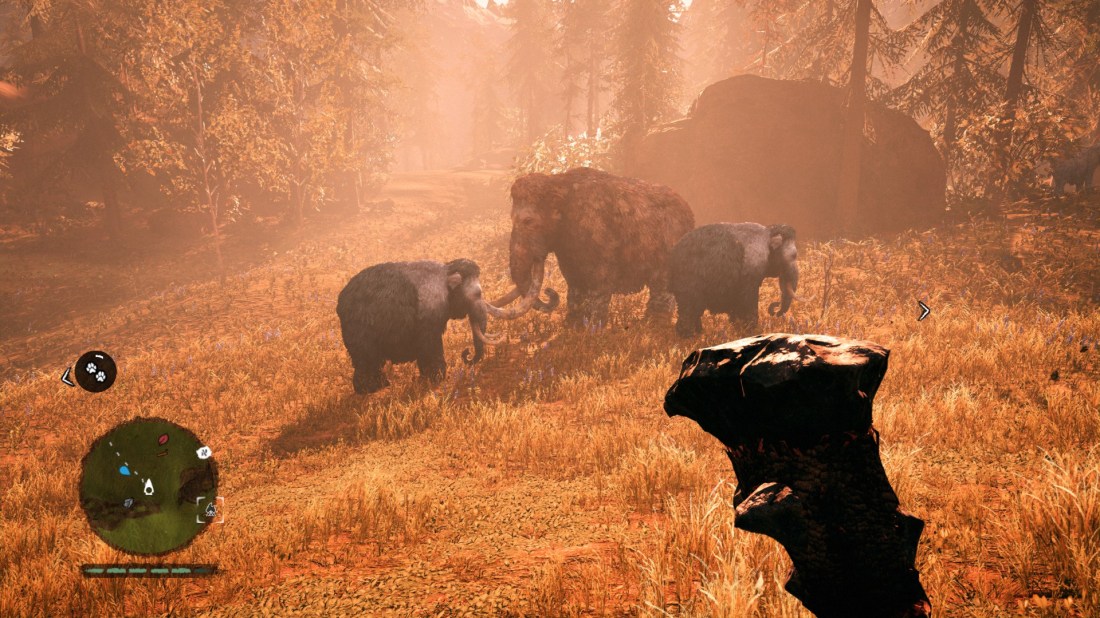
Although there’s no vehicles, you do get to ride the bigger animals you tame. It’s a shame it doesn’t go into third-person when you mount your big cat or bear, it must look amazing, and there’s several alpha versions that can be tamed too, including the uber-tiger from the beginning. They do act a little like classic Fallout 3 companions, taking misjudged routes to reach you, getting stuck or attacking something clearly too big for them, but they’re great. You can direct them, it crouches when you do, they growl at things and see off attackers; they become an absolutely necessity out in the wilds. The only ones you can’t tame are the mammoths, although you can ride the smaller ones, if you can get past the parents …

I really struggled with offing families of Mammoths, orphaning the baby and watching it circling its dead mum; I stopped doing it in the end and part of the reason for that is it has no real impact beyond you stocking up on fur and meat. It’s natural for Ugg to do it, but we should be taking that huge carcass back to the camp or something, make it a bit more meaningful, or at least realistic; why is Ugg taking on an entire Mammoth herd with nothing but a honey badger? Usually out of self-defence; get one pixel too close and its game on. Being chased by the bull is terrifying. Not even running into the water can save you – not only can they wade but the crocs from FC3 are back. It’s just a shame you can’t tame the crocs, surfing one as a reskinned jetski would’ve made Primal the best game ever.

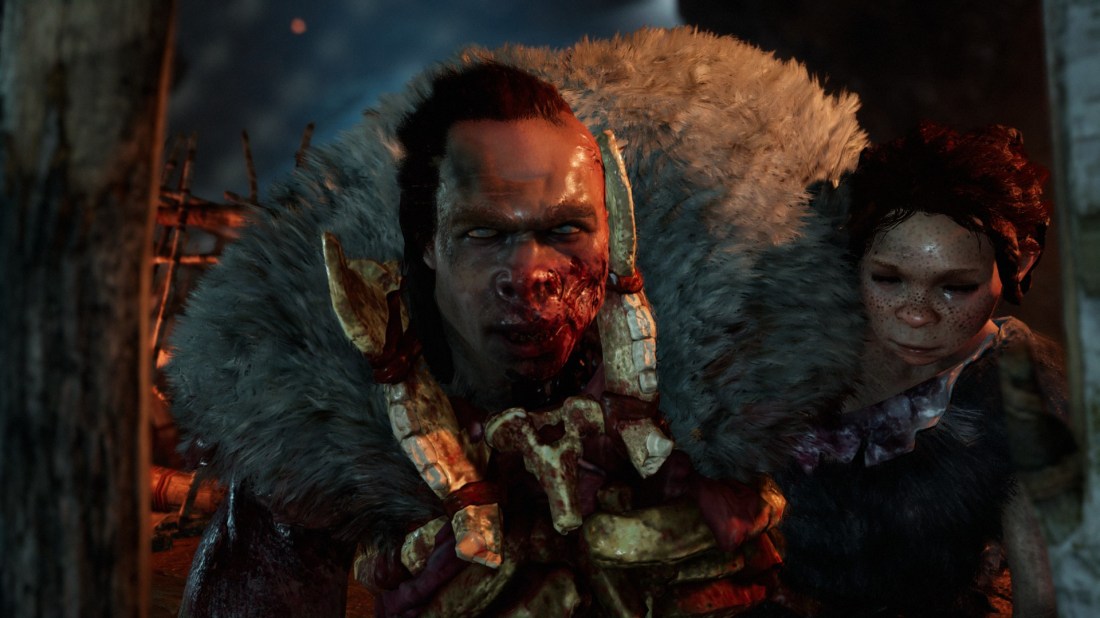
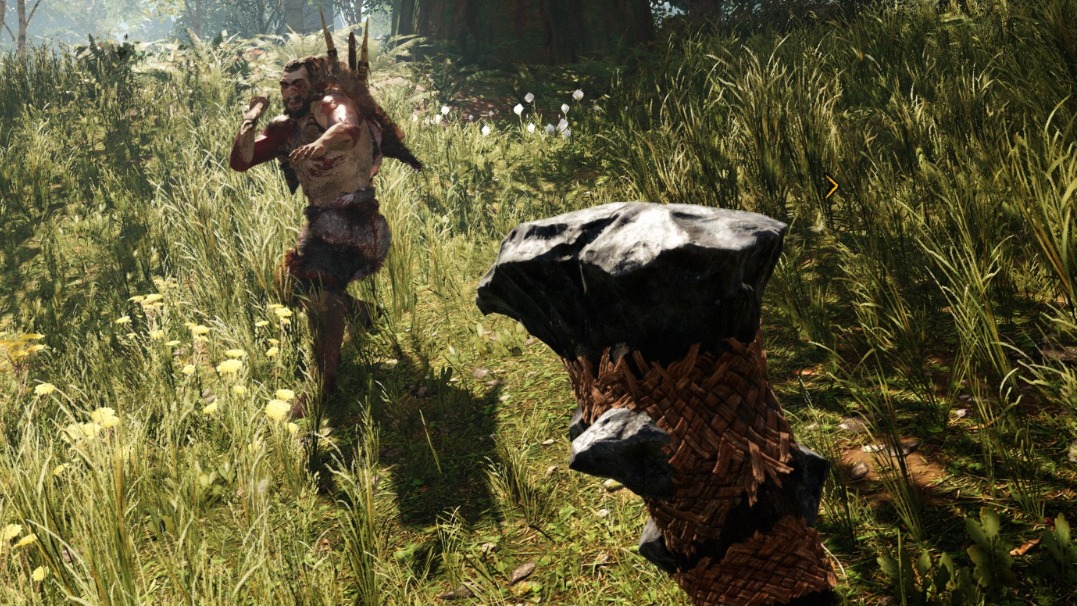
To help fortify the village, Ugg tracks down legendary Wenja; a famed hunter, a crazy craftsman (who introduces himself by pissing on Ugg) and a feared fighter who kills Udam for sport. They have nice little side missions that help Ugg build himself up. There’s even an ancestor of FC3’s Hurk, who has some advanced if idiotic ideas. Aside from the spear, bow and club, all of which can be upgraded, you also get rock shard to stab or throw, including ones tipped with crazy-poison (AC Ugg again) and a sling to lob stones. You’re a back to basics mud-covered Arnie and it’s so much fun; XP rewards are nicely balanced and put you in-tune with the world and the animals. As the little village starts to grow it becomes a lovely little spot to return to, genuinely idyllic and pleasant, with kids running about and folks doing their thing. Naturally it doesn’t last. Having caught the eye (and the stomachs) of the Udam, the boss man, UII, cuts through and threatens to have us for dinner. To protect the village, Ugg kidnaps ‘Dah’, a Udam warrior and from him we learn various skills – and that the Udam are dying from disease; and think Wenja meat will cure them. They’re dangerous and primitive but they’re not savages, we see them caring for their children too and realise they’re just another tribe trying to survive. It’s a nice change from FC’s usual boo-hiss villains and as I soften to Dah, and he explains their plight, I wonder if FC:P will let us make peace with them; nope. That would go against FC policy. Shame.

FC:P can’t quite shake off the FC structure; true to form, the main missions all feel familiar and not doing the main mission feels familiar too – we’re attacking camps and outputs. But, FC:P’s approach is the best we’ve seen for a while. Letting your owl get the lay of the land is a great start, as is using it to pick off lookouts, open cages or do strafing runs. Once Droney’s done his business, send in one of your menagerie and ‘snipe’ with your bow while the Udam freak out. At least, that’s the plan. The Udam seem to have evolved from Far Cry 3’s pirates; one arrow ten feet above their heads and they know exactly where you are, and they’re masters at spear-lobbing. The whole thing devolves into a fun scrap with spears, arrows and clubs flying about everywhere – most of which can be lit too, adding a fiery edge to everything. You’re vastly outnumbered and never better armed but a hard-won victory really makes you feel like you’re establishing the Wenja. I’m devolving and I like it.

Now da (cave)man, Ugg can strike out with some confidence; the world is huge and interesting, with cave formations, valleys, woods and rivers to venture through. Ugg gets a very modern grappling hook allowing him to FC4-it up cliff faces, and like all open-worlds, there’s tons of collectables to ignore. As beautiful as it is, its not the kind of world where you can just wander and see where the day takes you; if nothing else, because you don’t want to be caught out at night. A real show stopper is the night-day cycle. After dark the really big bads show up and facing down a pack of wolves, their eyes glinting in the moonlight is unnerving, scary stuff. You can’t see anything except the occasional glint or hear wolves and cats scrapping. You can use fire to keep things at bay, but only for so long.

It’s a real fun challenge to ignore fast-travel and just try to reach safety. A nice touch is pretty much everything can be crafted enroute, there’s no shops so you’re literally hunter-gathering for specific items – types of wood, rock and skin; there’s a lovely survivalist feel to Primal instead of the standard fast-travel to a shop, restock then fast-travel back again. It’s just you and nature. And those bloody crocs. They didn’t even have crocs in ancient Europe.

One staple of the FC series is its tendency to change up in the final third, but while Primal has that, it’s more on Ugg’s abilities as to when it happens. Besides the Udam threat, Wenja are being sacrificed by the Izila, an advanced tribe established in a tougher region. Once strong enough, Ugg goes to rescue the Wenja but is easily outmatched. After Ugg escapes, the Izila’s Citra-lite leader declares war, forcing Ugg to capture one of her advisors, Roshani, for their agriculture and warmongering skills. The Izlia are very tough opponents, and nowhere near as much fun as the Udam, but they do provide the standard FC fantasy sequences as we dig into their sun-worshipping region. They have advanced techniques and more complex camp layouts, but it’s not really enough; by the time you’re encountering them, FC:P has reached an evolutionary dead end.

Midway through you start to realise this is all there is – roaming the same valley, encountering the same enemies and animals, the same situations. The Izila don’t alter it enough and there’s just not enough going on to cover how light and repetitive it really is. It is an Open World Shooter after all, but it’s reputedly as big as Far Cry 4 and that’s too big when there’s not much in there. It should have been Blood Dragon – a quick, fun romp through 10,000BC – or go more RPG; have Ugg invested in the village, more interaction with the tribe – it would have been great to build up hunting parties to go after a mammoth, take Wenja with you when exploring, help gets crops started; in every other Far Cry you’re trying to escape the region, but here you should be making a home; it’s like playing Skyrim but only doing the main mission; so much is being missed. It could have been amazing to make peace with the Udam, who are also victimised by the Izila, or fall in with the Izila to put down the neanderthal Udam, open it up a little; one tribe could provide better protection, the other advancements; you decide where the Wenja are headed. Anything but another FC with added AC; Ugg even has ‘the sight’, able to sense animals, objects and foes around him. You never shake the feeling you’ve done this before.

Still, there’s a lot of effort gone into FC:P – the representation of pre-historic life feels very believable and the taming animals and the Owl really change the dynamic; the characters are amazing too – Primal is trying, and when we finally take the fight to both the Udam and Izila bosses it’s not FC’s event-driven button mashing; they’re curiously old-school with health-bars and waves of baddies in arenas. But there is a rather effecting end with Dah, which again just makes you wish FC:P had struck out on its own; rather than a spin-off it could have been a reboot. Instead it’s too bedded in the standard FC world and that’s at an evolutionary dead end. Still, it’s the best Far Cry since 3 and until it runs out of ideas, one of the more original open-world FPS (First Person Spearers) of ancient times; go find your inner caveman.

2016 | Developer Ubisoft Montreal | Publisher Ubisoft

Platforms; Win (Steam/Uplay), PS4, XO

Serious Sam

a second wind review

Why so serious?

Why is Sam serious? Sure, he’s the last hope for humanity and is facing overwhelming odds, reasons to be serious for sure, but he’s not taking the situation very seriously – he doesn’t even have a plan other than kill ‘em all and what he faces is so completely over the top insane, his state of mind really isn’t going to change things. It should be Seriously Sam?

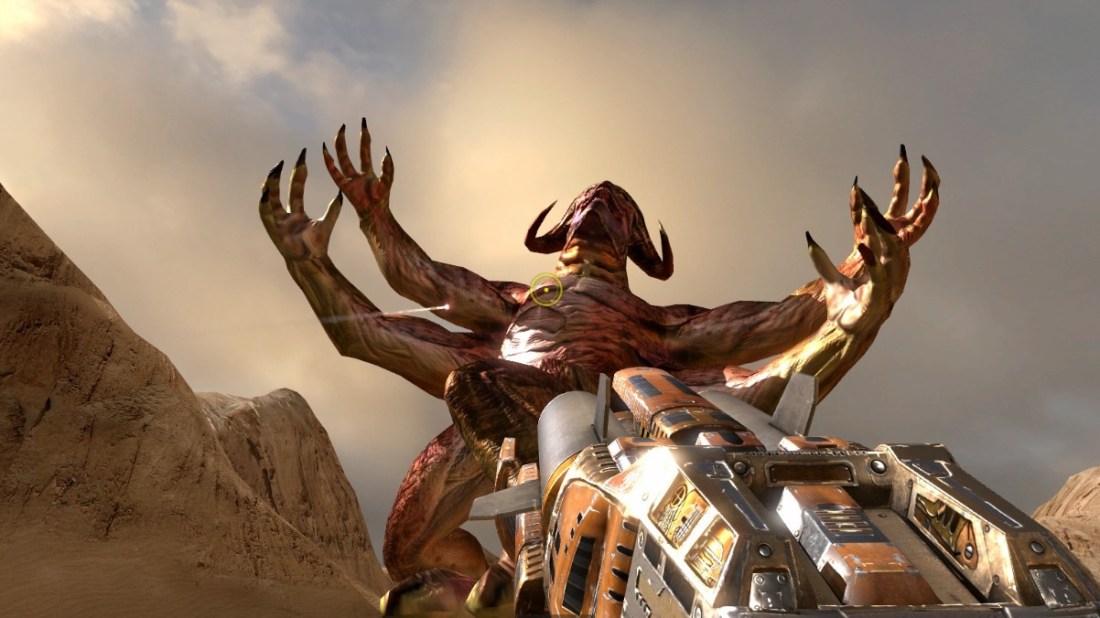
SS is one of those games everyone knows, and those who’ve played tend to smirk when it comes up. It’s the standard for describing a shooter’s intensity “well it’s not like Serious Sam crazy, but …” I avoided it originally, it was barely more than an arcade rail shooter. Released in 2001, it’s stripped back nature seemed at odds with where FPS was at the time – it was a Quake Clone in the Half-Life era. But maybe that was point; plots, justifications, moral choices and cutscenes – they just get in the way of what we’re really there for when we load up an FPS. You wanted a shooter, get shooting. But rather than be an oddity, Sam caught the imagination and survived to become a franchise, even getting HD remakes. I figured I’d find out what all the screaming was about.

Kinda like Mass Effect, a previous civilisation left various technological advances lying about. Those allow humans to colonise space; and attract the interest of an alien warlord we dub ‘Mental’. He sends monsters to wipe us out and heads for Earth. Desperate, humans decide to use the ‘Time Lock’, which can send a single, serious solider back to ancient Egypt where Mental and the other species were fighting over Earth’s resources. There, the idea is, our Sam can put a stop to Mental before he’s even begun. Great plan.

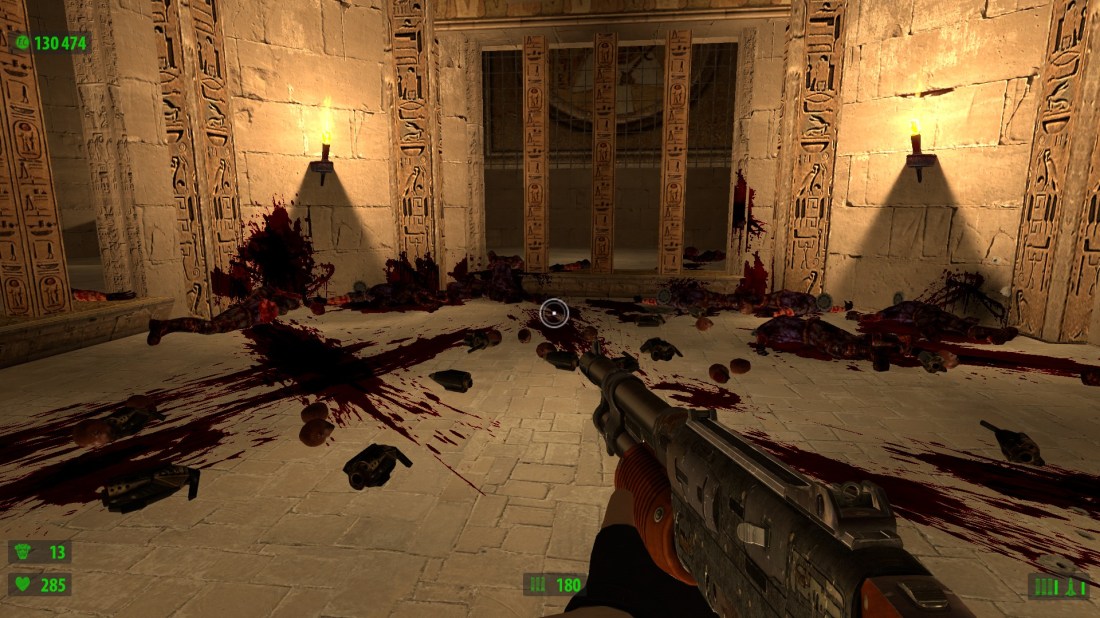
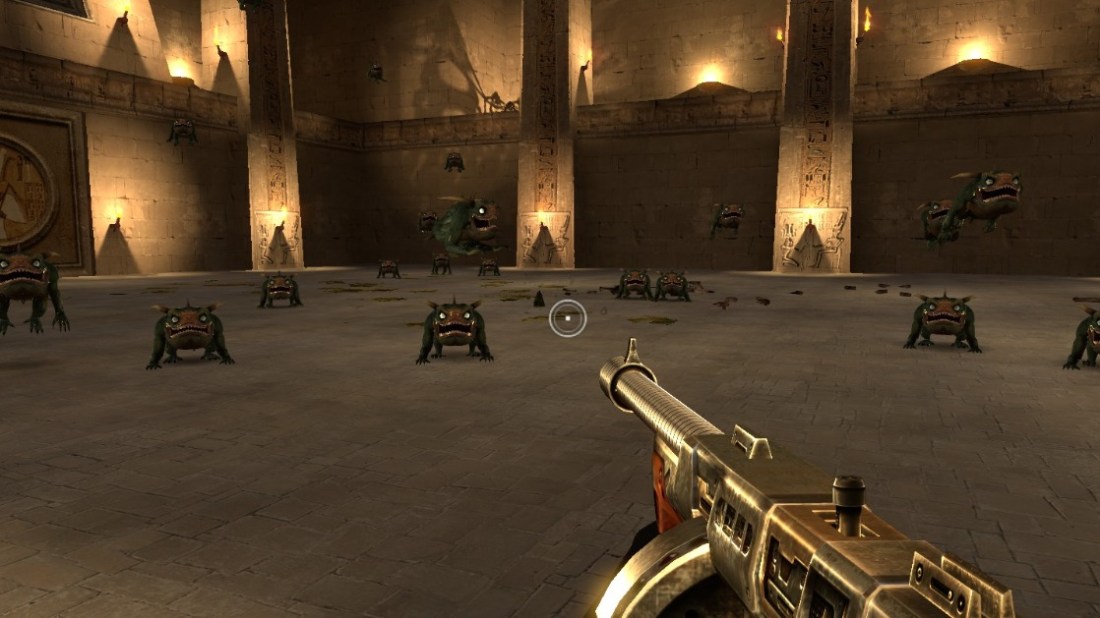
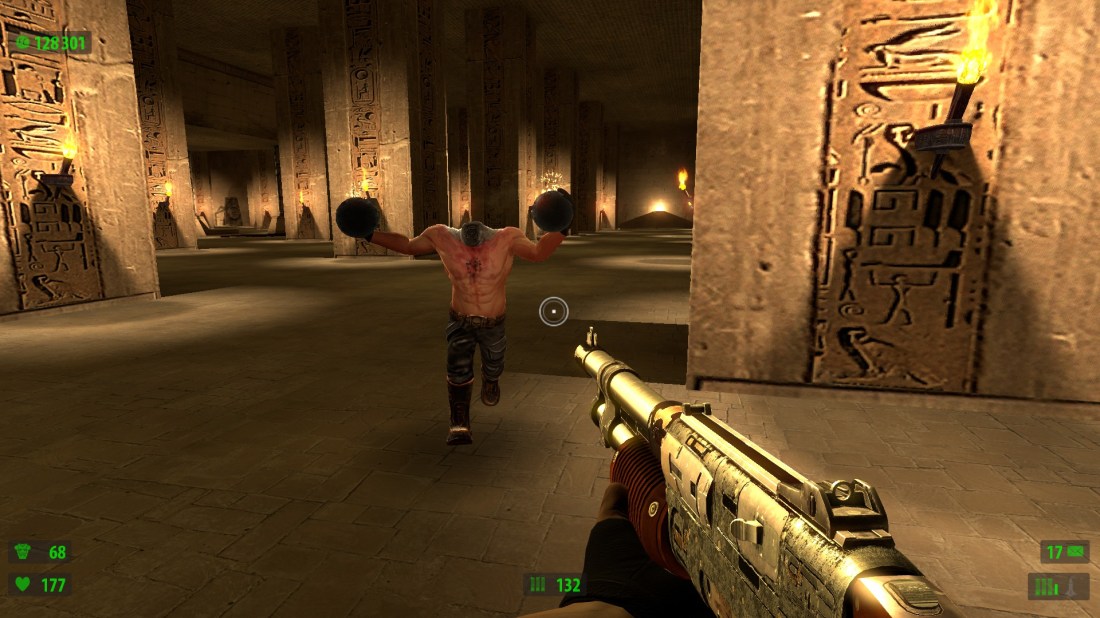
Of course, none of that matters – we’re dropped into ancient Egypt and then … Serious Sam actually broke my mouse. I have never clicked so furiously before. Not even google knows how many creatures appear in the game, but it’s a lot. And a lot quickly becomes too many.

It’s simple to play; kill everything in the arena, door opens, reload, next arena. Just follow the screams, grunts and growls. The AI is firmly set to ‘kill that guy’ and they just bolt towards you in their dozens. I could be describing anything pre-Half Life but the Doom era hid the basic AI and repetitive gameplay with clever level design and pacing. In SS there’s no hiding; literally. Its sheer perseverance; yet, after a while, you sort of key into its style.

You turn Sam into a violent ballet dancer while using their tactics to your advantage, circling to bunch them together and leading bombers into their midst; timing leaps and sidesteps to avoid charges, you can find some poetic moves amongst the mayhem – for all its brainless behaviours, there is an art to being Serious, and Croteam somehow found the sweet spot between ‘what the hell?’ and ‘woohoo!’. But, within a few levels, that subtlety within the silliness wears off and I switch off – I’m surrounded, overwhelmed, in danger and … bored. I keep expecting it to get going, but instead it becomes exhausting. Seeing huge hordes of creatures approaching should make you panic not just wait placidly until they’re within shotgun range. And when you put them down you’re not triumphant because you can already see the next batch headed for your muzzle. Sigh. I get that’s the point to Serious Sam, and one or two levels are ace, but more than that and you burn out.

A similar game was Painkiller. But while that had incredible gothic designs, freaky creatures and a semblance of a plot (plus Eve in the cutscenes as a reward for the endless battles), Serious Sam goes for the jokey, brightly lit daft approach. And that works well for an hour or so; the headless suicide bombers are at first hilarious. You hear their shout and instantly start trying to spot them in the fray – but the shout becomes a bit of a nag, hearing ‘agggggggggg’ especially when there’s about ten of them. The clip-clop of the Skeletons causes you to panic, but after a while you just think ‘Meh, I’ll deal with them when they get here’ and so it goes on. There is a nice sense of anarchy as creatures takes out their cohorts as much as you do, like an old-school deathmatch with everyone just going mad, but it never changes. SS is as much an assault on your ears as trigger finger and eventually you realise the screaming you hear is your own.

Quickly, I fall into a style of shooter gameplay I wouldn’t usually employ unless I was in bad shape – speed run. While certain elements have to be met to progress, if reaching somewhere is the goal, I just take off, hopping and side-stepping the whole way to get it done. Discretion is the better part of valour. As I dash through the levels, trying to convince myself the challenge is in not killing anything, I wonder what’s the point of this game.

SS was actually intended as a tech display of Croteam’s engine. But such was the reaction to the demo, it gained a reputation as a carefree antidote to the humourless shooters that followed Half-Life. The demo was eventually extended into “The First Encounter” while the Second debuted a year later. I’d better buy a new mouse.

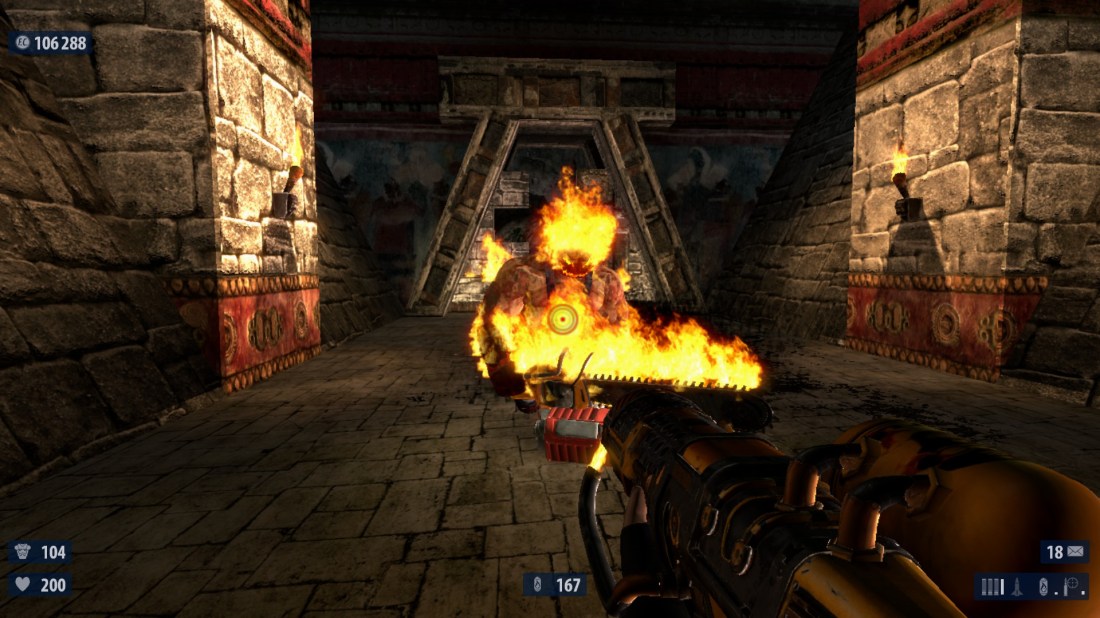
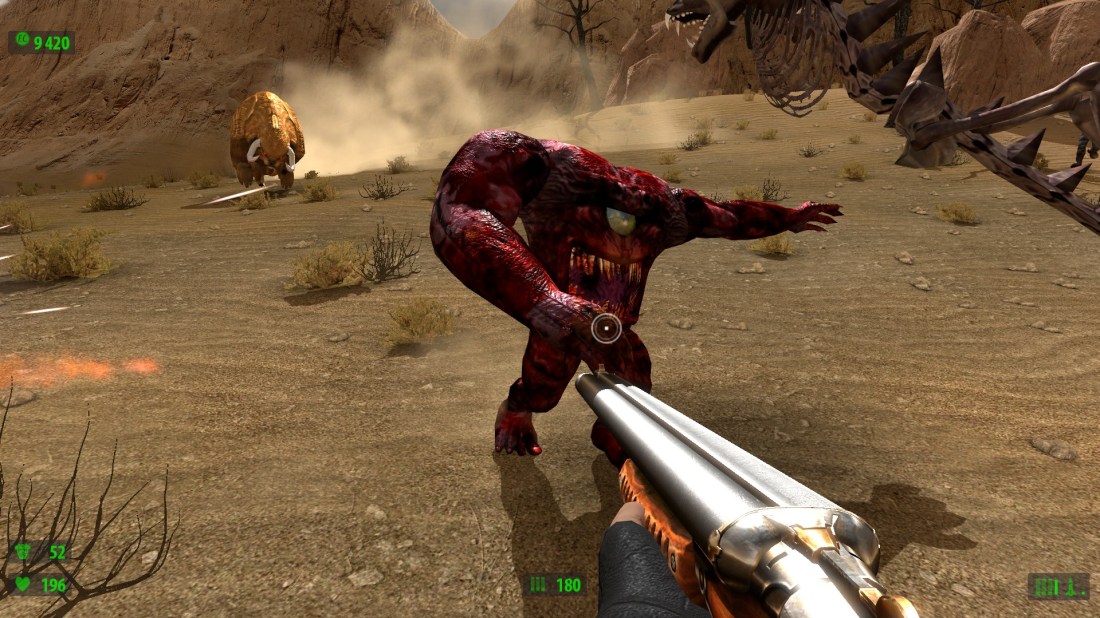
First Encounter ends with Sam boarding a ship headed for the homeworld of the aliens that left all the trouble-making tech in the first place. Second Encounter picks up after this ship is shot down over a South American tropical rainforest. Sam has to fight to reach various portals, bouncing him around earth’s past to reach a ‘backup’ spaceship. Second Encounter does sort of change things up and works better than the first. Freed of the repetitive Egyptian backdrops, we’re in slightly more complex level designs and locations, and have some new weapons including a sniper-rifle (like you ever get a chance to be that subtle), but the tsunami-sized waves of creatures is just as unforgiving, with a few new additions. Great, more creatures.

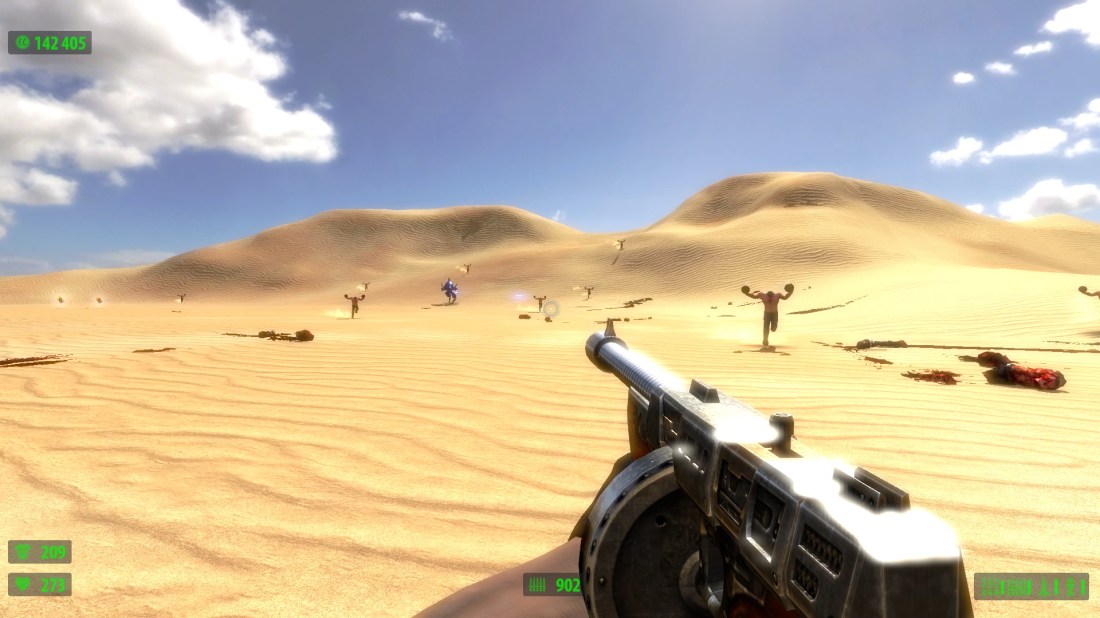
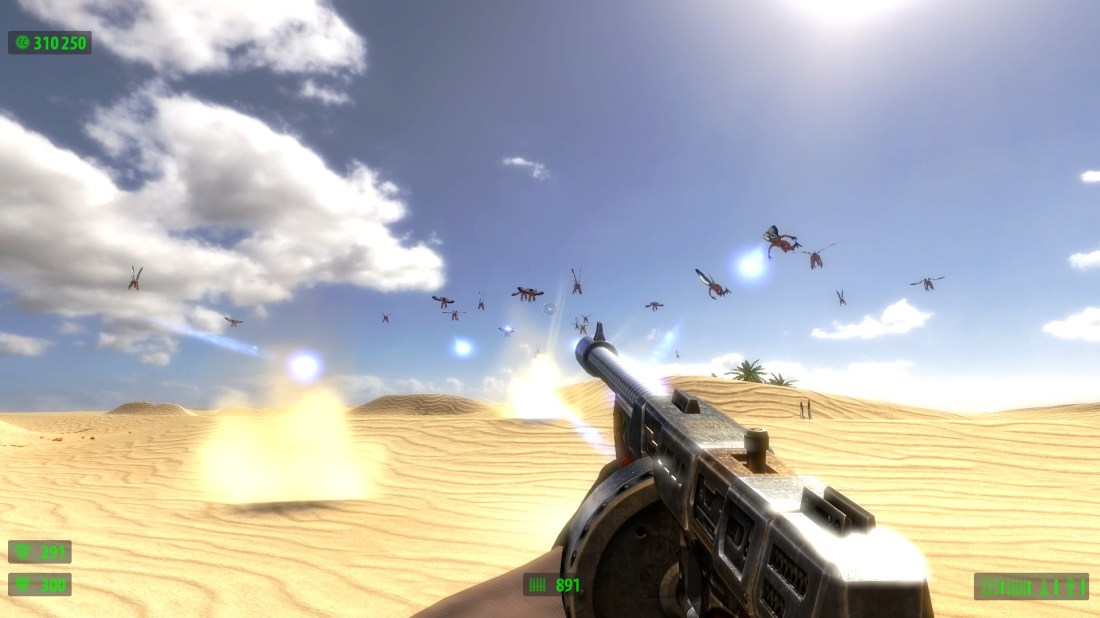
You can see how this is began as a demonstration for the Serious engine. The draw distance is still impressive; seeing tiny dots appear over a sand-dune accompanied by a distant yell, the flying harpies, the size of the arenas we bolt around in and the sheer number of nasties, it all flows really well and Serious handles the intensity better than many modern engines that start to flap when things happen – I’m looking at you, Bethesda. But as a game it never gets past that proof-of-concept feel. Still, Serious is a hell of an engine – it might not have the over-sophistication of the idTechs’ or the immersive quality of Unreal, but the Serious Engine is a tank – it solidly gets the job done and should have led to more mad games.

The series has enjoyed huge popularity but I’m struggling to see why. The screaming villains grate, I’m bored of the samey locations, annoyed at the mobs and the repetitive gameplay – but even though I’m not enjoying SS, I realise that’s because I’m not supposed to. We’re supposed to. It’s a game you and your mates get into and see how long you can survive, before handing the controller to your mate and watch him get cut to pieces, laughing at just how ridiculous it is, how ridiculous we are, how ridiculous gaming is. A few levels of Serious Sam is great fun but like the creatures we face, SS is best played in a crowd.

First Encounter 2001/2009 HD Remake | Second Encounter 2002/2010 HD Remake

Developer; Croteam | Publisher; Gathering of Developers / Devolver Digital (HD Remake)

Platforms Win/Steam, X360

Far Cry 3

a second wind playthrough special

FBT reviews Far Cry 3. Or 4, maybe 5 – I’m not sure.

*This is a playthrough review – there’s spoilers *

If you’ve played one FC you’ve played them all. You expect a sequel to not stray from the original, but Far Cry’s 4 and 5 (plus the spin-offs) have all followed FC3 down to the pixel – FC1 was the blueprint for 3 and no one talks about FC2. So is 3 the best Cry there is?

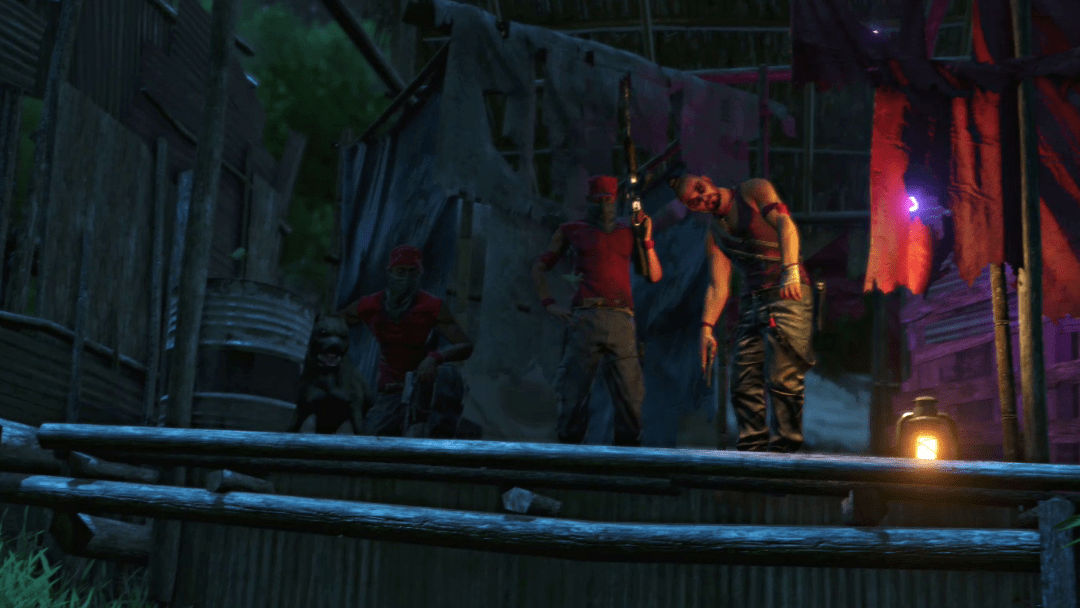
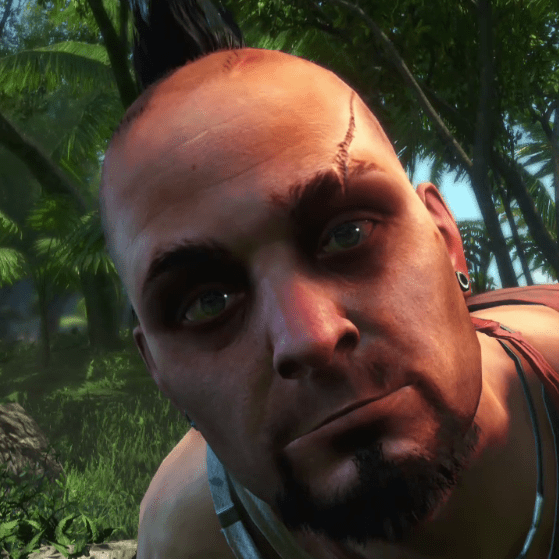
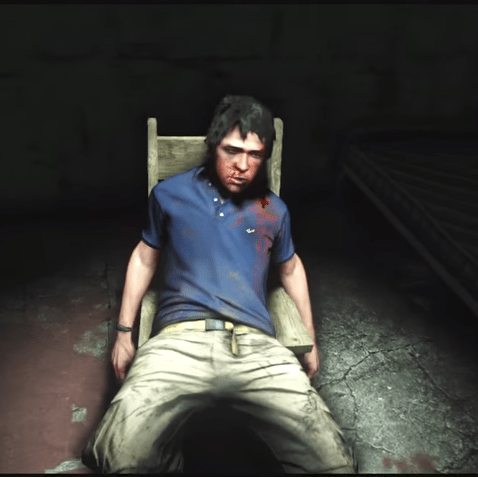
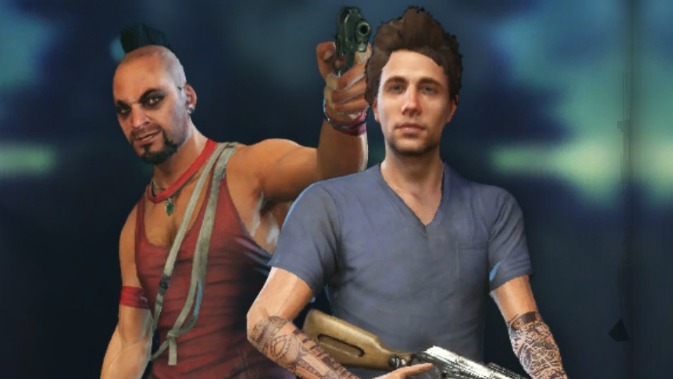
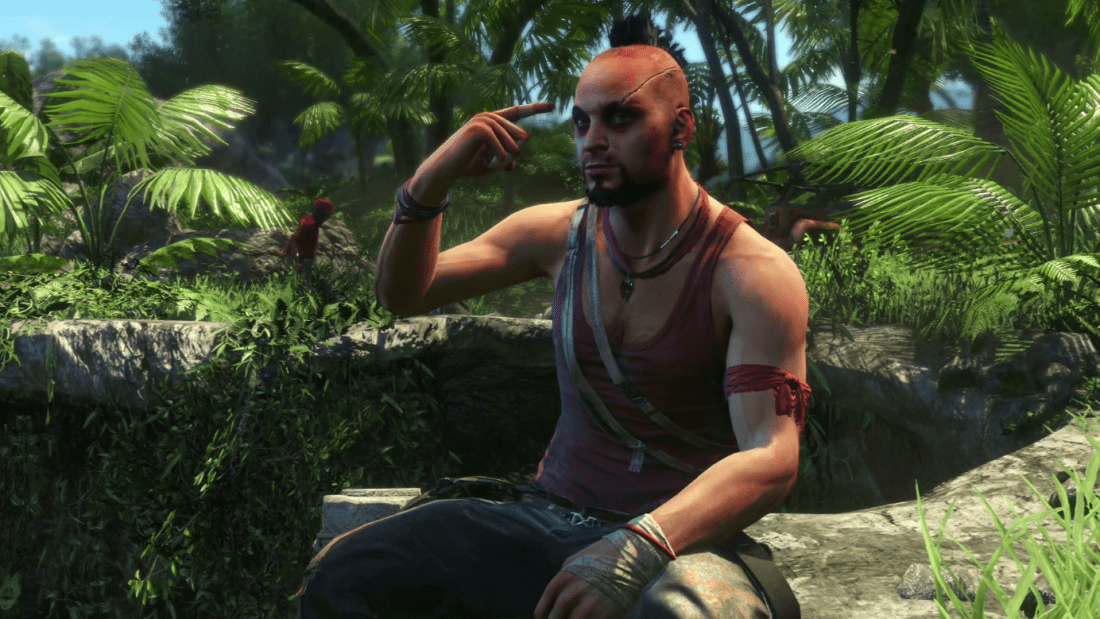
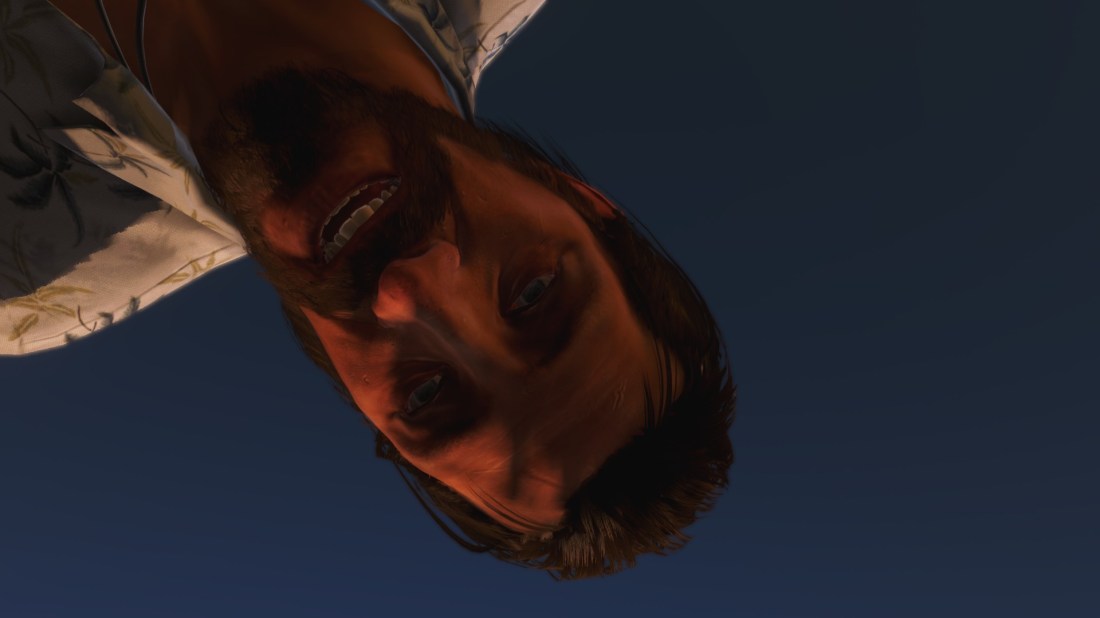
Jason, a slacker whose girlfriend Liza has grown tired of his man-child antics, is on an adrenaline-junkie holiday, cut short when they sky-dive over islands controlled by pirates; their very psychotic boss, Vaas, decides to ransom then sell them into slavery. Can Jase save his friends and prove to Liza he’s da man? Nope, it’s Jase’s big brother who breaks him out. As I’m thinking ‘why aren’t we playing big bro?’ he’s killed and Vaas makes Jase run into the jungle for the sport of his dogs. This was not in the holiday brochure.

One of the biggest issues with the similarly themed Tomb Raider (2013) was that cut-scene Lara constantly asserts she must rescue her friends, then we ignore them and gad about chasing dreamcatchers and exploring tombs. But FC3 neatly sidesteps the free-roam vs main mission conflict by establishing Vaas as very dangerous – and Jase as a wet sop. Escaping by falling into a river, Jase is picked up by Dennis, a drifter who joined the Rakyat, the indigenous people Vaas is rounding up to sell as slaves. No match for the pirates, Jase agrees to help the Rakyat regroup in return for helping rescue his friends, including little bro Riley. And whinging Liza too, if we must. It just takes the pressure off knowing the friends are beyond reach and more realistic than a preppy city-slicker suddenly going Rambo.

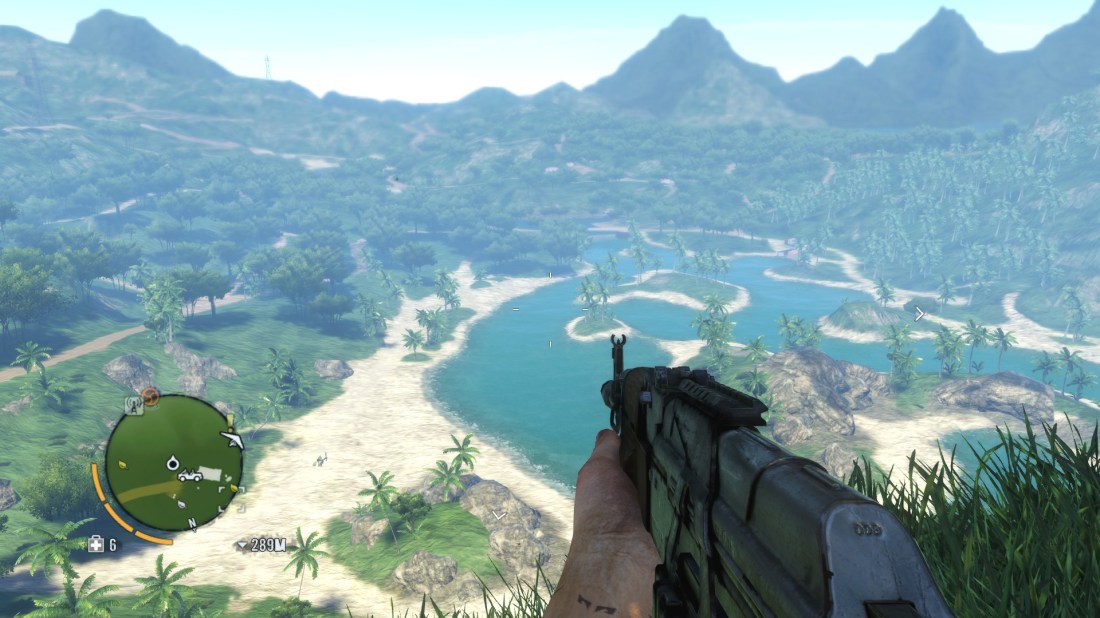
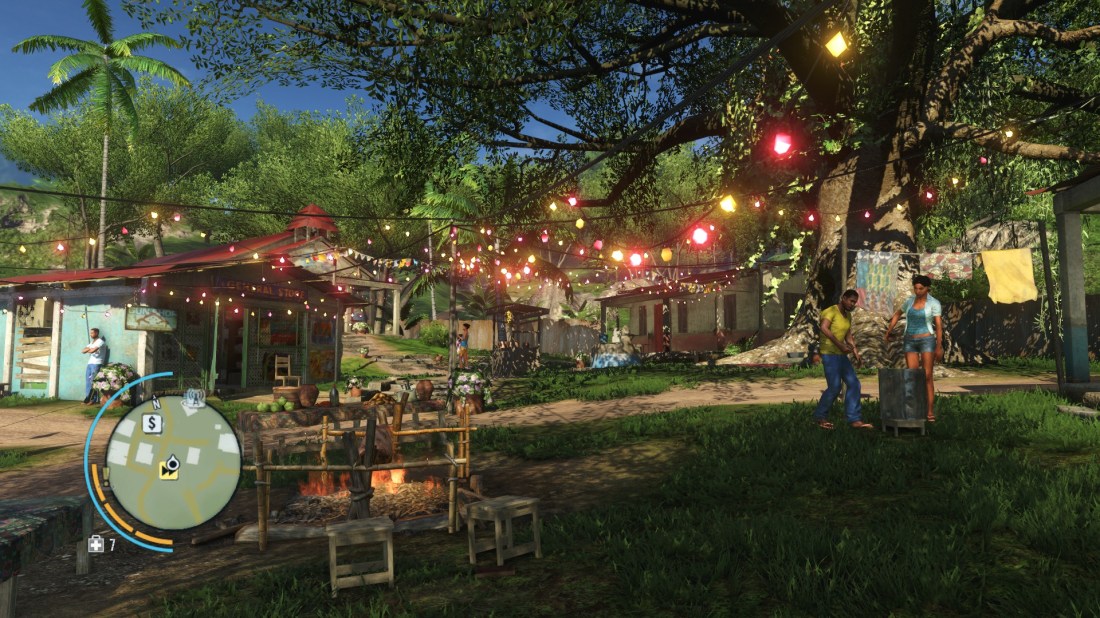
Although the tropical island is huge, this is no RPG. About the only on-going side-mission you’ll encounter is Hurk, an idiot straight out of Trump’s ‘Merica. He’s either a fun diversion or an irritant depending on how you take to him, but Ubisoft love Hurk; he’s the series’ own Claptrap. Or maybe they just can’t be bothered to scrub him out of the code each time they do a reskin … I mean sequel. There’s a few ‘find my daughter’ random quests, timed delivery distractions and the odd collectable or crate but that’s about it. FC3 is a rich and detailed world but a lean game, and all the better for it. Most of the areas you find are abandoned, showing the pirates’ impact; we’re a long way from the gentrified Starbucks of Jase’s world.

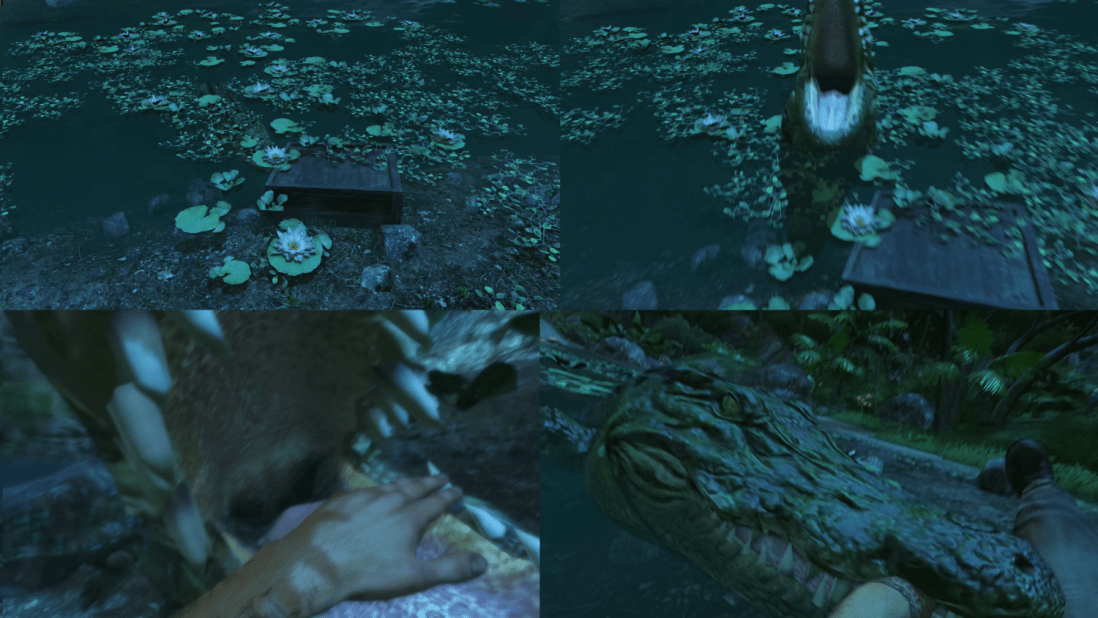
The pirates roam – either on foot or in vehicles – and make very short work of Jase, leading you to run for your life early on, but often you’ll just run into more problems. Furry problems usually, ranging from pack hunters like Dogs, easily irritated Cassowaries and Bears who have a mean temper and a meaner right hook. There’s also big cats … there’s nothing more upsetting than setting up a sniper spot then turning to see a Tiger giving that little shimmy, about to pounce. There’s Boars, snakes, Komodo Dragons and the coast is patrolled by marauding Bull sharks, but the real ‘oh come on!’ is the Crocodiles. Being dragged into the water and put in a deathroll isn’t something you forget and even when you’re being chased by a dozen pirates you’ll still desperately scan the water before leaping to maybe-safety. A few times I saw animals get pinched by crocs. Predators can be fended off with some nifty button mashing but you’re not Tarzan, it’s more Jase of the Jungle; getting mauled is par for the course. Better learn those skills quick sharp.

While weapons and items can be upgraded or crafted as usual, the level-ups are a nice, nature-orientated skill-tree. ‘Spider’ is ambush and hunting, ‘Shark’ is strength and brutality while ‘Heron’ is about speed and planning – each level up gets Jase a new ‘tatau’; a tattoo that marks Jase’s warrior status and gives him cool tattoo sleeve. The largest XP is gained from comms towers and outposts. The towers are locked to a frequency only the pirates can use, so you have to reach the top and remove the scrambler. They’re sort-of puzzles, each with a different route and opportunity to fall off. They reveal the map and local shops can now trade – rewarding you with a weapon for unlocking their tower. You can only manage four weapons but you’ll need them for the outposts; driving out the Pirates means Rakyat take over the area, plus you get a fast-travel spot, a shop and a nice XP bump – especially if you can do it unseen. Good luck with that.

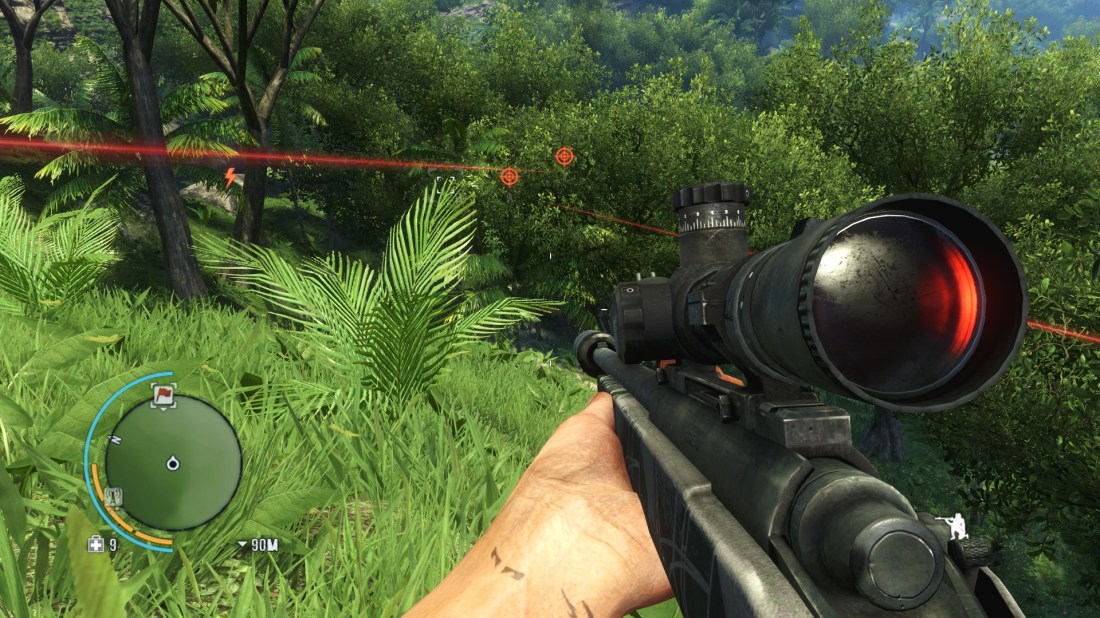
Alarms can be shut off completely by hand if you sneak into the outpost or taken out one at a time with gunfire, but even using a silenced sniper 200yards away at night from a bush they still spot you. Ducking behind something will break their line of sight but they have remarkably good visualisation skills – and they’re incredible shots. Occasionally they’ll have dangerous animals caged which you can snipe open as a distraction – once a tiger took out an entire camp; I was waiting to pick off the survivors but it killed all of them. Then I shot it for its fur. The outposts are all different and you can attack any way you like – until you fire a shot and they see you somehow. Those pirates must kill it at Where’s Wally. Claiming an outpost also unlocks big game hunts and missions to kill pirates using only a knife. Jase has a digital camera, which he can use to zoom in and tag enemies; thinning down bodyguards before sneaking in for a stealth kill is awesome.

After a few fun tutorial missions, Dennis discovers one of the friends has escaped. It’s Daisy, big bro’s girlfriend, recovered by a doctor who makes recreational drugs for the pirates and enjoys his work too much. Beneath his house is a flooded cave with an old boat Daisy decides to fix up for them to escape on. It’s here you bring back rescued friends, have flashbacks and fall out with Liza, who’s the next rescue mission. I’d expect her to be the final prize, but we get her out the way early, in a great mission that Jase completely f’s up. Still, Liza sees how focused Jase has become and changes her tune. Thing is, Liza’s got some competition.

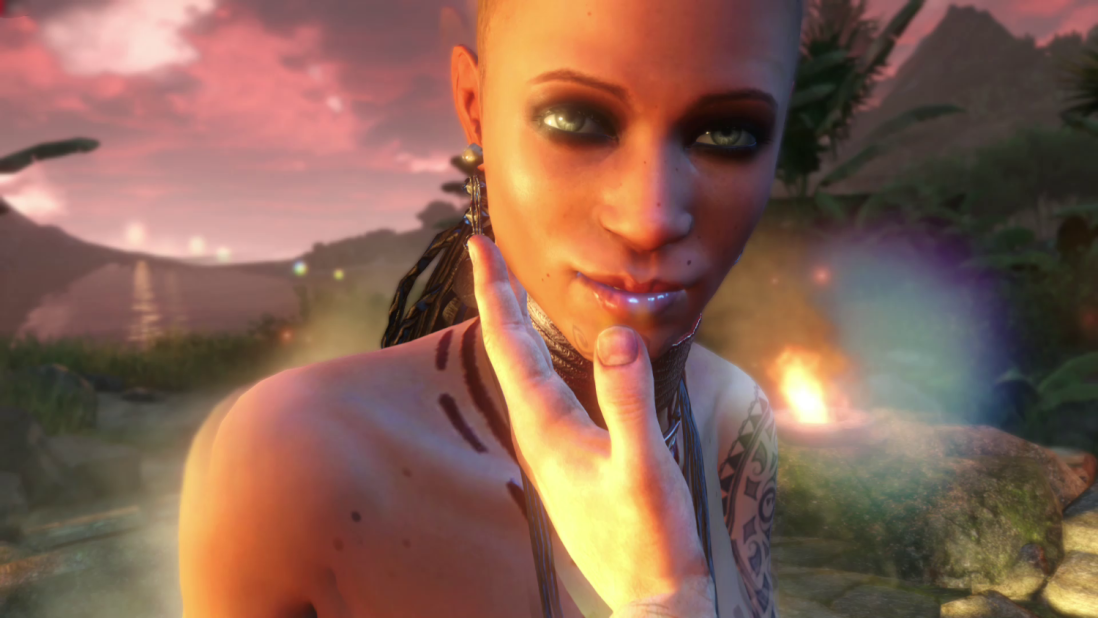
Dennis invites us to meet the Queen of the Rakyat, Citra; she’s unconvinced Jase will stop Vaas, but she’s willing to give him a chance – and some terrifically powerful hallucinogens to help him see his true spiritual path. While Liza represents a safe, structured life, Citra is passionate, primal; it’s not hard to see why Jase starts to waver. The whole game is filled with believable characters; Dennis is a nice guy but it becomes subtly apparent he’s merely tolerated by the Rakyat, not part of the tribe as he’d like to believe. But just as Citra’s body language and attitude is alluring, Vaas is terrifying; it’s not his raving that puts you on edge, it’s when he’s calm – there’s something in his eyes, his poise that just makes you uneasy. The inhabitants are as believable as the island. Which for Jase, is becoming home.

While the friends finish up the boat and bang on about getting back to civilisation, Jase is unsure; but is it the island life or is he enjoying the killing a little too much? He says his actions are necessary but after a while that excuse rings hollow – Dennis discovers one of our pals, Oliver is about to be shipped off. It’s a typical rescue mission, but we really see how … effective Jase has become. Both Liza and Oliver’s missions end with a chase where Jase explosively deals with the Pirates, but whereas Liza’s mission was a mess, in Oliver’s escape, Jase is Liam Neeson. He’s getting good at this and after Citra I’m a lot less inclined to care about this bunch of entitled brats. But saving Keith is possibly the highlight of the game.

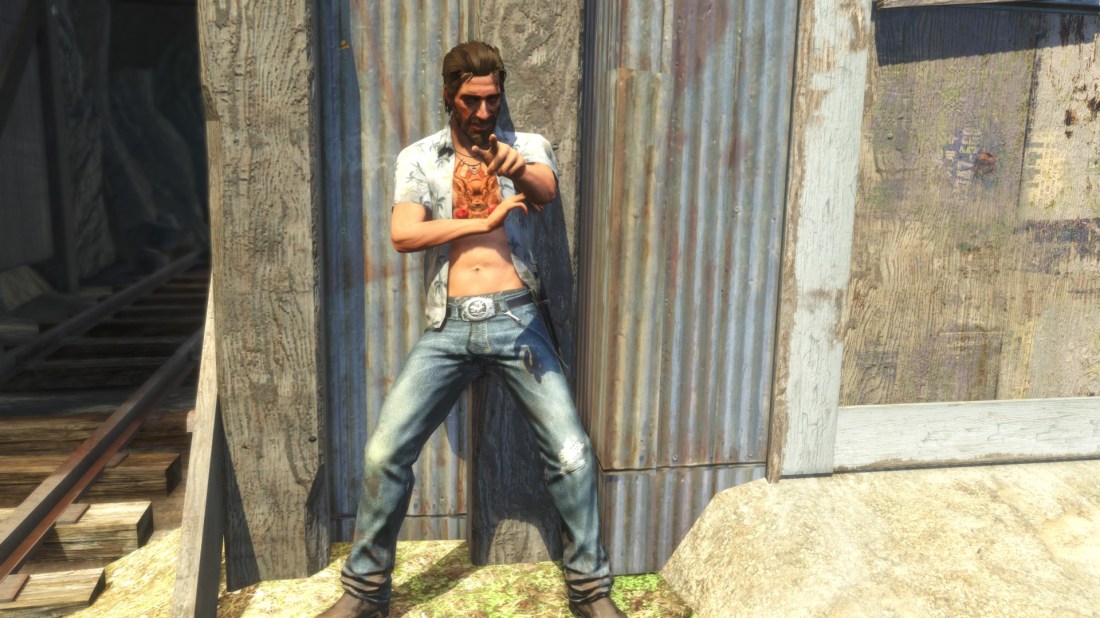
It turns out that Vaas isn’t the boss. He actually answers to Hoyt, a drug and slave peddler with his own private army on a nearby island. Hoyt sold Keith to Buck, a sadist who’s keeping him as a pet. When Jase mutters “I’m gonna kill that motherfucker” after a Buck encounter, you really want him to. This game keeps turning out top-notch bastards; whereas Vaas might snap at any second, Buck wants to make you snap. Walking around with an open shirt showing his Iggy Pop physique and chest ink, he re-enacts abusing Keith just to see Jase in pain too. He sends us off to explore long-lost tombs (Tomb Raider, this is how you do it) to find a lost Rakyat knife, and they’re great missions; but the real treat is Buck and Jase’s scenes together. It’s a critical turning point for Jase; he begins answering back (not that Buck appricates it – “I should cane you for that, I really should. But I won’t. I’ll cane Keith instead. Now then,”) and when Jase’s rage boils over, you’re up for it. Buck underestimated Jase; he’s gonna kill that motherfucker.

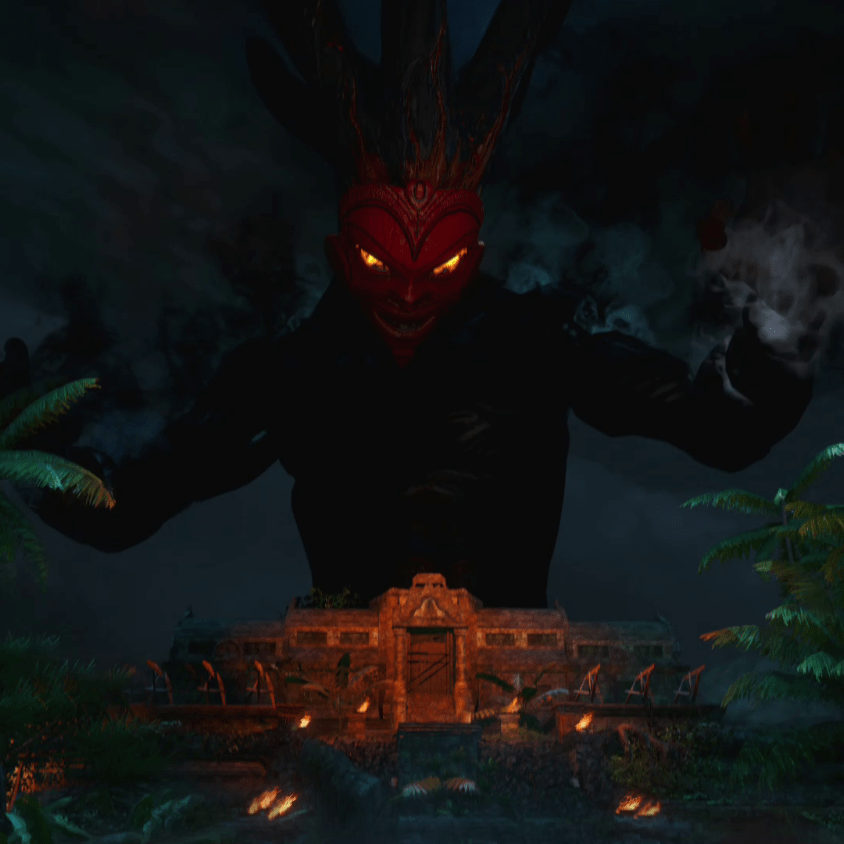
As Jase delivers a shattered Keith to the gang, he discovers little bro Riley was killed trying to escape. With no one left to save, the gang agree to leave, but Jase refuses, much to Liza’s teary annoyance. Whatever. Instead, Jase gets high with Citra again and re-enacts the legend of how the Rakyat were born – by killing a huge demon. As far as OTT mini-bosses go, this one is epic enough to let slide, partly because the final scenes intercut with Jase and Citra having sex. Now that’s an incentive to get through a staged boss fight. It turns out we were doing it in front of the entire Rakyat tribe too. Who da man! Afterwards, Citra asks us to kill Vaas, who happens to be her brother, and free the Rakyat so we can be together. Jase excitedly agrees. Okay, I excitedly agree.

This is it, come on Vaas, I’m gonna kill you then sleep with your sister. It’s a trippy, rage-fuelled fight but finally, Vaas is down for good. And so is the game. Shame it’s nowhere near over yet. Jase wants to prove his worth to Citra and get revenge for Riley by taking out Hoyt too. A pointless subplot featuring a CIA guy ends with him giving us a lift to Hoyt’s personal island. I’m coming for you Hoyt! Then I’m doing the sex again!

Except, I’m not. Hoyt’s island is largely the same, but rather than ramshackle villages and forests, it’s open grasslands and fortified bases – and tougher mercs. The entire game essentially resets; I just had druggy sex with a queen and killed a Pirate Lord, and now I’m running shrieking from the mercs like the brat I was at the start? All that momentum, emotion is dropped. I’m no longer da man. Damn.

Eventually, having enrolled in Hoyt’s mercenary intern scheme to get closer to him I discover Riley is alive – and I’ve been ordered to torture him about the whereabouts of this Jason guy … It’s true that FC3 does prick at some of FPS and RPG’s established tropes; not just Jase’s story and how a character can shrug off the acts we commit in a shooter, but little nods like Buck appearing like a convenient quest-giver, or the CIA merc who disappears after our cutscene and Jase mutters “where’d he go” – very meta. But FC3 isn’t as smart as it thinks it is. The Riley torture scene thinks it’s a brilliant commentary on CoD’s more distasteful sequences but it’s not because Riley agrees to it to keep up the pretence. It would have said something if we realised with horror Jase had become so unhinged that beating his little bro wasn’t a big deal, but Jase hates himself for it; FC3 was sold on the idea that it explores what a FPS would really do to someone but that’s simply not true and it’s glaringly obvious in the final scene – we make a moral choice, not Jase. Having offed Hoyt, who was a huge disappointment after Vaas and Buck (they really should have had their own sitcom), our ex-friends are nowhere to be found. Pirates? Nope, Citra. She has one final test – Jase has to literally cut all ties to his past life.

I get that Citra might be thinking if I’m willing to go through all that to save them I might want to return to my friends one day, but to leave the final choice to me doesn’t work. I’d stay with Citra, but I’m not gonna slaughter my friends and I never saw Jase become blinded enough to do it either. He’s traumatised but not insane. Second, all of Jase’s darkness came out of the extreme situation not a belief, so if the game thinks it’s provided enough evidence that Jase’s devolved to this extent then he should do it not me; let me watch in shock as I realise how far he’s fallen. It goes back to the Riley sequence; the game thinks it’s being devious forcing us into obviously amoral situations but it’s not because I shouldn’t have a choice. I didn’t go through what Jase did.

Worst of all, the game punishes you for choosing Citra, who reveals a pretty extreme plan to bring the Rakyat back to glory, while saving Liza is a disappointing non-ending that conflicts with Citra’s true intentions – she claims she loves Jase if you pick Liza, but the ‘Citra’ ending is not exactly loving. That’s two seperate narritives, two different worlds.

It’s also an uncomfortable moment to watch how animalistic the Rakyat are; they’re all cheering as I hold the knife. This is off. The Rakyat might be ‘primitive’ but they’re not prehistoric; a sacrifice? Citra is welcome to believe in old legends of the Rakyat’s mystical birth, but this display, and Citra’s later act are outdated and bordering on racist. We just spent the entire game saving 1940’s WB Cartoon-style savages? I’m surprised they don’t have bones through their noses and cauldrons for us to cook the friends in.

But, FC3 started to cave in on itself before this. The game creates this amazing dynamic between Vaas and Jase; losing him causes FC3 to slip into the generic when it could have gone in so many ways. We needed to know Vaas better. His extreme actions against the Rakyat are explained by Citra mumbling about Hoyt ‘poisoning his mind’ with drugs; hang on love, you keep doping me with hallucinogens then raping me; if we’d interacted more, if Vaas warned us about her true motivations, revealed an obsession with bringing back the Rakyat ‘warrior’ it all would have had much more impact; we recognise she’s dangerous, but not insane and there’s no hints – at least none we believe, since the few clues come from Vaas. It could have worked if we’d just seen the signs and Jase and Vaas’s relationship should have been so much more than ‘I killed you/I escaped’ – Vaas makes at least five serious attempts on Jase’s life but he always survives which drives Vaas mad – well, madder. He even shoots Jase point blank, but the bullet was deflected by a lighter; which Vaas had put in his pocket earlier. That’s no coincidence and there are implications of something otherworldly going on; the Tatau magically appears on Jase as you level up, his hallucinations give him tangible foresight and Dennis remarks that Citra is a Goddess; had it all been Citra’s spiritual doing rather than half-baked machinations, that she had some mystical power then Far Cry 3 could have been a trippy game that challenged the shooter norm, explaining if not satirising much of what we just accept when shooting. We just needed more Vaas, as insane as that sounds.

FC3’s loading screens are populated with quotes from Alice In Wonderland, implying more dream-like fantasy, but it’s not. Instead of down the rabbit hole FC3 heads into a dead end, and the irony of the FC series is in FC3’s best moment – where Vaas claims the definition of insanity is repeating the same event and expecting a different outcome; then repeats it over and over; that is the entire Far Cry series – everything you experience in FC3 is the structure of every other FC game; the series has turned reskin into an art-form, but FC3’s story and characters make it stunningly original and fascinating; it’s easily one of the best open-world games of all time – until you reach Hoyt’s island. Then it’s one Far Cry too many. Quit after killing Vaas and it’s an extraordinary experience. All hail king Jason.

2012 | developer Ubisoft Montreal | Publisher Ubisoft

Platforms; Win (Steam/Uplay), X360, PS3

Far Cry Blood Dragon

a second wind review

FBT is Rex Colt. And the dragons have lasers for eyes. What?

The year is 2007. From the ashes of the last nuclear war arose the Cyber-Commandos; dead soldiers resurrected using cybernetic technology. They were our last line of defence. But Colonel Sloan, the cyber-soldiers’ commander has gone rogue on an island populated by the legendary Blood Dragons. Now, our only hope is Sloan’s greatest pupil, U.S. Military Mark IV Cyber-Commando Rex ‘Power’ Colt. Get ready for the Power…

Opening with a 4.3 screen, vhs tracking bar and fuzzy credits, if you’re not from the 80s this game could be confusing. Being built on Far Cry 3, everything you expect is here – main mission, side missions, things to kill, places to explore and bases to take over; standard open-world shooter, but that’s where the familiarity ends. This makes me want to dig out my Vic-20. But if the 80s setting and in-jokes are lost on you, there’s always the gaming piss-takes …

Rex and “Spider” Brown (who is days from retirement and has a wife and kid waiting for him at home) are sent to the island where Sloan is holed up. Having become disgusted at America’s soft-stance on war after Vietnam II, Sloan plans to fire missiles (filled with the blood of Blood Dragons by mad scientist Dr Carlyle) at every nation and send us back to the stone age. Or something; it doesn’t matter. No match for their old mentor, Rex is left at the mercy of the Blood Dragons which can shoot laser beams from their eyes. What? Escaping, Rex takes over a nearby base, earning the gratitude of a bunch of nerds and Carlyle’s disillusioned assistant, Dr. Darling decides to help Rex stop Sloan, but warns only the ‘Killstar’ can beat him and in order to wield it, Rex has to become more than his cyber-programming.

Gruffly voiced by Michael Biehn (so perfectly you’ll have to watch Terminator, Aliens, even The Rock again), Rex is the ultimate 80s action hero. Whether it’s doing cool moves like giving the devil’s horn when he levels up (and the finger when you melee out of range) or reloading the shotgun by throwing the shells in the air, Rex is the hero we watched as kids, sitting a foot away from a square telly. He loves his country, his job and paintings of dogs playing poker. But Rex is not just a manly man’s man type, he’s also us gamers. Going through a tutorial (“to look up, look up”) causes him to yell “for fucks sake”, his HUD constantly annoys him with pointless info, he complains about missions and the logic behind them (like having to dive into cyber-shark-infested water to turn a fuse on), gets bored by exposition and questions collectables – “Great, found another one. What the fuck am I doing?”; what gamer hasn’t muttered that?

Explained as an evolutionary throwback, Blood Dragons are massive and lethal. They glow different colours depending on mood and they’re huge … fun to get killed by. They roam the island taking out anything they find; getting chased by one while in a jeep is the stuff of Jeff Goldblum’s ‘must go faster’ nightmares. You can rip out the hearts of downed cyber-baddies to decoy the dragons with, and getting them to attack bases is great, even if it means decoying it back out again or killing it afterwards – if you can.

BD is all about the fun of playing a straight-to-VHS action hero; the heroic cut-scenes, dramatic dialogue, it’s perpetually set at neon-night, the creatures are shiny chrome-coloured, the bases have that 80’s sci-fi atheistic and they’re filled with cyber-baddies in crash-helmets that talk in robotic voices. There’s a cold-war attitude and the assumption that the near future will be a ravaged, nuclear hell-hole – they’re not far off – and the score is by a synth band called Power Glove. Items we collect include VHS videos, and the titles are so spot on I swear I watched them as a kid. But it goes further than that, you really need to know your 80s to get the references built into it – missions are all movie quotes or titles, there’s Jaws and Blazing Saddles refs – wrong decade, but we all rented those in the 80s, long tall sally plays during the helicopter ride, when you fire a mini-gun Rex lets out a roar, and his sidearm looks very familiar. There’s classic training montages, Rex goes into the sewers to take out some mutated turtles, Dr. Darling looks like Bridgette Nielson while Slone bears a striking resemblance to Bennett. There’s a classic 80s sex scene and the final shot is straight out of a video that defines the eighties. It’s a joy to play your childhood – we are Michael Dudikoff.

While the 80s theme and humour are the most memorable thing, BD gets the open-world shooter bit right as well. The main mission is centred around dismantling Sloan’s war machine and Carlyle’s labs, while the side-missions fall into two categories – animal hunts and scientist rescues. Standard Far Cry stuff but this is more than a reskin; all the bases are different and require planning, especially if a Blood Dragon is about, while the missions are designed to have fun with and there are some great set-pieces – taking out the Blood Dragon’s nest is a standout (complete with an Aliens in-joke). And then, once we get the Killstar and assault Sloan’s base … whoa; its pure actioner wish fulfilment like you’re re-enacting the ending to Commando – except Arnie never rode a tame Cyber-Blood Dragon (which is self-aware and has its own 80s movie quotes), while the final fight with Sloan somehow mashes together every action movie you ever watched. You will be cheering like you did when Matrix said “Remember Sully, when I promised to kill you last?”

At face value, BD lazily takes aim at a decade that can’t be taken seriously anyway – just look at the 80s. But there’s so much to it – it’s as much a homage as parody and while 80s actioners are squarely in its firing-line, so is gaming; Rex constantly responding to the game’s logic with a befuddled ‘what?’ is all of us – but he’s no hero, he’s just your everyday U.S. Military Mark IV Cyber-Commando doing his job. It’s a genuinely funny game – “Tell my wife … I died fighting for my country!” / “You can tell her that yourself” – it’s like Naked Gun the Video Game.

This is another Far Cry; there’s nothing here you’ve not done two or three times before in a FC game, but Blood Dragon’s style and sly comedy raises it above the series’ diminishing returns and makes it a classic in it’s own right – I’d look forward to a BD2 way more than an FC6.

BD is short but it’s perfectly timed and doesn’t outstay it’s welcome – it’s one of those games you get tempted to replay immediately – not because you missed anything, but because you really want the exact same experience again.

As soon as I’ve re-watched Cobra.

2013 | Developer, Ubisoft Montreal/Shanghai | Publisher Ubisoft

platforms; Win, PS3, X360

Mass Effect playthrough – Pt3

a second wind special

In this final part of FBT’s Mass Effect playthrough, he and Ash get into it, Tali breaks his heart and Javik pays the kind of compliment you can’t come back from. Oh and Reaper stuff too.

So far, ME3 has been an up-and-down game. It’s not followed through on any of ME2’s promise but it’s a tight, fast moving game that keeps the pressure on. With all the ME2 deaths and impacts indifferently accounted for, all’s that left is the Reapers. And Ash.
DGAFShep and Ash haven’t really been seeing eye to eye. When we draw our guns on each other, it hits home; Ash would believe we’re behind this attack, all her fears realised. I’m dreading this; if it doesn’t go the way DGAFShep needs it to, chances are I’ll shoot Ash like she’s an Asari – on top of which, this time Udina has Kai-manipulated footage of me killing the councillor. Ash takes aim, I have no choice but to Renegade interrupt and … she backs down. I have no idea why, or what I did (or what more I could do to provoke her), but after I shoot Udina, which I really enjoy, I dismiss Ash with a curt ‘told you so’ and leave.

Later, I find her outside the Normandy and we have a tense conversation where I insist she join Hackett. It makes more sense. It’s selfish to keep her there when Hackett needs a Spectre and I’d be holding her back. She’s outgrown Shep. We firmly handshake and I never see her again. Not even at the Citadel party (Sorry James, DGAFShep is also CockblockerShep), but it feels right. DGAFShep might not care, but I do. Hope she makes it.
Oddly, I disagree with the survival of one squad-mate; Grunt. It’s such a great moment when he chooses to stay and give Shep a chance to escape, and his fight-to-the-end is a startling moment that brings home the sacrifices Shep is asking of people. That he rocks up again is great, but it just undermines that moment. He does have one of the best moments in the Citadel DLC so I’m looking forward to that but still, he should die. That’s Loyalty for you. Also, for DGAFShep the non-sacrifice doesn’t really add up to much. Since I gassed the Rachni Queen in ME1, the game has to explain all the Reaper forces and it turns out they just cloned a Queen to produce foot soldiers. This is turning in Borderlands with its respawning mini-bosses. This time I save the Queen and send her off to the Crucible project – where she becomes dangerous and the Alliance kill her. Well done DGAFShep, you wiped out the same species twice. And it causes my War Readiness to drop. More bloody work to do.
Despite that staffing issue, the War Readiness is growing nicely. Without even realising, it gets past ‘minimum’ which feels like DGAFShep’s target. A large reason for that is my new appreciation for ME3’s missions. I avoid the random and emotional stuff but if the Alliance needs boots on the ground I seem to find myself doing them, rather than working through a list of mission-triggering chores like ME2 just to get things moving. And they just get more and more epic like the Asari home-world and the Reaper fights; it’s exciting and fun (not fun as in causing all those Asari deaths, honest). Before I know it, DGAFShep has inspired the universe and aced the war readiness; I even managed to save Miranda from her dad (And another Kai fail). This time I let her hug her sister. DGAFShep is getting soft in her old age.

Nearing the end, we’re off to Rannoch to help Tali reclaim her homeland. I’ve already tangled with the Quarians but managed to keep them on side – by punching that war-hungry General. I even get to dish out some sass to the downed Reaper, taunting “Tell your friends we’re coming” before another bunch of rockets hit it and I mutter “Never mind, I’ll tell them myself.” Badass.
The Quarian’s planet reclaimed, I meet an excitable Tali. I always felt bad about Legion but it’s a great sacrifice – once, I lost Legion in ME2 and another Geth took its place. Despite all the Paragon chat and doing its side-mission it still tried to kill the Quarians and Tali killed it while saying “Legion would have understood” which was affecting; this time though, with Legion loyal and the Quarians onside, we should be good. As I watch Legion upload the code, I start to notice the dialogue is different. Still, sure there’ll be an interrupt where I force that punched general to stand down.

He’s not standing down. Legion’s going to attack the Quarians. My Mass Effect life flashes before my eyes and I realise that without her ME2 loyalty mission, Tali has no sway with the fleet, that she and Legion didn’t patch up their differences, that I didn’t do Legion’s trip into Geth subconscious; because of me, Legion and Tali don’t understood each other. Oh … oh shit. I only have a millisecond to interrupt – but which? For DGAFShep, the Geth are a better option; they have the Reaper code and stronger military. I don’t stop him and the Quarians are wiped out. As I stare at Legion’s body, Tali looks at her beloved planet littered with debris from the fleet … then removes her mask and -just to make it ten times worse- apologises before she jumps.
Tali must really regret throwing in with Shep. In ME1 she brought us the proof of Saren’s treachery which justified Shep’s actions – she gave us what we needed to get here and she’s been by our side from the start, but I never let her complete her pilgrimage or exonerate her father; because of me she gets excommunicated then sees her people destroyed. She’s easily the most tragic of all DGAFShep’s followers and it’s a horrible moment. But, this is how all of ME3 should have gone – that impact, the repercussions of our actions. ME3 should be Shep’s choices coming back tenfold, and narrative wise, the only time we really see tragedy is the fall of Thessia, which is a distant event. Tali was up close and personal. This was Shep’s fault. Seeing Tali die affected me for the rest of the game. I don’t want to be DGAFShep anymore.

What I need is a party to cheer myself up. But who is going to come?
The Citadel DLC is completely justified for DGAFShep – she’s hardly going to turn down a free apartment and some shore leave. The entire DLC is wicked fun; yes, it’s comedy is at odds with the rest of ME3’s stoic, stone-face nature, but on this playthrough I’ve noticed some gallows humour in Shep and this is just an extension of that. It just works so well, you can feel the steam being blown off. You can play it a hundred times and still catch new moments (This time I realised Javik refused to be in Team Mako or Hammerhead and is just Team Prothean, which still gets more kills than the other two). We get to partner with ‘Uncle’ Rex and every character gets their own great moment; when they grumble about never getting picked for missions the meta-humour gets almost too much. There’s loads of jokes and in-jokes, Shep and her ‘dancing’, the digs about breaking the fish tank, EDI going screwy when she loses connection to the Normandy, and the line ‘if you told me this morning a toothbrush was going to save the Normandy, I’d be very sceptical’. And when the caper is over the party begins; no other game gave the characters -or the fans- this much love. There’s more characterisation in this one DLC than most games manage in a GOTY edition.
One of the most amusingly harsh moments for DGAFShep is no one contacts her to hang out. Because I never bonded with them, I didn’t get the main-game moments either; Liara’s star-chart, Garrus’ shooting practice; even DGAFShep feels a pang of guilt for not making more effort now. I’m tempted to just have a party with Glyph and his bow-tie, who needs them anyway. I can’t even invite my clone or Brooks because I killed them both. But I figure this is the one time I’m allowed to have fun; they’re an alright bunch. No crew stopping by means I miss not only Miranda in the red dress and Grunt’s pub-crawl, but one of my favourite observations of Shep across the entire trilogy. When James and Cortez make a bet on the game, regardless of the outcome they both win; they weren’t betting on the winner, they were betting on Shep being able to spot a winning team. It’s a perfect nod to Shep’s inherent leadership. DGAFShep didn’t get that complement, but she got complemented by Javik – for her sexual prowess when they wake up together the morning after the party … Citadel might be my favourite DLC of all time. That group-photo is what it’s all about but for DGAFShep, it’s a harsh reminder of those she’s lost; there’s a lot of empty spaces.
As we reach the staging ground in London I don’t say goodbye to anyone. As they explain the scale of the attack, the odds, the forces we’ll be facing, it makes the Suicide Mission seem like a tutorial. This is gonna be … a standard two teammates mission? There’s a Reaper in the way and you think two followers will cut it? Everything has led up to this, every squad-mate would demand they do their bit just like happened at the end of ME2 but bigger – they wouldn’t just abandon their commander, DGAF or not – we’ve all come too far and it’s the first of many missteps ME3 takes as it reaches the end.
As Harbinger blows everything sky high, I say a goodbye to James – no cutscenes, no romance but the goodbye is still affecting. Both he and Javik survive (also, how come the Normandy doesn’t get involved earlier? You’d expect it to swoop down Millennium Falcon style and take out Harbinger while Joker tells me the blow this thing so we can all go home) and we’re zapped into the citadel. For various reasons, I don’t have paragon or renegade options during the Shep-Anderson-TIM showdown so I’m pretty much just along for the ride. I think this sequence (along with the next) coloured most of my previously negative opinion of ME3, and it’s doing so again.
Playing as DGAFShep has really brought this moment into a sharp focus. It’s gutting that TIM wasn’t an actionable alternative to the Alliance – their attitude is as single-minded and unshakable as TIM’s, and that’s what ME3 should have been about, the lesser of two evils; the true horror of war. This moment should have been Shep’s final decision, not the one that’s about to come. ME2 made Cerberus a tempting alternative and then ME3 pulls all that away and turns him into a boo-hiss villain; worse, it’s not even TIM and his ideals because he’s indoctrinated. He should never have been taken over by the Reapers, it should have been both of them trying to sway Shep to their side. Shep just mindlessly kills TIM and comforts Anderson; yes, yes it’s sad he dies, he was a father figure and a supporter but he could have been less than that, and TIM could have been more.
The Catalyst does have a Matrix Architect vibe about him, but it’s still compelling stuff. I like how an AI endlessly judges us, the irony of it killing trillions over and over to protect the universe is huge – on a galactic scale the individual is reduced to less than zero yet it falls to one to make the choice. Step forward DGAFShep. Uhho.
This has always been the real ME killer for me. The entire series is about choice, even if most of them didn’t really matter as it turned out, but this is one choice Shep shouldn’t make. Even Shep says it’s a decision no one person can make and the game should never have let us. Kid Catalyst should assume you are the best of us to reach here, and take Shep’s choices throughout the series to decide what happens next. It would have been truly stunning reaper-what-you-sow moment. Instead, even if you brokered peace between the Geth and Quarians, helped Legion understand humanity, taught EDI how to love, you have to kill them to destroy the Reapers? They’re not the same, the Reapers aren’t sentient, the fact that the Catalyst can’t be reasoned with proves it. Instead we’re supposed to sacrifice ourselves? A Renegade wouldn’t. This ending assumes you’re a selfless hero and yet, if we’ve learnt one thing, it’s that the universe can’t be boiled down to personal choice – there’s too many variables. That’s what ME is supposed to be about. The only way ME3 could work is if your actions speak for you. It’s an infuriating, simplistic cop-out to leave it up to you then make every choice have a downside.

Symbiosis is not what DGAFShep would chose, she wants to survive, and she wouldn’t want to become their consciousness either. That’s a full-time job. Plus, do we want DGAF Reapers? Those endings completely discount all of Shep’s actions, her attitude. Why would you risk a Renegade running the universe? What to do. Then I realise Destroy is also the only one where Kid Catalyst doesn’t imply death. Since DGAFShep only cares about herself, that means…
I chose Destroy and along with the Reapers, EDI – although I don’t see a death scene for her, which I kinda did and didn’t want to see, I’m gutted to have killed her. Everyone else survives and I watch Hackett give a surprisingly upbeat voice-over about rebuilding with a promise not to repeat our actions. I doubt it and wonder what will happen when another AI war wages and the Reapers aren’t there to stop it. For the first time really, I get that the Reapers were right and all it took was not caring.
As the Normandy blasts off, we pause at the wall of death. So many names this time – Cortez is on there too, which is saddening. Anyway, Garrus goes to place Sheps name alongside the (large) number of crew casualties – but pauses. What’s that all about? I’m a goddamn DGAF hero! Get my name up there! It’s sobering they chose not to honour her. Yes she shot people in the face, destroyed the Quarians and ignored a crew that constantly laid down its life for her, but she got the job done. Well shit. But then, the shot pans through the rubble of the Crucible to Shep’s N7 tags and … she takes a breath!

Holy shit DGAFShep survived. I had no idea there was even a survival option but I’m pleased. She deserves a beer. She may owe the Asari one too. I guess Garrus paused because he suspected I’d survived. Well why didn’t you rescue me instead of getting my name printed for the dead-board?! You’d better not have the wake at my apartment.
And that was DGAFShep’s playthrough. It was a huge red-eye-opener. ME1 is still a brilliant, pure sci-fi game. One of the greats. ME2 is epic in scale and impact, but arguably, it’s where the rot sets in; if only we could have sided with TIM it would be beyond brilliant. As it is, it’s just brilliant. And ME3 … it had an impossible task bettering ME2’s legacy, but I’m undecided on if it even really tried. Once it settled on the idea that we were saving the galaxy, it relaxed, as if that was enough – it wasn’t; ME was about how Shep would somehow find a way to cure the genophage and still think to check Liara wasn’t upset about something.
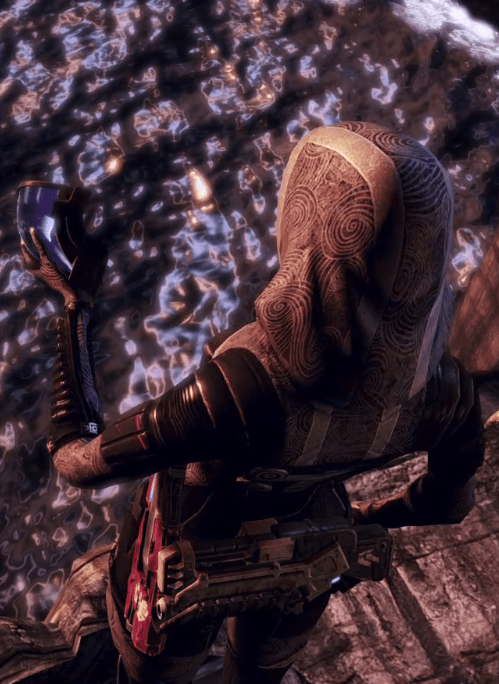
And then there’s the choices we’re tricked into stressing about. Everything we did in ME1 and 2 should count towards how easy Shep’s mission is in ME3 – the only reason to send Shep on her fundraiser is because she has history and sway with everyone. Past interactions should be their first reaction to her requests, not ‘go do this chore and we’ll give you troops’. Some don’t even make sense – why cure the genophage to get Krogan on Palavan so the Turians can bolster earth? Just ask the Krogan to help earth. And what the hell did TIM do with the Human Reaper? It’s easy to argue the sheer number of interactions, dialogue choices and Asari to shoot would make the final stages impossible to pull together but really, that’s as bigger lie as Garrus claiming to the best shot on the Citadel. A few more dialogue choices, some additional side missions and a few alternative cutscenes and it would have all pulled together. Other series’ have managed branching storylines and impacts but ME3 just doesn’t want to be bothered – it’s as DGAF as Shep was, and you often see little nips and tucks, shortcuts and reskins. It’s a good try though, and at least we have the Citadel, which is the best afterparty ever. The only thing that could have made that DLC better is if Conrad turned up.
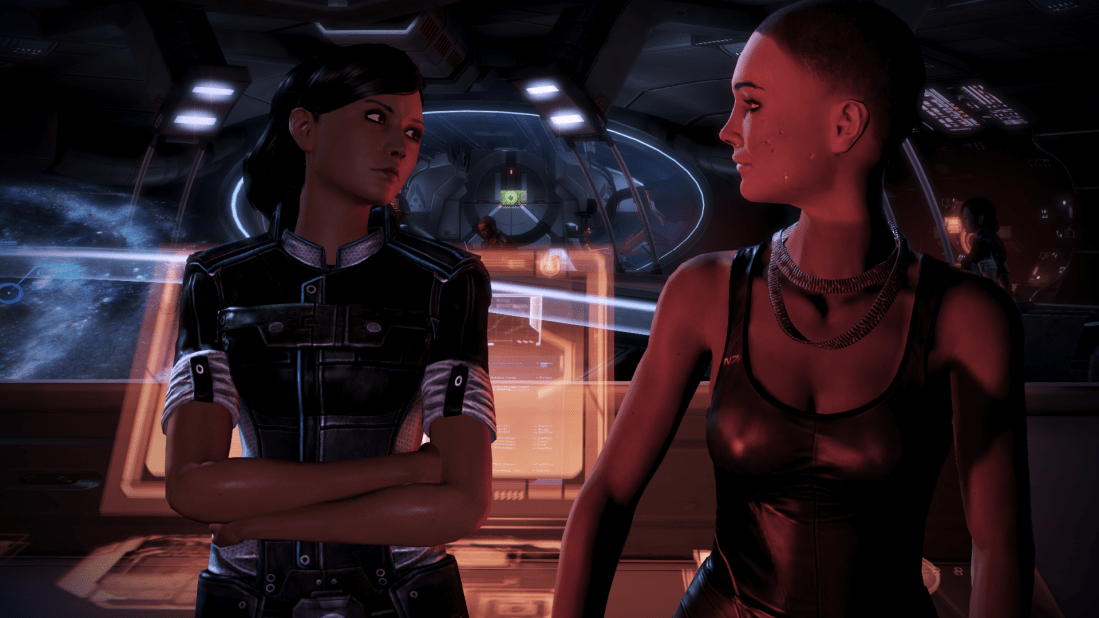
Despite all the hardships (mostly around not sleeping with crew mates; I’m amazed I resisted Trainor, no idea how I kept her out of my shower) playing as DGAFShep really refreshed a series I’ve played about as many times as the Reapers visited. I thought I knew it but I don’t – and when I consider all the fantastic moments, intimacies and friendships DGAFShep missed (and I discovered this time) I wonder what else there is to discover; this was just one playthrough, there’s hundreds more – TheMorty talks about his experiences as if we played different games, and he had no idea about some of the impacts and issues I faced – Mass Effect is a series that can be played forever.

There is a galaxy out there and no matter your disposition, it’s great saving it.
Mass Effect 2007 | Mass Effect 2 2009 | Mass Effect 3 2011

platforms; Win/Origin, PS3, X360