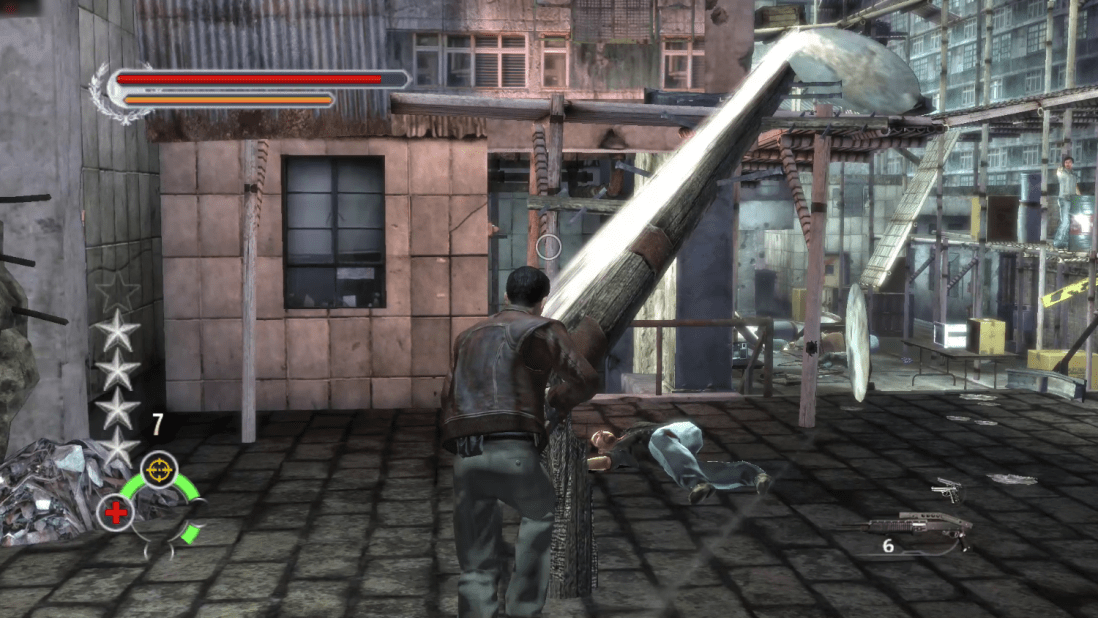
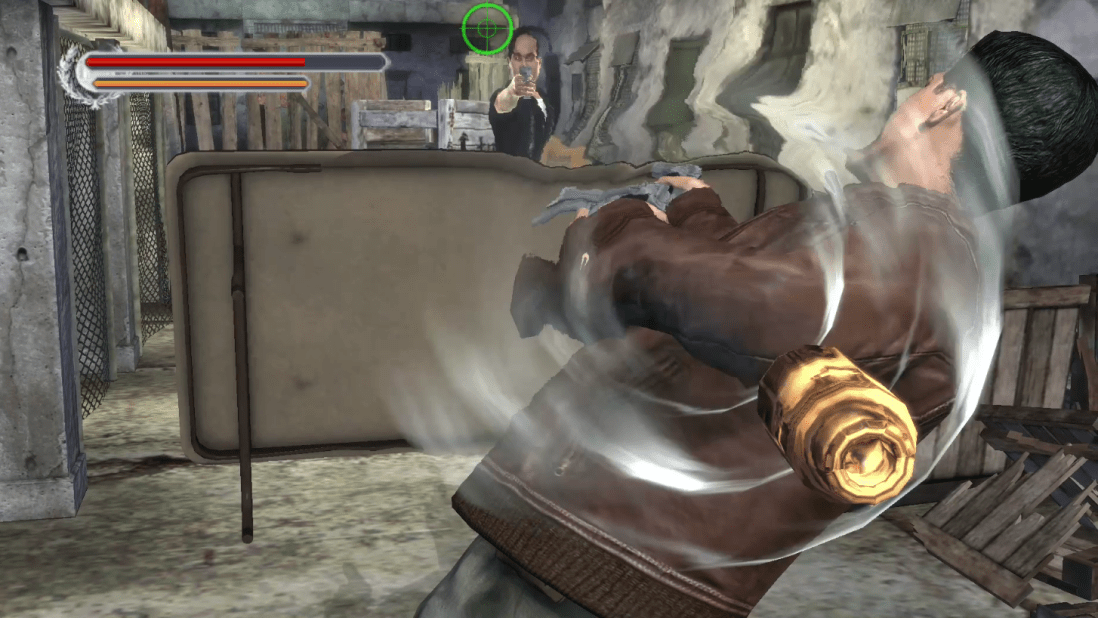
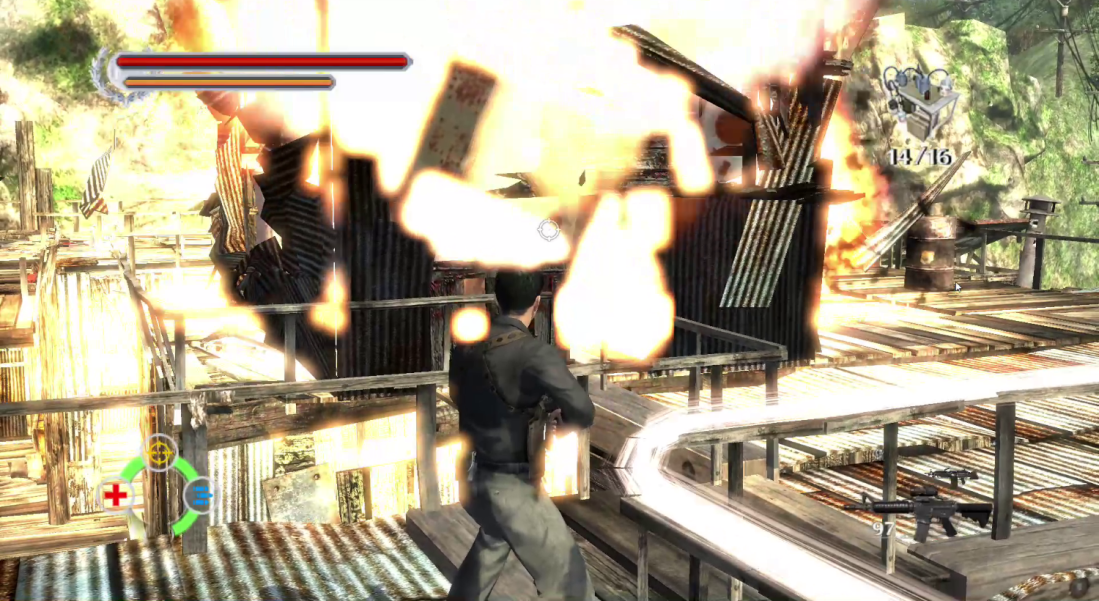
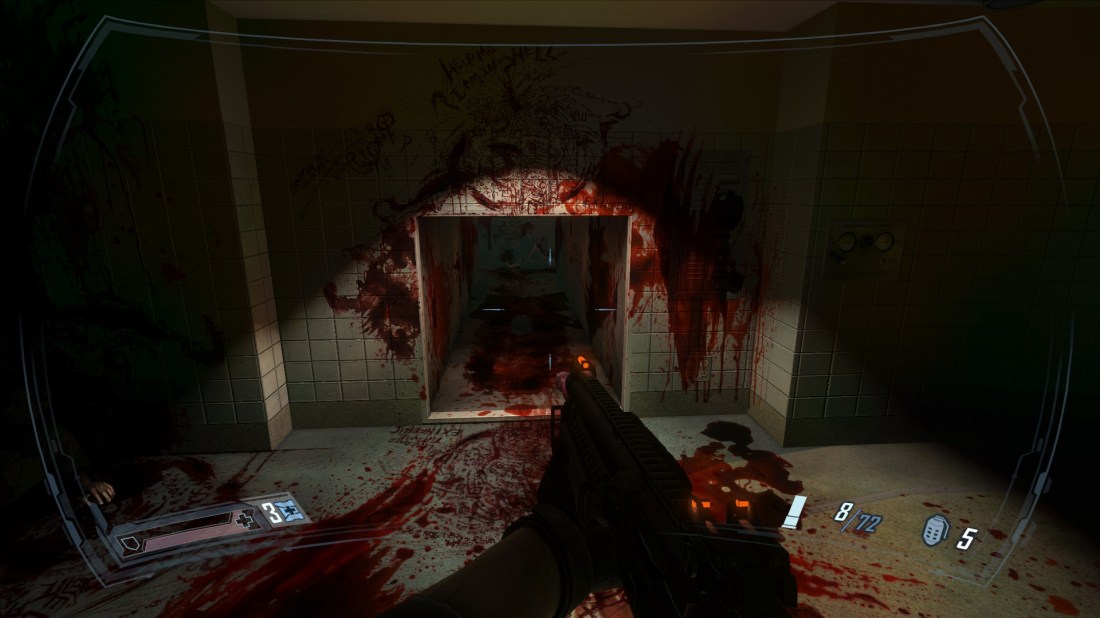
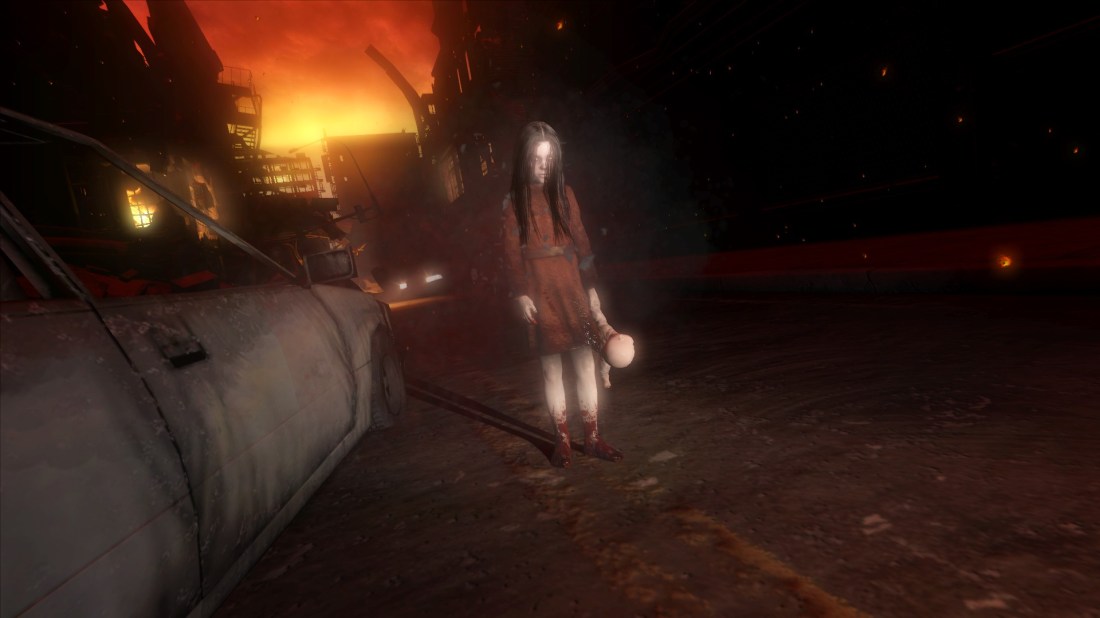
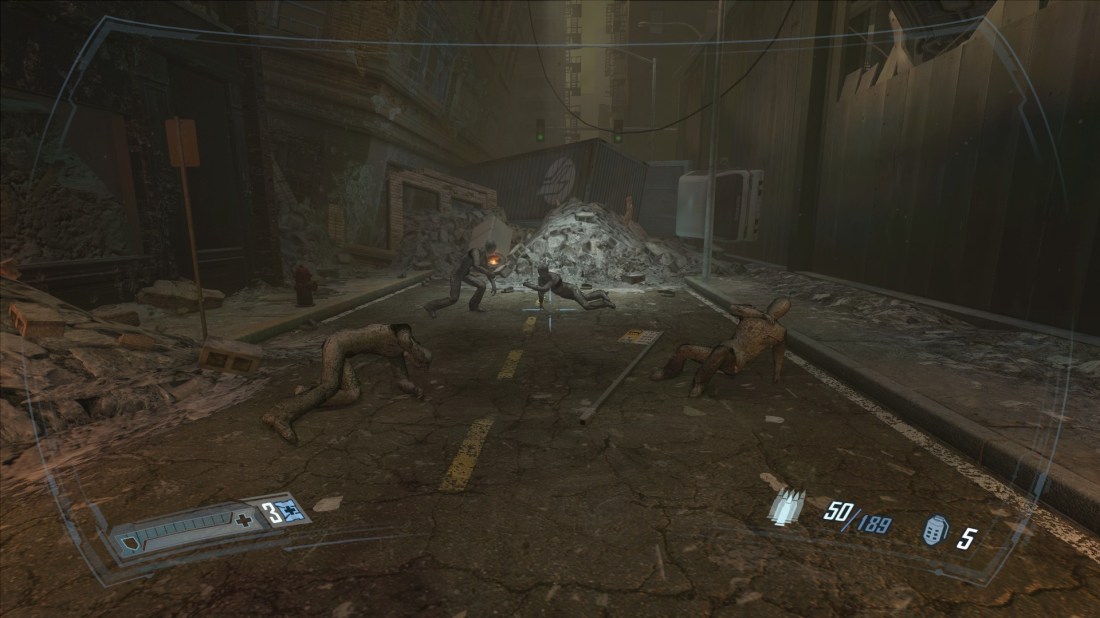
Just Cause 3

a second wind review

FBT plays the video game adaption of Cool Guys Don’t Look at Explosions

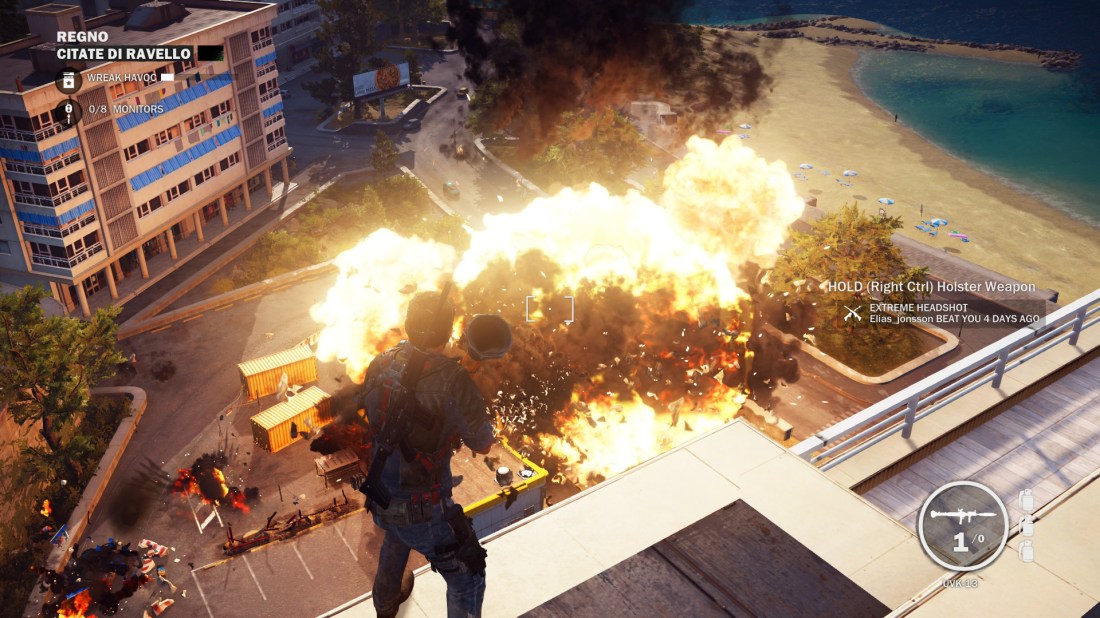
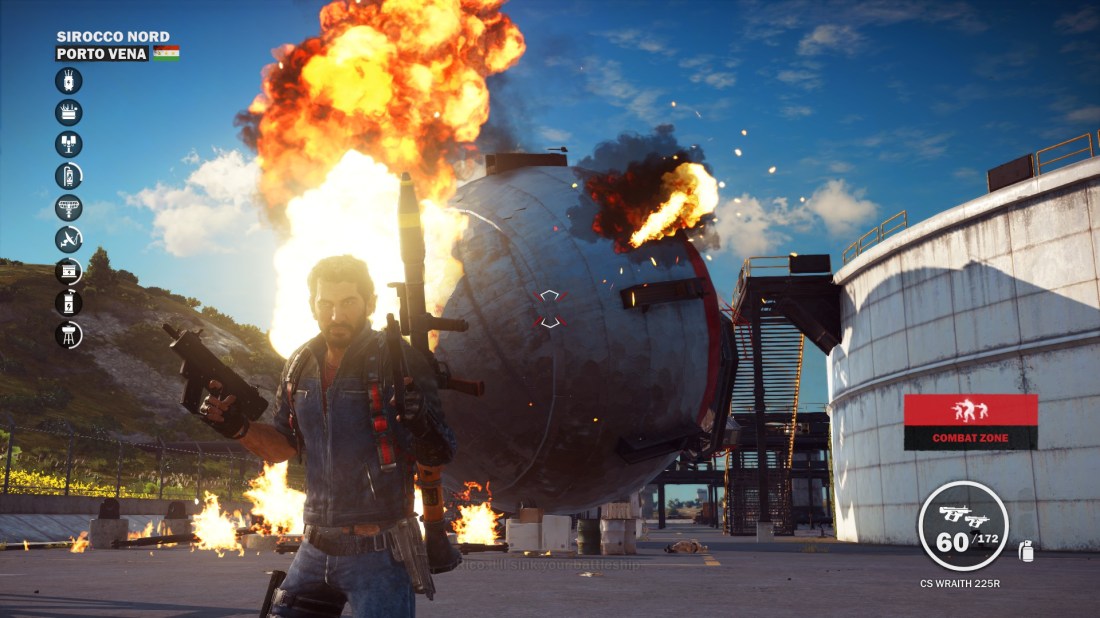
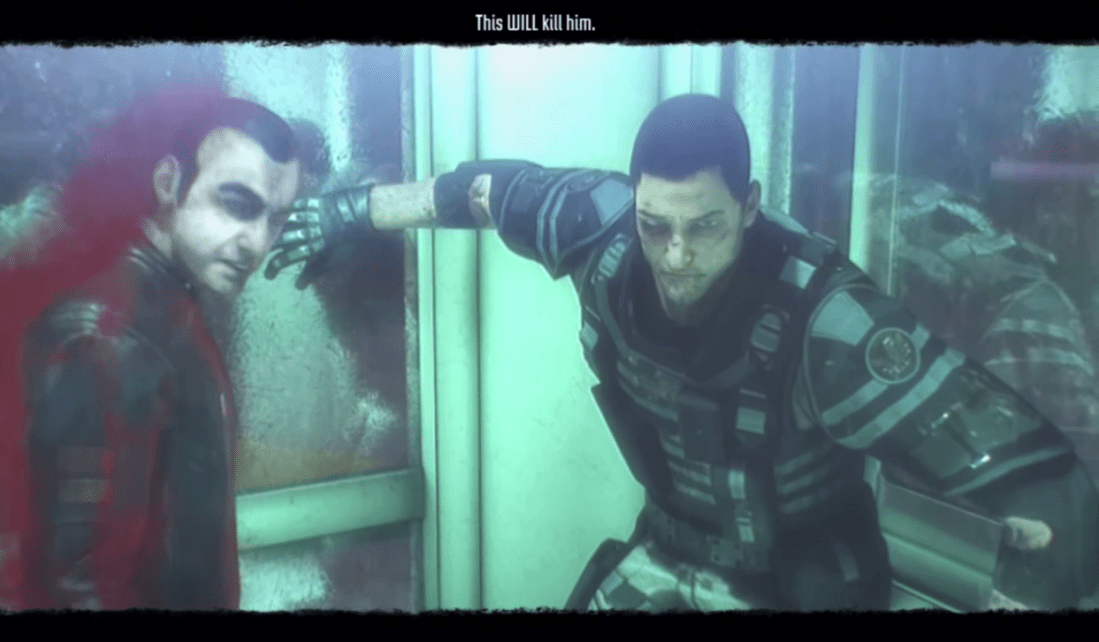
Just Cause 3 is not only a retread of the previous JC games, it ticks every open-world box that’s been ticked before – Far Cry meets GTA meets Borderlands meets Saints Row. Yet for all its seen-it-all-before, meet a really good game.

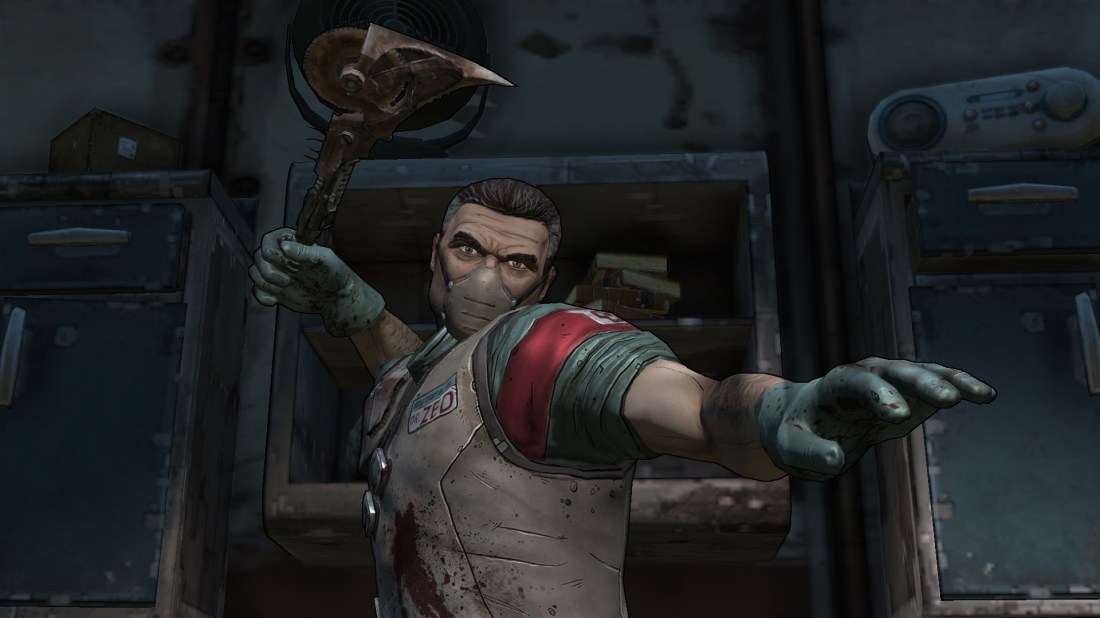
The Just Cause series has always been the underdog. Constantly overshadowed by bigger Open-World experiences, it didn’t help itself stand out by dropping Rico, a Che Guevara meets El Mariachi gun-for-hire, into the same situation over and over; in JC he helped rebels overthrow a dictator who’s taken over a peaceful island to produce WMD, in JC2 he helped rebels over throw a dictator controlling a peaceful island’s oil wells; but this time he’s going home. To help rebels overthrow Di Ravello, a dictator mining his peaceful island’s natural reserves. Rico heads home in style – from the top of a plane while firing rockets. This is not a subtle game; JC3 is a shower not a grower.

The place is huge, and calls to mind Far Cry 3 if Jase had lasted long enough to westernise it. Made up of several islands, each has multiple areas Rico must disrupt to weaken Di Ravello’s hold, allowing the rebels to move in and flush out his troops. Although the islands are generally similar there’s a lot to them, and it has a really beautiful, detailed and realistic feel to it; open roads, quaint little villages, you can see why Rico wants it returned to its former glory – by destroying all the concrete checkpoints and military installations. Not sure wanton destruction adds to the beauty, and maybe the rebels could have used the infrastructure but hey, let’s not sweat it.

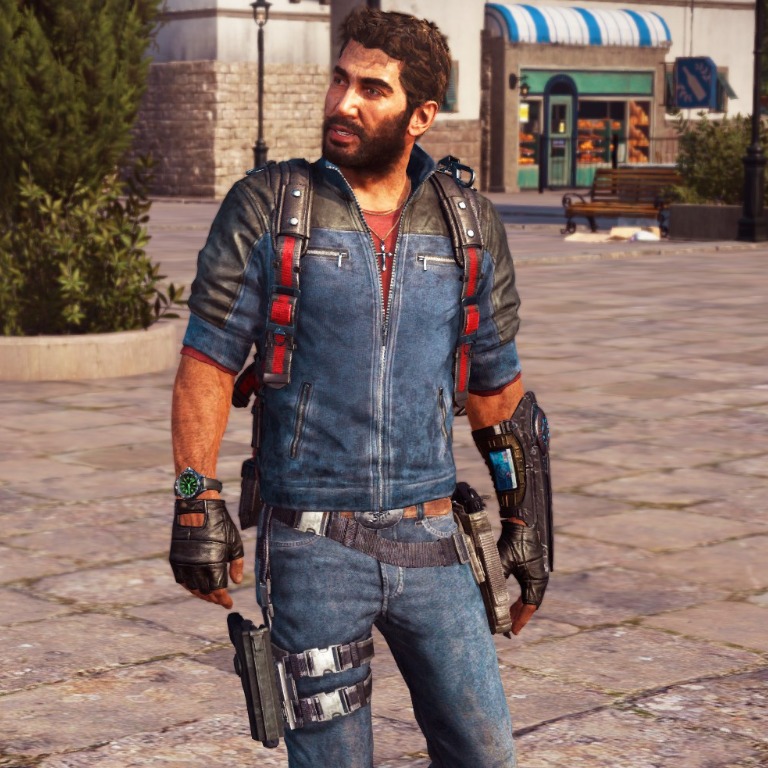
Rico, much like the plot, hasn’t changed a great deal, we’re an adrenaline junkie, too-cool-for-school Antonio Banderas dude. With a saviour-like reputation amongst his fellow Medicians (they’re often excited when he jacks their car or ask for autographs when he swaggers by) Rico is the islander’s poster-boy and rallying call. And the game makes damn sure you live up to that legend. Heath replenishes as you’d expect from someone this heroic and while he can manage a sidearm, main weapon and explosive weapon, if he’s caught short, unlocked weapons or vehicles can be airdropped – a shipping container will fall out of the sky and open (with confetti) to reveal whatever insane thing he’s requested. While every open-world game nowadays features a delivery service, it works well in JC3; getting a helicopter dropped in a container doesn’t make a great deal of sense, but at least it arrives intact unlike Saints Row or Sleeping Dogs where you’d watch an overzealous NCP destroy your vehicle on-route, leave it somewhere inaccessible then get run over.

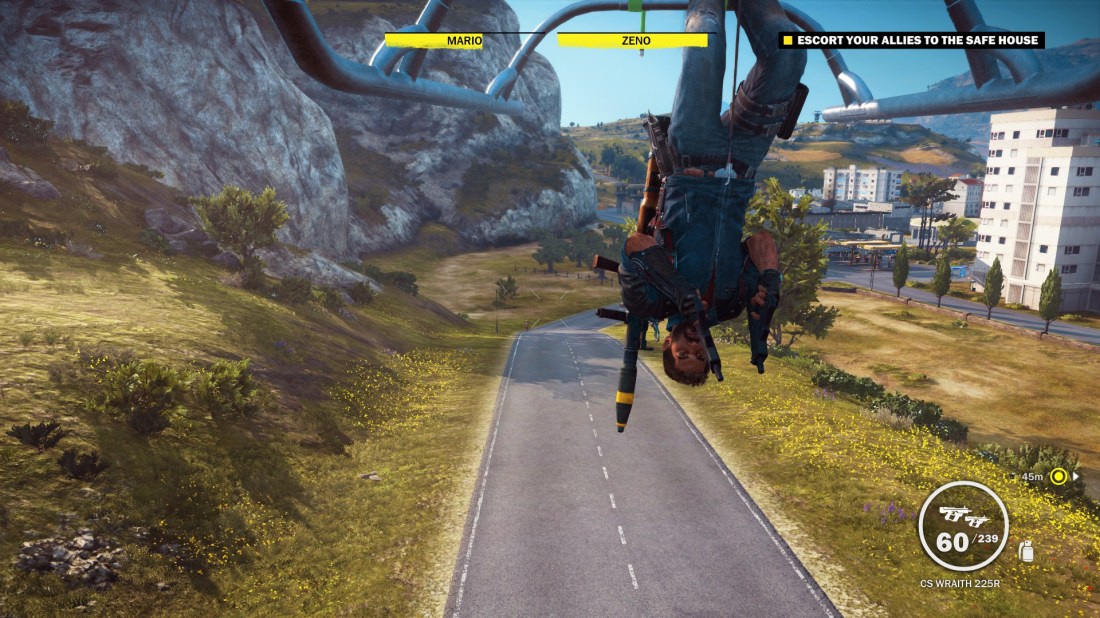
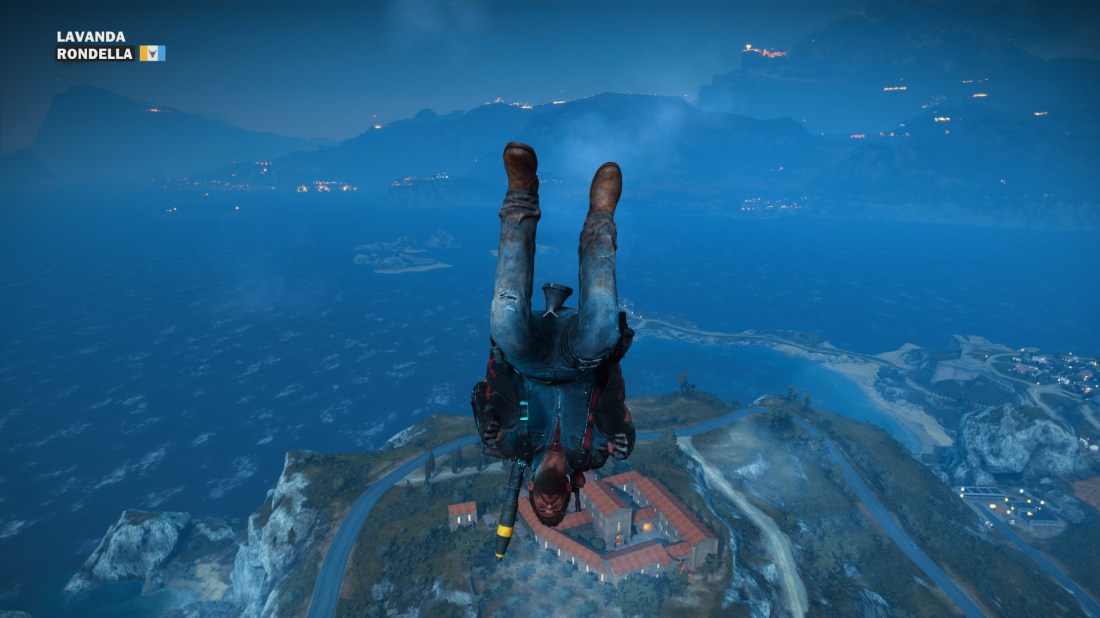
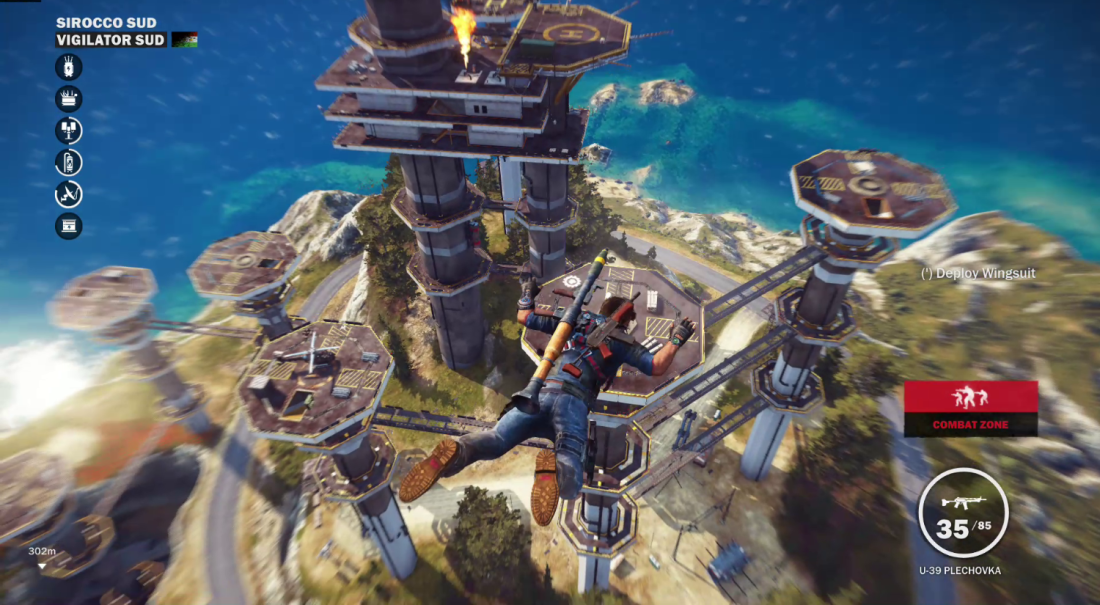
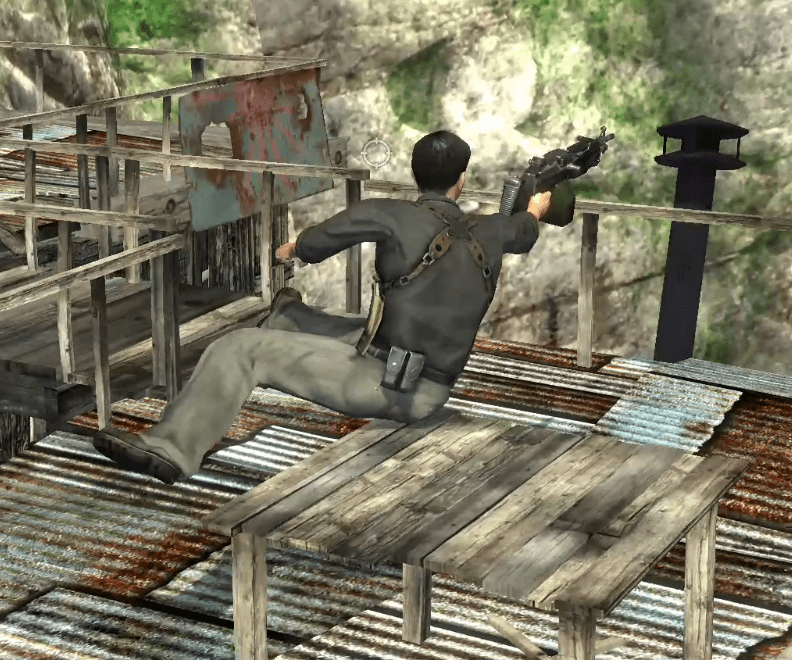
In order to drive Di Ravello’s army off, Rico has a bunch of insane tricks up his double-denim outfit. The wingsuit and parachute make a return and they’re a lot easier to use, calling to mind Saint Row 4’s flying dynamics and it’s great to have a game that wants you to fling yourself off buildings and cliffs. All the vehicles can be stolen including tanks, boats, helicopters and planes, and when you’re not making like it’s GTA you’re making like Batman – Rico has his trusty grappling hook and this thing never gets a rest once you get the ‘hang’ of it. It’s so handy, using it to grapple along the streets to get somewhere quicker, leaping onto or off cars, from ground to roofs and up the side of buildings, hang upside down, latch onto passing helicopters, make your way up cliffs, just about everything is traversable, including gravity itself; fall out of a plane or off a high-rise and just before hitting the ground a quick grapple onto the pavement will leave Rico unscathed somehow. The grapple gun can also let you tether things together and once you nail that, there’s nothing left standing. Gas canisters are conveniently everywhere and latching one to people or passing cars provides hours of sky-high fun as do later explosive upgrades while tethering cars to cars, or people to cars or boats or helicopters or anything to anything brings out the ridiculous in you. Not unlike Red Faction or Stranglehold, absolutely everything is destructible, and you will destroy it. In fact it’s a mystery how the island is still standing. It’s one of those games were you emerge from the rubble and think ‘Am I actually helping or making things worse?’

Taking out the army strongholds calls to mind Far Cry (again) but instead of outposts we liberate suppressed villages, army-controlled infrastructures and utilities by destroying various items; propaganda in the villages or supply dumps in the installations. The outposts also include SAMs – if you attempt to attack via the air they’ll make short work of your whirly-bird unless you reprogrammed them. While every liberation is great fun, including the troops calling in increasingly powerful support that can force you to retreat (Rico retreat? Never! Vive Medici!) the liberation missions are all the same; it’s usually fatigue or boredom that pushes you back to the main mission. But that’s a little boring too.

As is often the case in Open-World games, the biggest failing in JC3 is reason we’re there; the main mission. You should be constantly torn between a gripping main mission and the fun stuff, but JC3 doesn’t pull it off; this being Rico’s homeland isn’t really a compelling enough reason to get stuck in and the dictator is the same confidently evil guy we’re always facing; the missions while bombastic aren’t that whoa to play, and Rico himself doesn’t seem that invested; he’s too cool for that, he just smoulders and cracks Arnie one-liners as he destroys everything in sight. Medici itself can get a bit disorientating, leaving you struggling to recognise one place from another, and it doesn’t come across as a place that really needs saving; it’s lovely looking, with the rolling fields full of sunflowers, coastal roads, clear warm water and winding villages – I’d be quite happy to be oppressed here. But it does heat up; it ends in a helicopter fight over a volcano.

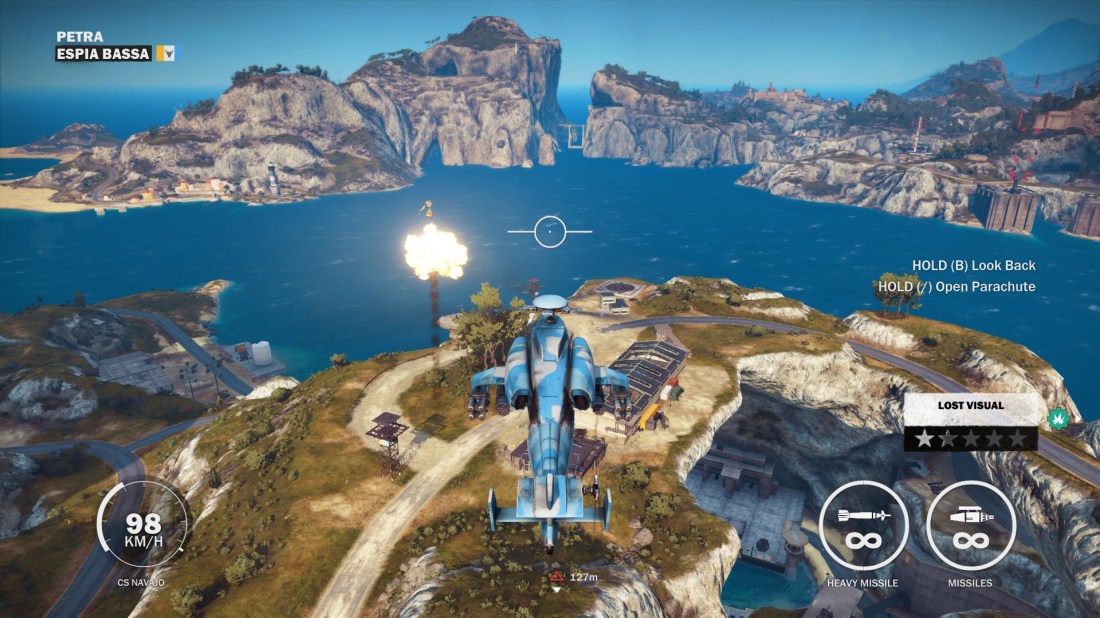
There are niggles; the ground vehicles are easy to crash compared to GTA V or Saints Row’s smooth, intuitive rides – you never keep a car for long – while battling in the choppers or boats means you’ll not be in them for long due to the lack of free-look, so you can’t anticipate attacks and the aiming is impossible – and everyone is a better shot than Rico is. One of the biggest annoyances is Chaos rewards you get – rather than XP unlocking upgrades, it’s adds to a pointless leaderboard score; who cares if I’m blowing up more crap than some kid halfway around the world? Upgrades are gained via a score system tied to challenges, which is another annoyance – Rico, hero of Medici can’t even precision aim until he’s unlocked it by winning a few races. Huh? And there is an argument that Medici is beautifully generic; if you’ve seen one island you’ve seen them all, it looks like the kind of thing Crysis aced a decade ago and what you do on one, you explode on another so nothing really changes. But grumbles aside, and despite feeling like it should be dismissed as derivative, JC3 works. It throws so much freedom and possibility at you, the sense of fun saves it. The challenge isn’t in saving the island, it’s finding hilarious ways to muck about in it. There’s so much of everything you’ve done before it’s like a Best Of compilation but somehow, it’s not a cash-in, it’s fun.

We’ve still not had a good guerrilla game; Boiling Point tried and failed while Homefront The Revolution just failed. One day they’ll get it right but JC3 isn’t aiming for that; it has a rideable pogo-stick, that’s what it’s aiming for and it aces it.

in 2017 Jason Momoa was announced as Rico in a JC film. But personally, and nothing against the mighty Momoa, I think only Dwayne Johnson could carry off the straight-faced insanity of Just Cause; JC3 is Dwayne Johnson The Video Game. That’s how good it is.

2015 | Developer Avalanche Studios | Publisher Square Enix

Platform Win | PS4 | XO

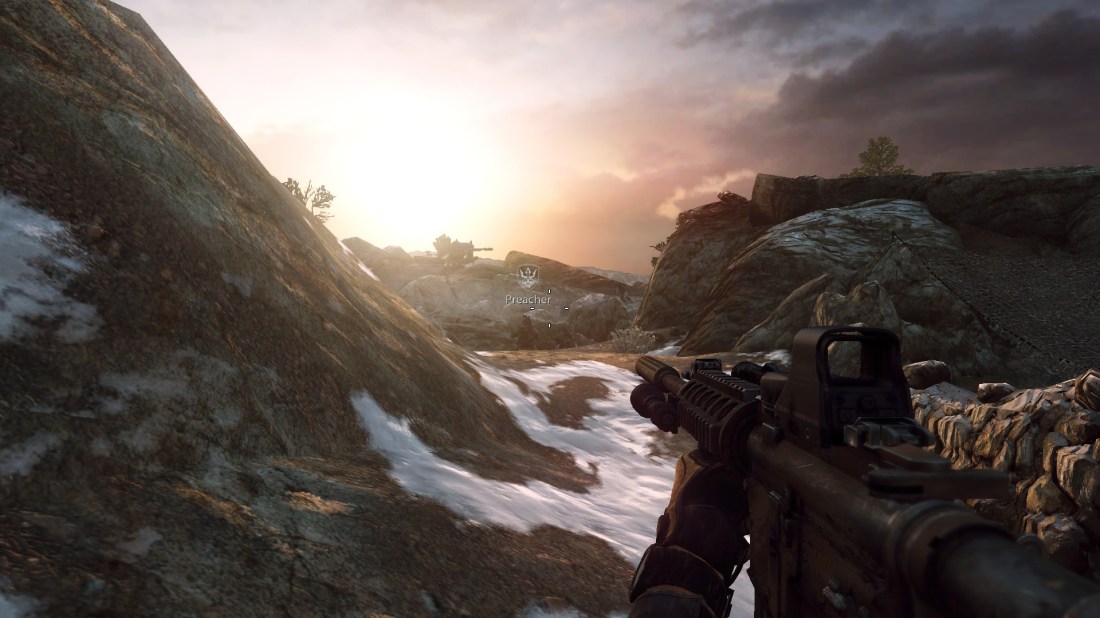
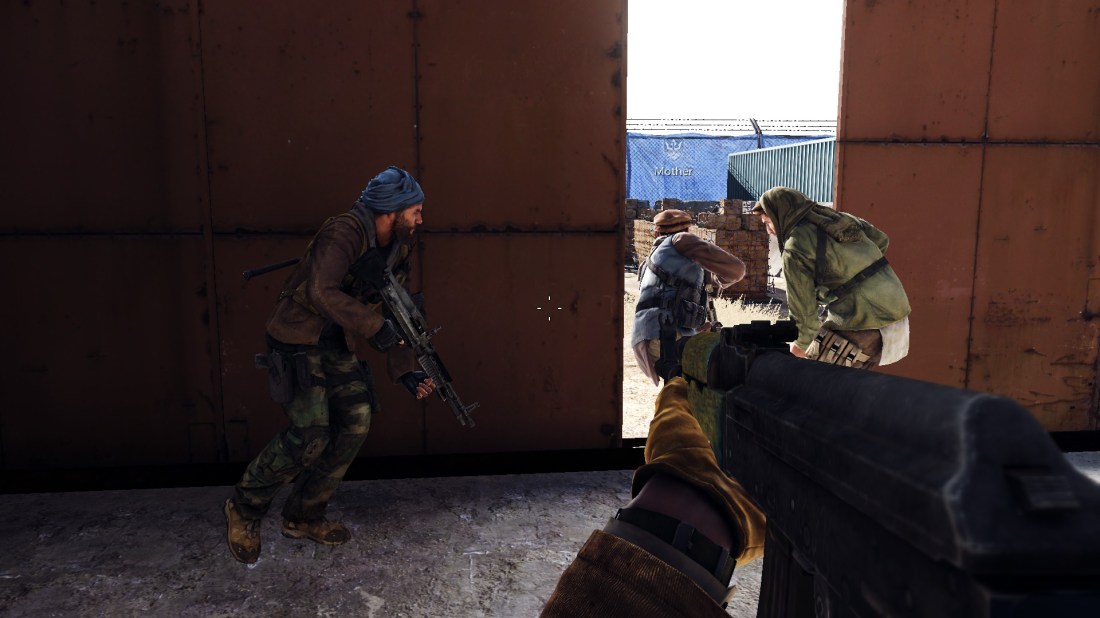
Medal of Honor 2010

a second wind review

FBT earns his Medal of Honor; by doing what he’s told

Every generation makes a choice; The Stones or the Beatles, Blur or Oasis, Beethoven or Salieri, Coke or Pepsi, Marmite or … not. In gaming, it was Medal of Honor or Call of Duty. For me, it was the MoH series. Unfortunately, that didn’t last. MoH got more outlandish as the series tried to keep up with CoD and when they went all modern in 2007, MoH followed with this 2010 contemporary reimagining – did it overtake CoD or chase it over a cliff?

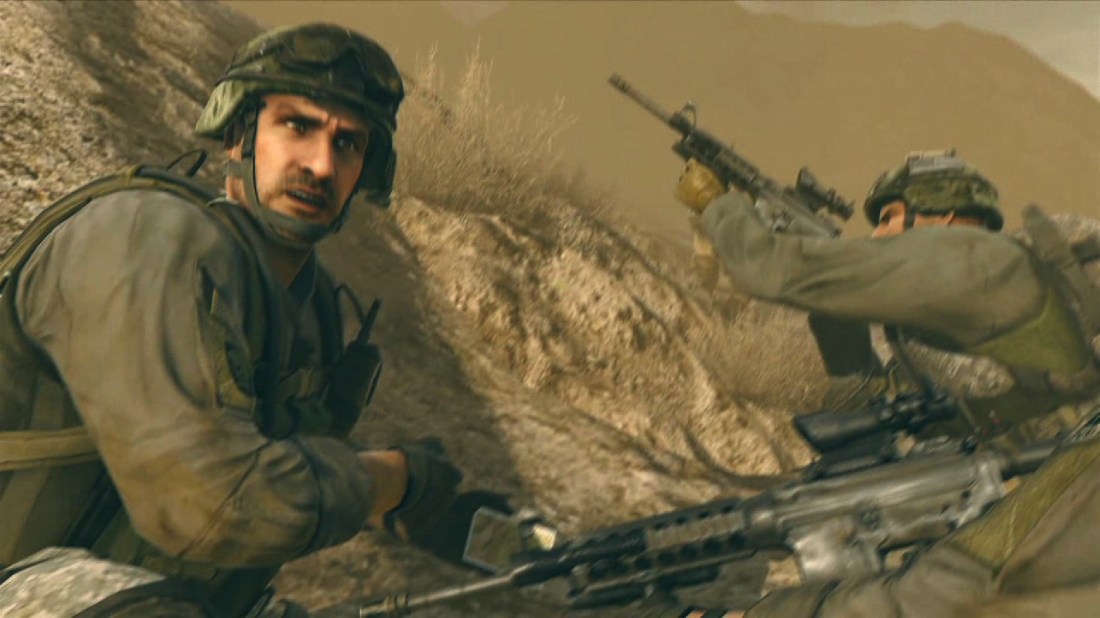
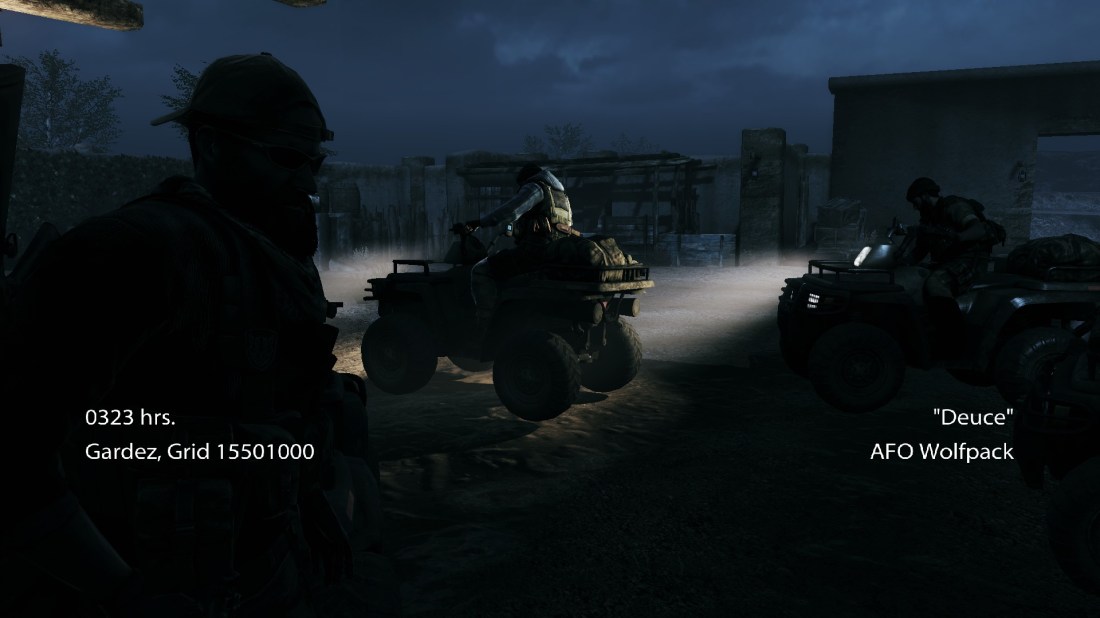
Immediately calling CoD to mind, MoH 2010 has three different characters we bounce between; “Rabbit”, an ‘operator’ collecting intelligence; “Deuce” a Delta Force commando disrupting enemy movements and “Adams” an Army Ranger, part of the US’s invasion of Afghanistan; those guys directly and indirectly affect each other as they carry out missions in the months following 9/11. Split across two days, MoH aims for a serious and realistic look at the war on terror and it seems like an epic story; the Operators discover a Taliban force the Rangers are on-route to mop up, has been grossly under-estimated. The power-that-be demand some good old-fashioned American Shock & Awe and force the unprepared Rangers into a shooting gallery. Thrilling stuff, as we cut between the Deltas disrupting Al Qaeda while the Operators thin out the Taliban and Adams and his team get cut to ribbons except … that doesn’t really happen.

Every game ever has objectives, mission markers and parameters, but in Medal of Honor you’re so locked down to specific orders and actions you never feel like it gets past tutorial stage; ‘move over there’, ‘shoot him’, ‘do that’ – constantly nagged by your teammates, you’re just their assistant; ‘snipe that guy then go get me a latté.’ I’m the sidekick? But HoM is also flat because the three characters have no character; they’re silent heroes of course, but based on the way they’re barked orders at, I’m guessing they can’t be trusted to do anything. Doesn’t feel very heroic. That might be realistic, wars aren’t won by Duke Nukem-types, it’s teamwork and precise objectives, but some investment in what’s unravelling around them, some personality, grit, ingenuity … excitement would go a long way. It’s a war-sim game. Rabbit’s missions tend to be close-quarter fights and Deuce’s are sniper and stealth based, but they are interchangeable and if it wasn’t for the NCPs round you, you’d never tell which squad you’re in. Adams’ missions are much more exciting, since he’s been deployed directly into FUBAR but it’s just agonising to never be let off the leash.

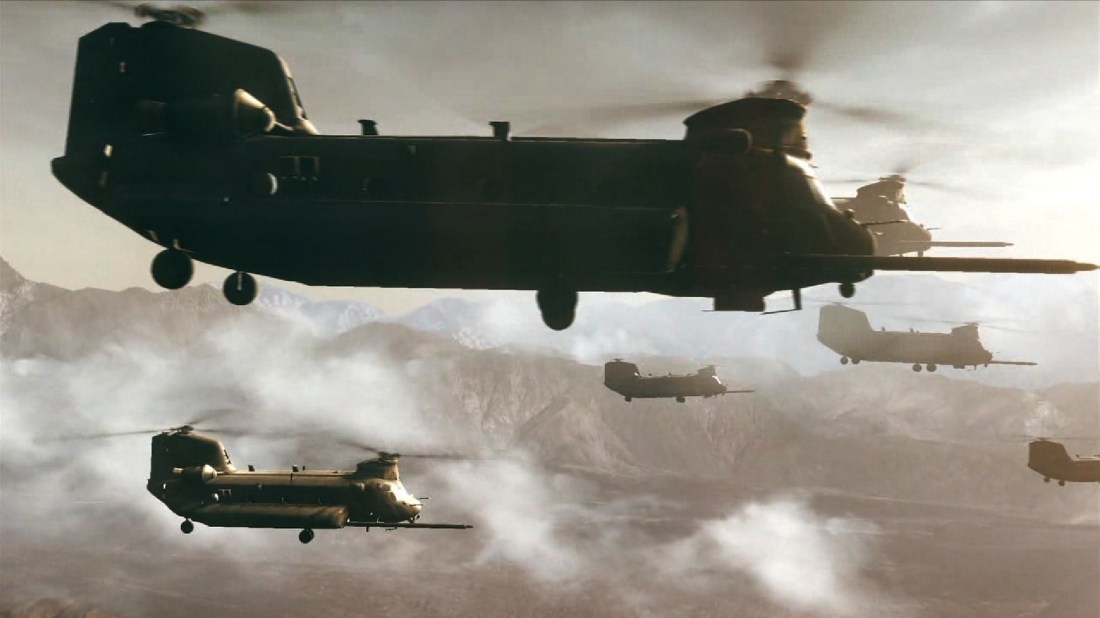
There are some great set-pieces, trying to secure an airfield (ending on the quote from Generation Kill; “that was pretty fucking Ninja”), Adams’ overrun and out of ammo moment, and a running firefight towards a Chinook that’s about to leave, but you’re never free – even running for your life is tightly controlled. Adding to that frustration, there’s moments where no one moves until you perform an action. Sometimes it’s easy to miss under the gunfire or because you’ve tuned-out the nagging, but often the game just doesn’t trigger the next action. They just keep telling you to do the thing you’re doing. So its restart at the checkpoint time and hope it works. Great, more nagging. As a shooter it’s unforgiving and realistic once the bullets start flying but it takes a lot of orders to get there.

The game does try to maintain some consistency, to show it’s all happening at once; there’s a great sequence with Adams’ team suddenly saved by an Apache Helicopter; we switch to the chopper’s gunner (since we’re not the pilot we don’t even get to choose where we go, literally a Rail-Shooter). After the chopper has cut through some enemy lines, it’s saved from AA guns by a sniper – Deuce, of course, and we slide into his mission. That’s cool, and although we see the effects of what each team is doing, since we have to complete a mission objective before it moves on, it’s not like we can fail or exceed and make this better or worst for the next lot.

Our on-the-ground CO is forced by a back-in-Washington General to get ‘boots on the ground’ and that should be our cue to get to work, Deuce and Rabbit desperately trying to even the odds while the clock ticks down to Adams’ deployment – even make it Non-Linear; if it had cut between Adams’ mission, then back to Deuce or Rabbit’s impact on it earlier in the day making it about what it took to get him there it could have been incredible; make Adams’ missions easier or harder depending on how well we did as the support teams. In fact, we don’t really get to play any hero – it’s actually Dusty, Deuce’s nagger on the box art and he, along with Adams and Rabbit’s bosses are the heroes. We just do what they tell us to.

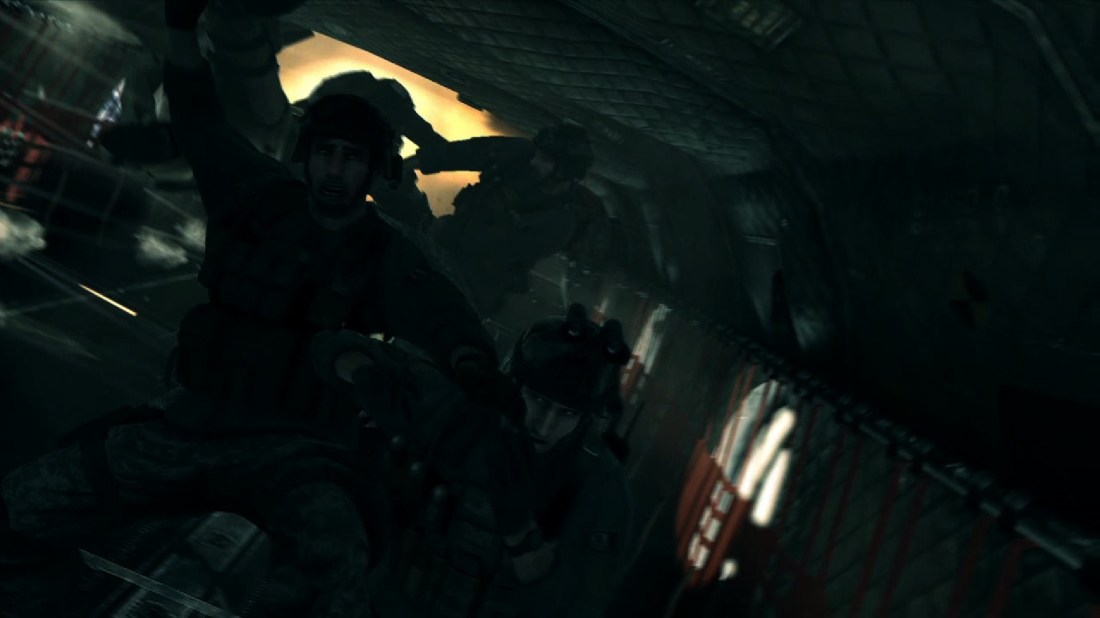
Nagging and script trigger-issues aside, MoH does have some great moments – rushing out of a chopper into blinding sun and sand unable to see anything is an unnerving moment as is a cut-scene inside a crashing Chinook where Adams’ team goes zero-g as it spins out. Those aren’t just good game moments, those are throwbacks to prime MoH; perfectly balanced gamer experience with true depictions of war.

In the end, the three characters do converge, with Deuce providing one final support act as the Operators draw away Al Qaeda and Adams’ winds up helping them recover a captured Operator; but it’s misjudged to end on a personal mission, a ‘we never leave a man behind’ finale undoes much of what came before. Until now, it was about how small actions have huge consequences elsewhere, now everyone’s up for saving that guy no one knows? It should have stuck to its original promise, ended with Deuce and Rabbit, the unknown soldiers, watching from afar as the Rangers take the hill then report for their next assignments, our actions forever unknown and disavowed.

It’s not that MoH couldn’t step out of CoD:MW’s atomic shadow, but it didn’t want to. MoH seems to invite comparison to Modern Warfare; there are the multiple characters, the satellite images during load screens, the occasional extra character to play, taking control of drones, directing air-strikes and slow-mo kill-shots. Most of those are necessary in a military shooter, and would be fine if there was more to it; what’s maddening is MoH 2010 is dedicated to not sensationalising or trivialising war but it’s so flat and unfinished, like a beta-test. And you can’t help but feel it’s all about the Multiplayer – and that caused a ruckus because you could play as the Taliban. Cue lots of point-scoring politicians and media outrage that a game lets you ‘shoot our brave boys’. It does seem like EA was inviting controversy; they tried to argue ‘someone has to be the cops and someone has to be the robbers’ but that doesn’t ring true as half the time you’re fighting Chechen mercenaries; and reducing the war on terror to school playtime is insulting and as an explanation of the multiplayer it undermines the tone of the story-mission; does anyone in EA’s marketing team game?

EA followed MoH with Warfighter, which was so bad it caused the cancellation of the franchise. Which is a shame. I have very fond memories of arguing MoH was better than CoD (It is. Was.) Playing the D-Day mission it struck me that this really happened, and the game was respectful about it. My opinion of military shooters was forever influenced by Allied Assault, and MoH 2010 had the opportunity to do the same, pitting us against Al-Qaeda but it seems to get caught up in its own politics and by refusing to sensationalise the events, it ironically ends up hollow; maybe there is something to said for CoD’s bombastic heroics. Yet it does come close to commentating on the War on Terror; towards the end, Rabbit’s team happens across a village they’d captured the previous day, only to see it full of Taliban again. That’s the War on Terror in a microcosm; shame we don’t get to play in it.

2010| Developers; Danger Close / DICE | Publisher; Electronic Arts
Platform Win, PS3, X360

DOOM

A Rage Quit Review

FBT gets mad at DOOM. Not Doom, DOOM.

Doom changed my life. It turned me from a gaming fan into a gamer. It was the vanguard of grown up gaming and the games that followed it were something else too – the Tomb Raiders, Elder Scrolls, GTAs, MoH, Max Payne, CoD and so much more all sprung from Doom’s quantum leap of an experience; it didn’t invent FPS – but it was gaming’s Jaws.

Aside from the ill-judged Doom 3 in 2004, Doom has been dead a long time, talked about only by aged hardcore gamers as where they made their shooter bones, and ignored by pubescent brats who scurry about in CoD Online. But in 2011 amid stories of failed restarts, id’s new owners Bethesda announced ‘DOOM’, a sequel-reboot that would return to the classic FPS era. That era died for a reason, but if any franchise can breathe new death into FPS it’s Doom. Or can it? No.

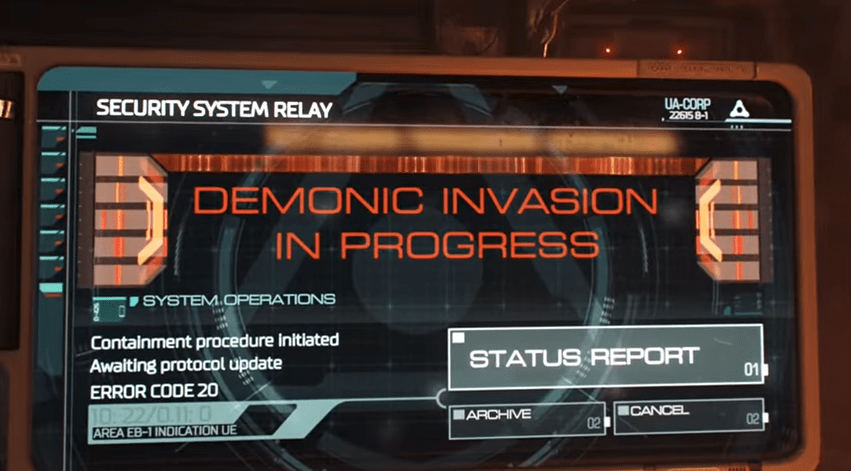
Since Doom II’s ending, UAC has found a way to provide alternative energy for earth by syphoning power from Hell while bringing back various trinkets, including a mysterious sarcophagus. One scientist makes a deal with the demons and opens a portal letting them invade. The sarcophagus opens to reveal ‘Doom Slayer’ (Doomguy to you and me; I think). And with the story crap out the way, let’s get knee deep in the dead.

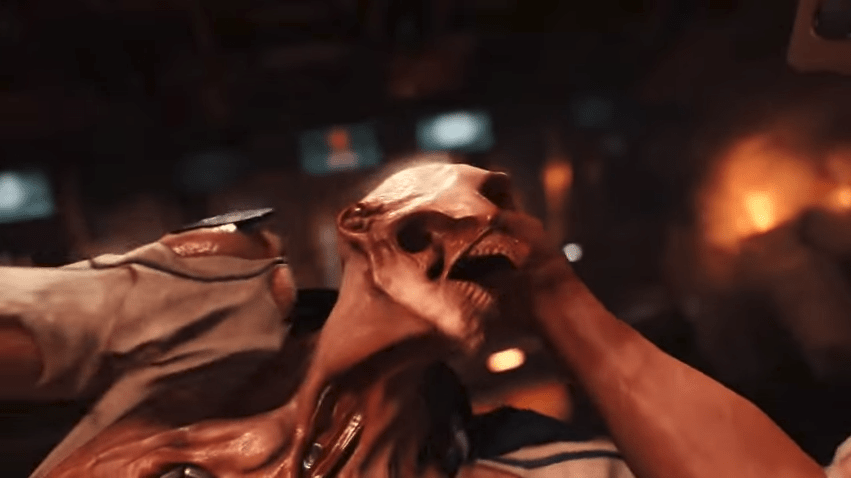
I can see why this game required specific driver updates and the soul of your first-born to run. It looks utterly fantastic, practically photo-realistic; a real Doom? Bring it. It’s one of the most grotesquely beautiful games I’ve even seen, like an Iron Maiden album cover come to life. The detail is extraordinary and it ‘feels’ solid to play (especially for a Bethesda game). There’s brutally quick fights, the demons are relentless and you don’t get a moment’s peace, but then – and I never thought I’d say this – DOOM gets boring. Not boring in the sighing, fed up kind of way, just so relentlessly repetitive that I start to see past the shouting and growling and realise there’s nothing here, just the same fight over and over and I kinda just … switch off to it.

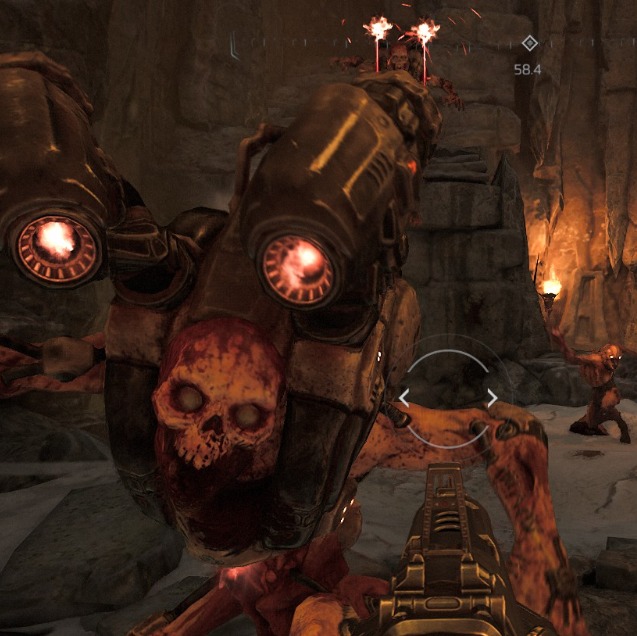
It’s certainly loud enough and busy enough to keep your attention; instead of Doom, DOOM calls to mind Serious Sam or Painkiller and while the creatures (including a few old buddies) are noisily aggressive, all their clowning about trying to be scary means the exact opposite happens. They not intimidating, they just get progressively bigger and the once hellish mixture of flesh and mechanics is now like a Halloween party at Cyberdog. On top of which, there is nowhere to hide, nowhere they can’t get you, nowhere to be tactical, no opportunity to actually be a badass Hellkiller and act heroic – it’s a party with a bunch of goths; I just hold down fire until it’s done.

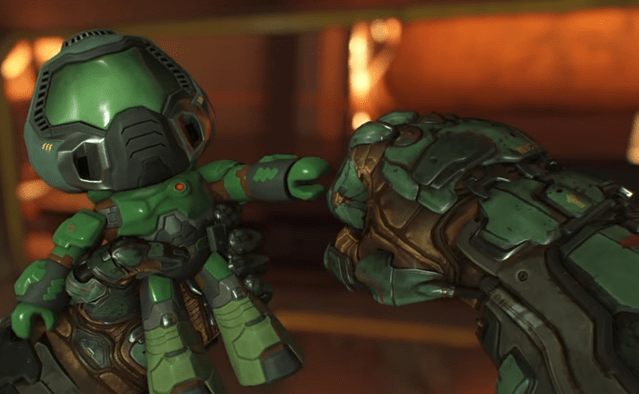
Despite the sense that DOOM is trying to be a desperate struggle to survive, it’s novelty driven. You’re in the middle of a brutal fight only to be pulled out of the moment to trigger a ‘Glory Kill’ where you over-murder an Imp. They’re annoyingly insistent. The Imp crumples then flashes, demanding your attention. I don’t have time, I’ve got a hundred more of the screechy little divas to deal with, just die already. Knowing they’ll recover – especially the bigger ones – means the Glory Kills become your focus and you get cut to ribbons just to reach it and perform the kill. And doing so gains you health and ammo – both of which you sacrificed to reach the fecking half-dead undead in the first place; you’re just maintaining a status quo when this was supposed to be Iron Maiden. They are brutally cool once you get there but somehow they should be more automatic, like Indy making short work of the sword guy not reliant on you reaching them in one piece; Bethesda’s Skyrim/Fallout managed wicked little animated kill shots, why can’t those happen mid-DOOM? Bethesda’s games are incestuous enough as it is, they didn’t think that moment would carry over? Doomguy kicked Hell’s ass twice already (I’m pretending 3 didn’t happen), why isn’t he cooler? If he can pause to fist-bump an original Doomguy toy he finds, why can’t he dispatch a downed Imp from a distance? And … Collectables? In Doom? FFS.

Glory-Kills are not the only way DOOM distracts you; there’s transporters that send you to an Arena to do battle and unlock upgrades, while weapons can be upgraded by accepting challenges. Why the hell am I trying to kill 100 imps in a minute with a shotgun just to unlock faster shotgunning? Doomguy can unlock upgrades for his suit by pillaging the bodies of other Doomguys; Doomguy never got better, he was the best, I don’t want to piss about looking for inconveniently placed dead buddies. I thought this would be a brilliant, well-observed retro throwback not Call of Duty Zombie mode full of distraction fodder.

There’s the original weapons, including the BFG – which is hobbled by a lack of ammo – and some new toys but the biggest insult is the chainsaw is now a standard weapon you need gas for – using it gains a much higher yield of health and ammo; which you lost by equipping the Chainsaw and meleeing in the middle of a moshpit.

For those who argue FPS is a very narrow genre and you can’t expect more than point and shoot, I have one word; Bulletstorm. It may have been uneven, unoriginal, daft and had an idiot for a main villain, but it did this kind of frantic firefights right – and kept it fresh; if I can be completely overwhelmed and still trying to kick an opponent into a cactus, that’s a good shooter. And Bulletstorm had better glory-kills. It’s about balance; if you’re not going down the Bioshock route, a pure FPS should be traumatic but you come out the other side with boasts, with hard-won victory stories. DOOM is just a loud, overwrought arena fight that thinks calling itself DOOM is enough. It’s not unfair, it’s just not fun; in Doom you had fun kicking ass. This is just endless ass.

After reaching another hellish location, and disinterestedly fighting my way through, I find a secret – much like Bethesda’s Wolfenstein easter egg, the secret takes me all the way back to where it started; an original Doom level. I enjoyed playing the original level so much, going back to the reboot was too much to bare. It’s a sign when a game reminds you of how bad it is. Rage Quit.

DOOM was the darling of the critics on release, who argued it recaptures FPS’s 1990’s glory days. No it doesn’t. It really doesn’t; it’s the biggest insult to Doom’s legacy; it’s derivative, not of Doom but of modern shooters, which is unforgivable. This is the house that Doom built and this game is just squatting in it. You can’t recapture Doom, but this isn’t even Doom-era, it’s the kind of corporate nonsense that the original id would have pissed all over; it reeks of market research and focus groups – it’s as shiny as it is shallow – it doesn’t even have those jokey insults when you tried to quit. Quit? Yes, with added Rage.

2016 | Developer id Software | Publisher Bethesda Softworks.

Platforms; Win, PS4, XO

Alan Wake

FBT is Max Payne’s nerdy brother

In 2001 Remedy burst into the shooter scene with Max Payne, a game that helped shape shooters in the noughties; not just a great game, it’s a nod to action cinema of the time -The Matrix & John Woo- and an engrossing noir story, but what made it a classic was the guy we played; Max Payne, a suicidal burnout we thought was cool and we cared about. Two years later Remedy did it again with Max Payne 2, deepening the character, story and the gameplay. If only all game (and movie) sequels could be that good. Let’s not talk about Rockstar’s Max Payne 3. Remedy then spent seven years perfecting their new man, Alan Wake; this is a developer that likes to get things right. And while there is a lot -a hell of a lot- right with Alan Wake, the game isn’t quite the sum of its unnatural parts.

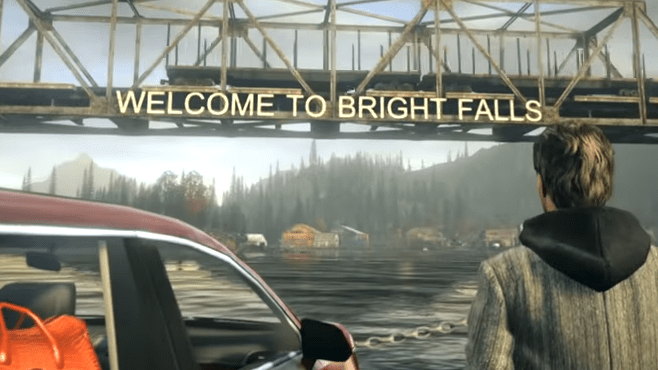
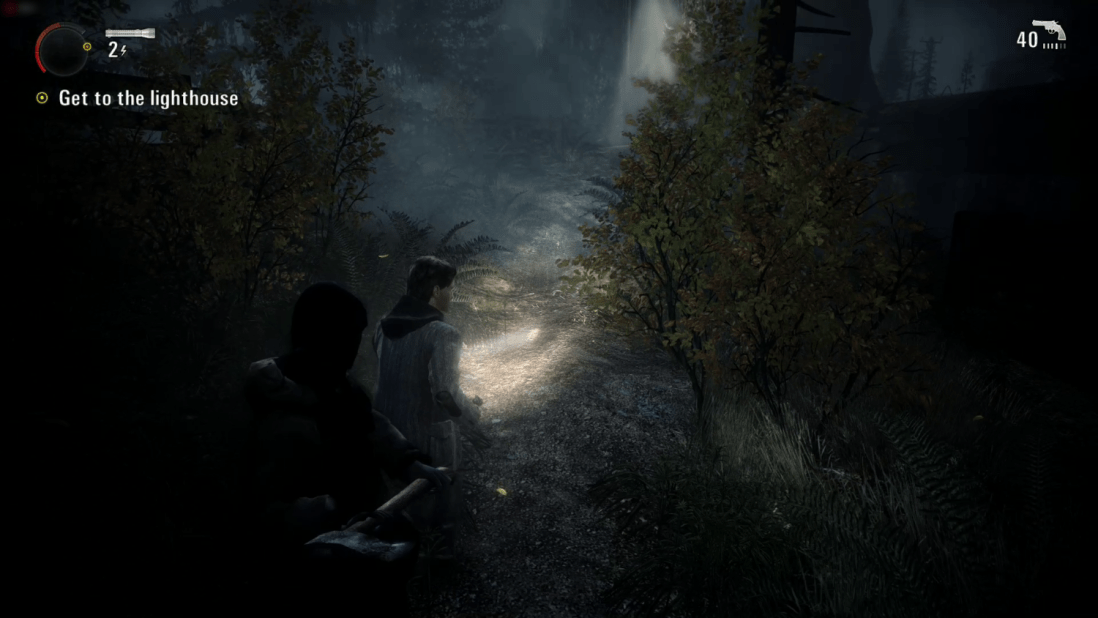
Alan Wake, our eponymous and unwilling hero (I get it, Awake, but Alan? I’m an Alan?), is a famous novelist struggling with writer’s block. His wife Alice suggests a trip to Bright Falls, a remote town that’s so quaint it screams ‘dark underbelly’. Settling into their cabin on the lake, Alan’s hoping to mope about and be all tortured-artist, but Alice has an ulterior motive; get Alan to visit a local celebrity psychologist to lift his spirits and knock out another best-seller. Alan’s not best pleased but no sooner has he stropped off when Alice disappears, and Alan wakes to find himself in a wrecked car a week later. The next thing he knows, violent ghost-like figures are after him and his most valuable weapon is a flashlight.

Alan Wake is as much a pot-boiler film or novel as it is game; Polanski’s Frantic meets Stephen King – in fact, there’s so much King in AW that Remedy sent him a copy. Should have given him a credit. The world is incredible, beautiful yet foreboding, isolated but intimate, it just has this off quality and it ramps up that unease with some juicy ghost-story beats to complicate things; the cabin on the lake hasn’t existed in years, who’s the unknown woman in black who gave them the cabin keys, the slightly off-kilter locals – it’s got all the makings, and that’s before you really get into the Novel-quality story; this isn’t some contrived plot to drive the game; King, Poe, M.R James, Susan Hill, Shirley Jackson; Alan Wake fuses everything that’s good about a small-town ghost story into its own compelling and chilling tale. Where the hell is Alice, what happened in that missing week? Why are there pages of a novel Alan doesn’t recall writing scattered around the town? What broke his writer’s block? Typically, the answers are to be found in the dark and that’s great, but that’s where the game unravels.

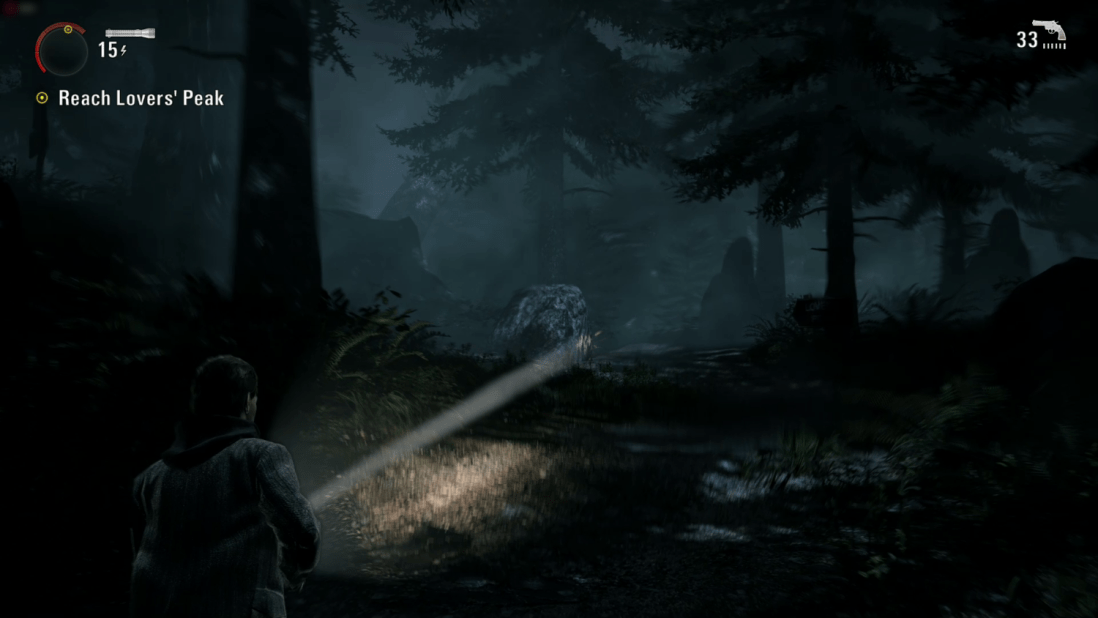
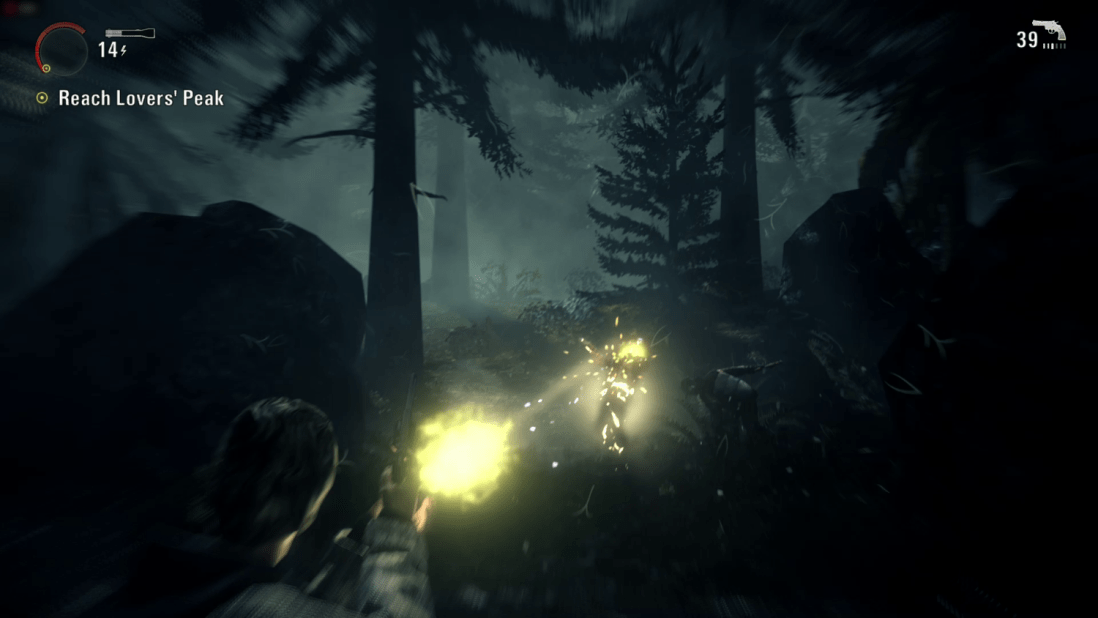
As Alan searches for answers, he contends with ‘the Taken’, previously cheery Bright Falls residents now wrapped in some evil Darkness and intent on butchering him. He can dispatch them with a wave of his torch and a well-placed bullet, and that’s the problem; it’s a shooter that doesn’t need to be a shooter. The best thing about a ghost story is nothing traditional will save you; we’re a pasty-faced intellectual, Alan should be completely out of his depth, an everyman – when did Max Payne get here? We’ve played this a hundred times before and it’s hugely at odds with the set up and cut-scenes. The fights are scary at first as you put your flashlight on full beam causing the battery to drain while firing wildly, then take off running, desperately trying to reach the safety of a street light only to be surrounded, with low bullets and no batteries, but the further you stumble on, the more you realise there’s not much else going on; it starts to feel like a zombie shooter and it’s so rail-linear it is literally you walking one way, the Taken staggering in the other; quickly you lose the key thing about going into the woods at night; apprehension.

A surprisingly bold/frustrating move is no melee. Alan can shoot like a trooper but he can’t muster a pistol-whipping? Running out of ammo means dodging until you find a safe haven (and hope it has ammo) or just wait to die and it feels like a lazy way to add tension – it would have been so much scarier to wander with only your torch and smarts as a defence; alone in the dark, hassled by possessed locals you just had a damn fine cup of coffee with isn’t enough? Why is this a shooter? I never thought I’d be annoyed at being armed.

The story though continues to grip, with Alan under suspicion for killing townsfolk and we’re not entirely sure it’s not all in his head – the psychologist even commits him at one point, but the sinister unease is always ruined by some contrivance that forces Alan back into the woods or elsewhere, at night, again. Alan Wake needed to merge the scenes with the reality, make it one inescapable nightmare not a game of two halves. But even without the clearly defined shooter parts to interrupt the flow, the game is broken out much like a TV series, something Remedy’s follow up Quantum Break explored further. Once a story element is resolved, we go to ‘credits’ and the next opens with ‘previously on’ featuring key scenes from the last episode. Why? I should be playing Stranger Things not watching it. An encroaching, suffocating narrative like this shouldn’t be ruined by the game pausing to ask, ‘are you still watching?’

Early reports suggested Alan Wake was going to be open world but Remedy decided would ruin the suspense – it might have worked better non-linear, if you could get lost … Everyone’s taken a shortcut at night down some alleyway, across a park or woods and gotten the heebie-jeebies and to have the town and surrounding area open up as he investigated the pages – then going into the woods would be truly horrible because we would have made the choice; and without weapons it would have been unbearable. If it had a constant clock and you roamed safely in daytime, venturing further only to get lost and see the sun setting … that would have been awesome. I should be too scared to go into the woods, not just dumped with no choice; it reduces the narrative’s dread and scares – I should be bravely walking out, hearing a twig snap and immediately saying “I vote we go back to the Slaughtered Lamb…”

Still, once out of the woods Remedy really have fashioned something beautiful with Alan Wake, it’s one of those games you grumble about then say ‘but it’s great really’; as a (cutscene) hero Alan is a refreshing one – petulant and self-obsessed, while others such as Alan’s agent/friend Barry and the local Sheriff work really well, wondering if they’re just feeding his fantasy, while the ending is Bioshock-brilliant; bitter-sweet and moving, it’s actually one of the best game endings I’ve seen in years. Despite everything else, the final reveal and what Alan does saved it. Alan Wake’s story is pure art, but the game-play … when you turn a bright light on, there’s nothing underneath.

Alan returned for the standalone add-on American Nightmare and a sequel was planned but poor sales caused Remedy to rework some of the ideas into Quantum Break, with mixed results. There aren’t any other developers out there with this level of ingenuity or originality in gaming; the risks and chances Remedy take are always more interesting than a play-it-safe CoD clone. Alan Wake is worth a play just to see a developer pushing the limits of what a shooter should be. Long may they continue.

2010 | Developer Remedy Entertainment | Publisher Microsoft Game Studios

Platforms; Win | X360

Stranglehold

a second wind review

FBT goes Woo for Fat in the sequel to Hard Boiled. Cue the doves and slo-mo.

Ever since ET almost destroyed the game industry trying to phone home, games based on movies have been generally lame. For every decent ‘based on’ like Mad Max or The Warriors you get something like 007 Legends; Tie-Ins are always without question, shit. And then there’s the game-sequels. Alien Isolation might have made a good go of it, but then Colonial Marines ruined it, as did Robocop (2003), Ghostbusters the Video Game, even Wreck-It-Ralph; a sequel based on a movie based on video games? The game sequel genre isn’t littered with greats. But this is Stranglehold, exec’ed by John Woo, who’s atheistic shooters have attempted to emulate since Max Payne. We’re ‘Tequila’ Yuen, a cop who, in slow-motion, burst onto our screens dual-wielding his way through Hard Boiled. It’s got slow-motion doves in it. That’s a movie I can play.

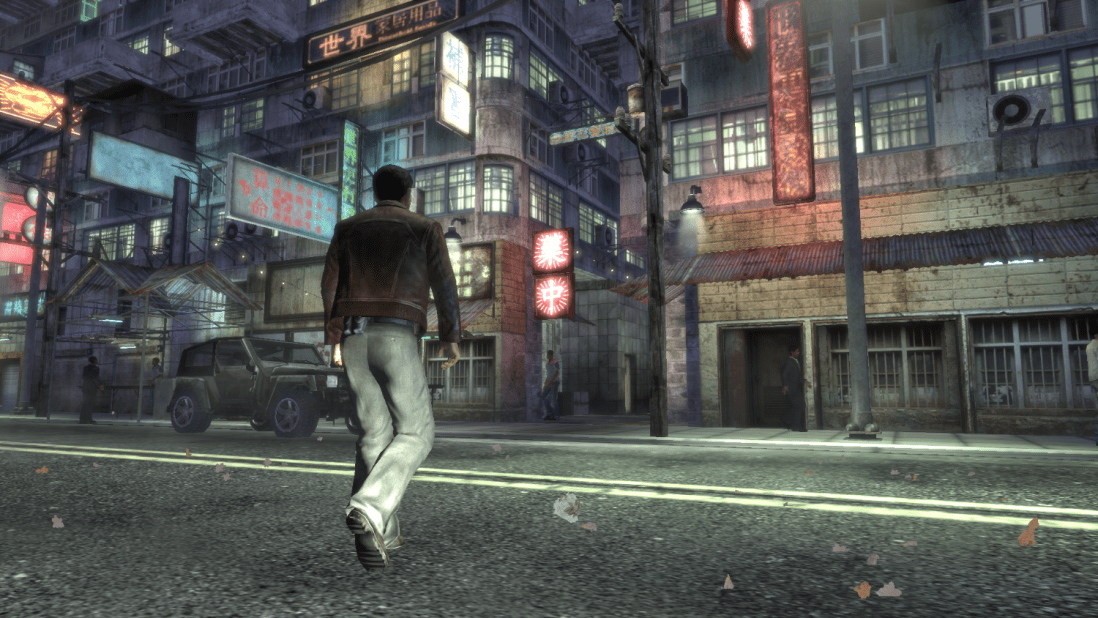
The setting, Hong Kong. The case, a missing policeman. The Captain’s orders, send a team. The Tequila, goes alone. After surviving the trap, Tequila get sucked into a Triad war while dealing with police corruption and a personal reason to go rogue.

Stranglehold does call to mind Max Payne. They’re similar cops with the same outside the law reasoning that justifies killing endless hoods along with bullet-time and shot-dodge mechanisms. But while Max Payne was inspired by John Woo, this is John Woo. Literally, he’s in it, reprising the bartender in Hard Boiled. But Stranglehold soon surpasses Max Payne for cinema references. There’s so many it’s hard to keep track; vendetta-driven cowboy cop trapped by an offer he can’t refuse, involved with a bad girl from the wrong side of the tracks that’s connected to the larger plot and used as leverage? Check. Double-crossing panto villain with a revenge-connection to Tequila who has an infinite source of bag-men and wants Tequila DEAD, check. A surprise betrayal followed by regret before they die, contemptuously dropping guns when they run out of ammo, ignoring orders from an Alka-Seltzer guzzling shouty captain? Check. Awesome cool? Check.

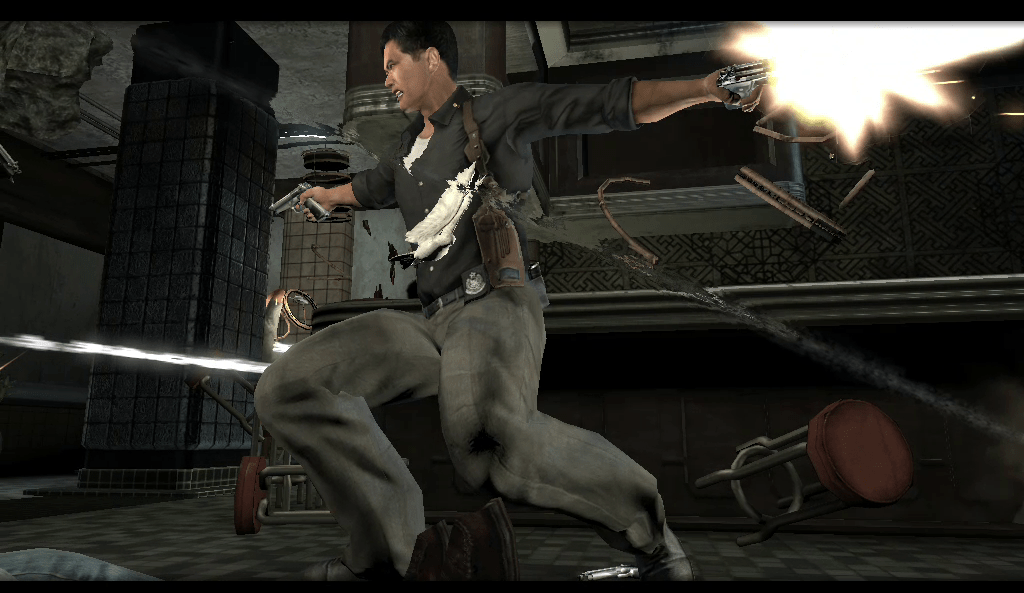
Once Tequila’s on the case, our 3rd person view does everything it can to make us believe John Woo is going to yell ‘cut’ at some stage. You name it, we can cinematically interact with it – surf down bannisters and on trolleys, leap over boxes, slide across counters, shoot things to create runaways or creative ways to take out hoods, crash through practically anything and destroy the rest. The problem is, if something can be Tequila’ed, it shimmers or glints and there’s so much of it you’re distracted by the epileptic fit it all triggers. The art design is really detailed but it’s covered in white lines demanding you leap, slide, roll or jump on them or repeatedly flashing shoot me. There’s nothing like shooting a neon sign and watching it swing around and take out a bunch of baddies, but you end up looking everywhere at once, wondering what’ll happen if you shoot this or activate that and is it really going to help if I – by the time you’ve decided to run up a wall or just shoot the guy, you’ve been riddled with bullets. It becomes one big overwhelming novelty like an arcade rail shooter; leaping and sliding along firing is great unless it happens to take you in the opposite direction or you slide along a counter into the face of a crouching mobster and you’re stuck with your legs in the air getting pummelled. You have to trigger Tequila to get on and then to get off again but he’ll only do it if there’s room for a cinematic roll or leap so you wind up yelling at Tequila like a parent in a park; ‘get down from there!’ The villains are top notch hard work, fast and unforgiving; but they must be wondering why you’re pirouetting on a lamppost instead of returning fire.

Of course, Tequila has more than enough ways to return his own fire; while he only carries two at a time, there’s pistols, uzis, machine guns, heavy machine-guns, grenades, rocket-launchers lying about everywhere and the smaller weapons he can dual-wield naturally. Once a weapon is spent he’ll drop it and auto-pick up anything nearby which more than once saw me smugly switch to the heavy machine gun only to see him pull out a puny sidearm, having not noticed the switch during the mayhem.

As he progresses, Tequila unlocks more opportunities to give it the ol’ razzle-dazzle; Tequila-Time is standard Bullet-time but the real killers are the Tequila Bombs; Precision is bullet-time from the point of view of the bullet, while Barrage just lets Tequila have a bullet-fuelled tantrum and Spin lets him twirl and fire while doves fly. Then there’s Stand-Off; when Tequila gets surrounded there’s a moment where they all eye each other and grip triggers, then the bullets start flying. You can shift Tequila from side to side to avoid bullets and return fire – it’s all charged by the destructive antics Tequila gets up to, so the more you break, slide and generally make like an action star the better.

So, we’re Chow Yun-fat in a John Woo film, how is that not the coolest thing ever? Because although you’re leaping in slow-mo through flying debris with a gun in each hand, you’re also in a constant state of frown, trying to see through the wreckage, distracted by the highlights, working out if the flashing thing will help; it takes you out of the moment by giving you pre-set moments and never lets up, it gets exhausting; meanwhile, Tequila insists on new things to be cinematic about; at one stage he’s swinging from chandeliers. It’s to frenetic and busy, the infamous 2min 42seconds from Hard Boiled extended into some seven hours game play. Once you take a breath you realise Stranglehold is a very thin shooter, trading style over substance; Stranglehold is a new example of why movies don’t work as games; if, on the big screen I saw Chow Yun-fat take out a posse in slo-mo while swinging from a chandelier, I’d go ‘cool, wish I could do that’ but when I do it I end up looking like a four-year-old on a swing with no one to push him. It’s too staged, I feel like Chow’s stuntman. It doesn’t feel natural the way parkouring about in Assassin’s Creed does; games are supposed to let me live vicariously but Stranglehold just reinforces why I’m not an action star popping up for five minutes in the latest Expendables movie.

As if the sheer amount of destruction and QT moments weren’t enough to prove how incredible the Unreal engine is, the work done to make Tequila look like Chow Yun-Fat is brilliant, in both the cut scenes and the action, and he’s voiced by the man himself. The locations are great looking too; an island that’s been turned into a drug factory, dirty back-streets of HK, a museum (bye-bye antiquities), and a restaurant with panicked extras running between the bullets; this is a very faithful game that tries hard to put you in Tequila’s shoes, but I’m the wrong shoe-size. It’s so busy being Hard Boiled it forgets to be a game; Max Payne knew when to pull back, to be cinema when it counted and game when it needed to be. Stranglehold makes you realise movies and games are mutually exclusive. An hour with Tequila is great fun but any longer and it gives you a hangover.

2007 | Developer Midway | Publisher Midway Games

platforms; Win | PS3 | X360

Singularity

FBT plays Raven’s time-bending Singularity.

And wishes he could bend it all the way back to their Heretic days.

Raven Software; always the bridesmaid never the bride. Old neighbours of id during their glory days, their first major game was Shadowcaster, an early FPS-RPG mash-up made possible by Carmack’s engine genius. They followed that up with Heretic, the classic fantasy Doom-clone produced by Romero. Raven then licenced the gun-nut magazine Soldier of Fortune to create a shooter so extreme it seemed a parody of the mag’s readers, and licensing became the company’s focus; Star Wars, Star Trek, X-Men, Wolfenstein and Quake games followed. So this, Singularity represents Raven’s first truly solo effort since … well, ever really. Are the training wheels off?

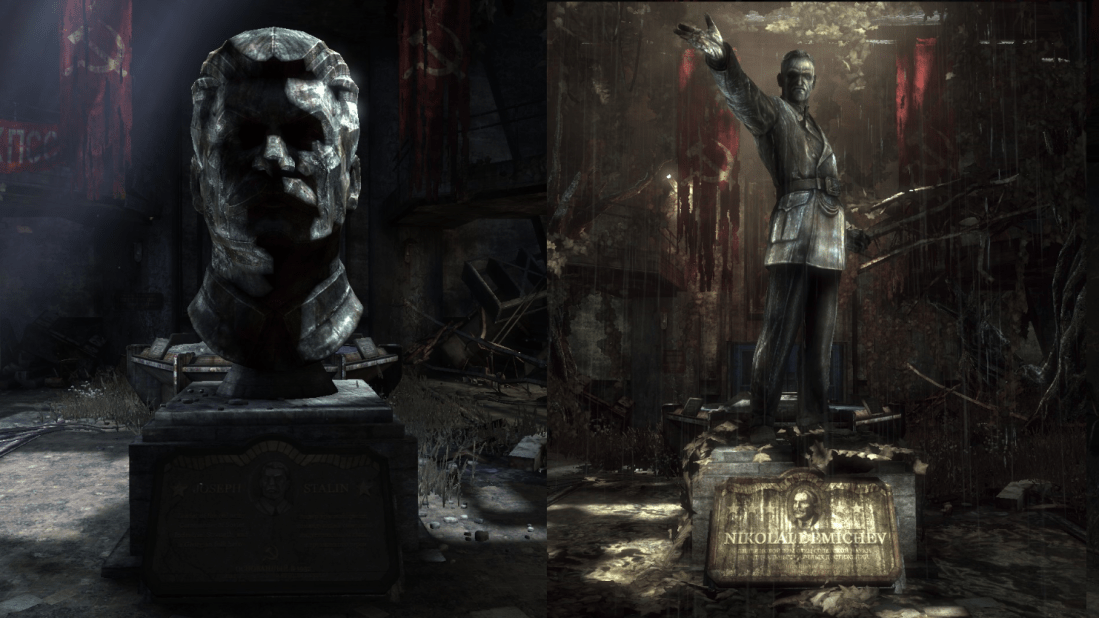
On a remote island, a long abandoned Soviet facility mysteriously kicks back into life, emitting strange pulses. US Marines, including our man Renko, decide to fly in and check it out, and a pulse brings us down. Making his way through the desolate island, Renko discovers a testing facility where, blundering into a strange displacement, he’s transported to 1955 where the island is in the midst of a catastrophic disaster. Fighting through the facility Renko saves a man, Nikolai from dying. Transported back again, Renko finds Nikolai now rules the world. Talk about your butterfly effect. A resistance group (what would shooters do without resistance groups?) tells Renko the island was a testing ground for time displacement, and this is all his fault – he must fight through both the past and present and stop Nikolai.

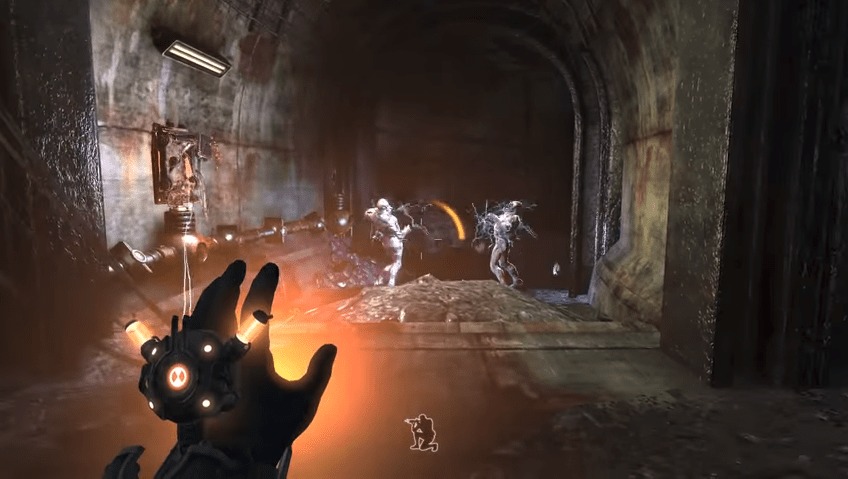
Trying to stop Renko however, is Nikolai’s troops and the tortured former inhabitants of the testing facility (both human and animal, plus pissed-off plants). Renko only has the usual two-weapon load-out and occasional weapon upgrade to even the odds – so far, so FPS. The twist in Singularity is the Time Manipulation Device or TMD Renko gets his hands on. A wrist-mounted time-gun, the TDM lets Renko age or de-age anything organic or materials infused with ‘element 99’, a compound painted on everything – Who was so careless with this stuff? It’s awesome rebuilding or aging things to navigate and turning soldiers into dust. It can also repel or move objects Renko can’t. Meanwhile, more displacements allow Renko to switch between times and see the impact of events as he progresses. However, it’s not the TDM that gives us deva-vu. We’ve been here before.

Singularity constantly calls to mind other, more original games – Fallout 3’s futuristic-retro look is throughout, while the facility comes across like a Vault, with the new residents led to believe the tests were for their benefit. It’s so Vault-like I keep expecting to find a bobblehead. There’s some heavy Bioshock vibes going on, as the TMD takes on a Plasmid-like quality thanks to various upgrades, ghosts and everything is tied into Renko in a Jack-like ‘it was always you’ plot, and then there’s Half-Life 2; not just in the look, but there’s a sub-Alyx companion and the TMD has some gravity gun-style options. And then there’s the shooting; Singularity is one half CoD, one half a zombie survival game; so CoD Zombies then. It’s not derivative, there’s just this ‘played it’ sheen and that’s largely because of the break-out star, the TMD; you don’t need a time machine to see this gadget is hobbled right from the start.

Conceptually, the TMD is brilliant, using time as a weapon but that just doesn’t happen and it’s aggravating; only being able to use it where there’s E99 means you never cut lose; I have a time machine on my wrist and I can’t muck about with it? Most shooters corral you into a linear experience or give you a locked down arena to work your way through, but with Singularity that feels a lot more obvious because of the TMD’s limitations. You can’t give me something as awesome as time to play with then not let me do anything with it. If it had been like Red Faction where practically everything can be broken, giving the TMD control of the environment would have opened it up into something special; all manner of approaches, opportunities and silliness. If Portal’s mind-bending physics can allow you to go anywhere yet still be trapped, the TMD could have done more. The whole island should be open and ready for you to muck about with but the puzzles, battle opportunities, and environment are strictly controlled and far too convenient – If Renko could switch at will it would have been a real mind-twister; overwhelmed? Go back and even the odds by altering the environment; jump back and leave a weapon in the past to recover in the future and give yourself an edge – there’s carnivorous plants for example, how cool would it be to notice a sapling near some soldiers; go back and age it and return to see it going Audrey on them. Basically, a shooter version of the Bill & Ted’s Excellent Adventure ending. Whoa.

The irony of time-travelling Singularity is it’s already happened – in other games. And a finale where Renko suddenly has a choice feels tacked on (now he can alter things?) – and none of the options work out well for him despite the fact that up until the ending, he wasn’t a tragic, mysterious or morally dubious character. Just an arm with an unpowered Flux Capacitor strapped to his wrist.

2010 | Developer Raven Software | Publisher Activision
Platform Win | PS3 | X360

F.E.A.R 3

A Rage Quit Review

The psychotic psychic is back and she’s expecting. FBT didn’t expect this.

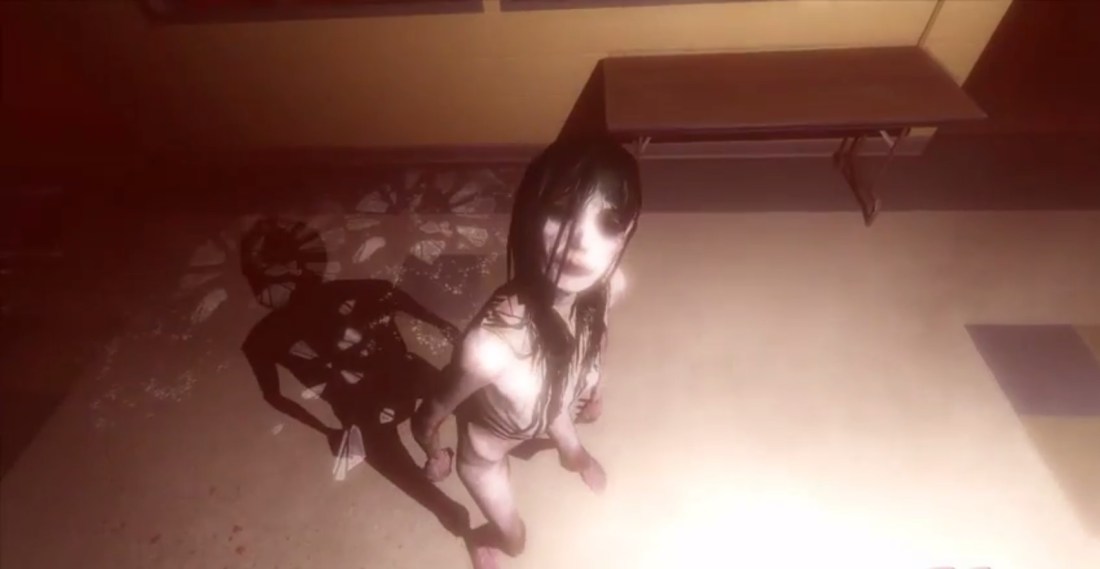
FEAR Alma for a third time? FEAR forced us to survive little Alma’s rage after being turned into a monster and FEAR2 turned Alma into a Video Vixen, so what does Alma have instore for us in FEAR3? Morning Sickness.

By now, the series has completely jettisoned the idea behind the First Encounter Assault Recon team. FEAR might as well have been called Project Origin since the entire franchise has centred on Alma rather than a Spec Ops team investigating paranormal activity; they’ve had one case. In the original, F.E.A.R investigated Fettel, a rogue commander in ATC’s army-for-sale who’s looking for Alma; a hugely powerful psychic who, after years of abuse by ATC’s science team (including her own father), went Carrie on her tormentors. It was a great game; full of awesome firefights, a terrifying but complex antagonist and a twisting plot. The perfect shooter. In FEAR2, a new Spec Ops team were tasked with finding ATC’s boss, Aristide only to get caught up in Alma’s explosive family reunion. Alma’s interest was piqued by ATC science project Sgt Becket, and she developed a big crush on him. Despite Alma changing her little girl image to an Instagram Model look, Beckett left her on Read and enraged, Alma took matters into her own hands. Not only was FEAR2 a sub-CoD horror-shooter, it ended with a bun in the oven for Alma; it wasn’t just morally dubious, it didn’t make a lot of sense; but presumably FEAR3 will reveal what the hell it was all about and what Alma’s end-game is.

I really wasn’t sure the FEAR franchise could withstand another round with Alma but FEAR3 does something unexpected with the demonic hellcat; puts her on Maternity Leave. It’s unexpected because all the trailers, the box art, the opening, even PR quotes from the studio promised Alma was back and badder than ever. Yet Alma is out of the picture for the entire game, save for a few non-threatening cameos. What the hell? While her contractions threaten to merge her nightmare world with ours, practically nothing Alma-related happens in FEAR3. We’re supposed to stop her giving birth because reasons, but first we’ve got bigger questions – like why is Fettel back in ghost form, and how come Pointy can’t think of a THING to say? He’s still silent despite finding out he’s a lab experiment, ATC have manipulated his entire existence, his Mom is a vengeful spirit and he shot his own brother in the face – who’s back from the dead. Not even a quietly muttered ‘FML’?

We first meet Pointman while he’s being beaten up by Mercs in a ATC-controlled town. No idea why, it just seems they’re knocking him about for fun; he was a considerable asset, a first blood of Alma and they’re beating him to death? You’re wasting your time guys, he’ll never talk. Thankfully, Fettel appears, possesses one of the soldiers and frees him. Without explaining himself, Pointy resolves to escape, link up with Jin from FEAR1 – who for some reason has spent the last nine months kicking around the decimated city doing nothing – and finally close a FEAR case by ending Alma. Fettel meanwhile also wants to find Alma, claiming he’ll join the family together like an R-rated version of the Munsters. Since their plans roughly align, the two siblings agree to work together.

As far as Pointy’s plan goes though, why does he want to kill Mom? She was as much a victim as he was, and why isn’t his rage directed at ATC? It could have turned it all on its head and have the bros protecting Alma’s newborn from ATC, or the three of them destroying Aristide and ATC once and for all; can you imagine Alma as a follower?! Holy shit. No. But we’ve got Fettel along for the ride; he’s an Alma-lite but still, packs a cannibalistic punch and that’s gotta be fun – get to know my undead bro on a road trip! Apologise for shooting him in the face, bond over our mummy-issues and all that? Nope. None of that either. He’s not even following.

The implication seems to be ‘will you rescue Alma (Fettel) or kill her (Pointy)’? But it doesn’t set that narrative out in any meaningful way and missions don’t impact your choices – it boils down to differing play-styles. This has several increasing levels of frustration; first, you don’t even have your brother as a follower. Once you’ve made the call on who you play, the other disappears until the next cut-scene, having reached the same spot somehow. Playing as Pointy means the same old same old – two guns, bullettime. But to have Fettle alongside doing supernatural stuff on command would have been awesome. And to play him should be awesome too, but it’s supernaturally disappointing. He’s a ghost who can get shot for starters. He’s already dead! But he can be deader? It’s idiotic, did not one person in the dev team go ‘hang on…’ At the very least Fettel should have been a stealth character, or capable of ghosty stuff. Instead, he can possess ATC troops but that just makes him Pointman without bullettime – pointless. Fettel can use telekinesis and fire bolts of evil but they’re nowhere near as awesome-destruction as they should be. He’s also not doing any of the cannibalism he used to get up to (health bump at least? How is biting not a weapon of his?) and lastly, why don’t we at least perceive the world from his POV – it is literally the same play through, different arm. What is the point of Fettel? What he is changes based on the story needs. He’s dead, undead, real or a ghost, depending on plot points. We can’t even walk through walls like he does in the cutscenes; Fear3 made playing a ghost boring.

Another frustration is the continuity cracks. Since Pointman refuses to talk to Fettel and they have no bearing on each other’s actions, there’s no reason why they team up. They have zero use for each other and nothing to say despite there being a huge depth to their backstory as explained through tons of cutscenes. How come the troops can tell when one of their buddies is Fettel? And where’s Aristide? She was the series’ The Smoking Man but she’s nowhere to be seen in 3 so who’s controlling ATC? They’re a major thorn in Pointy’s side but serve no story-purpose. What are they even doing? The Replicas also put in an appearance but who’s controlling them, and why can’t Fettel imprint on them like before? And, if this is nine months after FEAR2 (ignoring the fact that at the end we saw Alma about ready to drop, implying a supernatural birth) why is Jin just knocking about in a warzone; and why has that ruined city been left to fester, how are the zombies still alive, why are people possessed – and by who, Alma? Why? Where is everyone else? Why did this start in Brazil then never reference it again? WHAT IS GOING ON FEAR3?

Not even the gameplay can distract you from those petty plot points. The ATC soldiers don’t have anywhere near the flair of the original Replicas and they’re boring to engage with, as are random supernatural creatures that make no sense. The levels are linear, and the mission goals feel more like we’re being ordered about (by who?) and those classic scared-to-death FEAR moments are a thing of the past. I’m not even scared of ladders this time. And another gameplay annoyance is both Pointy and Fettel start out as newbies, gaining XP as they go. Why?! And why have we got to piss about hunting collectables to gain XP when we’re supposed to be hunting our own mother, let’s focus on – wait, COLLECTABLES?! What?! We can find little mini Alma dolls for extra XP. You turned her into a toy? Why does FEAR3 hate FEAR so much?

Anyway, we track down Mr Lover-Lover Boombastic Becket, who isn’t nervously pacing outside the maternity ward. His reaction to meeting his step-sons is extreme to say the least, screaming they need to ‘kill the filthy maggot inside her’. That’s a tad harsh but not as bad as how FEAR3 resolves his storyline; by having him explode from the inside out during Fettel’s possession/interrogation – and Pointman does fuckall about it. What was that?! FEAR2’s rape scene was always incredibly contentious, not least due to its ‘but she was hot so clearly he was up for it’ subtext, but to horrifically kill off a rape victim who’s been imprisoned just to further the story is unpleasant in the extreme; you couldn’t find you way to freeing him? Or maybe just ask him? It just resolved FEAR2’s story by punishing the victim – and our hero didn’t stop it. FEAR3 already felt cheap and nasty, now it’s reprehensible.

So, with Alma busy at Lamaze classes, we get no scary little girl appearances, not even an attempt to kill you for old times’ sake … instead we get ‘The Creep’, a manifestation of Alma’s own fears of her father. Fear has fears? It literally behaves the way Alma did in the first game, appearing at opportune times to wipe out the bad guys, take an interest in us and kindly creates pathways with its destructive behaviour. But unlike Alma it’s not scary. Also unlike Alma, it’s the final boss. We can literally kill a ghost now? Who you gonna call? Monolith, who developed the original, to sort this crap out. Day 1 Studios made this, and they previously worked on ports of the original so they knew what FEAR was; what were they thinking? At the very least you’d think only Fettel can take down the Creep but no, bullets can kill an imaginary friend too. Also, Alma Feared her Father? In FEAR she dissolved him alive with just her brain; she’s over her daddy issues. This is so shit. Once the brothers dispatch The Creep, we finally reach Alma, who decided to give birth at Pinhead’s maternity clinic. Clearly something’s up.

Then the game goes multiple endings on us. Pointman favours ‘Bullet to her belly’ while Fettel wants to call it ‘Junior’. Which is a huge crock of shit. We haven’t been given any context, a chance to draw our own conclusions on Alma or the brothers, what could happen and neither brother makes a case or grows during the game in a way that makes you ponder the choices; AND we still don’t know Alma’s intentions – why she wanted the child, what it means, what her plan is. But never fear, we reach Rage Quit level when the game just makes the call based on which bro you played as so it’s all redundant anyway; we watch as Pointy changes his mind and becomes a brother-dad and Alma fades away peacefully. What?! That was it? She … Fuck you FEAR3. It’s a muddled, unresolved ending to a pitiful, half-baked, hateful mean-spirited, confused, lazy, tame, boring game. And Pointman still doesn’t say anything.

FEAR3 sucks on every level – it’s a dull generic shooter, makes a mess of the FEAR narrative, removes its iconic villain and makes the entire game about one non-event without any resolution or explanation. It also forces the franchise into a co-op mode when the central thing to the original was you were alone – and even fucks that up. No way I’m going through that again to see what Fettel does. Rage Quitting the shit out of this abomination and googling ‘completely remove game from Steam’. I’m updating my bio’s most hated games list.

The worst thing though is Day 1 Studios wheeled John Carpenter out for PR points. Clearly they were just interested in his marquee value not input because pre-release, Carpenter and writer Steve Niles talked about how dangerous Alma is in FEAR3, now a protective mother, and that’s what FEAR3 should have been; everyone knows you don’t get between a bear and its cub and that’s exactly where Pointman should have been instead we’re her midwife.

Alma is Fear. This isn’t.

2011 | Developer; Day 1 Studios | Publisher Warner Bros. Interactive

Platforms; Win | PS3 | X360
Genres; horror, shooter, fps

Mad Max

A SECOND WIND REVIEW

In this extended playthrough review, FBT tucks into some Dinki Di and revs his way through Mad Max. One man enters, one man auto saves.
Games based on films usually fall into two groups; the first, ‘tie-in’ games supporting a movie release – cheap, quick and nasty, there’s a special hell is reserved for them alongside child molesters and those who talk at the theatre (When is that Firefly game coming out?) The second, games based on past movies fare better but generally we get less The Warriors, more Jaws Unleashed and middling exceptions such as Enter the Matrix, Die Hard Nakatomi Plaza and Avatar; you had to really love the film to forgive those. There is a third way, games acting as spin-offs, but The Thing, Stranglehold, Butcher Bay etc. worked only because they reference the original then do their own thing; but again, for every Alien Isolation there’s an Aliens Colonial Marines. And don’t get me started on TV-series tie-ins; 24, X-Files, CSI even The Shield and Sopranos have been digitally ruined. Movies based on games don’t fare much better and there’s a reason both fail to emulate the other; the experience. Games can be cinematic but they’re not cinema. Films can be involving but you’re not involved. They should just leave each other alone.

If the game-based-on-a-movie tag wasn’t enough reason to avoid Mad Max the video game, the bigger problem is we’ve already played it – not the 1990 NES game, that was Max in name only, but we’ve gamed as Max-by-proxy for years; any apocalyptic wasteland game is Max-inspired the same way a rain-soaked neon future is Bladerunner (which had two games). We’ve never gotten to be Max, never driven the Pursuit Special while acting out Fifi’s immortal line ‘People don’t believe in heroes anymore? Well damn them! You and me Max, we’re gonna give ‘em back their heroes!’

Plus, do we want to play Max? He’s not exactly the kind of character you want to inhabit. He’s too complex -for all his simplicity- to be reduced to a game perspective, and even the movies played fast and loose with the continuity and motivations, which makes a game adaption tougher; what kind of game is it? It can’t be a driving game, it can’t be FPS, that only leaves RPG – Which makes sense in that Max lives in a wasteland, but still, he’s the very definition of linear; he drives in a straight line, always away from his past – he doesn’t make a home, he doesn’t join guilds and he’s not the kind of guy given to helping Randoms. Max on a side mission? Sacrilege! Yet that’s exactly the genre that developers Avalanche decided on. And the bad omens continued; it was delayed for nearly a year then a teaser revealed Max with an American accent. Later trailers announced in full-screen text ‘you are Max’ – If a trailer for Mad Max has to spell out you’re Mad Max, it’s in trouble and the gameplay looked like it was Fury Road based but they couldn’t afford Tom Hardy. This is a tie-in isn’t it. Shit. Looks like we’re headed for another Rambo The Video Game.

But the thing is, while Max never thrives, he does survive; survived Toecutter, Immortan Joe, Lord Humungus and even Tina Turner. Can he survive a Tie-In?
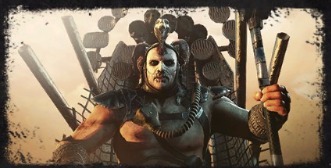
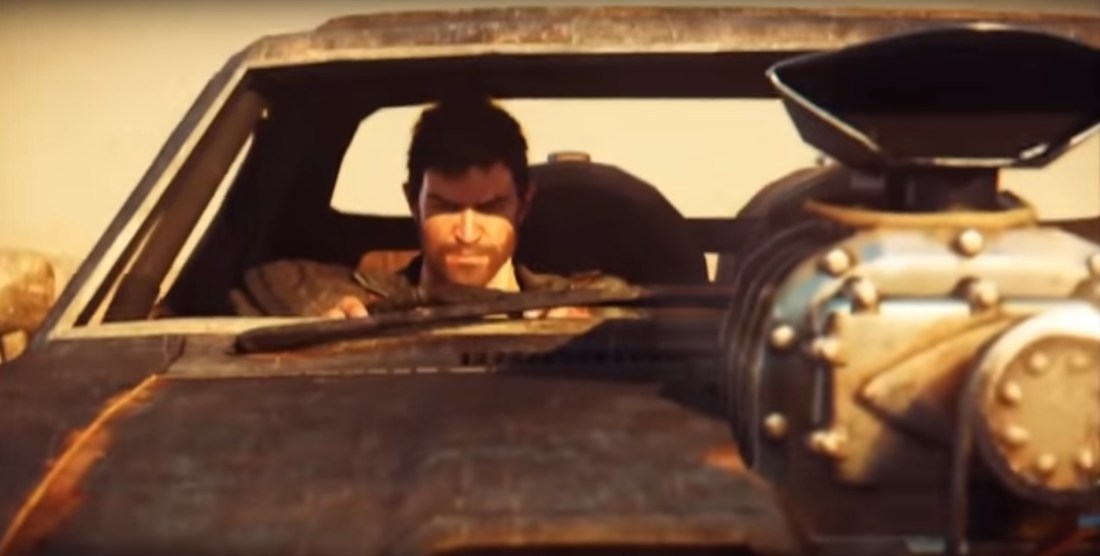
Fittingly, we first find Max behind the wheel of the V8 PS Interceptor. Eyes locked on the horizon. Like Fury Road’s opening, Max is ambushed by Warboys – but this time led by a giant called Scrotus, who wants a V8. Left for dead and without his Interceptor, Max inherits a dog, thrown from Scrotus’ War Rig for failing to tear Max’s throat out. The two scavenge along until meeting a deformed and clearly unstable mechanic named Chumbucket; Chum has been designing the ultimate wasteland car, his Magnum Opus, and after seeing the fight with Scrotus, believes that Max is a Saint sent by the Angel of Combustion to make Opus soar. Okay then. We can go along with that if it means getting a new car.
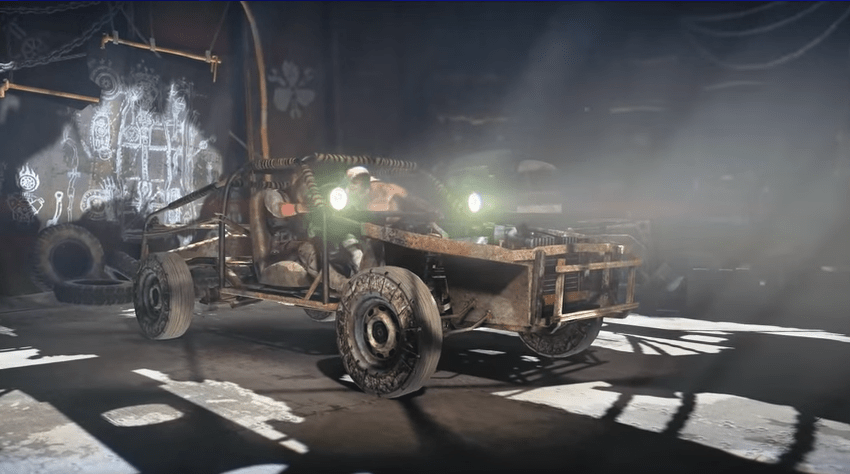
Problem is, not only is the Opus unfinished, she’s not a V8. Chum explains there’s various local strongholds under threat from Scrotus and they will have the tools he needs to finish the Opus; and we’ll need the Opus battle-ready to reach Gastown, the only place we’ll find a V8. It’s standard RPG to create a situation where various hoops must be jumped through to gain the final prize, but those hoops, this prize works for Max. It’s minimalist, there’s no distractions and it justifies tearing about in the Opus. We slide behind the wheel. Cue engine roar. Cue shiver-down-back as I, Mad Max, drive into the wasteland.

A Fury Road prequel of sorts, we’re in what’s left of a world ravaged by a resource war, that triggered an environmental collapse, which lead to a worldwide plague, resulting in a societal breakdown. Now that’s an apocalypse. Huge rusted ship hulls litter the land as we drive through bleached coral, dusty seaweed and the occasional whale skeleton – we’re in a dry ocean bed; the Grand Canyon meets the Great Barrier Reef, and it has a sickly sense of death to it; whereas Fallout suggested humanity was at least surviving, rebuilding, all we find here are bodies; things are not going to get better. This is the end. But the end looks great, it’s a detailed, believable-looking game.
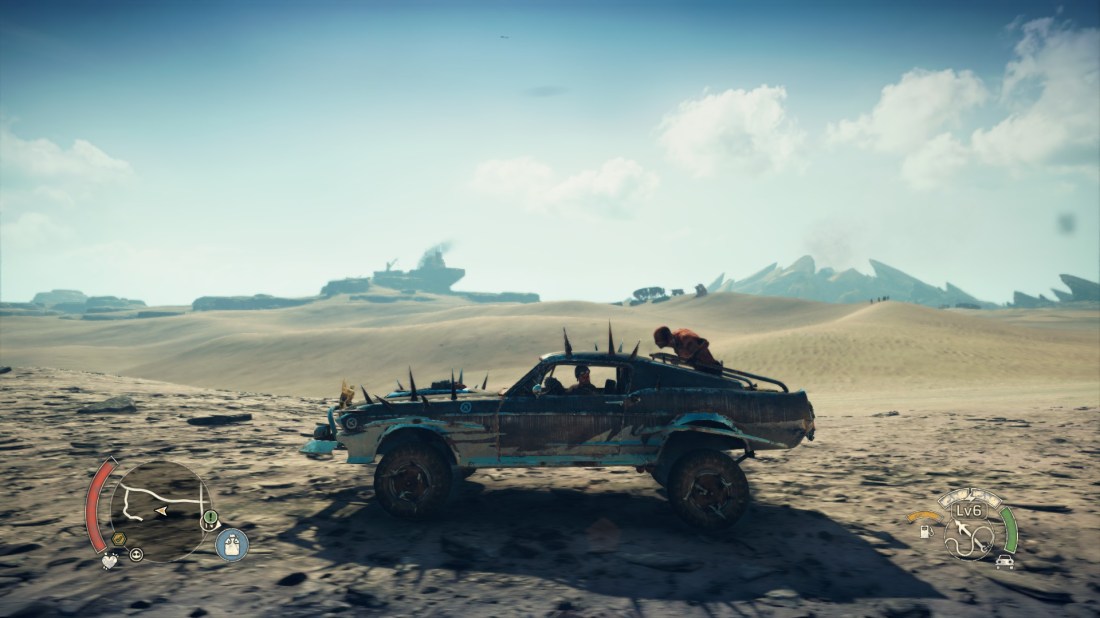
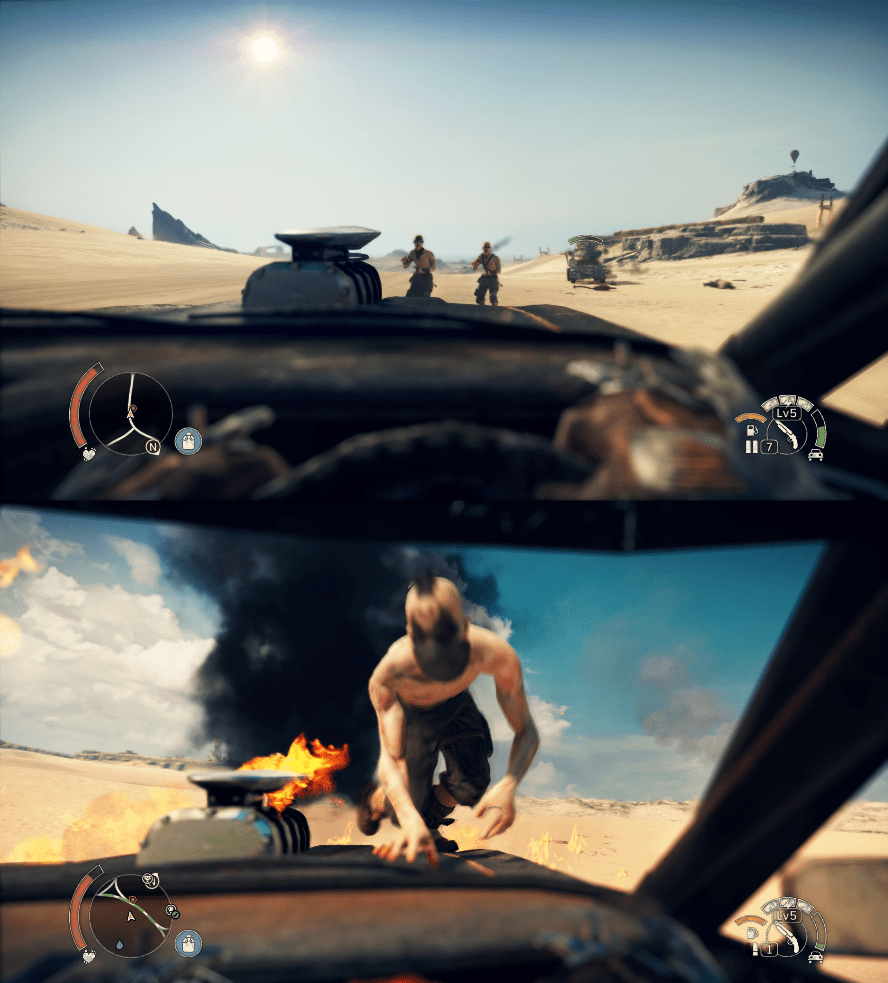
And as a game, MM is as stripped back as it’s possible to make an RPG. Max travels light. There’s no backpack full of junk to sell, no wardrobe choices beyond upgrades; he takes only what he needs and gets it by scavenging derelict camps – but stepping outside the safety of the Opus comes at a cost. The wasteland of Max is incredibly dangerous; not Borderlands gimme-a-break dangerous but you’re never going to just wander like Elder Scrolls. Factions run rampant in the wasteland and will come running when they hear the Opus pull up; leaping, punching and kicking at Max, throwing stones or worse. Others burst out of the sand in sneak attacks or wait in the shadows; expect to fight for that tin of Dinki-Di.

Strictly speaking, MM is a brawler game; he does have a rudimentary shotgun with a few shells and a couple of one-stab shivs but he’s mostly a fist man. He can also momentarily arm himself with a melee weapon, including the ‘Thunderpoon’, a type of bang-stick that can be thrown or melee’d with awesome and messy results and uses gas-cans as explosives but most of the time Max is battering heads into walls or the Opus’ hood if not throwing some mean WWE moves; the fights are desperate scraps but it’s not a button-mashing scrum. Reminiscent of WB’s Arkham City (Okay it’s not reminiscent, it’s blatantly the same mechanic and Max has a ‘fury mode’ to unlock quick finishes ending in slow-mo take-downs – I’m Batmad), it’s more of a ballet than a brawl; it’s all about anticipating and timing the beatings you throw down.
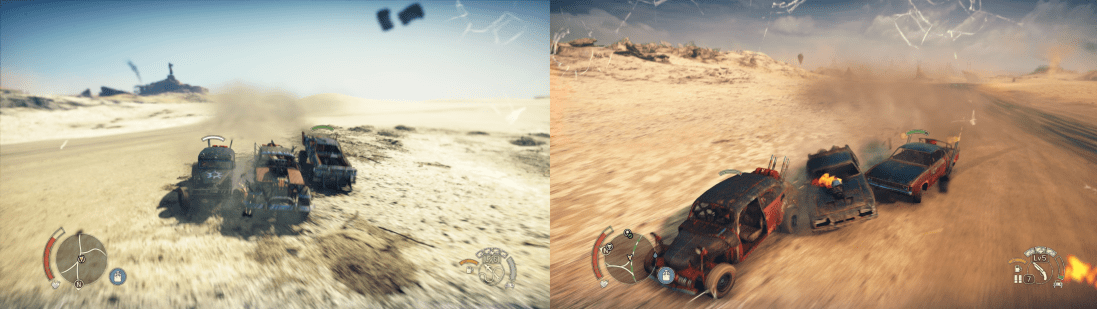
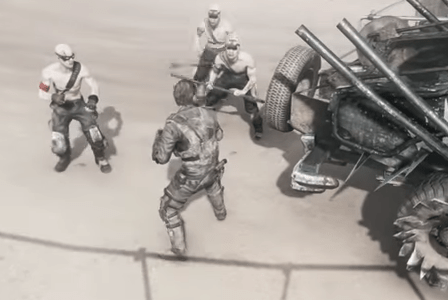
Besides the two-legged risks in the wasteland, there’s obviously the four-wheeled ones. The Opus isn’t invincible, but this is where MM becomes something really special. There’s raiding parties patrolling and they don’t just ram, they work together, clamber out of their cars to leap onto yours or lob things to make you crash. It is the most thrilling drive experience in an age, better than any 5-star wanted moment in GTA. It’s terrifying, exciting and random; you get that panic as cars appear on the horizon while you’re scavenging. You race back to the Opus and they give chase; suddenly the Opus is damaged, you’re out of shells, you’re trying to ram one into a cliff-face while avoiding another adorned with spikes, there’s a raider on the hood and you’re running out of road. The Opus bursts into flames and you’re rolling in the dirt trying to avoid them making you their hood ornament, then they pull up, jump out and mob you as the commotion attracts yet more. It’s fantastic.

Each faction has a different style of car, attack and attitude but they’re all insane. Sometimes you’ll find them parked up and catching some rays. Run them over. Sometimes you’ll run them over and then realise they weren’t Warboys but Wanderers desperate for water. Sorry. Destroying cars also yields precious scrap – everything is a commodity in the wasteland. Driving around you’ll come across oil-stained paths criss-crossing the sand. Follow it and you’ll find a truck ferrying Gas to the nearby outposts. Taking on the convoy is just a huge, breathless, desperate fight-on-wheels as you whittle down the convoy to just the Gas rig. Besting it nets you a hood ornament which gives mini power-ups. You’ll need it.
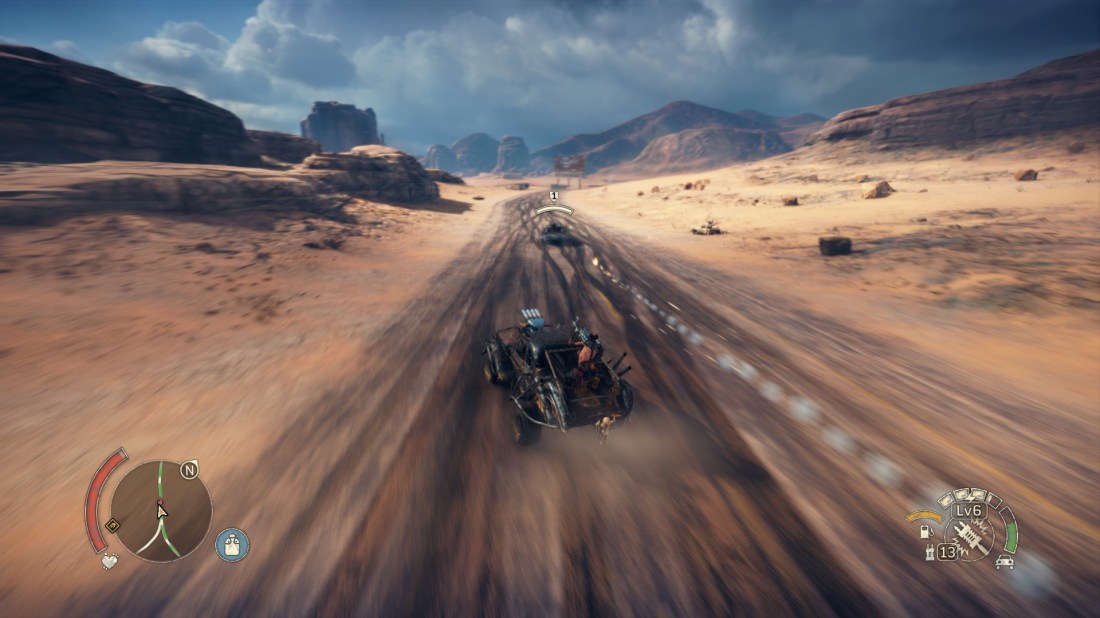
The Opus is just great fun to drive, easily one of the best in-game vehicles gaming has produced. It’s so compelling you often get yourself into trouble just to push its limits. The Opus is your home, a Sacred Place as Chum calls it, and as level-ups unlock it’s potential, you tinker with it as much as Chum does to get it just right for your style. It can be a bullet or a bomb and Avalanche have put a huge amount of work into making sure we love it as much as Chum does. Everything from the muscle-car feel, the growl, the fire it’s exhausts spit, just the feel and thrill of throwing it around; perfect. Max however stays stoically silent on the subject. He’s not a silent hero but he is taciturn and minimalist, only saying what’s necessary, only doing what’s needed. Sticking to the attitude we know from the movies, you’re an MFP Officer, the road warrior, the raggedy man. My name is Max.
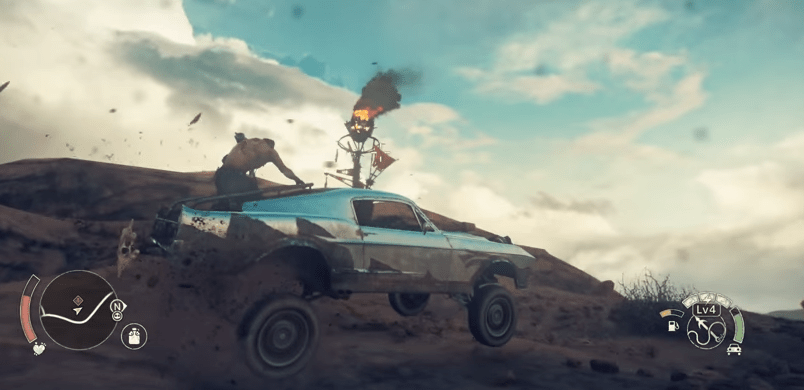
Despite Max’s focus, we’ve got some exploring to do. Tethered hot-air balloons let you pinpoint what needs doing to lower the Scrotus threat such as giant flaming scarecrows with bodies flayed on them that need to be pulled down, and for that we get a Harpoon gun that can also be used on the cars, or the occupants of cars, gates outside enemy camps, pretty much anything destructible. It’s great fun. There’s sniper posts as well, but Max gets his own car-mounted ‘lead slinger’ as Chum calls it; I’d assumed Chum would take on the role of mission-giver but he rides with Max, hanging on for dear life. Chum isn’t nearly as annoying as I first imagined; he gets nervous around camps and concerned if we’re not tending to the Opus’ needs. He’s chatty, pointing out locations or dangers (he’s a big fan of the ‘mighty duster’ sandstorms) and he’s also cheeky, asking why you got in the Opus on the wrong side and he’s geeky; when a wanderer marvels at some event saying “Surely that wasn’t you?” Chum pipes up with “It was, and don’t call him Shirley!” – he even quotes Aliens.
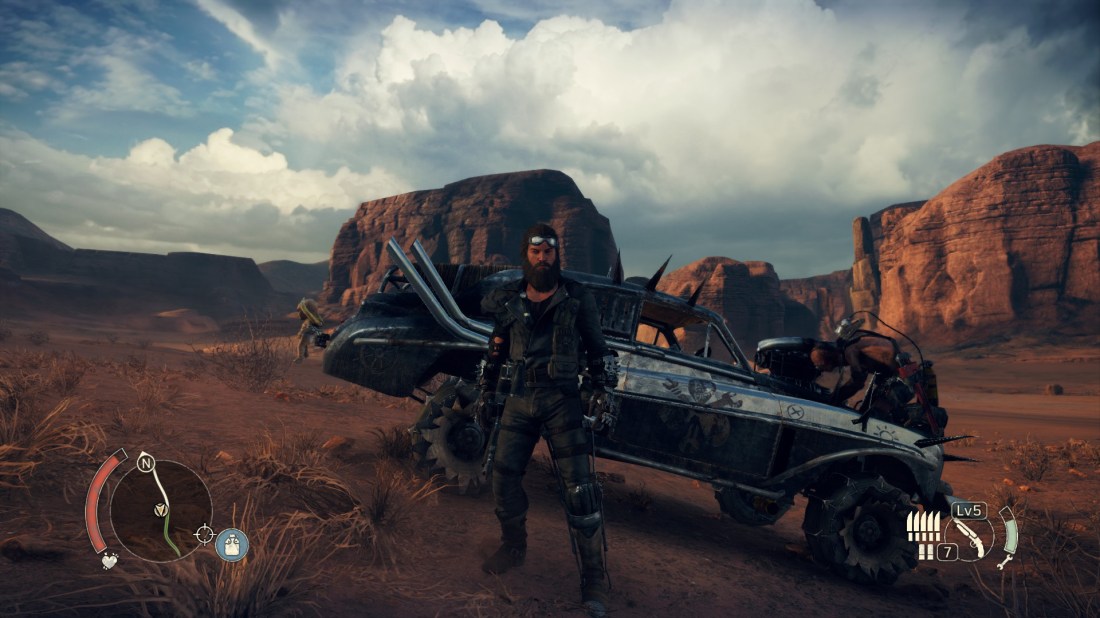
Chum will help fight off faction interlopers when they climb aboard and repair the Opus when you exit, meaning you’re not forced to limp to a garage after every battle; you’re often exiting the flaming Opus though, then distracting the factions long enough for Chum to repair her. Hurry up! You control the Opus’ Harpoon gun via Chum and he’ll drive while you snipe which is a nice touch, he really grows on you but he’s not Max’s only companion; if you take Chum’s buggy into the wasteland, Dog will come along to sniff out locations and mine fields. Disarming them will lower Scrotus’ threat level as will accidentally driving into them (irritating Chum as he repairs the flaming Opus). Best way to deal with mines is luring in a Warboy then watch him become a Was-boy.
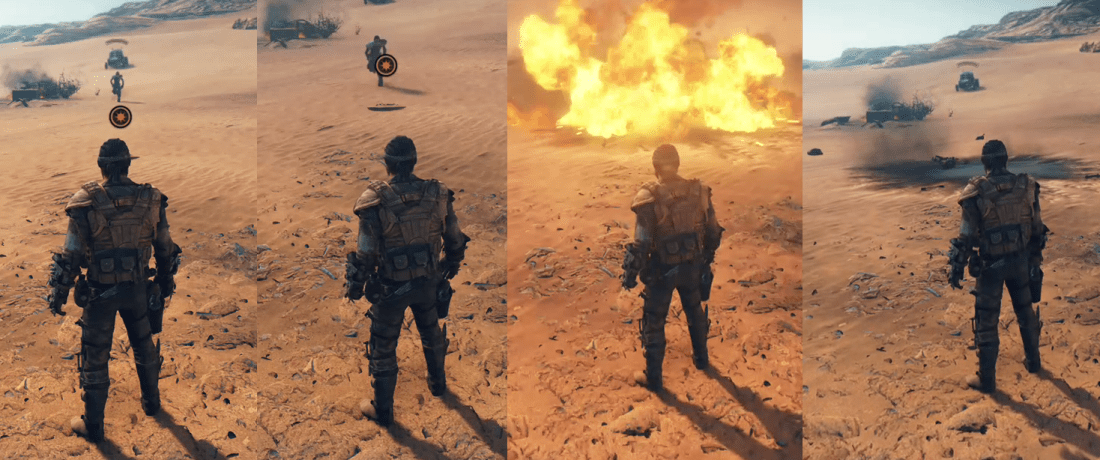
They have missed a trick with choosing your companion though. Waiting for Dog to sniff out a mine is laborious and he never leaves the buggy, and without Chum to repair the car it’s dangerous too. I know Max is a lone hero n’all and doesn’t have the best history with doggos but if they can’t both fit in the Opus it could have been interesting to at least position it as choosing a defensive or offensive pal when you roll out into the wilderness; Chum can repair the Opus but can’t fight while Dog can’t hold a wrench but he’ll come along and chew through Warboys.
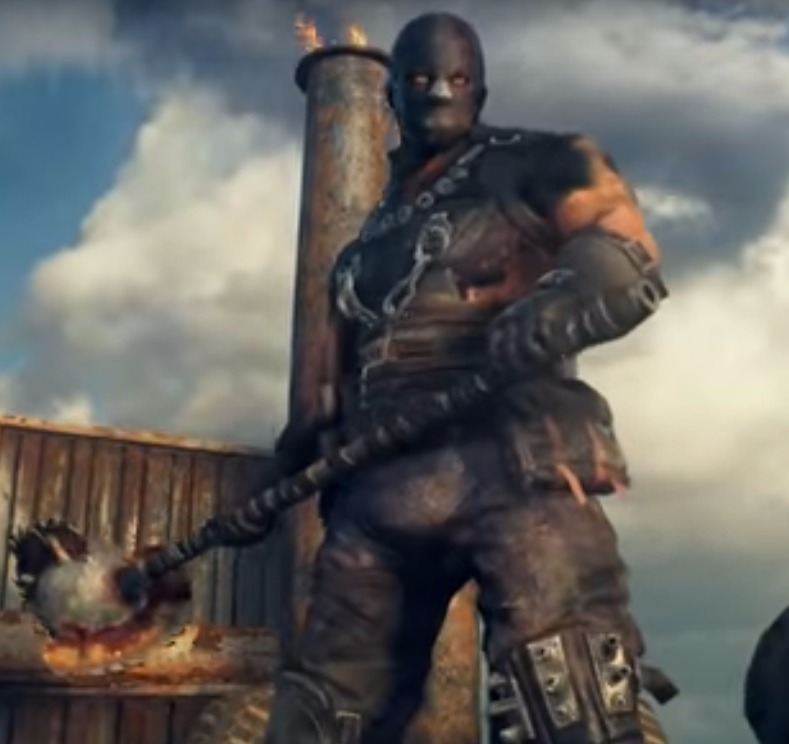
When we’re not thinning out his troops, we’re ruining Scrotus’ businesses. In each area there’s refineries, oil dumps and re-enforcement camps. They can be entered by using their own vehicles, but we’re not gonna do that. Once the Opus has weakened the camp enough to enter, Max is on his own and they know you’re coming; Prepare for some serious Batmaning. Most camps will have a War Crier, a lookout suspended from a crane who also beats a drum to Buff up the Warboys like Max’s Fury Mode. Great. If you take everyone out before him, he’ll drop the bluster and half-heartedly suggest you don’t kill him too. On occasion Criers can be reached from outside with the harpoon/sniper, which is very satisfying. Each region always has the same requirements – scarecrows, minefields, snipers, and Camps have the same ‘ruin this’, ‘blow up that’ parameters, but they’re all laid out differently and never a push over; and then there’s the Top Dog camps. Mini bosses. Taking out their mega-camps is a painful process but a good challenge and it’s only the Top Dogs themselves that are disappointing; they all follow a variation on the same fight technique and it’s a shame they’re not as unique an experience as their bases.
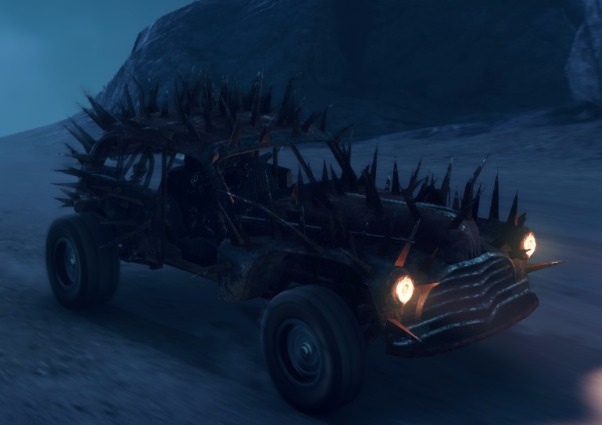
As Max barters for Opus tech by doing Stronghold missions that aid whatever ails them, he can also help make them better – but they always benefit him. Finding the plans for a water-catcher, oil containers etc. mean Max gets refilled upon re-entering a stronghold, making them invaluable upgrades. They’ll also collect stray scrap for Max, saving you constantly exiting the car to pick up materials. Stronghold missions revolve around typical RPG ‘go somewhere really dangerous to get something’ missions, but they’re always fun and often reference key points from the movies. About the only truly RPG side mission is one where Max performs legendary leaps to inspire the locals and he does come across races but they’re optional – although racing allows you to return for a free gas top up. The races will have set criteria and some require different cars entirely. Throughout the wasteland Max can find high-value cars and add them to a garage; it’s the only element that doesn’t feel right. Why does he care, where’s he storing them, why isn’t Chum stripping them for the Opus? Taking a faction’s car does mean driving without drawing that factions’ attention but it’s hardly worth it and even ‘legendary’ cars are no match for the Opus. That the locals would deify cars and oil makes sense, but not Max.
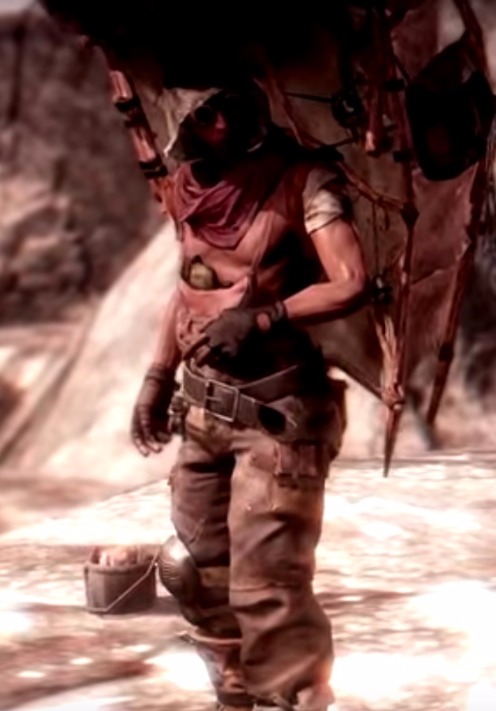
No RPG would be complete without Levelling Up. When Max reaches a Legendary reputation level (from Road Kill to – of course – Road Warrior) a mysterious drifter called Griffa appears to give you a headache. He reflects incomprehensibly on the past and seems to know Max and his pain in intimate detail. It’s implied he might be a figment of Max’s, his conscience trying to let go of the past; or he might be some drifter who had a similar experience, helping Max take on Scrotus. Either way, Max gets upgrade options – nothing new to RPG but we also get to upgrade the Opus. Now this is fun. Everything you need to turn the Opus into a monstrous demon car that actually intimidates factions. A lot of the upgrades are related to the main missions so you feel like you’re preparing for the Gastown showdown, not gadding about gaining xp. It helps that you become invested in the Opus, feeling that while once it was little more than a frame on wheels, now it’s something special.

Eventually, by way of a launchable Thunderpoon (which is even more fun than it sounds) Max and Chum make it inland and Max’s world changes. A bit. It’s still a sand-soaked, rotten world but there’s roads, or at least broken asphalt snaking through ruins, broken bridges, dry river beds, gas stations and so on, but the further inland you go, the more the desert has encroached until it’s all you see. Mostly we see more Scarecrows, Snipers, Encampments and Top Dogs. And bloody land mines. It’s a bit of a stumble on the game’s part; after all that work in the Ocean, the build up to reaching ‘land’, it’s the same challenges on the other side give or take. Still, off to Gastown, right? Nope, there’s another stronghold, a junkyard that surrounds Gastown that we need passage through.
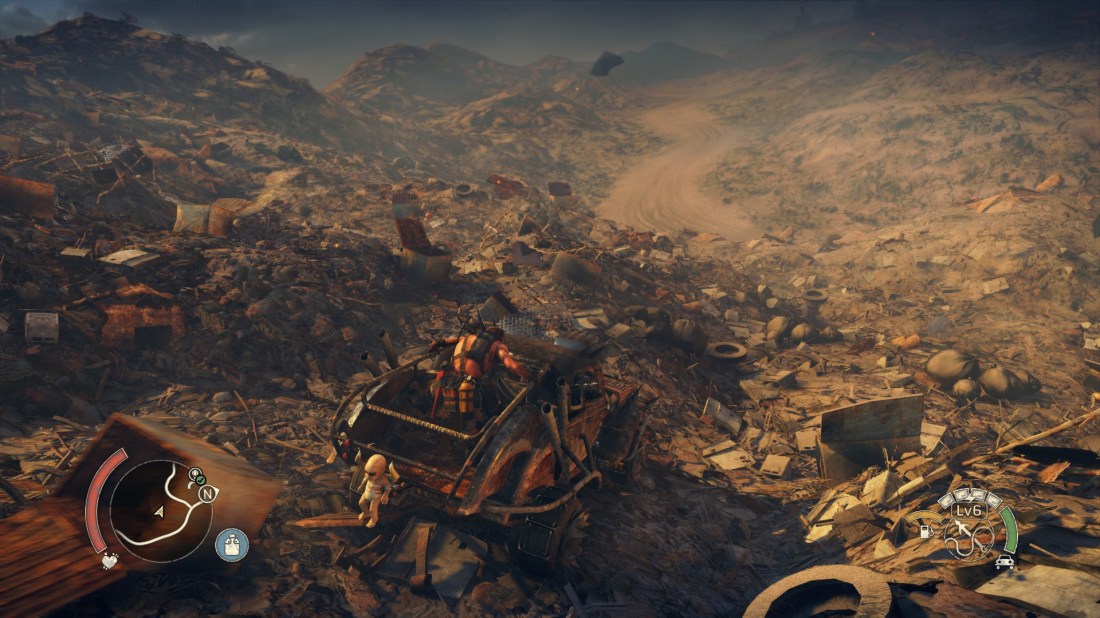
By now, I’m the Road Warrior, ready for anything but the junkyard is something else. After flinging the Opus around all that open space, I’m trapped in close-quarter alleyways, car-catching trash and dead-ends and constantly reduce the Opus to a burning wreck. Well, I wanted a change. Chum, fix up the Opus. We’re going to Gastown.
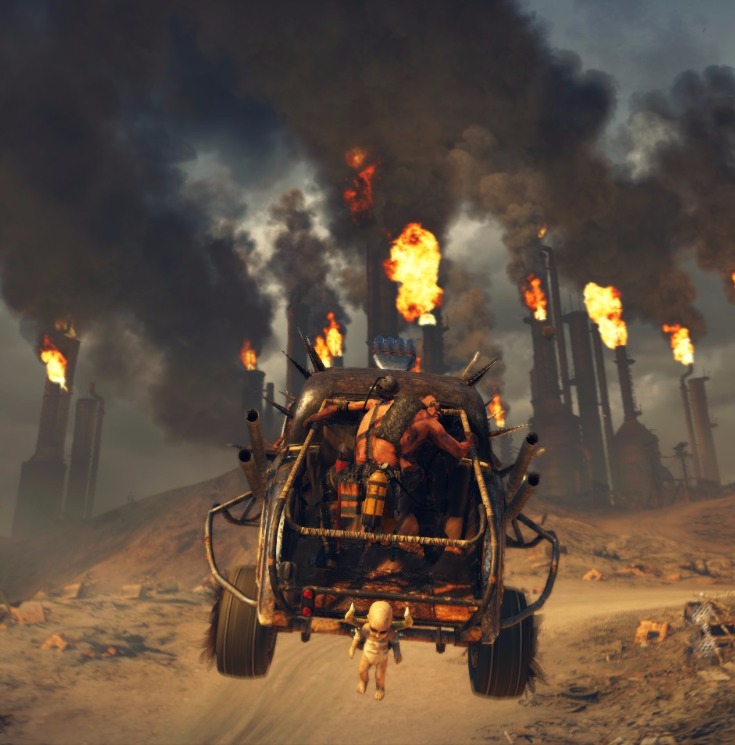
Naturally there’s a few more hoops between Max and the V8, and one is the best mission in the game; recover something from a buried Airport. The Opus crawls through the tomb-like airport interior as sand slips and we catch shadows. Chum is not happy and neither am I. It’s unnerving, then scary, then scary-fast as the Opus drives for its life, terrorised all the way back to Gastown. It’s a great mission just as our madness is starting to slip after one too many scarecrows. That it’s for a completely trivial reason adds to the mayhem of Max’s mad world too.

It’s an incredible moment when the V8 is revealed – Max is utterly captivated by it and so are we, seeing what the V8 means to him; he’s staring so hard he barely registers the other prize, a concubine in the shapely shape of Hope, a woman we helped (a bit) a while back. She’s owned by the maniac Stank Gum – who we have to beat to win the engine. Hope also had a daughter, Glory, now nowhere to be seen which is troubling. Max doesn’t seem to notice though because V8. That’s my V8.
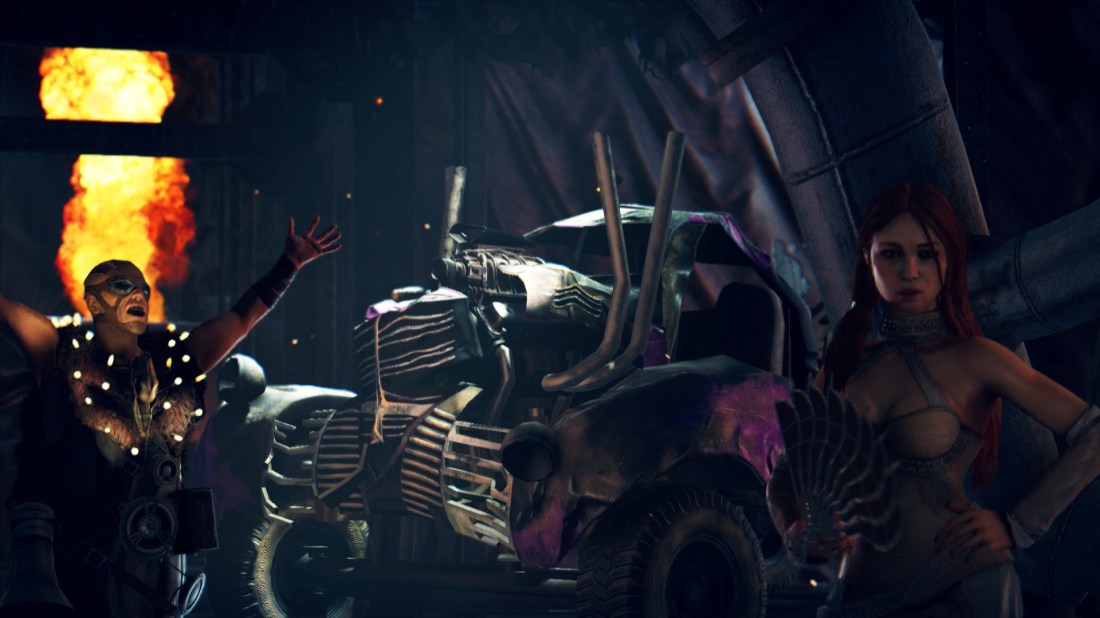
After everything, it’s no spoiler to say the V8 is a bit disappointing. I’m sure it’s just my uneducated ears, but once Chum has it installed, it’s nowhere near as dirty, guttural; I miss the bang when Max turns the V6’s key. It hums rather than spits. It’s also a let-down that the V8 has a load of upgrades. We just went through all that for something that can be better? It should have been Get The V8, Angels sing, Opus soars, Chum cheers, end credits. But it’s not over yet. After a Thunderdome fight that left me exhausted, we’re thrown into a monumental brawl so epic and unfair that even Borderlands would have said ‘calm down mate’, what could possibly be next? Another exceptional mission to begrudgingly help Hope find her Glory of course, and it feels right that Max would eventually agree to do one thing for someone other than himself – that’s a constant in every Mad Max movie since Road Warrior; someone gets under his madness and briefly reaches the man beneath.
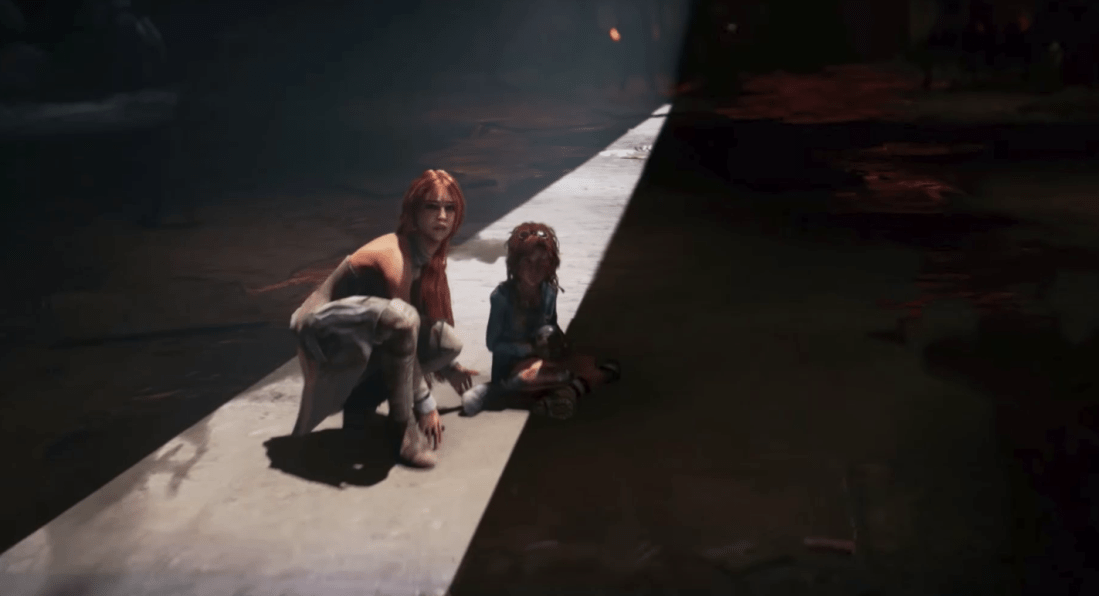
So we’re good to go, yeah? Not quite. It’s a desperately sad moment when Max takes off rather than stays with Hope and Glory. Glory gets in the car only to be lifted out like Feral Kid. Max barely glances in his mirror before taking off. But then, absolutely everything spirals faster than a V8; An insane sequence of events unfold, sending Max so far into the Madness that it’s hard to watch let alone play – and it couldn’t have ended any other way. We’ll ignore a completely ridiculous final twist/fight tacked on to spoil it. It’s that good a game that even a logic-breaking boss fight can be forgiven. Max drives, always away from his past; except now he has even more past to drive away from. Including me. It’s been a ride being Max. And surprisingly, it’s been emotional being Max.

With the Opus purring like a hybrid, I reflect on how well Mad Max the films were woven into the game. And it’s not just fan-service. There’s ‘two men enter, one man leaves’, Max eats Dinki-Di dogfood, the Lost Tribe is referenced, Max is called Raggedy Man and so much more; it might be a prequel to Fury Road (might be) with the Warboys, the huge storms and general look and feel, but the entire series’ DNA is woven in without turning the game into some sycophant greatest-hits tour. This Max can stand proudly alongside it’s cinematic bros – and manages the impossible; a brilliant tie-in. I would love to be Max again and it’s a shame WB didn’t throw enough support behind this game to warrant a sequel; well damn them. Avalanche gave us back our hero.
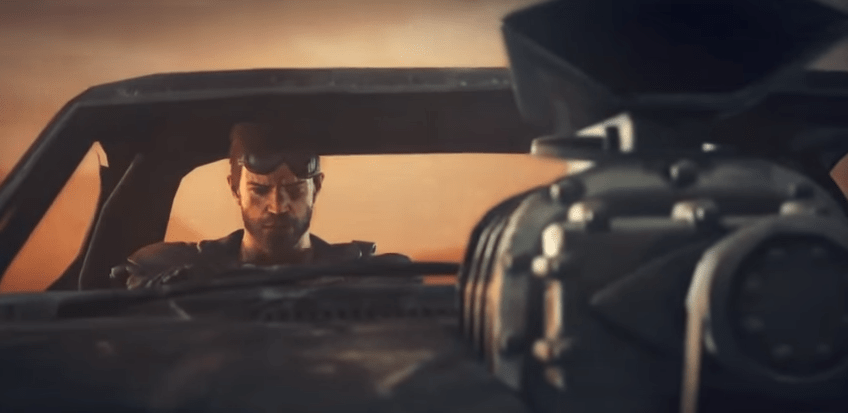
2015 | Developer Avalanche Studios | Publisher WB Interactive Entertainment

Platforms; Win, XO, PS4
F.E.A.R. 2 Project Origin

a second wind review

Kicking and screaming, FBT is dragged back into Alma’s world. Fear FBT’s review of FEAR 2.

Alma. I’d tried to forget her but … I’ll never get over a dead little girl following me. F.E.A.R. 2: Project Origin delves deeper into Alma’s history and the ATC corporation that created her, but … didn’t FEAR stand for ‘First Encounter Assault Recon’? A team dedicated to investigating supernatural events; why go back to Alma? Evil corporation kept an immensely powerful psychic in a coma while impregnating her to fine-tune her abilities in more compliant offspring then let her starve to death locked in a vault only to watch her spirit wreak horrific revenge. How’s about we chalk that up as unsolved and move on? Investigate Nessie. Bigfoot? Unicorns! Anything but Alma. I’m not scared, you’re scared.

Starting just as the original FEAR ends, we’re in boots of Becket, part of a new Delta Force detachment called Dark Signal. Yeah, that’s not foreboding. DS is sent to extract Ms Aristide, the head of ATC who were behind Project Origin – which gave us Alma; we should be scared, but worryingly, the fun-size devil’s brief appearance at the beginning makes this look a lot like a Hollywood remake of a Japanese horror classic.

As the wise-cracking/tough-as-nails/cliché Dark Signal make their way to Aristide’s penthouse, we’re attacked by a black ops team who want Aristide themselves. The fights aren’t to be taken lightly, but it’s not as thrilling as the original Replica soldiers, who -ironically for clones- had more personality than those Black Ops, behaving like typical shooter enemies. Beckett doesn’t have bullettime like F.E.AR’s Pointman, but he does act like he’s played a lot of Call of Duty. This is a basic CoD clone with some horror themes thrown in – lights turn off, doors mysteriously open/slam but nothing happens; the original FEAR never lied to you, Unknown Signal was like the Jaws theme; no dun-dun, no shark. Your imagination did the rest. But this time we’re just running and gunning, not creeping and scared of our own shadow. But once Pointman’s nuclear explosion hits, Beckett’s not in CoD anymore, Toto.

We awake to find Becket on an operating table and most of his squad eviscerated. The Black Ops team save us from ATC’s experiments by rocking up to kill us, and as we fight our way out, Becket ends up imbued with the same abilities Pointman had – as in bullettime and the interest of Alma; well, more interest since she was knocking about from the get-go, which doesn’t make a lot of sense unless Alma now has foresight – she does have other powers now though; she can now summon tendrils from hell and her eyes glow; before, Alma was just a little girl with a blank, emotionless face; that was scary – this Alma is the monster from a straight-to-VOD horror movie. In Fear, seeing her get up close and personal with her tormentors or hearing her blood-curdling screams as her babies were taken away said a lot more about Alma’s rage and how much we ought to fear her than a reenactment of Sarah’s dream from T2. Worse, Alma’s appearances are reduced to pointless jump-scares or she’s acting like a mission marker – in the original she had a purpose, she was curious, now she’s a pop-up reminder; yes, this is FEAR. It isn’t.

As he fights through the ATC lab, Becket’s set upon by the Replicas in their proving grounds; which seems to be there just to re-familiarise ourselves with Bullettime. Which doesn’t seem as necessary as it did in the original; half the time I forget to use it. And when it’s not Black Ops or the Replica forces it’s disfigured test subjects skittering about, turning F2 into a horror shooter; although Becket can only manage two weapons, keep the shotgun handy for close encounters. Later, we meet phantoms able to control corpses and people driven mad by Alma’s power which turns F2 into a zombie shooter too; the original FEAR was criticised for its minimal villains and repetitive locations and F2 does try to change it up – locations are more varied too, including a school where the team discovers ATC were experimenting on the kids to heighten their psi abilities. While the school mission is a creepy highlight, it’s secrets come across as a bit half-baked story-wise; both Becket and team-mate Keegan went to this school, presumably explaining Alma’s early interest but all I can think is; is there anything ATC aren’t involved in?

Talking of getting involved, Alma’s interest in Becket turns into a crush once they’re on the same psychic wavelength, and she begins to take on a more attractive look to woo him. If Becket’s backstory seems hackneyed, Alma going full-Lolita feels really off. Alma may be rage incarnate, but she was as much a victim as victimiser, so to suddenly sex her up adds an uncomfortable but vulnerable aspect that blows the whole character wide-open – only to immediately fumble it; are we scared or sorry for her? We don’t entertain the idea of loving her, so which is it? The game is never sure, but to give Alma emotions she doesn’t understand should make me extremely nervous – a girl’s first crush is frightening enough but this girl can kill you with her brain. Yet Becket just silently plays hard to get. It could really have changed F2, there’s instantly all sorts of ways their relationship could have gone and so many ways it could have ended, but it’s just a sexier version of Alma we run screaming from and the few times you do feel a pang of sympathy for her, the game doesn’t. Becket did suffer at ATC’s hands too, they have that in common but sexy Alma, her hair covering the naughty bits, makes no sense since she forces herself on him anyway – she doesn’t crave his affection, just his naughty bits. it just takes on a very uncomfortable titillation feel and it would have made more sense if she’s remained scrawny since Becket’s resistance meant nothing to her. Does she have feelings or not? Alma’s interest also causes Keegan to start acting jealously, implying Alma had been trying it on with him but turned her attention to me instead. Can’t blame her for that; hate the game not the gamer.

The whole Dark Signal thing doesn’t really come into its own either – it seemed to imply we were all proto-Pointman, being field-tested but once Becket gets upgraded it all goes away and they’re reduced to standard NCPs. We only really gang up when one has to meet a grisly Alma-end, the rest of the time Becket’s alone due to contrived reasons. While Keegan suffers the most, and it implies he and Becket are close it just doesn’t go anywhere, alongside the possible interest Becket stokes in Stokes, the token tough chick on the crew. I expected Alma to pick up on their mutual interest and get into a scrap with her, but no and this emotional disconnect is largely down to the insistence on keeping Becket a silent hero; his best bud is getting tortured by a ghost that wants to get jiggy with him and he’s got side-chick Stokes on the go but he still can’t muster an opinion. But he does have an idea. A really bad one. Aristide has a way for Becket to take on Succubus Alma once and for all. Date night!

Thing is, if you told me in the first game I’d being going one-on-one with Alma, I’d quit, turn off the PC then burn my house down to be sure. But in F2, I’m just not that bothered; it makes Alma a threat we’re expected to meet; something you never, ever wanted in FEAR – That scene where the vault opens and her emaciated, deathly form walks out was heart-stopping, but here we are watching her approach and it’s not scary; Alma stops being frightening when you imagine her with a health bar, and no red-blooded marine is going to turn down a naked hot chick – the game doesn’t even create a situation where Becket leads her on to trap her, least then you’d be nervously waiting for her reaction to ‘it’s not you it’s me’, but at the last second F2 drops that in favour of a standard mano-a-mano with Keegan who we don’t care about, while the game resolves Alma’s needs in a really uncomfortable way. One thing about FEAR 2’s ending, neither you nor Becket saw that coming.

FEAR 2 is a technically good game – there’s a huge amount of shooting, complex levels and it’s intense; it keeps you on your toes. And your fingers; there’s a lot of classic mid-noughties button mashing to get things out of your face. But it’s only Alma’s shenanigans to separate this from any other military shooter. The oddest thing is this is from Monolith, usually a crackingly good developer with an eye for subverting the genres they explore. Keep the ATC as an X-Files secret government and Aristide as the Smoking Man if you like, but FEAR should have been a great supernatural shooter series with each game featuring new nasties to overcome. Then little Alma would have remained a great amongst gaming’s villains; SHODAN, GLaDOS, Andrew Ryan – compelling one-off villains you develop just a sliver of compassion for.

Stick to the original, it knows your fears, where as Fear2 is just Call of Duty: Alma. Played in Zombie mode. It even drops young Alma once sexy Alma appears, and there’s nothing scarier than a little girl that’s up to something – never thought I’d admit this, but I miss Little Alma.

The DLC F.E.A.R. 2: Reborn is an effective little shooter that makes zero sense. A Replica solider is activated and sent to find FEAR 1’s Fettel. Alma then takes control of his brothers and the various ghosties to stop him. Why? It’s not really clear, and I assumed it provided the explanation for Fettel’s rebirth in Fear 3, but it doesn’t. Why not have Alma task the Replica with trapping Becket for her? The main game could have included a scene where Becket disappears and we play a DLC as Keegan for a while – it could have explained more of Keegan’s Alma-crush before Becket pops up refusing to talk about it, but of course this is just a quickie DLC that adds nothing but a few quid to WB’s coffers. Avoid.

2009 | Developer; Monolith Productions | Publisher; Warner Bros. Games

Genre; shooter, FPS, horror

Platforms; Win | PS3 | X360

Borderlands

an Agree To Disagree review

TheMorty and FBT take very different trips to Pandora.

While TheMorty gets robbed by the locals and leaves a negative review on TripAdvisor, FBT comes back with a Claptrap figurine and a tattoo from Mad Moxxi.

Vault Hater – TheMorty

Borderlands. Bore-derlands more like. Never have I played a game with so much promise that delivered so little. For a game given a sequel, a pre-sequel and a TellTale spin-off, it must be good, right? At the time of release, there was only really the Fallout series in terms of post-apocalyptic RPGs and Borderlands offered a comedic alternative where you could just have a blast. I was full of hope. Not just from the fast-paced, hell-for-leather trailer detailing an hilarious, action packed comedy, but this was in FBT’s top 5 of all time! What higher honour could be bestowed upon a title? Sadly, the slow and repetitive gameplay, the uninventive antagonists and a variety of weapons that you simply couldn’t use was a major let down and made Borderlands less of a gore-fest and more of a snore-fest.

The game starts with giving you four seemingly great characters to choose from. Your friendly bus driver gives you some god-awful advice that brute force won’t cut it in Pandora and you must be smart. So, I figured, okay, I’ll pass on the walking tank, the hot-shot sniper, the jack-of-all-trades soldier and go for Lillith. The girl who’s about stealth and whose special power is to Phasewalk to go invisible. What. A. Mistake. I had made such an error and by the time I realised how bad her power was, I was hours in and couldn’t stomach a re-start. Borderlands is not a stealth game and what I had was essentially a twilight-tween who glittered whenever trouble was near. In arena type battles her power was useless and put me at a serious disadvantage. By the time I realised how maniacal the game was, it was too late. I needed brawns not brains and I was stuck getting battered like a cod.

Borderlands is so generic with the character choice that bar that one special ability, the differences between who you play as are irrelevant. Sure, there’s the odd one-liner and the QuickTime of you getting in and out of a tank, but otherwise there’s nothing that showcases personality or that tailors the gameplay to the character you choose. The replay value really is minimal. Take Lilith, she’s portrayed as the sexy siren, but not once does she use her beauty or allure to get results and without the 3rd person view of her scantily-clad design, you might as well be playing as Princess Peach. To put it bluntly, would you play a first-person Tomb Raider? No. Because that’s just Mirror’s Edge and no-one wants to play Mirror’s Edge.

Something else that hacked me off was the lack of game saving ability. Sure, there’s a Save option, in which you can bank your XP whenever you quit out. But be warned, the next time you load you’ll be back at the beginning of the level and all the enemies will have re-spawned (oh, and they’ll also have levelled up, just to make it a bit more inconvenient). I lost count of how many times it got to 2am and I was still battling past hordes of henchmen trying desperately to complete the level just so that I could finally get some kip before getting up at 6 to go to work the next day. Borderlands isn’t a game you can just dive in and out of, having a quick 30mins blast to kill some time here and there. Playing Borderlands is a slog in which setting aside nothing less than an entire day to play will cut it. Traversing through a wasteland for hours just to ensure that you get to that heavenly safe spot coveted more than Pandora’s Vault itself is really your true goal – just to avoid tediously re-doing the same level all over again the next time you pick up the controller. While that’s not something new in gaming and you’d expect it from Destiny or any online session game, it’s far too much for an offline Role-Playing Shooter that marketed itself on being “Fun”. The beauty of games like Bulletstorm is that you can dive in, have a blast for as long as you want and then quit out. With Borderlands, it just feels like more work than it’s worth.

Its not just the characters that are one-dimensional, the missions are too and often you find yourself in a state of repetition, having to clear the same areas again and again. Meeting residents of Pandora that give you the same old mission time and time again…

Dr Zed: Alright mate, I need you to kill this bloke in Skag Gully, Nine-Toes

Me [4hs later, tired, covered in blood, all ammo spent]: It’s done.

Dr Zed: Thanks, have a crappy pistol from the vending machine.

Me: You’re kidding… That’s it? What’s the next mission?

Dr Zed: Can you get me this key?

Me: Okay, sure. Where is it?

Dr Zed: Skag Gully

Me: Oh FFS!

Worst part of it is that when you eventually Kill Nine-Toes for Zed, he has the audacity to demand that I buy HIM a drink? The cheeky bas-

There’s 87 bazillion guns apparently, at least that’s according to the sticker on the box. Though, you can only carry a handful. The best of which you can’t use until you level up another 20 times so best to sell everything you find. Meaning that you’re essentially a scrap man, trawling around the streets in your van asking the residents of Pandora if they’ve any old iron. If not, kill a few Skaggs and you’ll find they’ve swallowed a gun that can be ground down and sold for next to nowt. It goes on and on and on, constantly exploring the same bit of map where all you get is guns you can’t use and the same villains to put down. Think it’s a good money-spinner? Think again, it’s rare you’ll survive without a respawn or two which, naturally, takes a tax on your hard-earned cash. The more you have, the more you’re taxed meaning you don’t really get a great deal out of playing the boring missions. Literally, just XP.

The comedy’s decent, I’ll give you that and the comic-book style of gameplay was certainly unique on its release. However, if you’re looking for a cross between Fallout and Bulletstorm, you’ll be disappointed. It’s more Starship Troopers meets Beyond Thunderdome where giant insects and overtly camp topless dwarves in hockey masks run amuck. Maybe one day I’ll dive in, play as Brick and enjoy it, or maybe I won’t. One things for sure, not only are the titles in my Top 5 safe as houses, it’s not even troubling those in my Top 50.

Vault Hunter – FBT

Borderlands separates the men from the claptraps. It’s a leveller, a palate cleaner (with bleach), a reset on every game that ever put a gun in your hand. Go big or go home.

The best way to play Borderlands is the way the raiders in Borderlands play Borderlands – run straight at an enemy laughing. It’s designed to be played with a death wish, every encounter a breathless Second Wind followed by a ‘fuck that was close’. Try playing it like Fallout and you’ll be back at a cloning station quicker than you can say ‘now come on, that was just unfair’. It’s a RPG for those who don’t give a shit – once you get your head out of the RPG space, Borderlands becomes something very special. There’s side-quests and a larger story but really, you’re after fame and riches. TheMorty can sit there planning his approach – do you have a good spread of weapons, are all the elements covered, what kind of shield do you have – and I’ll launch myself into the fray like Leroy Jenkins.

Having a quick save just removes all that intensity; saving is for pussies and it’s about the visceral moment not incremental baby-steps. The creatures only respawn once a day; if you get put back at the beginning and they’re back too, you’re too slow. Borderlands is head-long or head-off. It’s all in the reflexes – you’re Jack Burton and you’ll not get through it without a hefty dose of bravado. A couple of skags aren’t going to stop us. Unless you’re TheMorty

No character? Your lead isn’t lacking in personality, they’re lacking in morals. Lilith often dissolves into giggles after kills or asks “that was it? Well it acted tough”, and she pays no attention to anyone’s plight – even the mission-givers are selfish, like Scooter asking you to save a guy so he can kill him later (he “ruined my mama’s girl parts”) or people stiffing you on the reward – everyone’s out for themselves and life is cheap.

Even money’s cheap. The counter goes up to $9,999,999 and you still earn more. It’s everywhere. Sure, it’s galling to get charged a mill after getting offed because bullshit, but it doesn’t actually matter – there’s nothing to buy except bullets and medkits and they’re like $40. Only cowards buy guns. Play the gun-hand you’re dealt and dig up something better. There’s a bazillion weapons, another bigger, better, madder gun is just around the corner letting you evolve your approach, and winning a high-powered corrosive revolver, a rapid-fire sniper or a rocket-firing shotgun keeps the battles fresh and gets you excited about the next fight; I wanna shoot something with that! Both weapons and missions are locked by XP, so stop fannying about and go out there and get some level-ups. They represent confidence; soon you’re laughing at the Skag Pups you ran from a few hours ago – now you’re facing huge Elemental Alpha Skags like they’re no big thing (They’re always a big thing but the mad fight and huge XP bump is worth the blood). Start building your skill tree, find some brutal weapons and go from Welp to Warrior, pushing until even Lilith can punch out a skag without breaking a sweat.

How can I even be friends with TheMorty, slagging off my girlfriend like that? Lilith is a beauty to behold and to play. She’s not stealth, creeping about like a wuss is not going to impress Lilith. Her phasewalk is only for retreating at first; she is under-powered early on, but that just forces you on the offensive. Get in there, get her hands dirty and once her skill tree start to warm up? Whoa. She goes from Valley Girl to Sarah Connor faster that you can say “I have angel-wings that set people on fire as I pass by?” Lilith’s phasewalk starts killing people, she can strike while invisible, enter and exit with elemental powers, absorb bullets and shot them faster; all automatically – she’s brutal. She’s the most constantly evolving, rewarding lead in a shooter I might have ever played; if you come out swinging instead of sneaking. You become a God, instead of just shooting more bullets than everyone else.

Borderlands is for the fearless, but it’s also just for fun. Once you start seeking out the worst that Pandora has to offer, you really get into the lawless, Tom & Jerry tone of it. Whereas Dark Souls thinks it’s funny to kill you, Borderlands lets you die laughing. You’re not saving the world like in a regular RPG, you’re looking to own it. TheMorty says Borderlands would never land in his top 50. I’m betting he’d never survive level 50 (let alone Mad Moxxi). I could go on but this response is longer than he lasted in Skag Gully. And that’s just the tutorial area; let’s not even tell him about Playthrough 2.

2009 | Developer Gearbox Software | Publisher 2K Games

genres; shooter, RPG, Sci-Fi

platforms; Win, X360, PS3