The Darkness II

A SECOND WIND REVIEW

FBT is The Darkness. With the lights on.
When The Darkness II came out on PC I didn’t bother, even though it looked cool; why plonk down money when I’d never played the console-only original? Why was it successful enough for a sequel but not a port? Lazy, 2K. But, DII started appearing in the sales and after reading reviews that likened it to Bioshock (DII was from Digital Extremes, who had swam in the Bioshock universe) I decided to give it a go – Plus, The Darkness is voiced by Mike Patton; sold.

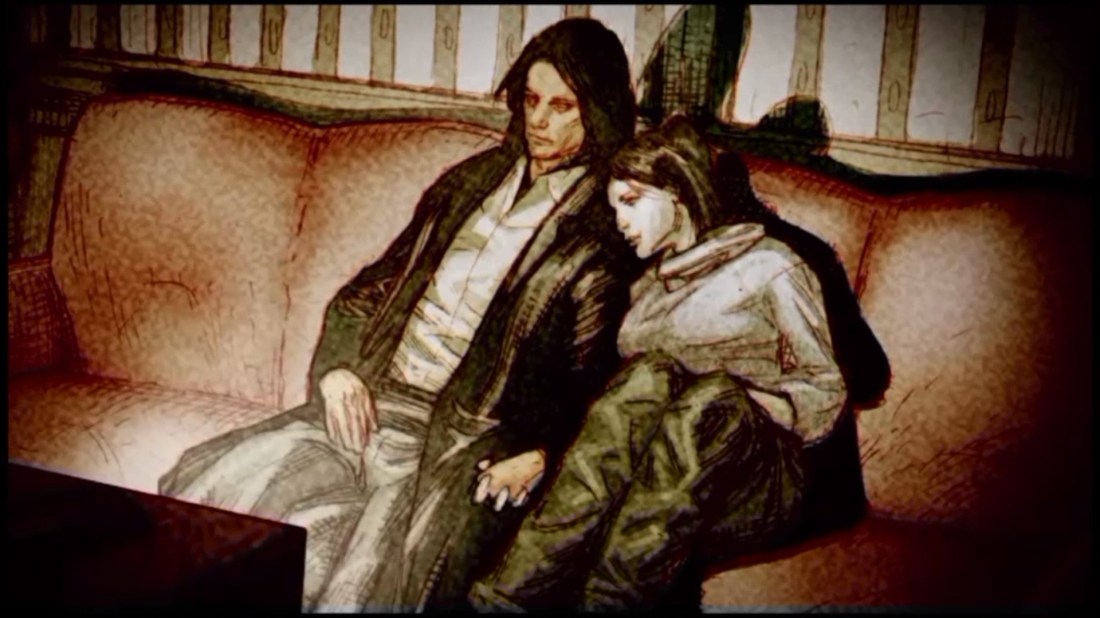
As explained by a manic flashback chap, we learn The Darkness existed (quite happily) in the great nothingness until God decided to let The Angelus (the light) into the universe to help create Earth; The Darkness isn’t happy about this, and The Angelus isn’t a fan of the Darkness either but since they can’t exist simultaneously The Darkness takes advantage of this Earth gaff and inhabits humans to do its dirty work, allowing them free-will knowing it’s powers will corrupt them and plunge the universe into Darkness again. The Angelus meanwhile, takes over humans completely and creates ways to imprison The Darkness and claim earth for itself. Get a room. On his 21st birthday, the only light in mob hitman Jackie’s life is Jenny, his childhood sweetheart. A mob boss murders her but Jackie is unable to stop it – the Darkness, which was passed down from previous generations manifested and held him back. Jackie fully embraces its corrupting nature and rage-driven, slays the entire mafia. Or something like that, it’s hard to keep up with the yammering narrator and it’s based on a comic book, a medium not known for its continuity. With the mafia dead and him the new Mob Boss, Jackie, with the help of our panicky exposition expert Johnny (what’s with all the J-names?), then suppresses The Darkness, until … Darkness II presumably.
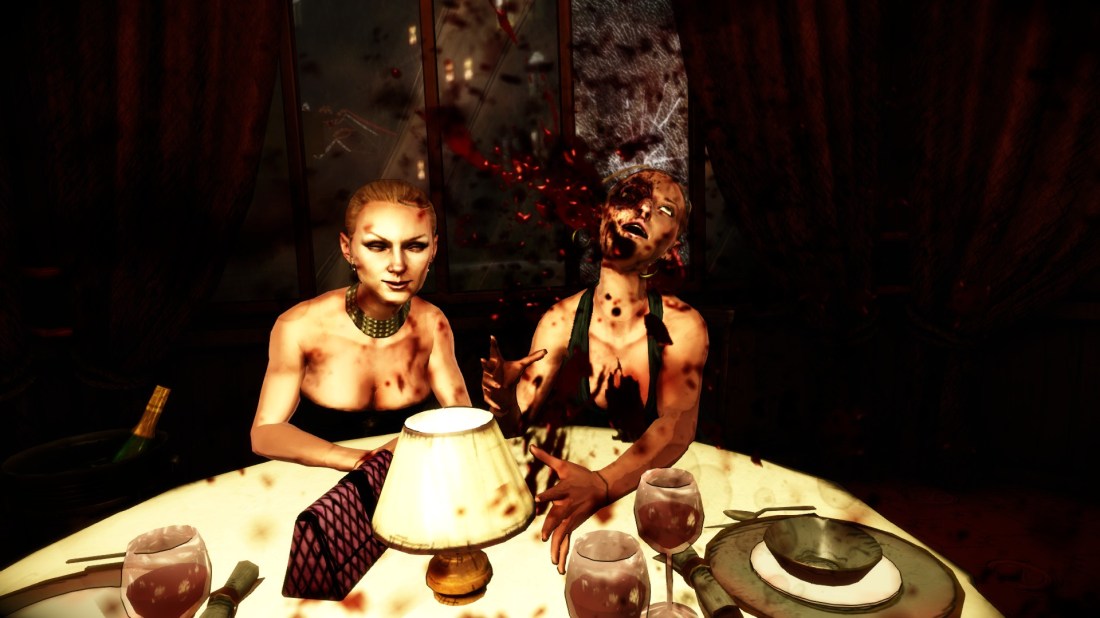
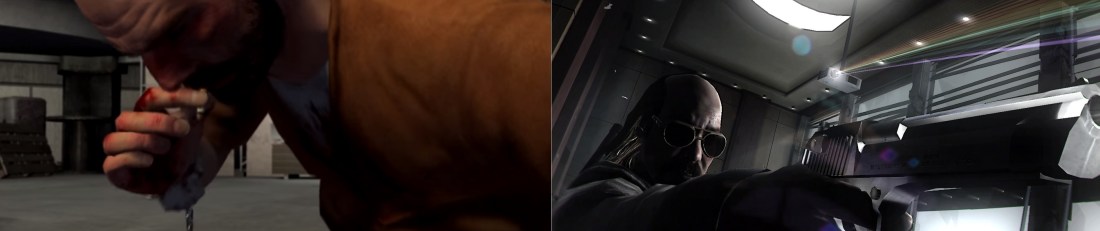
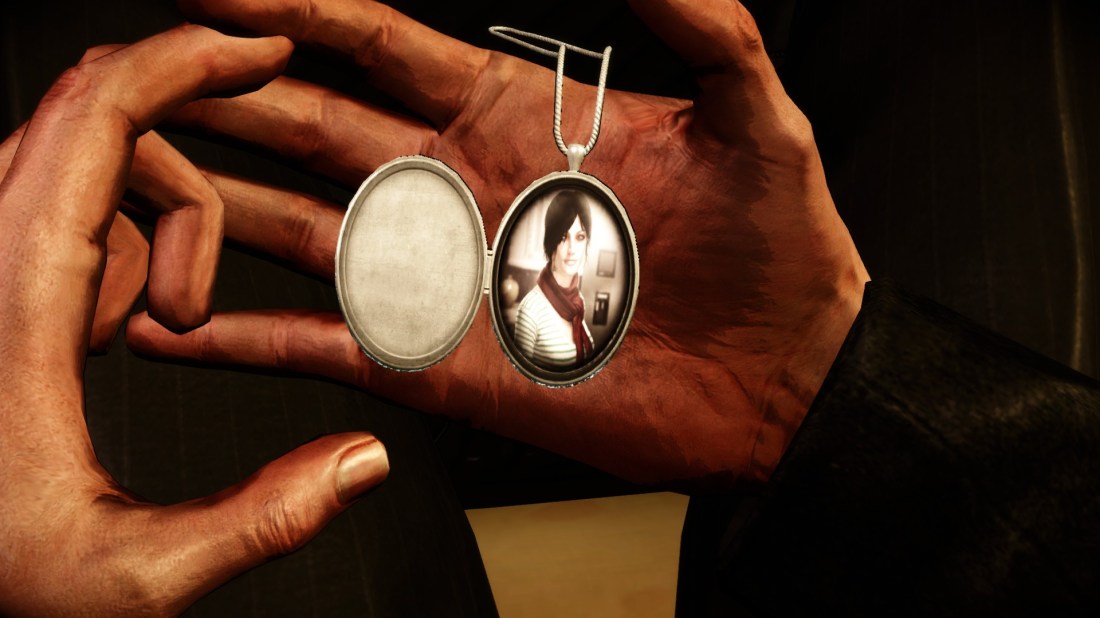
The look of DII is somewhere between XIII and Borderlands – fitting, given it’s based on a comic and from 2K, they must have had some spare Borderlands render knocking about. It gives DII a surreal, saturated comic-book look which helps with the ultra-violence the Darkness has in mind – had this gone for realism I’m not sure I coulda stomached some of the things The D gets up to. We open on Don Jackie being shown to his table by mob friend Vinne. All the Soprano and Italian clichés are here; we know everyone in the joint, someone is complaining about the spaghetti and Don Jackie is seated at his special table with two stripper sisters for the evening’s entertainment. Unfortunately, one entertainment is shot through the eye and the other hit by a van that crashes into the restaurant, delivering a bunch of mobsters intent on whacking Jackie. Badly hurt, Jackie is dragged through the chaos by Vinne, shooting mobsters as we go. One gas explosion later and a burning Jackie hears the Darkness begging to be let out and save him from death. Jackie agrees; then all hell breaks loose as two … appendages sprout out of somewhere over his shoulders and lay graphic waste to the mobsters. I wish I’d picked this up sooner. This is awesome.
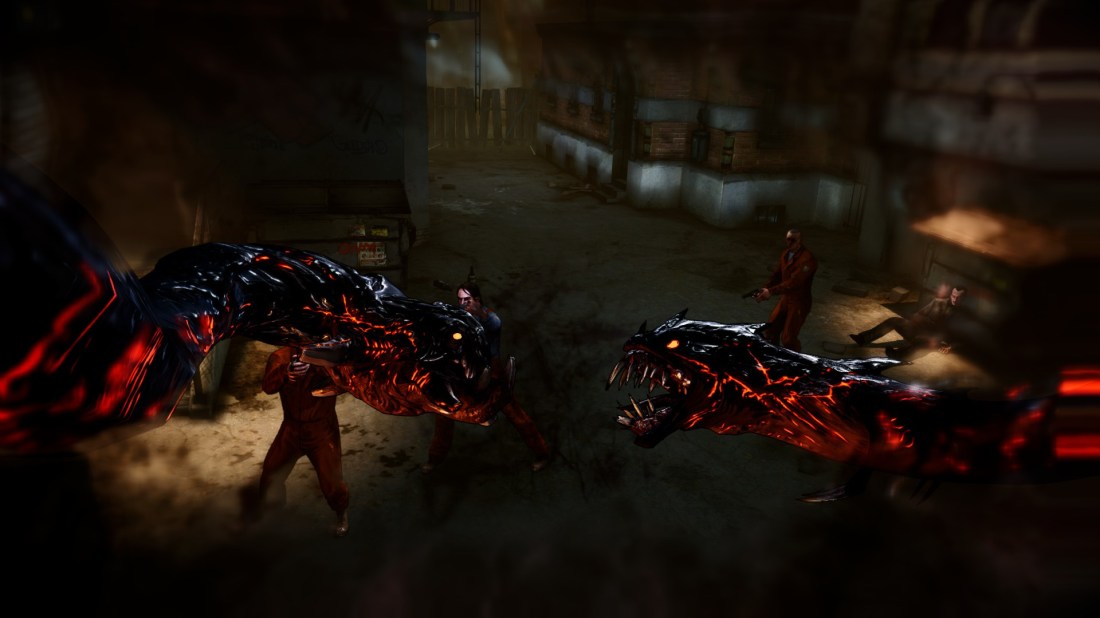
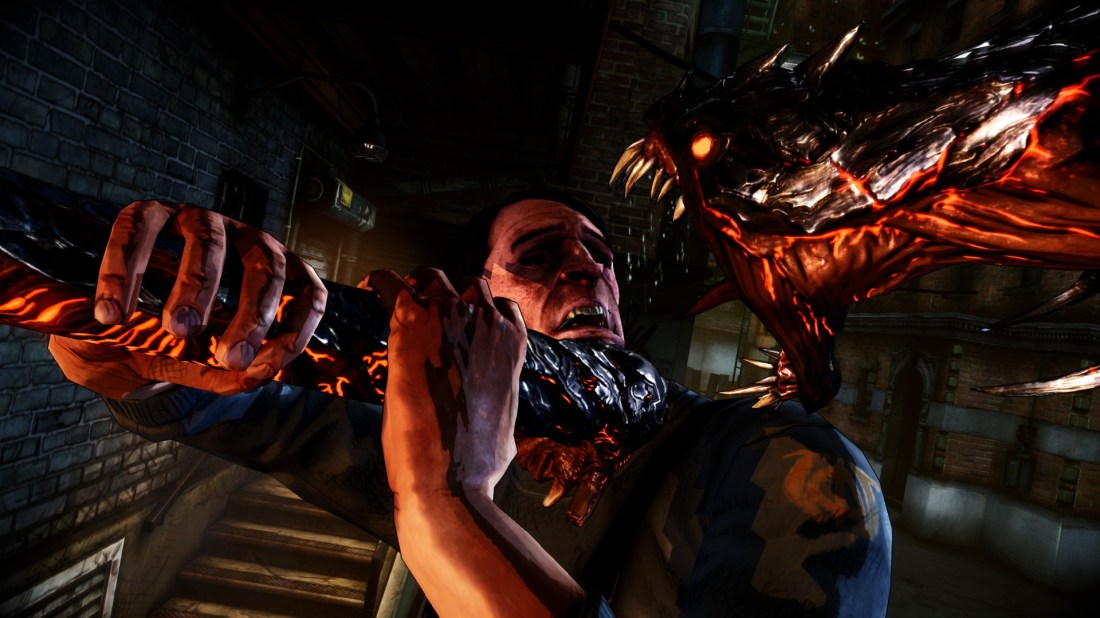
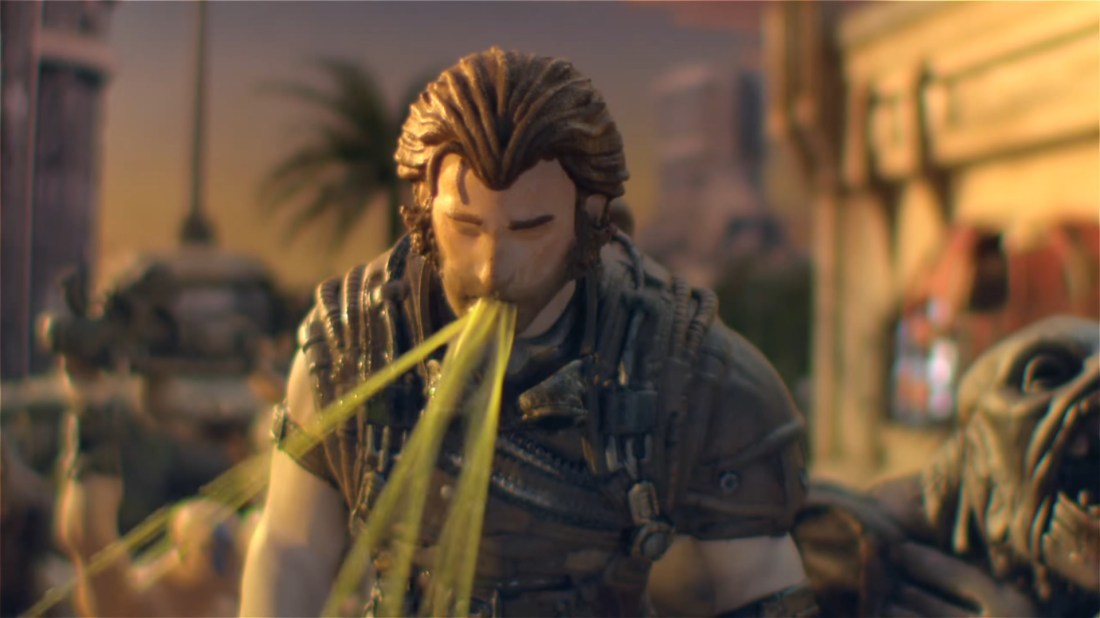
The Darkness’ representation is pure horror. The slithering, snake-like arms end at snarling, jagged spiky teeth and look like the bastard child of a Xenomorph and those nightmarish deep sea fish. They have a life of their own, look around (sometimes at Jackie which is weirdly unnerving), squabble with each other and are deadly. You never really see what Jackie looks like with his extra arms but judging by the reaction of the mobsters (‘what the fuck is that?!’ usually) I look hideous. But who cares, look at those things. One arm, Grabby, picks up and throws things while Whippy slices and dices. Mobsters can be grabbed, thrown, eviscerated or sacrificed in imaginatively disturbing ways, the tendrils can pull out and eat hearts to regain health and smash their way through obstacles. Those moments are so good (one references the Alien John Hurt scene), that I often chose to take a battering just to reach a mobster and watch my arms do their graphically slimy, bloody work, wondering if it’ll be the Alien death, the one where they grab each leg and rip the mobster in two or ‘just’ cut them in half – then use a half to throw at another mobster. The way the mobsters scream when they get grabbed, the slithering sound, the growling, it’s unsettling … and that’s before they start tearing them to pieces. Grabby can also lob things at enemies; the real finds are stuff like poles that can skewer, doors that can be frisbeed to decapitate – sometimes Grabby can miss a gas canister and throw a coffee mug instead, but these things happen. Whippy meanwhile has a fun time belting mobsters into bloody messes like a demonic cat o’nine tails and can be upgraded to grow blades down it’s back – actions that The Darkness likes will gain you xp to unlock its powers like Darkness Armour (which only works in the dark) and pulling ammo, health etc out of the mobster’s viscera once they’ve done their work. As the arms get more powerful you wind up using them as primary weapons while guns are for those hard to reach mobsters and shooting out lights.

Since Light and Dark don’t get on, any light means the Darkness retreats, leaving you exposed. Shooting out the lights brings it back and it’s a great extra dynamic to the game; trying to fight while avoiding light sources or find and remove them in the middle of a firefight is thrilling and the bad guys get wind of this and start setting up traps with flood lights and using high-powered torches, and later light grenades to keep you in check. The Darkness won’t let Jackie die, as without him it’ll be rendered useless, but you have to stay out of the light to gain its rejuvenation powers. Most games have a dynamic to set it apart from others in its genre; Plasmids, bullet-time, power-ups etc., but being afraid of the light is a new – and welcome – one. It’s a nice change to be the monster in the shadows instead of the other way around.
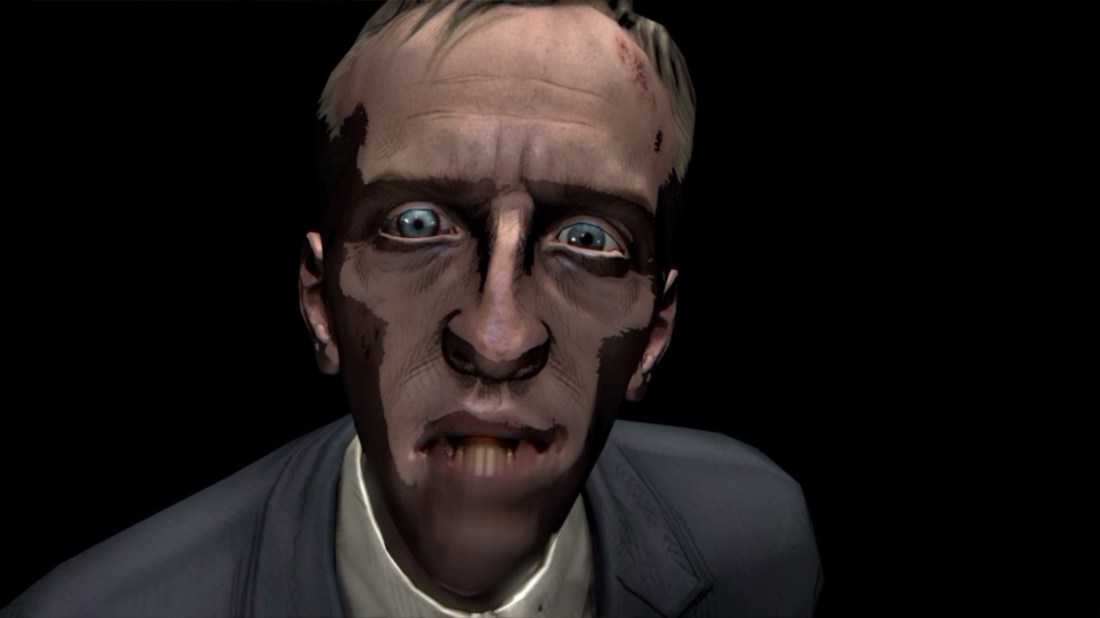
So now The Darkness is back and Jackie’s empire is under attack from another crew, time to figure out what’s going on. Jimmy is brought to the mansion and a long fidgety story later, there’s a group calling themselves The Brotherhood who’ve found ‘the Syphon’, an object created by our old pal The Angelus to contain The Darkness. Problem is, Jackie has to give up The D willingly so they’re all about making his life as horrible as possible, including capturing and crucifying him, killing his friends and family and generally being as despicable as possible; promising to stop if he just lets The D go. To stop Jackie considering it, The D reveals a secret – It kept Jenny’s soul. She’s trapped in Darknessland and since The D really doesn’t want to be given to The Brotherhood, it cuts a new deal; Kill’em all and you’ll get Jenny back. Jackie arms his arms and obliges.

As we shoot and eviscerate more mobsters than Max Payne could dream about, we work through some killer set pieces. An abandoned fair ground, warehouses and whorehouses and even our own house after it’s attacked by The Brotherhood are tense and exciting shootouts, with bullets and bodies being flung every which way. While this blood-letting is going on, it’s clear The D is up to something and maybe a little worried – It’s in a difficult position; It needs Jackie to stop The Brotherhood, but that means Jackie may get the Syphon himself; it begins to taunt him with memories of Jenny and flashes of her in Hell to keep him in line and not get any ideas about using the Syphon himself. Even though I’ve not played DI, I can see why critics often point to their relationship as one of the best in gaming – and Jenny’s death one of the most heart-breaking. Jackie doesn’t care if The D is setting a trap and neither do we. Saving her is the only thing on Jackie’s mind – or maybe it’s all in his mind.

On occasion, Jackie will suddenly find himself in a mental asylum. Here, surrounded by people from his ‘hallucination’ including a kindly nurse called Jenny, Jackie is led to believe The Darkness, his role as a mafia don and The Brotherhood are just figments after a major breakdown. You never really believe the asylum is reality but it does seem more likely – we do have demonic tendrils for shoulders. It’s also more welcoming, as Nurse Jenny begins to warm to her patient. This reality might be a better option for the heartbroken hitman. It’s interesting to have this level of uncertainty – real or not, Jackie might chose it; Jenny’s alive here – and not everything is cleanly laid out – Jackie and The Darkness need each other, but Jackie is a psychotic killer and The Darkness is not exactly trustworthy. There’s just this fatalistic, uneasy sense that pervades DII. It’s all just so horrible. Additionally, each mission is preceded by Jackie describing his life as a Darkness host and a mobster; but who is he confessing to, and in which reality? As a mobbed up criminal or a mental patient describing his delusion? Or somewhere else? He looks how he looks in the main game not the asylum, but is that how he sees himself? Where is this happening?
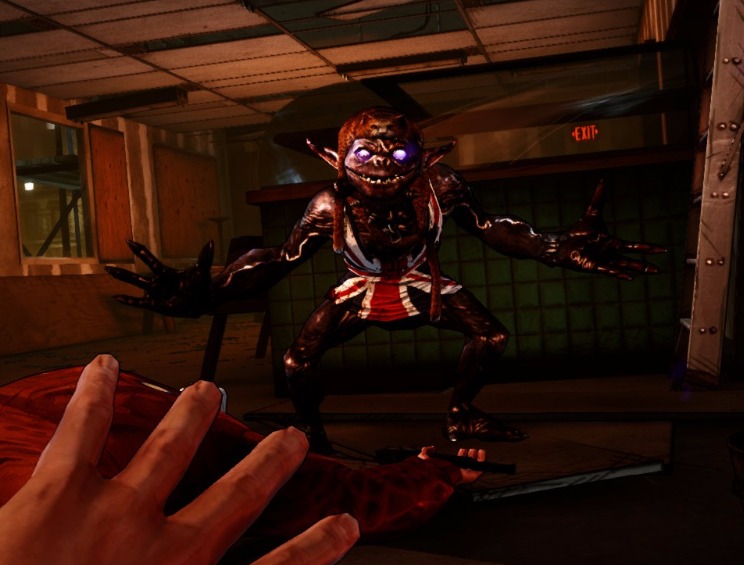
Although Jackie is very much a lone gunman in DII with only The D’s Jenny-taunting for company, he’s not totally alone. In-between missions he can roam his mansion, chat with the other mobsters and reminisce about Jenny –who, thanks to The D, appears on occasion to relive their past life together. But, his only true friend/fiend is his own personal ‘Darkling’ – possibly the best side-kick/follower ever. Wearing an oversized Union Jack vest that makes him look like a gremlin ginger spice (with, inexplicably, a dead cat on his head), Darkling chatters in an Eastenders accent, takes the piss out of Jackie (or Monkey as it calls him) and generally lads about causing trouble. Despite being a servant of The Darkness sent to aid him, he seems to have some measure of self-determination; He knows The D can’t be trusted and tries to make Jackie see beyond his grief, knowing Jackie will do anything to get Jenny back even if it’s a lie. He often suggests they give up and go have some fun. He’s like that friend you know better than to invite out for drinks but do anyway because the fun on the night outweighs the apologies the next day. He’ll rip apart mobsters, distract them, piss on them, point out shortcuts and ammo and can’t be killed. He behaves exactly how a three-foot-tall immortal gremlin from hell would. Grabby can even pick up Darkling and throw him at mobsters, which he’s not very keen on. Several scenes put you in his mind to sneak about and ripping open mobsters’ throats with his fingernails is a whole new grotesque experience. He’s a fun sidekick without falling into comic relief, a great -if maladjusted and deeply disturbed- character and his loyalty to Jackie is oddly touching.
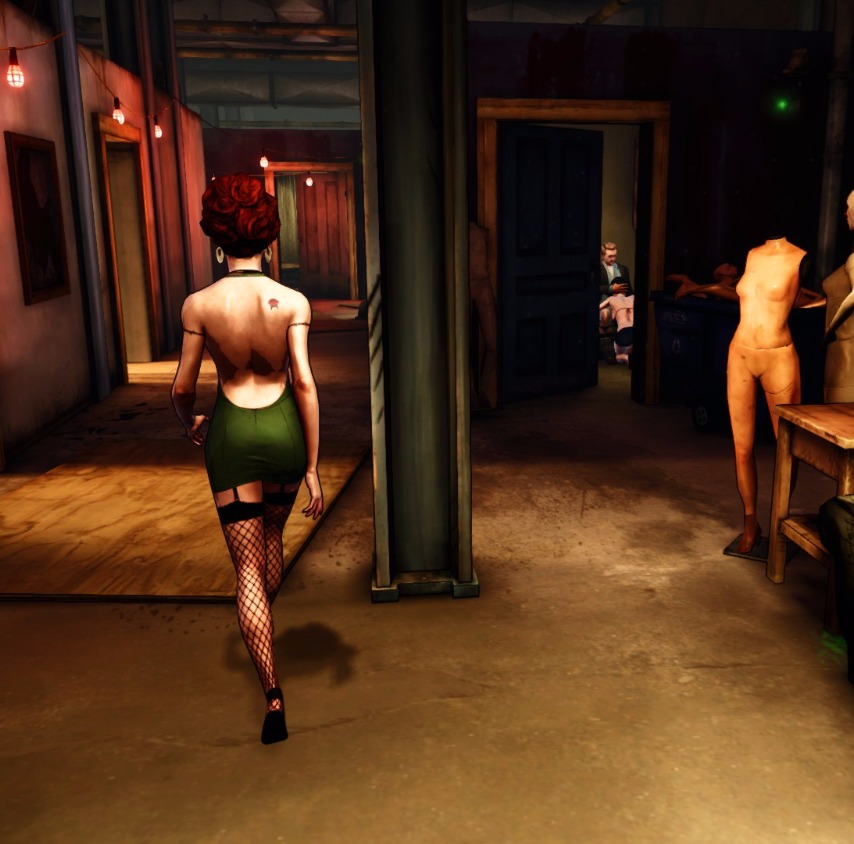
Not quite so touching is the game’s treatment of women. As it’s a mobster fantasy, it’s a strictly male-view cliché game which is fine, but apart from Jenny who’s romanticised to the point of perfection (but since she’s in Jackie’s mind, she would be), the only other women are Jackie’s shrew of an Aunt and a prostitute who helps Jackie sneak into a brothel; her brutalised body is seen later but Jackie doesn’t react and the brothel is an uncomfortable scene – sex slaves kept in plywood rooms, dressed in ragged and dirty clothes as they dance or perform. Jackie does burn the place down but not to free them. It’s a grim moment in an otherwise hyper-real game; we’ve got tendrils sticking out our back and we’re accompanied by a gremlin; is this really the game to offhandedly have us shoot through a sex trafficking location? There’s also the two sister strippers and a gratuitous ass shot followed by bouncing boobs in a scene that would put Elexis from SiN to shame.

As we make the final push towards The Brotherhood’s stronghold (having been crucified, shot in the face, locked in an iron maiden, forced to see Jenny in hell, watch family members murdered then have those family members’ funeral disrupted, chose which friends are killed), the two realities converge and Jackie must make a choice – which one does he believe in; or rather, which he’d rather live in – Stay with Nurse Jenny or descend into Hell and see what The Darkness has been keeping from us; It’s a tough choice.

DII is a short game and has an unforgivable cliff-hanger ending – it ends on such a great ‘awww’ moment, then jumps to ‘ohhh’ and as the credits roll, ‘agggh’. That’s assuming you reject the asylum; that ending is ironically better given there’s no DIII.

Although DII had no DLC to continue the story, there is ‘Vendetta’. A co-op (or solo) set of missions, you pick one of four mob hitmen assigned to aid jittery Johnny in his investigation. You don’t have the arms at your disposal and its basically surviving waves of villains to reach a Darkness artifact so story-wise it’s redundant but they’re good little shoot’em-ups and Johnny has some nice lines (especially if you play as Shoshanna, a no-nonsense ex-MOSSAD agent he develops a crush on) and it provides some background to Johnny’s main-game exposition. Still, I would have preferred an ending. Or a DIII.

Despite it’s shortness, The Darkness II packs a huge amount into that time and it gets you invested. It really shouldn’t work – mobsters, horror, comic-book look, a psychotic gremlin sidekick, murderous tendrils and a demonic voice in your head while a love story plays out in flashback and fantasy? Yet it works because apart from being a really good shooter with those arms brilliantly utilised rather than just being oddities, it’s got heart; we want to see Jackie and Jenny together again. I am so moved by Jackie and Jenny’s love affair, plus the fun of playing with Grabby and Whippy that I’m annoyed I’ll not get to play DI and see how it all began; I’m almost tempted to buy a console just to play it. Almost. Nearly convincing a PC Gamer to buy a console? That’s a good game.
2012 | Developer Digital Extremes | Publisher 2K Games

Platforms; Windows | PS 3 | Xbox 360
Kane & Lynch Dead Men | Dog Days

A SECOND WIND SPECIAL

Kane & Lynch Dead Men | Kane & Lynch Dog Days

FBT takes a walk on the wild, bloody, morally shaky side with this Kane and Lynch double-bill special review

The Kane & Lynch series was polarizing; critics either applauded it or were appalled by it, and for the same reasons; morally ambiguous, ultra-violence, glorification of criminals, bad hair dos. But both sides agreed that beneath the Heat-inspired set-pieces were formulaic shooters and that while Dead Men’s ambitious reach exceeded its graphical grasp, Dog Days was just seedy and unnecessarily brutal. Meh, I wanna play Heat the Video Game.

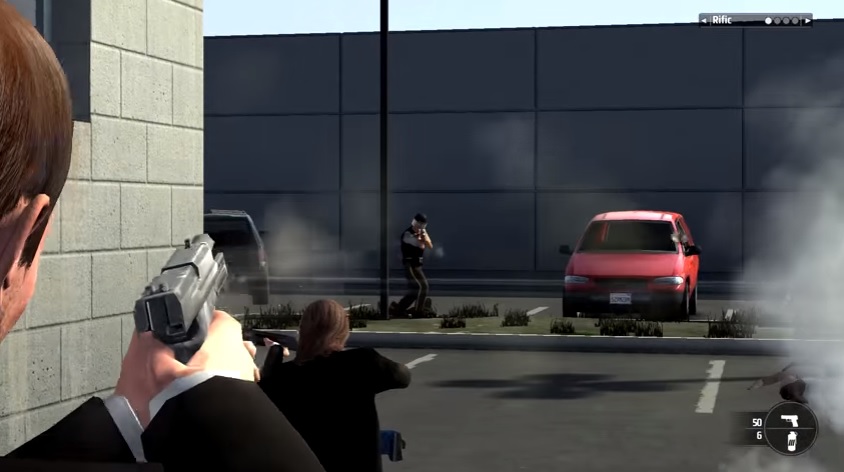
In Dead Men, we meet grizzled mercenary Kane, composing a letter to estranged daughter Jenny while in a prison van headed for death row. He’s promptly broken out by Lynch, channeling Heat’s Waingro and taken to a warehouse, via an extended tutorial/shootout in which more cops than you can shake a donut at are shot. Kane was on death row because a job went drastically wrong and he lost a ton of money for ‘The7’, a collection of high-end mercs who’ve kidnapped his ex-wife and daughter; get the money back and they live. Kane’s dead either way. Lynch, a low-level thug with some serious psychological issues is looking to get into The7’s crew. If he can babysit Kane and bring the money, they’ll have him aboard.

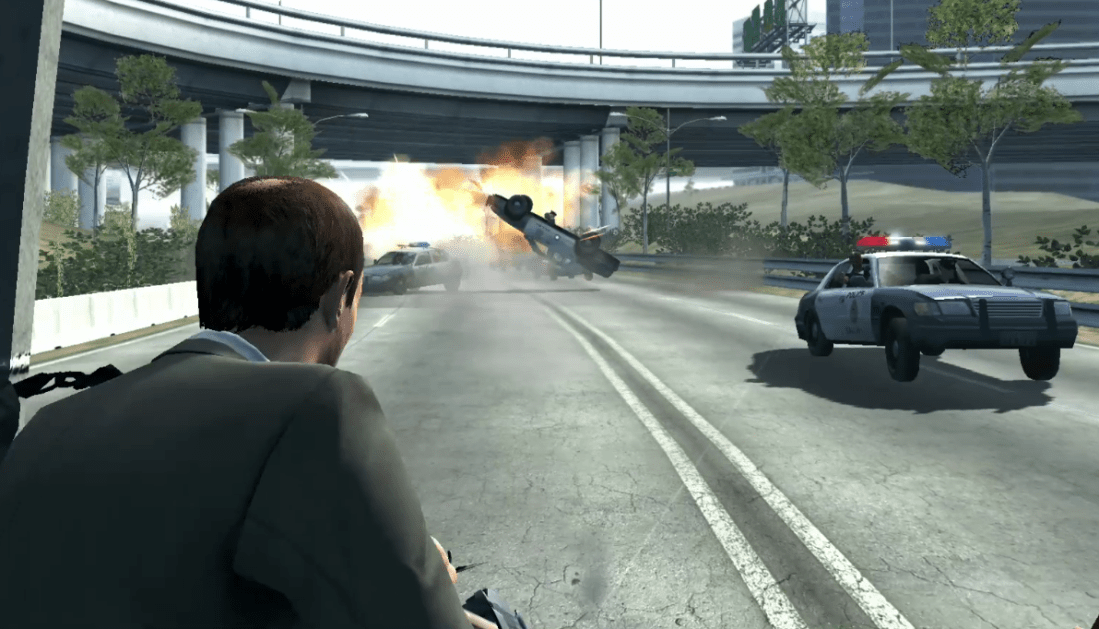
After another mini tutorial and more cops shot, we infiltrate a bank for Kane’s dirty money, leaving Lynch to control the bank customers. Instead, Lynch panics and suddenly kills most of the hostages; I’ve not even finished the first mission and I reckon the death count is reaching triple figures. I killed two or three security guards just walking in the place. After shooting a ton more, we fight our way out of the bank and along the freeway, eventually escaping on the subway where we fill time waiting for a train by killing more cops.

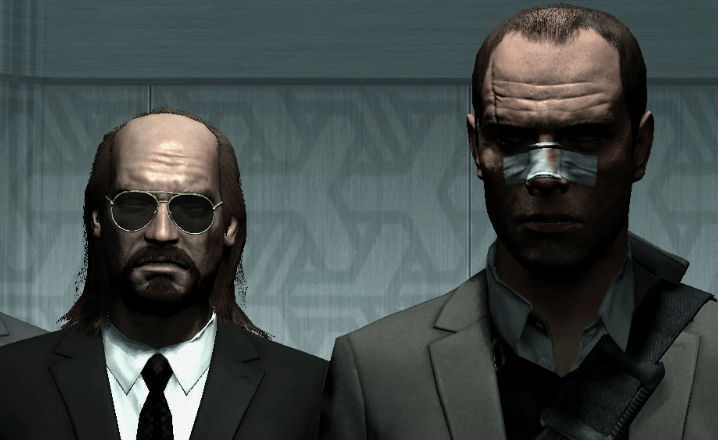
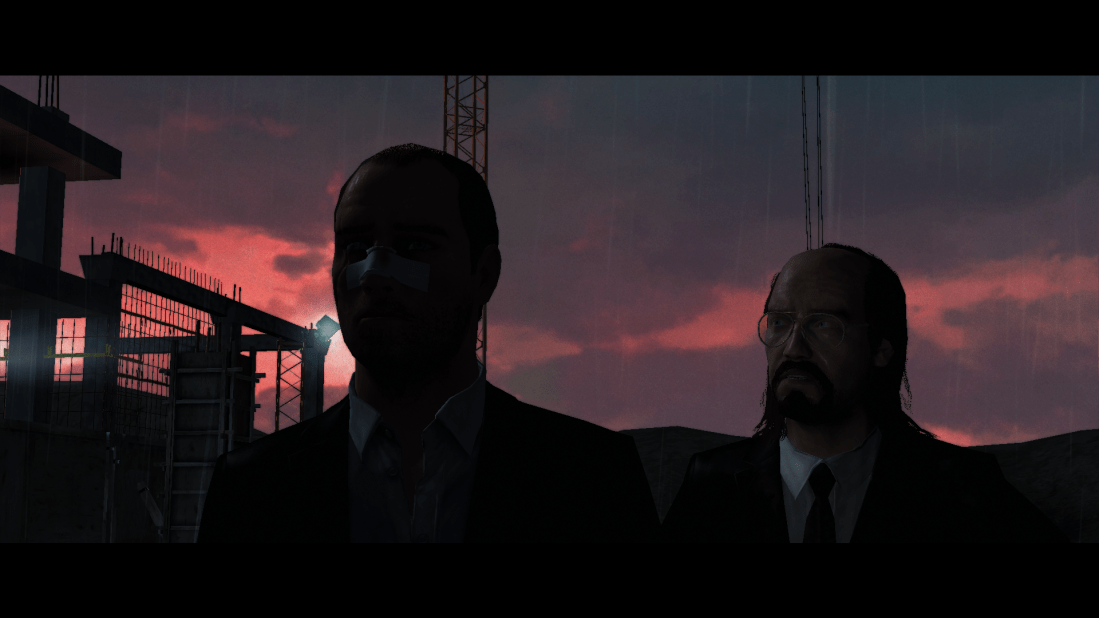
Dead Men feels pretty good so far; everyone’s a bad guy, the situation is bad, the solution is going to be bad and the ending doesn’t look good either. It feels stripped back like Heat, focused and driven; there’s nothing in this game that we can’t drop in thirty seconds flat and Kane & Lynch are a good, if dysfunctional team. Kane knows how to shoot, he’s Heat’s Coffee House scene come to digital life – He’s boxed in and he’s not hesitating. He isn’t like Tarantino’s cool killers, sporting a Gittes-style nose bandage after getting pistol whipped and a scar across a white eye, we’d never see him jiving in the Jack Rabbit. He’s coolly efficient and pissed at Lynch not for opening up on the hostages but for the police interest it draws. We did just bankrupt the Police Department’s Widows and Orphans fund.

Apparently unhindered by what would be by now the biggest manhunt in US history, K&L pop over to Japan to kidnap the daughter of Japan’s biggest mobster. Kane intends to ransom her for the rest of the money, but first we have to shoot our way out of the nightclub we found her in. Cue innocent lives lost as we try to cut through the panicking crowd in the dark strobe-lit club picking out mobsters scanning the crowds for us. Unfortunately, once clear, Lynch misunderstands Kane’s deal with the mobster and causes the situation to … escalate. Lynch, with his Mr Kidd meets 70s porn-star look is, unlike Kane’s precise coldness, really well balanced considering how unbalanced he is. He’s noted in the game as being a self-medicating psychopath, but he’s more complex than that. He’s quite needy and naive despite his brutality and pessimism and you get the sense there’s a lot more to him. He’s the most interesting thing in the game and it’s a shame we don’t explore Lynch further. He’s apologetic about the hostages and explains he blacks out when stressed, adding a complication and turning Kane into the babysitter instead as Lynch occasionally just races off to murder and when he comes too he often assumes Kane was responsible for the bloodshed. As a follower, Lynch can be directed about (He does get amusingly snippy if you order him about too much or demand he swap out his favourite weapon) and you can revive him – he’ll do the same for you as will other followers, although if it happens too often Kane will die of an overdose. Even health can kill you in DM. Lynch tries to bond with Kane telling him his wife was murdered (it’s implied that he might have done it during a blackout); Kane, of course, stays resolutely distant and grimly points out The7 will kill his family which Lynch didn’t seem to realise. He also sarcastically warns Lynch there’s no way The7 would have a loose cannon like him aboard; they’re just using him.

Sure enough, once they return from Japan (empty handed even after having killed most of Japan) it’s double-cross time and Kane decides the only thing left to do is off The7, while Lynch just wants revenge. The7 being somewhat powerful means K&L first establish a crew of their own, the Dead Men by freeing several other ex-The7s from a high-security prison. And then it’s a simple task of returning to Japan for the money, then Havana for some Che Guevara nonsense and finally Venezuela where The7, who have reached Bond levels of supervillainy, have a hide-out. It’s when we reach Havana that DM takes a dip it never really surfaces from. Away from the intensity and focus of the streets, running around in camo and a beret helping the Cuban army and assaulting a hidden fortress just seems daft – we’re now in Dirty Dozen meets Commando. It’s practically The Expendables.

Believability is a problem in Dead Men. Games are escapism and the key element of a shooter is you’re not required to worry about repercussions – As a Heat homage, DM is missing the Heat – cops have no impact other than bullet impacts. There’s no Vincent closing in and they get away with the most extraordinary crimes; the cops might as well be imps. DM is closer to the infamous North Hollywood Shootout; look how that ended for the robbers. It would have been better to emulate that, make it a death run, stay head of the cops just long enough, not kill enough to trigger the freedom of a cut-scene; it is unforgiving, react or die mayhem within the game, but the plot is draggy drama and catching red-eyes all over the globe at the drop of a clip slows the intensity, loses the fight-or-die tone. Another problem with DM is the environment, or lack of it. The game world feels bare – this was 2007, the year games got immersive but this looks like 2004; blocky cars and buildings, no layers of clutter. There’s a lack of depth and atmosphere – when the screen isn’t turning red from bullets – which undoes some clever level design.

Of the seven hours game play, you only really get about five hours before it gets silly and that’s a shame. DM is nowhere near as slick as it thinks it is and it’s incredibly narcissistic – there’s no one in it doing anything for anyone except themselves. That is until a sudden moral choice near the end which makes zero sense; you expect me to slay hundreds of innocents then pause and make a moral call? Even if Kane catches the feels at the end, why suddenly force me to decide? Kane’s been in control all this time, including more than a few moments I’ve thought “are you sure Kane?” – Now he needs a second opinion? It’s like playing Renegade the entire time then opting for a Paragon ending. What game would offer that choice? You’re not even party to his thinking until after making the call. Ultimately what makes Dead Men interesting is Kane and Lynch themselves. They are refreshingly unapologetic; for all the controversy about Dead Men glamorising violence, it’s not as glamorous as we thought. It’s actually pretty awful being lawless.

Regardless of the ending you chose, Kane & Lynch Dog Days ignores it. It turns out Dog Days means unbearable heat so maybe this time it’ll be a little more Heat-like; but, it also means back luck…

Opening on brief flashes of Kane & Lynch being tortured with box-cutters, it’s pretty clear Dog Days isn’t a watered down, consumer-tested sequel. This is a harsh way to get reacquainted with our ‘heroes’. Rewinding to before the boxcutters, we learn Lynch escaped to Shanghai, settling down with a local girl, Xiu to become a bagman for an ex-pat / Guy Ritchie-extra called Glazer. He needs some muscle to help shift guns to Africa and Lynch has a certain muscle in mind.

But before we get to bless the rains down in Africa, Lynch needs to strong-arm a mob rival on the way to Kane’s hotel. Naturally, it goes pear-shaped and we’re chasing through gang-controlled Shanghai as the mobster uses a naked woman as a shield. Eventually we catch up with him and the girl catches a stray bullet. The guy, realising she’s dead calmly cuts his own throat. Oh-ho.

The first thing that strikes you about Dog Days, aside from the torture, naked chick and throat slitting is we’re in the psychotic shoes of Lynch this time. Fine except Kane takes over as the story-driver in the cut scenes, yet is a mute follower in the game. I’m leading the game but a follower in the cut scenes? Lynch isn’t even unhinged anymore; you’d assume some kind of clichéd psycho bullettime at least, but there’s nothing to differentiate him from every other character you’ve shot as; none of that unpredictability or subtle threat that made him interesting in Dead Men. Lynch was something different, someone you could trust yet not turn your back on but now he’s just the back of a head.

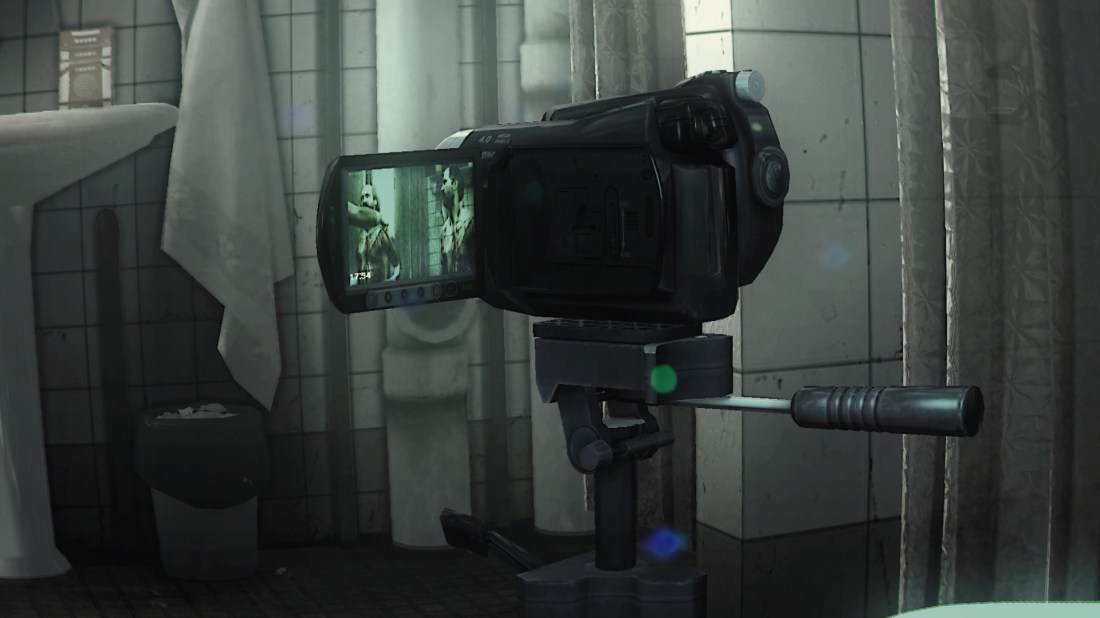
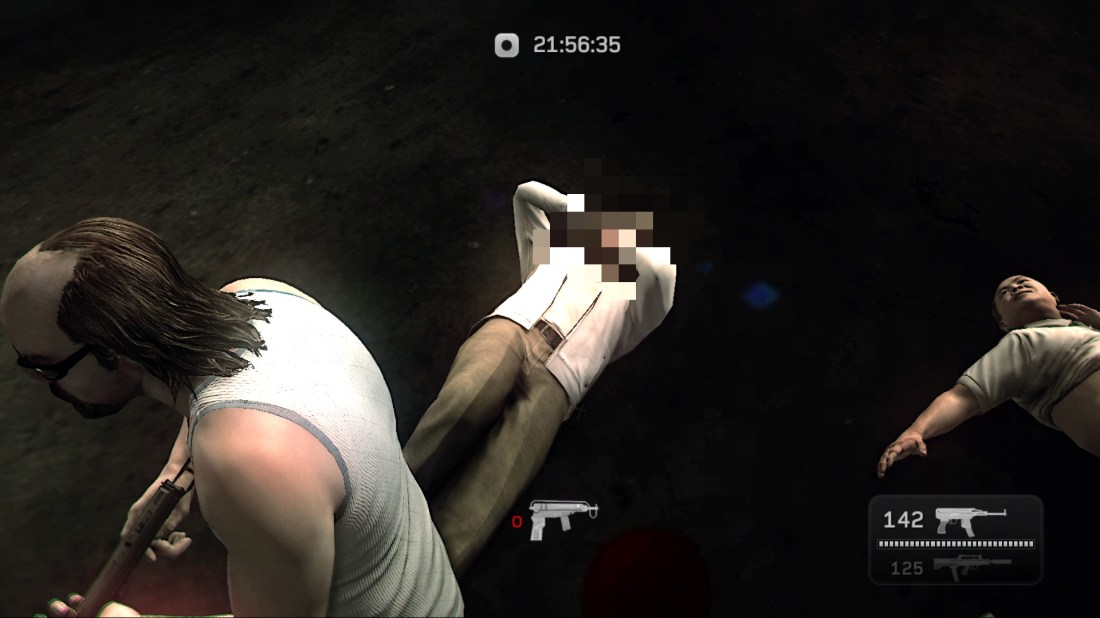
Also, in some sort of comment that doesn’t say anything, the game is presented as found footage. It’s interesting and different at first; when Lynch runs the image wobbles and loses focus, nudity is pixelated as are any head shots and the auto-save is Time Code popping up but you keep asking ‘who’s footage is this?’ The key to found footage is it’s the opposite of a voyeur; they’re part of the event. It really wouldn’t have been that big a leap to add someone – Jenny for example; Kane intending for them to fly to Africa for a new life. It would make sense since all this started during a routine chore; have her mucking about with the camera filming Shanghai while dad goes to deal with something, hears a sound, investigates, throat slitting. Things escalate and it’s too dangerous to leave her alone so have to bring her along. Then Kane would be invested, and he and Lynch would be looking to us, protecting us, drawing us into their violence beyond the usual gamer experience – and we’d be wondering who is reviewing the content, who’s censoring it, what happened to everyone. That would be interesting and a comment on user generated content especially in those increasingly uncomfortable Facebook Live and personal videos-as-news times, and a sly one on gaming violence. Dog Days could have been prophetic now and compellingly original then. But no, there’s no one behind the camera and it’s just a gimmick.

It transpires the girl we shot was the daughter of a rather powerful chap in the government – considering her BF would rather slit his own throat than tell dad the bad news I’m guessing he’s trouble. They agree to go through with the deal but that means killing a lot of everyone to keep the truth hidden from Glazer long enough to reach the shipment. How well does that go? Well this is Kane & Lynch; eventually we have the army after us.

The shootouts are quick and clean, an early fight through traffic protecting Glazer’s limo is a standout, as is a run through a Shanghai slum protecting Xiu as thugs try to reach her on the other side. Cops are fair game again of course, slightly more justified as being described as in the pocket of that government bigwig who’s daughter someone recently shot.

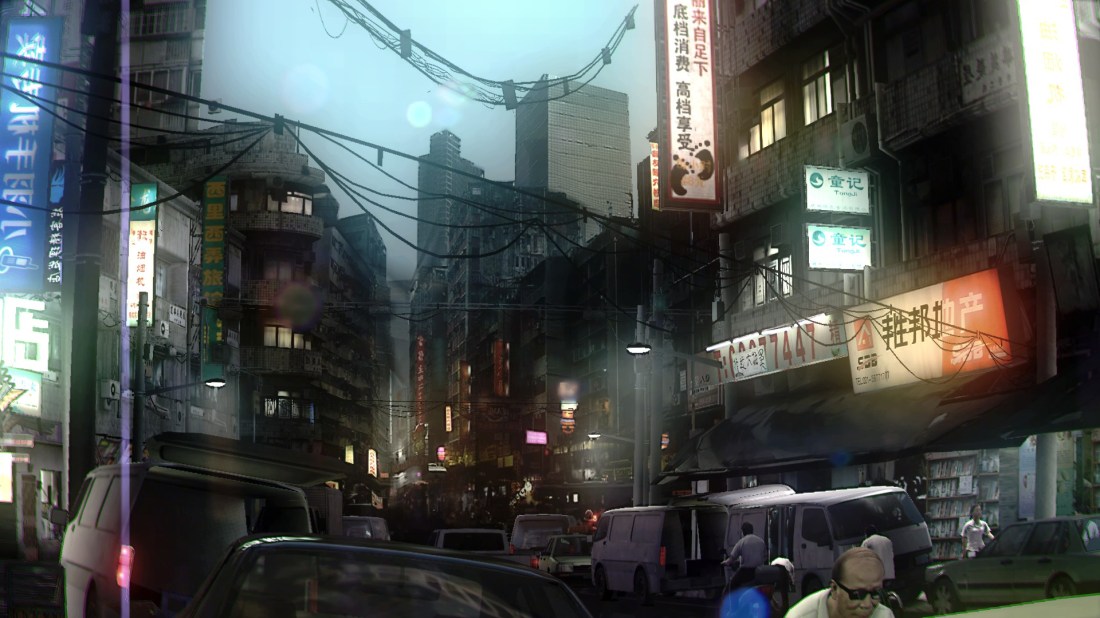
Weaponry is typical; two weapon choices and you’ll use them a lot. The ‘bad guys’ are aggressive and tenacious, they’ll sweep around, react and they’ve got the numbers. As to where you fight them, the neon rundown streets of Shanghai is a step up from Dead Men’s plain environments and sticking to one location keeps the pressure on. There is an air of claustrophobia fighting in such close quarters but eventually it feels repetitive; most of the fights take place in back alleys and seeing variations on the same location makes it seem like they’re running around in circles and fighting their way out of self-contained episodes – If Dead Men took its inspiration from Heat, Dog Days should have been a homage to The Warriors; stuck in an unfamiliar and dangerous place, a cut off and exposed Kane & Lynch are on a relentless run across town – They’re are perfect for that kind of experience; their intensity would have worked so well.

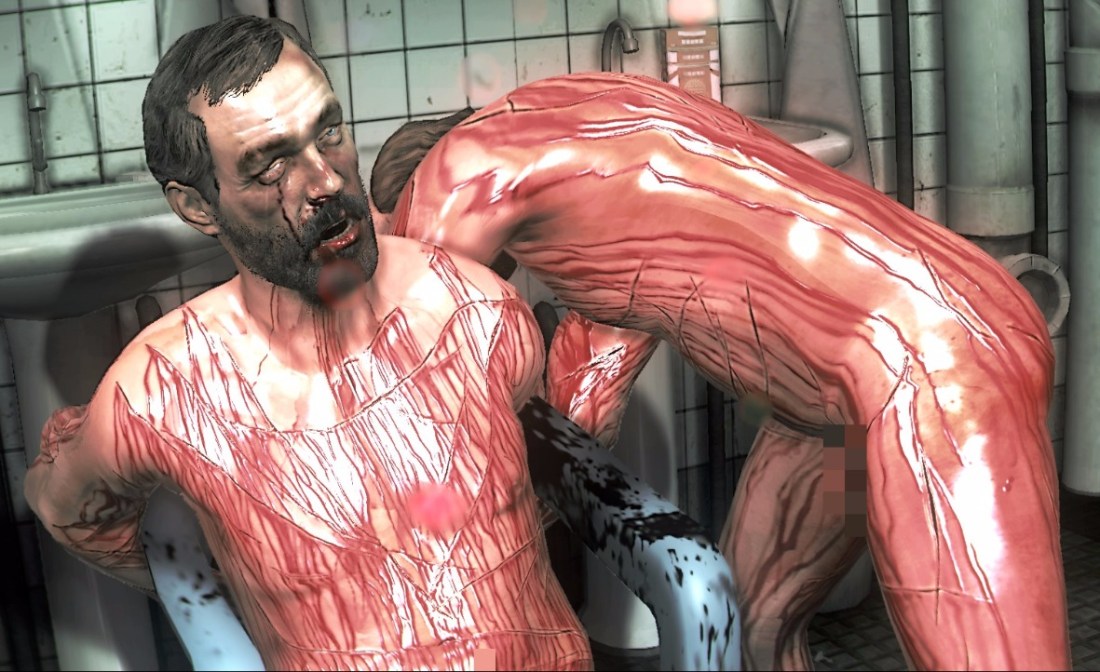
Eventually we catch up with the torture scene, which is horrible and unintentionally (or perhaps intentionally) amusing, because they’re both naked and their bits are pixelated. We escape, catching little pixelated flashes of Lynch’s impressive undercarriage as he runs. The scene seems gratuitous, there to court controversy and live up to the original’s undeserved reputation for being ultra-violent. It wasn’t and we never sympathised with Kane & Lynch so how are we supposed to react to their suffering? It is nice to note though that Kane & Lynch aren’t ripped heroes. Under the blood and cuts there’s love-handles and a paunch.

Kane & Lynch, the tubby little scrappers that they are push on through the set-pieces until they hijack a helicopter and attack the government man’s building. It’s intense but shooting RPGs out of the air and taking down enemy choppers, while not quite on the same scale as Dead Men’s government toppling (we just topple their building this time) is overblown. Of course, once the scene is over they just walk out. Guess there’s no cops left in Shanghai. Kane & Lynch work best down and dirty in the streets, laying down so much gunfire the cops yell “there’s nothing we have that can stop them” not stuff more at home in CoD.

At a generous five hours gameplay (I mean I’m being generous giving it five hours) Dog Days is a fast, lean experience that demands that you play with nothing to lose. Instead of an unexpected and unwelcome moral choice, this ending is bleakly truthful to the characters, but is then followed by a needless escape epilogue that plays like a ‘next episode on Kane & Lynch’ teaser that never happened and seems to be some final Heat nod for old-times sake. It would have been better to end in the building, what they’ve done sinking in. Why did IO Interactive keep fudging the last third of the Kane & Lynch games? Why that insistence that they need to step up rather than double-down? Both games could have been elevated had they stuck to their bleakly fatalistic guns rather than attempted some genre-pleasing final sequence.

The biggest let down in Dog Days is the huge disservice to Lynch. He’s lost almost everything that made him interesting in Dead Men; a heart-breaking scene makes you feel for the guy and you think ‘oh crap, he’s going to kick offffffff’ but he doesn’t. Meanwhile Kane is completely emasculated (and not during the torture); he does have a manipulative moment, when he convinces a distraught Lynch to head for the deal even when it has to be suicidal, but it’s too little too late. At least Lynch finally behaves like himself at the government man meeting. By making things worse.

Ever since Max Payne, memorable shooters are the ones where we care about who’s doing the shooting; the standout element of the Kane & Lynch games is Kane and Lynch. They may be dangerous, unlikable and, well, murderers, but Kane and Lynch are great characters – Dead Men and Dog Days, while having their moments, weren’t the games for those two reprobates. Dog Days looks and plays nicely while Dead Men has more drive and interesting set-pieces, the club and prison breakout are standouts but overall they’re nothing special; standard shooters. I’d like to play Kane and Lynch again, but not in Dog Days or Dead Men. There is a game out there for them, but IO Interactive left them on a mother of a cliff-hanger then ran back to the safety of their other morally ambiguous creation, Hitman. There was talk of a movie but it’s still in development hell. Let’s hope it stays there. Kane & Lynch have suffered enough.

Dead Men 2007 | Dog Days 2010

Developer IO Interactive | Publisher Eidos / Square Enix

Platforms Win, PS3, X360

Frontlines Fuel of War

A SECOND WIND REVIEW

FBT is on the frontline of the fuel war. And he’s not happy about it.

Frontlines, a modern era shooter, didn’t have much competition on release in early 2008 but it was completely missed. Because we were still living in 2007; Bioshock, Halo 3, Witcher, Assassin’s Creed, The Orange Box, Mass Effect – to name a few, but the name on every gamer’s lips was Call of Duty 4 Modern Warfare, the game that rebooted the CoD franchise and pulled it out of the trenches of Normandy and into the now. Pre-release, CoD’s modern setting seemed like a folly but MW destroyed its competitors and made military shooters dangerous again. And that was just the single-player mode. The multi-player changed the way we gamed online, signalled the end to Counter Strike and Smack Talking reached new levels of idiocy. Love or Loathe it, CoD MW was a landmark game that cast a shadow over every other shooter and changed FPS forever. Frontlines could have ridden that wave but instead it drowned after CoD MW atomically dropped, dismissed as a wannabe. Worth a look now CoD is just a clone of CoD?

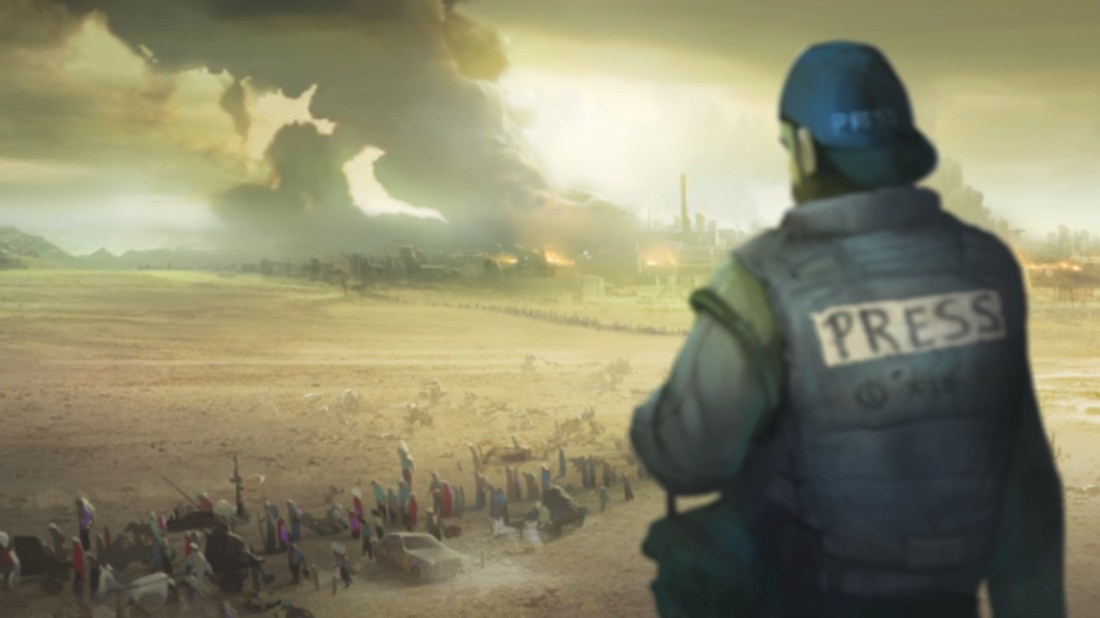
Set in the 2020’s, the world is on a knife-edge as fossil fuels run dangerously low. After a worldwide plague further destabilises nations, two pacts are formed; the Western Coalition (The U.S., various) and the Red Star Alliance (Russia & China). Relationships deteriorate until RS launches a surprise attack after exposing WC was moving to control Turkmenistan’s oil supplies. WWIII begins – and is documented by Photo-journalist Andrews, embedded with ‘Stray Dogs’ – a WC frontline battalion sent to weaken Russian defences as the WC pushes towards the Motherland. Let’s go.

As we’re set down on the ground we’re overwhelmed by RS forces and Andrews is kidnapped. I’m confused; I’d half expected to play him, given he’s the one in the cutscene rambling on about war is hell. Instead, I’m in the boots of … it doesn’t matter. It turns out, despite an opening where I meet every military cliché since Aliens (Jock jerk, the ‘get some’ marine, humourless commander, cocky kid etc.) I’m playing as non-descript members of the Strays. If I get killed, which happens regularly, I reincarnate as another Stray. This kind of interchangeable character only really works in games where the plot doesn’t matter yet the opening tried very hard to make clear freedom rests on my shoulders. We just sat through the fall of society, starving kids and disease-ridden bodies over Andrews’ speech about the futility of war and the Strays’ impossible odds. Hard to care when I just respawned Solider No.9. Had there been say 10 Strays we met and their deaths reflected in Andrews’ reports, brought home how tough this war was, I might have made more effort to not get killed every five minutes, but instead we battle anonymously through doing Capture the X missions over and over. Frontlines’ cutscenes constantly shows the Jock Stray and Andrews gassing about the state of the world after each mission. Does Jock ever actually fight?

Respawn games like Battlefield and Battlefront at least have compelling locations to fight bots in, but not even Frontlines’ maps are exciting enough to care. Visually, it looks like Counter Strike – a game that got respawning right by dropping the reasons and concentrating on the ways to win. Frontlines tries to be involving and distant at the same time and messes up both shooter approaches. The wonderful 2007 also had Medal of Honor Airborne – another nameless respawner, but each location was very different and difficult but most importantly, you could land where you liked, giving you the option to rethink your approach – I once lost 3 Strays in a row after the game constantly respawned me at the wrong end of a RS tank barrel and while you can chose to respawn at claimed objectives, you have to run your Stray all the way back to the battle again.

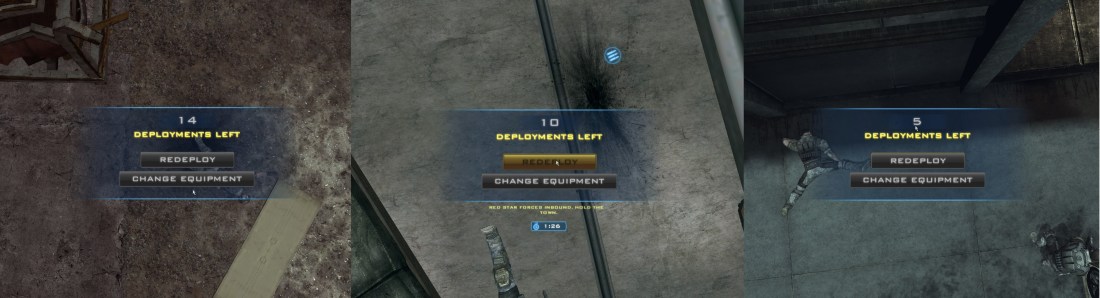
And that battle is unfairly tough. It takes the better part of a full clip to take down a RS solider, sometimes you’ll need several headshots even when he’s not in a helmet, but if they clip you it’s red-screen and ‘redeploy’. Each mission gives you a limited amount Strays to sacrifice so rather than care, you’re just careful because you don’t want to Capture the HQ yet again.

The only area that Frontlines distinguishes itself is in some the tech you can find and use. RC helicopters, c4-packed cars and miniguns allow your solider to weaken enemy lines and they’re a great deal of fun even if they only survive for a few moments. We can also signal for air-drops and drive Humvees and Tanks, along with one helicopter which I crashed instantly – I can fly the RC Copter like I’m Stringfellow Hawke but the grown-up version? Crashed in seconds.

Frontlines was developed by Kaos, a studio created by THQ specifically to build shooters. Both Kaos and THQ are now long gone which shows how well that plan went. It never stood a chance against CoD MW but it could have distinguished itself, gone its own way; instead, it’s the worst example of a single-player mission just being a warm up for the multiplayer – a quick knock-off, a Mockbuster (‘you rented Snakes on a Train?’), Frontlines is what you end up with when you send your Mum into Game (“the man said it’s the same as CoD and it only cost a fiver”).

It was tough to develop modern shooters in the face of CoD’s unstoppable cycle of releases, even rival MoH crashed spectacularly when they tried to compete. But Frontlines isn’t even a good throwback to pre-MW days; Andrews’ dispatches would hardly have made prime time CNN. Stray Dogs as a team could have matched CoD’s narrative-switching had we been given the opportunity to get to know them. If we don’t care about our soldiers dying or what they’re dying for, the experience becomes forgettable; Against the 2007 juggernaut Frontlines didn’t have much of a chance but it didn’t even put up a fight. That’s a fatal mistake for a shooter.

Developer Kaos Studios | Publisher THQ | 2008

Win | X360

Genres; FPS, Shooter, Military

Call of Juarez Gunslinger

A Rage Quit review

FBT gets into the rootinest, tootinest, ragingest game seen in those parts for nigh on a season oldtimer, then goes watch Young Guns.

Call of Juarez has had the weirdest franchise narrative. The first featured two playable characters in a converging western storyline where one tried to solve murders that the other was hunting him for. The prequel Bound in Blood explained the backstory with backstabbing in every cut-scene. Cartel leapt into the present day and centred on three protagonists in an incoherent co-op storyline where they all double-crossed each other. Will Gunslinger finally explain what Juarez keeps calling about?

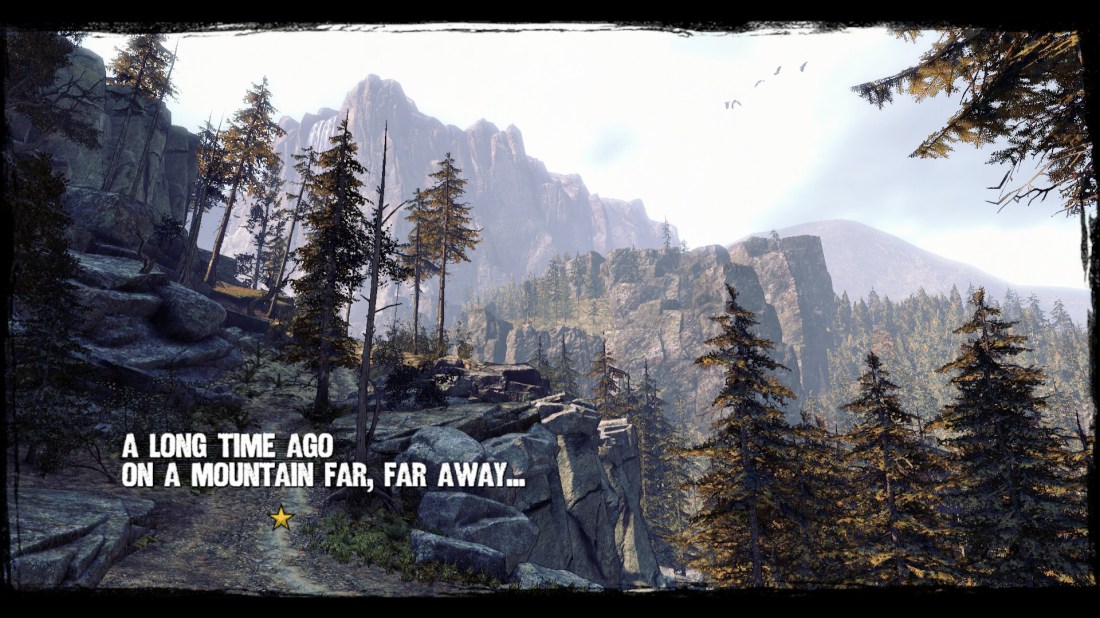
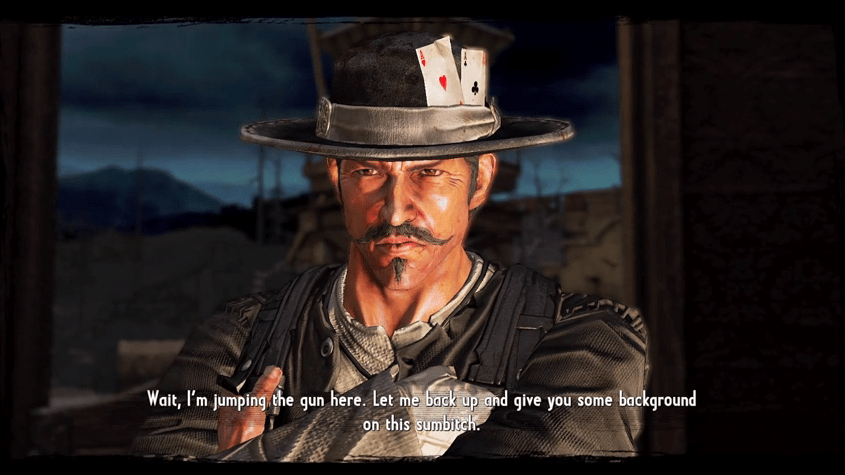
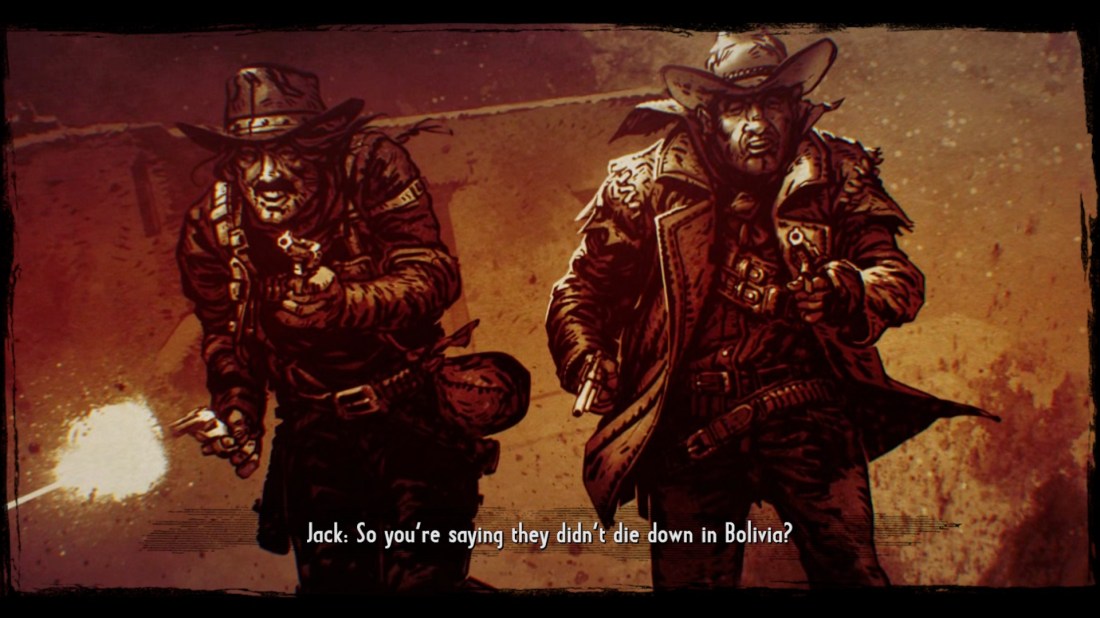
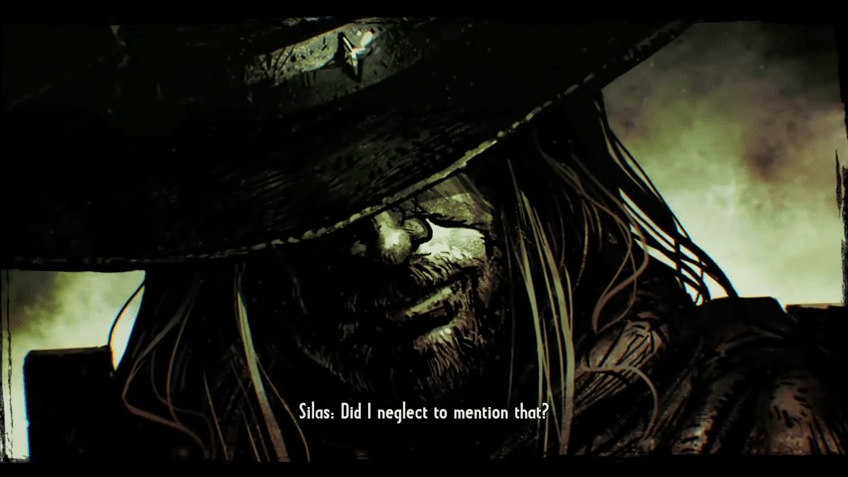
Sometime in the early 1900s, an ornery old coot ambles into the Bull’s Head Saloon and a young man excitedly recognises him as Silas Greaves, the infamous bounty hunter from his Dime novels. The bar patrons take a knee as Silas relives his legendary career, almost at an end – one more bounty and he’s done.

We open on Silas’ involvement with none other than Billy the Kid. Silas reveals he was one of Billy’s Regulators, helped them escape Pat Garett and won a quick-draw with Bob Ollinger. Thing is, if you’re a student of western lore (or a fan of Young Guns), you know Silas’ stories don’t smell right; the locations, folks and events happened, but not the way Silas tells it, and not with him the hero. One of Billy’s most famous killings was Ollinger (With his own shogun). Silas also recalls how he became a bounty hunter; as a younger man, he and his two brothers were lynched for their money. He survived, the brothers didn’t. Silas swore vengeance and as he hunted the robbers, he fell into bounty hunting and became the legend, driven by hate as the men continued to elude him.

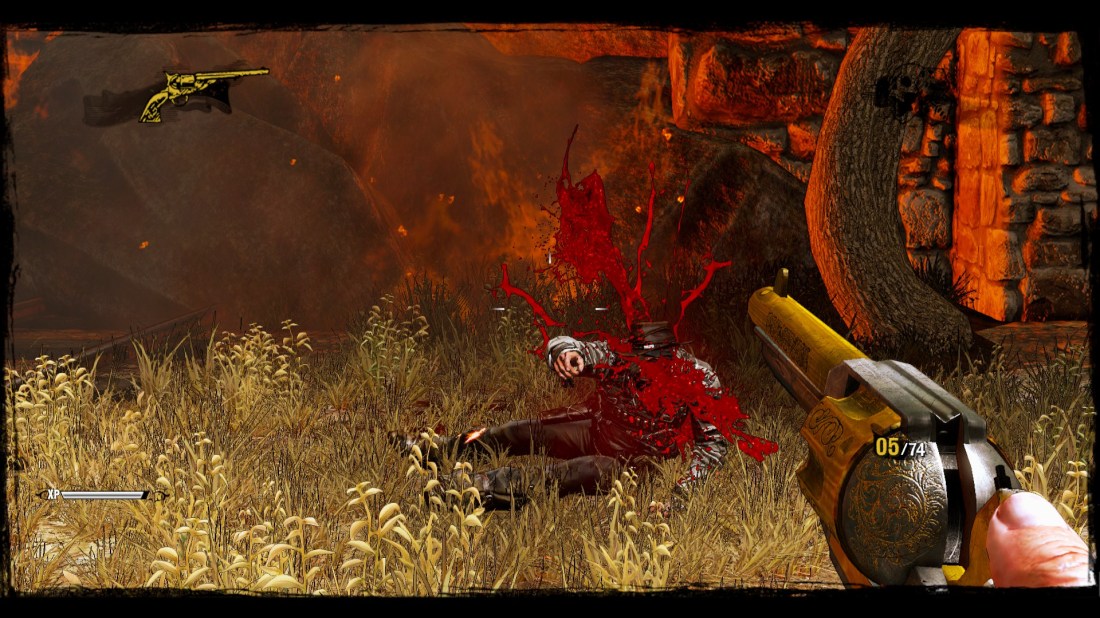
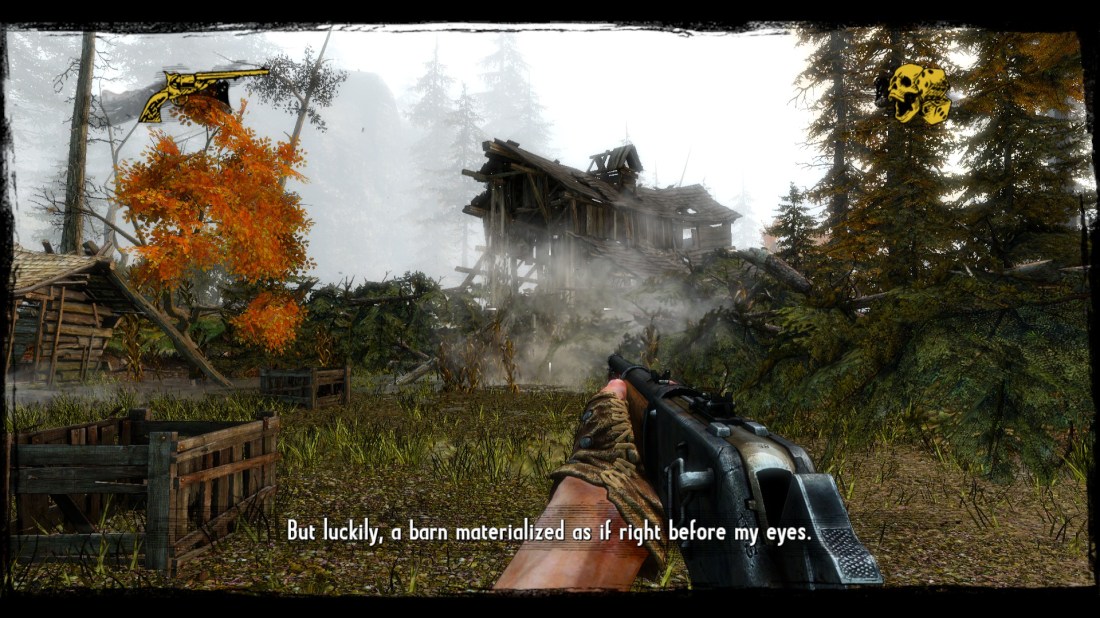
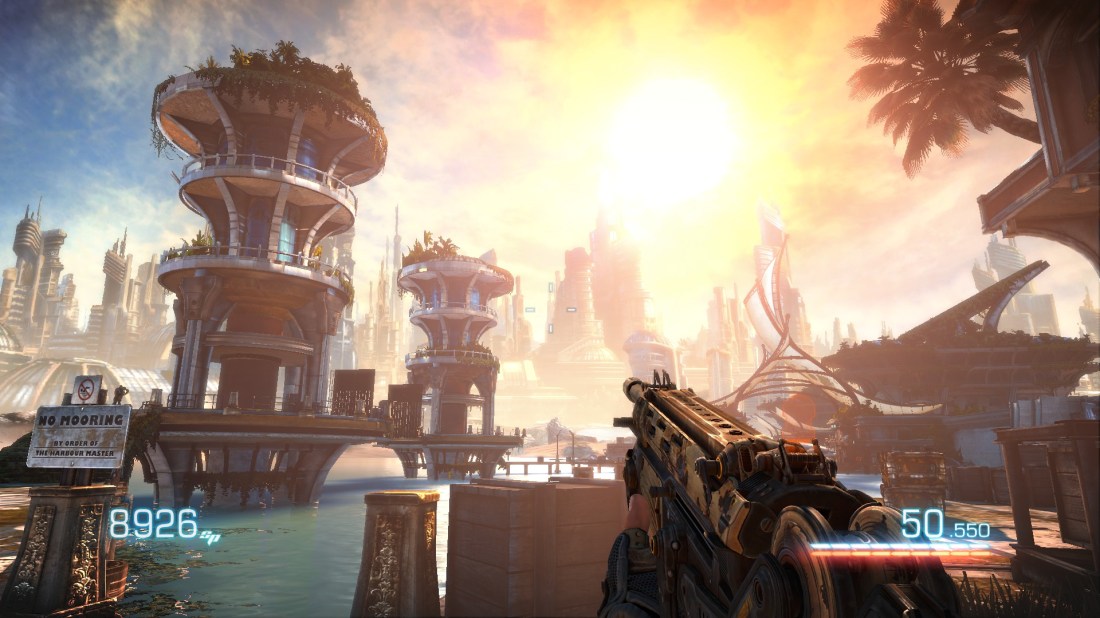
Visually, Gunslinger is close to Darkness II – hyper saturated and hard edged, to reflect Dwight’s dime novels, and the kills have a comic-book look. But it doesn’t forget it’s western cinema influences. The levels recall the romantic imagery of the old west although there’s no involvement the way Gun or Red Dead attempted, it’s practically a rail shooter and you have one mission goal – reach your bounty through a slew of bandits, outlaws, rustlers, robbers, fugitives … I can’t think of any other words to describe bad guys in westerns.

The cowboys we hunt use the terrain well, hidden in bushes or behind rocks and while there’s only three variations, who look like a ZZ Top cover band, they not pushovers – Some prefer running straight towards your muzzle like the psychos of Borderlands (another game whose aesthetic it shares), and letting them get too close is dangerous; they’re dangerous at a distance too but there’s a bullettime where Silas moves faster and enemies are highlighted. That doesn’t make it easier, just a lot more frantic. It might actually be one of the better examples of bullettime, you have an edge not a get out of jail button press. There’s also super-bullettime called Sense of Death. When near death, and assuming it’s not a hail of bullets or dynamite that’s about to take Silas down, everything will slow to the speed of a bullet and you’ll see the kill shot come flying at you. You have a second to move Silas and it’ll either skim past or hit him in the face, and there’s also nice standoff moments where hitting the right keys will make Silas quick-draw his way out. In some of the more brutal fights it all happens at once and coupled with the general frenzy of the fights and the bloody messes you make of the cowboys, it’s all pretty intense. Gameplay wise, Gunslinger is up there; the fights aren’t for the greenhorns, it’s brutal and unforgiving, even after leveling up – although level ups don’t mean the cowpokes become cowboys, they’re constantly a Nightmare mode. Once you level up you have three skill trees dedicated to pistol, shotgun and rifle – He can only carry two at a time though, you’d think a grizzled bounty hunter could manage a third. It’s great fun though, Silas kicks ass. You can see why the bar patrons are enjoying his tales. At least the believable ones.

As Silas continues his story, the patrons become suspicious of his escapades. They point out inconsistencies, question the claims Silas makes and the sheer luck that the bounty hunter seems to keep having; and the game doesn’t seem to believe him either.

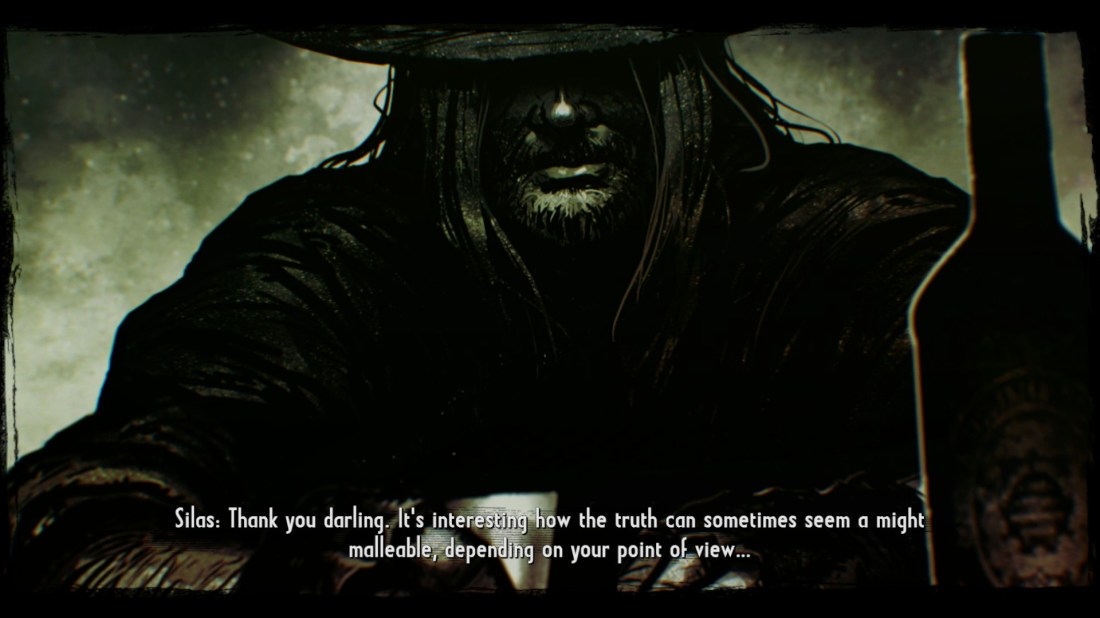
When questioned, Silas’ mastery of storytelling comes to the fore. When the patrons rubbish his doubtful tales, he corrects them for assuming elements of his story; when one scoffs that a bounty of his is still alive, he retorts with ‘I didn’t say he died did I?’ – well, no but … and then they reappear alive, having strangely survived – brilliantly, the game reworks itself to match his story; He mentions being surrounded by Apaches and we’re in the middle of shooting dozens of them when we hear someone point out they were never even in that area and Silas says he meant they fought like Apaches – suddenly they all respawn as ZZ Top. In another he claims to have gotten out of a dead end after finding a body with dynamite – but there isn’t one … and then a body drops from the sky in front of him. Once, we battled through an explosive-laden mine, carefully lining up shots to hit cowboys not dynamite but eventually it all goes off and we’re running through tunnels and just as it seems Silas has talked himself into a corner he says, ‘but I realised the futility of that plan’ and the game spins all the way back to the beginning and we replay a more believable route. Everyone tuts, but Silas just carries on, as his story gets closer to his final, personal bounty.

Silas also plays with gaming conventions. Several times he’s trapped until he does an action; kills everyone, stops something happening etc., and then says ‘then I noticed a ladder that had escaped my attention’ or ‘I noticed an escape route’ and the game quickly places them there. There’s sly nods to gaming clichés, such as pointing out how is he carrying dynamite and not getting blown to smithereens when shot – Or constantly surviving getting shot? He also has some cracking death lines, dryly saying things like “I just needed to jump to the cliff *I jump only to fall off* assuming I don’t fall off.” Alright smartarse. I wondered if they were actually scripted fails they’re so well done. You can also find ‘nuggets’ which unlock the real stories behind Silas’ tales. You’re not going to read them, but they carry hefty XP so it’s worth tracking them down. All of this self-awareness though, even with Silas’ unreliable narrator act isn’t quite enough to hold it all together; there’s a serious threat under Silas’ genial nature, like he’s giving them all this hokum to disarm the patrons, play up the harmless old soak routine. You imagine one of his rapt audience is his final bounty but we never see them other than in brief dime novel stills and not being involved in those scenes drains the tension. The episodic, arcade nature doesn’t help either; Silas and his wily ways does, but the story doesn’t follow through. Had it been a mystery where each chapter gave you the opportunity to reveal something about their identity or clues to narrow down the suspects and we cut back to a tension-filled Saloon where we could question or call them out like some Western edition of Cluedo it could have married it all up but you’re just not invested in Silas’ final reckoning.

Gunslinger even manages to do the good old red in’juns about right. One mission has him tracking ‘Grey Wolf’ an Apache whose tribe is causing trouble. After an epic battle, a cornered Grey Wolf points out Silas’ revenge is consuming him, which causes Silas to pause and Grey Wolf escapes; Stricken by his words, Silas gives up saying he realised it was an unfair bounty considering what the Apaches have been through. Take note, Gun. We catch a glimpse of Grey Wolf passing behind a tree – from which a real wolf emerges. Nice touch.

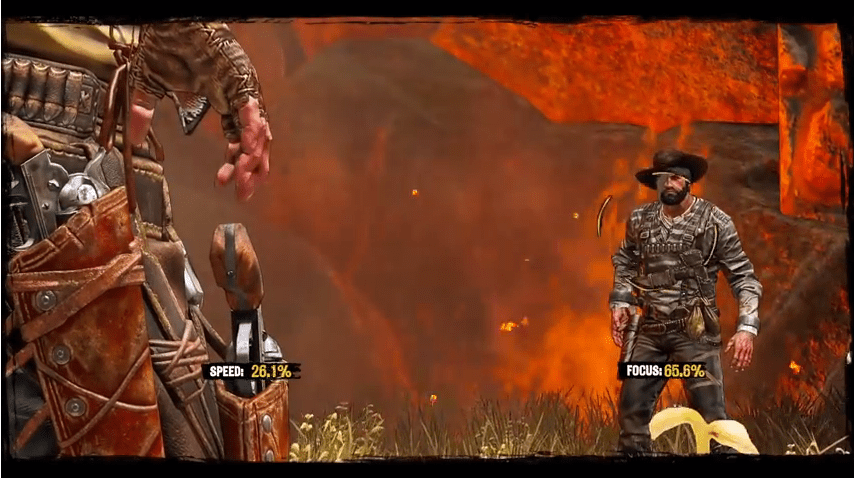
By now Silas has tangled with every famous outlaw in western history; and what an annoying tangle it is. Once you’ve reached a gunslinger of note, the game goes into a stand-off. Using the mouse, you focus your concentration – which inexplicably wanders; if I was facing John Wesley Hardin who killed 40+ men including one for snoring, I’d keep my eye on him. You then have to use two keys to constantly keep Silas’ hand above the gun ready to draw. It becomes the gamer equivalent of pat your head and rub your tummy. Why am fighting Silas’ compulsion to put his hands in his pockets? You can’t watch the percentage of gun grabbing at the same time as keep your eye on your opponent; one will drift. Then once they shot you have to dodge left or right to avoid their shots and keep the gaze on target and you have fire once to pull your gun then again to fire – if he’s not been distracted by something. It’s rage-inducing. You can cheat, pulling before they do but that gets you a Dishonourable kill and zero XP. But it’s worth it, stand-offs are annoying enough to sacrifice XP. Later stand-offs get harder until even cheating won’t do it. It really is something that your heart sinks at the sight of a shoot-out in a western.

Eventually, Silas’ revenge sends him spiralling into increasingly outlandish stories and the game takes on a beautifully surreal edge – at one point he excuses himself and the game repeats the same sequence as we hear the patrons pick apart his legend until he returns; to confront none other than both Butch and Sundance. The man he wants is supposedly part of their posse. We face off and … enter a double stand-off. Not only am I trying to juggle concentration and gun-hand and anticipate a draw but I have to flick between the two of them to work out which will shoot first; that’s another set of keys. To recap, two keys to gauge where the hand should go, two more keys to switch between opponents, and move the mouse to keep him focused. Silas may be the fastest hand in the west but even he doesn’t have three of them. And I have to re-concentrate each time I switch while the gun-hand makes like Thing and takes off and when one does fire I have dodge and fire back AND flick to the other opponent and dodge his bullets while – Or not. That’s four keys, two places to look (three if you can’t touch type) in two QT sequences plus some surgical mouse-movement and timed clicking. And, the story just made clear they were now enemies and he only needed one of them alive. Just let them have the quick-draw and interrogate the other! I just get so angry with it, so annoyed I crash out and never go back. Rage Quit.

So I never found out if Silas was telling the truth, if he got his vengeance, if any of it was true. And that’s really annoying. Silas was great company and I’m really aggravated I didn’t get to see how his story ended because of idiotic over-complicated controls. I don’t know if it’s easier on a console and I don’t care; all the imagination and subversion in this story, the bullettime, quick-shots and Sense of Death and they couldn’t save one for the quick-draw or come up with something else? At the very least, Gunslinger could have worked like Gat Out of Hell or Blood Dragon, a subversive companion to the main series, but it’s an Add without an On and the quickdraw ruins an otherwise brilliant game that could have stood on it’s own. Why can’t PC Gamers have a good western? I loved this game until it went all button-mash.

A narrative thread throughout the JoC games has been betrayal, and this time I feel betrayed. I’m ignoring Juarez’s Call.

2013 | Developer Techland | Publisher Ubisoft

platforms; win | PS3 | X360

Bulletstorm

a second wind review

FBT blazes his way through Bulletstorm, before Gearbox f’ed it up for no reason. Like they did Duke. And aliens. Got Borderlands right though, so silver lining and all that.

killing dick

When Bulletstorm came out in 2011 it disappeared quickly, with both critics and gamers wary – With its throwback box art which recalled the original Doom cover, the trailer aping the Halo 3 diorama and a free download called Duty Calls, Bulletstorm seemed out of place; taking the piss at a time when games took themselves very seriously; it was the prime ‘realism’ era of gaming with COD Black Ops and the Medal of Honor reboot the year before while 2011 also saw Modern Warfare 3 not to mention trifling games like Crysis 2, Deus Ex: HR, Batman AC, Rage, LA Noire and Mass Effect 2 out around the same time – triple A games that strove for realism and here was a linear shooter that rewarded you for sniping someone in the ass. The only other exception was the mighty Saints Row 3 and no one knew what the hell to make of that, dimissing it as a bit of daftness (It’s not). So it’s no wonder Bulletstorm got overlooked. Compounding the gamer nervousness around it, Bulletstorm itself didn’t seem to know its own place – it wasn’t all about kicking baddies into cactus (cacti?), a serious subplot around avenging a death and a sidekick’s descent into madness chafed with the wise-cracking of our hero while the horror of the world you play in and the fate of the hero’s merry band don’t gel with the silliness of the xp system. Was it a giggle-some shooter for after-the-pub or an engrossing survival shooter? Was it the game Duke Nukem Forever should have been, was it actually quite dark beneath it all? It didn’t seem to know itself, it’s like art design, dialogue and story writers all worked in their own vacuum and someone else pulled it together. Not to mention the rage-inducing cliff-hanger ending; it’s one thing to leave fans wanting more, it’s another somewhat arrogant thing to expect them to want more; It’s just a betrayal – revenge story, hardly Mass Effect epic and a clichéd one at that. It does sometimes feel like the devs were mighty pleased with themselves while pulling BS together, like they had something revolutionary, like they were going to beat DNF to the punch and launch the next generation’s Duke. Being bits of everything and nothing, Bulletstorm seemed to cancel itself out and it quickly faded away. Except that, over time gamers got it and BS developed something of a cult following; it was one of the games no one had but there was always someone who said, when you complained about the latest COD being a reskin, ‘you should try Bulletstorm’ and Gearbox’s unexpected relaunch of it shows Bulletstorm was one of the games you lent and never got back.

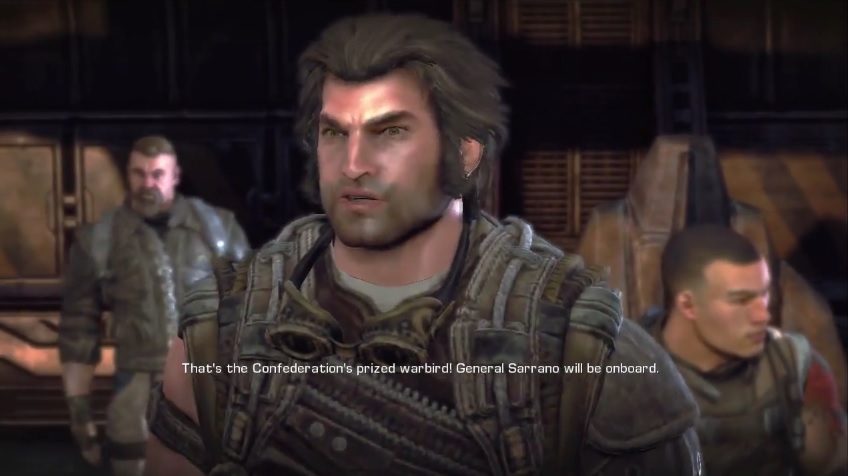
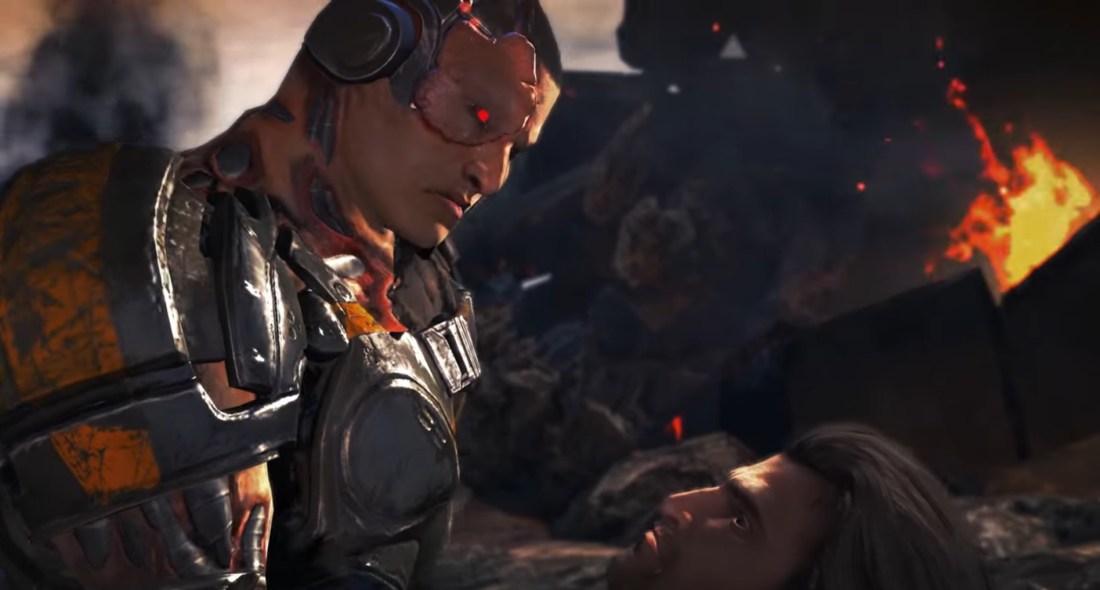
Bulletstorm opens in the 26th century with ‘Dead Echo’, a Spec-Ops team busily assassinating traitors. Mission accomplished, our hero, Gray, discovers Dead Echo is being used by their CO, Sarrano; they’ve actually been operating as his personal death squad; the list of ‘traitors’ were innocents looking to expose his dodgy side-deals. Barely escaping a trap Sarrano sets as the last link to him, Dead Echo becomes a band of burnt-out mercs with Gray drunkenly obsessed with killing Sarrano, filling his time finding and torturing Sarrano’s men as much for fun as information; a chance encounter with Sarrano’s flagship results in both ships crashing on a nearby planet and in the ensuing fracas, Gray escapes while all but one of Dead Echo is wiped out; only Ishi survives after being cybernetically rebuilt with the ship’s AI to control his bodily functions. And the ship AI has had just about enough of Gray’s shenanigans. Ishi Mk2 attempts to murder Gray, only relenting when they discover Sarrano also survived the crash and is on the planet somewhere. The two remaining Dead Echoes agree to find Sarrano so they can escape and save Ishi before the AI takes over completely. And so begins a solid ten hours of shooting, kicking and brutalising everything between here and Sarrano.

The world Grey lands on is a failed pleasure planet, kind of an amusement park meets all-inclusive holiday resort. But this place was not ‘ATOL protected’; the resort is overrun with dangerous clans of prisoners who were shipped there to build the place then left to rot when the park was abandoned, partly because they discovered too late the planet was filled with carnivorous plants and a huge Godzilla-like species, and because they dumped tons of toxic waste underground that seeped into the water supply and mutated the holiday-makers. It’s this mix Grey and Ishi fight their way through and as a set design, it is brilliantly observed. Beneath the rot and decay you can see an incredibly detailed and believable resort and locations to blast your way through. Much like People Can Fly’s previous effort, Painkiller, the world you inhabit is as beautiful as it is brutal.

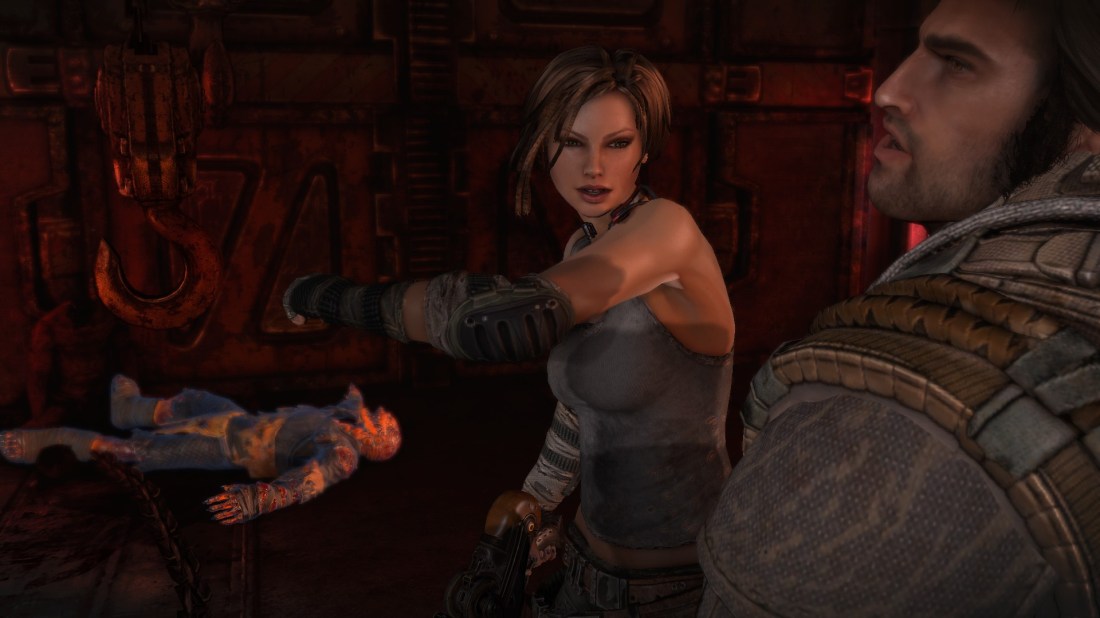
As the two make their through the resort, dealing with Ishi slowly being assimilated by the AI they find another survivor from the crash. An amusingly and foul-mouthed female solider, Trishka, who joined Sarrano’s crew for one reason – kill Dead Echo. When Trish isn’t insulting Grey (‘Get any closer and I will kill your dick!’ / ‘Wait, what? You’re gonna kill my dick? What does that even mean?!’) she starts to come around to Grey’s way of thinking on Sarrano, who she blinded followed, not knowing Gray’s the guy she’s trained to kill. Her and Ishi make for interesting companions through this nightmare world.

Fighting through the world is relentless. Not Borderlands relentless, and not the drudge of Painkiller but intense. The different clans you encounter each have different attacks, styles and approaches and they all move fast. In order to counter them, you have something special – Early on Grey finds a strange device which attaches itself to his wrist and has a leash he can use to grab objects and villians with spectacularly gruesome effects. Trishka explains the planet was being used by Sarrano as a training ground and the leashes were to track star soldiers and provide them with ammo – if they managed kills. Quite a severe but effective way to weed out the weak and one of the few times xp is truly woven into a game; the bigger and better the kills, the more skill the leash awards and the more ammo and upgrades you can afford. Usually xp has a hackneyed justification for being but in Bulletstorm it not only feels right but has immediate ‘real world’ consequences if you don’t man-up. Yes, scoring xp with outrageous kills is a great deal of fun but it being your only way to get special ammo and power-ups adds another level to the shooting. Pulling someone towards you with the leash causes them to go into a form of bullettime and you glance around, looking for a cliff, wall, metal post, anything to shoot or kick them into with insane and messy results. It adds a level of thrill and awareness to the world rather than mundanely splattering through and even when overwhelmed you’re still looking for any opportunity to kill by cacti.

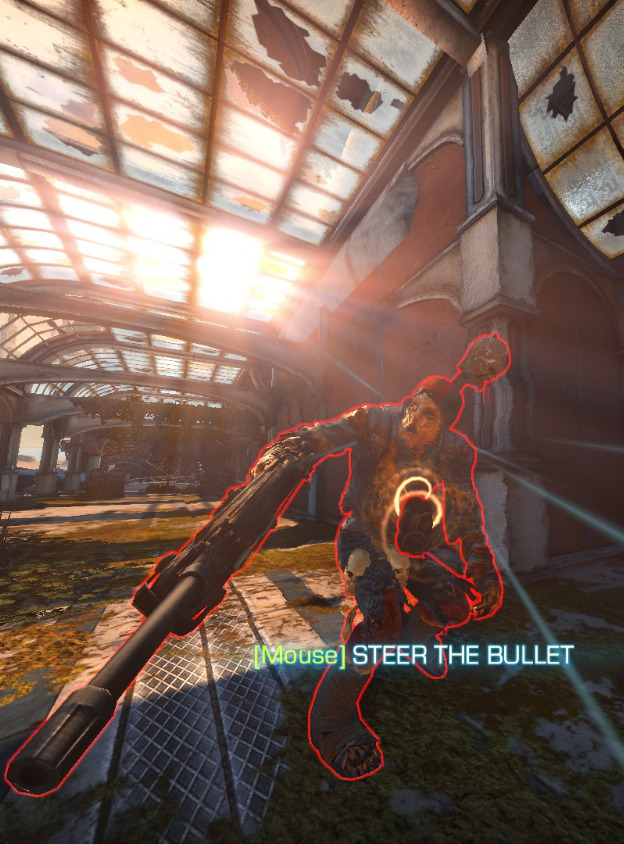
The weapons also allow for different kills. The standard weapon, a machinegun has an alt fire that unloads an entire clip in one shot leading you to try and line villains up for a blast. The sniper rifle allows the bullet to be directed mid-flight once it’s locked to a target and soon you’re Wanted-style bending them around corners; pulling the trigger is only the first step to killing in Bulletstorm – a grenades-on-a-chain weapon lets you fire then detonate later but trying to chain-up baddies or chaining them to nearby objects creates all manner of mayhem. Hidden in the madness is a thinking game; in the middle of the kind of mayhem reserved for button mashing you’re planning and looking for opportunities.

While the set design stays mostly within the world of the holiday park, there are some variations such as toxic caves and crumbling high-rises but BS also relies on several QuickTimeEvent set pieces to keep things interesting. Being chased by a huge spinning gearwheel, a Godzilla creature and even a model village set of the park are all stand outs. For one sequence Grey even gets to control a mech-zilla to clear the way and it’s so much fun it’s almost sad when it does down.

Eventually Sarrano is tracked down and we’re forced to work alongside him to get off the planet, only to (obviously) be double-crossed. But Bulletstorm is a great ride start to finish, an exhilarating, breathless race with some insane weapons, set-pieces and characters to enjoy a solid ten hours of gaming palate-cleansing. It is a refreshing change from the dour and seriousness of other shooters. Gray is something of a Duke clone but without the misplaced, misjudged misogynies of DNF. Throughout the levels, you can find beer to drink and like Redneck Rampage eons ago, doing so will make his aim go off (and draw Ishi’s ire – ‘You disgust me’) but it makes the firefights fun and rather than being bombastic, stoic or silent, Grey is often surprised and annoyed at the situations he finds himself in and isn’t above teasing Trishka or Ishi about their predicament – one that he has to take responsibility for, and comes to do so as the game draws to a blood-soaked close. Trishka is a solid female sidekick whose gender is a non-issue and has her own agenda while constantly points out what a dick Gray is. Ishi, heavily scripted with his AI-driven tantrums makes for a different kind of sidekick; rather than just blindly following as most companions do, or just there to remind you what you should be doing, he questions and comments on Gray’s choices and is intending to save Sarrano not get revenge (Ishi has always put down the betrayal as part of the business, unlike Gray who took it personally); early on he tells Gray that Sarrano is under his projection in return for rescue, setting up the potential for a nasty falling-out and adding a dynamic that’s frustratingly never really resolved – it was clearly intended given that goddamn cliff-hanger ending making it even more galling. Sarrano on the other hand, is just the worst villain ever committed to gaming. He’s all ‘shitkickers’ this and ‘grab your ladyparts’ that, screaming insults and sneering contempt. I’ve never hated a character so much. And that’s not good storytelling drawing the hate, he’s just so incredibly annoying, a Poundland R.Lee Ermey. I constantly wanted to murder him just to shut him up and it’s so obvious he’s going to double-cross us it’s the one time the game falters and slows down. The rest of the time it’s exhilarating but once he’s involved it’s ‘been here, done that’ and his character being so frustrating makes it worse. Critics complained about the uneasy balance between the serious story and the knockabout gameplay but really it can be seen as gallows humour in the face of an insanely difficult situation, its only when Sarrano’s on the scene does BS feels tired and unoriginal.

Since Bulletstorm comes from Painkiller creators People Can Fly (which became Epic Poland then became PCF again) it shares a lot of that game’s style and approach. The hordes of baddies rushing at you are straight out of Painkiller and the leash is a techno version of the Painkiller weapon. But Grey, interacting with Ishi and Trish is a much more entertaining character than PK’s Daniel while their escaping this Hell is somehow more interesting than Daniel trying to purge his soul. It’s a brilliant world to kill in. Also great is how Grey continues to make things worse for himself and the others, his temper and machoism getting the better of him – one level sees them navigating through a cave system where something is following. They find themselves an exit but there’s huge eggs in the way. We all know this will not end well, Grey knows it, Ishi begs him not to but Grey merrily smashes them to get through. Of course, something big and nasty isn’t happy but rather than just appear at the end of the level as a boss battle, the huge Godzilla creature just keeps putting in appearances as they progress through the game, eventually appearing in the final third in a great aerial set-piece. Trishka just marvels at how Grey could have willingly upset such a creature.

Bulletstorm is a short game, it does rely on a lot of scripted moments and over time, kills lose their appeal; the plot and gameplay feel at odds often and the open/cliff-hanger ending is unforgiveable – it’s easy to see how it was overlooked not just in the face of some major AAA games in 2011 but also as a cartoony bit of silliness. But it easily surpasses any COD Reskin for sheer inventiveness and pure-blooded shooter fun. It’s just really good. And that ending does suggest PCF knew they had a good game but were over confident, like this was the start of a franchise. Maybe it was publisher pressure to create a story-arc but there’s no reason why Grey couldn’t have gone onto other adventures rather than just drag this slight plot out into a series (That was FEAR’s problem). It’s a shame we didn’t get to knockabout with Gray again.

That is, unless Gearbox’s gamble pays off. They bought up the IP and re-released Bulletstorm in 2017, much to everyone’s surprise, chucking a 4K up-res and some maps in and asking near full-whack for it. Who for? It’s not like the original was aged or unavailable. Bioshock’s remaster didn’t make Rapture any more beautiful or immersive; the Skyrim redo was for the hardcorers – when are publishers going to realise its the experience not the pixel-count that brings us back? It’s a worrying trend; publishers seem to think releasing remasters will push the brands back into the charts, give the IP some value and keep the franchises going while they tried to figure out what to do next. If you’re going to remaster a game, it needs to be a game that needs it, that can capture new fans and let the originals replay it at today’s spec – the Monkey Island series or Broken Sword with its additional scenes rounding out the story; the success of those overhauls led to new adventures. Bethesda should have remastered Morrowind instead. Worse, in Gearbox’s remaster you can swap Gray out for Duke Nukem – complete with re-recorded lines from John St.John. Both Gray and Duke use their foot for a melee weapon and they’re both macho, but really that’s where the similarity ends and this seems like a disservice to Bulletstorm (and both Gray and Duke) and just a cynical marketing campaign to reboot both franchises. Avoid Gearbox’s latest evil plan and stick with the original. Get in there and kill some dick.

2011 | Developer People Can Fly / Epic Games | Publisher Electronic Arts

platforms; Win, PS3, X360 (PS4 & XO for the remaster)

Mafia III

A Rage Quit review

TheMorty had been so looking forward to playing a mafioso.

There must be some kind of way outta here, said the Joker to the thief
There’s too much confusion, I can’t get no relief…

Well, they can’t say they didn’t warn us. The writing was well and truly plastered all over the wall from the very beginning of the game as Hendrix’ iconic cover of ‘All Along the Watchtower’ boomed over the title screen. Call me nostalgic, but I hadn’t been this excited for a game since Saints Row 4. Nearly 7 years since the last Mafia game and we’re thrust straight into an unexplored era of America. Sure, we’d had the 40s and 50s with Mafia II, the 80s with Vice City, the birth of hip hop with 1990s San Andreas but I always felt there was a big gaping hole where sandbox games had just failed to explore the period in-between. Think of the soundtrack alone, The Beatles and Stones, the height of New Orleans R&B and the astronomic rise of disco and Motown. The announcement trailer alone filled me with anticipation as there was a previously unexplored opportunity to relive a golden period in history and have a break from the comparable norm of what’s been a very generic offering of third person shooters in the recent marketplace.

Perhaps the biggest draw of all was the idea of playing a mixed-race protagonist that carried all the stereotypical attributes of the badass from the Bayou during a period rife with racism. Surely there’s nothing more character defining than overcoming the extremely racist Italian-American mob on their own turf? Hell, the game even carried a warning that it was going to be extremely non-pc and felt it necessary to condone dropping the N-bomb as often as possible to stay true to the abhorrent problems that the character would undoubtedly have faced at that time. I mean wow, that obliterates the feeble cop-out of a warning from the Assassins Creed anthology – “we’ve got Christians, Muslims and Atheists working on this game, honest… ask me mum”. Surely all the above considered we’re going to be in for one hell of a journey… right?

Alas, I was conned. Sucked into the abyss by the siren of Jimi’s wailing Gibson SG Custom. Instead of the thought provoking, immersive story the preamble had promised to deliver – what followed was a hastily-released, buggy and boring mess without a resemblance of substance or stamina. A game that would not only leave me feeling disappointed, but one that made me fear for the future of a fantastic company that has delivered two of this sites all-time top ten games in Borderlands and Bioshock.

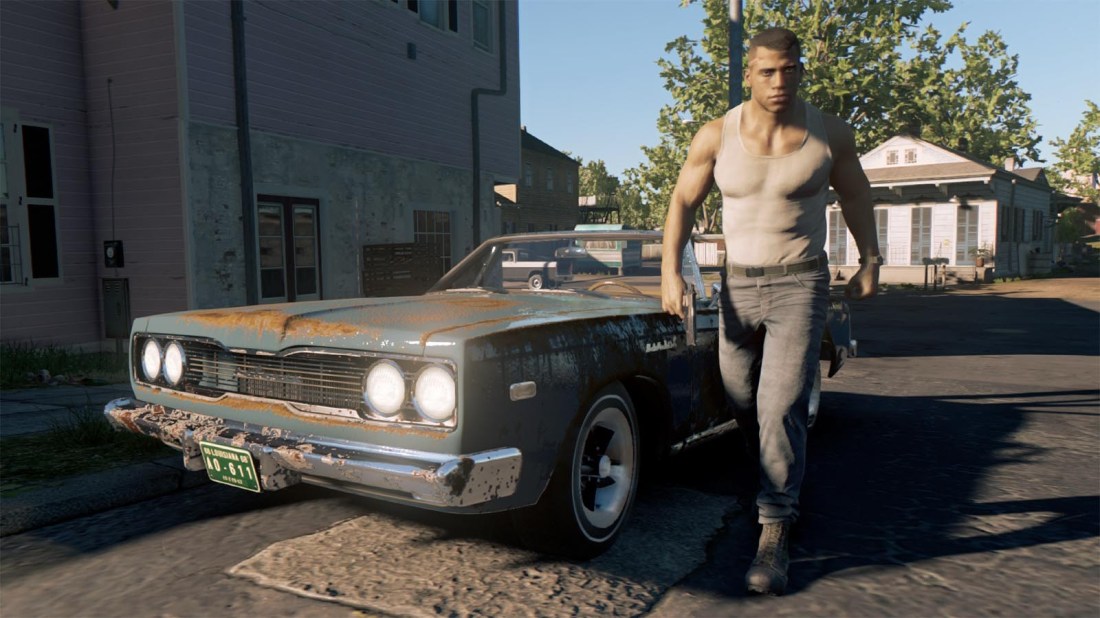
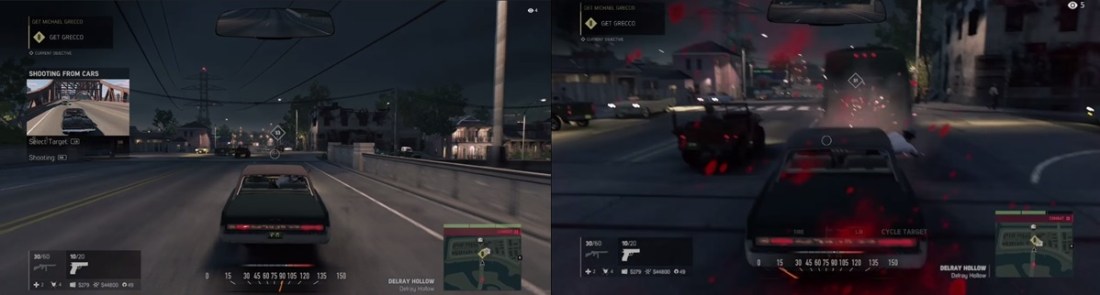
The game starts as it means to go on and opens in a tedious method of non-linear storytelling – a Black Mass-style interview with key players some years after the narrative ends. “I knew Lincoln as a boy” queue flash back to Lincoln being a boy… you get the drill. After an overly prolonged backstory about how I was a Vietnam vet (who would clearly suffer from PTSD before the game was out) the tutorial level began. As with all lecture levels, they’re dull – like teaching your granny how to suck eggs or Duke Nukem how to bed strippers. I’m on a job, dressed as a security guard and I get given my first “Choice”, kill a man or wound him. I pondered it. What would a future gangster do; kill him and keep him quiet or show humility. Turns out that what I do here makes absolutely no difference to the outcome (Commander Shepherd, Lincoln is not!) so of course, you pop the guy. Heading outside, we climb into an armoured security van. Grabbing the steering wheel for the first time, I take out a fence, crash through a gate and collide into a tree. Bloody hell, what am I driving? An oil tanker with a caravan hitched onto the back??!! Fair enough it’s the late 60s and power steering was more of a luxury than a standard – but this is ridiculous. On reflection, maybe it was my fault. While waiting for the game’s 30gb download I took a trip to Los Santos and spent three hours messing around in GTA V. Maybe the smooth cornering, quick breaking and responsive handling of my souped up Zentorno was the equivalent of filling up on bread at a nice restaurant and being unable to eat the main meal. Still, it doesn’t excuse how bad the driving mechanics are here. Like GTA IV, there’s two driving modes in Mafia – normal and simulated. Now, one is supposed to be the generic VG style driving mode – except trying a cool handbrake slide at half speed sends you flying into the Lagoon – the other, which per the game menu is a “fully realistic driving experience”, allows you to corner at 100kph without the need to brake. Who wrote that part of the game – the Stig? It’s frustrating given that driving is pretty much the cornerstone of any city-based sandbox game and to get it so fundamentally wrong was always going to make that inevitable time-trial mission even more impossible.

Not wanting to spoil, the tutorial missions end in the all too familiar gangster style. The double cross. Leaving Lincoln angry, bereaved and frustrated as hell. He’s on the warpath and won’t stop until he gets his revenge. Sounds promising, perhaps I can look past the poor driving mechanics…

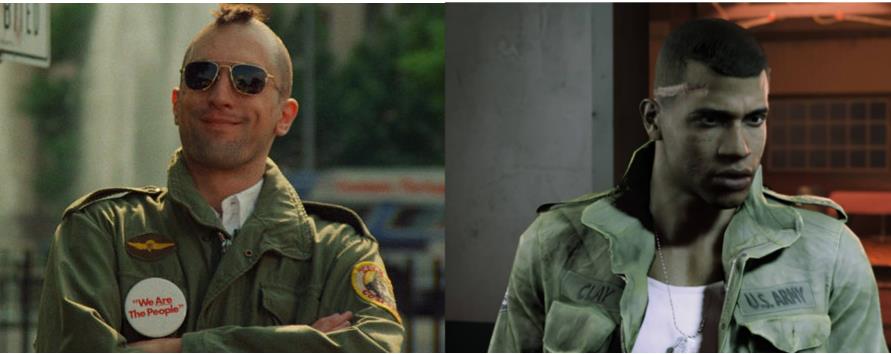
Once the cut scenes are out of the way and the tutorial mission has been finished, I can finally free-roam. I head to my safe house and notice my wardrobe contains a nice little pre-order bonus pack of outfits. Thanks 2K, very kind of you. Oh, wait, you’ve given me one that makes me look exactly like Dwayne ‘The Rock’ Johnson – I’m wearing it. Sod the 70s. This will be fun for the next 20 minutes at least. The generic costume is typical war-vet attire. Dog tags, big boots, green jacket – I’m looking very Travis Bickle (lazy Scorsese reference #2,458).

Sod that, dressed in my pre-order attire I leave the house, jump in my car and head over to the first mission point. As I walk through the door, something feels off, is it a trap? Am I about to get whacked? Nope. I’m dressed like Travis Bickle again for the cut scene. Are you serious? it’s 2017 and you’re still using QuickTime cut scenes? Character customisation is pretty basic these days; I mean most iOS and arcade games can cope with integrating your unique character look into cut scenes – why have bother even having a customised character if you can’t include them into the most powerful and memorable aspects of your story. Two seconds ago, I had a bic’d bonce now I’ve got a full head of hair. You’re beginning to irritate me Mafia and with a full shelf of games on my to-play list, you’re on real thin ice!

One of the new features in Mafia III allows you to have underbosses to your empire of crime (oh yeah, we’re 10 minutes in and have already forgot about revenge – we’re already thinking ahead before we’ve even had chance to spill some blood!). The first of which is Cassandra, a woman with the Haitian Mob who owns a voodoo shop in Delray Hollow. We “rescue” this girl in one of the earlier tutorial missions, not realising she’s the brains of the operation. I’m starting to like where the games going with this. A strong, black female in a world filled with powerful, white males – surely this promises to be tasty.

The first mission for Cassandra fully immerses you in the games fighting system. It’s quite good, but annoyingly you can’t use it unless you’re in stealth mode. I learned this the hard way, walking up to a group of gang members outside a bar thinking I’m going to go full Batman in Arkham City, when one of them shouts “hey, it’s him” causing his crew to whip out their shotguns and with one blast put Lincoln down – costing me a cool 50% of my wallet, Borderlands style. So not only are shotguns pretty much the BFG of Mafia III, but prepare to lose a lot of cash if you don’t make regular trips to your safe house to store the cash in your safe. Oh, that’s right. You must physically bank your cash. Again, something that should have been left behind in the stone age of gaming.

I’m trying to persevere with this so I head to the next mission and with it, a little more of the map is unlocked. I can now do missions to reclaim my turf – like CJ and Big Smoke’s missions to take over the hood for the Grove Street Families. Yes! Let’s make this map a little greener… I dive into the nearest enemy warehouse and enter stealth mode – taking out the lookouts on the door before making my way through the floor and up the stairs to where the piles of drugs are held. I attach some C4 and move on – looting a pile of cash in the head honcho’s office as I choke him out from behind. I wring the place dry, taking out every enemy and watching my XP slowly rise in the process before triggering the C4 and blowing the drugs. I’m a few quid better off and can move on to the next red hotspot on the minimap – this time it looks like it’s in a bar. I sneak around back armed with my signature Colt (avec silencer) and eliminate the guy on the payphone. Once he’s out of the way, I edge into the back room and take out the two guys in the office – helping myself to a chunk of cash and picking up the collectible playboy mag to appeal to the 14-year-old boys playing the game. Moving into the bar, I get spotted. Quick on the draw, I shoot the mobster sipping his scotch before he can even raise his pistol and then take out the other guy just in time before he leaves the building to sound the alarm for reinforcements. Smooth Clay, two hideouts hit, without a single triggered alarm. Maybe there’s some hope for this title after all…

At this point, I’ve been away from the story for a while, so I figure – best head over to Cassandra’s place to start the next story mission. When I get there, I enter the house dressed as Bickle again (FFS!) and Cassandra proceeds to tell me of some pesky drug smugglers holed up in a warehouse nearby (hmm, this sounds familiar…) and how she’d be ever so grateful if I could get rid of them for her. The cut scene ends, I leave the house and I’m dressed as The Rock. I follow the nav-point and as I’d feared – I’m back at the warehouse I’ve just cleaned out 20 minutes previous, only problem being the whole safe house has respawned. Same number of people, same positions, same AI movement. The only difference… no more cash to steal! How dreadfully dull and pointless. So again, I stealth around the room taking much less care than I ever did the first time, expending more ammo and using far too much health than I need as my brain desperately tries to avoid boredom during the repetition of the task. After 5 or so minutes, the coast is clear. I’ve taken everyone out and head back to Cassandra. “Thanks Lincoln”, no bother Cassy – what you got for me now – A high-speed chase… high profile assassination… what’s next on the agenda? “There’s a group of guys in a bar I need taking care of…” You’ve got to be shitting me. The bar I’ve just been in? Now I must re-do that again too? Honestly lads, why even try to be a sandbox game and offer the illusion of choice if all you intend to do is force me to play this as a linear third person shooter – and why am I dressed like Bickle AGAIN!! So not only does the game not reward you financially for doing twice the work, but it makes an open world free-roaming game extremely linear. There’s absolutely no point in exploring any of the map until after you’ve completed the story missions in that part of town – so why bother.

Understandably annoyed, I carry on and complete a few more side-missions before finally getting a unique task; take down Ritchie Doucet. Doucet’s a man aligned to the Dixie Mafia who happens to be holed up at a rundown theme park. Perhaps my favourite mission on the game, I arrive on a boat and sneak into the park. Think Bond if Idris Elba ever gets the gig. Making my way around various obstacles and taking out Douchet’s lieutenants in Deus Ex-style fashion was quite fun, despite the lack of space you can still combining long range shots and short range combat quite effectively without starting World War III. I finally track down the Boss and he takes more than a few bullets to put down but eventually – he’s toast. I’m Lincoln Clay. I’m a man to be feared. I’m again dressed like the love-child of Rambo and Travis Bickle. Sigh.

The game doesn’t progress much past this point, continuing to recruit underbosses while almost always being forced into running errands for them. What happened to the powerful shift in ethnic power? I’ve now got an Irishman and an Italian on the books and no-one gets on with one another. Oh, and why have I become so obsessed with making money that I’ve forgot about my revenge? I thought that was the whole point of playing through the most monotonous of missions in this games?!

The last straw was the hunt for Sal Marcano’s nephew, Michael Grecco (another lazy Scorsese reference). Mission after mission comes and goes as we repeat the same old task reskinned for different locations to hit Grecco in the pocket and force him out of hiding. Finally, he appears and away we go on what should be an epic car chase. As previously mentioned, the car handling is god awful in this game so imagine how bad it is trying to aim, shoot and steer without breaking your thumbs – all while trying to stop Grecco’s escape. 10 minutes later and I’m still nowhere near Grecco as he inconceivably evades Lincoln whenever you get close enough to deliver a meaningful shot across the bow. Despites his motor being the same model as Lincoln’s he somehow manages to hit Mach speeds whenever you’re near. I eventually get close to him, he’s in shooting distance and I’m locked on his driver’s side rear-wheel ready to pull the trigger and blow out his tyres; bringing this dreadful assignment to its conclusion.

Just as my trigger finger is clenched and I’m about to gun him down, out of nowhere and as if by magic, a 20-tonne garbage truck spawns right in front of me. Where on Earth did that come from? I slam right into the back of it and blood covers the screen. Grecco gets away and the mission fails.

Genuinely, I haven’t seen rendering or draw distance this bad since the original Midtown Madness running on my late 90s Pentium 2. The mission restarts from the beginning. I’m furious. I don’t have time for this, I’m out. I quit. It’s just not worth the hassle.

I expect this from the likes of ‘True Crime: Streets of LA’, ‘Sleeping Dogs’ or even from ‘Just Cause’ but to play one of the most anticipated games of the year from a heritage franchise and to be so brutally let down borders on disgrace. The game just doesn’t know what it wants to be. It’s taken the best aspects of several different genres and got them all horribly wrong. No wonder it was down to £19.99 only a month after its release and can now be seen floating around the bargain bins of second hand gaming stores. If you can’t compete with GTA then be different. Something Saints Row have prided themselves on across four wildly different games. If you don’t want to compete, then fine – but at least stick to what you do well. FarCry Primal is a great example of where a copy and paste game can go right, you just need to tap into your consumers longing to be back in the world they love, even if it is just a re-skin of what they’ve played before.

The game just feels like it’s 8-10 years behind the times and while the story feels like it might be going somewhere, the pacing is snail at best. It’s not only seen me question the integrity of a reputable gaming brand, but it’s see me never want to watch another Scorsese movie again. Bravo lads and lasses, you took Goodfellas, Casino, The Departed and Taxi Driver and somehow managed to make Shutter Island. You utter, utter buffoons.

2016 | Developer Hangar 13 | Publisher 2K Games / Take-Two Interactive

genres; RPG, Free-roam, Driving

platforms; Win, PS4, XO