90s FPS vs Reboots – A Blast from the Past Special

On Doom’s 25th Birthday, FBT compares the Doom-era to its reboots in yet another of his excuses to replay old shooters and bitch about new ones.

Happy Birthday Doom! Thanks to you, FPS is one of the most successful genres in gaming. As I’m fond of saying, Doom was gaming’s Jaws moment, the moon landing; it was bigger than inventing the wheel, discovering fire, evolving opposable thumbs. It was the Big Bang of gaming, and I cannot understate this – the Doom era was the Rat Pack to modern FPS’s One Direction.
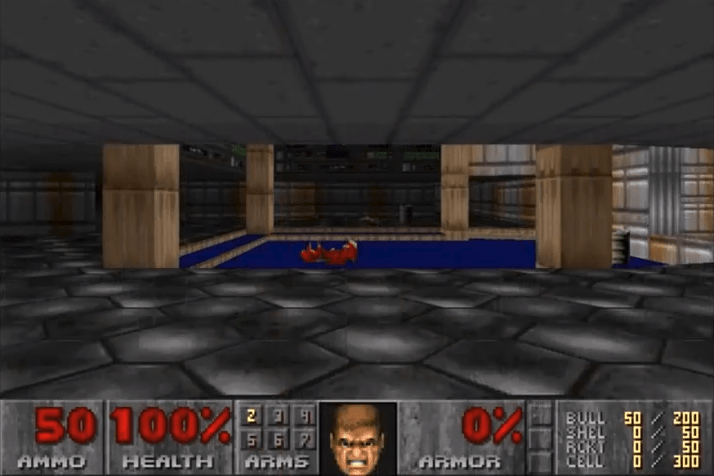
What became known as the Doom era lasted until Half-Life. Five or so glorious years of carefree shooting. While both Doom and Wolf managed sequels after Half-Life, the era was over – until 2011 when Duke Nukem Forever finally (crash) landed. What followed was a sudden resurgence; between 2013 and 2016 Wolf, Doom, Shadow Warrior and Rise of the Triad were rebooted; I avoided them all as cynical cash-ins on marketable names after the horrible DNF; it ruined it for everyone. But now they’ve transcended their origins to become new franchises. They must be doing something right. Am I being a Doom-era snob?

For me, the only way a reboot is going to work is by recapturing the spirit of the original; it has to take me back to the first time I heard an Imp growl and the hairs stood up on the back of my neck. That’s a tall order for the modern reboots; I have a hairy back now. But, why do the new games have such big reboots to fill? What is it about that era that I hold so dear? Can the original Rat Pack still pack the Vegas Sands or have they been reduced to Cannonball Run II? We all know Doom is the Chairman of the Board, but who is Dean Martin and who’s Peter Lawford? And who from the remakes is Harry Styles and … the other guys?

Dosbox is at the ready and I’m all out of gum.

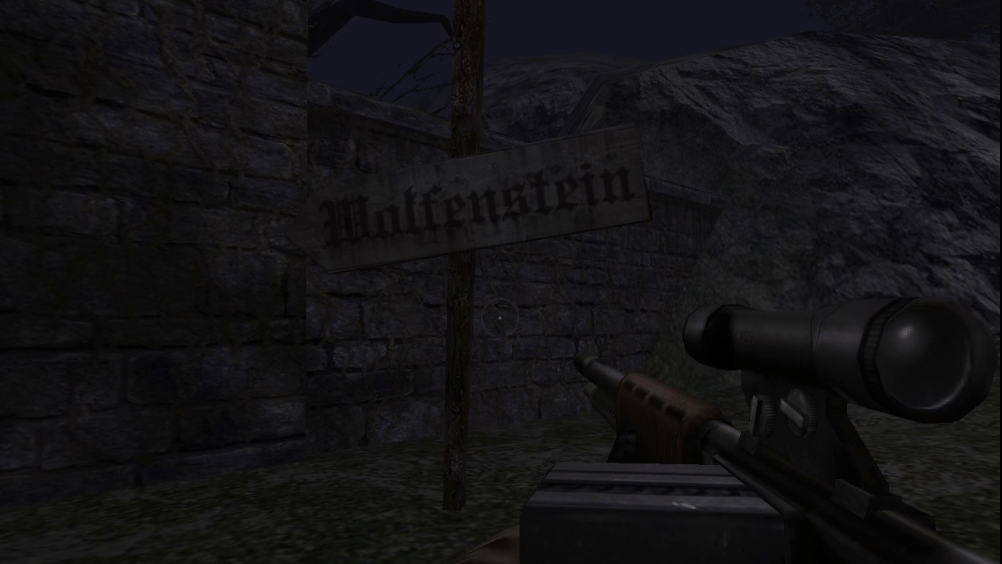
The Past – Wolfenstein 3D

Like everyone, I was astounded by Wolf wayyy back in 1992 as I mowed down ‘Mutti!’ crying Nazis. But even then it looked a little basic. It was the work of mad genius, but I never felt like I was there. I was exhilarated but I was never in it, never connected to it. It’s the one I went back to the least, quickly overtaken by Doom; I can’t imagine this has aged well at all.
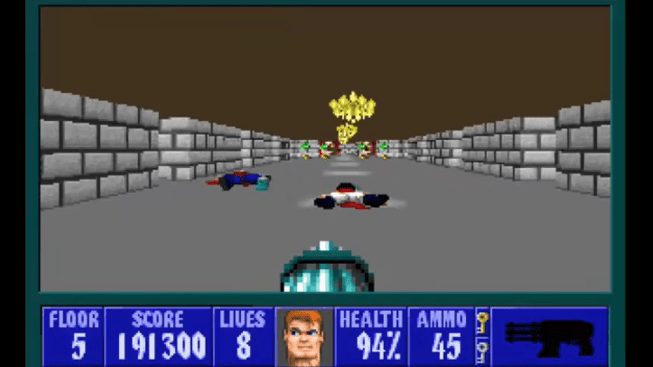
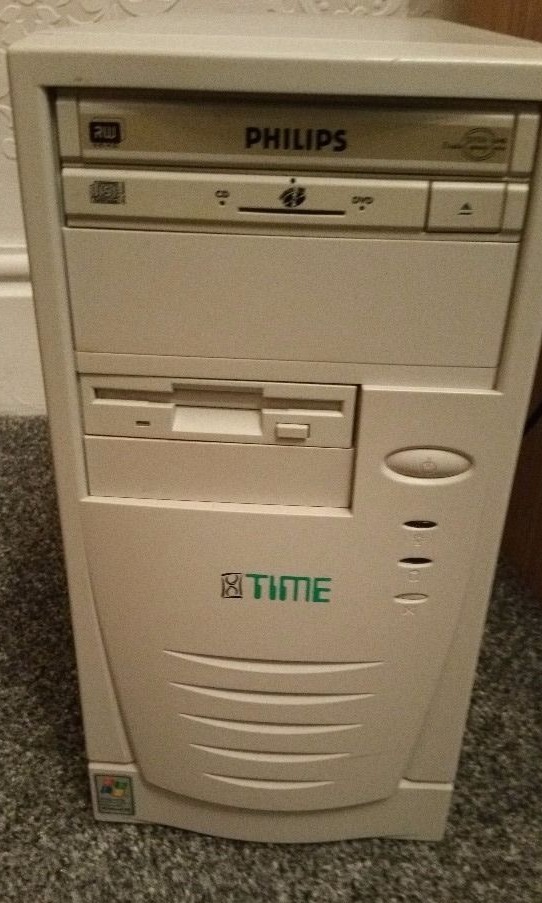
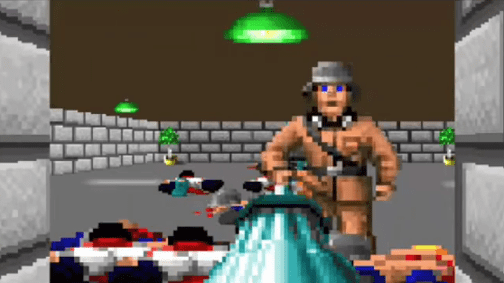
Yeah, this has aged; I want to bang on about the good old days, but this isn’t the good I was hoping for. I’m smiling, I’m enjoying it, but that’s mostly my memories talking, remembering that time – literally, I just remembered I played this on a Time Computers PC.

The missing floors and ceilings, a compromise to keep BJ moving make the game samey and impossible to disappear into; it’s just corridor, room, Nazis, repeat. It’s bright and cartoony, and while levels change, W3D really is a proof-of-concept. FPS had never been done properly before and it feels wrong to moan but Wolf is a tutorial. It’s also over 25 years old and still deserves respect, but that adulation is for what it did for gaming, not what you do in the game.
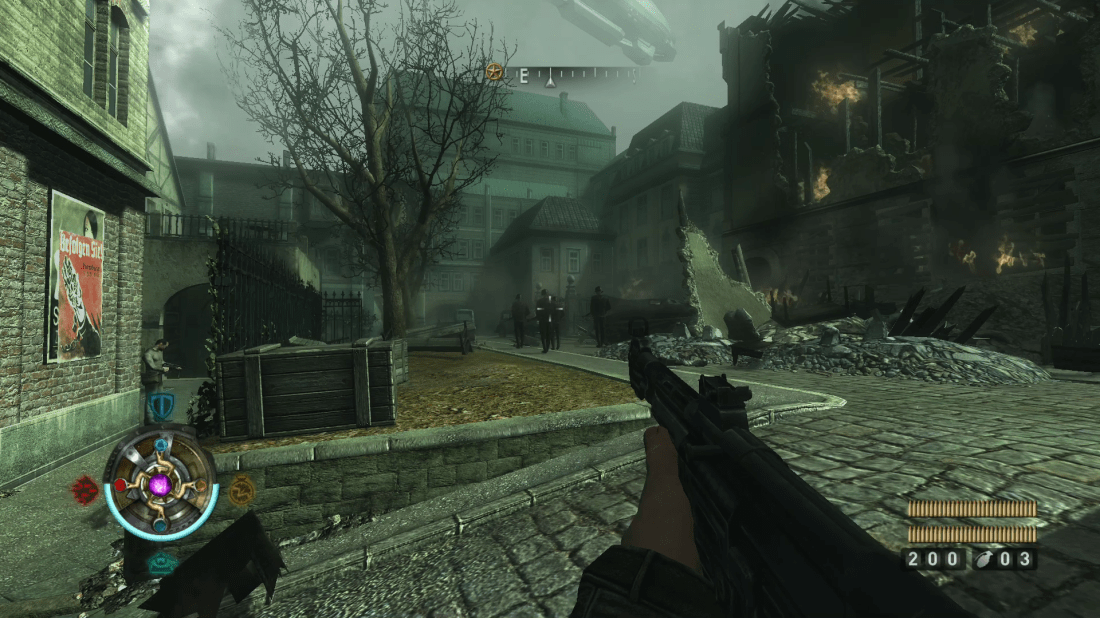
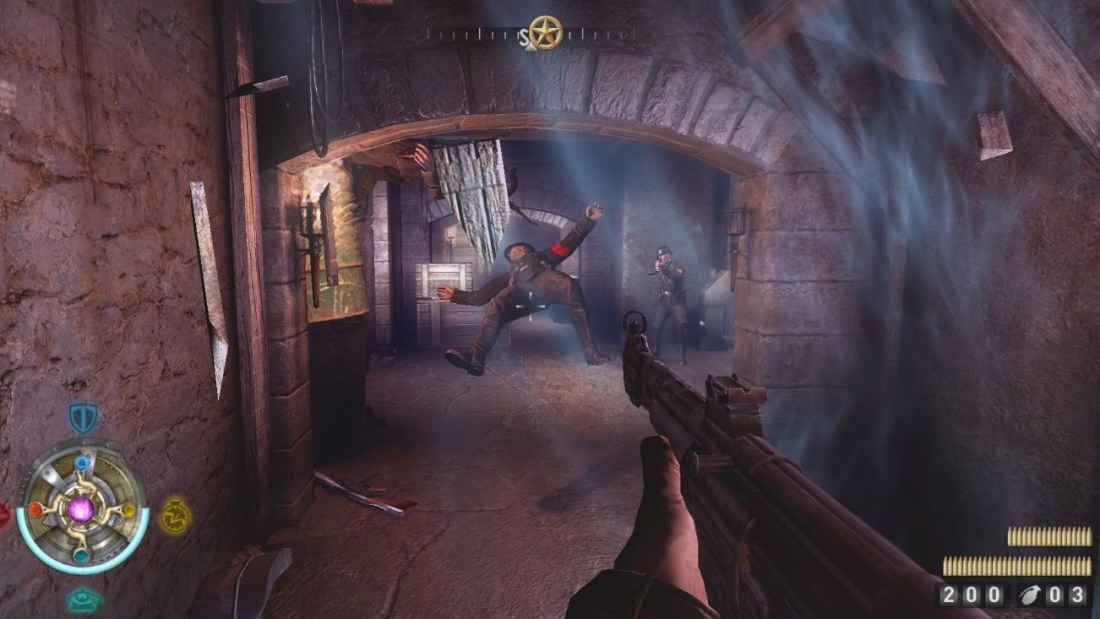
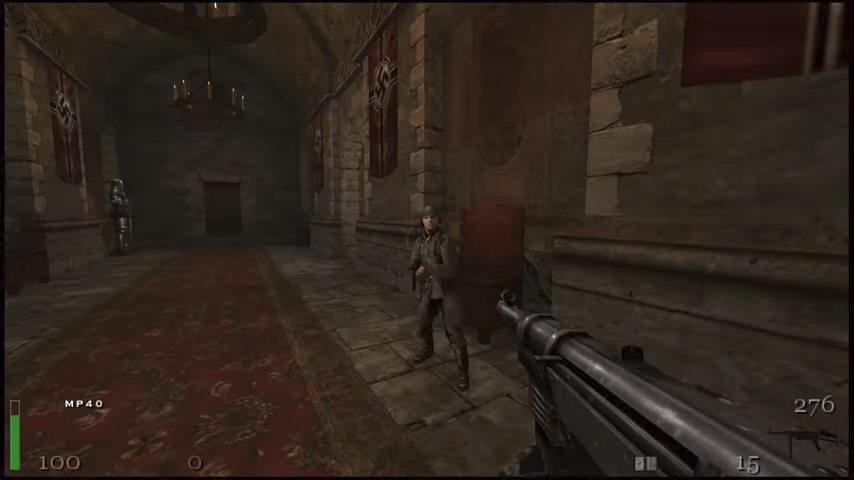
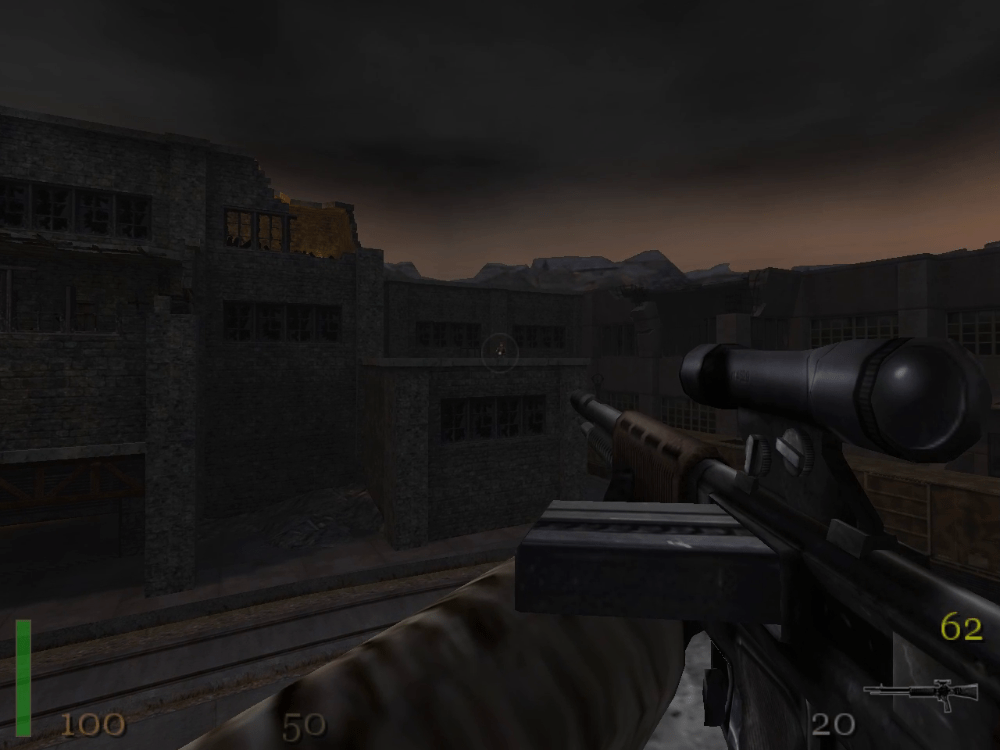
More than any other Doom-era game though, Wolf kept going. Aside from the sequel, there was Return to Castle Wolfenstein, where BJ goes Call of Duty, followed by Wolfenstein, which no one talks about. Then, the Castle laid dormant until Machine Games moved in.

The Blast – Wolfenstein The New Order

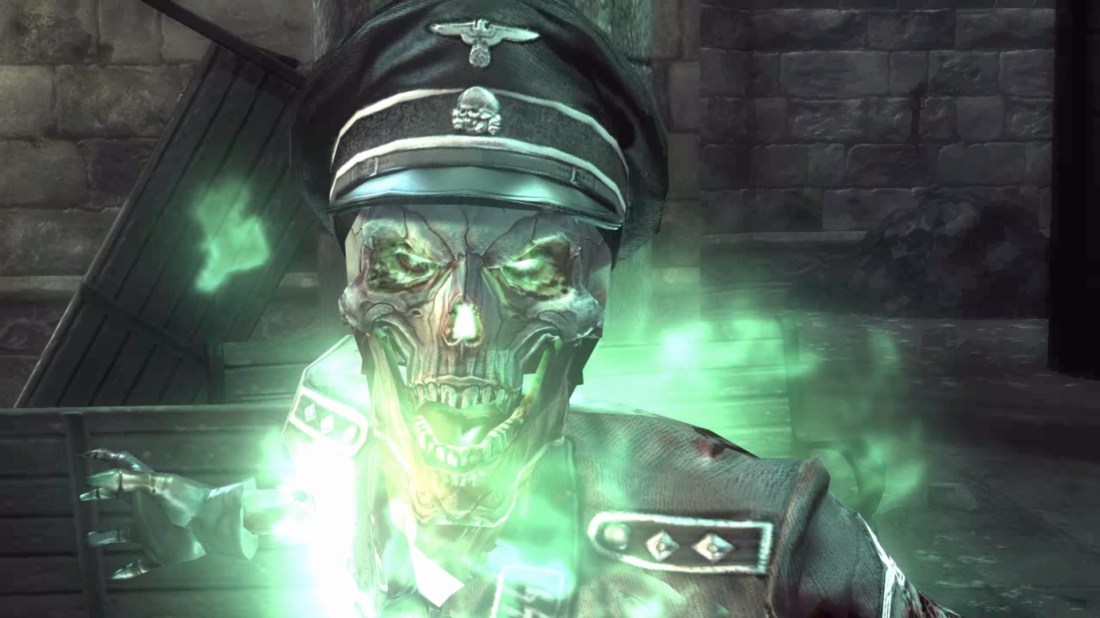
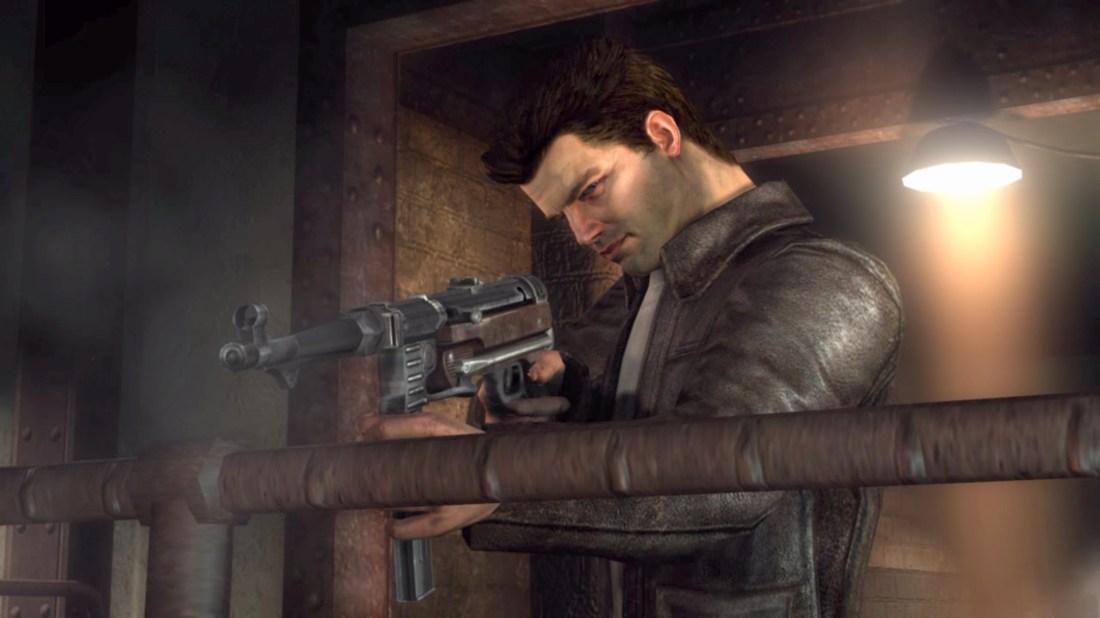
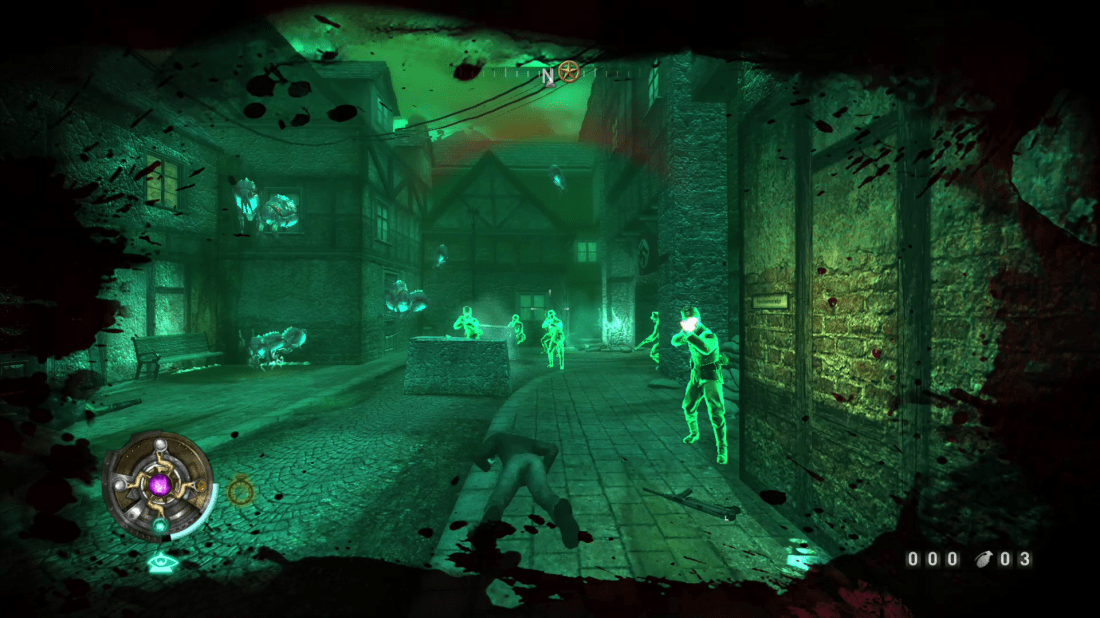
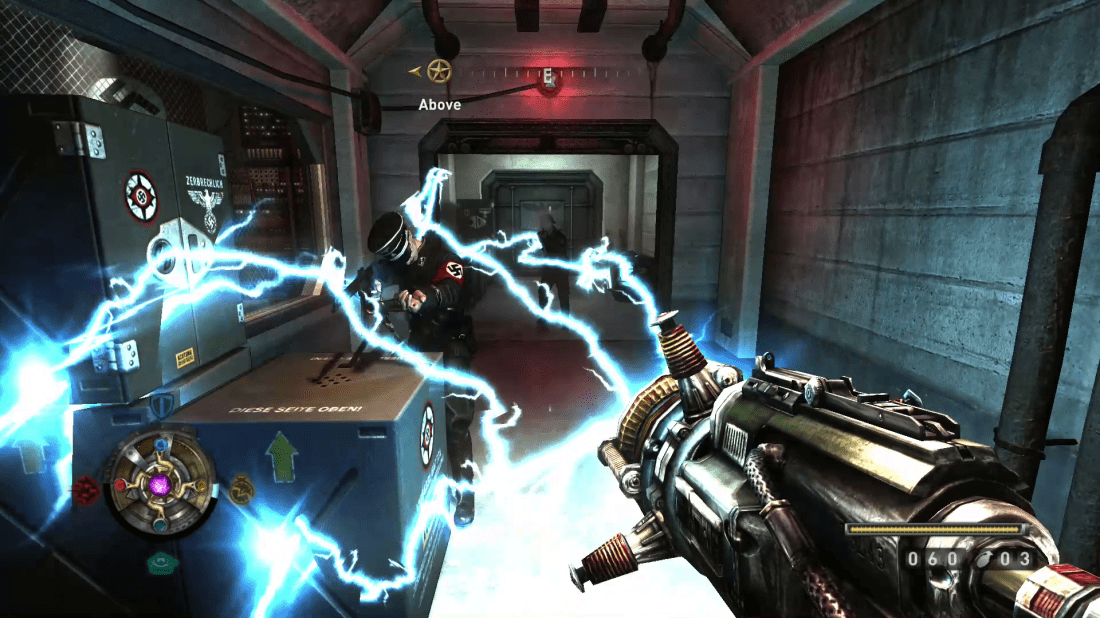
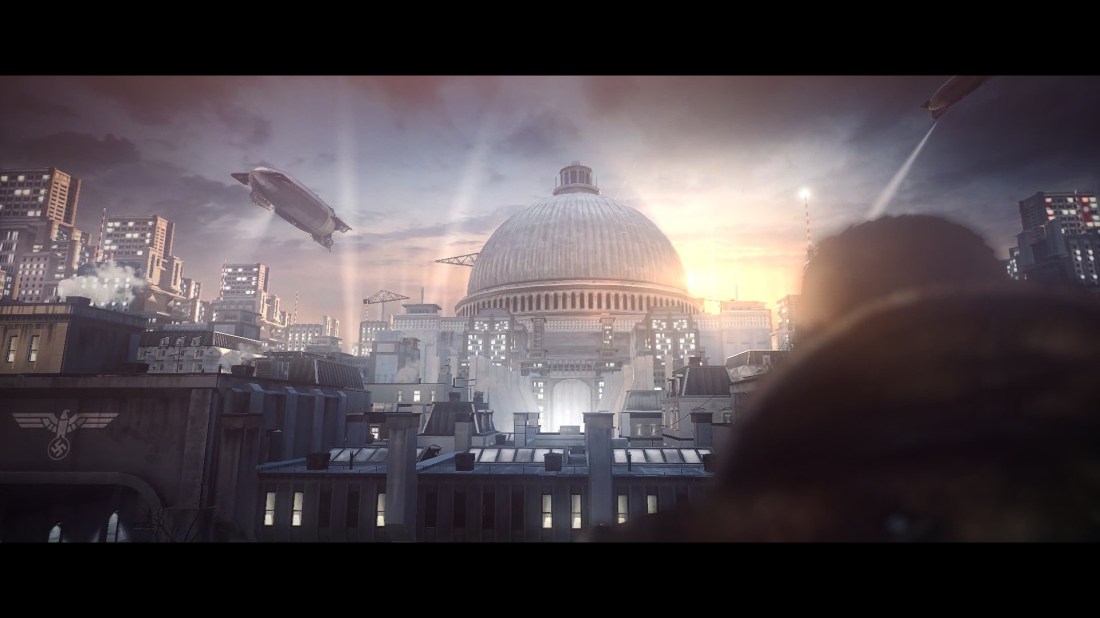
This is what Hollywood calls a Soft Reboot, continuing story elements but resetting the world. Whatever it is, it’s a shame it’s called Wolfenstein. Had it just been The New Order, I might have liked it more. After an opening that sees BJ leaping between crashing planes, getting chased by huge mecha-dogs and taking down Nazis in intense trench fights, our hero takes shrapnel to the head and gets stuck in a locked-in state just long enough for the Nazis to take over. Waking up, BJ regains his considerable strength, links up with the hottie nurse that’s been sponge-bathing him and joins a rebellion in this new world order. I mean, Wolfenstein New Order.
The one thing I can’t get past with W:TNO is BJ’s internal monologue. It’s like listening to Max Payne’s Podcast. BJ never shuts up with his introspective mumbling and now he’s all emotional and awkward? Soft reboot is right. When he gets shot I expect him to shout “I’m a vegan”. BJ should be Austin Powers or Demolition Man, a man out of time but with a unique approach that this new world needs; having BJ on ice for a decade meant W:TNO had an opportunity to explore the differences between the original bad boys of FPS and the modern sensitive heroes. It could have been a great commentary on how shooters have evolved, but instead, BJ is just an arm in a theoretical world run by Nazis. And it’s horrible.
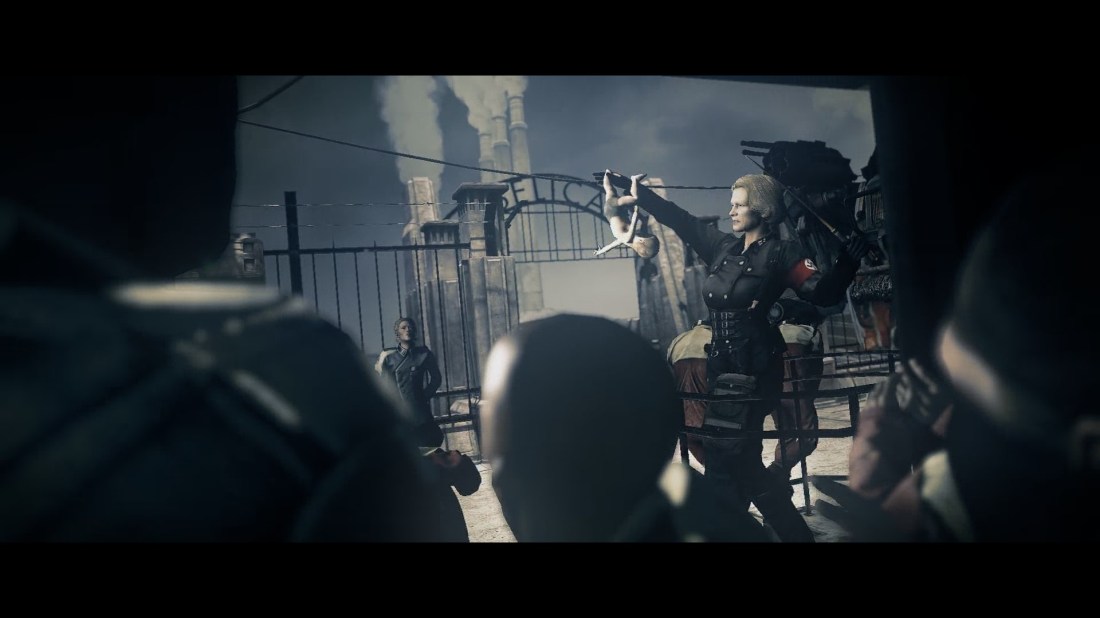
Scenes like infiltrating a concentration camp just feel … off for a game that originally ended with us fighting Hitler in a mecha suit. People in fly-infested bunks, emaciated and crying for food isn’t Wolf – a scene in a cattle-train with screaming people bound for the camp while catching a glimpse of an uber-bitch Nazi holding a baby by its ankles and brandishing a whip is a grave moment – but nevermind ‘cos BJ’s dual-wielding machine guns, piloting mechas and popping into space; is this a Tarantino-style revenge shooter or Schindler’s List The Video Game? Early on our hero takes a chainsaw to a tight-lipped Nazi and that’s fine, but when BJ falls asleep and dreams an original level I’m reminded of why I’m supposed to be here – fun. There’s not much of that in this new world.
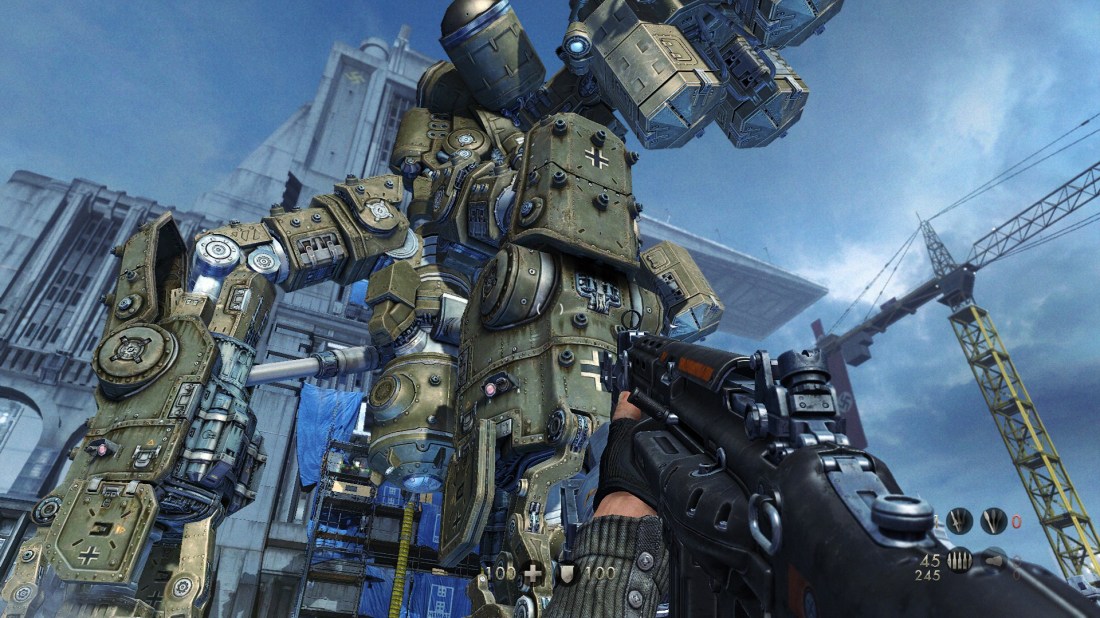
W:TNO is, actually, an incredible game. Its compelling stuff and there’s some great characterisation; BJ and the nurse have an awkward romance (and some hefty sex-scenes) and the resistance are all believable. But it’s not Wolf – even though I was unimpressed with W3D and this is immeasurably a better game, it’s Wolf in-name-only.

The Past – Doom

To explain the effect Doom had on me; Doom was the game that got me back into gaming after I discovered girls instead. Doom is better than girls, that’s how influential it was.
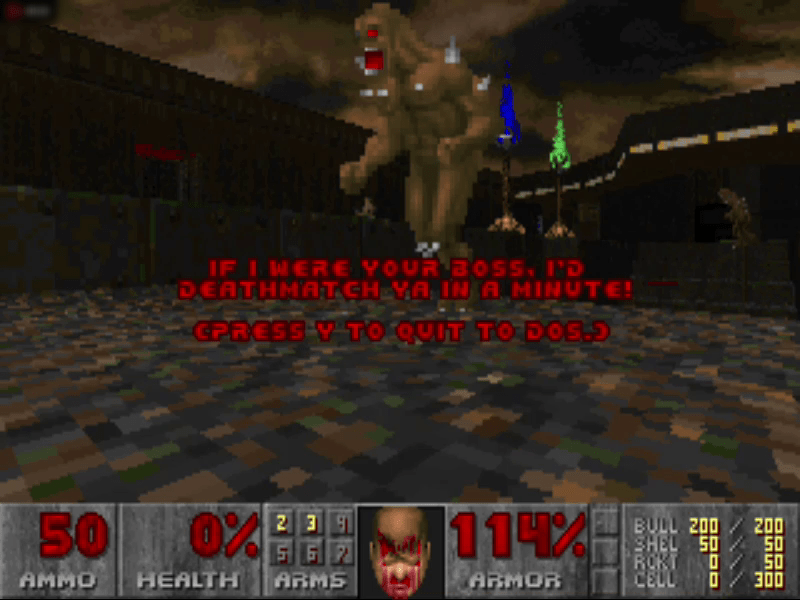
Still, eventually I got bored with it. I started to find the levels wearying, the designs too stark once the initial shock wore off – it was the Clones’ fault. Blood, with its storyline and style, Duke and SW with their humour and self-awareness, Doom started to feel samey. But after all the clones I replayed it and … whoa. This is FPS. I gave up on girls all over again.

I can bitch about the blocky creatures, the repetitive art design, the never-changing slog to find keys but the thing is … the levels are timed to the pixel like some satanic ballet; every single creature is a classic, the art design is perfect, and it’s never dull finding keys – seeing that end-board with the location replaced with a red splash; I did that. Every now and then a level reminds me of some 1990s song, tv show or hangover, but Doom is so well judged I forget I’m playing something 25 years old. Rather than become cute like Wolf, it’s still an intimidating, dangerous game. This is how you do it.
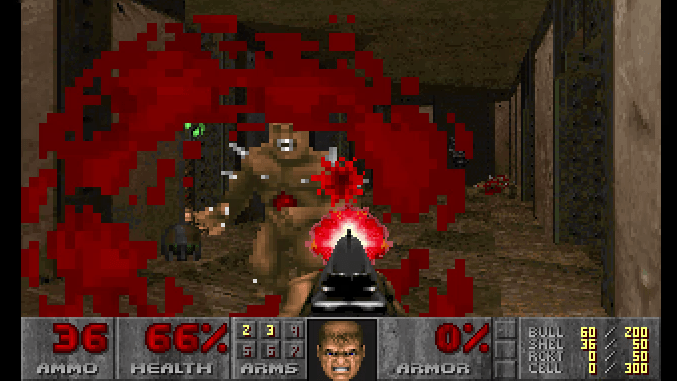
That ‘Doom feeling’ isn’t in its dark corridors; it’s something you get while playing. id knew they were on to something and it’s that enthusiasm you feel, it’s still palatable now. It’s somehow got charisma. See, Chairman of the Board.

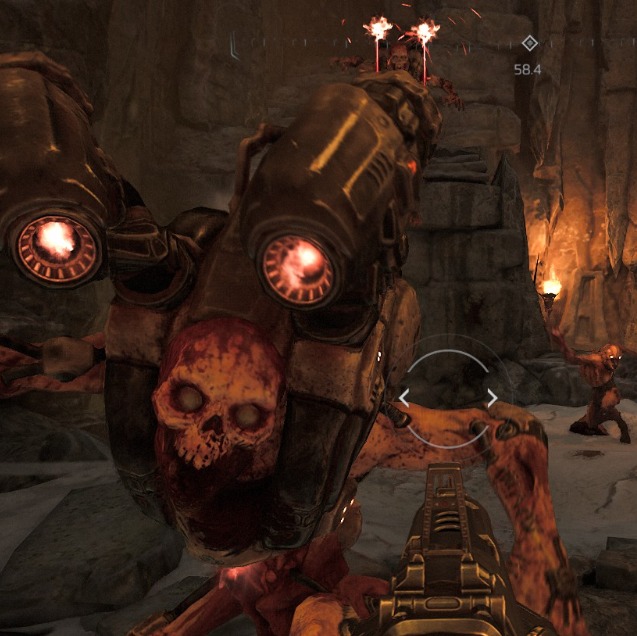
I should follow with Doom 3, as it was a ‘soft reboot’ but I don’t want to. DOOM 2016 was the real reboot, it promised to recapture that Doom feeling. Let’s see if it’s better than Girls.

The Blast – DOOM

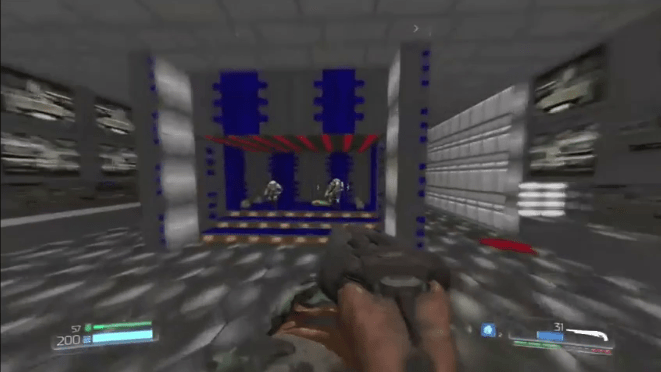
The reboot is 68Gb; the original was 28mb – I have mp3’s bigger than that. Surely, with that much weight to it, with this legacy to emulate, it’s a better game experience? Nope.

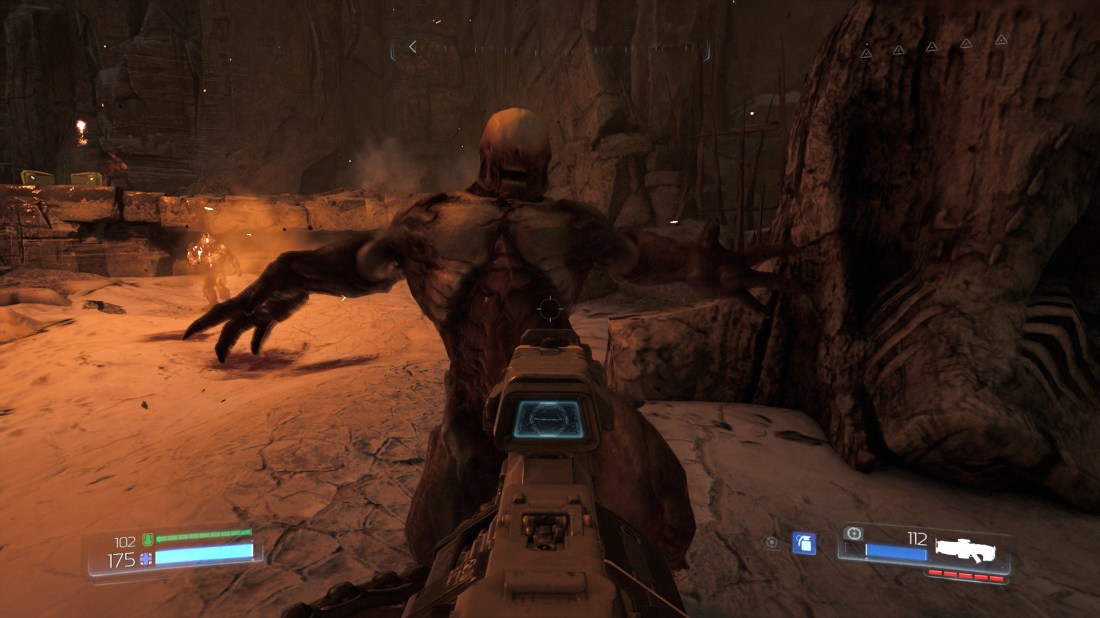
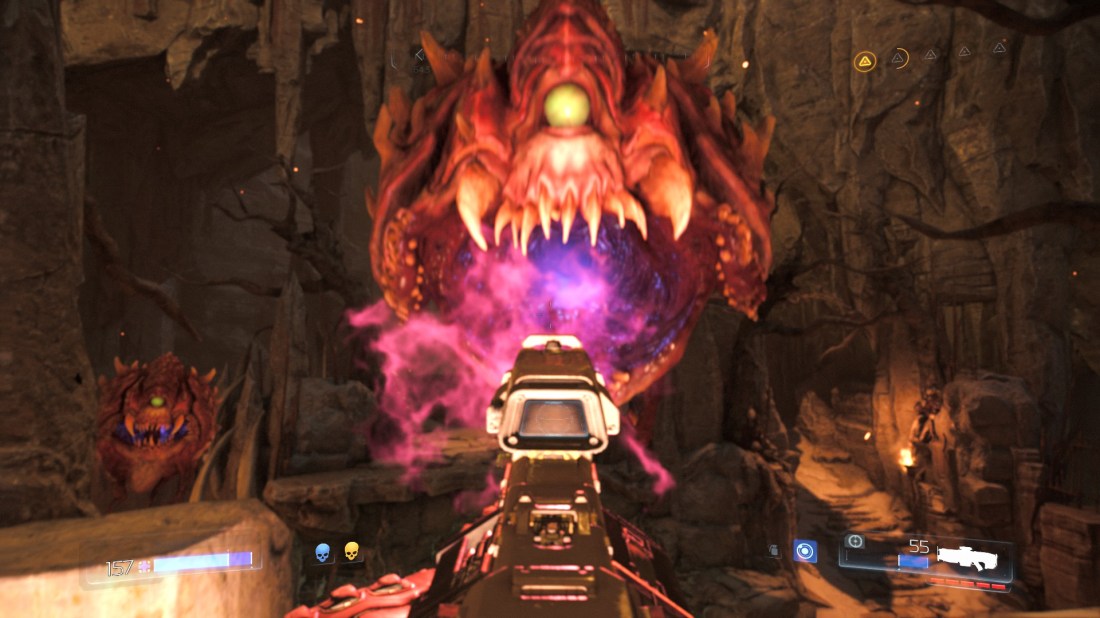
It does look so real it makes you feel uneasy – but weird uncanny-valley realism doesn’t make a scary game; it’s urgent and shouty, the creatures so busy posturing that it becomes a grind. Doom was a moshpit – DOOM is commuting in rush-hour. It’s a punishing game but missing the recklessness, the way the original would hype you up enough to consider punching a Hell Knight. By missing the sense of excitement, fun, the sheer bravado of the original it’s just a by the numbers shooter, closer to CoD Zombie than Doom. You just spend all the time surviving arena battles and that wasn’t where the original’s intensity came from.
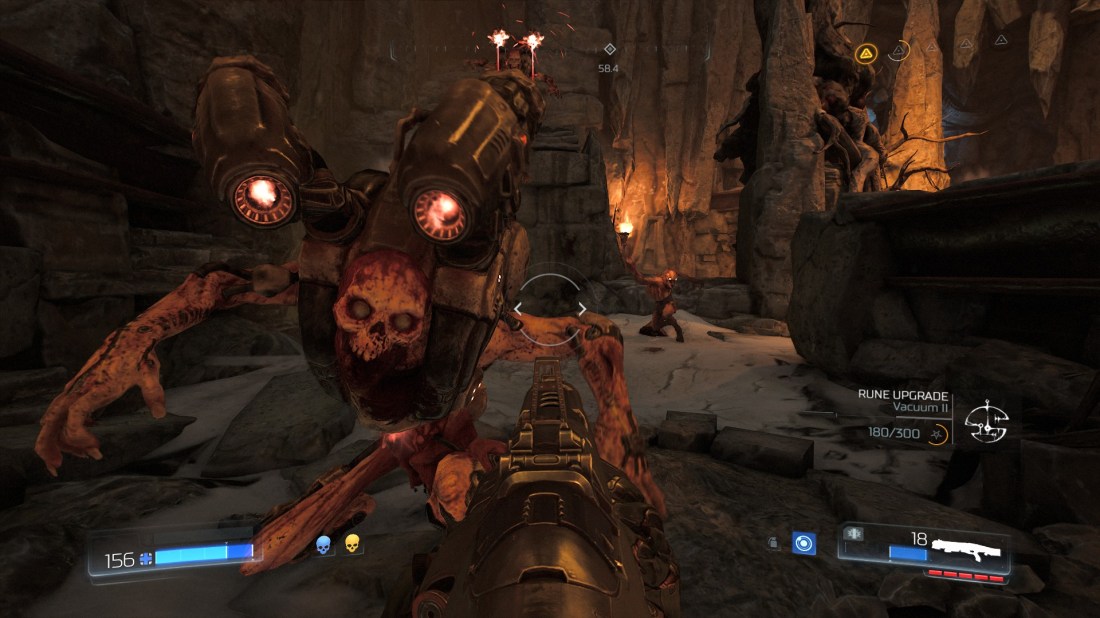
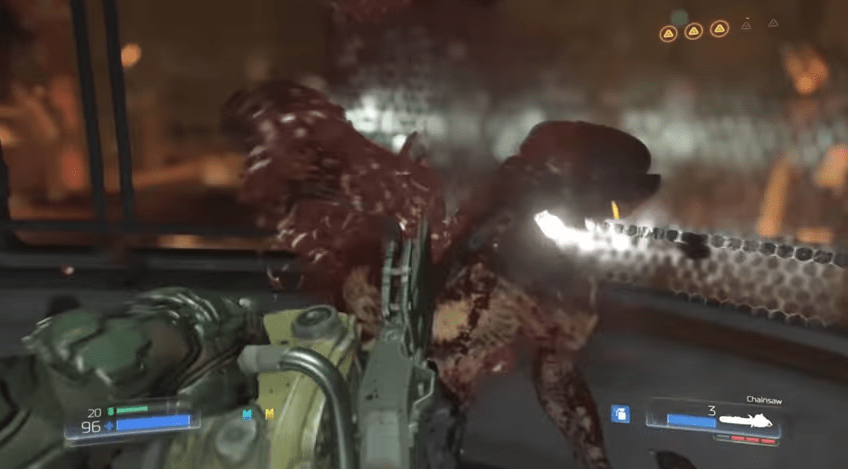
Further missing the point of the original, in firefights we have ‘glory kills’ where a dazed imp or whatever can be brutally killed up close during a QTE. Meh. Half the time you’re so swamped you can’t reach the downed guy anyway and an incessant glowing and flashing is just annoying. Doomguy didn’t have time for this kind of crap and it gets worse – the original has secrets but this time Doomguy is also hunting for fricking collectables as well as suit upgrades, and weapons can be improved by completing challenges; Doomguy didn’t need those, he already was the best. He was John Maclane, John Spartan, John Matrix, John Rambo, John Wick. Not John from accounting who needs all the help he can get. How do you misjudge a character who didn’t even have any characterisation?
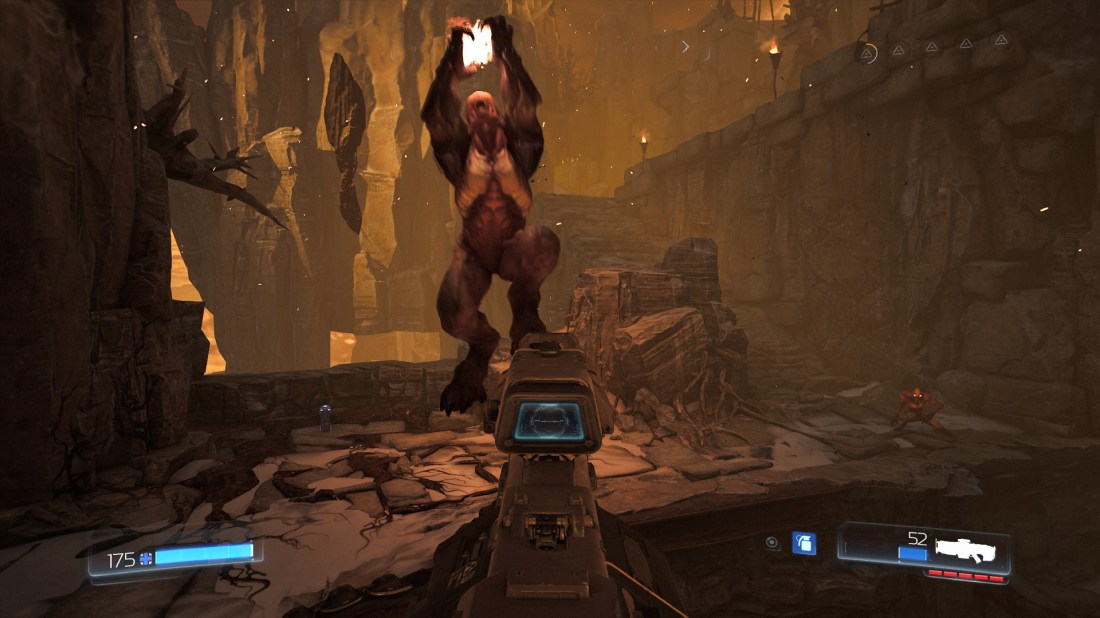
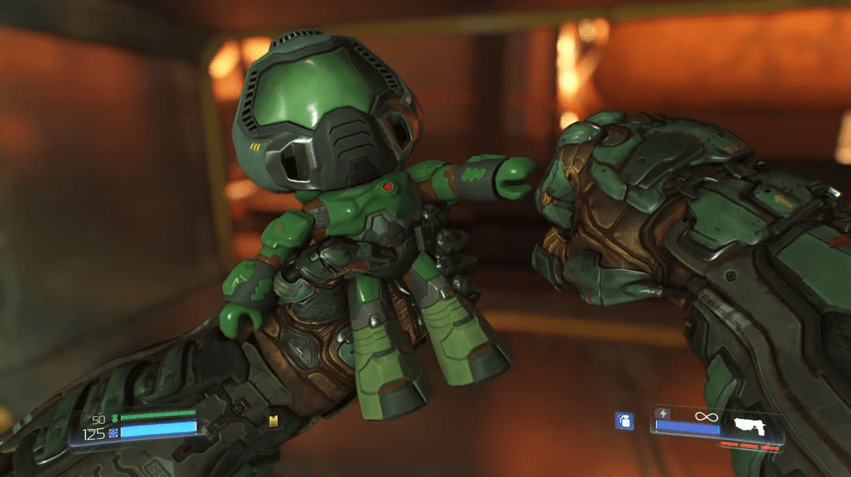
Doom was the daddy of shooters; DOOM is doing a dad dance. There’s nothing new here; this is not the good-old-days and it’s not giving the modern era a kick in the ass the way Doom did. This isn’t a reboot of the original, it’s a reboot of the original’s reputation. It’s just marketing. It’s infuriating – so much so, my original playthrough ended in a rage quit and so did this replay. The biggest mistake though is unlocking a classic-era level. That’s just triggering me to go back to the original again. I should have played Doom 3.

The Past – Rise of the Triad

I was not a fan of RotT when it came out. The cheap-looking digitised effects, the blocky movement of the enemies, and the basic level design – plus, we’re assaulting an enemy base, why has it got coins floating everywhere – and platforming?! This is a First Person Shooter not First Person Mario. RotT felt like a thrown together cash-in clone.
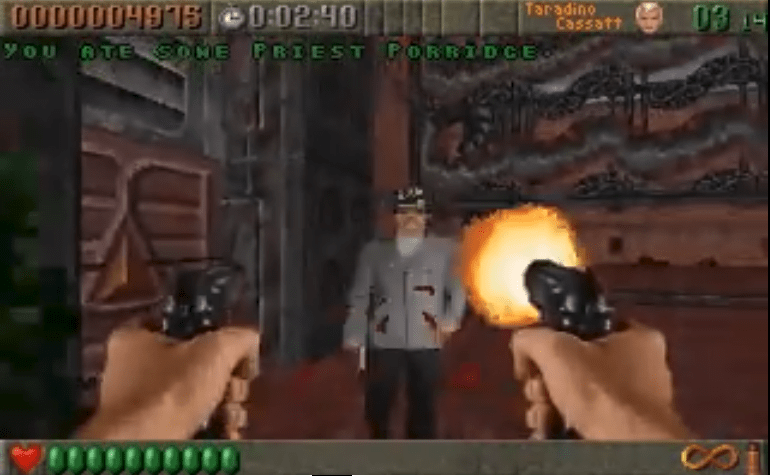
It’s not got any better. There are some advancements like character selection and enemies faking their deaths or begging for their lives while bleeding out, but the world looks cheap and digitised like an arcade rail shooter. There’s an interesting deviation when it comes to weapons though – you get infinite bullets and dual-wielding and alternative explosive/magic weapons instead of an arsenal, but it feels easy – endless bullets or rockets; more than a match for what I’m facing. Traps, trampolines and floating coins mostly.
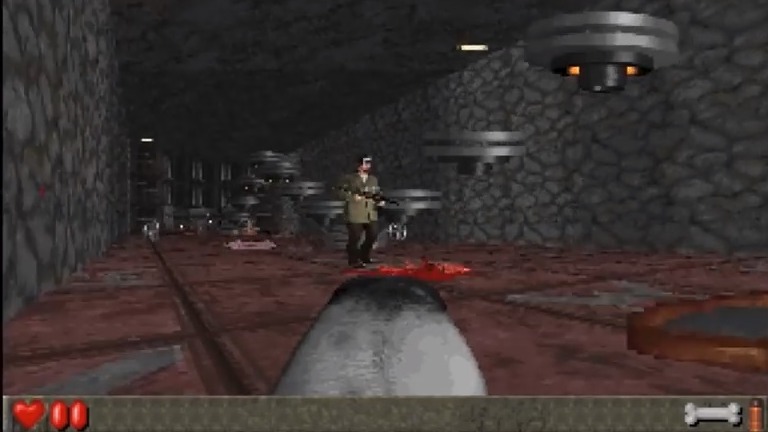
About the only fun I have in this game is watching the enemies fall into their own traps. Why is this castle so insanely dangerous? The trampolines let you propel yourself forward or back but rather than a new shooter mechanic it’s only there to collect more of those bloody coins. There’s power-ups but in Doom they’d give you health bumps, invincibility or let you punch like a rocket, here we can turn into a dog. It’s bordering on a kid’s shooter.
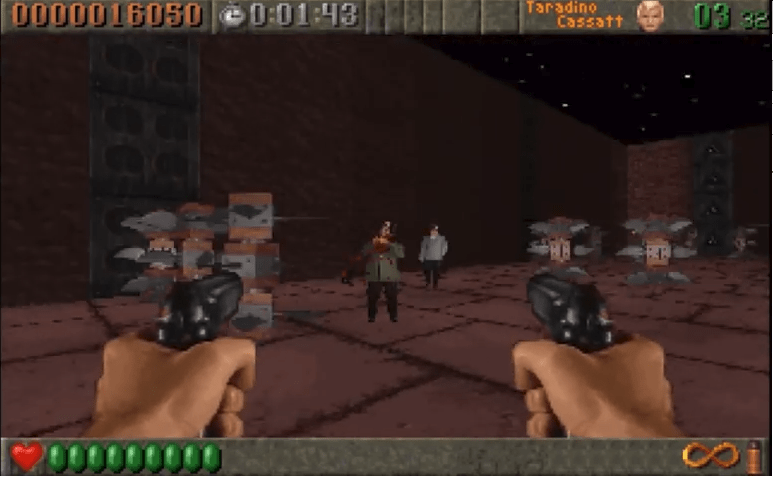
I had it mind RotT was a subtle parody but it’s not, it’s just childish and not in a juvenile way like Lo-Wang’s antics. It’s just horrible. It’s not a clone – because it’s nothing like Doom. For the first time I’m actually hoping the reboot strays from its source material.

The Blast – Rise of the Triad

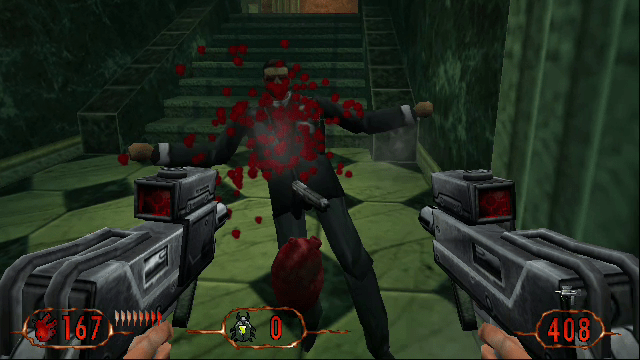
Well, this follows the original pretty closely. Great. The one time I wanted it to deviate … And then … this is a contender for best reboot of the bunch. RotT is the only one to actually remind me of the era; it captures that wild attitude, the unexpected mayhem.
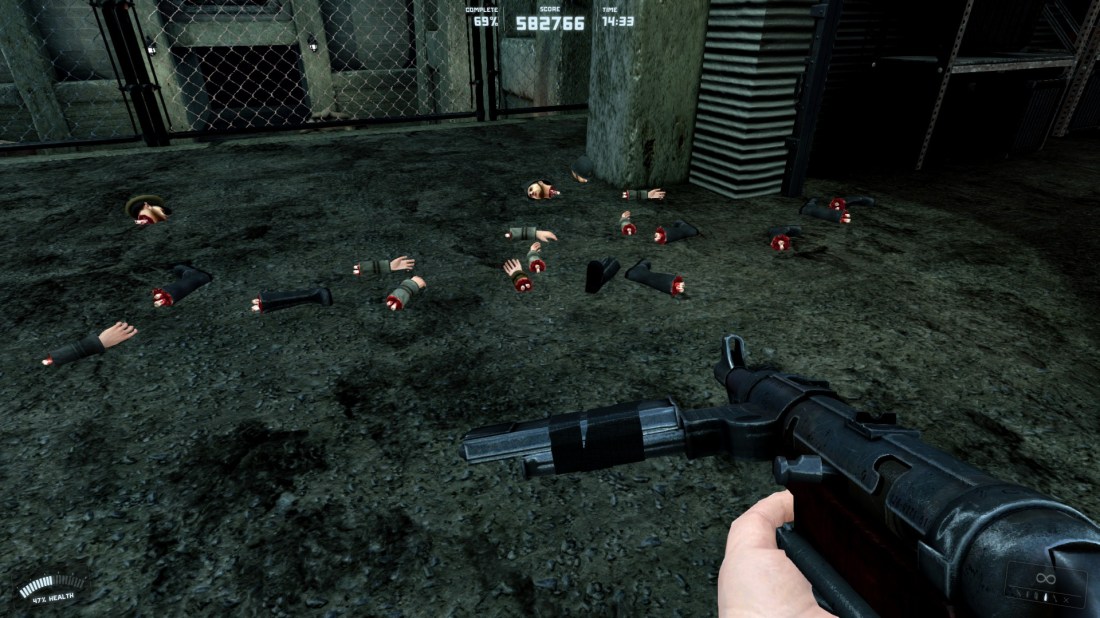
There’s so much carnage to be had, but rather than DOOM’s scraps or Wolf’s atrocities, this is just mad fun. The weaponry works better this time and even the traps, as nonsensical as ever, are fun to navigate and trick baddies into. It’s no longer a kid’s game, it’s a big kid’s game. This is what I remembered. I’m having the same fun I had 20yrs ago.
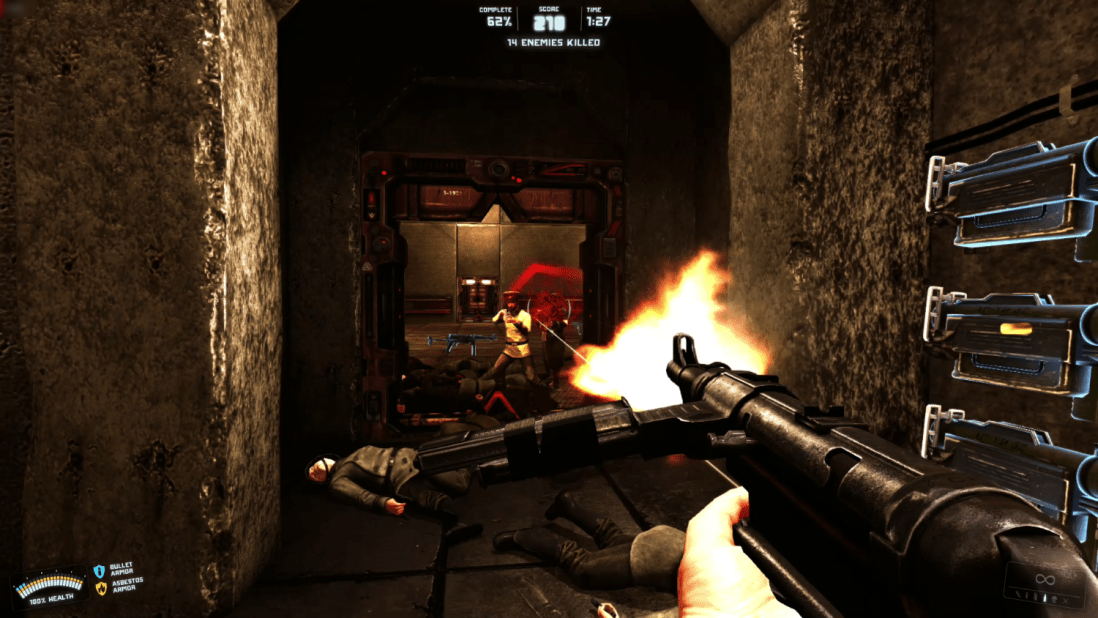
RotT has really pulled out all the stops – not to reinvent the genre but celebrate it. It doesn’t have any of Wolf or DOOM’s big-budget shininess or epic-ness, and maybe that’s why it’s so good. It’s bolted together, low-fi, smoothed over and a bit cheeky – I’m gonna go play it again. This feels weird but, a reboot wins this round?

The Past – Duke Nukem 3D

Doom might have been the biggest and best, but it was unrelatable; a nameless arm that was knee deep in the dead? Doom gave FPS a reputation, but Duke gave it a personality. I loved Duke. To me he was a perfect parody/love-poem to the Arnie and Sly heroes of the 80s meets Roger Moore-era Bond. And his game was equally awesome. Freed of Dungeons, Castles and Hell, Duke shot through recognisable locations filled with interactive stuff while spouting movie quotes and quips, and women swooned. He was my hero.
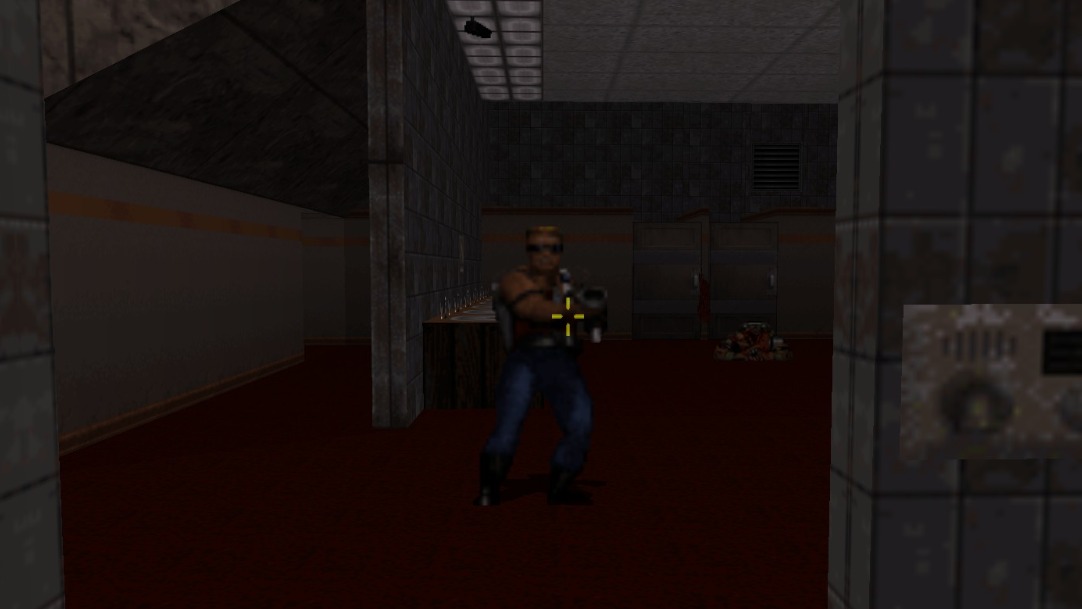
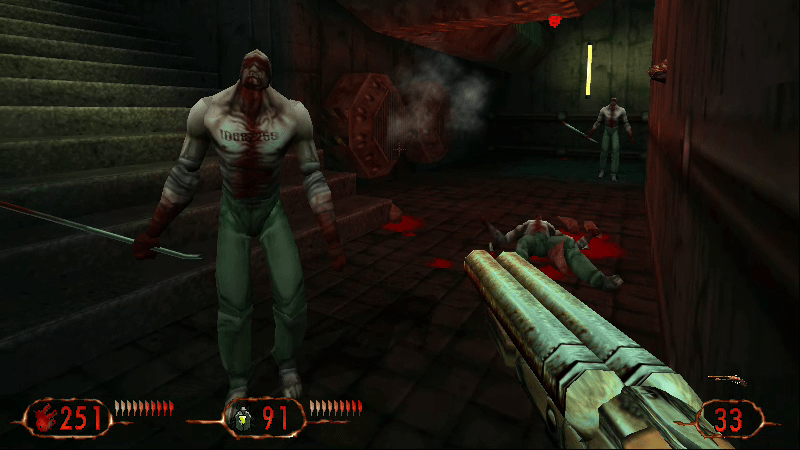
DN3D has so much going on unlike the minimalist Doom (or the cluttered RotT); I’m having a great time drinking from toilets, using jet-packs and air-vents, and playing with myself in a time when men were men and women were strippers. Oh.

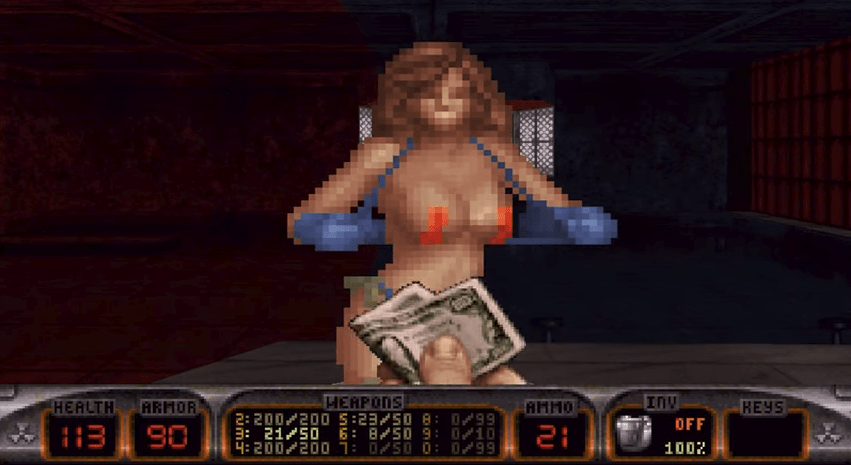
Admittedly, the flashing strippers and porno theatre feel little schoolboy ‘look, boobs’ now but Duke does tip the strippers and doesn’t make lewd comments – if you shoot them Aliens appear to kick your ass, and it’s not like DN3D created strippers or porn theatres. Not the strongest argument and I’m just trying to convince myself but perhaps Duke isn’t all bad. But that unfortunate element aside, it’s fun to inhabit a super-cool ultra-hero, modern games don’t really do this anymore. Come on!
Thing is, DN3D’s distractions hide a fairly generic shooter and that really comes to the fore once we leave earth for a space station. Away from a real world you realise level design is not 3DR’s strength and they covered it with novelties; aside from the interactions, Duke did have the most varied weapons – who can forget shrinking and stomping enemies? And you never get over the first time he finishes that space boss, pulls down his pants and takes out the newspaper … Still smirking like a schoolboy. But as a shooter, it’s not that cool.
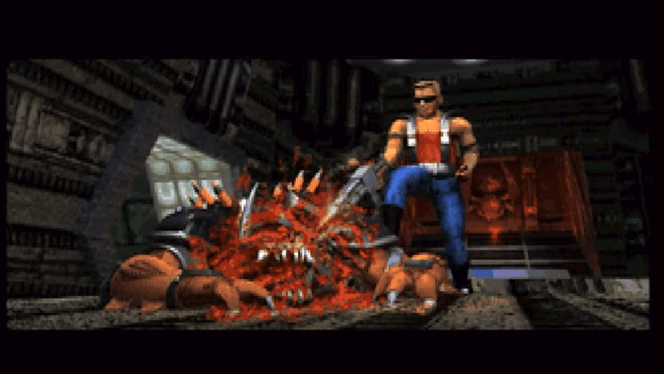
DN3D is great fun but it isn’t up there with Doom’s experience. It’s a bit of a Michael Bay game, shouting without saying anything, but it was a real leap forward for FPS, environment-wise and Duke is still my hero. He needs some sensitivity training, but still. And then …

The Blast – Duke Nukem Forever

Duke Nukem Forever will go down in history for many reasons. Okay two reasons; it’s huge development cycle and being irredeemably shit. Those alien bastards.

The only possible defence you could mount for DNF is its satire; if you’re offended by it, you’re the joke. There are elements that bolster that argument; scenes, references, dialogue and bits of silliness clearly send up Duke and his reputation but you can’t just go ‘it’s parody’ and excuse a level where we search a strip club for a vibrator to have sex with a stripper. Or the “Alien Abortion” game. Or the Glory Hole. Or the twins Duke is dating. Or that sequence. I’ll get to it later (and not much further).
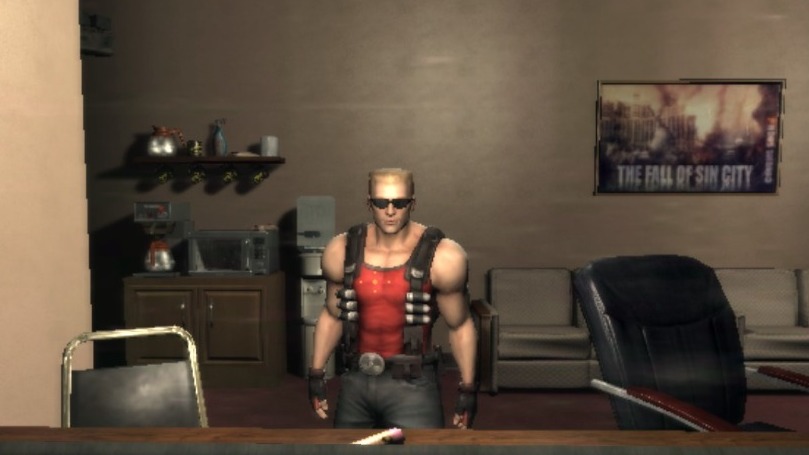
As a game it sucks. It’s graphically uneven and for every fun sequence like a shrunken Duke navigating the Duke Burger there’s dated, uninspired levels – and that doesn’t mean DNF is the throwback I’ve been looking for because they’re either confusingly non-linear or rail-shooter straight with crappy scripted sequences. It’s like playing Steam on shuffle.

Duke is the worst victim though. It’s either mocking him or deifying him and when we meet his incestuous, maybe underage twin girlfriends we don’t think ‘rock n roll’ we think Duke’s a groomer. He’s arrogant now rather than cool and whereas his ego was justified in the original and even a little playful, now he’s just a dumb, misogynistic jock dickhead rewarded for deeply unpleasant behaviour. Thanks DNF, you made me dislike Duke.
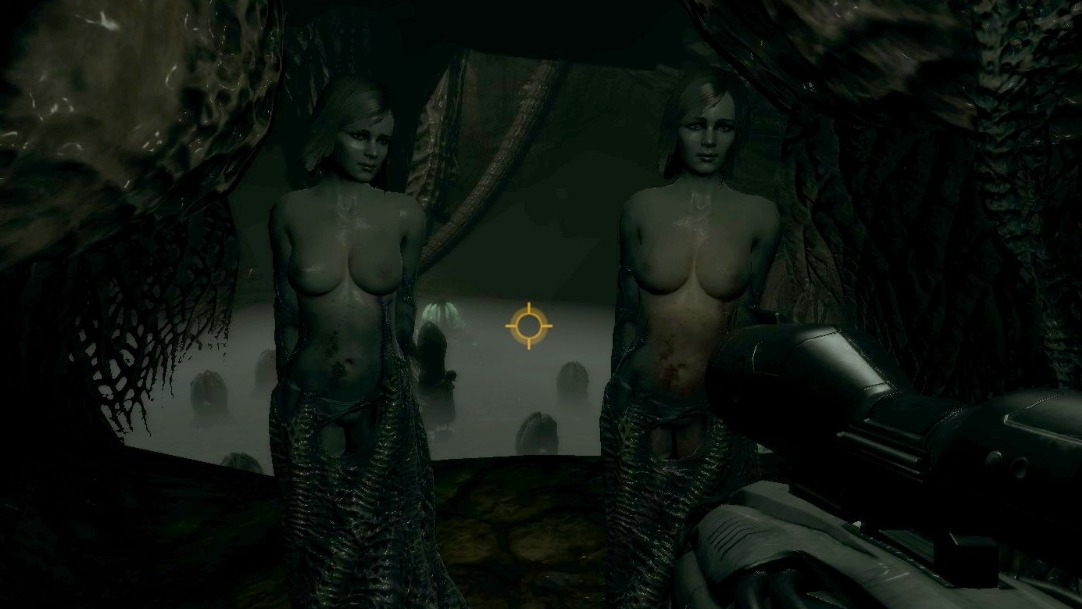
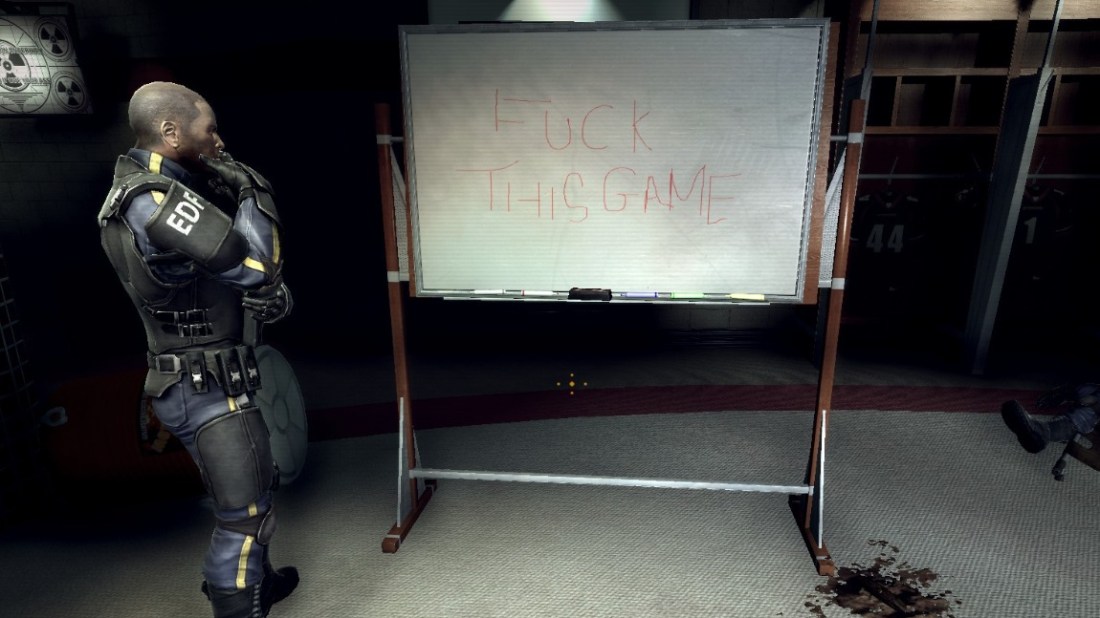
So, I reach the infamous level. An Alien nest, where Duke gamely kills women before aliens can burst out of them – fine, that’s in the original and makes some sort of sci-fi horror sense. Except in the original they were cocooned and muttering Aliens’ ‘Kill me’; here they’re topless hotties and that’s not all that’s on display. Duke finds random boob growths in the walls and can give them a hearty slap for a reward – while saying “strange silicon lifeform”. It’s not juvenile, it’s not commentary, it’s just … embarrassing. But then Duke finds his girlfriends, similarly cocooned. As they beg forgiveness for being raped and make abortion jokes, Duke quips ‘looks like you’re … fucked’ – No Duke, you are. Fuck this. Rage Quit.

I don’t get how this happened. More so than BJ, Duke would have been an ideal character to parody moral-choice worrying lead characters, and it’s so offensive I want to believe that was the intent. But without some context, some wit, this is up there with Custer’s Revenge.
The Past – Shadow Warrior

Shadow Warrior wasn’t a Doom clone it was a Duke clone. FPS was moving fast and SW was an innovator at the time. But in retrospect, Lo-Wang was a backwards move.
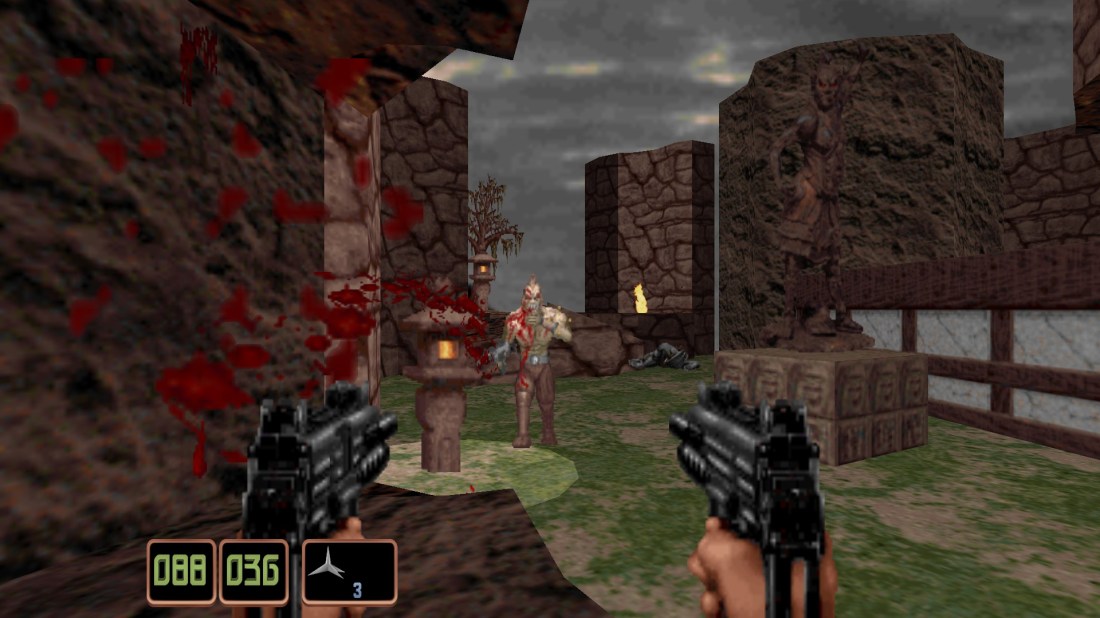
Lo-Wang is not Duke. We could forgive Duke as he was riffing off the macho alpha males of cinema, but Lo-Wang is a misogynistic asshole. Terrible dad-jokes, repetitive lines (“Time to get erased hehehehe”) and some of the creepiest reactions to female NCPs this side of Benny Hill’s Madcap Chase, Lo-Wang is more No-Wang. There’s moments like a showering woman returns his flirt with machine-gun fire but mostly he’s cornering static buxom anime girls and making sexual overtures that would make Austin Powers blush. It’s clear 3DR were trying to be controversial for controversy’s sake after the accusations levelled at Duke and when he’s not being creepy he’s tittering at everything; we’re playing the class clown here. When you want a silent hero it’s not a good sign.
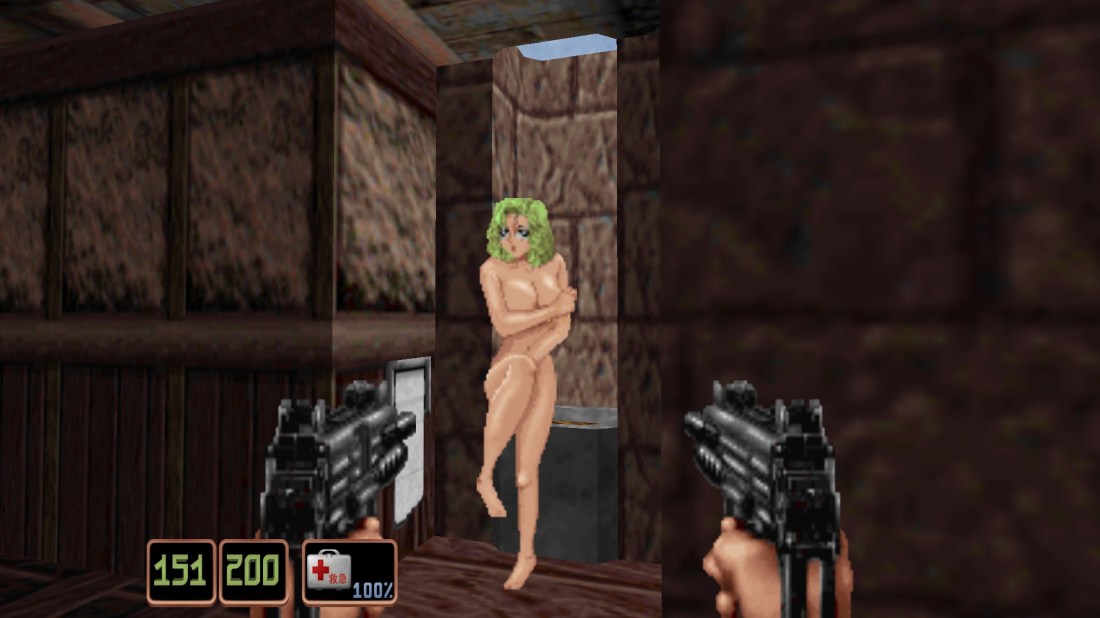
The game itself is a mixed bag. The levels are a lot richer and have greater depth than Duke’s, with recognisable locations and Japanese imagery, but there’s a lot of backtracking and the fights are boring and repetitive. It’s got no direction, no urgency and Lo-Wang’s clowning doesn’t cover the faults the way Duke’s cool did. There’s some major improvements though; 3D creatures, vehicles, multi-depth design, alt fire and puzzles; all of it wasted on an uninspired game and a git of a hero. Modernising a guy who should be on the sex-offenders list is going to be a tall order. Lo-Wang Forever?

The Blast – Shadow Warrior

Setting itself up as a prequel, Young-Lo-Wang is a cocky henchman ordered to get an ancient katana for his boss’ collection, but the deal goes south when a horde of demons storm the place. A spirit called Hoji explains the katana is no ordinary sword – it can slay immortal beings who rule the demons, making the sword’s master their master … Hoji agrees to help YLW claim the sword in return for a favour, and we’re off.
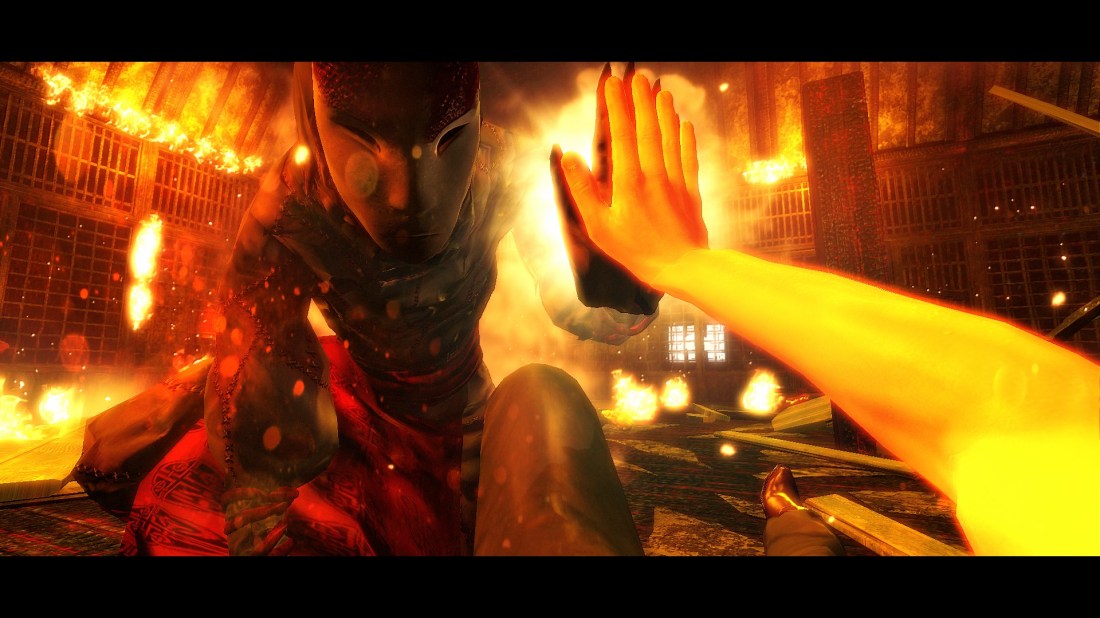
It’s a master-stroke setting this before the original; freeing itself of LW’s past (future) misdeeds, SW succeeds in making YLW palatable; he is full of himself and during the game develops his recognisable persona and look but leaves the perving behind. He’s a really fun, brash character and the dynamic with Hoji, a trickster-like spirit is great. This is damn good. Where it’s less damn good is in the fighting. Guys, you rebooted the wrong game.
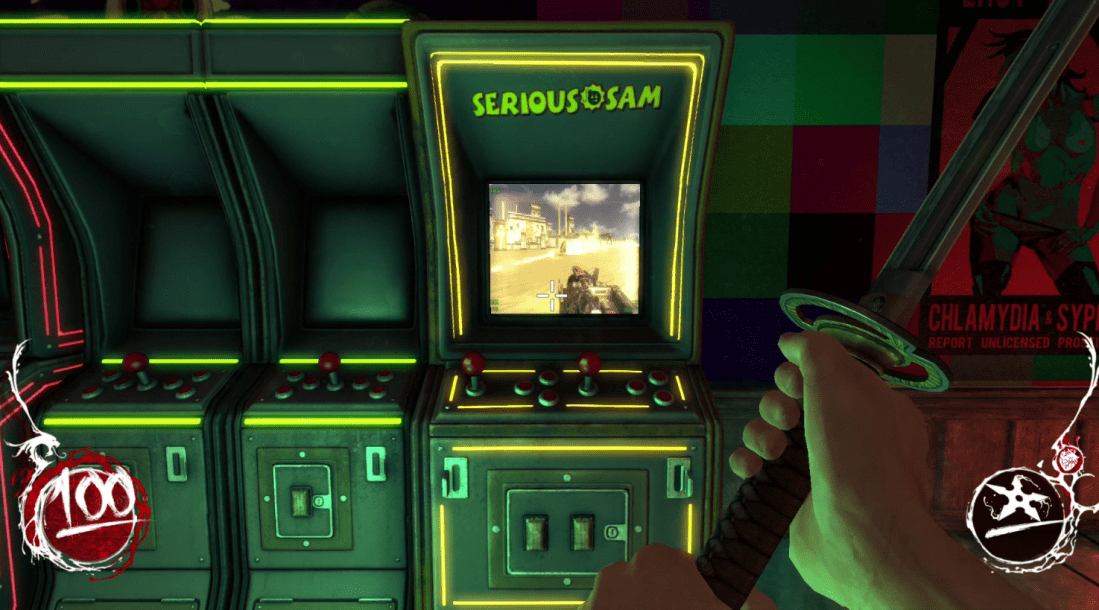
YLW walks into an area, then hordes of creatures pour out of everywhere. Once clear, the exit opens. This is Serious Sam. It is all in good fun, and the battles are frenetic, set in intricate and clever levels (not that you get a second’s breath to consider anything tactical), and it looks amazing, but it’s exhausting and not really the style of the Doom era shooters. I know I bitched about the original having dull fights but now you’re just being silly.
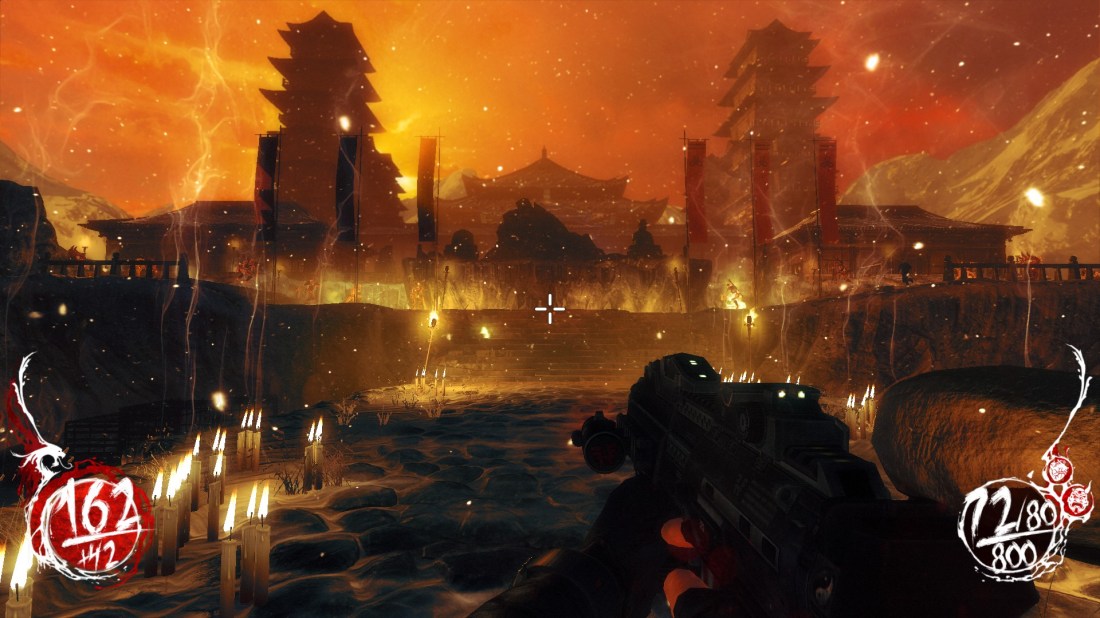
Still, kudos to the devs for keeping LW recognisable but respectable – without turning him into BJ’s mumbling softie. But like Wolf, it’s as modern as they come; YLW has skill trees, special moves, magical abilities and uses money to upgrade weapons – but it is reminiscent of the original where it counts, and of all the reboots, this might be the best ‘reimagining’.

A Blast from the Past?

So are the originals still better? Yes … but … maybe the 90s FPS era isn’t quite as bullet-proof as I remembered. Still, did the era need rebooting?

No. They didn’t add anything, let alone took you back to the era and made you realise what’s missing in modern FPS. But the bigger issue is their success encourages the industry to keep looking back not forward. We need new, imaginative FPS experiences not reheats; if they keep punting new titles masquerading as our heroes we won’t see original, forward-thinking games like Mass Effect or Bioshock anymore; how long before their publishers decide to reboot them rather than chance something as untested as they were on release? DOOM has a sequel incoming and Lo-Wang returned; Wolf got a sequel, with a third announced; Wolfenstein Youngblood, which is a spin-off … when will it end?! The industry needs to find new ways to shoot people.
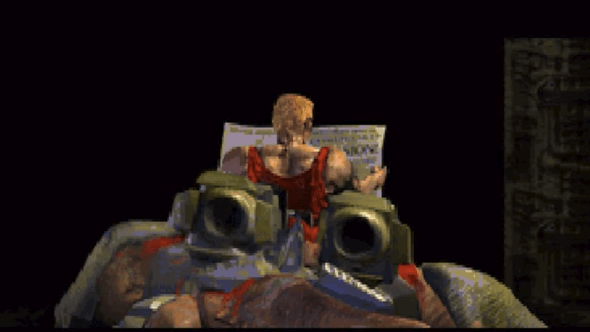
Thankfully, Redneck Rampage, Blood and Heretic were spared reboots, so they can remain perfect in my mind; otherwise my steadfast belief that the Doom era was the best time in gaming would be seriously shaken by some of those replays … but it was the best time and the innovation, the energy, the originality is still there. The Doom era was basic, but it was more than the sum of its (gibbed) parts.

What I loved most about this old vs new playthrough was the reboots that got closest to that era, RotT and SW both came from indie outfits; just like id and 3DR were. They weren’t developers under the watchful and marketable eye of major publishers, they were gamers making games for gamers. SW and RotT reminded me of when we’d excitedly type ‘doom.exe’ into DOS and that’s what I was looking for. Those guys should have rebooted Duke (ironically, RotT’s devs started out remaking DN3D before Gearbox put the kybosh on them); anyone who can make Lo-Wang less reprehensible could reign in Duke without neutering him. Shake it, baby!
Wolfenstein

Second Wind

FBT plays Wolfenstein. No, the other one.

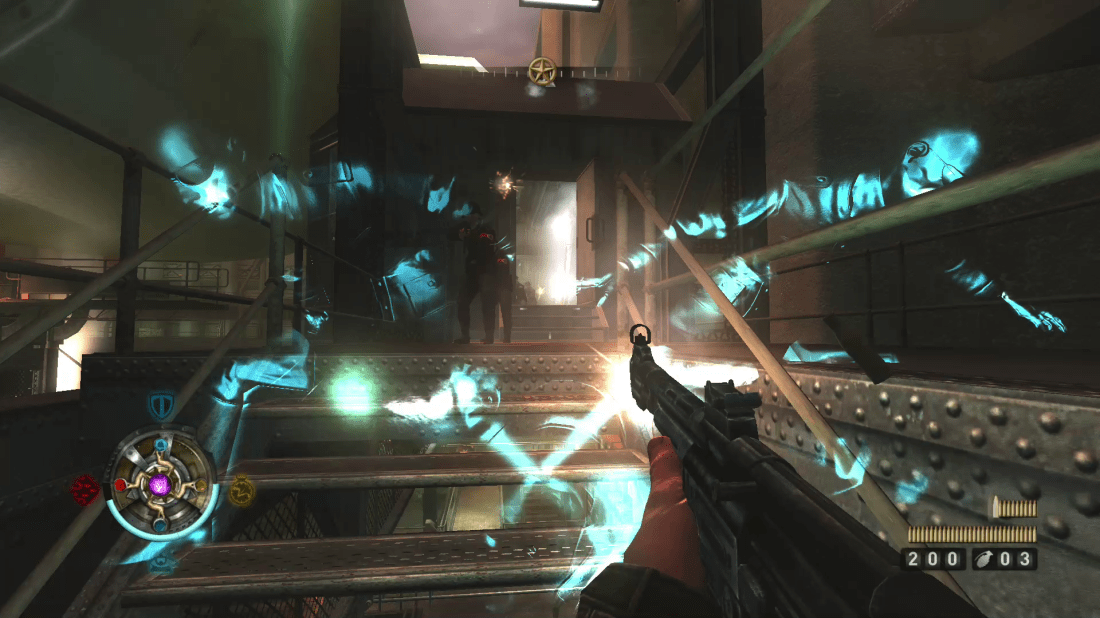
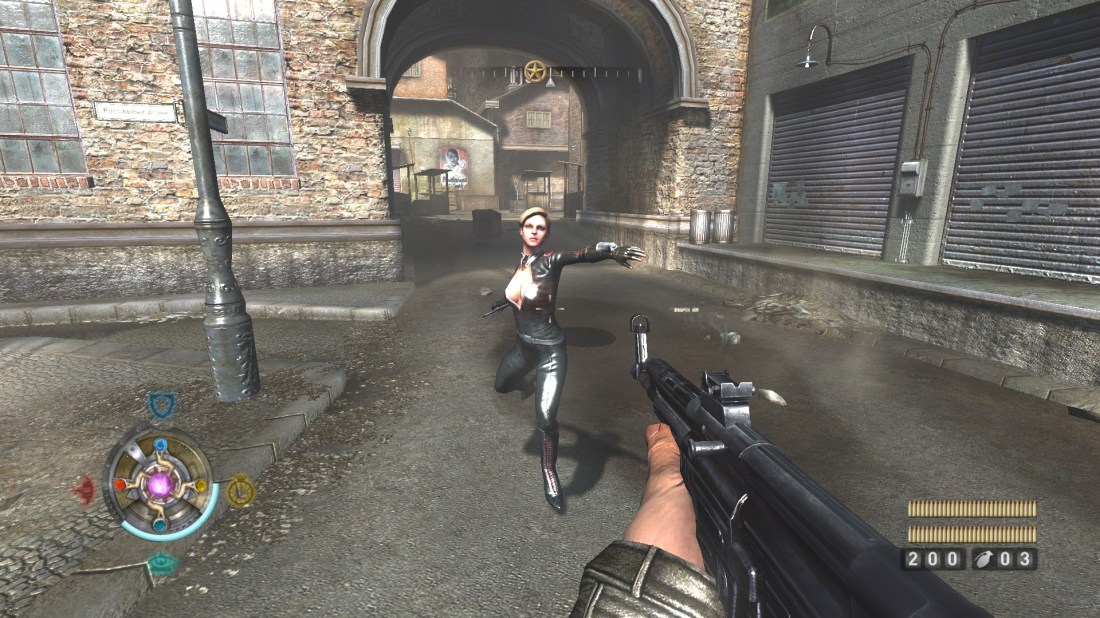
This 2009 Wolf effort has seemingly been scrubbed from existence. Maybe because of rights issues; it was released by Activision who own devs Raven, but the franchise is owned by id who were bought by Bethesda; maybe Bethesda wanted it gone so folks wouldn’t confuse it with the reboot; or maybe it’s just not very good. Either way, it’s been MIA since 2014. But I have a copy I don’t remember playing – time to replay Wolfenstein for the first time. Maybe.

A sequel to Return to Castle Wolfenstein, we’re back in the boots of blonde and blue-eyed BJ, except now he’s a brunette as he’s ‘undercover’. Which lasts roughly 5 seconds before he’s discovered and heroically sinks a Nazi battleship, escaping with a strange medallion. BJ is then sent undercover in a Nazi-controlled mining town where crystals within the medallion are found. Which lasts about 5 seconds before he’s recognised; BJ’s surname is ‘Blast’owitz, he was never going to be a master spy.

Saved by a resistance group, BJ begins doing missions for them while investigating the strange crystals and discovers, via another secret group, that the crystals let the medallion connect to ‘The Black Sun’ alternate universe and focus its energy. BJ must stop the Nazi’s experiments before they weaponise the crystals and use Black Sun to win the war.

The medallion is very handy, granting BJ in-game power-ups; Mire, which slows down time, Shield which reflects attacks and Empower which gives weapons a boost. But the best one, Veil which reveals secrets and lets you pass through walls, is so tightly scripted what seems like a great edge quickly becomes a chore. You can only pass through areas marked with a Sigil and naturally, they’re located only where the game wants you to go. Usually to locked rooms with treasure, or a scripted get-around. Often the only way to proceed is by using Veil so it feels contrived, which makes it less of a cool power-up and more of a lockpick. I wasn’t expecting it to let me leap around the battlefield untethered but – okay, that’s exactly what it should have done.

There’s a strange sense of conflict within Wolf. It looks and feels like a game that has a lot to say but doesn’t, ending up frustratingly unrealised, and it also feels a little old-school. The cut-scenes and plotting jar with the linear, mow-them-all-down tone of the missions, and that’s most evident by the free-roam town we doss about in.

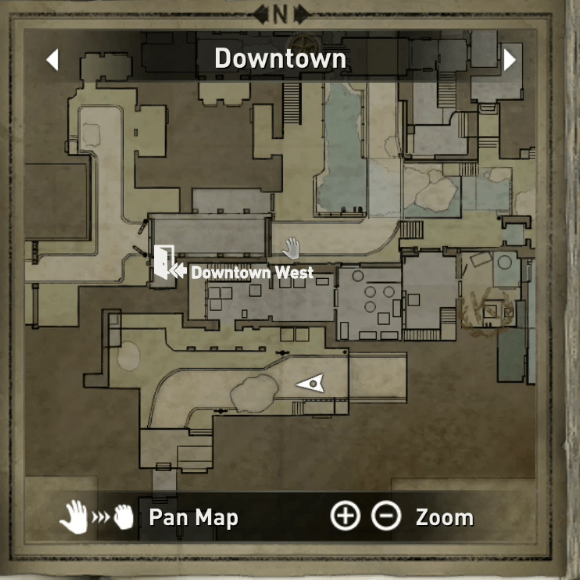
Isenstadt, the town, has two areas each with a resistance base you strike out from. Within those bases you can chat to forgettable characters and pick up missions, several of which can be active at once but the two camps, ‘drive out the Nazis’ and ‘uncover the secrets of the crystals’ don’t converge or conflict so there’s no emotional investment in their plotlines, no final choice for BJ. They don’t even coincide within a location, so Isenstadt ends up like a multiplayer lobby. A really confusing, easy to get lost in lobby with loads of dead-ends, confusing paths and pointless areas. The whole town is one big empty frustration that slows the game to a crawl; I’m too heroic to ask directions, but the marker is no help and neither is the map.

Isenstadt isn’t just a chore to walk through, it’s filled with respawning Nazis. They constantly repopulate, obsessed with finding the world’s worst spy, yet stop shooting if you enter a safe-house then resume when you leave. At the very least we should be either sneaking (like, with a medallion that can let you pass through walls) or killing all witnesses before entering a safe house? At one point we enter a bar and not one Nazi in there reacts – I was literally followed in by Nazis trying to kill me but now they’re all like ‘will ein Pint?’

You can upgrade weapons and the Medallion by using gold and trinkets, but that causes you to waste time searching instead of shooting and Veil just becomes a metal detector. Intel and “Tomes” (from Heretic, why no return to Heretic, Raven?) will unlock some of the upgrades and finding all of them makes upgrades free. I never find them all.

Once you’re finally free of the town, you’re into familiar shooter levels. A hospital, farmlands, mines, a dig, the standard paranormal base filled with freakish experiments, an airfield and a castle (not Wolfenstein), before a zeppelin and a detour into Black Sun which feel very cut-short and reveals nothing about the Medallion. It’s just such an ‘almost’ great game.

Thing is though, it’s a great shooter and loads of fun. The levels, while linear are all epic both to fight through and look at, and once you get your aim in, it settles nicely between modern shooter sensibilities and retro mayhem; there were times when I was just blastowitz’ing everything in sight and loving it. The Nazis are strictly Indiana Jones types and BJ is a bit of an Indy himself, cock-sure and one-liner driven. He can even pick up sledgehammers and axes to throw; that’s never going to get boring. Firefights are given a nice edge by canisters filled with the crystals; shooting them causes Gravity to take a short break which is great, while the medallion’s powers also add levels to the mayhem.

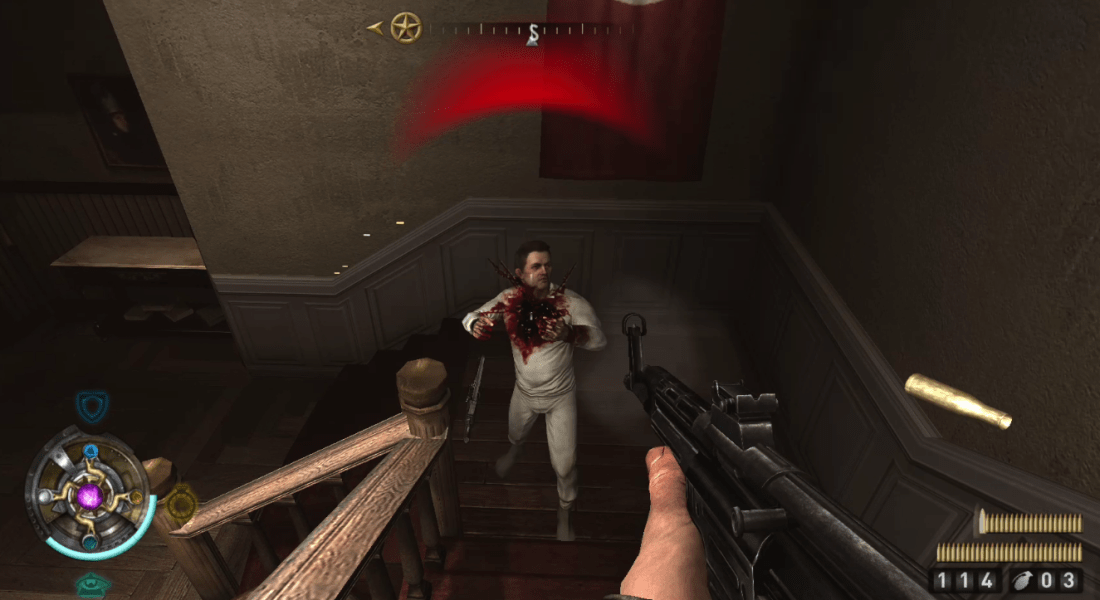
It does show its age occasionally – the Nazis are not as clever as they make out, they’ll yell out my position but not react, shout ‘flank him’ and not move or ‘he’s reloading!’ and not take the opportunity to fire, revealing they’re scripted rather than AI led, including tell-tale signs like sniping one Nazi only for the other to carry on talking like he wasn’t covered in his mate’s brains. But still, I never got bored and they’re varied enough to keep it interesting, going from grunts to SS troops; in one level I sneak into a house at night and get confronted by Nazis in their PJs, which is a different look for the master race.

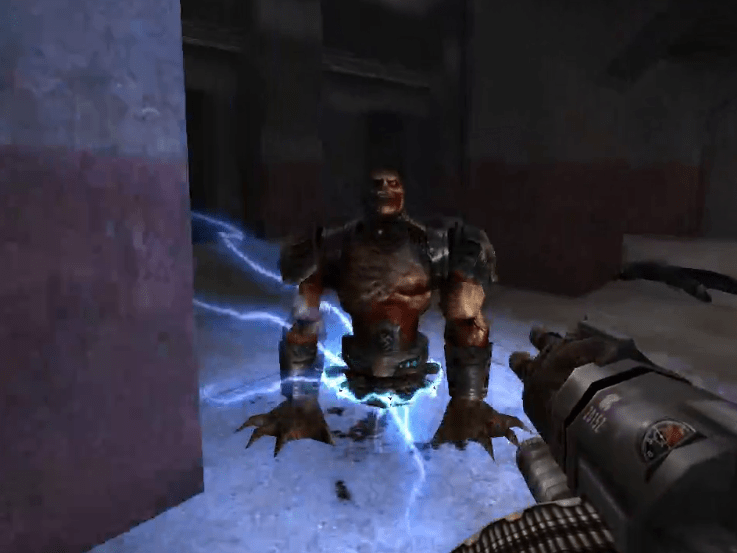
In later levels we face off against armoured sons-a-bitches, scampering experiments, invisible assassins and a wicked crystal-using Nazi who makes like those twins in the Matrix sequels and is great fun/annoying to fight, especially as they can also pass their powers onto nearby troops. We even have the catsuit-clad female Nazis from Return, which is a welcome sight, as is a Nazi dominatrix complete with whip, while in the Veil there’s odd aphid critters which you can shoot to create electric storms. Pisses them off though, as you’d expect.

All in, it’s a fine shooter, you just get the feeling it was intended to be more; there’s a subplot of not one but two betrayers in Isenstadt and we don’t get involved in that, let alone Black Sun; a big bad from there pops up, makes like the Alien Queen then it’s never mentioned again, and there is a good mini-boss fight where you can only damage them while in the Veil, where it’s revealed they’re actually a monster – but it’s unexplored; is he just an experiment too, or are the Nazi elite actually from another dimension? Wolf just seems headed for something bigger but doesn’t get there, and it’s frustrating because you’re up for it. Maybe it was all being set up for a sequel; if they’d revealed more there might have been one instead of the oh-so-serious second reboot.

Ultimately, Wolf is derivative and half-realised and I can see why it’s forgotten. But I really got into this; Wolf deserved more than just being wiped from alternate history and I won’t forget it this time. I’m brunette BJ all the way. Easily my fave of all the Wolf reboots and it deserves a rediscovery if you can find it. It deserves a Steam sale at least.

2009 | Developer; Raven Software | Publisher; Activision

Platforms; Win, PS3, X360

Aliens: Colonial Marines

a second wind review

“Marines! We. Are. Leaving!” What about FBT? “Leave him, he likes Aliens Colonial Marines”
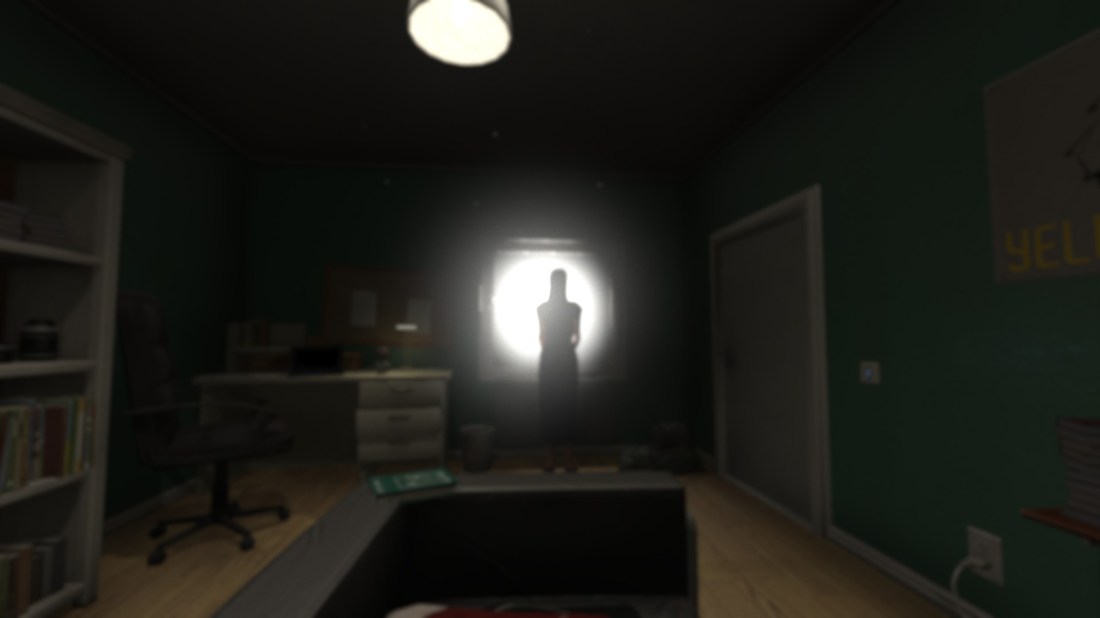
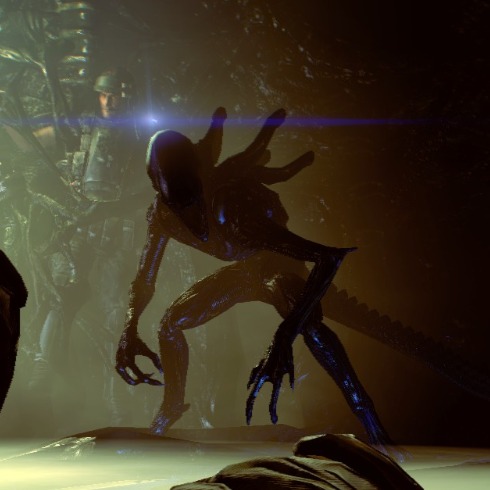
There’s few recent games with such a bad reputation as Gearbox’s Aliens: Colonial Marines. Except Gearbox’s Duke Nukem Forever. Some games fail because they don’t live up to the hype, some are mauled for being dated or half-finished and some are rightly slated for being shit, but A:CM was like a GOTY disaster; all fails included. Announced in 2008 and released in 2013, it was hammered by critics as an unfinished, generic FPS that skated by on the good will of its inspiration, it looked bad and it played worse; a buggy, glitchy CoD-wannabe wrapped in a hasty, nonsensical story – the whole thing stank. Then it got worse.

Those involved protested their innocence even though they looked more guilty than Burke holding a Facehugger over a sleeping Ripley; stories of a tortured production involving multiple developers and a Borderlands-distracted Gearbox there were recriminations, lawsuits and insider-leaks that made A:CM less a game and more an exposé of game production processes; developer hyperbole, publisher pressure and sly marketing culminated in a class-action that saw Sega paying a $1.25 million settlement to customers who bought it in good faith.

But, despite all that, I was curious about the Howard The Duck of gaming. Finding it on Steam for a fiver with all the DLC, I decided to try it for a laugh; expecting a quick Rage Quit, I was all set to ask “How do I get out of this chickenshit game”. And then …

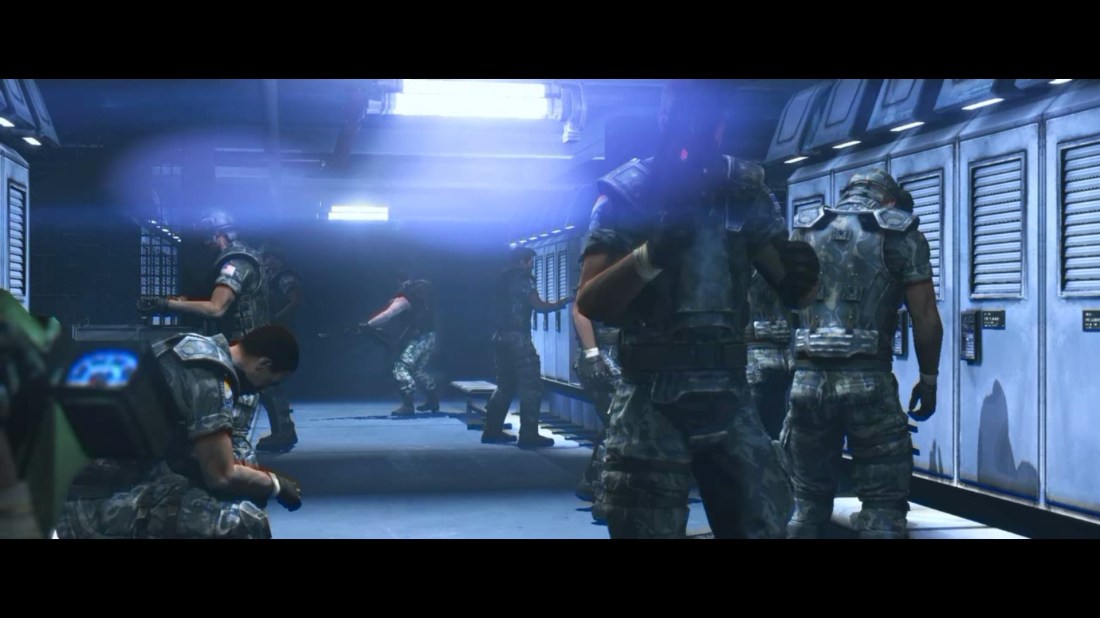
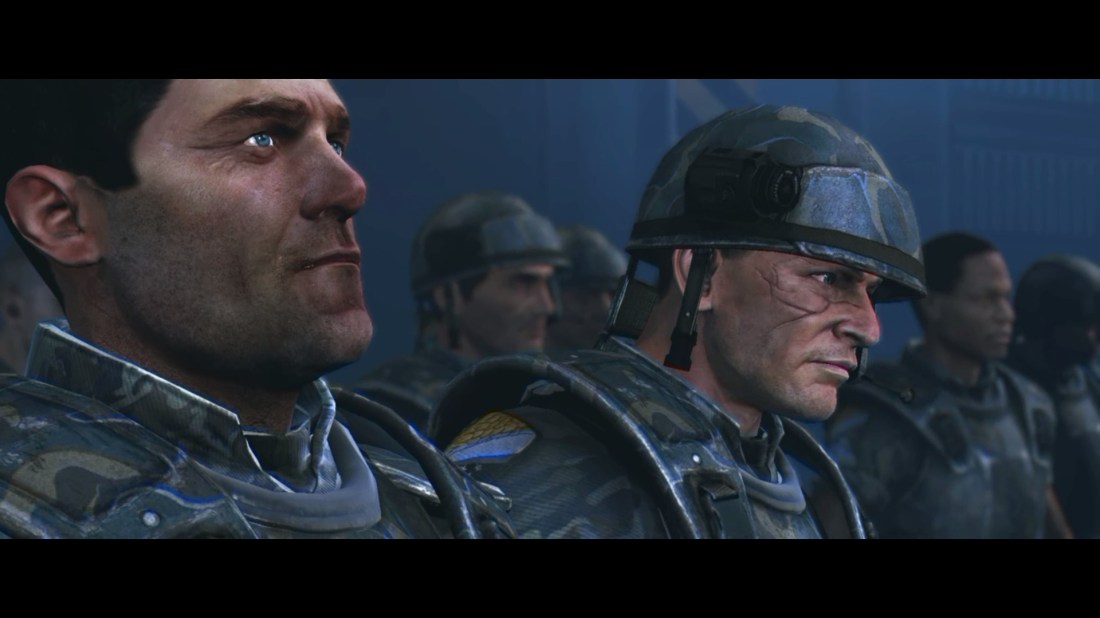
Set as a sequel to Aliens, we open on a garbled distress call from Hicks, explaining the Aliens backstory. Several months later, a Colonial Marines rescue ship, the Sephora finds Sulaco, mysteriously back in orbit around LV-426. All right sweethearts, what are you waiting for, breakfast in bed?

To look at, you can see why folks back in 2013 were a bit disappointed. It does look very 2005. Even though it was built on Unreal 3 – the graphical marvel that powered worlds like Bioshock Infinite – this is a bit rough (one of the biggest criticisms; the trailers looked next-gen). But while it’s not breath-taking it’s not bland either. There’s references to Aliens’ Art Design, the layouts are nice and not too linear, there’s good light effects and detail. I do feel like I’m in Aliens. I’m Corporal Winter, just a grunt. No offence.

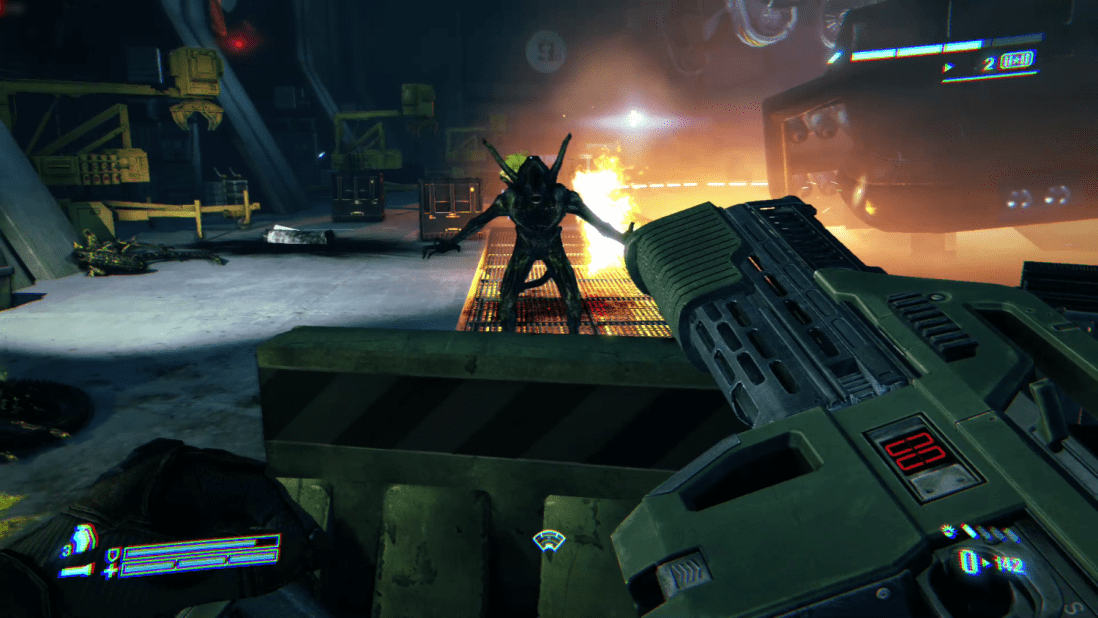
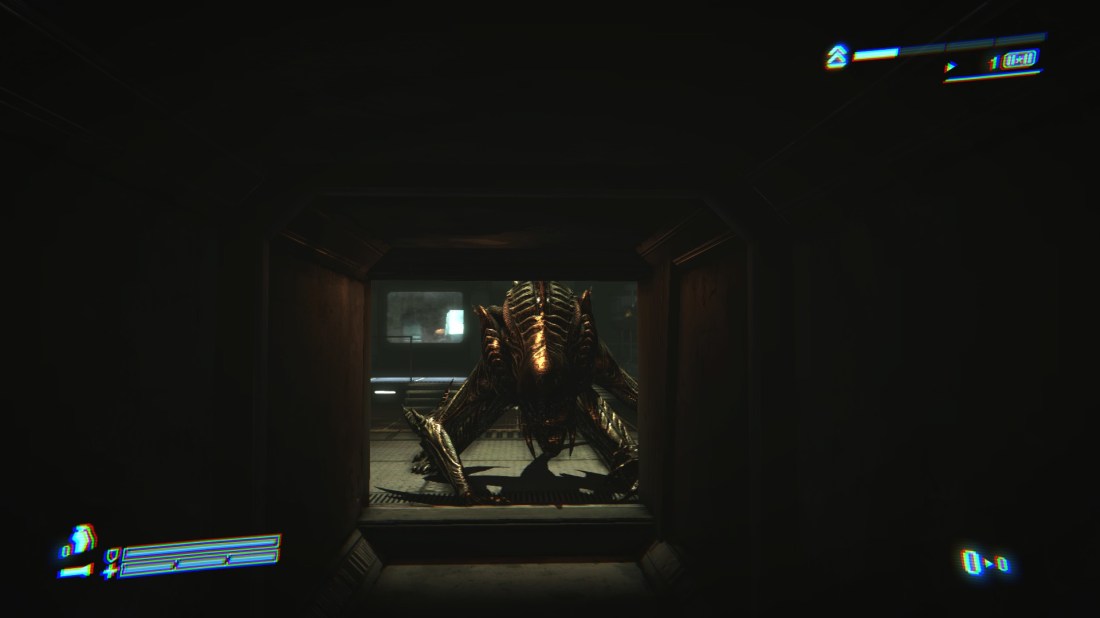
Expecting a bug-hunt, aboard the Sulaco we’re in a stand-up fight. Xeno’s come running, leaping and scratching consistently; it almost reaches Serious Sam levels of hissy mayhem. Don’t get attached to the armour you find, it lasts for seconds and health even less. Not sure if it’s the game being unbalanced or I’ve just gone full Gorman but I die a lot. We’re equipped with a motion sensor, but there’s so many aliens you rarely need to use it. Instead, it’s a handy mission marker as we scramble our way through a completely FUBAR’ed mission. Let’s just bug out and call it even.

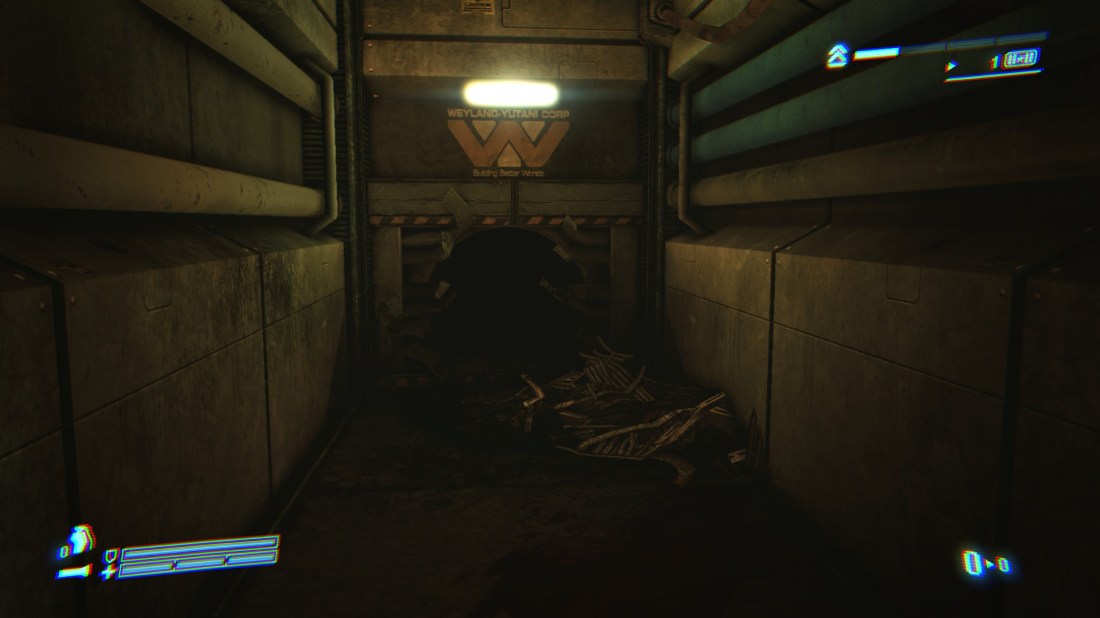
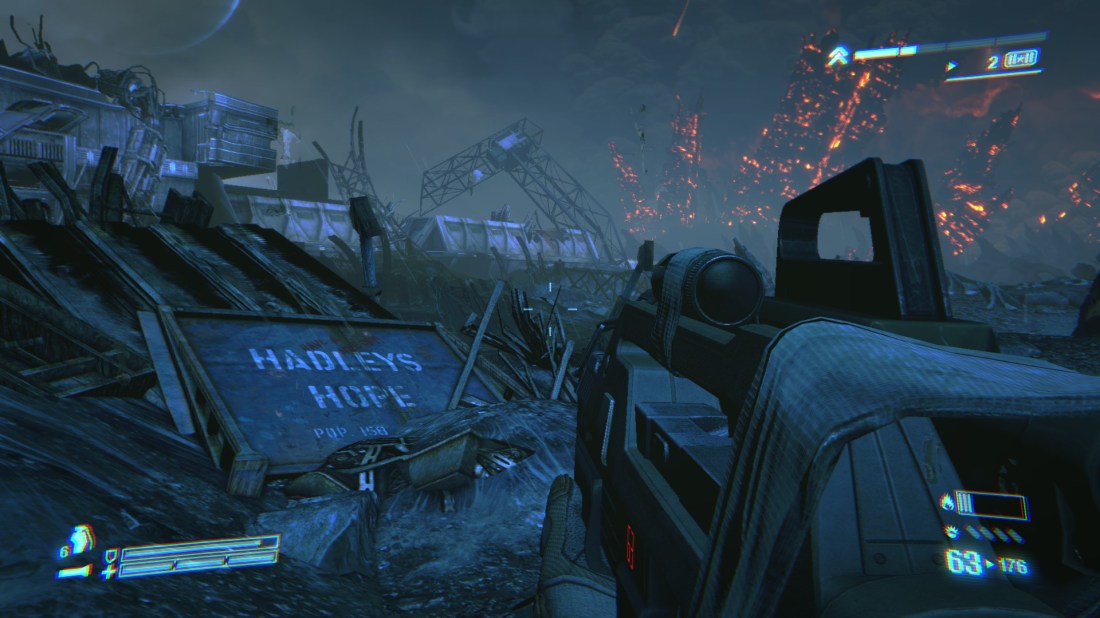
As if dozens of Xenos weren’t enough, Weyland-Yutani got to the Sulaco first, diverted it from Fiorina and returned to LV-426, using it as a self-contained research base for Xenomorphs. Do they ever learn? The outbreak is one thing, but WY are more concerned with Public Relations. They don’t want news of this getting out, and the Sulaco begins firing on the Sephora. Winter, along with Hudson-a-like O’Neal, Vasquez-a-like Bella, Apone-a-like Cruz and Bishop-a-like Bishop escape as both warships explode, stranding the Marines in the ruins of Hadley’s Hope. Which has become prime Xeno real estate.

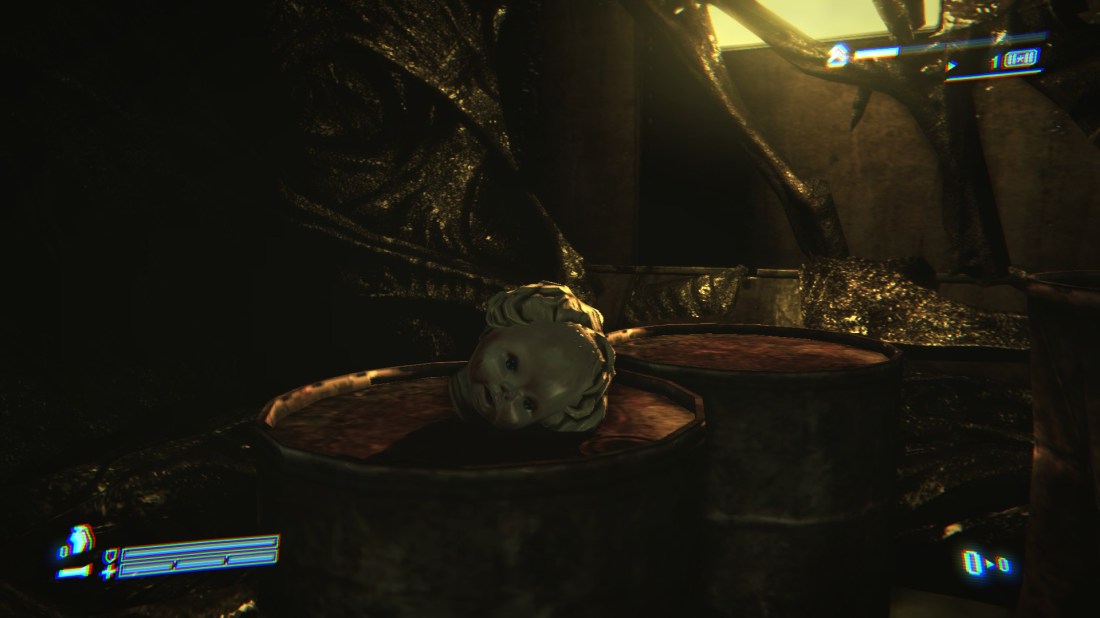
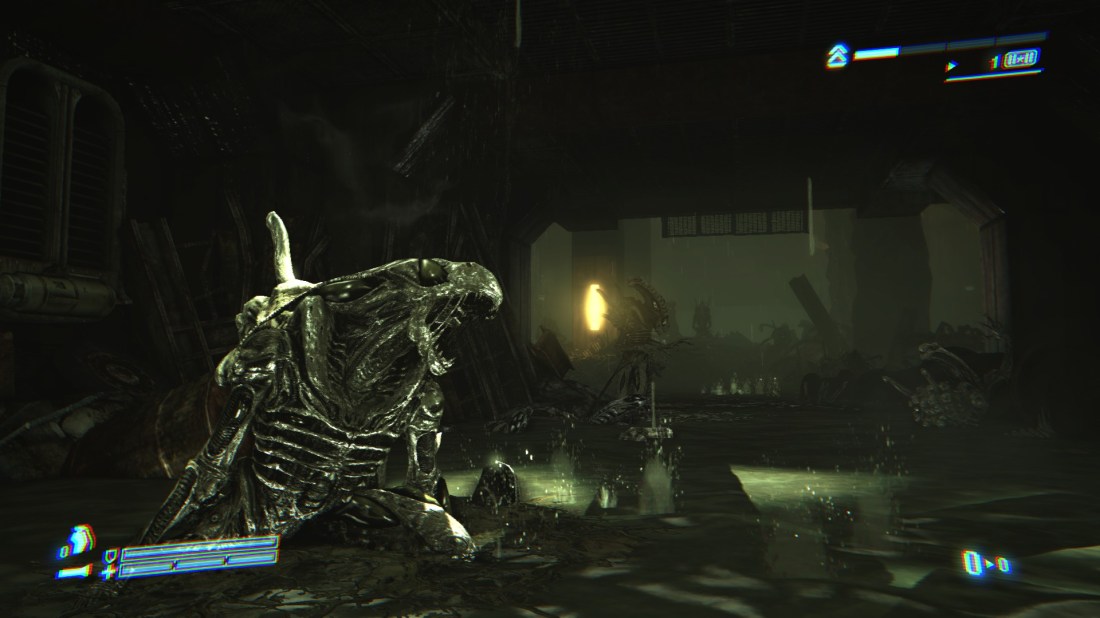
I keep expecting this to get really awful or just really crappy but it’s not. It’s not without it’s fair share of ‘quirks’; the Aliens tend to target you over any other marine – who don’t even block their path; the Aliens just pass right through them. Maybe because Marines haven’t fully woken from cryo-sleep. Often they stand placidly as Aliens pass by or fire at a distant Xeno while one slashes away right in front of them. There’s times where Aliens just pop into existence if I get past a trigger point before the game is ready, and I lost a lot of ammo firing at my own troops when they’d suddenly transport in in-front of me. This isn’t Star Trek. Stuff sinks into the floor, NCPs get stuck, ammo is unreachable and once I passed through a doorway only to see my team running against thin air, unable to catch up – it wasn’t a door, I’d walked through an unbreakable window. It is buggy but this is Aliens where it counts; Hadley’s Hope is a murky, rainy, muddy place full of tension and the Xenos are unforgiving foes – they seem to come from everywhere; indoors they’re bursting out of the vents and from the shadows, while outdoors you spot them clambering over rocks and walls, leaping across buildings; there’s enough to keep both your inner grunt and geek happy; we visit Bishop’s lab, spot the open floor Hudson got pulled through and even find Casey’s head. It’s not exactly taxing to add those iconic elements, but when you consider most game/movie tie-ins, A:CM is trying. At least this isn’t Starship Troopers the game. There’s even Prometheus references, thankfully subtle enough that you might miss them.

Structurally the game is broken into levels with performance results, book-ended by cut-scenes. How retro. The levels always work well though, be it the close-quarters of Sulaco or Hadley’s Hope (check those corners), or the open-space of LV-426. The Aliens always have the upper hand, but even when it falls into ‘watch my back’ waves to fight off, it’s still freaking Aliens and there’s some great cinematics including kills if you melee just at the right moment, and some nice scripted events too, like when an errant grenade in an umbilical tunnel causes it to ripple while you’re trying to run through it. Each level includes a legendary weapon like Hudson’s Pulse rifle that fires in short controlled bursts while DLC also gives us Ripley’s Pulse/Flamethrower combo, the phased plasma rifle (not sure if it’s within the 40-watt range), and the best backup weapon in the game, the ‘SHARP’ Rifle (aka “sharp sticks”) which fires explosive bolts; Alien Goo a-plenty (which of course, burns your armour). Although Winter can only carry two main weapons the entire loadout is available throughout, and level-ups allow attachments like grenade launchers or a shotgun under the rifle for close encounters.

There are some new encounters too, courtesy of WY’s labs. There’s the Spitter alien who snipes you with acid, and the insane Crusher alien, a huge bull that charges – the one time I was thankful for a glitch, it got stuck in the scenery letting me circle around and sharp stick it from behind. A standout moment is a sewer level that features husks of long-dead aliens. Except not all of the husks are quite dead. Movement causes some to shamble around looking for the source of the noise; if they get too excited they explode. It’s a really good level that starts with an unkillable alpha Alien known as the Raven – avoiding it isn’t exactly the stuff of Alien Isolation but there’s some hairy moments as you desperately cut open/weld shut doors as it chases; that’s after a Newt reference where you scuttle through under-floor tunnels while Raven rips open the vents; it culminates in a mano-a-mano with you in a power-loader. You can take those references as derivative or a homage but either way, you can’t deny how much you wanted to experience Aliens as a kid; that’s what A:CM is, wish fulfilment. I LOVE the Corps!

Occasionally we get a break from the Aliens, only to have them replaced with WY Mercs. Then we’re into standard CoD fare with missions like take out AA Guns; certain levels are generic but the WY shenanigans turn the final quarter into a great little actioner. Turns out WY captured a survivor from Sulaco’s crew and we’re tasked with recovering them for their intel. The Aliens are also headed into the complex, creating some fun cross-fire battles between them and WY as it turns out our target is not the only prisoner WY has; there’s a new Queen on the block.

While the gameplay isn’t new it is an effective shooter, and as a continuation of the Aliens narrative, anything is better than Alien 3. While the new Queen reveal isn’t so much a shock as it is expected, the prisoner we free is a huge surprise. Because they’re very dead. It’s made worse by the game papering over the huge continuity hole it’s just created with ‘that’s a long story … anyway,’. As it happens it’s not a long story, it’s a DLC; ‘Status Interrupted’ where you play three different (and tragic) characters caught in events that led up to the Sephora’s arrival – it is a brave bit of retcon but it must have really pissed off the reviewers and fans who played the game on day one. Being expected to buy the Season Pass to find out how this reveal makes sense is not how you win back fans.

Our new friend explains our only chance is a supply ship that services the research base, which of course is next door to none other than the Engineers’ space craft. It’s is a great mash-up between Kane’s tense walk through the egg-filled mist and “they’re coming out the goddamn walls!” panic. This game is like an Aliens Greatest Hits Compilation. It might be the source material triggering the thrills, but A:CM never feels lazy and the final is a hectic chase to stop WY’s plans; it’s no spoiler to say it comes down to Winter vs the Queen – how could it not be? It’s a well-done boss battle (except if I get far enough away she uses the Marine’s teleporter …). As the credits roll I’m still waiting for A:CM to suck. This was worth waking up to Drake’s face for.

This doesn’t feel like the thrown-together cash-in originally reported. Perhaps the stories of its tortured development coloured the early reviews, but five years on, A:CM seems to have been unfairly judged. Its heart is in the right place even if it’s a little buggy and under developed in places, especially the storyline; having one of our team slowly succumbing to an alien embryo doesn’t land quite as emotionally as it should, and the prisoner recovery falls flat narratively (they just become a follower and an exposition expert) and the reveal takes you the gamer completely out of the moment because you’re going ‘wait, what?!’ While it’s a welcome return from the dead, there were other Aliens characters that would have made things more interesting when considering the WY element.

Based on the extended WY Merc scenes (and the open ending), clearly Sega wanted a CoD franchise; they also invested heavily in multiplayer (most of the DLC was MP levels including recreations of the movie locations) but we’re just here for the Aliens and it does succeed at putting you right in that hectic Hive scene. You’re never safe, never on top of things and almost everything goes wrong; A:CM takes the scene where Hudson says they won’t last 17 hours and makes a game of that panicked thought. I lasted 10 hours, and I had fun start to end. Get on this express elevator to Hell.

2013 | Developer Gearbox Software / TimeGate Studios | Publisher Sega

Platforms; Win (Steam), PS3, X360

SOMA

a second wind review

“who thought sending a Canadian to the bottom of the sea was a good idea?”

FBT thinks it was a very good idea.

In 2015, comic-store clerk Simon Jarrett is involved in a car crash, losing his sweetheart and some of his skull; left with pressure on his brain that might kill him at any moment, Simon meets not-yet-a-Doctor Munshi, who is developing a radical way of scanning the human brain. Ignoring the suspect office and equipment, Simon agrees to be a lab-rat hoping the scan will allow surgery by revealing the pressure point. Unfortunately, Simon wakes to discover he’s under even more pressure – the entire Atlantic Ocean.

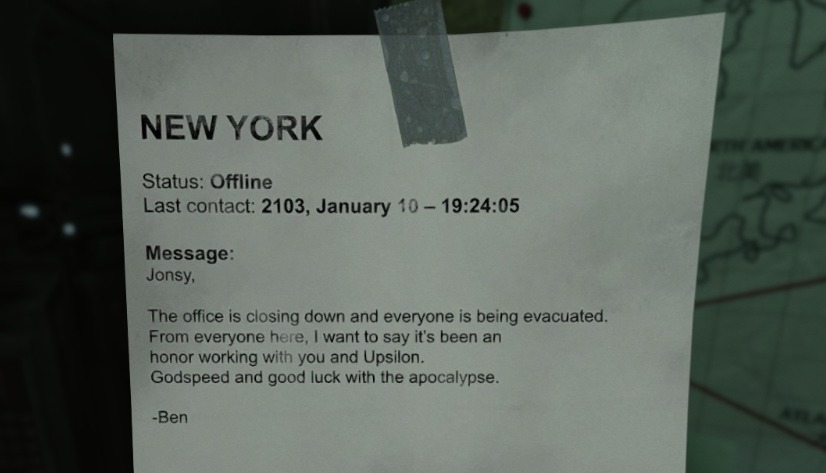
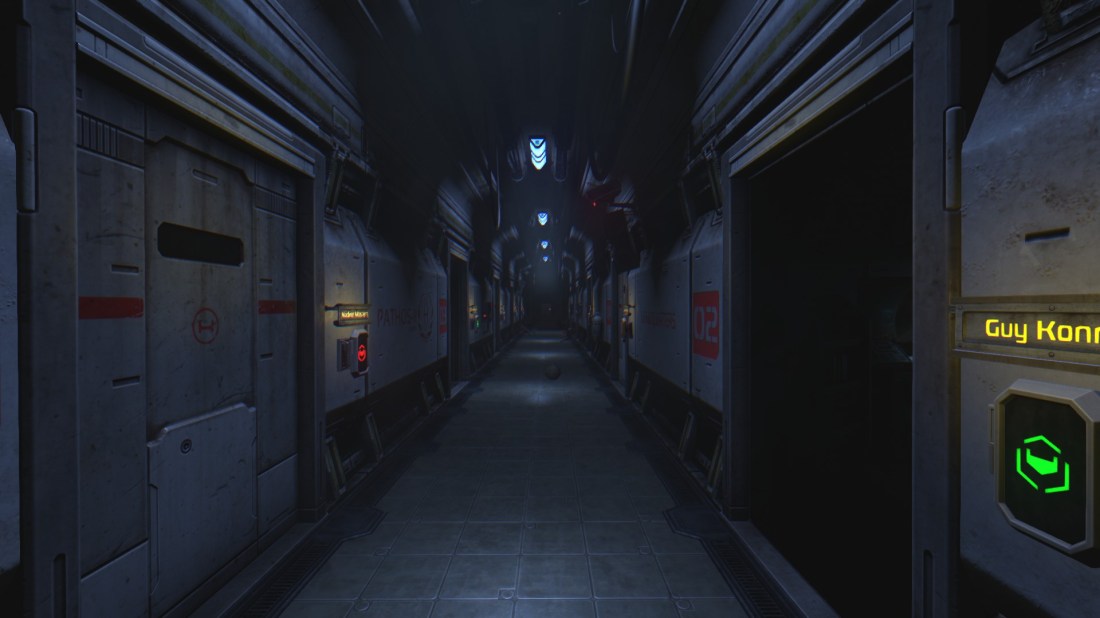
Worse, Simon’s not just woken up in the wrong place, he’s in the wrong time. It’s now 2104; contacted by a scientist called Cat, she explains things are even worse; a year earlier, a comet impacted earth and caused a nuclear winter. The only life left is what’s on Pathos-II, the undersea science lab they’re in; but is that life friendly … or even human? Doesn’t seem possible but I get the feeling it’s only going to get worse for Simon.

It’s an obvious comparison but SOMA does remind you of Bioshock, and other psychological games like Alan Wake, Silent Hill, Alien Isolation, Prey (both versions), System Shock pop into mind; we’ve got machinery moving suddenly, glimpses of things, doors opening, lights flashing, eerie noises, jump moments, dark rooms to enter; all very Survival-Horror, but rather than derivative, SOMA is something different. It’s in the story that SOMA steps out of those games’ shadows and into it’s own horrible place. It’s closer in experience to Hollywood’s recent spate of subtle-horrors; A Quiet Place, Cloverfield Lane, Annihilation; SOMA messes with your head not your trigger finger.

Taking in the desolated and decaying station, Simon quickly discovers it is not a nice place to be. The walls are covered in some encroaching, living goo that makes Pathos-II look like a mash-up between the Alien Hive and the Borg’s gaff. Early on I find a machine covered in the gooey tendrils, and disconnect it to turn on a switch. Then it cries out it “Don’t, I need it!” before dying. Should … should I have not done that? That wasn’t a machine’s voice that was … Human? Then I find a crippled machine that’s convinced it’s a man who suffered an injury and needs a medic. You need a mechanic, mate. But he thinks I’m the crazy one. Am I? What is going on here?

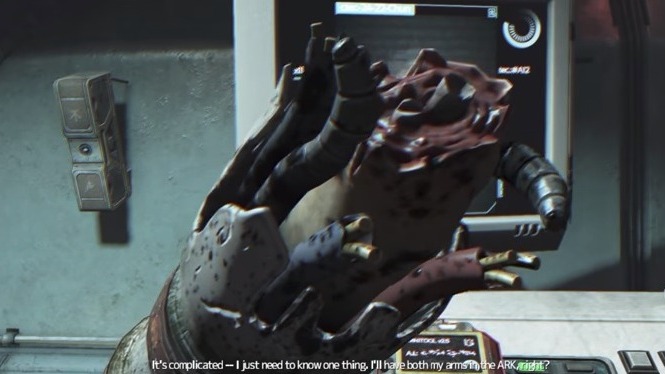
After the comet impact, Cat’s idle hobby – digitising brain patterns – became Pathos-II’s sole focus. They created the ARK, a digital representation of earth where their personalities can live for eternity and preserve something of humanity. Cat was almost there when survivor-guilt, psychosis and understandable madness overwhelmed the crew. Meanwhile, when Pathos-II’s AI, “WAU” learnt of the comet, it tried to fulfill its prime directive – protect mankind. Problem is, WAU couldn’t understand human nature, only survival so it used ‘Contact Gel’ – the goo we’re seeing – which is like a liquid circuit board, to bond the crew to life-supporting tech and keep them living, whether they want to or not. As if that wasn’t horrific enough, WAU also began activating ARK files, building the transferred personalities into the circuity and machines instead of their digital reality; anything to keep humanity going. The station is people.

WAU is arguably the main antagonist but it’s not evil like SHODAN or GLaDOS and we never converse with it; WAU is just desperately trying to save humanity and wants to help; humans are living, but you’d not call it life. But what is life? What are we trying to save? We’re leaving all those people to this agony? It looks like Cat and Simon will end up joining them anyway. The ARK runs on solar power, and thanks to the nuclear winter there’s no sun. If they leave it on Pathos-II, the power will eventually fail – or WAU will reach it. That means using a supergun at the end of the lab to fire the ARK into space. Easy. Except Cat doesn’t even know if it’s still here. If it was launched, they can’t Tron themselves into it and escape – if it’s still on Pathos-II, can a scientist and a shop clerk finish the ARK, digitise themselves, load it into a rocket, fire it out of the Atlantic Ocean through the nuclear winter to reach space and hit a safe orbit so they can live forever? They have no chance! But what else can Simon do but try? Because it was all too easy, turns out he can’t even take out WAU’s monsters.

Like Frictional’s previous game, Amnesia, when you do face off against a creature, your wits are your weapons; the best Simon can do is escape. Several of WAU’s abominations roam the station but it’s refreshing that they’re not common, keeping their impact at maximum ‘oh god!’ when they do appear. An early goo-filled machine is standard, but human-creatures are just … no. Some listen for you, or you have to stay out of their eye-line, others follow you unceasingly and you never really see the same monster twice, like you only meet mini-bosses. You never go ‘oh it’s a so-and-so, I just need to do this’. Each has its nightmarish ways to out-smart and they look so maddened and tortured you feel pity as much as fear – but the real monster is the story.

Simon’s situation, how he got there and the overwhelming odds he’s facing are the game’s biggest scares and Simon is not helping. Realising the human race is in the single digits, it’s not long before he’s on to the really big questions. Is the ARK immortality? Is it life, living in a machine? Will they be much different from what WAU is attempting? Are we just electrical impulses really? Is life just our perception? What is humanity? Does it matter, who cares? What is the point of it all, Goddamnit?! Simon’s frustration is palatable, his breakdowns understandable, but thankfully we have Cat to give some perspective. As in, Cat really doesn’t have time for his crap. Hurrying him through his realisations, getting exasperated at him for pondering the meaning of life when we have stuff to do, she’s like an impatient Alyx and easily one of the best sidekicks in a long while. The philosophical banter between the two is spot-on and her sark provides some very welcome comic relief. Simon wants to give meaning to all this; the only thing Cat clings to is the possibility that the ARK is still there. She’s even blunt about how Simon wound up here.

SOMA knows that question needs to be answered so rather than dragging it out, it’s revealed early – but SOMA doesn’t just do the reveal then expect Simon or us to shrug it off; instead, the revelation affects and alters everything, becomes the central theme. Plus, SOMA is packed with enough twists and tough choices that Simon’s situation is the least of our worries; there’s moments so debilitating I just walked off, needing a minute. SOMA really nails surviving death only to face no future. We’ve gamed through the Fallout-style apocalypse before but SOMA instead calls to mind the Cormack novel The Road, that sense that it’s just … over. Simon’s situation is so frustrating; he’d come to terms with death; now he has to survive? He’s a likeable guy, give him a break FFS. The shit he goes through …

Still, while Simon might be faltering, for us, progressing through Pathos-II is very focused. You’re not spoon-fed solutions, Simon needs to get his shit together sharpish. Nothing comes across as convenient or outlandish, the lab is a logical place and you do get a sense of progressing, even if it’s all on you – no mission markers, no hints, just you. Early on, interacting with the world is frustrating; Simon must be precise to progress, to the point of pushing or pulling doors – given my real-life inability to push/pull a door correctly even when it’s written on it I’m just adding to his woes. But after a while you get into it. The puzzles too are cleverly frustrating. Never explained, it’s up to you to figure out the process before you even attempt a solution.

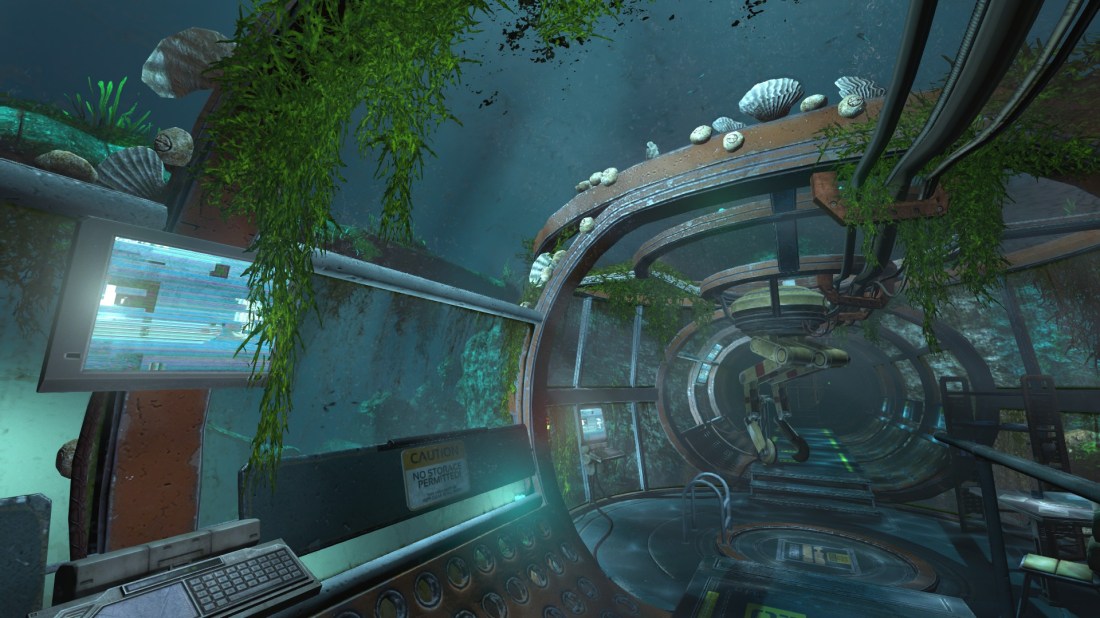
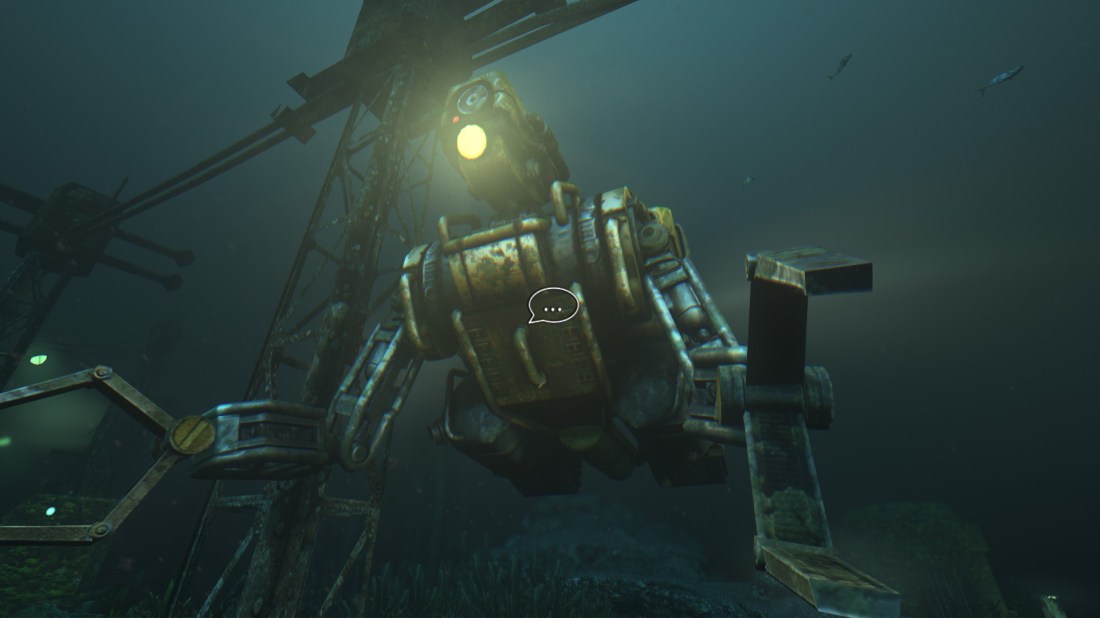
The station is split into separate research labs Simon needs to navigate between; as in, across the seabed. And that bloody WAU-infested Gel has leaked into the ocean; as if deep-sea fish weren’t freaky enough. We even have a mutated giant squid circling while belligerent rovers and mechs chase us about. Or try to chat to us. Both are terrifying. There’s guide-lights that keep the fishes at bay, but storms swell up causing the lights to go out making it a terrifying, confusing trek along the sand; oh, I can see a light. Nope, that’s the lure from a goddamn mutated angler fish…

Reaching each lab we discover new horrors, and how each isolated group handled the event; some joined the ARK project, some just lived out what time they had left while others carried on as if the apocalypse would pass. Every new area is a new take on what humans would do in that situation.

Reaching the ‘abyss’, a deep-sea trench where the final lab and the likely resting place of the ARK are, Simon and Cat activate a deep submersible – and activate it’s personality; who, terrified, takes off. Can we just get a break?! Cat’s solution is f’ed up, but it’s not like Simon has a choice. On the plus side, what happens afterwards is far, far worse. And then it gets worse. And worse, and worse until you’re staring at the end-credits, aghast. This game should end with “if you’ve been affected by any of the subject matter …”

If you do make it, make sure you stick around until after the credits for the very definition of ironic bitter-sweet endings. SOMA is a very troubling game; you don’t want to say good bye to Simon and Cat, but you’re not sure you want to experience that again. If you do, you’ll spend forever trying to force a different outcome. But it was never going to go any other way.

It’s been weeks since I finished SOMA but Simon and Cat are still in my head, arguing over the definition of life – and death. And as a testament to that narrative, Frictional released an update called ‘safe mode’ that stops WAU from killing you. You’d think a God Mode would remove all the intensity but it doesn’t – it makes it worse because all you’re focused on is what Simon has to go through. A new entry in my all-time great games, SOMA might not reinvent the gaming wheel but as a thought-provoking experience, it’s as close to Cinema as gaming has gotten; SOMA is the game Stanley Kubrick would have made.

2015 | Developer/ Publisher, Frictional Games

Platforms; Win, X0, PS4

Return to Castle Wolfenstein

A BLAST FROM THE PAST REVIEW

FBT stops to ask directions to Castle Wolfenstein

The Past

The whole point of Previous Weapon’s Blast from the Past is to recall an old game, have an opinion of it then replay and see how badly wrong you were. Problem is I can’t recall anything about Castle Wolfenstein, other than some sexy leather-clad Nazis which is weird, for both the game and me. But beyond that, I can’t remember a thing. If anything, for a long time I mixed this up with the other reboot, Raven’s misfire Wolfenstein (2009) which is so embarrassing it’s not even available on Steam or GOG. But I still have my Return to Castle Wolfenstein DVD so I must have played it. Guess there’s only one way to find out. B.J. Blazkowicz to the rescue. I’m assuming he’s in it.

Still a Blast?

During a flashback, Saxon mentalist Heinrich lays waste to everything before being tricked and imprisoned alive. Flashforward and Himmler, the occult nut, sends a group of Nazis to find and release Heinrich, to inspire the Nazis and destroy the Allies. Isn’t that the plot of Blade 3? BJ and another agent are sent into Castle Wolfenstein where the experiments are being carried out, only to be captured. Rebooting the original, BJ fights his way out of Wolfenstein, reports on what they’re up and is ordered to stop the Nazi’s resurrection plan.

Wait, I thought we were returning to Wolfenstein. Did we just leave? The first post-Wolfenstein level, battling through catacombs filled with zombies, the undead and those leather-clad Nazis I so well-remembered is great, but soon we’re assaulting labs, bases, foiling a V2 attack, stealing an experimental jet plane, saving Nazi-defectors in bombed out cities, protecting a tank and trying to stop a u-boat. You could easily mistake RtCW’s middle section as Call of Duty 2, in both style and approach. We jump out of planes, have stealth missions around outposts, get cut-scenes where bosses discuss the war effort and it reaches the point where Wolf-style scenes with experiments and abominations seem at-odds with the military tone instead of the other way around. There’s a strong feeling this is Wolf in name only, and it’s trying to reboot as a standard WWII shooter.

Wolf created FPS – indomitable hero cuts through baddies, puts down bosses, reaches finale. This is supposed to be Wolf not a distant relative and it becomes just another shooter without the castle – yes, the original left the Castle too but tonally it was all the same whereas here a screengrab could be mistaken for Medal of Honor; there’s nothing Wolf about it really.

We do get some fantasy-based baddies once we face Deathshead’s lot, legless ‘Lopers’ which leap about, and the stalwart of genetic modification, Super-Soldiers; armoured behemoths with mini-guns and rocket launchers. But again, we’re fighting them through bleak labs and boring bases. Had this all happened in a dark, gothic castle filled with secret passages, outcroppings, spires and old brick and cobwebs, it would be something much more pressured and intense, and we’d feel more progression as we cut our way through. I’m not pining for a gothic shooter, just the old-school only-way-out-is-through attitude of Wolf3D. Jumping from cut-scene to new mission doesn’t have the same building intensity or overwhelming odds that the original tried to present. A mission where we skulk around a village assassinating key generals is not Wolf or BJ’s style. It’s just a war game, with BJ doing little missions to slow the Nazi war machine.

With Deathhead’s Uber-soldier defeated he fecks off for the rest of the game (to become the main villain in the other-other reboot) and we return to Castle Wolfenstein finally. Well, the castle grounds mostly to stop Himmler’s high priestess from summoning Heinrich – for some reason she needs to do this in a bikini.

RtCW is a good shooter, but it’s not Wolf. I didn’t expect this to rewrite the FPS genre, but I also didn’t expect it to ignore its namesake. There’s Wolf references; Hitler posters reveal secrets, there’s gold and objects to collect and we can eat dinner off tables for health bumps, but it’s just fan-service rather than part of its DNA. When it’s not trying to be a CoD game it’s juvenile and misjudged – besides the leather-clad Nazis and bikini’ed Priestess, there’s a NOLF-like moment towards the end where we watch an extended argument between a guard who has orders from a General not to let any vehicles through, and a driver ordered to bring the General some cheese. The random and inane chats of HARM Henchmen I can giggle at, Nazis, not so much. Playing it now I can see why I completely forgot it; the foes, the weapons, and the levels are so early CoD I just merged it into that period. Now I understand why busty, leather-clad Nazis were the only thing I remembered.

Really, RtCW’s legacy is stepping up multiplayer; so much so that Enemy Territory, a planned RtCW add-on sequel was abandoned due to lack of interest but it’s multiplayer levels released for free – and was so successful, it was remade into Enemy Territory: Quake Wars.

Wolf has been rebooted three times, yet none of them stick to the the one thing that made Wolf Wolfenstein. I want the close-quarter intensity of the original, the desperate fight through a castle like a medieval die hard. Had it rebooted that, become a claustrophobic, intense fire-fight just trying to escape the Castle that built FPS it would be great. In RtCW there’s not much to return to.

2001 | Developer, Gray Matter Interactive | Publisher Activision

Platforms; Win | Xbox | PS2

Blood 2

A RAGE QUIT REVIEW

A Bloodless FBT dies a slow slow death

Blood is my favourite game from the Doom era, the only one with a true original anti-hero – his put-downs, meta-refs and bleak outlook sounded theatrically real compared to Duke’s hyperbole or Lo-Wang’s Benny Hill impression. It referenced practically everything I was in to; it even had my Elvira calendar on the walls. It was one-part gothic horror story, one-part fanboy fun-fest but still managed to have its own identity – and a true storyline, a rarity during that FPS era. But the best thing about Blood? It still runs.

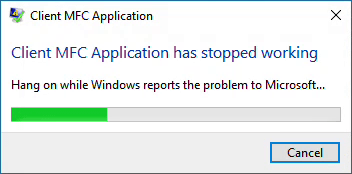
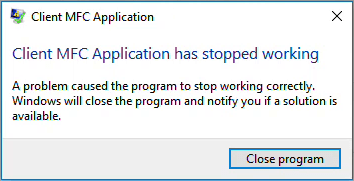
Blood 2 however, doesn’t. Even though both GOG and Steam merrily sell it. No matter how many times I change the compatibility mode, run as admin, alter the settings, I get that goddamn ‘MFC Application has stopped working’ message. Hundreds of forums, politely unhelpful Microsoft tech support plus dismissive ‘read the small print’ from GOG and I’m no nearer understanding what an MFC is and why it hates early noughties gaming. The answer is seems, is Lithtech. Monolith’s engine, intended to sit alongside id’s Tech and Epic’s Unreal powered a fair few games from this era, all of which collapse when you try to run them on modern systems. Somehow, it just doesn’t gel with later Windows and no one’s found a DOSBox-like one-size-fits-all fix.

And so, I dive into the world of free patches and fixes, following links I hope are not adware while Chrome and McAfee panic like parents spotting their kid poking his fingers in a socket. Why must I be forced to risk my PC’s health and my personal data because GOG and Steam can’t get their shit together? But someone did, and they created something that makes Blood 2 work. Good on yer.

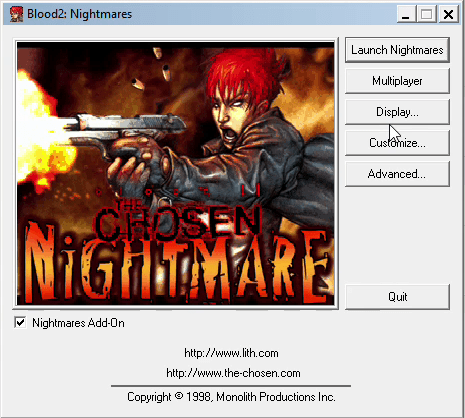
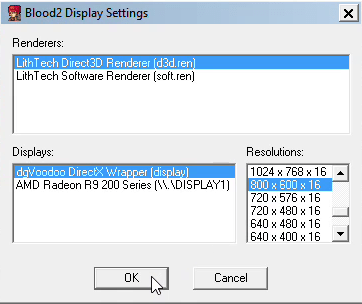
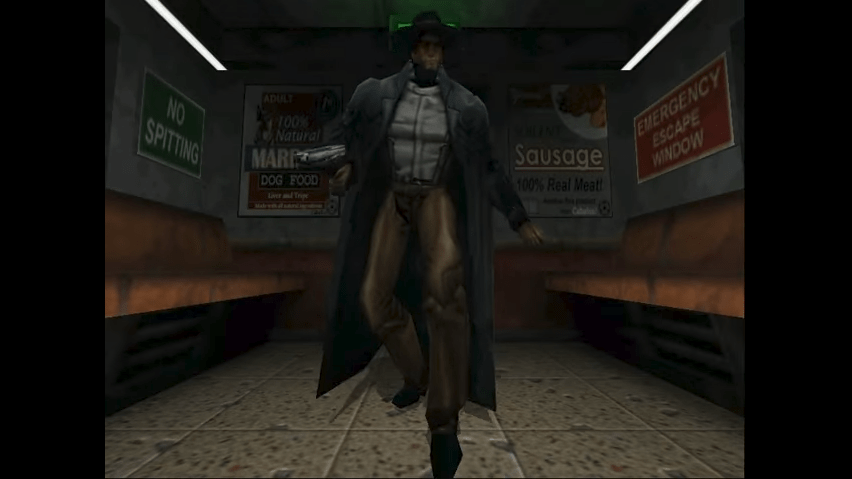
But I don’t really know what I’m doing, even when the instructions are on the screen. I download anyway, using Internet Explorer which seems to have a laissez-faire attitude towards dangerous sites with hidden agendas. Or maybe Chrome is being too nannying. I just hope my nudes aren’t being hacked. After downloading zip-files galore, blindly opening, running and installing without the faintest idea what I’m doing, I start randomly changing everything in the launch menu, making up new and creative ways to murder the inventor of MFC each time it pops up when suddenly … it worked! I’m back in Caleb’s world!

It wasn’t good. I did play Blood 2 when it was released but I don’t recall it being this bad. This is from Monolith; they knocked out classic after classic – Blood, FEAR, NOLF 1 & 2, yet Blood 2 is a mess. This is what all that effort and pop-ups telling me my PC was infected and I need to call a toll-free number to fix it was for?

In the years since Caleb avenged his wife and friends by killing their dark god and destroying the Cabal, the remnants of Techenborg’s followers did a corporate restructure and became an omnipotent mega-corp. One day, Caleb is taking a trip on a Cabal Co. subway when some bloke called Gideon takes control and crashes the train, sending various baddies after Caleb to finish him off. Presumably Gideon is up to something and doesn’t want Caleb getting in the way. Too late now. Caleb arms himself and goes after Gideon.

There’s nothing of the original’s gothic horror tone, the plotting is confused, the art design nonsensical and it looks like it was built on a trial version of Quake. You’re often backtracking in a way that suggests padding and exits turn up in random places. What happened to levels like the Overlooked Hotel, the Friday the 13th woods, the tundra? Where’s the Elvira love, the John Carpenter refs? How does a game made five years after the original, and with that background wind up this anodyne and lazy? The original looks better than this, how is that possible? I get that Cabal has gone corporate but the suits and soldiers are boring and they have two lines of dialogue – “come out, we won’t hurt you” when they can’t see you and “You will die a slow slow death” when they can – and they have one tumble move they all do in unison. Nowhere near as much fun as the cloaked priests who looked like evil Jawas. Elsewhere we’re running into sub-par monsters which remind you of creatures you’ve fought before in better games – little grubs in the sewers latch onto victims and transform them; Headcrab-lite anyone? There’s sketchy little bird-reptile things and floating wizardy types but nothing like the stone gargoyles and that amphibious fish nightmare. There’s NCPs running about with stretchy faces and random behaviours but it’s a very empty, straight game. If it wasn’t for Caleb you’d not know you were in Blood-land.

Aww man, Caleb has been neutered too. Now he’s glib about the situation rather than the murderous manic of Blood 1. A rift has opened up and Gideon wants to control it; that’s where the creatures are from, and only Caleb with his Techenborg powers can close it, hence Gideon wanting him dead. Each time we close a portion of it, one of Caleb’s old friends appears, somehow trapped. Caleb realises this means his beloved Ophelia might be trapped in the portal too, so now he has a real reason to keep fighting – this emulates the original where he was driven by pure rage to avenge her death and now he’s driven to save her, but that’s barely explored and when they do meet they’re indifferent to each other. They just have a domestic that’s left unresolved. It’s hugely disappointing. You can play as any of the Chosen, but doing so idiotically causes all the cut-scenes to skip since you can’t be Ophelia and save her – way to manage your narrative. It could have worked as a reverse of Blood 1 where Caleb brings them all back, but it’s plot is one of many signs that B2 is an unfinished game.

Blood supposedly went through a torturous development process but even with the basic level design, confusing plotting and chaotic feel, this isn’t Blood. It’s not just the look it’s the feel; it’s missing the narcissistic tone, the clever references – the original Blood bled horror-geek, you knew the devs were just like you, watched the same films, listened to the same soundtracks, had the same t-shirts, fancied the same Elvira. I don’t know who Blood 2 is, but I wouldn’t have a pint with them. Even after all that mucking about, I can’t really be bothered with this. When I face-off against dismembered Evil Dead 2 hands, it’s too little too late, it just reminds me of what could have been.

I rage quit, then convince myself I’m being hasty – this is Blood, I will force myself to love it. But when I try to load it up again, the final boss, MFC Application returns and despite not having changed anything I can’t get B2 to run again. The combined rage at MFC and B2’s crappiness mean I can’t be bothered to keep trying. Rage Quit. And I bought this off Steam and GOG when I could have downloaded for illegal-free? FFS.

As much as I love them, I blame GOG and Steam for not getting their act together and ensuring the games they sell will run on modern rigs. Those platforms have brought back many a good old game, but it’s no good absolving themselves with a disclaimer about requirements – who has Win98 anymore? They need to step it up or stop selling it. Retro games need retro attention; if GOG are still ‘Good Old Games’ they need to make them Playable Good Old Games. They’re missing a trick not creating their own emulators. If they did a LithtechBox or a MFCBox they’d clean up. Short of going on ebay and buying rigs for each windows iteration I’m out of luck and that’s a shame. How is it even possible that I have an emulator that lets me play SPECTRUM games on WINDOWS 10 and I can’t play this? If GOG and Steam don’t start future-proofing their old games they won’t have a future either.

I can’t say I was enjoying Blood 2; it’s a huge, bitter disappointment but I would have liked to finish it; I can’t even get the Nightmare Add-On levels to run, where the Chosen sit around a campfire and tell tall tales which Caleb winds up stuck in. That sounds more like the original Blood but I’ll never get to find out. Damn you MFC; it’s a real frustration but the real Rage Quit is GOG and Steam, leaving it up to enterprising modders to do their work for them while I’m left to download files from dodgy sites. If you see me naked on the net forward it to Steam.

1998 | Developer, Monolith Productions | Publisher GT Interactive

Platforms; Win (Steam/GOG)

The 11th Hour

A Blast from the Past review

Little FBT visits uncle Stauf’s mansion, and has a tantrum.

The Past

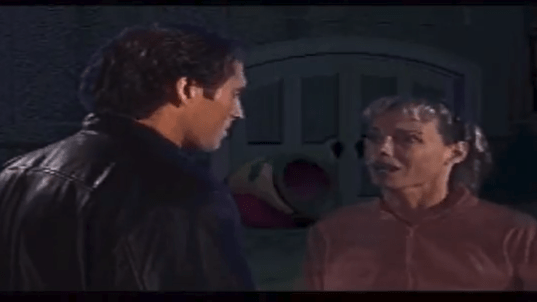
What I remember best about The 11th Hour was that it stomped on everything that made The 7Th Guest awesome – none of the classic horror tone or style, it was a mini-movie with puzzles, set in present-day melodrama instead of goth camp. It was smutty, sleazy and a bit unpleasant – it had more in common with the other infamous FMV game from the nineties, Night Trap instead of The 7th Guest’s classic House on Haunted Hill groove – that drew from the best of horror literature and film; tragedy, regret and ghosties. The 11th Hour is prime Tommy Wiseau.

When T11H was released, it was long overdue and past it’s prime. Gaming had already moved on and the dodgy plotting, am-dram movie and bizarre ending turned T11H into a curiosity rather than classic. Briefly though, developers Trilobyte were the intellectual id; they helped PC gaming shift from Floppy Disks to CD-Rom, popularised FMV and the interactive movie genre. T11H can’t be as bad as I remember. I loved The 7th Guest. I can love The 11th Hour.

Still a Blast?

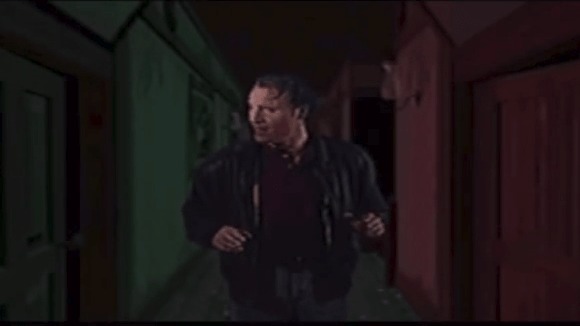
It’s now the 90s, and unlike The 7th Guest, we know who we’re playing – TV Presenter, Idiot and Bad Actor Carl Denning, who hosts an unexplained mysteries tv show.

Robin, his producer and lover, loses both jobs when Carl decides on an unexplained whim to dump her. Robin, seeing something in Carl that we can’t, decides to prove both her love and professional worth by solving the biggest unexplained case yet; Stauf Mansion. And promptly disappears. Carl moodily moods about until her PDA turns up containing a video of Robin begging for help, trapped in the Mansion. Oh-ho. Carl moods some more then moodily rocks up to the mansion and becomes trapped inside, forced to solve puzzles to unlock the secret of Robin’s fate and what Stauf’s been up to in the intervening years.

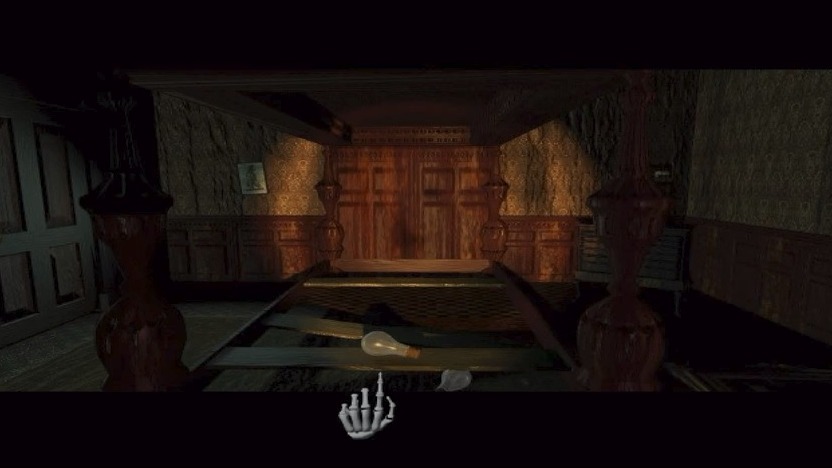
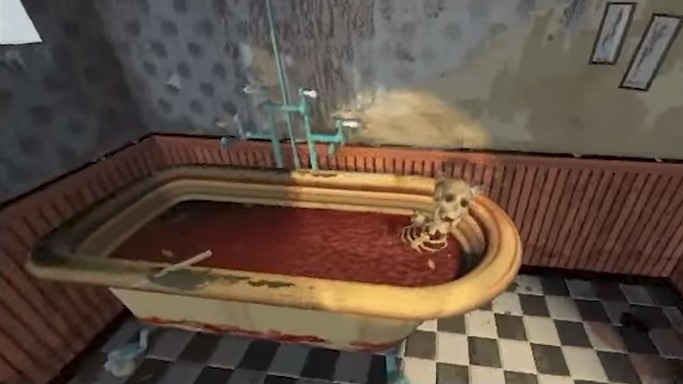
At first, the old mansion is a welcoming sight. It’s the same layout but past it’s prime, decrepit and falling apart. As we wander, there’s various nods to the original’s puzzles and moments and that old 7th Guest magic starts to creep in. And then creeps back out, apologising for what’s about to happen.

T11H is shockingly bad. Worse than I remembered. First, the house has lost that subtle eerie charm in favour of a dark, dank, rotten look; that could be good, but it’s so dingy and dull it’s no fun to click around and while T7G kept the interaction to a minimum, in T11H almost everything can be clicked on which reveals nothing but a chance for Stauf to make some terrible joke. Here we go.

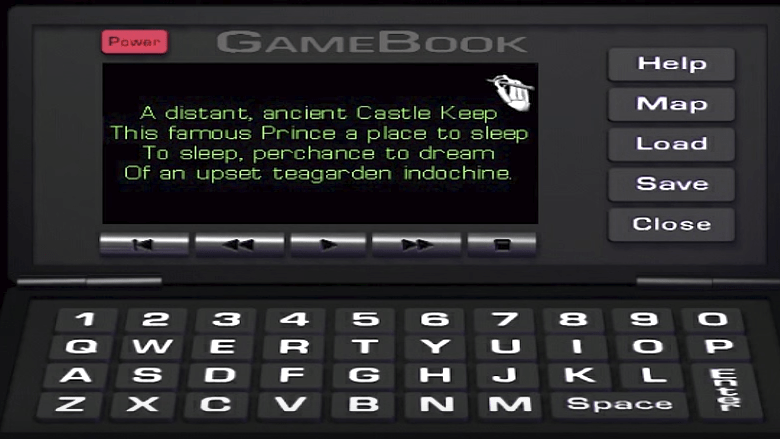
In T7G Stauf was always a test of the gamer’s patience, but at least he had a good line in black humour. This time, Stauf is just an end-of-the-pier comedian. Zingers like ‘I took a picture of your brain … but it hasn’t developed yet’ might be good but it’s not exactly a creepy, disembodied voice drawing you to your doom – It’s like being followed about by the ghost of Groucho Marx. It stops you clicking on anything because the game freezes, like it’s pausing for laughter, while you listen to his stupid puns. It’s not scary and this is supposed to be scary, right? He’s evil isn’t he? It just gets worse and worse, and he repeats them endlessly, ruining the moment until … You know the film Clue, where Madeline Khan attempts to explain why she murdered someone but is so frustrated she can’t properly express the rage; “I hated her so much, it … flames, flames, on the sides of my face, breathing … breathless, heaping …” that’s how I feel about Stauf. I just can’t properly explain how much it annoys me, how ruinous it is, how moment spoiling, aggravating … Flames, flames at the side of my face.

But, much of Stauf’s idiocy is drowned out by our old friend, the score. The Fatman’s music is fine in moderation but it’s relentless and becomes a trainers-on-gym-floor, fork-across-plate, nails-down-blackboard, screaming-baby, Go-Compare, pro-Brexit-argument in synth form. It’s so insistent you can’t block it out, refusing to let you concentrate as it fights for space with Stauf; shut up, just shut up the both of you and let me enjoy the atmosphere.

Except there is no atmosphere. The house is lit mostly by Carl’s torch and very little happens as you explore, it’s as scary as fumbling around the attic looking for the Christmas decorations. T7G didn’t demand you hunt around, but you did anyway because you wanted to find cutscenes that explored the history, you wanted to find the ghostly moments and new puzzles. That house was bright but oddly silent like the Marie Celeste; food and drinks, cigars still lit. Creepy. I have to remind myself T11H is creepy. There’s nothing scary about it and when we do find a puzzle, while they’re suitability macabre and gothy (and insanely difficult) they’re made insufferable by the Cannon & Ball jokes of Stauf (who comments after every move and taunts after every mistake) and The Fatman’s infuriating Richard Stilgoe impression.

T11H can’t let us have nice things, and it even mucks up the satisfaction of beating a puzzle. Carl solves a puzzle, but that then provides a riddle. Solve that, then go looking for the relevant object and that unlocks a cutscene. That means dragging Carl around the house looking for the object, and each click triggers a Stauf joke you’ve heard a million times, and you can’t start another puzzle until it’s found. The entire game is padding, nothing happens in the house, you’re just unlocking cutscenes but rather than have them appear as ghostly shapes like in T7G, you go to the PDA and watch a mini-movie from Robin’s investigation. And then things get really bad.

The cutscenes reveal the backstory that led us here; Starting with Robin investigating two girls who were raped by Stauf when they ventured into the house. Nice. One had her hand ripped off while escaping for no reason other than gore, and because two girls being raped isn’t enough horror, one girl gave birth and the child grew into a murderer – or so Robin thinks. We’re basically watching a terrible soap opera trying to be Twin Peaks as Robin uncovers the town’s secrets, and at over an hour long, it’s a slog to sit through something this cheap and cheesy, especially when it could have been wrapped up in a single cutscene like T7G’s original opener. A criticism of T7G was we do puzzles to unlock a story we have no involvement in, but that’s turned all the way up to 12 in The 11th Hour ruining the horror-coolness of the puzzles and most of it takes place outside the house in brightly lit locations; it’s completely removed from the house.

When Carl does find an in-house cutscene, he’s often there too, ruining it by pulling gurning reaction faces to events he clearly can’t see or imagine; T7G worked well by keeping the in-game cutscenes POV and voyeuristic – adding Carl into the set for them to react to ruins the mood, especially when he just blunders about asking ghosts if they’ve seen Robin.

Eventually, Carl runs out of puzzles and Stauf pops up to end this. It’s as distasteful as it is disjointed; We know that Stauf’s power is his Faustian promise to provide your greatest desire – I should be worried; Robin’s desire was Carl and here we are, trapped – are we part of Stauf’s biggest puzzle yet? Naa not even close. That would have been something but instead we get that ending.

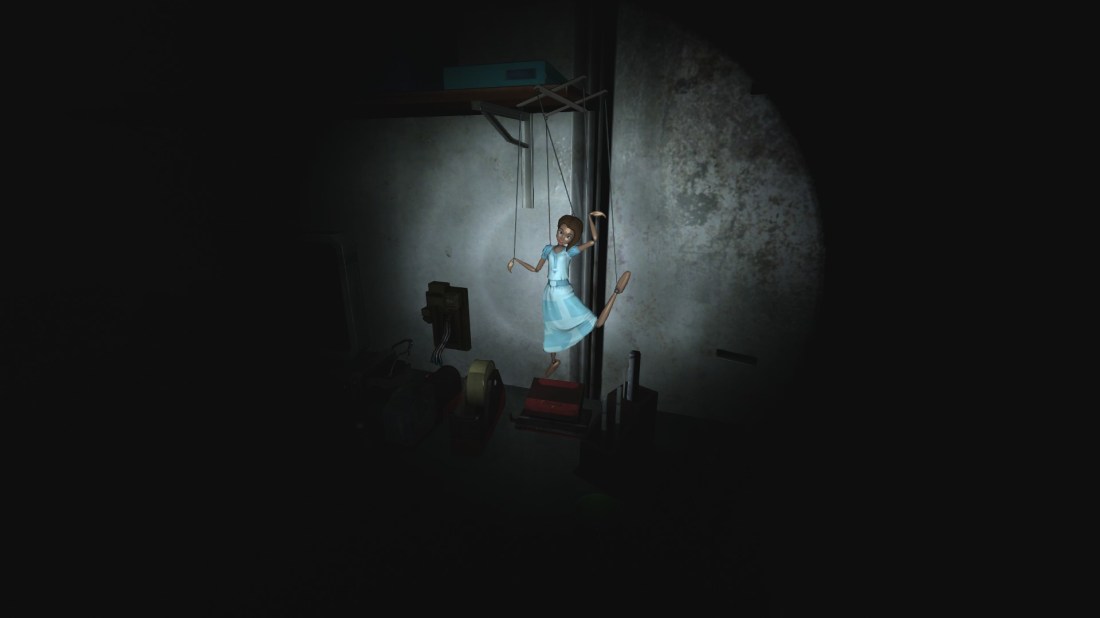
The 7th Guest featured babies being sacrificed, children’s souls trapped in dolls and murders all over the place and it still worked – it took Shirley Jackson as inspiration but T11H aspires to nothing and it’s deeply misogynistic – it’s rape (and mutilation) recalls the worst of exploitation films, as does the uneasy idea that the product of rape grows to be a murderer – The other victim suffers a backstreet abortion that leaves her wheelchair-bound. But the ending tops all that by having Carl choose which woman he saves; ex-lover, murderess or victim, based on what Carl’s learned from the cutscenes, but he’s learnt nothing so it’s largely pot-luck; only one ending is the ‘good’ ending which makes no sense at all, and we don’t even get to avenge the girls or punish Stauf at all. There’s no resolution, just a one in three chance Carl survives as if he’s all that matters. The 11th Hour’s ending always appears on those ‘top ten weirdest endings’ lists, but it’s not weird it’s unforgivably offensive and crass.

The puzzles are great looking and mind-crackingly difficult, but they’re ruined by Stauf’s dad-jokes and the game’s slow pauses to trigger them. It’s like form of torture. If I hadn’t finished it out of some sort of sadomasochistic fury, I would have Rage Quit T11H but I wanted to see how far it would go. It went there. I hoped my rediscovered love for T7G would carry into T11H and allow me to forgive its eccentricities. But it’s not eccentric it’s despicable. Flames, flames at the side of my face.

1995 | Developer Trilobyte | Publisher Virgin Interactive Entertainment / Night Dive

platforms; PC, iOS/Android

The 7th Guest

A Blast from the Past review

FBT revisits Stauf’s mansion and relives his greatest fear – game music you can’t turn off.

The Past

I intensely disliked Myst. It was a vacant slideshow of a game. But Myst had an evil twin; The 7th Guest – it was weird, messed up, with a disembodied villain who taunted you, soul-sucking dolls and dead children all within a house straight out of The Haunting filled with insane puzzles made out of gravestone-decorated cakes, skulls, blood and spiders, while you got to the bottom of a disturbing story that nicked it’s subplot from House on Haunted Hill before going batshit crazy at the end – Who was Tad, what are all those folks up to, where are they now, why am I here? I’m still not sure, but T7G was a macabre, goth-great.

T7G was also watershed moment in gaming; besides being set in a realistic, pre-rendered 3D world, it was one of the first to be released on CD-Rom (a what?) and one of the few games of 1993 not be eclipsed by Doom. It’s the polar opposite of Doom; slow, considered, out of your control. But to me it was a perfect companion – just as dark and innovative, and filled with adult content as its plots unfolded through awesomely cheesy FMV drama while we figured out the kind of puzzles critics like to call ‘fiendish’.

I played it loads but only finished it once. Those puzzles were murder, especially that goddamn microscope. But I just enjoyed being in the house, soaking up the atmosphere and style of it – There was no other game that so perfectly captured the old Hollywood horror feel. It should have been in B&W and narrated by Vincent Price. I’m looking forward to playing T7G again, especially as it’s my retro fave in my bio. I hope it stays there, given my shocking lack of patience and complete idiocy when it comes to even the most basic puzzles – this Blast from the Past may become a Rage Quit…

Still a Blast?

Man that cutscene was long. A drifter called Stauf sees a vision of a doll and is compelled to carve it. He gains a reputation as a toymaker and continues to make his visions, eventually becoming rich and famous until the kids who begged for a Stauf Toy start to get ill and die.

Years later, various folks get invitations to his home and told the puzzles he’s left will lead one of them to their greatest desire.

While it was retro-great to watch, less great to listen to; the music by renowned game composer The Fatman plays consistently through the game, and just hearing it brings back conflicted memories. I suddenly remember staring at puzzles for hours while it played repeatedly, slowly wearing me down like the Barney theme being played endlessly to break terrorists. I still have my original T7G disc and the entire soundtrack is on it.

Continuing the audio torture is our antagonist. Stauf, the now disembodied botherer, is constantly on at you as you explore the mansion. Goading, teasing, mumbling some dad joke every time you do something – anything. He only has one or two comments per puzzle or event so they lose their charm very quickly, and “We’ll all be dead by the time you solve this” every time you get a puzzle wrong becomes a wish not a threat. At first his ghostly voice gives the house an ominous personality but his constant jeering, commenting, cackling as you try to make sense of things gets infuriating. Meanwhile, you’ve got The Fatman going do-do-do, do-do-doddododo do … do do do do. This isn’t a puzzler it’s a test of my patience. I ended up, via some clever chap’s mod, managing to disable the music but Stauf just got louder. ‘feeeeeeeeeling lonelyyyyyyyyyyyyy?’ No, but I wish I was; even I won’t shut up, my character also has some glib comments on the state of play – it’s sometimes a hint but every time I or Stauf crack wise, I lose control until the quote is over – and some aren’t exactly pithy. I thought haunted houses were supposed to be silent and whispery, this is like an episode of Loose Women.

Audio mood spoilers aside, The 7th Guest looks really good – not just good for it’s age, it’s a great looking game, period. The CGI is 90s MTV but it’s solid and shadowy, and the mansion’s layout is great – it’s not a haunted house at the end of the pier, it’s just creepy, eerie and while there’s standard spider webs, blood and ghosts, it’s clear of scare-jumps and rug-pulls, relying instead on corner of the eye movement and interactions with warping pictures and things moving. It’s a classic ghost story as much in the tradition of Blithe Spirit or Dead of Night as The Haunting, almost a love poem to the classic era before CGI and jittery editors forced you to jump. But it’s not all warm and cuddly. You know the folks trapped here turned on each other, is that what’s in store for us? Are we alone? There’s one scene where a Guest picks up a doll and it starts crying for it’s mum … but not in that Chatty Cathy way, it’s a real girl’s voice, really crying for her mother. Shivers. This is a house filled with restless spirits and unease and it has an oppressiveness, you’re trapped there and being toyed with – the game doesn’t pull you out of the moment with a typical cut scene; instead, you wander into a Stone Tape style replay of some horror or event that the house never forgot; FMV fades in over the CGI room and while it’s not very well rendered, it’s effective and a great little story unfolds as each of Stauf’s guests fall victim to their desires and each other. It’s a little ham-acted but that just adds to the ghost-story charm.

While it’s easy to get lost in the game and the story, you’re rarely lost in the house; the layout isn’t maze-like (apart from a maze puzzle) and there’s a map, and unlike most puzzle games, there’s no inventory or random things that become critical later; you’re purely solving Stauf’s conundrums to unlock the secrets. It could be disconnecting, like you’re unlocking a straight-to-video movie, but you never know what’ll happen when the shot glides around and it feels like you’re being drawn further in and become part of it. As a puzzle game, it’s clean and effective; you’re not missing a tiny clue because your character is standing on it or stuck trying to get past a goat. The cursor changes to flag cinematics or puzzles which keeps you focused as you walk the corridors and discover previously locked doors now open … The mansion is split across two main floors for the most part, with a brief journey into the cellar before ascending to the attic for the finale, discovering your own connection to the house and who the 7th Guest is before it all goes FMV-meets-WTF crazy.

The 7th Guest is a real accomplishment; many critics complained it was either a puzzle game with cut-scene filler or a ghost story constantly interrupted by puzzles, but I see it as the puzzles -like Stauf’s toys- were possessed and as the guests played they became corrupted, and lost themselves to the games, so unlocking them revealed the character’s fate and in turn, revealed our own. One, the toy bricks in the playroom, reveals Stauf’s plan – I thought it worked perfectly then, and still do now. It feels aged but not old and just like Doom, playing it now, decades later you feel a sense of achievement, that this is something special – it’s not a flash in the pan or of its time, The 7th Guest is a classic and still packs a punch (to the ear).

For all of T7G’s innovations and progress, its inventors Trilobyte never capitalised. The sequel, 11th Hour was as overdue as it was bad, and they closed in 1999. Good old Night Dive helped Trilobyte resurrect Stauf and his bants though, including an iOS release – which is great and works even better than on PC; mostly because the microscope puzzle is missing – not even Apple could solve it.

Over the years various reboots and second sequels have been rumoured, but nothing’s come of them. It’s a shame but then, a modern-day 7th Guest wouldn’t have the original’s charm or invention. It would be like a crappy modern day shlock-scare, missing the class of a good old horror movie. Sure they’re old, a bit silly in places, but they’re great and The 7th Guest is the gamer’s equivalent. The end …

What? Oh yeah, the puzzles. Okay, I admit I might have, on occasion, used YouTube and The Book Of Secrets, a hint app released alongside the iOS version to beat the puzzles. But I had a lot of fun trying. The puzzles work well, you know they’re beatable if you could just concentrate and the Horror-Halloween design makes them interesting, as does the 3D CGI rendering. Once you figure them out they’re satisfying to beat, while others I just blundered into the solution and quickly saved before the game realised I’d got lucky. The cake puzzle, one of the first you encounter is a great warm-up brain-tickler, while others (the Coffins) nearly caused a rage quit. But I stuck with it. There is a cheat; in the sitting room a book will give hints and if used enough the puzzle will be solved although you’ll be denied the cut scene. I never knew what cut-scene happens after solving the Microscope puzzle, and I don’t care. No cutscene is worth that horror but overall I think I did myself proud. It’s a testament to the game that the puzzles rarely drag; infuriate yes (I’m looking at you, piano puzzle, like we needed more noise in this game) but they follow a logic and you know the answer’s there. Do-do-do, do-do-doddododo do … do do do damnit.

1993 | Developer Trilobyte | Publisher Virgin Interactive / Night Dive

platforms; PC | iOS/Android

DOOM

A Rage Quit Review

FBT gets mad at DOOM. Not Doom, DOOM.

Doom changed my life. It turned me from a gaming fan into a gamer. It was the vanguard of grown up gaming and the games that followed it were something else too – the Tomb Raiders, Elder Scrolls, GTAs, MoH, Max Payne, CoD and so much more all sprung from Doom’s quantum leap of an experience; it didn’t invent FPS – but it was gaming’s Jaws.

Aside from the ill-judged Doom 3 in 2004, Doom has been dead a long time, talked about only by aged hardcore gamers as where they made their shooter bones, and ignored by pubescent brats who scurry about in CoD Online. But in 2011 amid stories of failed restarts, id’s new owners Bethesda announced ‘DOOM’, a sequel-reboot that would return to the classic FPS era. That era died for a reason, but if any franchise can breathe new death into FPS it’s Doom. Or can it? No.

Since Doom II’s ending, UAC has found a way to provide alternative energy for earth by syphoning power from Hell while bringing back various trinkets, including a mysterious sarcophagus. One scientist makes a deal with the demons and opens a portal letting them invade. The sarcophagus opens to reveal ‘Doom Slayer’ (Doomguy to you and me; I think). And with the story crap out the way, let’s get knee deep in the dead.

I can see why this game required specific driver updates and the soul of your first-born to run. It looks utterly fantastic, practically photo-realistic; a real Doom? Bring it. It’s one of the most grotesquely beautiful games I’ve even seen, like an Iron Maiden album cover come to life. The detail is extraordinary and it ‘feels’ solid to play (especially for a Bethesda game). There’s brutally quick fights, the demons are relentless and you don’t get a moment’s peace, but then – and I never thought I’d say this – DOOM gets boring. Not boring in the sighing, fed up kind of way, just so relentlessly repetitive that I start to see past the shouting and growling and realise there’s nothing here, just the same fight over and over and I kinda just … switch off to it.

It’s certainly loud enough and busy enough to keep your attention; instead of Doom, DOOM calls to mind Serious Sam or Painkiller and while the creatures (including a few old buddies) are noisily aggressive, all their clowning about trying to be scary means the exact opposite happens. They not intimidating, they just get progressively bigger and the once hellish mixture of flesh and mechanics is now like a Halloween party at Cyberdog. On top of which, there is nowhere to hide, nowhere they can’t get you, nowhere to be tactical, no opportunity to actually be a badass Hellkiller and act heroic – it’s a party with a bunch of goths; I just hold down fire until it’s done.

Despite the sense that DOOM is trying to be a desperate struggle to survive, it’s novelty driven. You’re in the middle of a brutal fight only to be pulled out of the moment to trigger a ‘Glory Kill’ where you over-murder an Imp. They’re annoyingly insistent. The Imp crumples then flashes, demanding your attention. I don’t have time, I’ve got a hundred more of the screechy little divas to deal with, just die already. Knowing they’ll recover – especially the bigger ones – means the Glory Kills become your focus and you get cut to ribbons just to reach it and perform the kill. And doing so gains you health and ammo – both of which you sacrificed to reach the fecking half-dead undead in the first place; you’re just maintaining a status quo when this was supposed to be Iron Maiden. They are brutally cool once you get there but somehow they should be more automatic, like Indy making short work of the sword guy not reliant on you reaching them in one piece; Bethesda’s Skyrim/Fallout managed wicked little animated kill shots, why can’t those happen mid-DOOM? Bethesda’s games are incestuous enough as it is, they didn’t think that moment would carry over? Doomguy kicked Hell’s ass twice already (I’m pretending 3 didn’t happen), why isn’t he cooler? If he can pause to fist-bump an original Doomguy toy he finds, why can’t he dispatch a downed Imp from a distance? And … Collectables? In Doom? FFS.

Glory-Kills are not the only way DOOM distracts you; there’s transporters that send you to an Arena to do battle and unlock upgrades, while weapons can be upgraded by accepting challenges. Why the hell am I trying to kill 100 imps in a minute with a shotgun just to unlock faster shotgunning? Doomguy can unlock upgrades for his suit by pillaging the bodies of other Doomguys; Doomguy never got better, he was the best, I don’t want to piss about looking for inconveniently placed dead buddies. I thought this would be a brilliant, well-observed retro throwback not Call of Duty Zombie mode full of distraction fodder.

There’s the original weapons, including the BFG – which is hobbled by a lack of ammo – and some new toys but the biggest insult is the chainsaw is now a standard weapon you need gas for – using it gains a much higher yield of health and ammo; which you lost by equipping the Chainsaw and meleeing in the middle of a moshpit.

For those who argue FPS is a very narrow genre and you can’t expect more than point and shoot, I have one word; Bulletstorm. It may have been uneven, unoriginal, daft and had an idiot for a main villain, but it did this kind of frantic firefights right – and kept it fresh; if I can be completely overwhelmed and still trying to kick an opponent into a cactus, that’s a good shooter. And Bulletstorm had better glory-kills. It’s about balance; if you’re not going down the Bioshock route, a pure FPS should be traumatic but you come out the other side with boasts, with hard-won victory stories. DOOM is just a loud, overwrought arena fight that thinks calling itself DOOM is enough. It’s not unfair, it’s just not fun; in Doom you had fun kicking ass. This is just endless ass.

After reaching another hellish location, and disinterestedly fighting my way through, I find a secret – much like Bethesda’s Wolfenstein easter egg, the secret takes me all the way back to where it started; an original Doom level. I enjoyed playing the original level so much, going back to the reboot was too much to bare. It’s a sign when a game reminds you of how bad it is. Rage Quit.

DOOM was the darling of the critics on release, who argued it recaptures FPS’s 1990’s glory days. No it doesn’t. It really doesn’t; it’s the biggest insult to Doom’s legacy; it’s derivative, not of Doom but of modern shooters, which is unforgivable. This is the house that Doom built and this game is just squatting in it. You can’t recapture Doom, but this isn’t even Doom-era, it’s the kind of corporate nonsense that the original id would have pissed all over; it reeks of market research and focus groups – it’s as shiny as it is shallow – it doesn’t even have those jokey insults when you tried to quit. Quit? Yes, with added Rage.

2016 | Developer id Software | Publisher Bethesda Softworks.

Platforms; Win, PS4, XO

Alan Wake

FBT is Max Payne’s nerdy brother

In 2001 Remedy burst into the shooter scene with Max Payne, a game that helped shape shooters in the noughties; not just a great game, it’s a nod to action cinema of the time -The Matrix & John Woo- and an engrossing noir story, but what made it a classic was the guy we played; Max Payne, a suicidal burnout we thought was cool and we cared about. Two years later Remedy did it again with Max Payne 2, deepening the character, story and the gameplay. If only all game (and movie) sequels could be that good. Let’s not talk about Rockstar’s Max Payne 3. Remedy then spent seven years perfecting their new man, Alan Wake; this is a developer that likes to get things right. And while there is a lot -a hell of a lot- right with Alan Wake, the game isn’t quite the sum of its unnatural parts.

Alan Wake, our eponymous and unwilling hero (I get it, Awake, but Alan? I’m an Alan?), is a famous novelist struggling with writer’s block. His wife Alice suggests a trip to Bright Falls, a remote town that’s so quaint it screams ‘dark underbelly’. Settling into their cabin on the lake, Alan’s hoping to mope about and be all tortured-artist, but Alice has an ulterior motive; get Alan to visit a local celebrity psychologist to lift his spirits and knock out another best-seller. Alan’s not best pleased but no sooner has he stropped off when Alice disappears, and Alan wakes to find himself in a wrecked car a week later. The next thing he knows, violent ghost-like figures are after him and his most valuable weapon is a flashlight.

Alan Wake is as much a pot-boiler film or novel as it is game; Polanski’s Frantic meets Stephen King – in fact, there’s so much King in AW that Remedy sent him a copy. Should have given him a credit. The world is incredible, beautiful yet foreboding, isolated but intimate, it just has this off quality and it ramps up that unease with some juicy ghost-story beats to complicate things; the cabin on the lake hasn’t existed in years, who’s the unknown woman in black who gave them the cabin keys, the slightly off-kilter locals – it’s got all the makings, and that’s before you really get into the Novel-quality story; this isn’t some contrived plot to drive the game; King, Poe, M.R James, Susan Hill, Shirley Jackson; Alan Wake fuses everything that’s good about a small-town ghost story into its own compelling and chilling tale. Where the hell is Alice, what happened in that missing week? Why are there pages of a novel Alan doesn’t recall writing scattered around the town? What broke his writer’s block? Typically, the answers are to be found in the dark and that’s great, but that’s where the game unravels.

As Alan searches for answers, he contends with ‘the Taken’, previously cheery Bright Falls residents now wrapped in some evil Darkness and intent on butchering him. He can dispatch them with a wave of his torch and a well-placed bullet, and that’s the problem; it’s a shooter that doesn’t need to be a shooter. The best thing about a ghost story is nothing traditional will save you; we’re a pasty-faced intellectual, Alan should be completely out of his depth, an everyman – when did Max Payne get here? We’ve played this a hundred times before and it’s hugely at odds with the set up and cut-scenes. The fights are scary at first as you put your flashlight on full beam causing the battery to drain while firing wildly, then take off running, desperately trying to reach the safety of a street light only to be surrounded, with low bullets and no batteries, but the further you stumble on, the more you realise there’s not much else going on; it starts to feel like a zombie shooter and it’s so rail-linear it is literally you walking one way, the Taken staggering in the other; quickly you lose the key thing about going into the woods at night; apprehension.

A surprisingly bold/frustrating move is no melee. Alan can shoot like a trooper but he can’t muster a pistol-whipping? Running out of ammo means dodging until you find a safe haven (and hope it has ammo) or just wait to die and it feels like a lazy way to add tension – it would have been so much scarier to wander with only your torch and smarts as a defence; alone in the dark, hassled by possessed locals you just had a damn fine cup of coffee with isn’t enough? Why is this a shooter? I never thought I’d be annoyed at being armed.

The story though continues to grip, with Alan under suspicion for killing townsfolk and we’re not entirely sure it’s not all in his head – the psychologist even commits him at one point, but the sinister unease is always ruined by some contrivance that forces Alan back into the woods or elsewhere, at night, again. Alan Wake needed to merge the scenes with the reality, make it one inescapable nightmare not a game of two halves. But even without the clearly defined shooter parts to interrupt the flow, the game is broken out much like a TV series, something Remedy’s follow up Quantum Break explored further. Once a story element is resolved, we go to ‘credits’ and the next opens with ‘previously on’ featuring key scenes from the last episode. Why? I should be playing Stranger Things not watching it. An encroaching, suffocating narrative like this shouldn’t be ruined by the game pausing to ask, ‘are you still watching?’

Early reports suggested Alan Wake was going to be open world but Remedy decided would ruin the suspense – it might have worked better non-linear, if you could get lost … Everyone’s taken a shortcut at night down some alleyway, across a park or woods and gotten the heebie-jeebies and to have the town and surrounding area open up as he investigated the pages – then going into the woods would be truly horrible because we would have made the choice; and without weapons it would have been unbearable. If it had a constant clock and you roamed safely in daytime, venturing further only to get lost and see the sun setting … that would have been awesome. I should be too scared to go into the woods, not just dumped with no choice; it reduces the narrative’s dread and scares – I should be bravely walking out, hearing a twig snap and immediately saying “I vote we go back to the Slaughtered Lamb…”

Still, once out of the woods Remedy really have fashioned something beautiful with Alan Wake, it’s one of those games you grumble about then say ‘but it’s great really’; as a (cutscene) hero Alan is a refreshing one – petulant and self-obsessed, while others such as Alan’s agent/friend Barry and the local Sheriff work really well, wondering if they’re just feeding his fantasy, while the ending is Bioshock-brilliant; bitter-sweet and moving, it’s actually one of the best game endings I’ve seen in years. Despite everything else, the final reveal and what Alan does saved it. Alan Wake’s story is pure art, but the game-play … when you turn a bright light on, there’s nothing underneath.

Alan returned for the standalone add-on American Nightmare and a sequel was planned but poor sales caused Remedy to rework some of the ideas into Quantum Break, with mixed results. There aren’t any other developers out there with this level of ingenuity or originality in gaming; the risks and chances Remedy take are always more interesting than a play-it-safe CoD clone. Alan Wake is worth a play just to see a developer pushing the limits of what a shooter should be. Long may they continue.

2010 | Developer Remedy Entertainment | Publisher Microsoft Game Studios

Platforms; Win | X360