Singularity

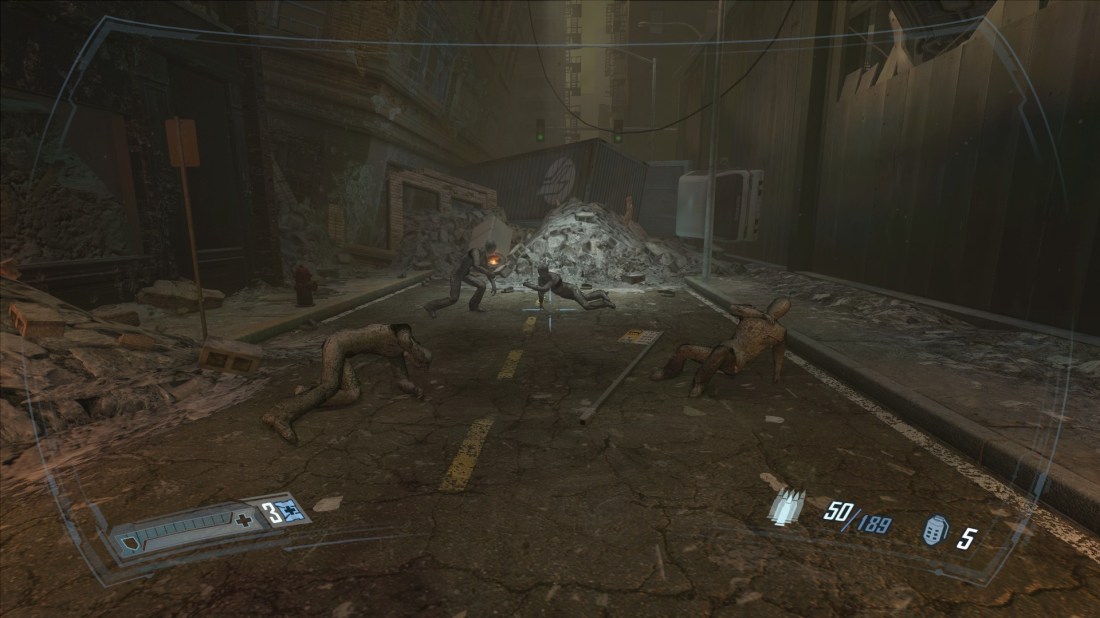
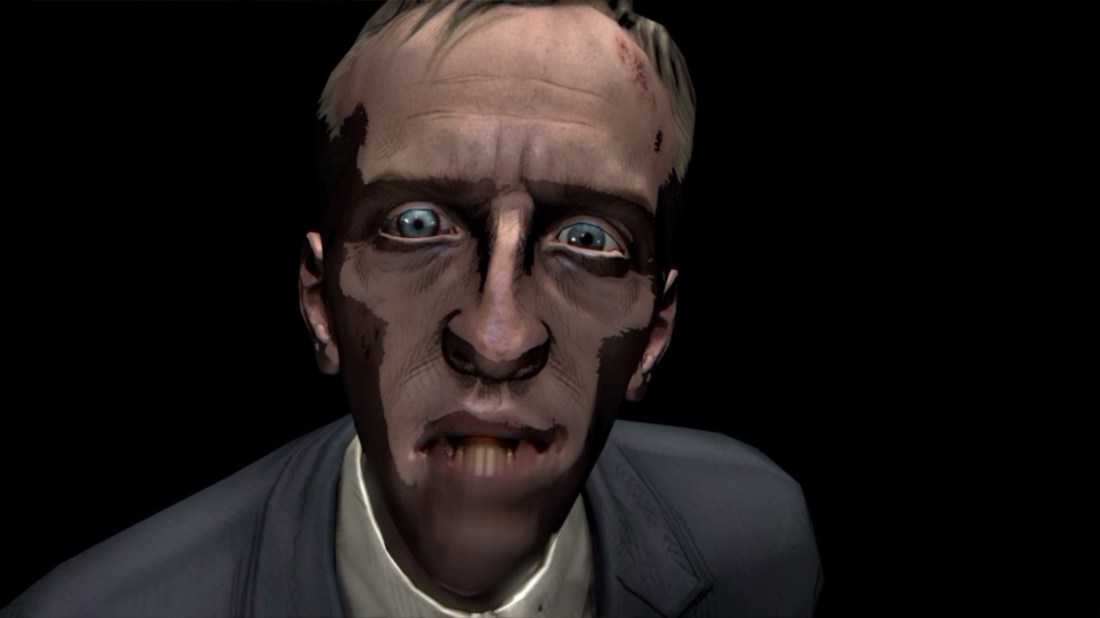
FBT plays Raven’s time-bending Singularity.

And wishes he could bend it all the way back to their Heretic days.

Raven Software; always the bridesmaid never the bride. Old neighbours of id during their glory days, their first major game was Shadowcaster, an early FPS-RPG mash-up made possible by Carmack’s engine genius. They followed that up with Heretic, the classic fantasy Doom-clone produced by Romero. Raven then licenced the gun-nut magazine Soldier of Fortune to create a shooter so extreme it seemed a parody of the mag’s readers, and licensing became the company’s focus; Star Wars, Star Trek, X-Men, Wolfenstein and Quake games followed. So this, Singularity represents Raven’s first truly solo effort since … well, ever really. Are the training wheels off?

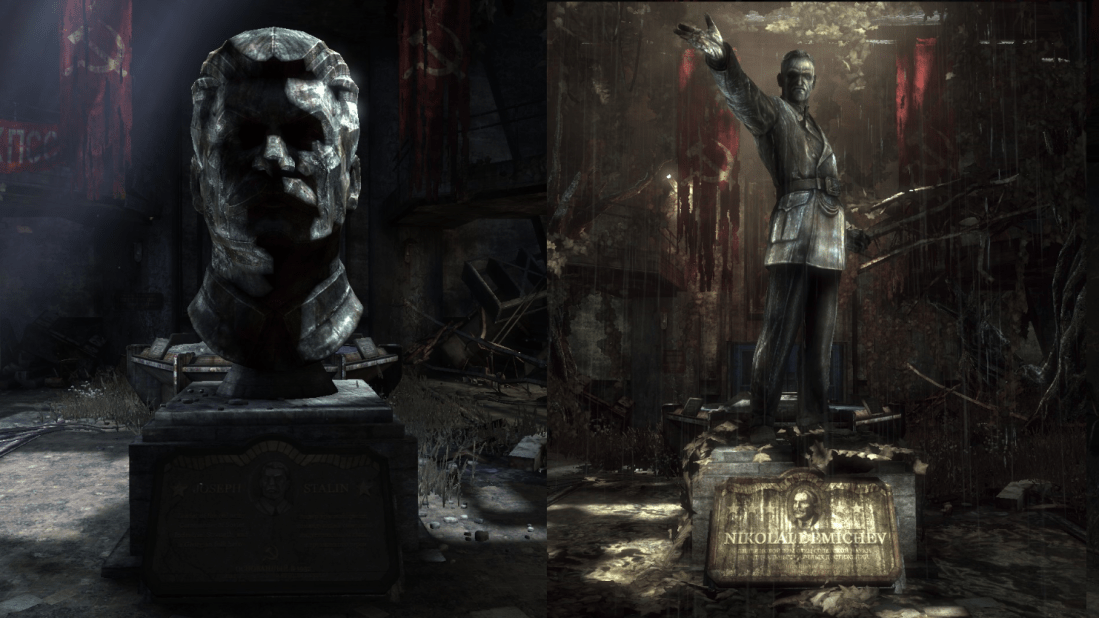
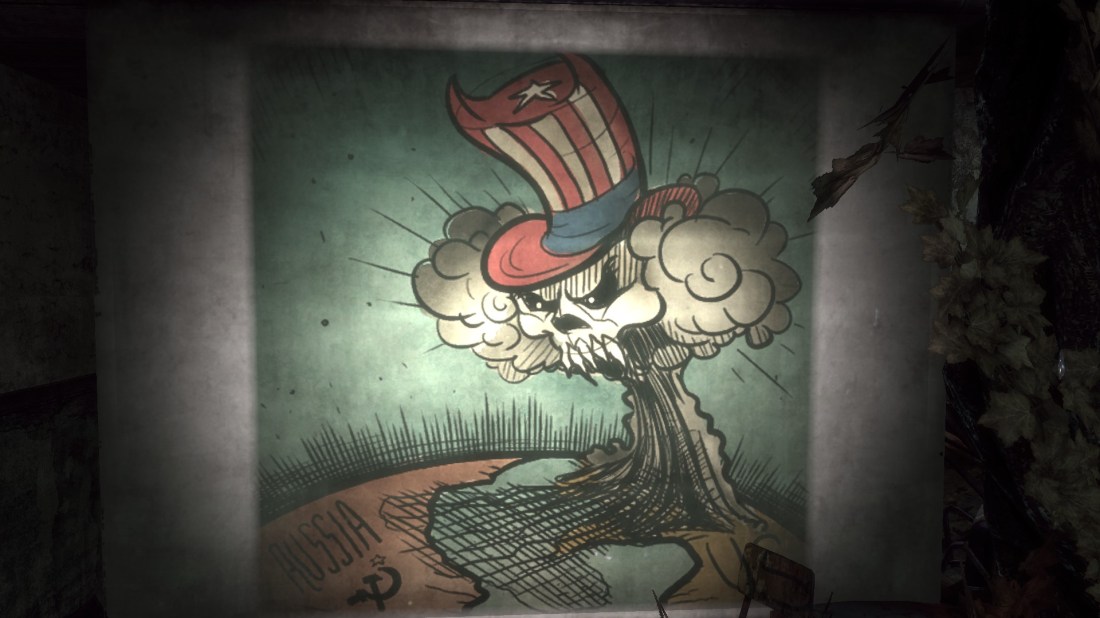
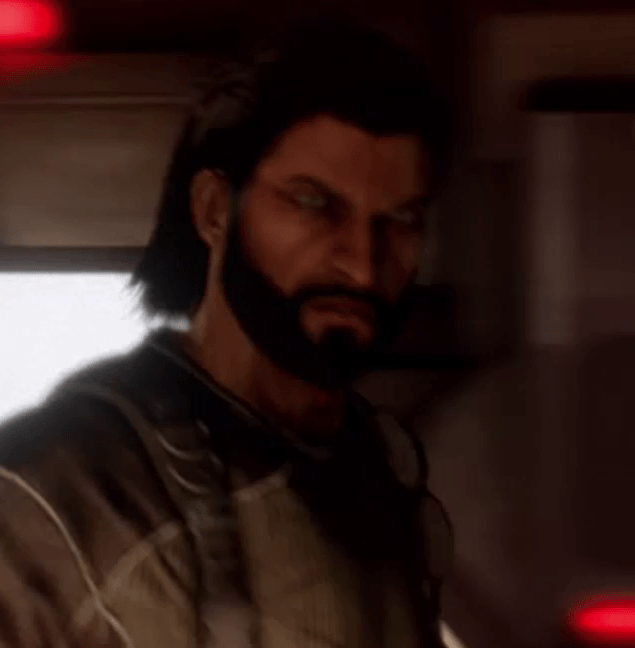
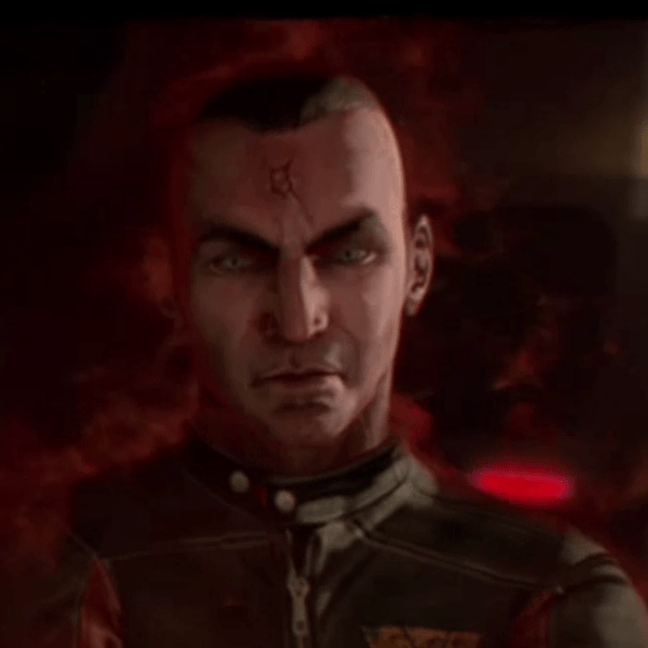
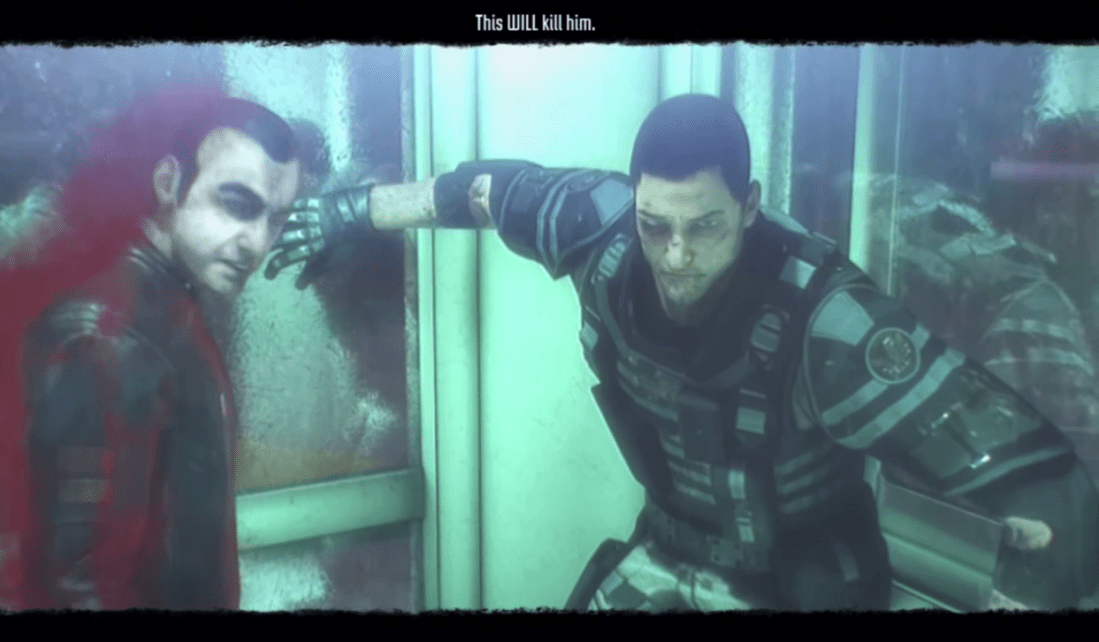
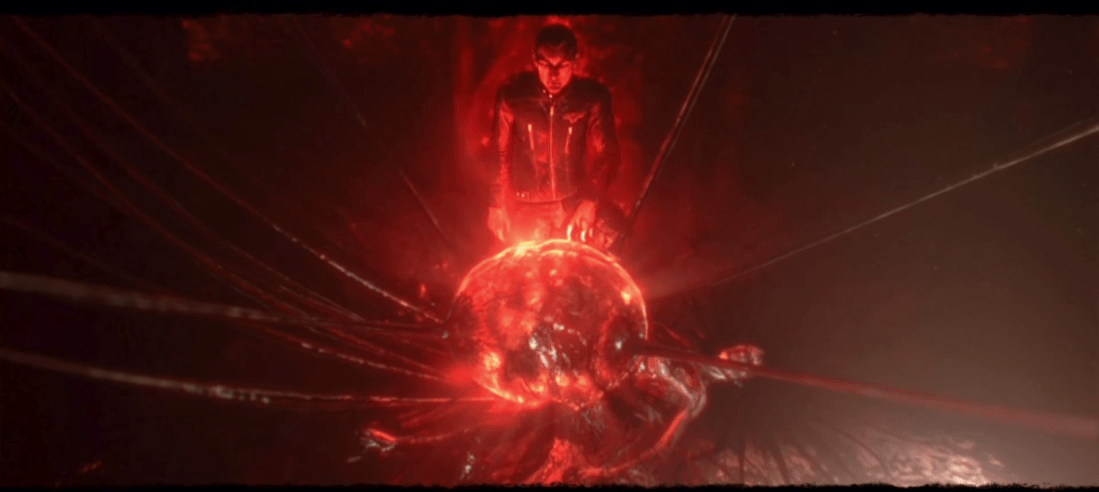
On a remote island, a long abandoned Soviet facility mysteriously kicks back into life, emitting strange pulses. US Marines, including our man Renko, decide to fly in and check it out, and a pulse brings us down. Making his way through the desolate island, Renko discovers a testing facility where, blundering into a strange displacement, he’s transported to 1955 where the island is in the midst of a catastrophic disaster. Fighting through the facility Renko saves a man, Nikolai from dying. Transported back again, Renko finds Nikolai now rules the world. Talk about your butterfly effect. A resistance group (what would shooters do without resistance groups?) tells Renko the island was a testing ground for time displacement, and this is all his fault – he must fight through both the past and present and stop Nikolai.

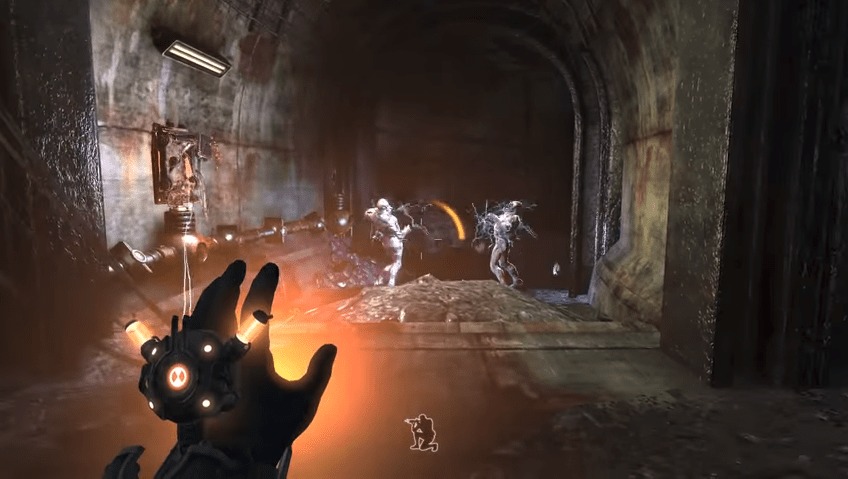
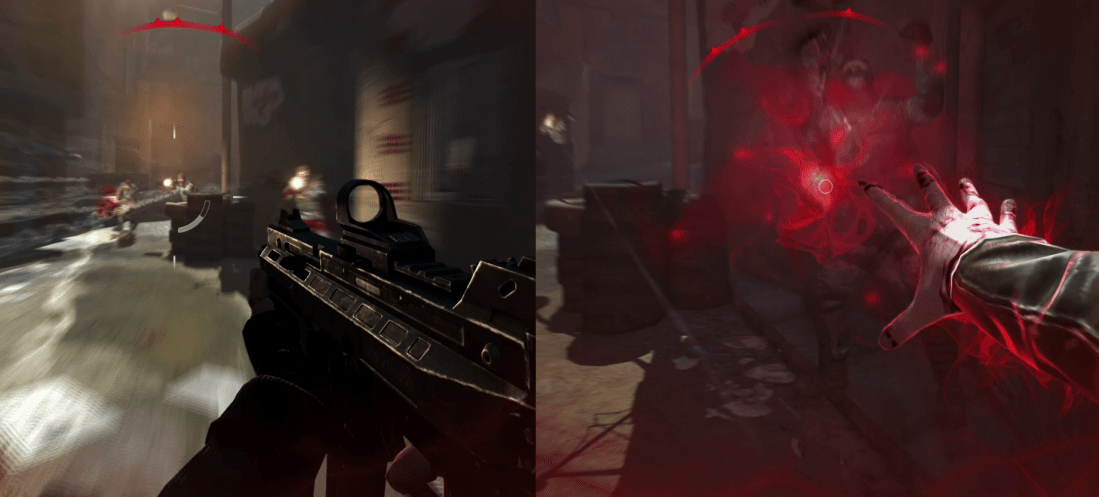
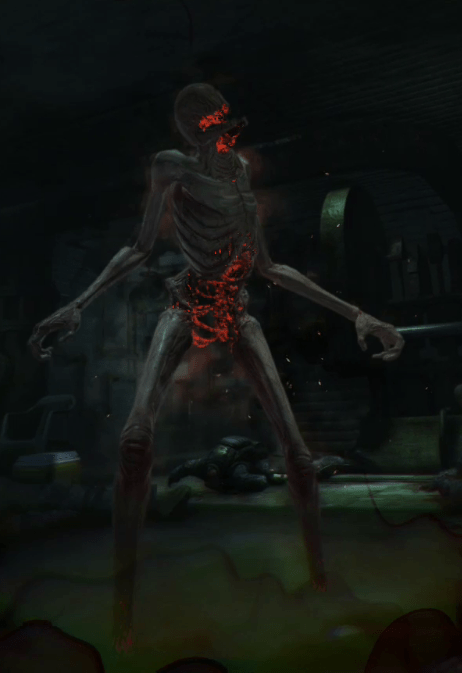
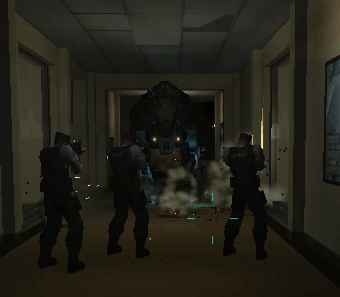
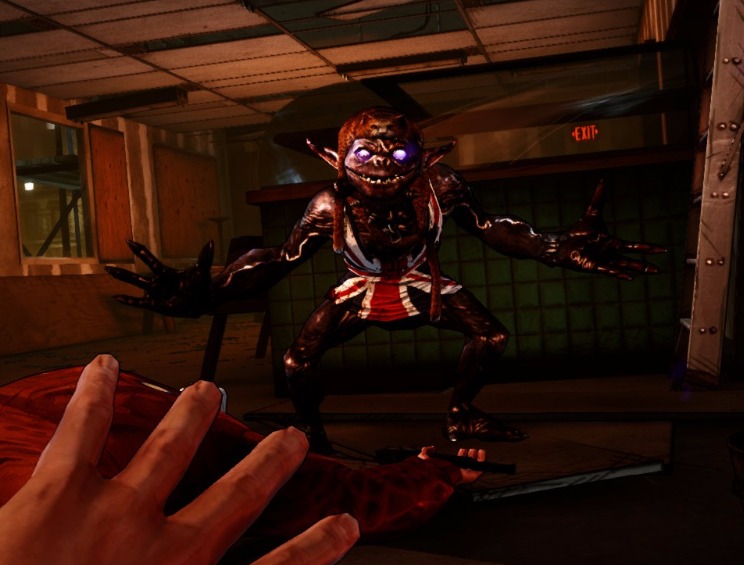
Trying to stop Renko however, is Nikolai’s troops and the tortured former inhabitants of the testing facility (both human and animal, plus pissed-off plants). Renko only has the usual two-weapon load-out and occasional weapon upgrade to even the odds – so far, so FPS. The twist in Singularity is the Time Manipulation Device or TMD Renko gets his hands on. A wrist-mounted time-gun, the TDM lets Renko age or de-age anything organic or materials infused with ‘element 99’, a compound painted on everything – Who was so careless with this stuff? It’s awesome rebuilding or aging things to navigate and turning soldiers into dust. It can also repel or move objects Renko can’t. Meanwhile, more displacements allow Renko to switch between times and see the impact of events as he progresses. However, it’s not the TDM that gives us deva-vu. We’ve been here before.

Singularity constantly calls to mind other, more original games – Fallout 3’s futuristic-retro look is throughout, while the facility comes across like a Vault, with the new residents led to believe the tests were for their benefit. It’s so Vault-like I keep expecting to find a bobblehead. There’s some heavy Bioshock vibes going on, as the TMD takes on a Plasmid-like quality thanks to various upgrades, ghosts and everything is tied into Renko in a Jack-like ‘it was always you’ plot, and then there’s Half-Life 2; not just in the look, but there’s a sub-Alyx companion and the TMD has some gravity gun-style options. And then there’s the shooting; Singularity is one half CoD, one half a zombie survival game; so CoD Zombies then. It’s not derivative, there’s just this ‘played it’ sheen and that’s largely because of the break-out star, the TMD; you don’t need a time machine to see this gadget is hobbled right from the start.

Conceptually, the TMD is brilliant, using time as a weapon but that just doesn’t happen and it’s aggravating; only being able to use it where there’s E99 means you never cut lose; I have a time machine on my wrist and I can’t muck about with it? Most shooters corral you into a linear experience or give you a locked down arena to work your way through, but with Singularity that feels a lot more obvious because of the TMD’s limitations. You can’t give me something as awesome as time to play with then not let me do anything with it. If it had been like Red Faction where practically everything can be broken, giving the TMD control of the environment would have opened it up into something special; all manner of approaches, opportunities and silliness. If Portal’s mind-bending physics can allow you to go anywhere yet still be trapped, the TMD could have done more. The whole island should be open and ready for you to muck about with but the puzzles, battle opportunities, and environment are strictly controlled and far too convenient – If Renko could switch at will it would have been a real mind-twister; overwhelmed? Go back and even the odds by altering the environment; jump back and leave a weapon in the past to recover in the future and give yourself an edge – there’s carnivorous plants for example, how cool would it be to notice a sapling near some soldiers; go back and age it and return to see it going Audrey on them. Basically, a shooter version of the Bill & Ted’s Excellent Adventure ending. Whoa.

The irony of time-travelling Singularity is it’s already happened – in other games. And a finale where Renko suddenly has a choice feels tacked on (now he can alter things?) – and none of the options work out well for him despite the fact that up until the ending, he wasn’t a tragic, mysterious or morally dubious character. Just an arm with an unpowered Flux Capacitor strapped to his wrist.

2010 | Developer Raven Software | Publisher Activision
Platform Win | PS3 | X360

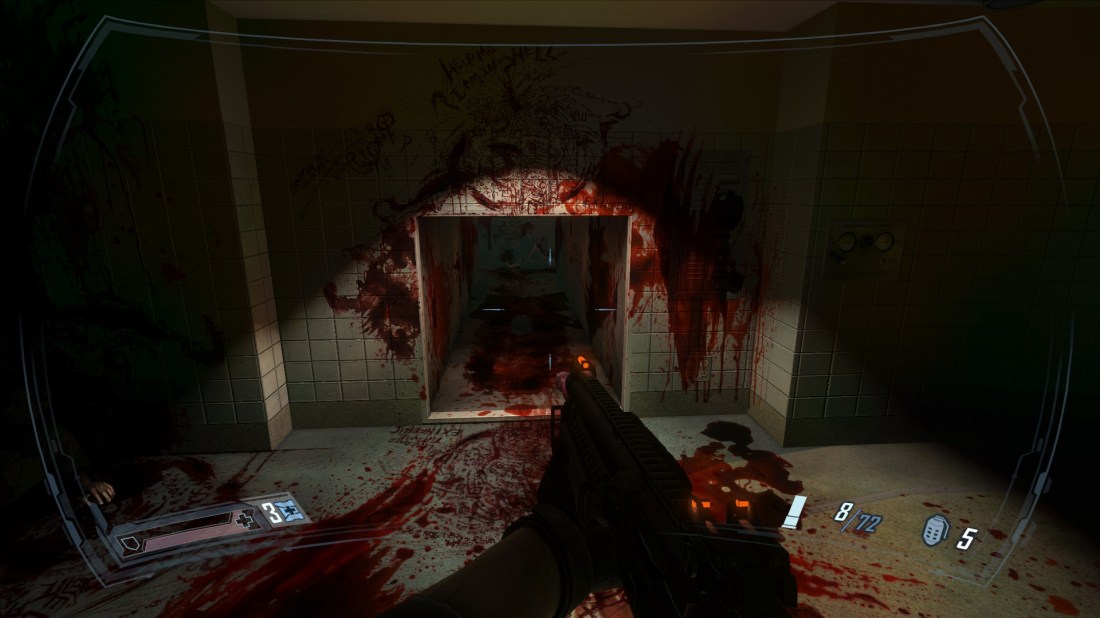
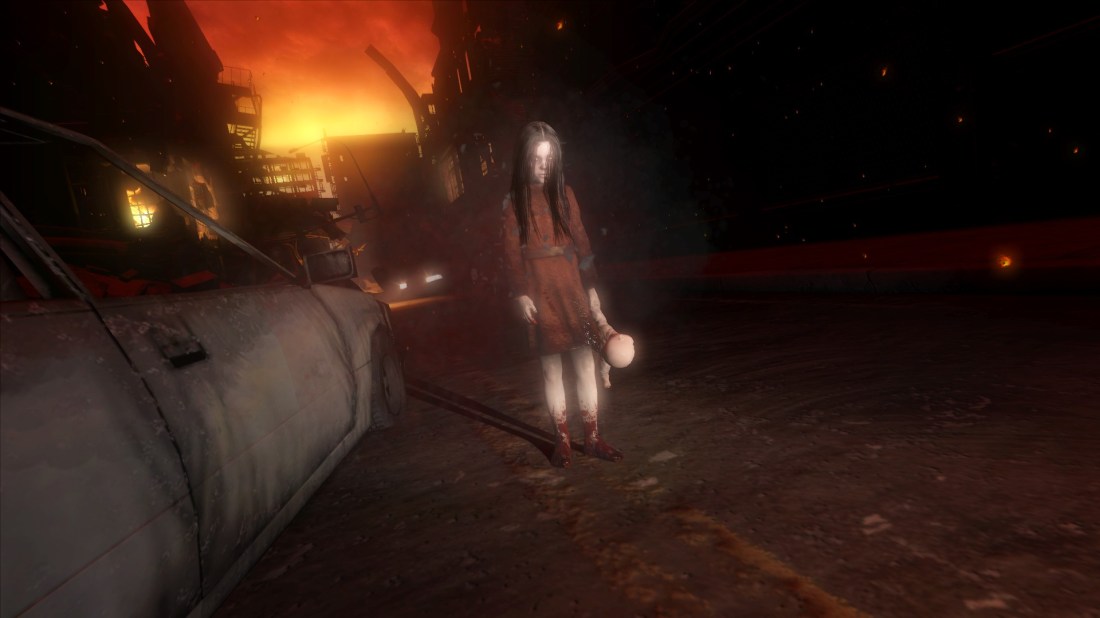
F.E.A.R 3

A Rage Quit Review

The psychotic psychic is back and she’s expecting. FBT didn’t expect this.

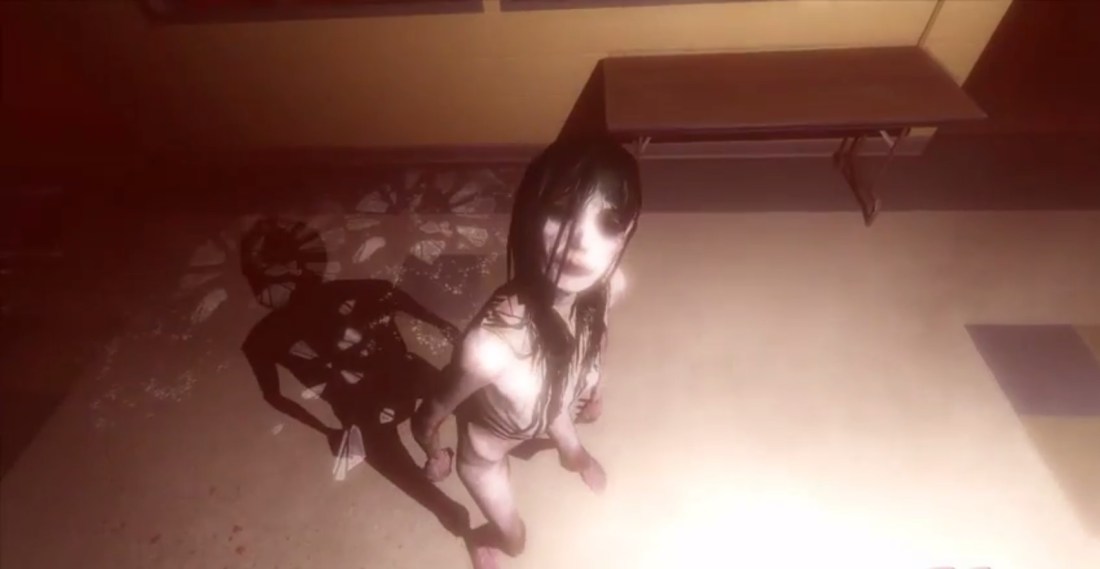
FEAR Alma for a third time? FEAR forced us to survive little Alma’s rage after being turned into a monster and FEAR2 turned Alma into a Video Vixen, so what does Alma have instore for us in FEAR3? Morning Sickness.

By now, the series has completely jettisoned the idea behind the First Encounter Assault Recon team. FEAR might as well have been called Project Origin since the entire franchise has centred on Alma rather than a Spec Ops team investigating paranormal activity; they’ve had one case. In the original, F.E.A.R investigated Fettel, a rogue commander in ATC’s army-for-sale who’s looking for Alma; a hugely powerful psychic who, after years of abuse by ATC’s science team (including her own father), went Carrie on her tormentors. It was a great game; full of awesome firefights, a terrifying but complex antagonist and a twisting plot. The perfect shooter. In FEAR2, a new Spec Ops team were tasked with finding ATC’s boss, Aristide only to get caught up in Alma’s explosive family reunion. Alma’s interest was piqued by ATC science project Sgt Becket, and she developed a big crush on him. Despite Alma changing her little girl image to an Instagram Model look, Beckett left her on Read and enraged, Alma took matters into her own hands. Not only was FEAR2 a sub-CoD horror-shooter, it ended with a bun in the oven for Alma; it wasn’t just morally dubious, it didn’t make a lot of sense; but presumably FEAR3 will reveal what the hell it was all about and what Alma’s end-game is.

I really wasn’t sure the FEAR franchise could withstand another round with Alma but FEAR3 does something unexpected with the demonic hellcat; puts her on Maternity Leave. It’s unexpected because all the trailers, the box art, the opening, even PR quotes from the studio promised Alma was back and badder than ever. Yet Alma is out of the picture for the entire game, save for a few non-threatening cameos. What the hell? While her contractions threaten to merge her nightmare world with ours, practically nothing Alma-related happens in FEAR3. We’re supposed to stop her giving birth because reasons, but first we’ve got bigger questions – like why is Fettel back in ghost form, and how come Pointy can’t think of a THING to say? He’s still silent despite finding out he’s a lab experiment, ATC have manipulated his entire existence, his Mom is a vengeful spirit and he shot his own brother in the face – who’s back from the dead. Not even a quietly muttered ‘FML’?

We first meet Pointman while he’s being beaten up by Mercs in a ATC-controlled town. No idea why, it just seems they’re knocking him about for fun; he was a considerable asset, a first blood of Alma and they’re beating him to death? You’re wasting your time guys, he’ll never talk. Thankfully, Fettel appears, possesses one of the soldiers and frees him. Without explaining himself, Pointy resolves to escape, link up with Jin from FEAR1 – who for some reason has spent the last nine months kicking around the decimated city doing nothing – and finally close a FEAR case by ending Alma. Fettel meanwhile also wants to find Alma, claiming he’ll join the family together like an R-rated version of the Munsters. Since their plans roughly align, the two siblings agree to work together.

As far as Pointy’s plan goes though, why does he want to kill Mom? She was as much a victim as he was, and why isn’t his rage directed at ATC? It could have turned it all on its head and have the bros protecting Alma’s newborn from ATC, or the three of them destroying Aristide and ATC once and for all; can you imagine Alma as a follower?! Holy shit. No. But we’ve got Fettel along for the ride; he’s an Alma-lite but still, packs a cannibalistic punch and that’s gotta be fun – get to know my undead bro on a road trip! Apologise for shooting him in the face, bond over our mummy-issues and all that? Nope. None of that either. He’s not even following.

The implication seems to be ‘will you rescue Alma (Fettel) or kill her (Pointy)’? But it doesn’t set that narrative out in any meaningful way and missions don’t impact your choices – it boils down to differing play-styles. This has several increasing levels of frustration; first, you don’t even have your brother as a follower. Once you’ve made the call on who you play, the other disappears until the next cut-scene, having reached the same spot somehow. Playing as Pointy means the same old same old – two guns, bullettime. But to have Fettle alongside doing supernatural stuff on command would have been awesome. And to play him should be awesome too, but it’s supernaturally disappointing. He’s a ghost who can get shot for starters. He’s already dead! But he can be deader? It’s idiotic, did not one person in the dev team go ‘hang on…’ At the very least Fettel should have been a stealth character, or capable of ghosty stuff. Instead, he can possess ATC troops but that just makes him Pointman without bullettime – pointless. Fettel can use telekinesis and fire bolts of evil but they’re nowhere near as awesome-destruction as they should be. He’s also not doing any of the cannibalism he used to get up to (health bump at least? How is biting not a weapon of his?) and lastly, why don’t we at least perceive the world from his POV – it is literally the same play through, different arm. What is the point of Fettel? What he is changes based on the story needs. He’s dead, undead, real or a ghost, depending on plot points. We can’t even walk through walls like he does in the cutscenes; Fear3 made playing a ghost boring.

Another frustration is the continuity cracks. Since Pointman refuses to talk to Fettel and they have no bearing on each other’s actions, there’s no reason why they team up. They have zero use for each other and nothing to say despite there being a huge depth to their backstory as explained through tons of cutscenes. How come the troops can tell when one of their buddies is Fettel? And where’s Aristide? She was the series’ The Smoking Man but she’s nowhere to be seen in 3 so who’s controlling ATC? They’re a major thorn in Pointy’s side but serve no story-purpose. What are they even doing? The Replicas also put in an appearance but who’s controlling them, and why can’t Fettel imprint on them like before? And, if this is nine months after FEAR2 (ignoring the fact that at the end we saw Alma about ready to drop, implying a supernatural birth) why is Jin just knocking about in a warzone; and why has that ruined city been left to fester, how are the zombies still alive, why are people possessed – and by who, Alma? Why? Where is everyone else? Why did this start in Brazil then never reference it again? WHAT IS GOING ON FEAR3?

Not even the gameplay can distract you from those petty plot points. The ATC soldiers don’t have anywhere near the flair of the original Replicas and they’re boring to engage with, as are random supernatural creatures that make no sense. The levels are linear, and the mission goals feel more like we’re being ordered about (by who?) and those classic scared-to-death FEAR moments are a thing of the past. I’m not even scared of ladders this time. And another gameplay annoyance is both Pointy and Fettel start out as newbies, gaining XP as they go. Why?! And why have we got to piss about hunting collectables to gain XP when we’re supposed to be hunting our own mother, let’s focus on – wait, COLLECTABLES?! What?! We can find little mini Alma dolls for extra XP. You turned her into a toy? Why does FEAR3 hate FEAR so much?

Anyway, we track down Mr Lover-Lover Boombastic Becket, who isn’t nervously pacing outside the maternity ward. His reaction to meeting his step-sons is extreme to say the least, screaming they need to ‘kill the filthy maggot inside her’. That’s a tad harsh but not as bad as how FEAR3 resolves his storyline; by having him explode from the inside out during Fettel’s possession/interrogation – and Pointman does fuckall about it. What was that?! FEAR2’s rape scene was always incredibly contentious, not least due to its ‘but she was hot so clearly he was up for it’ subtext, but to horrifically kill off a rape victim who’s been imprisoned just to further the story is unpleasant in the extreme; you couldn’t find you way to freeing him? Or maybe just ask him? It just resolved FEAR2’s story by punishing the victim – and our hero didn’t stop it. FEAR3 already felt cheap and nasty, now it’s reprehensible.

So, with Alma busy at Lamaze classes, we get no scary little girl appearances, not even an attempt to kill you for old times’ sake … instead we get ‘The Creep’, a manifestation of Alma’s own fears of her father. Fear has fears? It literally behaves the way Alma did in the first game, appearing at opportune times to wipe out the bad guys, take an interest in us and kindly creates pathways with its destructive behaviour. But unlike Alma it’s not scary. Also unlike Alma, it’s the final boss. We can literally kill a ghost now? Who you gonna call? Monolith, who developed the original, to sort this crap out. Day 1 Studios made this, and they previously worked on ports of the original so they knew what FEAR was; what were they thinking? At the very least you’d think only Fettel can take down the Creep but no, bullets can kill an imaginary friend too. Also, Alma Feared her Father? In FEAR she dissolved him alive with just her brain; she’s over her daddy issues. This is so shit. Once the brothers dispatch The Creep, we finally reach Alma, who decided to give birth at Pinhead’s maternity clinic. Clearly something’s up.

Then the game goes multiple endings on us. Pointman favours ‘Bullet to her belly’ while Fettel wants to call it ‘Junior’. Which is a huge crock of shit. We haven’t been given any context, a chance to draw our own conclusions on Alma or the brothers, what could happen and neither brother makes a case or grows during the game in a way that makes you ponder the choices; AND we still don’t know Alma’s intentions – why she wanted the child, what it means, what her plan is. But never fear, we reach Rage Quit level when the game just makes the call based on which bro you played as so it’s all redundant anyway; we watch as Pointy changes his mind and becomes a brother-dad and Alma fades away peacefully. What?! That was it? She … Fuck you FEAR3. It’s a muddled, unresolved ending to a pitiful, half-baked, hateful mean-spirited, confused, lazy, tame, boring game. And Pointman still doesn’t say anything.

FEAR3 sucks on every level – it’s a dull generic shooter, makes a mess of the FEAR narrative, removes its iconic villain and makes the entire game about one non-event without any resolution or explanation. It also forces the franchise into a co-op mode when the central thing to the original was you were alone – and even fucks that up. No way I’m going through that again to see what Fettel does. Rage Quitting the shit out of this abomination and googling ‘completely remove game from Steam’. I’m updating my bio’s most hated games list.

The worst thing though is Day 1 Studios wheeled John Carpenter out for PR points. Clearly they were just interested in his marquee value not input because pre-release, Carpenter and writer Steve Niles talked about how dangerous Alma is in FEAR3, now a protective mother, and that’s what FEAR3 should have been; everyone knows you don’t get between a bear and its cub and that’s exactly where Pointman should have been instead we’re her midwife.

Alma is Fear. This isn’t.

2011 | Developer; Day 1 Studios | Publisher Warner Bros. Interactive

Platforms; Win | PS3 | X360
Genres; horror, shooter, fps

F.E.A.R. 2 Project Origin

a second wind review

Kicking and screaming, FBT is dragged back into Alma’s world. Fear FBT’s review of FEAR 2.

Alma. I’d tried to forget her but … I’ll never get over a dead little girl following me. F.E.A.R. 2: Project Origin delves deeper into Alma’s history and the ATC corporation that created her, but … didn’t FEAR stand for ‘First Encounter Assault Recon’? A team dedicated to investigating supernatural events; why go back to Alma? Evil corporation kept an immensely powerful psychic in a coma while impregnating her to fine-tune her abilities in more compliant offspring then let her starve to death locked in a vault only to watch her spirit wreak horrific revenge. How’s about we chalk that up as unsolved and move on? Investigate Nessie. Bigfoot? Unicorns! Anything but Alma. I’m not scared, you’re scared.

Starting just as the original FEAR ends, we’re in boots of Becket, part of a new Delta Force detachment called Dark Signal. Yeah, that’s not foreboding. DS is sent to extract Ms Aristide, the head of ATC who were behind Project Origin – which gave us Alma; we should be scared, but worryingly, the fun-size devil’s brief appearance at the beginning makes this look a lot like a Hollywood remake of a Japanese horror classic.

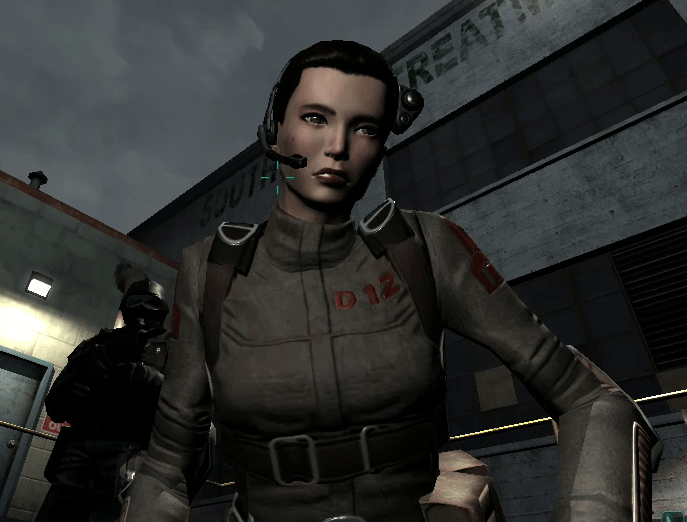
As the wise-cracking/tough-as-nails/cliché Dark Signal make their way to Aristide’s penthouse, we’re attacked by a black ops team who want Aristide themselves. The fights aren’t to be taken lightly, but it’s not as thrilling as the original Replica soldiers, who -ironically for clones- had more personality than those Black Ops, behaving like typical shooter enemies. Beckett doesn’t have bullettime like F.E.AR’s Pointman, but he does act like he’s played a lot of Call of Duty. This is a basic CoD clone with some horror themes thrown in – lights turn off, doors mysteriously open/slam but nothing happens; the original FEAR never lied to you, Unknown Signal was like the Jaws theme; no dun-dun, no shark. Your imagination did the rest. But this time we’re just running and gunning, not creeping and scared of our own shadow. But once Pointman’s nuclear explosion hits, Beckett’s not in CoD anymore, Toto.

We awake to find Becket on an operating table and most of his squad eviscerated. The Black Ops team save us from ATC’s experiments by rocking up to kill us, and as we fight our way out, Becket ends up imbued with the same abilities Pointman had – as in bullettime and the interest of Alma; well, more interest since she was knocking about from the get-go, which doesn’t make a lot of sense unless Alma now has foresight – she does have other powers now though; she can now summon tendrils from hell and her eyes glow; before, Alma was just a little girl with a blank, emotionless face; that was scary – this Alma is the monster from a straight-to-VOD horror movie. In Fear, seeing her get up close and personal with her tormentors or hearing her blood-curdling screams as her babies were taken away said a lot more about Alma’s rage and how much we ought to fear her than a reenactment of Sarah’s dream from T2. Worse, Alma’s appearances are reduced to pointless jump-scares or she’s acting like a mission marker – in the original she had a purpose, she was curious, now she’s a pop-up reminder; yes, this is FEAR. It isn’t.

As he fights through the ATC lab, Becket’s set upon by the Replicas in their proving grounds; which seems to be there just to re-familiarise ourselves with Bullettime. Which doesn’t seem as necessary as it did in the original; half the time I forget to use it. And when it’s not Black Ops or the Replica forces it’s disfigured test subjects skittering about, turning F2 into a horror shooter; although Becket can only manage two weapons, keep the shotgun handy for close encounters. Later, we meet phantoms able to control corpses and people driven mad by Alma’s power which turns F2 into a zombie shooter too; the original FEAR was criticised for its minimal villains and repetitive locations and F2 does try to change it up – locations are more varied too, including a school where the team discovers ATC were experimenting on the kids to heighten their psi abilities. While the school mission is a creepy highlight, it’s secrets come across as a bit half-baked story-wise; both Becket and team-mate Keegan went to this school, presumably explaining Alma’s early interest but all I can think is; is there anything ATC aren’t involved in?

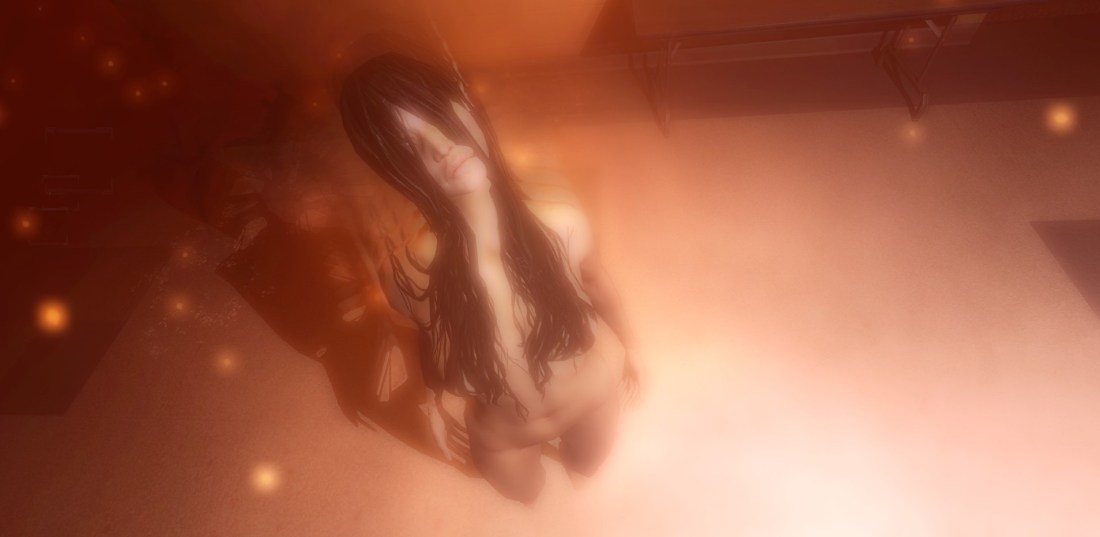
Talking of getting involved, Alma’s interest in Becket turns into a crush once they’re on the same psychic wavelength, and she begins to take on a more attractive look to woo him. If Becket’s backstory seems hackneyed, Alma going full-Lolita feels really off. Alma may be rage incarnate, but she was as much a victim as victimiser, so to suddenly sex her up adds an uncomfortable but vulnerable aspect that blows the whole character wide-open – only to immediately fumble it; are we scared or sorry for her? We don’t entertain the idea of loving her, so which is it? The game is never sure, but to give Alma emotions she doesn’t understand should make me extremely nervous – a girl’s first crush is frightening enough but this girl can kill you with her brain. Yet Becket just silently plays hard to get. It could really have changed F2, there’s instantly all sorts of ways their relationship could have gone and so many ways it could have ended, but it’s just a sexier version of Alma we run screaming from and the few times you do feel a pang of sympathy for her, the game doesn’t. Becket did suffer at ATC’s hands too, they have that in common but sexy Alma, her hair covering the naughty bits, makes no sense since she forces herself on him anyway – she doesn’t crave his affection, just his naughty bits. it just takes on a very uncomfortable titillation feel and it would have made more sense if she’s remained scrawny since Becket’s resistance meant nothing to her. Does she have feelings or not? Alma’s interest also causes Keegan to start acting jealously, implying Alma had been trying it on with him but turned her attention to me instead. Can’t blame her for that; hate the game not the gamer.

The whole Dark Signal thing doesn’t really come into its own either – it seemed to imply we were all proto-Pointman, being field-tested but once Becket gets upgraded it all goes away and they’re reduced to standard NCPs. We only really gang up when one has to meet a grisly Alma-end, the rest of the time Becket’s alone due to contrived reasons. While Keegan suffers the most, and it implies he and Becket are close it just doesn’t go anywhere, alongside the possible interest Becket stokes in Stokes, the token tough chick on the crew. I expected Alma to pick up on their mutual interest and get into a scrap with her, but no and this emotional disconnect is largely down to the insistence on keeping Becket a silent hero; his best bud is getting tortured by a ghost that wants to get jiggy with him and he’s got side-chick Stokes on the go but he still can’t muster an opinion. But he does have an idea. A really bad one. Aristide has a way for Becket to take on Succubus Alma once and for all. Date night!

Thing is, if you told me in the first game I’d being going one-on-one with Alma, I’d quit, turn off the PC then burn my house down to be sure. But in F2, I’m just not that bothered; it makes Alma a threat we’re expected to meet; something you never, ever wanted in FEAR – That scene where the vault opens and her emaciated, deathly form walks out was heart-stopping, but here we are watching her approach and it’s not scary; Alma stops being frightening when you imagine her with a health bar, and no red-blooded marine is going to turn down a naked hot chick – the game doesn’t even create a situation where Becket leads her on to trap her, least then you’d be nervously waiting for her reaction to ‘it’s not you it’s me’, but at the last second F2 drops that in favour of a standard mano-a-mano with Keegan who we don’t care about, while the game resolves Alma’s needs in a really uncomfortable way. One thing about FEAR 2’s ending, neither you nor Becket saw that coming.

FEAR 2 is a technically good game – there’s a huge amount of shooting, complex levels and it’s intense; it keeps you on your toes. And your fingers; there’s a lot of classic mid-noughties button mashing to get things out of your face. But it’s only Alma’s shenanigans to separate this from any other military shooter. The oddest thing is this is from Monolith, usually a crackingly good developer with an eye for subverting the genres they explore. Keep the ATC as an X-Files secret government and Aristide as the Smoking Man if you like, but FEAR should have been a great supernatural shooter series with each game featuring new nasties to overcome. Then little Alma would have remained a great amongst gaming’s villains; SHODAN, GLaDOS, Andrew Ryan – compelling one-off villains you develop just a sliver of compassion for.

Stick to the original, it knows your fears, where as Fear2 is just Call of Duty: Alma. Played in Zombie mode. It even drops young Alma once sexy Alma appears, and there’s nothing scarier than a little girl that’s up to something – never thought I’d admit this, but I miss Little Alma.

The DLC F.E.A.R. 2: Reborn is an effective little shooter that makes zero sense. A Replica solider is activated and sent to find FEAR 1’s Fettel. Alma then takes control of his brothers and the various ghosties to stop him. Why? It’s not really clear, and I assumed it provided the explanation for Fettel’s rebirth in Fear 3, but it doesn’t. Why not have Alma task the Replica with trapping Becket for her? The main game could have included a scene where Becket disappears and we play a DLC as Keegan for a while – it could have explained more of Keegan’s Alma-crush before Becket pops up refusing to talk about it, but of course this is just a quickie DLC that adds nothing but a few quid to WB’s coffers. Avoid.

2009 | Developer; Monolith Productions | Publisher; Warner Bros. Games

Genre; shooter, FPS, horror

Platforms; Win | PS3 | X360

Quake 4

A SECOND WIND REVIEW

This is a review of Quake 4 and FBT still spends most of it moaning about Quake.

If Doom was the Star Wars of gaming, Quake is the prequels; Everything is there, it looks great, but they’re shit rip-offs when you get down to it. Only the multiplayer saved it; and the sequel wasn’t even a sequel – it was a new IP, they just couldn’t think of a better name, which tells you everything you need to know about id by this point. Quake represents where id went wrong and I hate Quake more than the Star Wars prequels. It was a polished turd.

Nothing more than a tech company by 2004, id busied themselves sullying Doom’s legacy with Doom 3, aka ‘buy our new engine’; they off-loaded the Quake franchise to old pals Raven. I have a huge soft spot for them; besides making one of my fave Doom Clones, Heretic, they also hit both Star Trek and Star Wars out of the park with Voyager Elite Force and Jedi Knight Outcast/Academy. But I still avoided Quake 4 because it was a Doom 3 clone. More dark corridors and jump-scares? Naa. But now, a decade on and one Steam sale later, can Raven do what id couldn’t – Make a good game out of the Quake universe(s)?

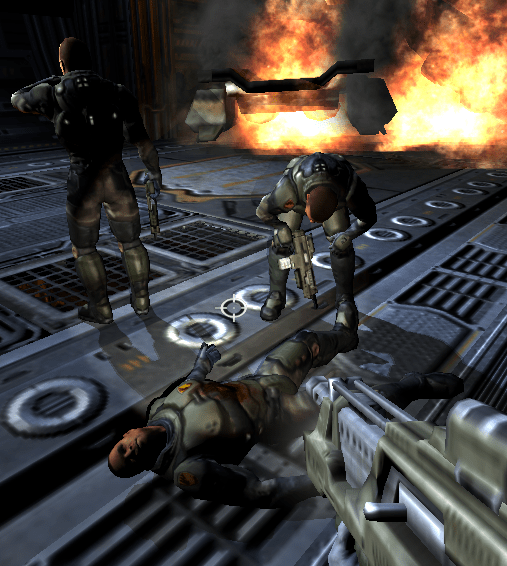
With id out of the equation and good old fashioned war movies as inspiration, Q4 actually gets the job done right. A military FPS, Q4 picks up directly after Enemy Territory and Quake II – finally, some Quake Continuity. Plus, it’s single-mission driven; the first Quake game which is more than just lip-service for the multiplayer. The Strogg, an cybernetic invading force seen in Q2 has been beaten (well done Doomguy of Q2) and our hero, Kane, is deployed on their homeworld to mop up. But of course, the Strogg aren’t quite as down and out as the military thought, and soon enough we’re in a battle for our lives. It’s got a D-Day meets Starship Troopers vibe, and while it’s standard ‘get this door open’, ‘go find a medic’ orders, the missions often turn FUBAR as the Strogg push back – in Q4 it feels realistic in the way the army has misjudged Strogg forces and you get the sense we’re just being played with.

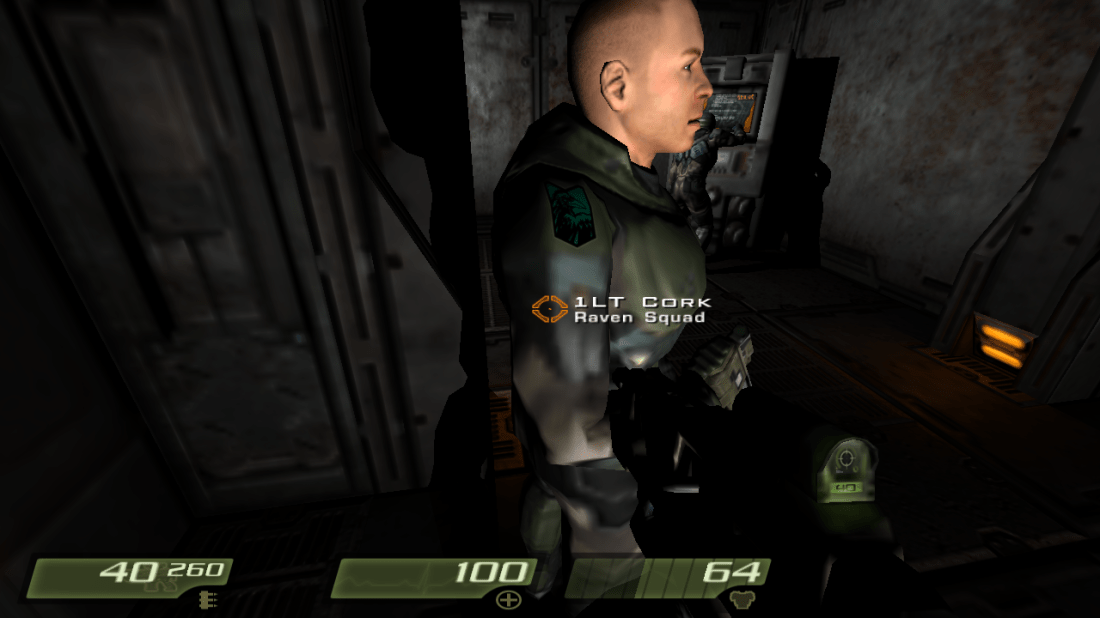
Rather than be a straight FPS with us wading through infinite Strogg, Q4 goes for the realistic approach; its a CoD-classic era tactical shooter and we’re often accompanied by other commandos, either from our squad or other regiments (Including Raven squad, complete with their logo as their patch) and they’re expendable – losing them is occasionally scripted but not always, and ending up alone can get under your skin; you suddenly feel outnumbered. Still, it’s not all on you; safe-areas where you hang with other troopers reveal missions they’re on, sorties that got their teams cut to ribbons and you pick up snippets of transmissions detailing other events; you get the sense that you’re part of a bigger mission, Q4 really tries to explore the grunt experience and seeing jets scream past in dogfights or troop carriers land or get bombed as they evac makes you think we’re all in it together. We listen to other troops discussing events from the earlier games, worry about ‘the folks back home’. It reminds me a lot of Raven’s Elite Force – no Seven of Nine though, but you can’t have everything.

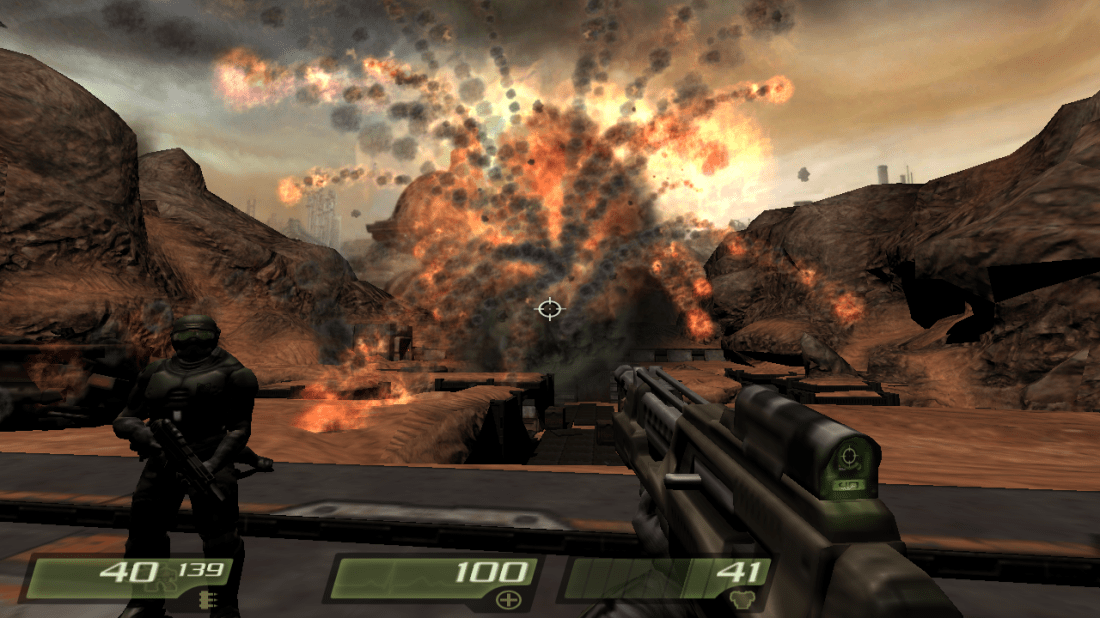
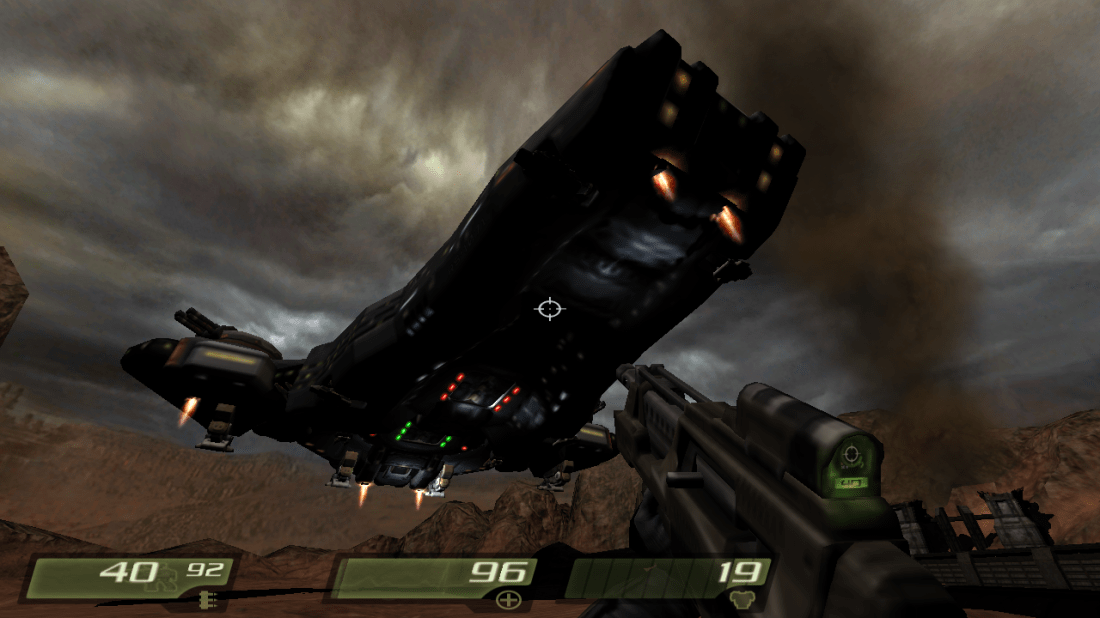
The game itself has some nice epic moments to give it that war movie vibe; there’s a great moment where you help secure a landing zone for a carrier, then watch it circle and land, then climb aboard, all in one shot. While we wander the ship, it circles to the next LZ and we deploy into another battle zone. You always feel as if you’re pushing toward a goal, doing your bit to stop the Strogg.

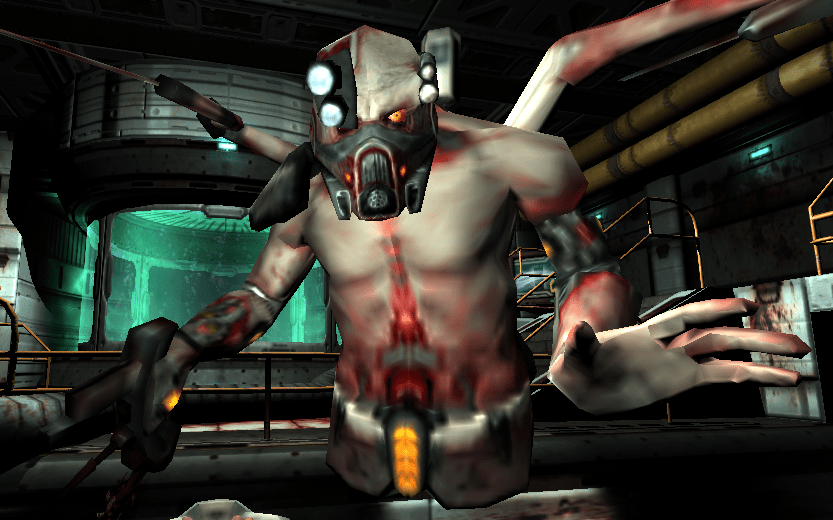
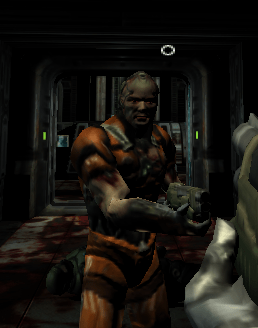
The Strogg are basically what the Borg would be like if they assimilated the WWE. Huge cyborg mentalists, sporting the kind of dismemberment and horror that’s usually reserved for Clive Barker; even Pinhead would be like ‘that’s a bit much’ and they provide some great firefights; it’s not a case of who can pump the most bullets into the other first (although it seems to be them generally). They’re formidable. Most of the Strogg’s military is converted humans from past battles, adding a macabre element and there’s the standard gunners but also big rigs like the Harvester, a giant spider-like creature that reminds you of the striders from Half-Life – a scripted moment when one barrels towards you, legs stomping while you and your team are stuck in a corridor is awesome-scary. There’s freaks like the surgeon guys who haunt the medical bays; cut-off at the waist and hovering, they take great delight in swooping down, swinging surgical instruments, while returning from QII, the Iron Maiden has had an upgrade including the ability to teleport, going from nuisance to rocket-propelling threat. Meanwhile heavy-unit The Gladiator has to drop its shield to fire so it’s a quick-draw or run-quick. Q4’s enemies aren’t hugely original but they have some tricks up what’s left of their sleeves and while most of Q4 is close-quarter corridors, they’re nicely laid out with various ways to advance or get the upper hand if you spot them in time; the game balances slow, uneasy exploratory levels with throw-down shootouts keeping it interesting. Progressing often requires a bit of thought and backtracking, rather plodding ever-onward and there’s quite a few outdoor levels, including some vehicular action; hover tanks, exoskeletons and jumping aboard troop carriers to keep the Strogg off our tail. It is industrial in look and without doubt falls into a Doom 3 feel at times, being built on idTech 4 but it’s got some sci-fi to take the dreary edge off and Q4 quickly develops its own personality. Kane himself though is just a Doomguy; it has Doom 3’s weird ‘zoom out of his head’ cut-scenes and he’s the strong silent type, a grunt committed only to the mission – which the marines have started to lose the initiative on. Then, you lose more than that.

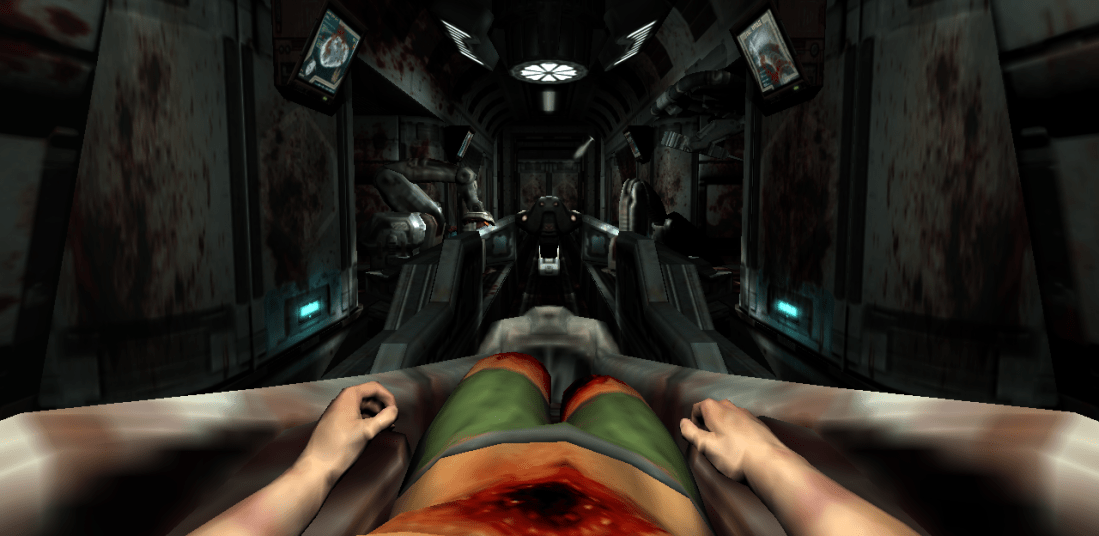
Roughly mid-way through, it’s all on you as you reach the final button that’ll stop the Strogg. Yeah, that room isn’t clearly set up for a boss battle is it. But it’s worse than that. What follows is a grotesque trip as Kane is ripped and rendered for Stroggification. At the last second, we’re saved by our squad but a glance in the mirror suggests we’d need more than an analgesic cream to clear that up. Ever stoic, Kane seems largely untraumatized after being buzzsawed to pieces and his head cracked open. While conscious. Without anaesthetic. Man, even Doomguy looked perturbed when he lost most of his health in one shot, but Kane doesn’t even blink when he loses most of his limbs. He doesn’t even check if little Kane is still there.

Once Kane escapes, he’s Robocop with a missile launcher. Faster, meaner, a better shot and you can hear the Strogg talking and interact with their equipment now. It feels like the game just changed, but not enough. Everyone bangs on about Kane now being the army’s most important asset but we’re back to getting doors open and babysitting. It should drastically alter the game but it falls into standard shooter tropes – even his squaddies are largely unfazed by their old pal looking like the enemy. It could have gone in all sorts of ways; Kane cast out to go it alone, or hunted by his own squad, or even have him completely assimilated and turn on his pals – Kane could have been biblical reference (sort of) so to have him start killing his bros would have been sick. At least have him turn into an infiltration soldier, walking the Strogg areas without threat as you try to bring down defences, see how far you can get before that itchy trigger-finger gets too much. It could have gone anywhere but it just keeps going until it becomes standard shooter fare. It just doesn’t alter the gameplay drastically enough considering what we just watched him go through. He’s just Doomguy on Steroids and doesn’t quite feel as key to the mission as everyone bangs on about; it’s all down to Super-Kane in the end, and it’s a good ending with a nice question-mark final shot, and it works, but it feels a little bit of a missed opportunity.

Stroggification disappointment aside, Q4 is a cracking shooter. It’s a real good’un. You feel like John Wayne in some 1940s war movie or western; Q4 holds up as a shooter from a period where all gamers banged on about was Half Life 2 – like Prey (the 2006 version) which this often reminds you of, Q4 has some great moments and it deserves to be played; it’s more than another Quake sequel built on Doom. It’s the Rogue One of the Star Wars movies.

Raven software; always the bridesmaid never the bride, most of their successes have come from playing in someone else’s sandbox; their early games were built with id (ShadowCaster ran on an id engine, Romero exec-produced the Heretic series), while their best games, Elite Force and Jedi Knight were fan-fave franchise licences; besides Quake they also rebooted Wolfenstein and then produced a shooter based on the magazine for gun-lovers, Soldier of Fortune, which is as odd as it was ultra-violent. Then they contracted with Marvel for a series of X-Men games. Everything Raven touches is a solid, likeable game – and in the case of Jedi Outcast, an absolute classic – yet they never had an in-house property; their most recent attempt, Singularity failed and now they just churn out Call of Duty DLC. They deserve better, and it’s a shame Raven got bought by Activision; if only id bought them instead – as each id engine evolved, their games devolved. Raven’s developer genius built on id’s technical genius could have staved both off from being bought out by the kind of soulless companies they once rallied against. Just think what Doom 3 could have been; The Doom Awakens.

2005 | Developer Raven Software | Publisher Activision

platforms; win | X360

F.E.A.R

A Blast from the Past review

FBT’s not scared of Alma. Honest. Leave the lights on.

The past

In 2005, society almost collapsed because an idiot released a hack that unlocked a ‘hidden’ sex game in the already contentious GTA San Andreas. Hidden! Secretly adding sex into games for little children to find? The outrage. It was the end times. GTA SA was rated Mature so kids shouldn’t be playing it anyway and the unfinished sex element was removed before release, the hack just reactivated it but Politicians and the Papers ignored that; they had Moral Outrage to peddle. F.E.A.R, released at the height of the Hot Coffee spill, is a perfect example of a game not for kids. Not just because of the gameplay intensity but the tone, the story was pure grown-up’s time – A deep, unsettling physiological mindfuck about a solider being harassed by a Carrie-like little girl while fighting telepathically-linked super-soldiers under the charge of a cannibal trying to find the girl. Not exactly a Teletubbies episode.

The Hot Coffee whohah did one good thing; games were recognised as entertainment like movies or music and should be considered accordingly. The morally outraged moved on to being horrified by the internets. Meanwhile, FEAR scared the hot coffee out of me.

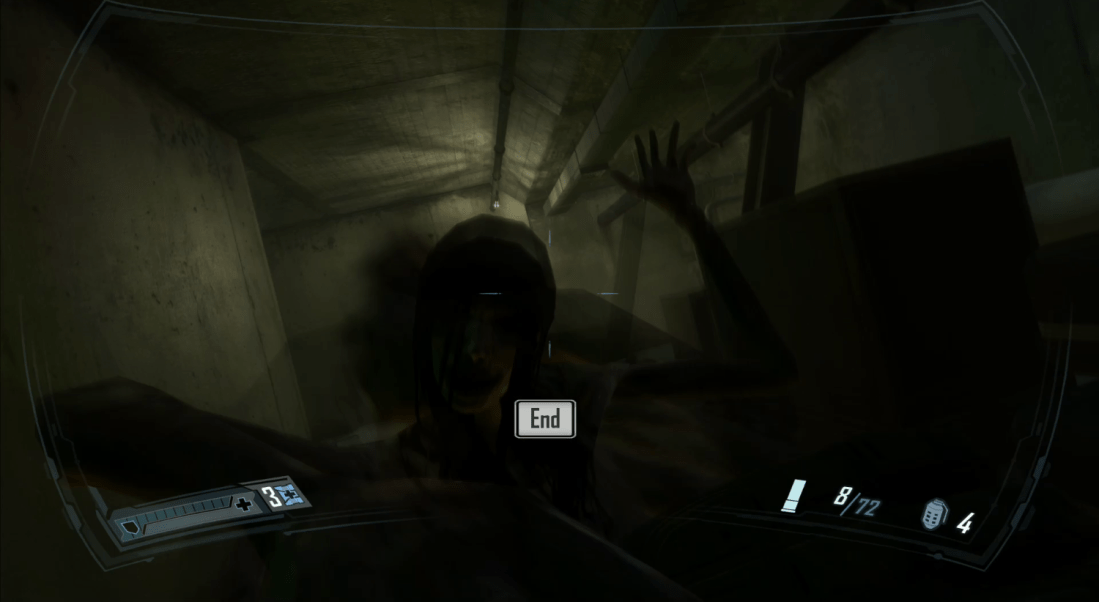
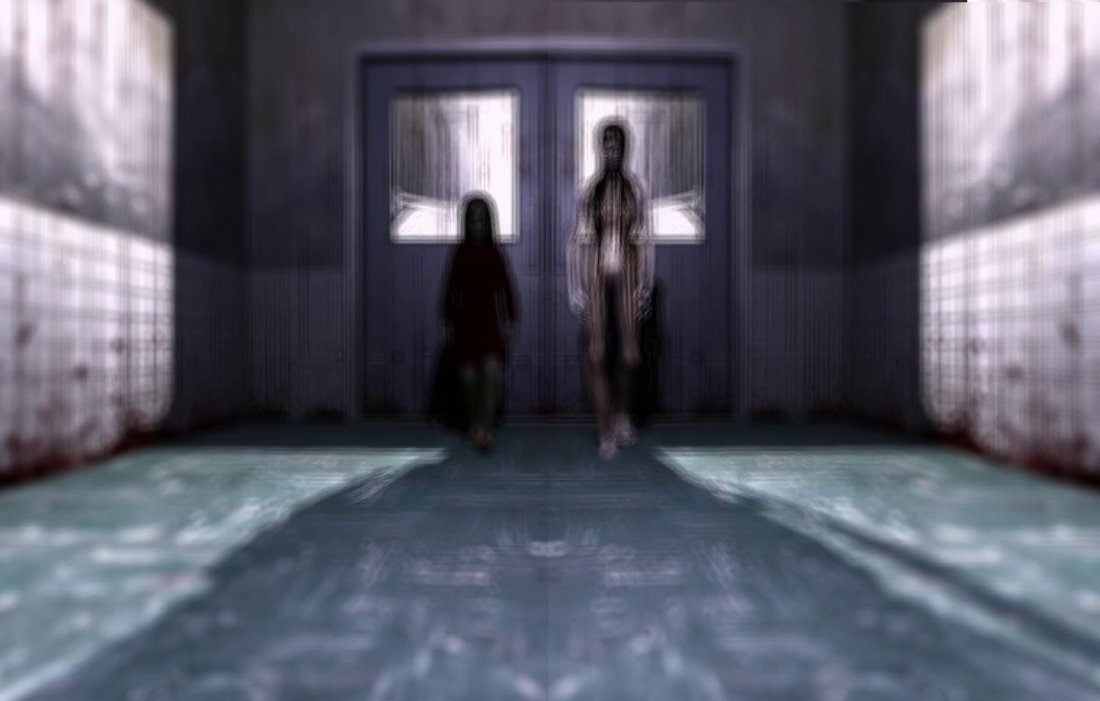
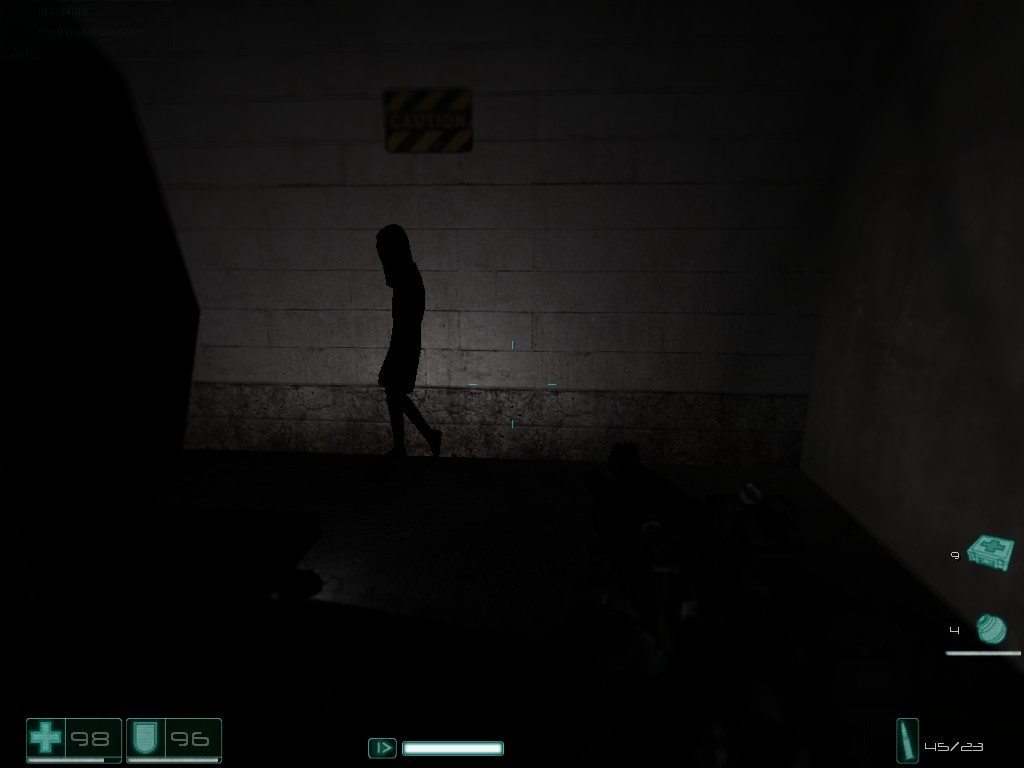
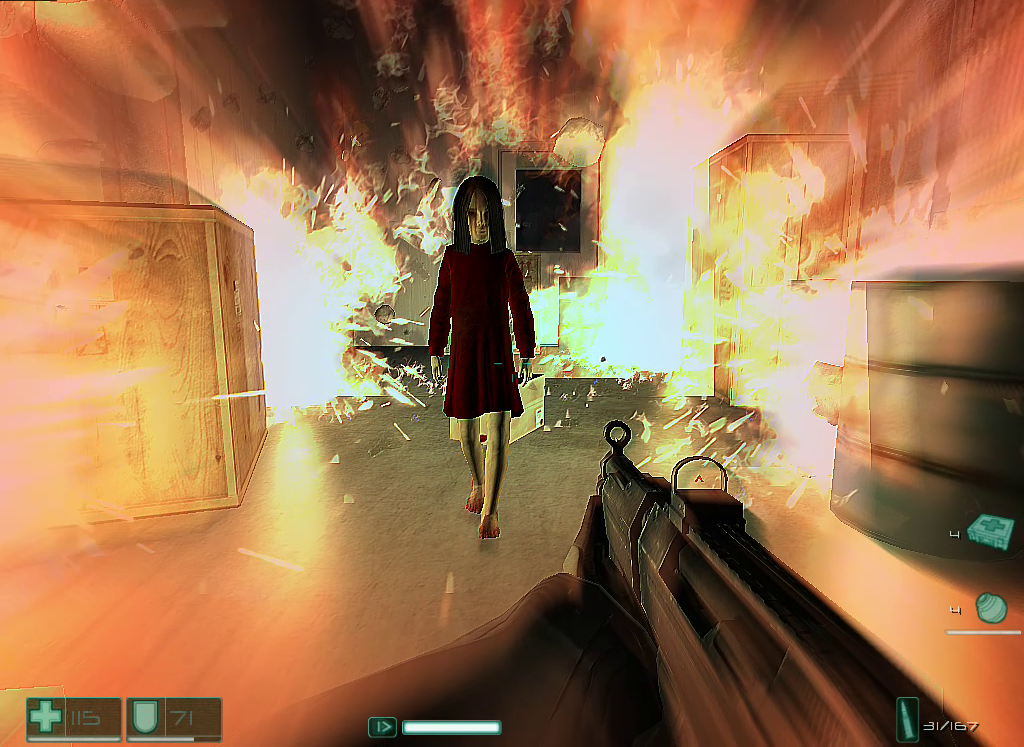
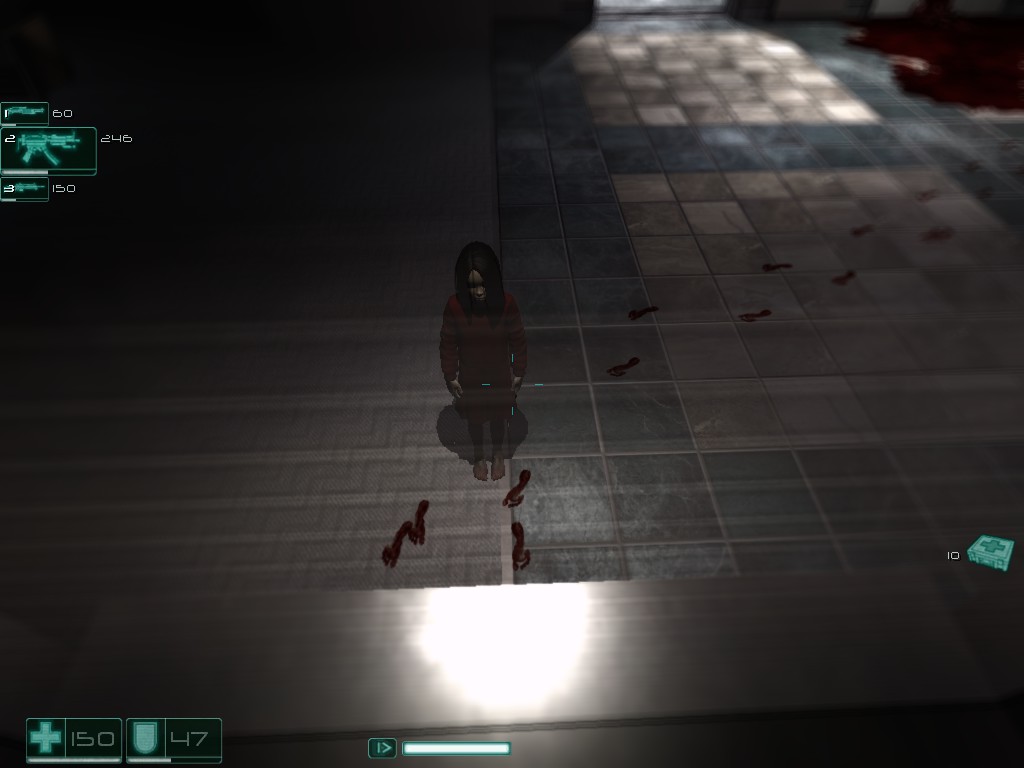
FEAR was like being armed and in a horror film. But you’re not fighting Freddy. This was pure Japanese horror; Ringu, Dark Water, The Grudge. The increasingly horrible story just freaked you out – learning who she was and worse, what had happened to her. The scares often aren’t threatening and that was somehow worse; you’d be terrified, but she … She was just curious. The ‘Unknown Origin’ noise, a little like the sound of Saddako approaching, first seemed a bit of spoiler but became psychological torture; she’s here. Somewhere. You just cowered and hoped she went away. I still remember swinging around on a ladder and she was right there. FEAR’s over ten years ago and I still get jumpy using a ladder in a game. That time I saw her bloody footprints walking towards me but not her. That time I saw her on the monitor – a monitor that was showing what’s behind me. Waa! And the screaming banshee, all spindly and screaming, matted hair, rushing at you, trying to – *Shivers*

I haven’t played FEAR in a long time, but I haven’t played anything that got to me like FEAR. Lots of games made me jump, but FEAR kept me jumpy. It is my favourite shooter from the Half-life to Bioshock period but I’ve not played it since then. I think I’m actually nervous. Time to face … Alma. Even typing her name is triggering.

Shoulda Stayed There?

Oh god, even the loading screen has that screeching sound. Just gonna go pop the lights on.

I’d forgotten FEAR actually stood for something; First Encounter Assault Recon, a spec-ops team investigating paranormal activities. It’s a shame the series didn’t make more of this, the sequels confined themselves to the fallout from the first game so FEAR as an idea was largely ignored. A series about a bunch of Spec Ops investigating the paranormal could have been awesome, The X-Files with a shotgun.

I am The Pointman, a hero so silent Gordon would be proud. I don’t even have a name, just a squad position. I’m all for silent heroes, but given what Pointy goes through you think at least the occasional ‘WTF!’ would be uttered. Pointy is the new kid to the team, and after some friendly joshing from a teammate and some promising interest from Jin, the team’s Agent Scully, we’re off to investigate some mysterious goings on.

What’s been going on is Fettel, a man who’s escaped from a lab at the ATC Corporation, a tech company with government defence contracts. Fettel didn’t escape alone though; he is telepathically linked to an entire legion of ‘Replica’ soldiers and they are tearing through ATC offices looking for something – or someone. He’s also capable of projecting himself wherever he likes. So not just a disgruntled employee with a gun then.

Pointy, who has the odd ability to move faster than bullets, is sent in to scope the place out. Besides Jin, the team we’re Pointing for includes our CO who directs things from a safe distance and another Operator who mysteriously disappears, only to reappear as a ghostly image warning she’s interested in me. Could you stop that mate? Not helping. There’s some nice moments early on, overheard conversations about how weird The Pointman is and the legitimacy of FEAR’s work. It’s a slow burn game, unlike most shooters where you’re dropped into a firefight and head to the opposite side, FEAR unfolds like a novel or film, drawing you into the story not just the bullets.

As we progress, more story elements come to light. We discover the little girl we keep glimpsing – and by glimpsing, I mean witnessing her murdering entire squads with her mind – is ‘Alma’, the daughter of a ATC scientist who discovered she has psionic abilities. Turned into a lab rat, Alma is subjected to various experiments and tests, but quickly grows bored and instead fills her time making the scientists kill or mutilate themselves. Sounds like she’s played the Hot Coffee mod. Fettel is interested in helping her escape, and also starts to take an interest in you. He’s not your battlefield nemesis, goading or chatting on the mic. He just appears right in front of you, says something cryptic then disappears. Usually with blood around his face. Because he’s also a goddamn cannibal who eats ATC employees as a novel way to get info. This game …

It’s not just Alma that drives the game; for much of the time, that’s just background. It’s great how we’re just in the middle of several greater stories – as well as Fettel, there’s ATC’s attempts to cover up the incident and Alma’s father; so much going on conspiracy-wise, Mulder would have a field day. Phone messages, conversations, laptops reveal the depth of ATC’s experiments – it’s so involving that finding power-ups like injectors that extend Pointy’s health and bullettime makes you wonder what else ATC has been experimenting with – and why does Pointy already has the ability? Stick around for the last phone call during the credits. It’s a zinger that would make the Smoking Man proud.

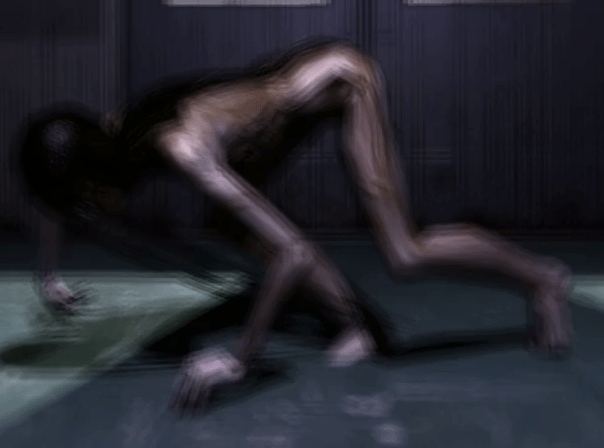
While tangling with Fettel’s Replica soldiers, we also contend with ATC security and later their black ops team; melee fighters with invisibility cloaks. Anything else? Yeah, there’s also manifestations of Alma’s, disembodied demons that come out of the blackness ready to rip you to pieces. Think that’s it. Oh, and the harpy that screams and scampers towards you. Don’t let her touch you, that’s if you can keep your tremblingly finger on the fire button.

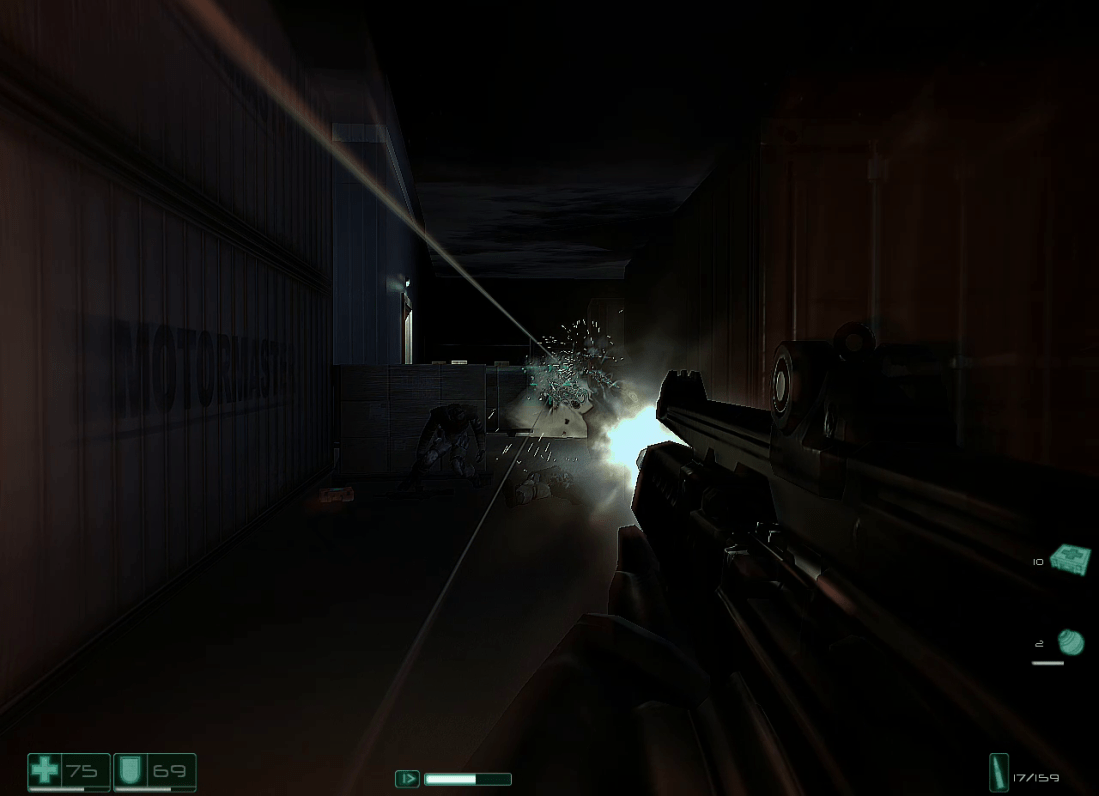
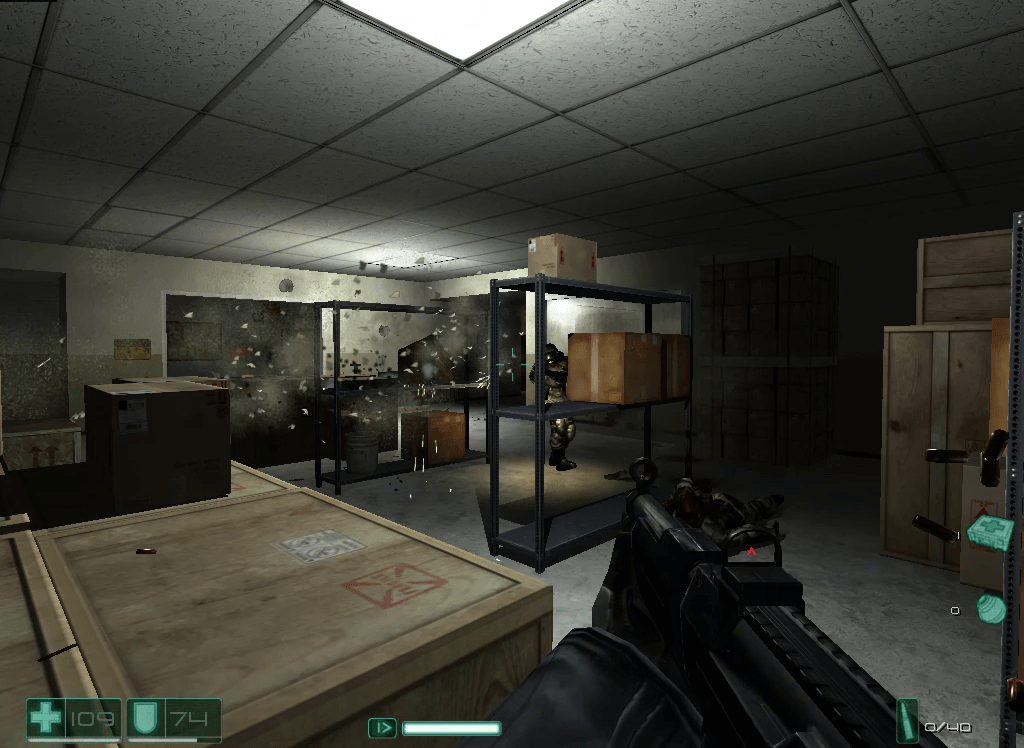
As a shooter, FEAR is way, way up there. We’re more than a decade after its release and the firefights easily match anything the latest CoD clone’s managed. The Replicas in particular – you do get a sense they’re linked, and you know they’re just clones but they’re real. They get scared, yell at each other (‘get to cover!’/’where?!’) and act so lifelike it’s unnerving. They stumble and trip if you clip them in the leg, scramble to get away from fire, run for it, act aggressively and it doesn’t feel scripted or manipulated. Obviously walking into areas triggers their appearances, and events are scripted but they don’t seem to be; It’s like playing Online – and you’re the Newbie. They’ll work around you, sometimes taking such long routes to reach you, you’ve forgotten and you just run into them randomly – which seems to make them jump too. They react to teammate’s positions and actions, duck under obstacles, vault over things, change their minds, get intimidated by your tactics – they’re incredible just to watch let alone try to hit. It’s also unnerving how they’re completely compliant but have free will.

Pointy is no slouch with the bullets either. The bullettime he possesses is one of the best I’ve played. Similar to The Matrix, we can see bullets flying about and the detail is amazing as they ricochet off walls and bodies. We’re running through clouds of blood and sparks, real John Woo stuff. The firefights are always frantic, you get constantly battered and bloody, dust and debris fly everywhere ruining your shots, everyone’s hurling grenades about, it’s practically a schoolyard scrap. Pointy can carry health packs and pick up vests; neither last long.

The best/worst thing in FEAR of course is Alma. When she’s not shocking or observing you, she’s making you experience her life at the hands of ATC. It’s terrifying, but you develop pity for her. Then you see her kills littered about, bodies melted to the bone and get nervous again. You never quite know if she’s on your side or not. Some of her actions seem hostile, others helpful. Hearing that Unknown Origin noise hasn’t lost its power, and while the game does occasionally lapse into quickie shocks they’re more than made up by Alma’s other appearances and behaviours. That scene where she’s on the other side of the glass just staring at you and all you need to do is open the door is just terrifying. She’s a ghost, she could just walk through but she doesn’t. She just wants to see what you’d do. You have to walk towards her and that’s just insanely scary. But there’s so much more than scares going on. Alma does draw heavily from J-Horror – Alma is the daughter of Saddako and Ikuko with possibly a bit of Don’t Look Now thrown in, but the abuses she suffers and the story behind it are all hers and as a character, Alma is practically without peers; this isn’t just some entity stalking you – you start to wish you weren’t uncovering her story because you understand why she’s so angry. Just, leave me out of it yeah? No such luck.

The only let down in FEAR, and it is a sizeable one, is the never changing environment. You’re always, with very few and very brief exceptions, fighting through offices and industrial areas. It makes sense for the story, Fettel is storming ATC’s properties looking for Alma and this kind of story works best in places you can’t just turn tail and run out of. But while the intensity of the story can get fatiguing and the Replica’s onslaught tiring, it’s the locations that makes you reach for the Main Menu button. Perhaps had it had more going on within those locations it might have felt fresher, but while the level designs are good, with multiple approaches, interesting obstacles and multi-level areas perfect for smart-arse soldiers and scary children to creep up on you, the environments all merge. I recollected shoot-outs and Alma-scares, but never the locations and as I replayed, I realised without the loading-screen updates I’d have little idea about where I was, where I was going or why.

As we reach the final destination (and really feel nervous doing it, I remember now what’s coming; I think I blocked it from my mind) it’s amazing that even now, ten years after the release, FEAR can still pack such a punch – it’s novel-quality story, terrifying experiences and insane gameplay marks FEAR as one of the greats, either to replay or discover for the first time. Maybe the original Bioshock came close two years later, but FEAR makes you despair at the state of modern shooters.

Alma and her revenge are The Exorcist of gaming – you just want it to stop, catch your breath, remind yourself it’s only a bloody game. Add in the Replica’s AI and the conspiracy that weaves through the plot and FEAR is a masterclass in gaming. It taps into that feeling you get when you’re alone in the house and hear a noise … It’s a good job the moral crusaders got distracted by the internets, I’d hate to think what they’d make of a psychotic little girl melting people with her mind. Turn on the lights and fear Alma.

After FEAR, there were two add-ons. Those were the days. Not money-grubbing DLCs but actual mini-games. The first, Extraction Point continues the story as the FEAR team attempt to escape the repercussions of the main game. It starts off well enough, but quickly descends into more typical horror-survival territory and FEAR elements feel crowbarred in, while Perseus Mandate tries something different. Set alongside the first FEAR, we play a Sergeant who inexplicably has the same bullettime powers as Pointy. This FEAR team is tasked with investigating the ATC coverup and the events of the main game spill over into this one. You’re largely fighting against a splinter group within ATC who use the event to grab the data the original project was based on. Alma makes a few cameos, but otherwise this is largely a straight shooter. It’s fast and fun, the black ops team are a lot more gobby than the Replicas (calling me a pussy for backing off for example) and there’s a great standout where you’re chased by an ED-209 through the office, but otherwise it’s typical shooter stuff. Both were created by TimeGate Studios and aren’t considered ‘cannon’ to the main series – shame, they’re both better than the FEAR sequels and Extraction Point ends things in a more satisfying way than they do; it would have freed FEAR to go investigate other scares. Pointy would have made a great Mulder.

And that fricking ladder scene is even scarier than I remember.

2005 | Developer Monolith | Publisher Sierra

Platforms; Win, PS3, X360

Blood

A Blast from the Past review

FBT goes back to when FPS spoke to him on a spiritual, personal level. The weirdo.

The Past

Should I ever get into a discussion about the best shooter from the “Post Doom – Pre Half Life” era I tend to turn the conversation bloody real quick. Folks go for Doom because it was a quantum leap; Doom wasn’t released; it was unleashed they cry, claiming it was the Jaws of the game world. They are right. But while Doom was gaming’s We’re Gonna Need A Bigger Boat moment, for me it was when I saw Elvira’s calendar in ‘Blood’ -the same calendar on the wall of my bedroom– and I knew, Blood and I got each other.

Like anyone else staggered by Doom’s release, I played everything and anything similar; Wolf3D, Duke, Shadow Warrior, RotT, Heretic, Dark Forces, Jedi Knight, Blake Stone, Redneck Rampage, Quake. I bought them, played them, loved them and eventually lost them. All but Blood; I still have the CD. It’s burnt into my memory so deeply that in my advanced years I may begin to confuse its levels with actual memories. That should make the old folks’ home interesting.

Thinking about it now, I recall that Blood was made up of everything I was into. Packed with references and nods to my VHS collection, my posters and film quotes, everything I thought was the coolest thing ever was in there. And, Blood had a plot. A real, on-screen story and reason why everyone in my eye-line had to go, not some vague background written in the manual. And Blood’s storyline was explored by an equally perfect lead character; Caleb, a wild-west era killer-for-hire who worshipped a Dark God which inexplicably has Caleb, his beloved wife and friends murdered for an unknown failing. Reborn (‘I live…again!’), Caleb was the perfect antihero to inhabit as I waded through a thousand bodies in a dark gothic setting, looking for revenge and reasons. Caleb wasn’t a jokey celebration of macho like Duke and he wasn’t just an arm like Doomguy; Caleb was every dubious hero you adored while watching straight-to-video films in those big puffy WB cases. He was Snake Plissken meets Eric Draven with a dash of Ash. Ultimately I loved Blood for its ‘soul’ despite Caleb not having one; It’s so fatalistic, the tone so foreboding it could have been a John Carpenter film. Blood is one of my best gaming experiences and I’d defend it with my boomstick. But I admit now, my love for Blood is based on it matching my bedroom walls, not it’s comparison to other shooters, its graphics or whether it’s actually any good. So, at the risk of losing a 20yr long argument (Blood is better than GoldenEye), time to see if Blood still courses through my veins.

Still a Blast?

The opening menu is satisfyingly gothic, blood drips down the screen and demos play, instantly taking me back. Okay so I ignore that it’s looking blocky, that maybe the menu is Doom Clone, but that’s no reason to mark it down. So far, so top ten.

the guy she told you not to worry about

I kick into the level and … the opening cutscene. I watch Caleb, his wife and friends summoned by their dark god, talking through an acolyte who disintegrates as he speaks, seared apart by the power of his Lord’s voice. Which isn’t happy. Caleb demands to know what they’ve done to earn his ire, but he can only watch helplessly as his wife and friends are attacked by monstrous creatures and he is sealed alive in a grave. Now that’s an opening. There was nothing like this back then (or since). Okay so now it’s graphically on a par with that Dire Straits video about MTV but it’s bleak, gothic and I’m taken by it; It reinforces that it’s not graphics that make a game; Blood’s opening would have been as effective in any gaming age. When Caleb fails to reach his beloved before she’s taken away I’m moved. I have a reason to live… again.

I emerge from the ground armed with only a pitchfork and Army of Darkness quotes. The zombies come running and once it’s over I’ve forgotten I’m playing something 20yrs old. I had at them and the excitement, the frantic killing and the thrill are still there. Yes, I have problems with mouse doing the movement instead of looking but I soon get used to it. Sort of. I still lob Caleb off cliffs and into pits when subconsciously trying to look up but at least I can quick save.

What happened to quick saves? AutoSave in a shooter encourages you either play ultra-safe or to mow mindlessly hoping you reach one before being offed. You’re scared not by the game but of being respawned at a checkpoint miles away; it’s not a genius level design or a carefully constructed battle that bested me and it’s a lazy way to add tension. Worst of all, AutoSave icons spoil the moment – you just got told something bad is about to happen. Just add a quicksave and leave me to fire a rocket-launcher at point blank range cos I panicked and span the mouse wheel too quick, don’t punish me by making me trawl through all that crap again.

I’m seriously getting my ass kicked. My reload (thank you quicksave) is higher than my bodycount. I can’t keep blaming the mouse. Is it the game? Is it me, am I too old, is Blood something I can grumble about to kids of today telling them, hunched over the latest COD reskin that they don’t know how easy they have it? I just needed time to adjust, this era of shooters wasn’t as forgiving. I have less options, I can’t hide in tall grass or go invisible. And quickly I realise it’s all on me, I have to win this situation not manage it, and that’s actually really exciting, more exciting than any recent shooter that practically encourages cowardice. I just gotta shut up and man up.

Finally able to survive a level or two, it all comes back to me and lost in the world again, grinning like Caleb when he gets the shotgun (‘Good, bad, I’m the one with the gun’), I’ve got this. I’m enjoying this. It’s like meeting up with an old friend and instead of realising how far apart you’ve grown, you actually have a ton of fun and stuff to share.

i ain't got nobody

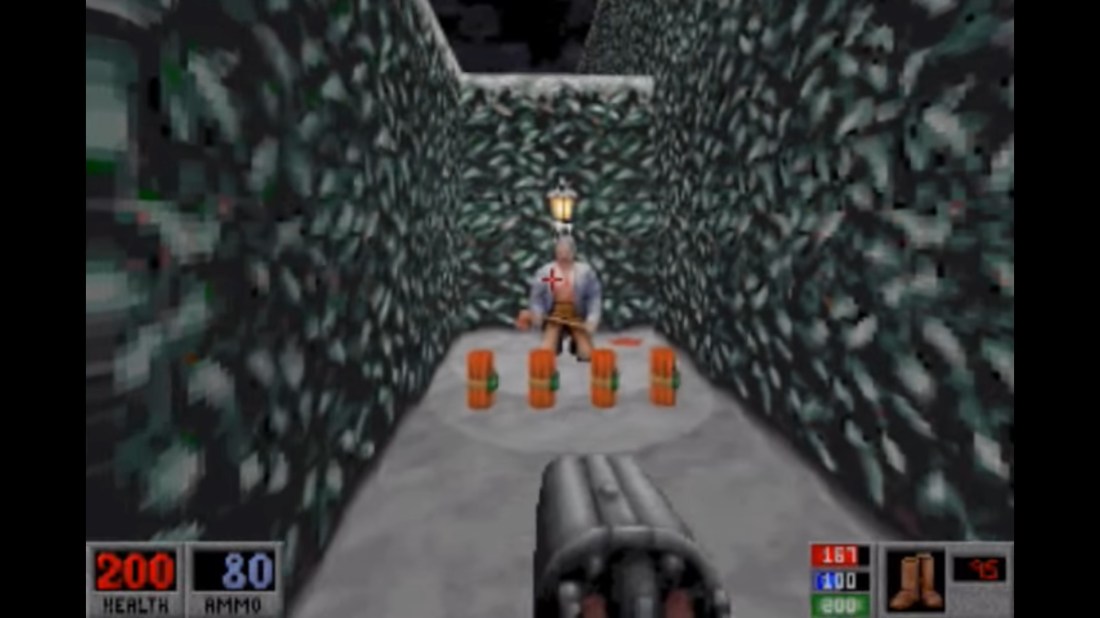
Blood squeezes every drop out of the Build engine. The graphics aren’t hard on the eye; in fact they hold up incredibly well and I don’t feel like I’m playing an old game. Levels are cleverly constructed to draw you in and then spring a trap, they encourage exploration even when you know better; they reward and double-cross you in equal measure. Best of all, you always feel like you’re pushing forward and you’re getting somewhere rather than Doom’s drudge towards whatever. 20 yrs on and I’m still amazed at the sheer inventiveness of the locations; frozen mazes, moving trains, disused fairgrounds, Haunted Houses, Crystal Lake complete with the ki ki ki, ma ma ma sound in the woods, a Meat packing factory, it’s like playing through every horror film I watched when I was too young to watch them; Lovecraft, Poe, Tolkien and Sinatra refs are thrown in too. Modern games, better by every technical yardstick, don’t have this inventiveness. Why are modern games so samey? Within Blood’s levels, buried deep are multiple references to … well pretty much everything you ever thought was cool but your mum would have taken off you if she found it. But Blood doesn’t go for the Duke cheap shots. There’s no strippers who show their pixel-nipples for a dollar, In Blood you have to know your stuff; Dismembered hands scream “I’ll swallow your soul!”,

all work and no play...

Caleb growls “Son of a bitch must pay”, “Are you gonna just stand there and bleed?”, “Victims. Aren’t we all?”. There’s an orange jumpsuit with Kimble on it during the train level, a room filled with magic-tree air fresheners and a body strapped to a bed, a reference to the Flukeman. They are absolutely everywhere and 20yrs later they’re still gloriously retro and I’m still finding them; I heard a dog barking and Caleb muttered ‘Cujo?’ Blood was built for the kind of folks who’d get the zombie in a bath in room 237 of the Overlooked Hotel. Borderlands, Far Cry Blood Dragon and Saints Row owe Blood a debt and still didn’t do it as Rat Pack cool. And this attention to cool, in its clever locations and level design, its references and quotes go a long way to forgiving any of its graphical limitations, it’s playability or its age. Which I honestly don’t find confining.

Like all games of the era, the limitations of the engine also extended to the monsters and the weapons. The monsters head towards your muzzle with little more thought than zig-zagging and the weaponry is just a variation on Doom’s, but they’re as inventive and macabre as you’d expect. A flare gun is a personal fave, just to clip a distant zombie and watch him burst into flames feet from you. There’s the bloody butcher lobbing cleavers, a tommy gun, the cultists mumbling what’s likely some film ref I’ve still not figured out, the voodoo doll. And the zombies with heads you can kick off. Still fun. It’s a shame games grew up, COD could do with some kickable heads and have shooters really progressed any further than dressing up Doom’s gameplay anyway? When they do try something different, we moan about it. We still want to run and gun. That’s what we’re here for and when I battle in Blood I’m having a better experience than most recent games because it gets me; it’s as much fun as freak.

it's stone, it's stone, it's stone

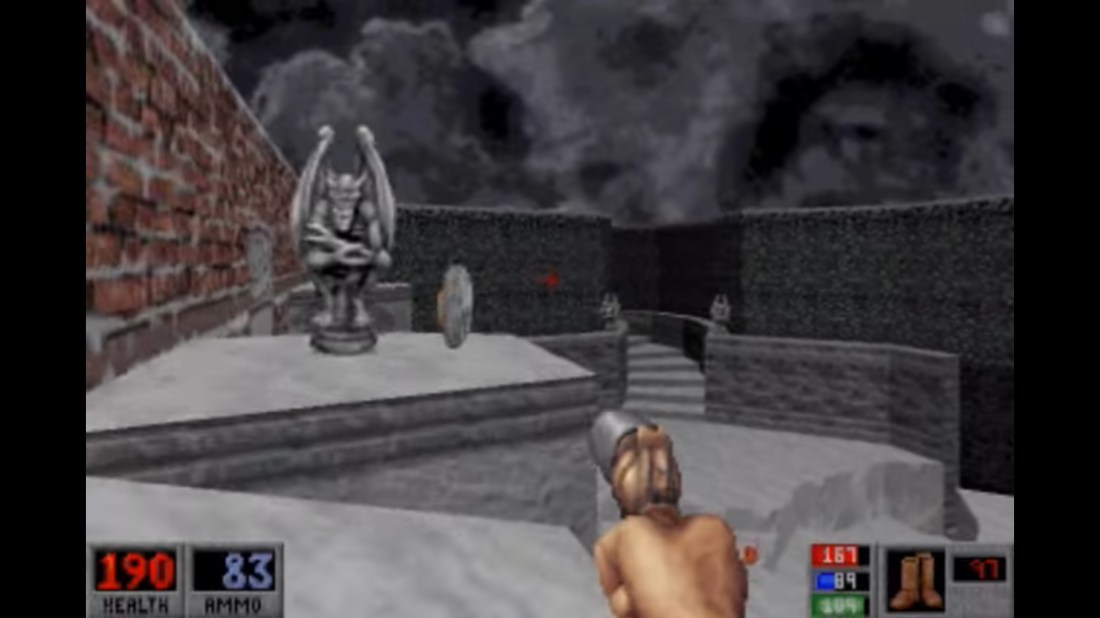
The level design is way above Blood’s peers too. I’d forgotten how much your survival and fun depended on using the environment – which can’t be trusted. The haunted house has some great secret passageways letting you get the jump on creatures waiting in rooms, but the ghosts found there screech and scare you back into the open; Outside, jumping into swimming pools or lakes to escape gunfire is not always a good idea – there’s often a gill monster thing lurking and worse, it can get out the water to chase you, so you just added to the monster count. Clambering on top of buildings keeps you out of range but watch those stone gargoyles … Blood is not for cowards. It’s for explorers ready for a fight. I found myself exhilarated the entire time and when I’d cleared a level, I’d happily wander taking in the style and the references. It’s not lost anything and anyone who grew up on today’s shooters would find this more rewarding an experience if they could see past the graphic limitations.

So involved was I, that when I finally reached the Dark God and demanded a reason for all this, I was speaking alongside Caleb; and the answer didn’t disappoint. Neither did our response. The mystery solved, my wife sadly avenged and the day saved, the game was played and I am no less a Blood fan than I was 20yrs ago. Quite possibly more so because it showed me how placid and safe shooters have become. Once in the zone I forgot it’s age; it’s exciting and so engrossing you don’t care the world isn’t photo-realistic.

Subtly subversive and rewarding, there’s few games even now that can offer Blood’s depth and that transcends any advancements the genre has made; against its peers, Blood still reigns down; Doom has not aged well, Duke is best remembered and not replayed, and the others? I can’t remember what Quake was about at all. Technology may have improved immeasurably, but mo-cap and pseudo-moral choices don’t hold a candle to a game that gets you. Blood still gets me, and it still sits proudly in my top ten.

Elvira. Still got it

Spoiler alert, aka that ending.

I remember the ending being hysterical. Like a real Snake Plissken exit. But this time something different struck me. Call it age, over analysis, maybe I’ve become used to moral choices and my actions having an impact but Blood’s finale was dark. Really dark; even for a shooter, which usually ends with the hero’s murderous mayhem at least justified. I remembered Caleb, having killed the God (He kills a god!), walking into the night victorious; the lone hero. But now, in my later years, I see a man who leaves with nothing; his faith shattered and the society he belonged to gone, Caleb is left with no friends and no future – all by his own hand. Other heroes got their reward; Duke and his babes for example. Calab got nothing but blood on him. So far, so dramatic. But then, his work done, he outright murders someone; someone innocent who was thanking him for their liberation. Games don’t portray real bastards generally. Indifferent maybe, narcissistic perhaps, but typical anti-heroes on the side of right if not the law, sitting comfortably in the ‘he’s bad but they’re worse’ camp. What actually shocked me was the realisation I’d played Caleb just how he was. He was a murderer before and he’s a murderer still. So many games sit on a contradictory fence where the cutscene character is behaving one way, but me inhabiting them sure isn’t. They lament the murder, the horror, then let you take control to enjoy doing just that. You as the player ignore whatever’s troubling that cutscene character; I recall killing endless pedestrians from the outset in GTA SA, just to get some money. That’s not the behaviour of cutscene CJ who desires to rise above the mindless violence of the streets. I wasn’t true to him; your character may be a goody goody, but you aren’t and what caught me was Blood’s Caleb was as true as I was playing him – a cold murderous villain. He was who he was.

20 yrs on and Blood still had one impression left to make; The cutscenes did not justify or ignore the death I’d wrought, they showed Caleb intended to do exactly what I did. For all of Bioshock’s Rescue or Harvest, Mass Effect’s Paragon vs Renegade or whatever the hell Far Cry 4 was trying to say, I’d always do what was best for me the player, not me the character. But Blood knew both of us; it is a brilliant game.

1997 | Developer Monolith Productions | Publisher GT Interactive Software / Atari

Platform; Win

Painkiller

A Blast from the Past review

FBT relives a painful memory.

The Past

My memories of Painkiller are vague yet vibrant. It stayed with me somehow, despite playing once and never going back. I recall the best ‘melee’ weapon of any shooter (The eponymous weapon) as I fought through the lost and pissed off souls of Purgatory to re-join my wife in Heaven, assisted by none other than Eve, looking typically seductive. What really stuck with me, my first thought when I recalled Painkiller is endlessly battering baddies; that’s the point of any shooter, but it was such a consistent onslaught and not in a frenetic, frantic or exhilarating way. I remember them in their hundreds plodding towards me as I plodded towards them, Painkiller akimbo. I think I enjoyed it but didn’t want to be stuck in purgatory again.

Painkiller was released in 2004 – a big year for gaming, starting with Rockstar’s GTA San Andreas. It finally cracked what we’d been after since the beginning; an immersive shooter experience. Along with 2004’s other open world release, Far Cry, games that would have been traditionally linear shooters changed – Now we could choose how and when we shot it. Shooters began to absorb more Role-Playing tropes; xp, level ups, choices and side missions and eventually games like Borderlands became the modern shooter, only CoD laboured lineally on. Meanwhile, 2004’s Doom 3 had one thing going for it – it’s iDTech4 engine; Doom 3’s guts and GTA:SA’s heart meant games were going to get interesting again.

And in the middle of this revolution was Painkiller, in its own kind of purgatory. It’s ‘shut up and shoot’ approach seemed dated, a year too late like Daikatana or SiN, steamrolled by their contemporaries. But somehow Painkiller held on, kept coming like its monsters. A steady stream of add-ons, DLC, odd remakes, and a sequel – Painkiller was one of those games most gamers had played but didn’t really talk about, like living through ‘Nam.

So, my expectations for Painkiller are mixed. Would it play like a refreshingly clean game, a change to the overly complicated shooters of today? Why did I play it once and never go back?

Still a Blast?

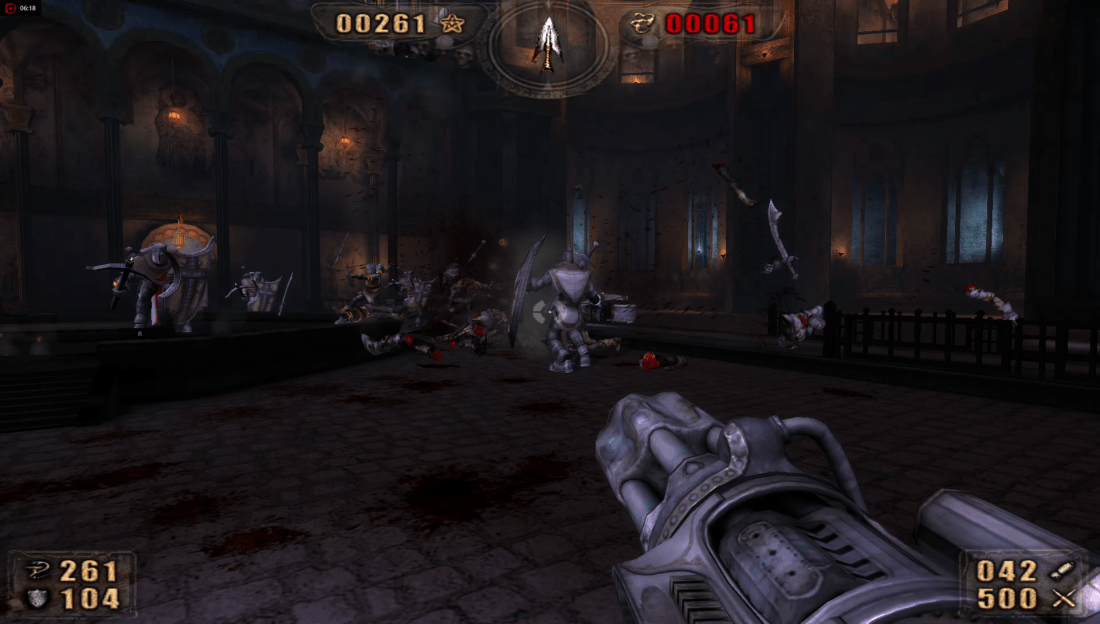
Despite it being all about Hell, Purgatory, Regret, Loss and all that, I wasn’t prepared for how Gothic it is in here. An opening cut scene shows a car on the road at night, our hero Daniel (What kind of name is that for a hero? I’ll assume some biblical reference that I can’t be bothered to google) looking lovingly at his wife instead of the road and ploughing their car into a truck. She goes to Heaven while Daniel, in purgatory is left to his own device. The Painkiller. Easily one of my favourite Melee weapons, beating the Grav-Gun from HL2 or Duke’s foot, PK is a bladed fan that slices through enemies like one of those Dicers that cuts anything on a teleshopping channel. But wait, that’s not all! If you order now you’ll also get an alt fire that sends a tracer firing out creating a laser that eviscerates anything walking through it, while the tracer also grabs an enemy and pulls them towards the blades. Plus it can rip open anything destructible. It’s the multipurpose tool of any Purgatory survivor and one of those early weapons you keep going back to because it shakes things up a bit. I’m in a graveyard and looking forward to letting loose.

But two steps of exploration later and I’m battling through pretty much an endless roll-call of Gothic, horror nightmare-ish villains. Crone Witches, Skeletons in armour wielding swords. Fine, this is a shooter afterall and it’s a strong start. But after this happens two or three times, I sense a trend. For no real reason, I’m locked or forced into battles, trapping me into what really are mini arenas; walk into an area and a door locks and off I go, spinning and shotgunning until it opens again. I’m just corralled and set upon. But that’s what a shooter is surely? I justify this as Hell’s punishment for me, to eternally wander into firefights, fighting for my non-life. A dozen baddies pop up, I dispatch and continue. And keep doing it.

Eventually my smiting is over and the entire graveyard smote, my stats are revealed like a deathmatch game and on we go. For levels and levels I repeat this until Eve appears, who along with an angel (who looks like the keyboardist from a ‘80s Swedish pop band) explain Lucifer is on the march to claim Heaven via Purgatory and all I have to do to join my wife is stop him. That’s … big. That’s a big boss battle, the devil. And then it’s back to killing groups in areas in levels, with no real sense of moving forward, of getting anywhere because each level is it’s own part of Purgatory – that makes sense thematically, it just doesn’t work narratively, when in the game itself. When I die I expect it to ask me to insert more coins.

Painkiller is schizophrenic. The cutscenes do all the telling, I do all the shooting. They could be different games if it wasn’t for the backgrounds. Sure, that’s the basic structure of any FPS, but the stages, the stats completely remove me from any personal involvement. I just wander looking for traps to spring waiting for the exit to open. I have no investment; This feels like a bot-controlled deathmatch, like I have no friends to play with online. There’s no story elements to the parts I control, no reveals, no curiosity to be had. Just shoot.

Daniel, in a pleather jacket and frowny face, doesn’t seem too concerned about it. He’s like a Max Payne knock-off. Had Daniel been a bit more of a Maxalike, constantly doubting himself in-game, it could have been interesting but once you’re back in control, Daniel is silent (except for those annoying ‘huh, haa, oof’ noises first person heroes used to make every time they jumped.); All the apprehension and seemingly unwinnable situation carefully woven into the cutscene’s narrative is swept aside in favour of literally hundreds of creatures who take the quickest route towards Painkiller’s blades. Zero AI, zero challenge. All I got from this was RSI from clicking fire. You could mod the backgrounds into anything (Serious Sam springs to mind) and it would have no effect on your experience; Your purpose is to clear out the baddies and start the next battle.

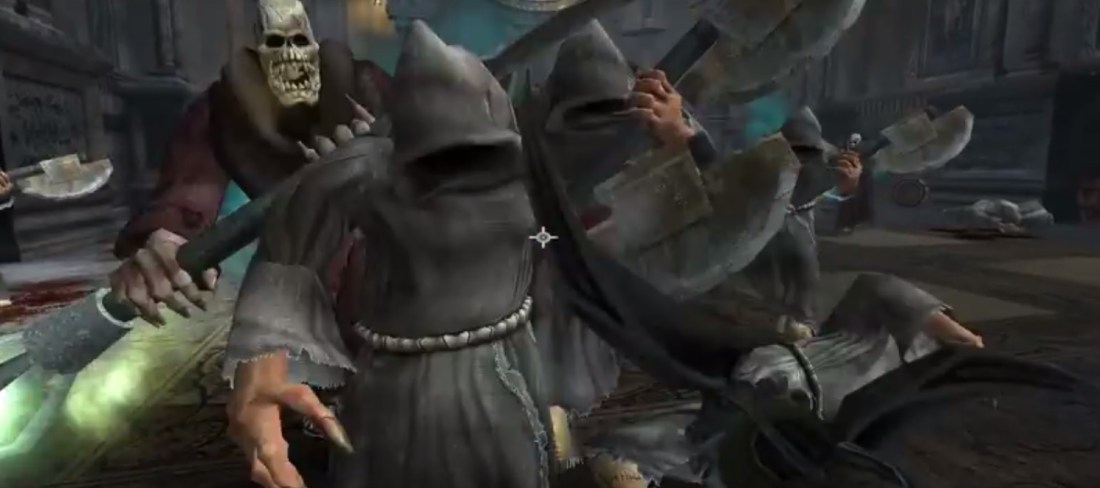
To look at, it’s a thing of beauty. Each level is a master-class in art design and different to the next. Every possible gothic and nightmarish location is explored and it’s done so well – you’re maiming through huge cathedrals where robed figures lob axes, blazing medieval villages under attack from witches on broomsticks, a mental institution where tortured patients still strapped to their electro-shock equipment scream, medieval castles with Executioners. Later levels reflect WW1. It drips with death and despair and that’s what is so anger-inducing; none of the surroundings are reflected in the experience. Purgatory is full of decrepit and wasted places inhabited by victims siding with the Devil in the hopes he’ll lead them to Heaven yet you’re just holding down the shoot button in arena battles. If it felt like you were pushing forward, that you were progressing through the story not a level it would be perfect. Painkiller should work, it should be full of a creeping sense of unease as I hesitantly explore the underworld knowing I’ll have to face off with the devil at some point. But I make no connection, I have no war-stories to tell, no anecdotes of lucky/clever fighting on my part or the baddies, no narrative moments while I’m in control; I don’t personally achieve anything except unlock the exit and my experience would be identical to any other gamer’s.

And it gets more frustrating. Each new level removes your previous ammo and armour disconnecting you from the narrative – It’s Unreal Tournament in a Haunted House; It’s easy to see why PK was chosen as the first World Cyber-Athelete game. Chasing after souls to invoke ‘devil mode’, juggling coin out of dead bodies to unlock one-use power-ups just add to the disconnect; Daniel should be Max Payne, the levels should show me clawing my way back to my wife, I should want to get through this but I just maim until I get to see Eve again in her barely there outfit; I don’t blame Adam for making a mess of things. Painkiller is essentially an arcade game while the cut-scene story is an animated Divine Comedy. Just watch it on YouTube.

2004 | Developer People Can Fly | Publisher DreamCatcher Interactive

Platforms; Win | XBox

The Darkness II

A SECOND WIND REVIEW

FBT is The Darkness. With the lights on.

When The Darkness II came out on PC I didn’t bother, even though it looked cool; why plonk down money when I’d never played the console-only original? Why was it successful enough for a sequel but not a port? Lazy, 2K. But, DII started appearing in the sales and after reading reviews that likened it to Bioshock (DII was from Digital Extremes, who had swam in the Bioshock universe) I decided to give it a go – Plus, The Darkness is voiced by Mike Patton; sold.

As explained by a manic flashback chap, we learn The Darkness existed (quite happily) in the great nothingness until God decided to let The Angelus (the light) into the universe to help create Earth; The Darkness isn’t happy about this, and The Angelus isn’t a fan of the Darkness either but since they can’t exist simultaneously The Darkness takes advantage of this Earth gaff and inhabits humans to do its dirty work, allowing them free-will knowing it’s powers will corrupt them and plunge the universe into Darkness again. The Angelus meanwhile, takes over humans completely and creates ways to imprison The Darkness and claim earth for itself. Get a room. On his 21st birthday, the only light in mob hitman Jackie’s life is Jenny, his childhood sweetheart. A mob boss murders her but Jackie is unable to stop it – the Darkness, which was passed down from previous generations manifested and held him back. Jackie fully embraces its corrupting nature and rage-driven, slays the entire mafia. Or something like that, it’s hard to keep up with the yammering narrator and it’s based on a comic book, a medium not known for its continuity. With the mafia dead and him the new Mob Boss, Jackie, with the help of our panicky exposition expert Johnny (what’s with all the J-names?), then suppresses The Darkness, until … Darkness II presumably.

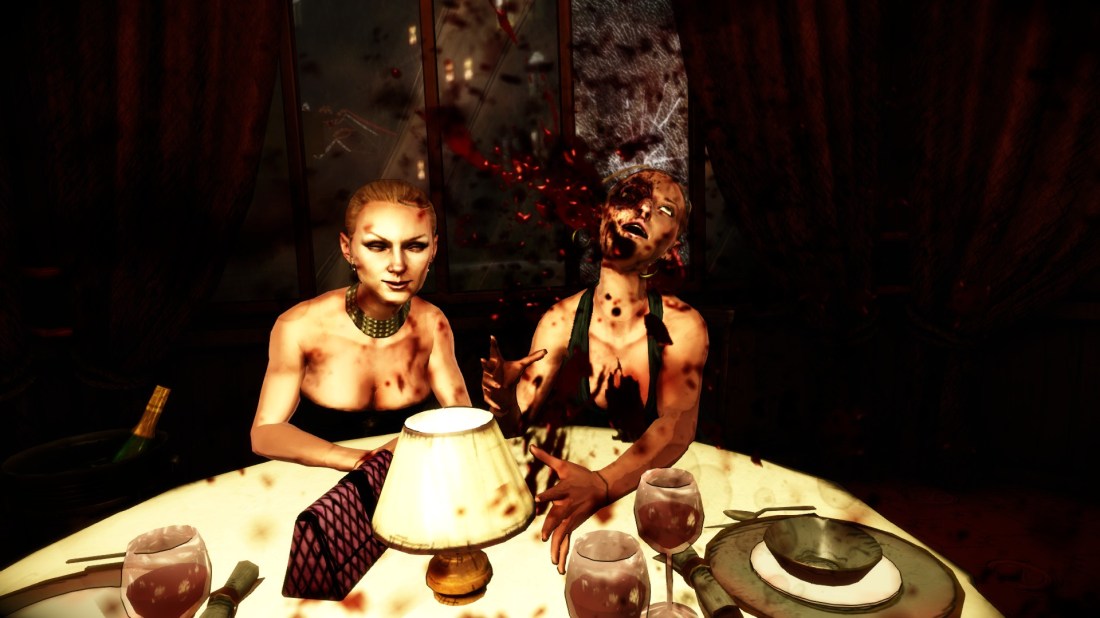
The look of DII is somewhere between XIII and Borderlands – fitting, given it’s based on a comic and from 2K, they must have had some spare Borderlands render knocking about. It gives DII a surreal, saturated comic-book look which helps with the ultra-violence the Darkness has in mind – had this gone for realism I’m not sure I coulda stomached some of the things The D gets up to. We open on Don Jackie being shown to his table by mob friend Vinne. All the Soprano and Italian clichés are here; we know everyone in the joint, someone is complaining about the spaghetti and Don Jackie is seated at his special table with two stripper sisters for the evening’s entertainment. Unfortunately, one entertainment is shot through the eye and the other hit by a van that crashes into the restaurant, delivering a bunch of mobsters intent on whacking Jackie. Badly hurt, Jackie is dragged through the chaos by Vinne, shooting mobsters as we go. One gas explosion later and a burning Jackie hears the Darkness begging to be let out and save him from death. Jackie agrees; then all hell breaks loose as two … appendages sprout out of somewhere over his shoulders and lay graphic waste to the mobsters. I wish I’d picked this up sooner. This is awesome.

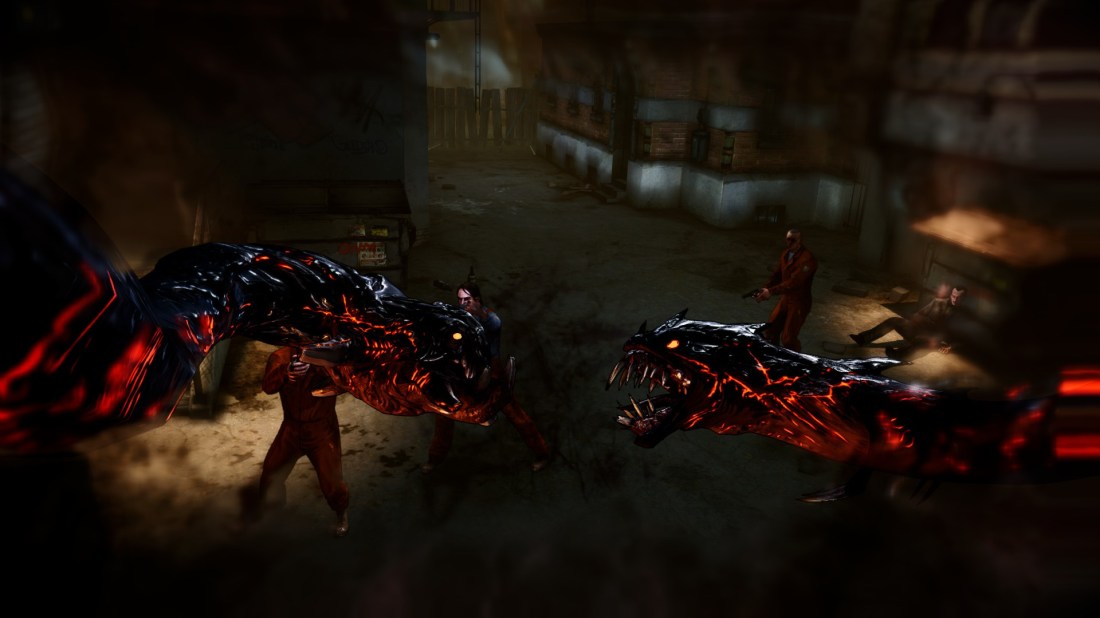
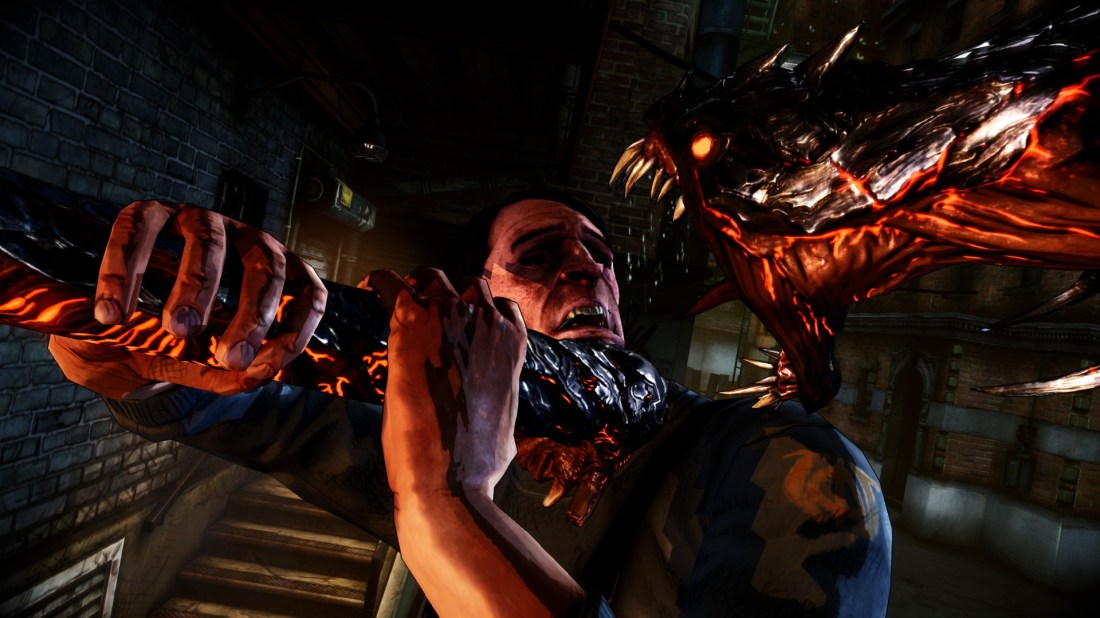
The Darkness’ representation is pure horror. The slithering, snake-like arms end at snarling, jagged spiky teeth and look like the bastard child of a Xenomorph and those nightmarish deep sea fish. They have a life of their own, look around (sometimes at Jackie which is weirdly unnerving), squabble with each other and are deadly. You never really see what Jackie looks like with his extra arms but judging by the reaction of the mobsters (‘what the fuck is that?!’ usually) I look hideous. But who cares, look at those things. One arm, Grabby, picks up and throws things while Whippy slices and dices. Mobsters can be grabbed, thrown, eviscerated or sacrificed in imaginatively disturbing ways, the tendrils can pull out and eat hearts to regain health and smash their way through obstacles. Those moments are so good (one references the Alien John Hurt scene), that I often chose to take a battering just to reach a mobster and watch my arms do their graphically slimy, bloody work, wondering if it’ll be the Alien death, the one where they grab each leg and rip the mobster in two or ‘just’ cut them in half – then use a half to throw at another mobster. The way the mobsters scream when they get grabbed, the slithering sound, the growling, it’s unsettling … and that’s before they start tearing them to pieces. Grabby can also lob things at enemies; the real finds are stuff like poles that can skewer, doors that can be frisbeed to decapitate – sometimes Grabby can miss a gas canister and throw a coffee mug instead, but these things happen. Whippy meanwhile has a fun time belting mobsters into bloody messes like a demonic cat o’nine tails and can be upgraded to grow blades down it’s back – actions that The Darkness likes will gain you xp to unlock its powers like Darkness Armour (which only works in the dark) and pulling ammo, health etc out of the mobster’s viscera once they’ve done their work. As the arms get more powerful you wind up using them as primary weapons while guns are for those hard to reach mobsters and shooting out lights.

Since Light and Dark don’t get on, any light means the Darkness retreats, leaving you exposed. Shooting out the lights brings it back and it’s a great extra dynamic to the game; trying to fight while avoiding light sources or find and remove them in the middle of a firefight is thrilling and the bad guys get wind of this and start setting up traps with flood lights and using high-powered torches, and later light grenades to keep you in check. The Darkness won’t let Jackie die, as without him it’ll be rendered useless, but you have to stay out of the light to gain its rejuvenation powers. Most games have a dynamic to set it apart from others in its genre; Plasmids, bullet-time, power-ups etc., but being afraid of the light is a new – and welcome – one. It’s a nice change to be the monster in the shadows instead of the other way around.

So now The Darkness is back and Jackie’s empire is under attack from another crew, time to figure out what’s going on. Jimmy is brought to the mansion and a long fidgety story later, there’s a group calling themselves The Brotherhood who’ve found ‘the Syphon’, an object created by our old pal The Angelus to contain The Darkness. Problem is, Jackie has to give up The D willingly so they’re all about making his life as horrible as possible, including capturing and crucifying him, killing his friends and family and generally being as despicable as possible; promising to stop if he just lets The D go. To stop Jackie considering it, The D reveals a secret – It kept Jenny’s soul. She’s trapped in Darknessland and since The D really doesn’t want to be given to The Brotherhood, it cuts a new deal; Kill’em all and you’ll get Jenny back. Jackie arms his arms and obliges.

As we shoot and eviscerate more mobsters than Max Payne could dream about, we work through some killer set pieces. An abandoned fair ground, warehouses and whorehouses and even our own house after it’s attacked by The Brotherhood are tense and exciting shootouts, with bullets and bodies being flung every which way. While this blood-letting is going on, it’s clear The D is up to something and maybe a little worried – It’s in a difficult position; It needs Jackie to stop The Brotherhood, but that means Jackie may get the Syphon himself; it begins to taunt him with memories of Jenny and flashes of her in Hell to keep him in line and not get any ideas about using the Syphon himself. Even though I’ve not played DI, I can see why critics often point to their relationship as one of the best in gaming – and Jenny’s death one of the most heart-breaking. Jackie doesn’t care if The D is setting a trap and neither do we. Saving her is the only thing on Jackie’s mind – or maybe it’s all in his mind.

On occasion, Jackie will suddenly find himself in a mental asylum. Here, surrounded by people from his ‘hallucination’ including a kindly nurse called Jenny, Jackie is led to believe The Darkness, his role as a mafia don and The Brotherhood are just figments after a major breakdown. You never really believe the asylum is reality but it does seem more likely – we do have demonic tendrils for shoulders. It’s also more welcoming, as Nurse Jenny begins to warm to her patient. This reality might be a better option for the heartbroken hitman. It’s interesting to have this level of uncertainty – real or not, Jackie might chose it; Jenny’s alive here – and not everything is cleanly laid out – Jackie and The Darkness need each other, but Jackie is a psychotic killer and The Darkness is not exactly trustworthy. There’s just this fatalistic, uneasy sense that pervades DII. It’s all just so horrible. Additionally, each mission is preceded by Jackie describing his life as a Darkness host and a mobster; but who is he confessing to, and in which reality? As a mobbed up criminal or a mental patient describing his delusion? Or somewhere else? He looks how he looks in the main game not the asylum, but is that how he sees himself? Where is this happening?

Although Jackie is very much a lone gunman in DII with only The D’s Jenny-taunting for company, he’s not totally alone. In-between missions he can roam his mansion, chat with the other mobsters and reminisce about Jenny –who, thanks to The D, appears on occasion to relive their past life together. But, his only true friend/fiend is his own personal ‘Darkling’ – possibly the best side-kick/follower ever. Wearing an oversized Union Jack vest that makes him look like a gremlin ginger spice (with, inexplicably, a dead cat on his head), Darkling chatters in an Eastenders accent, takes the piss out of Jackie (or Monkey as it calls him) and generally lads about causing trouble. Despite being a servant of The Darkness sent to aid him, he seems to have some measure of self-determination; He knows The D can’t be trusted and tries to make Jackie see beyond his grief, knowing Jackie will do anything to get Jenny back even if it’s a lie. He often suggests they give up and go have some fun. He’s like that friend you know better than to invite out for drinks but do anyway because the fun on the night outweighs the apologies the next day. He’ll rip apart mobsters, distract them, piss on them, point out shortcuts and ammo and can’t be killed. He behaves exactly how a three-foot-tall immortal gremlin from hell would. Grabby can even pick up Darkling and throw him at mobsters, which he’s not very keen on. Several scenes put you in his mind to sneak about and ripping open mobsters’ throats with his fingernails is a whole new grotesque experience. He’s a fun sidekick without falling into comic relief, a great -if maladjusted and deeply disturbed- character and his loyalty to Jackie is oddly touching.

Not quite so touching is the game’s treatment of women. As it’s a mobster fantasy, it’s a strictly male-view cliché game which is fine, but apart from Jenny who’s romanticised to the point of perfection (but since she’s in Jackie’s mind, she would be), the only other women are Jackie’s shrew of an Aunt and a prostitute who helps Jackie sneak into a brothel; her brutalised body is seen later but Jackie doesn’t react and the brothel is an uncomfortable scene – sex slaves kept in plywood rooms, dressed in ragged and dirty clothes as they dance or perform. Jackie does burn the place down but not to free them. It’s a grim moment in an otherwise hyper-real game; we’ve got tendrils sticking out our back and we’re accompanied by a gremlin; is this really the game to offhandedly have us shoot through a sex trafficking location? There’s also the two sister strippers and a gratuitous ass shot followed by bouncing boobs in a scene that would put Elexis from SiN to shame.

As we make the final push towards The Brotherhood’s stronghold (having been crucified, shot in the face, locked in an iron maiden, forced to see Jenny in hell, watch family members murdered then have those family members’ funeral disrupted, chose which friends are killed), the two realities converge and Jackie must make a choice – which one does he believe in; or rather, which he’d rather live in – Stay with Nurse Jenny or descend into Hell and see what The Darkness has been keeping from us; It’s a tough choice.

DII is a short game and has an unforgivable cliff-hanger ending – it ends on such a great ‘awww’ moment, then jumps to ‘ohhh’ and as the credits roll, ‘agggh’. That’s assuming you reject the asylum; that ending is ironically better given there’s no DIII.

Although DII had no DLC to continue the story, there is ‘Vendetta’. A co-op (or solo) set of missions, you pick one of four mob hitmen assigned to aid jittery Johnny in his investigation. You don’t have the arms at your disposal and its basically surviving waves of villains to reach a Darkness artifact so story-wise it’s redundant but they’re good little shoot’em-ups and Johnny has some nice lines (especially if you play as Shoshanna, a no-nonsense ex-MOSSAD agent he develops a crush on) and it provides some background to Johnny’s main-game exposition. Still, I would have preferred an ending. Or a DIII.

Despite it’s shortness, The Darkness II packs a huge amount into that time and it gets you invested. It really shouldn’t work – mobsters, horror, comic-book look, a psychotic gremlin sidekick, murderous tendrils and a demonic voice in your head while a love story plays out in flashback and fantasy? Yet it works because apart from being a really good shooter with those arms brilliantly utilised rather than just being oddities, it’s got heart; we want to see Jackie and Jenny together again. I am so moved by Jackie and Jenny’s love affair, plus the fun of playing with Grabby and Whippy that I’m annoyed I’ll not get to play DI and see how it all began; I’m almost tempted to buy a console just to play it. Almost. Nearly convincing a PC Gamer to buy a console? That’s a good game.

2012 | Developer Digital Extremes | Publisher 2K Games

Platforms; Windows | PS 3 | Xbox 360

Prey 2006

A Blast from the Past review

No, not that Prey, the original Prey. FBT replays the 2006 classic like it’s 1996.
The Past

I have no recollection of Prey, beyond anti-gravity and aliens. I’m not even sure I finished it. That it was finished at all was a miracle. Announced in 1995 by 3D Realms, the shareware publisher who unleashed id’s Doom, Prey was at the very epicentre of the FPS explosion. 3DR had cut their shooter teeth on 1994’s Rise of the Triad and their forthcoming Duke Nukem 3D had everyone frothing but it was Prey, developed by ex-id founder Tom Hall on a ground-breaking engine that seemed to be a serious contender for the ‘Doom Killer’ title. But instead, Hall, frustrated by the engine’s slow progress, left to create Ion Storm with ex-id cohort Romero. 3DR brought in the legendary Corrinne Yu to get the engine started but three development teams later and despite acclaimed appearances at E3, by 1999 Prey still wasn’t released and as the golden era of FPS waned, it joined stablemate Duke Nukem Forever as Vapourware. Finally 3DR called old pals id; Prey was restarted on Doom 3’s idT4 engine at Human Head Studios. It took them five more years. Eventually Prey was released in 2006, 11 years after the announcement. Doom was long dead.

You’d have expected Prey to be at best a throwback; at worst, another Diakatana. But Prey was critically well received – and successful enough for a sequel to be announced; which true to form, went through an even more painful development than its predecessor, while Prey was eventually overwhelmed by other heavy hitters released in 2006 and disappeared. It wasn’t until the 2017 Reboot trailer was released I even thought about the original Prey. I couldn’t recall anything which seemed unfair to a game born in those halcyon days. It may have been released in 2006 but its a nineties game; it was from 3DR, built by ex-Raven developers (Heretic, Jedi Knight II) and conceived by Tom Hall. That’s classic FPS pedigree. Time to jump back to 1995 meets 2006 and see what took them so long.

Still a Blast?

As the menu and opening load up, I suddenly remember Prey’s lead was a clichéd Native American called Tommy. I wonder how well that’s aged. I also recalled his reason for blasting through levels; a girlfriend who was abducted by aliens. The loading screen of a giant malevolent-looking globe, which looked like Pinhead’s holiday home recalled horrible twisted levels to battle through. And that’s it. But what more did I expect from what’s in reality a Doom-era shooter?

There was a lot more it turns out. The opening shows Tommy having a word with himself in a mirror. He looks more like Billy from Predator, just a regular dude who happens to be Native American. Guess that was just my memory playing racist tricks. The mirror is in the toilet in a bar in the reservation, which Tommy hopes Jen his girlfriend will leave with him. I spend a bit of time trying to trick the mirror, turning Tommy away then back but it’s an almost perfect reflection. Even modern games avoid reflective surfaces, showing mirrors as broken or misty – odd considering they often popped up in mid-nineties games; Duke, Wang and Caleb admired themselves in mirrors and it’s interesting to ponder why modern games avoid it, what graphical shortcut denied us our gamer narcissism? Anyway, Tommy dosses about in the toilet for a bit then heads into the bar.

Prey looks really good, it’s detailed and interactive. I can select songs from a jukebox, switch TV channels and play video games (including Runeman, a play on a previous HHS game) before eventually being cornered by the clichéd ‘Red Indian’ I remember.
when's bonanza on

It’s my Gramps, dressed and behaving so typically I’m surprised he doesn’t have one of those huge feather headsets. We have a little argument about my lack of respect for their culture and desire to get off the reservation, then I find Jen and have the same argument with her. Angered, I take it out on two biker boys, beating them with a handy wrench which becomes my melee weapon. Before Gramps or Jen can be react to this expression of just how much Tommy wants to leave the reservation, he gets his wish; aliens arrive and beam us into space. This far enough away from the reservation, Tommy?

We don’t get to see much of the Sphere from the outside but inside, Jen, Gramps and I are stuck in a Clive Barker wet dream. We can hear screams and shouts, and then see what they’re screaming and shouting about. We’re being processed through an abattoir; Machines are rending and mangling abductees, reforming them into the very sphere itself. The sphere is people! Hey look, there’s the two bikers. At least they surviv-oh. Huge bulging tubes process the meat, the walls are skin sown together, there’s flesh and blood everywhere and all around us bikers scream. Quake 4 had some similar nastiness to it, but this really is a sickening place. Helpless and terrified as I approach a machine I just saw suck out someone’s innards, I’m mysteriously set free but it’s too late for Gramps. I watch him turned into mincemeat then chase after Jen, deeper into the bowels of the sphere. Or it might be the lower intestines. I hope the exit isn’t where I think it is.

Prey really does look good, in its horrible way and I’m deeply, unsettlingly immersed in the world. You can imagine the stench, the squelch under foot; idT4 was built for Doom 3’s spookiness but HHS wrangled and mangled a ton of horror and gore out of it. I’d best find my barings.

No sooner have I got my barings than Tommy dies. But instead of a load screen, we’re transported to the ‘land of the ancients’. Seems the afterlife is real and we meet a pre-mangled Gramps, who now makes like a Jedi Spirit and explains I have a special power; Tommy can shadow-walk, which allows him to sneak unseen but also be corporal enough to fire spirit arrows and interact with the tech found around the ship. We also get Talon, Tommy’s childhood pet, a spirit hawk that accompanies him back to the Sphere. Talon comes in handy, distracting the bad guys and perching on things we should take a look at. He flies in the direction you need to take, so he’s a handy mission marker too. We are returned to Tommy’s body and press onwards. And upside down.

Within the sphere, gravity isn’t a hindrance. Throughout there’s tracks that allow Tommy to walk on ceilings and walls and around obstacles, while gravity wells reverse the room and portals allow him to transport around. Those, combined with Tommy’s spirit walk all add up to an alternative take on the shooter genre, and it’s easy to see why 3DR were so keen to crack this element back in 1995; this would have been Doom-killingly cool.
sorry

As I go, I find various other folks from earth who’ve also got free but unlike Tommy, they’re cowering and terrified. Especially after I accidently clobber one with my wrench. Will you put that thing down, Tommy. I do this a lot, anything interactive is triggered with your trigger finger and if you’re off by a pixel you’ll shoot it instead. And you have a lot to shoot with. There are five main weapons each with an alt. fire, they’re half hardware and half some unfortunate reconstituted creature; they move, quiver and breathe as I go. The rifle has a leech-like appendage that leaps out and sticks to my eye for a zoom and when idle, it takes an interest in what’s going on around us, sometimes unnervingly looking back at me. The other weapons are similarly icky; I’m pretty sure the grenade launcher is an anus but I’m not looking at that in a mirror. You can imagine what they feel like to hold.

The creatures you can fire at are plentiful too. You’re never far from a firefight and they’re aggressive, fast and have no sense of humour; Appropriately grotesque, the main bullet-catchers are the Hunters, designed to track any creature that escapes the processing but elsewhere we encounter Harvesters which leap in and out of fleshy pockets in the walls to grab wanderers; If you shoot one they’ll jump back in and you can hear them clattering around between openings and it’s panic-inducing trying to guess which it’ll leap back out of. Reconstituted humans do drone work, skinned wolf-like creatures stalk you, the list goes horribly on and you never feel safe. Mini-bosses like the Centurion and Creature X become new high-end opponents – there’s a lot here that can and will kill you. But dying is no big deal. Just before death, Tommy is transported back to the land of the ancients to fight his evil spirts. Tommy has a short amount of time to use his spirit bow and the more you kill the better your heath once back in your body. A little like Borderlands’ second wind, it’s a nice little way to stay in the game rather than reload or get checkpointed.
After a while though, those gravity dynamics, which seemed exhilarating at first are revealed as typically 90s linear – they’re scripted and always necessary; if there’s a walkway you’ll need to use it, the Portals are basically just doors and the gravity wells are rarely used to upend the bad guys or gain an edge, they’re there to get past an obstacle or puzzle. By 2006 you’d have expected to have those at your disposal and use them to turn battles to your advantage – or expose yourself – but they’re pre-planned events that quickly turn into gimmicks. When you’re not excited about walking upside down you know something’s up. Another aspect betraying Prey’s 1990s DNA is the level design. While an incredible setting, it doesn’t evolve or change in any great way; there’s only so long I can stay uncomfortable sneaking through Sphere’s guts; later levels are industrial and bleak but they’re very samey and unoriginal; it feels like Doom 3 or as if they just ran out of ideas. The one exception is when we pilot an anti-grav moped for some zero-g aerial fighting. The biggest let down though is Spirit-walk. Spirit-walking should be like Max Payne’s bulletime; a superpower you utilise but it’s just a puzzle-solver. Got stuck? There will be a convenient ghost-only route and it’s a shame you don’t really use it to get an edge. All of that would have been accepted in a 1990s game and that’s where Prey is firmly planted at its core; but this was released in 2006 and it should have some of that decade’s sensibility, that freedom. It’s also ironic that those innovations were a key reason for Prey’s delays yet now date it, and it’s truly compelling aspects – a great main character, setting, storyline and a solid goal were lacking in Prey’s 90s contemporaries. Maybe they came along later, but Prey could have been a Doom Killer on an emotional level rather than wow factor.

The game is stuffed with nice touches to break through the monotony though; there’s beautiful vistas of earth and the stars when you pass open areas and there are some knockout mini-moments; Tommy spots a display cabinet holding a mini asteroid. The next portal leads us to a barren area and then a giant Hunter looms over us, peering in at tiny Tommy on the surface of that mini asteroid. Occasionally you’ll pick up DJ Art Bell on Coast to Coast AM, a real-life paranormal radio show, discussing the recent reports of UFOs and chatting with callers describing weird things going on (One caller claims this has been planned since 1995; touché.). During one trek past the edges of the Sphere a jetliner, caught in their transporter beam flies in – Later we find the wreckage. There is a lot going on and Tommy is never at a loss on what to say about it; he’s seen some shit. He’s not Duke, cracking wise, but he’s got that fatalistic, John Carpenter tone to him; in fact, Prey could be a 2000’s remake of a 90s game based on a 80s Carpenter movie and the mash up very nearly works. You can almost pick out which decade aspects of the game were born in; it feels inspired by 80s horror and sci-fi and while the shooting, the levels, the monsters are all prime 90s, the characterisation and immersive plot wouldn’t be out of place in mid-2000 games like Mass Effect and Bioshock.
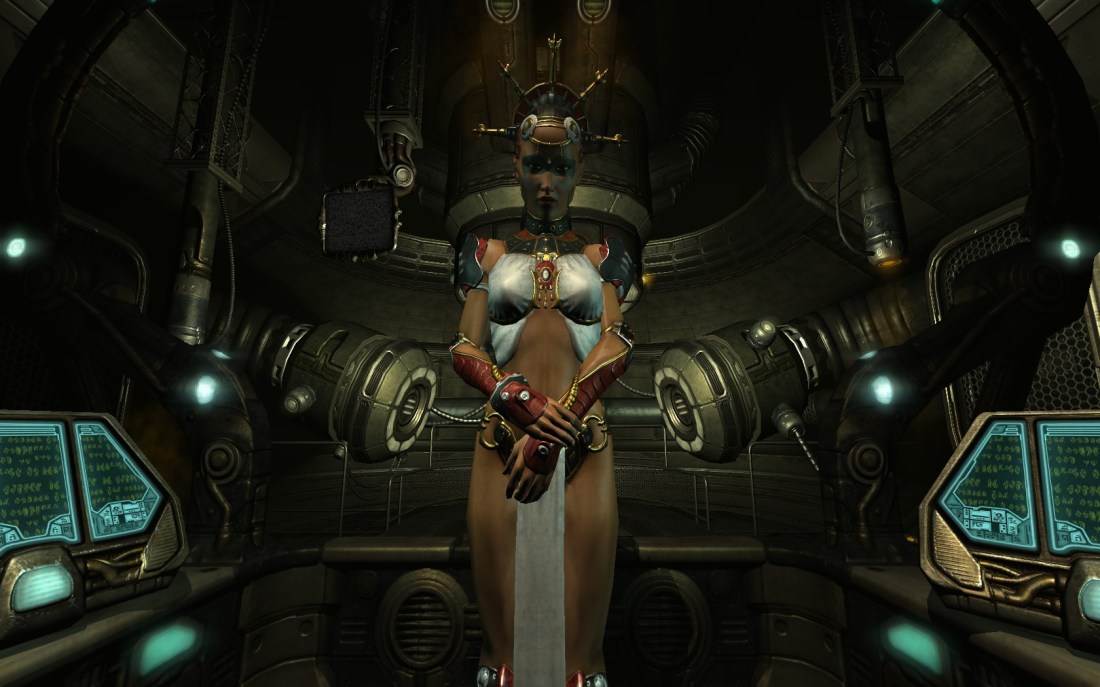
Hi, I've been living in squallor for decades.

And of course, we have that story to entertain us; We run into a group of humans who escaped the meat grinder after its last visit and survive hidden within Sphere’s own living walls, while Tommy is goaded about the futility of trying to escape by the disembodied voice of its controller, The Keeper (who at one point calls Art Bell to give its deranged view which is awesome). Plus, we have Gramps occasionally prodding us about our heritage and destiny. It’s like an X-Files episode as we uncover hints about the Sphere and its previous visits to earth, the Keeper’s true purpose and what the Land of the Ancients and Tommy’s spirt-walk power really are – at least it’s hinted at, we (horribly) see little children sacrificed until one develops Spirt Walk and becomes a mini-boss from hell and later, Tommy is tricked into revealing the location of the Land of the Ancients and the Keeper’s forces attack. I’m sure it’ll be explained in the sequel, currently slated for a 2012 release.
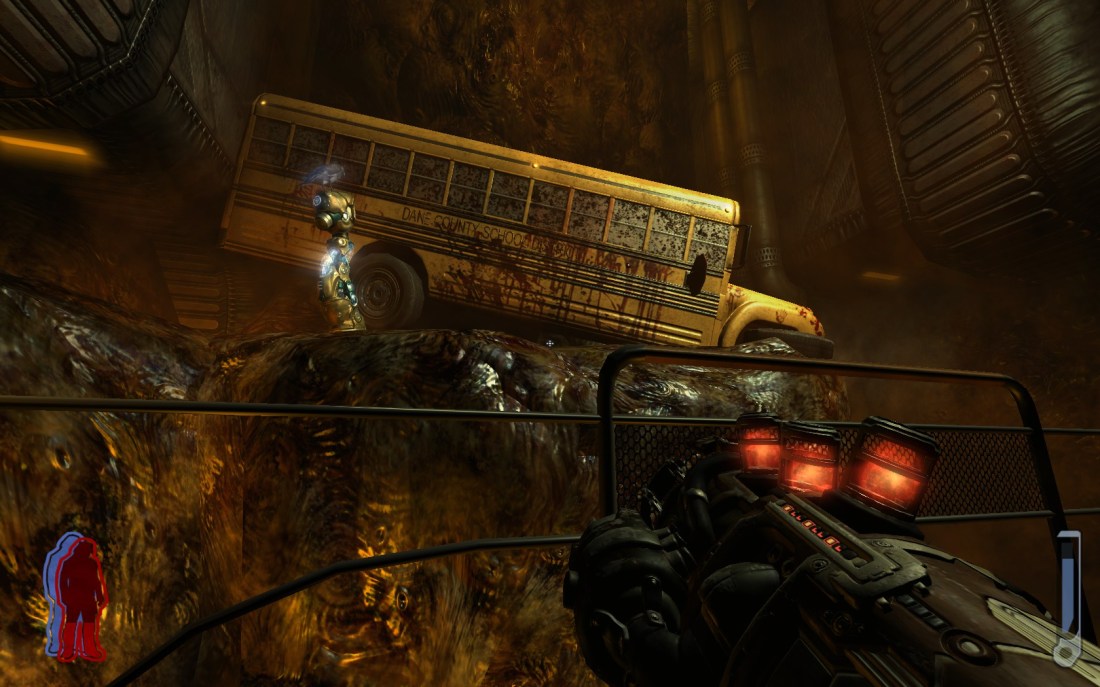
oh crap a bus load of kids

Finally rescuing Jen, Tommy reluctantly agrees to kill the Keeper so the humans can activate a portal out of this place. After a monumental battle where I spend as much time in the Spirit world regaining health as I do fighting, the Keeper goes down. Except, turns out it wasn’t the boss. There’s tons of those Keepers knocking about. Dagnamit. Another interminable slog and some genuinely painful plot-twists later and we finally we reach the centre of the Sphere. It’s a great moment, partly because Tommy is driven by rage now and we feel for him, but mostly because it’s been toying with Tommy the entire time, testing and manipulating him to reach this moment – giving Tommy a compelling choice to make. If this had truly been a 2006 game, we’d have had to make the choice and trigger a good/bad ending, but this is the 90s; Tommy just readies his grenade anus. Spirit world, here I come again.

Once that’s done, we get a surprisingly dark and emotional ending and as I watch the credits roll, a little shell-shocked, I’m about to congratulate Prey on a brave and honest ending when a franchise-starting twist pops up. In a final scene that in no actionable way rips off Half-Life, Tommy is suddenly and inexplicably placed back in the bar at the beginning, where he’s visited by the leader of those Sphere humans. While earth has dismissed the events as an natural disaster (except Art Bell, he knows the truth), the human explains ‘others’ would like to meet Tommy and opens a portal to the words ‘prey will continue’. And oh boy did it.

If Prey 1 had a tortuous development then Prey 2 was treated worse than Gramps in the Sphere. HHS began work on Prey 2 under the direction of Radar Group, an IP Management company from 3DR’s Scott Miller. Announced as a direct sequel that picks up directly after Prey 1, it went nowhere and was eventually offloaded to Bethesda – who have a habit of grabbing waning IPs and rebooting them (Fallout, Doom, Wolfenstein) and they stuck to what they know best; P2 was announced as an open-world non-linear game with a morality system set on a Blade Runner style planet controlled by various warring factions. Exactly how I envisioned Prey would continue. It even got as far as a (clearly not game-play) trailer. Then things went quiet until 2014 when Bethesda finally admitted P2 was cancelled before uncancelling and parking Prey at their Arkane Studios; Who in 2017 turned out a Bioshock meets Dishonoured reboot. It’s Prey in name only now, which is a shame because there is so much to recommend in the original, be it the 1995 half or the 2006 half. It’s schizophrenic, like a great remake of a game you never played and it does drag, but it’s aged well (twice) and considering its torturous development, Prey is a solid, enjoyable game; Duke Nukem Forever had no excuses. Ultimately Prey feels old-school familiar, new-school absorbing. I enjoyed it, but I would have preferred to play the 1995 version and rediscover it now. Then all my gripes would be put down to age and forgiven. It would have been a great Doom Clone.
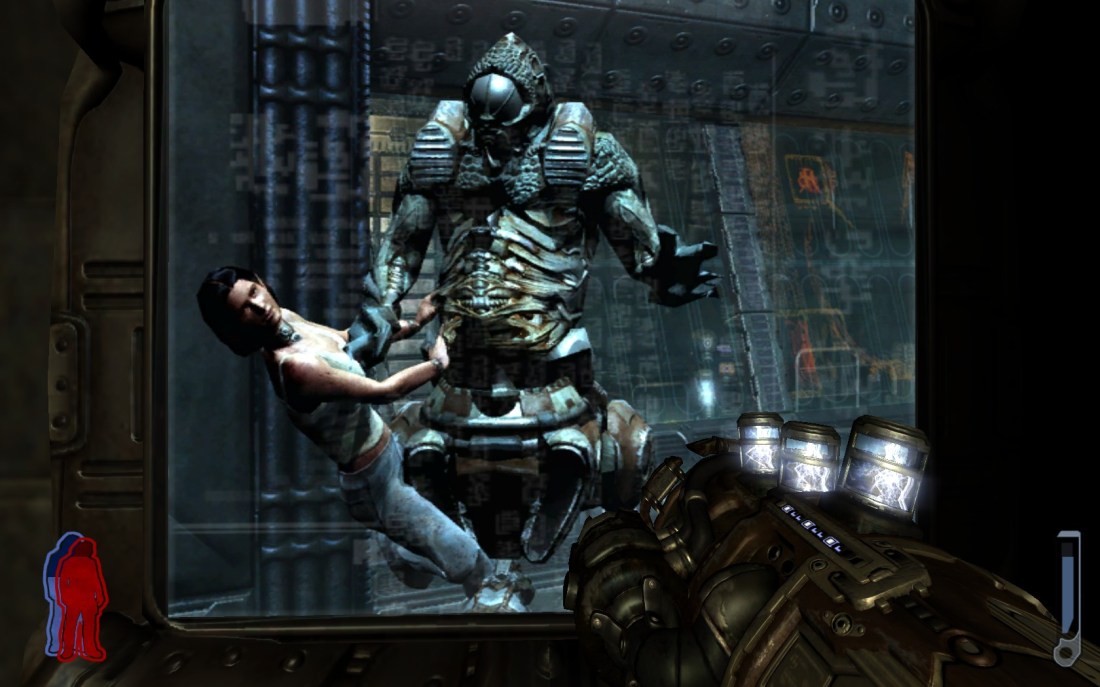
2006 | Developer Human Head Studios | Publisher 2K Games / Take-Two Interactive

platforms; Win | X360