SOMA

a second wind review

“who thought sending a Canadian to the bottom of the sea was a good idea?”

FBT thinks it was a very good idea.
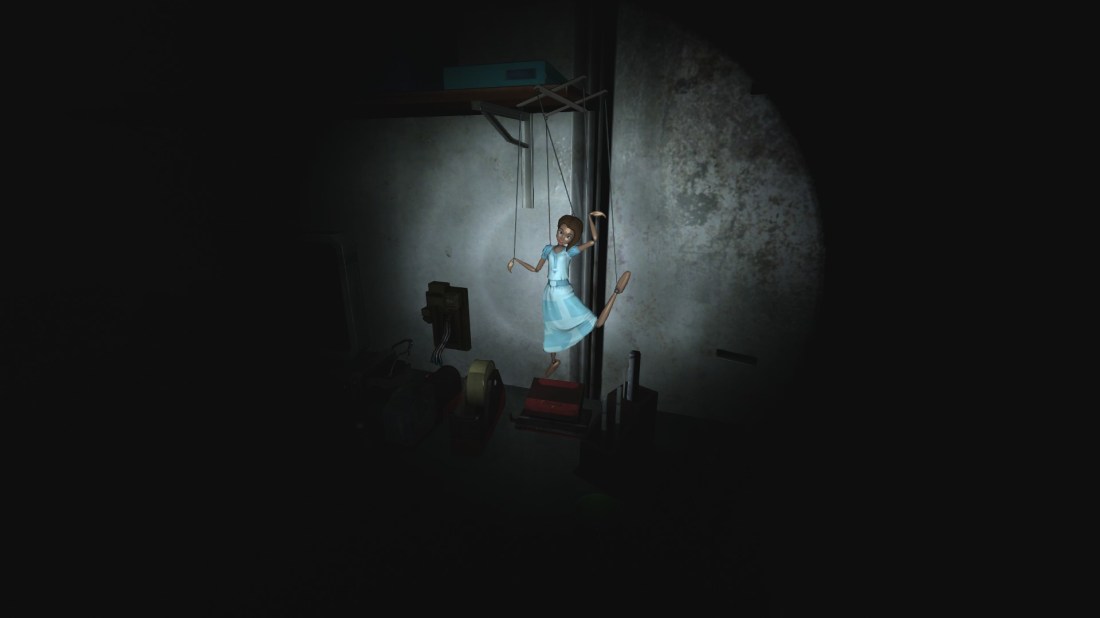
In 2015, comic-store clerk Simon Jarrett is involved in a car crash, losing his sweetheart and some of his skull; left with pressure on his brain that might kill him at any moment, Simon meets not-yet-a-Doctor Munshi, who is developing a radical way of scanning the human brain. Ignoring the suspect office and equipment, Simon agrees to be a lab-rat hoping the scan will allow surgery by revealing the pressure point. Unfortunately, Simon wakes to discover he’s under even more pressure – the entire Atlantic Ocean.

Worse, Simon’s not just woken up in the wrong place, he’s in the wrong time. It’s now 2104; contacted by a scientist called Cat, she explains things are even worse; a year earlier, a comet impacted earth and caused a nuclear winter. The only life left is what’s on Pathos-II, the undersea science lab they’re in; but is that life friendly … or even human? Doesn’t seem possible but I get the feeling it’s only going to get worse for Simon.
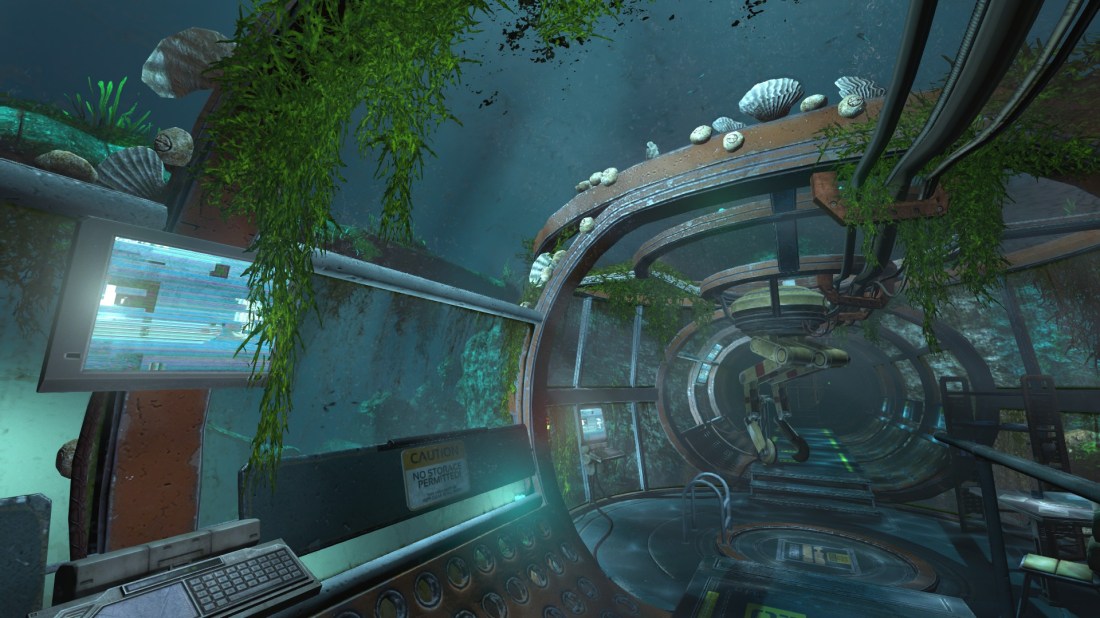
It’s an obvious comparison but SOMA does remind you of Bioshock, and other psychological games like Alan Wake, Silent Hill, Alien Isolation, Prey (both versions), System Shock pop into mind; we’ve got machinery moving suddenly, glimpses of things, doors opening, lights flashing, eerie noises, jump moments, dark rooms to enter; all very Survival-Horror, but rather than derivative, SOMA is something different. It’s in the story that SOMA steps out of those games’ shadows and into it’s own horrible place. It’s closer in experience to Hollywood’s recent spate of subtle-horrors; A Quiet Place, Cloverfield Lane, Annihilation; SOMA messes with your head not your trigger finger.
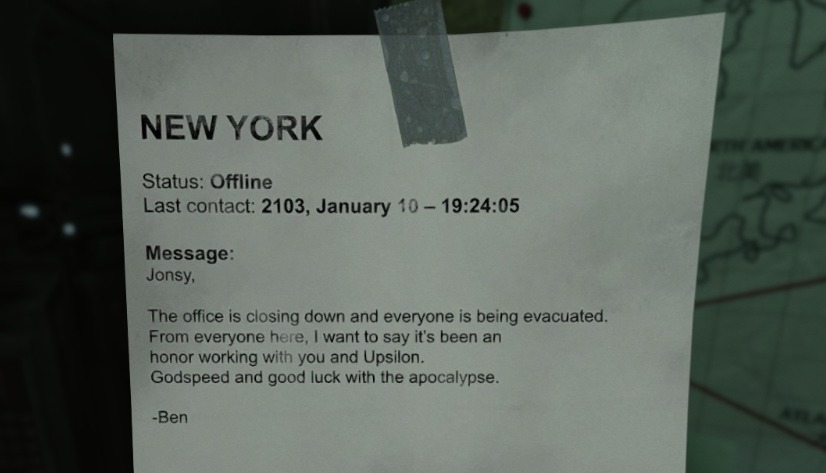
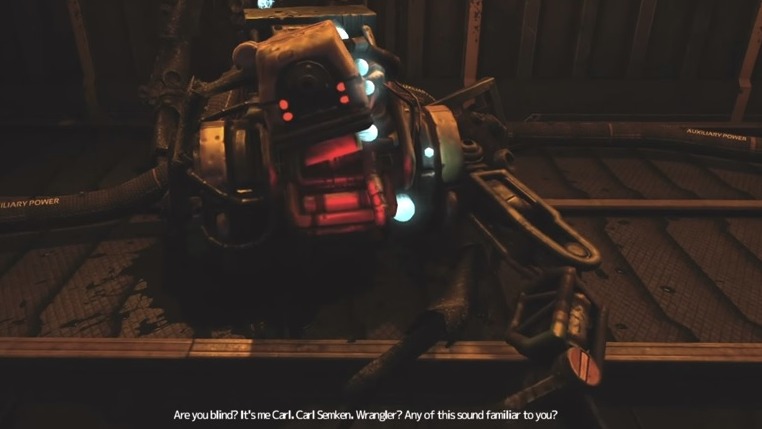
Taking in the desolated and decaying station, Simon quickly discovers it is not a nice place to be. The walls are covered in some encroaching, living goo that makes Pathos-II look like a mash-up between the Alien Hive and the Borg’s gaff. Early on I find a machine covered in the gooey tendrils, and disconnect it to turn on a switch. Then it cries out it “Don’t, I need it!” before dying. Should … should I have not done that? That wasn’t a machine’s voice that was … Human? Then I find a crippled machine that’s convinced it’s a man who suffered an injury and needs a medic. You need a mechanic, mate. But he thinks I’m the crazy one. Am I? What is going on here?
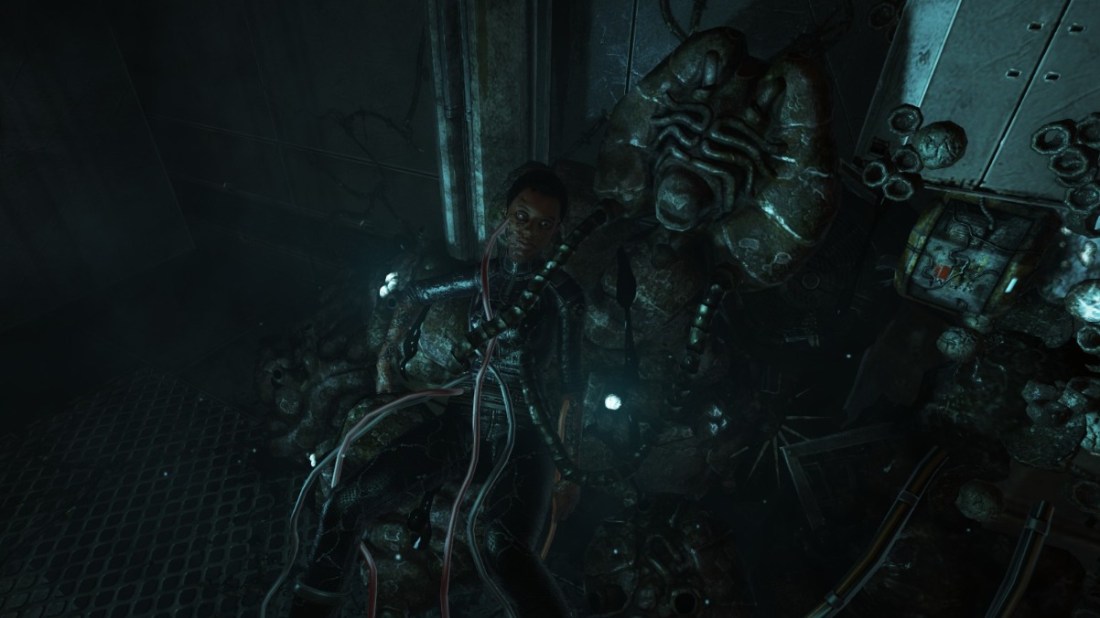
After the comet impact, Cat’s idle hobby – digitising brain patterns – became Pathos-II’s sole focus. They created the ARK, a digital representation of earth where their personalities can live for eternity and preserve something of humanity. Cat was almost there when survivor-guilt, psychosis and understandable madness overwhelmed the crew. Meanwhile, when Pathos-II’s AI, “WAU” learnt of the comet, it tried to fulfill its prime directive – protect mankind. Problem is, WAU couldn’t understand human nature, only survival so it used ‘Contact Gel’ – the goo we’re seeing – which is like a liquid circuit board, to bond the crew to life-supporting tech and keep them living, whether they want to or not. As if that wasn’t horrific enough, WAU also began activating ARK files, building the transferred personalities into the circuity and machines instead of their digital reality; anything to keep humanity going. The station is people.
WAU is arguably the main antagonist but it’s not evil like SHODAN or GLaDOS and we never converse with it; WAU is just desperately trying to save humanity and wants to help; humans are living, but you’d not call it life. But what is life? What are we trying to save? We’re leaving all those people to this agony? It looks like Cat and Simon will end up joining them anyway. The ARK runs on solar power, and thanks to the nuclear winter there’s no sun. If they leave it on Pathos-II, the power will eventually fail – or WAU will reach it. That means using a supergun at the end of the lab to fire the ARK into space. Easy. Except Cat doesn’t even know if it’s still here. If it was launched, they can’t Tron themselves into it and escape – if it’s still on Pathos-II, can a scientist and a shop clerk finish the ARK, digitise themselves, load it into a rocket, fire it out of the Atlantic Ocean through the nuclear winter to reach space and hit a safe orbit so they can live forever? They have no chance! But what else can Simon do but try? Because it was all too easy, turns out he can’t even take out WAU’s monsters.
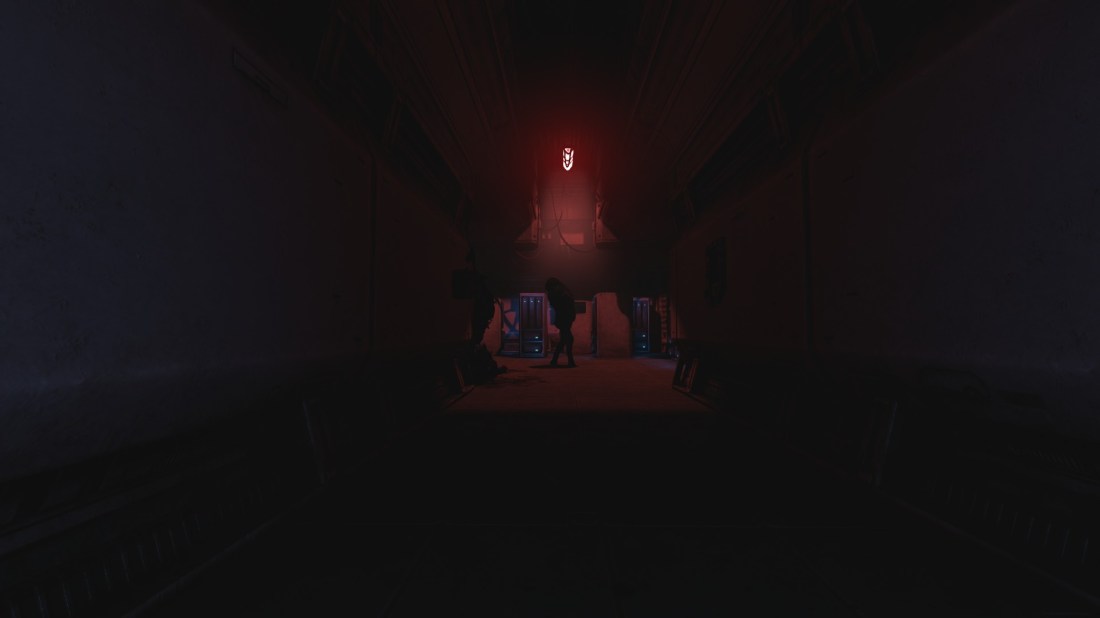
Like Frictional’s previous game, Amnesia, when you do face off against a creature, your wits are your weapons; the best Simon can do is escape. Several of WAU’s abominations roam the station but it’s refreshing that they’re not common, keeping their impact at maximum ‘oh god!’ when they do appear. An early goo-filled machine is standard, but human-creatures are just … no. Some listen for you, or you have to stay out of their eye-line, others follow you unceasingly and you never really see the same monster twice, like you only meet mini-bosses. You never go ‘oh it’s a so-and-so, I just need to do this’. Each has its nightmarish ways to out-smart and they look so maddened and tortured you feel pity as much as fear – but the real monster is the story.
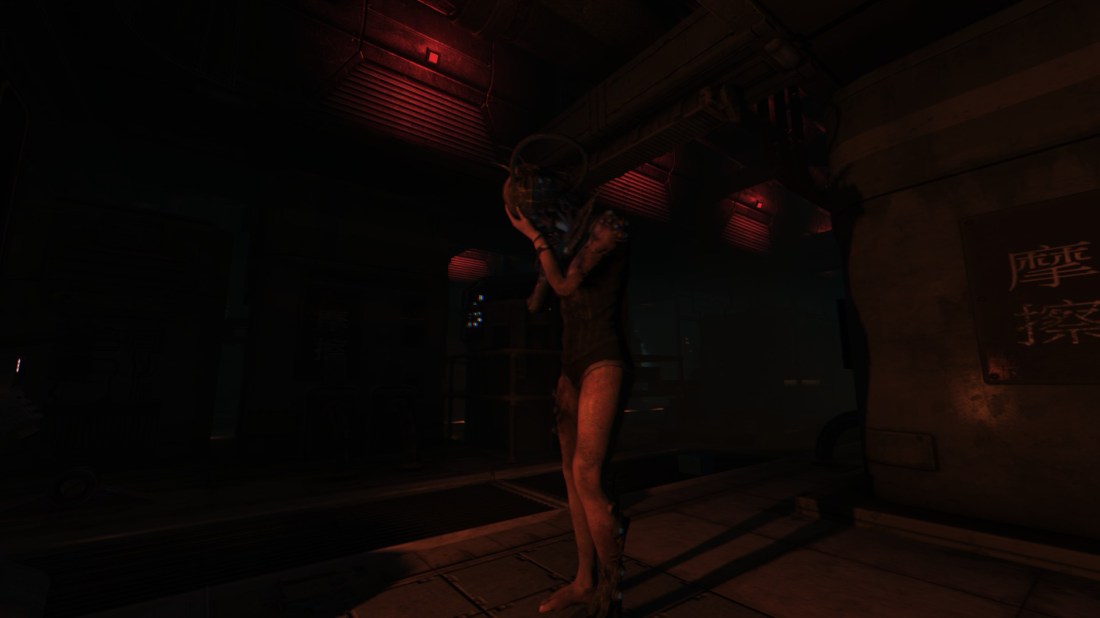
Simon’s situation, how he got there and the overwhelming odds he’s facing are the game’s biggest scares and Simon is not helping. Realising the human race is in the single digits, it’s not long before he’s on to the really big questions. Is the ARK immortality? Is it life, living in a machine? Will they be much different from what WAU is attempting? Are we just electrical impulses really? Is life just our perception? What is humanity? Does it matter, who cares? What is the point of it all, Goddamnit?! Simon’s frustration is palatable, his breakdowns understandable, but thankfully we have Cat to give some perspective. As in, Cat really doesn’t have time for his crap. Hurrying him through his realisations, getting exasperated at him for pondering the meaning of life when we have stuff to do, she’s like an impatient Alyx and easily one of the best sidekicks in a long while. The philosophical banter between the two is spot-on and her sark provides some very welcome comic relief. Simon wants to give meaning to all this; the only thing Cat clings to is the possibility that the ARK is still there. She’s even blunt about how Simon wound up here.

SOMA knows that question needs to be answered so rather than dragging it out, it’s revealed early – but SOMA doesn’t just do the reveal then expect Simon or us to shrug it off; instead, the revelation affects and alters everything, becomes the central theme. Plus, SOMA is packed with enough twists and tough choices that Simon’s situation is the least of our worries; there’s moments so debilitating I just walked off, needing a minute. SOMA really nails surviving death only to face no future. We’ve gamed through the Fallout-style apocalypse before but SOMA instead calls to mind the Cormack novel The Road, that sense that it’s just … over. Simon’s situation is so frustrating; he’d come to terms with death; now he has to survive? He’s a likeable guy, give him a break FFS. The shit he goes through …
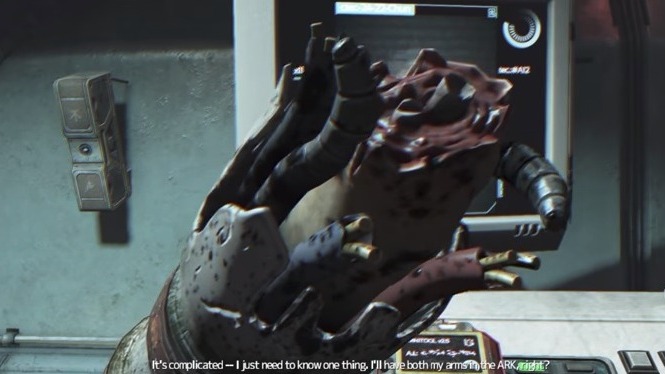
Still, while Simon might be faltering, for us, progressing through Pathos-II is very focused. You’re not spoon-fed solutions, Simon needs to get his shit together sharpish. Nothing comes across as convenient or outlandish, the lab is a logical place and you do get a sense of progressing, even if it’s all on you – no mission markers, no hints, just you. Early on, interacting with the world is frustrating; Simon must be precise to progress, to the point of pushing or pulling doors – given my real-life inability to push/pull a door correctly even when it’s written on it I’m just adding to his woes. But after a while you get into it. The puzzles too are cleverly frustrating. Never explained, it’s up to you to figure out the process before you even attempt a solution.
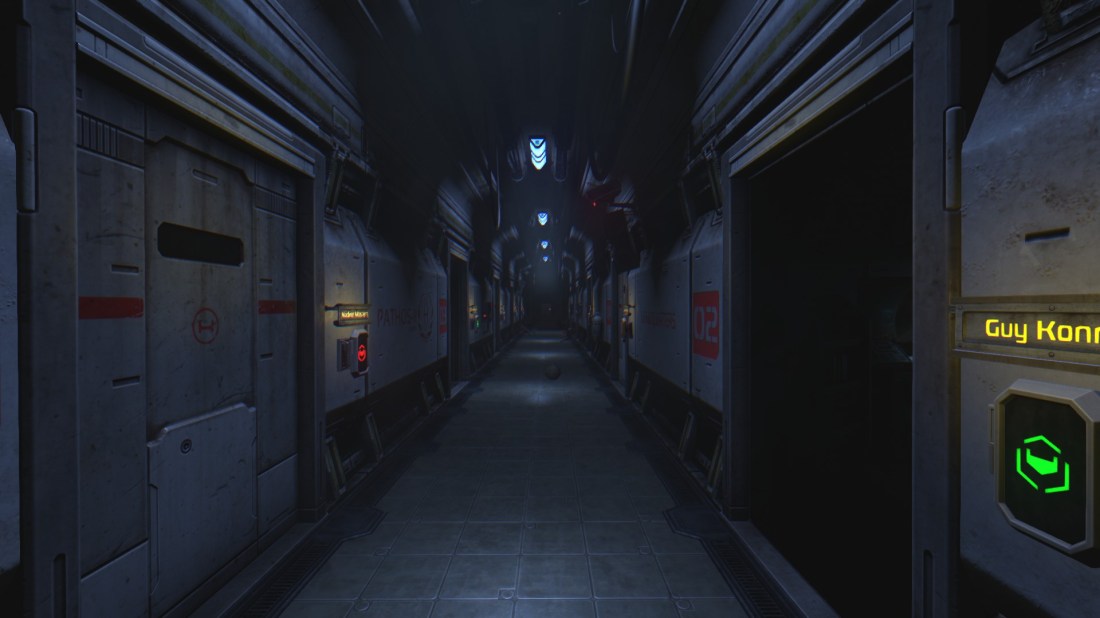
The station is split into separate research labs Simon needs to navigate between; as in, across the seabed. And that bloody WAU-infested Gel has leaked into the ocean; as if deep-sea fish weren’t freaky enough. We even have a mutated giant squid circling while belligerent rovers and mechs chase us about. Or try to chat to us. Both are terrifying. There’s guide-lights that keep the fishes at bay, but storms swell up causing the lights to go out making it a terrifying, confusing trek along the sand; oh, I can see a light. Nope, that’s the lure from a goddamn mutated angler fish…

Reaching each lab we discover new horrors, and how each isolated group handled the event; some joined the ARK project, some just lived out what time they had left while others carried on as if the apocalypse would pass. Every new area is a new take on what humans would do in that situation.
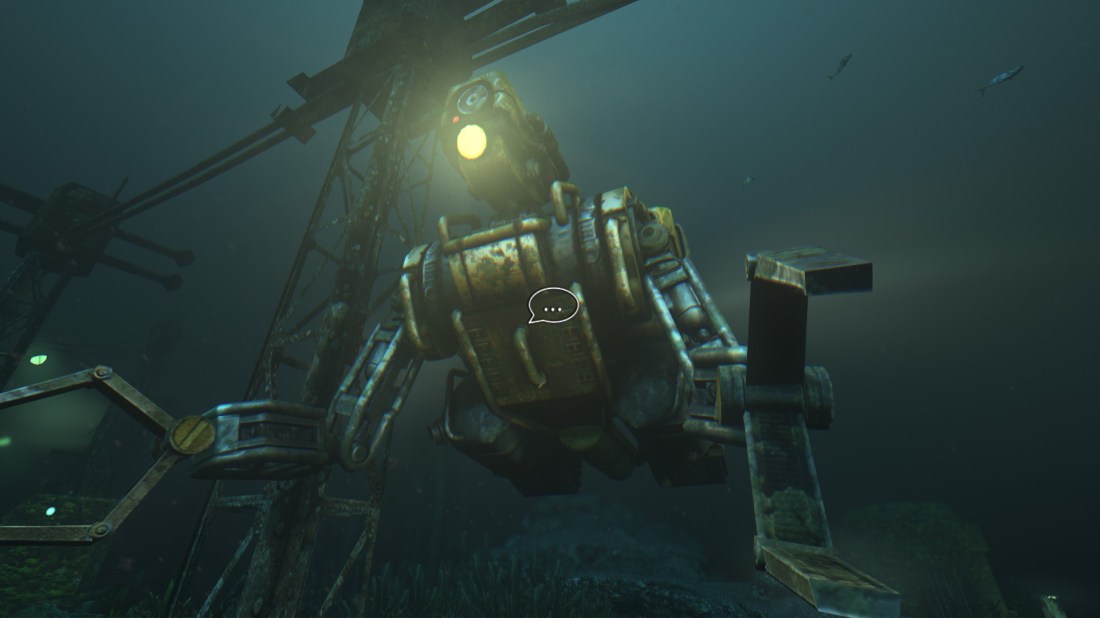
Reaching the ‘abyss’, a deep-sea trench where the final lab and the likely resting place of the ARK are, Simon and Cat activate a deep submersible – and activate it’s personality; who, terrified, takes off. Can we just get a break?! Cat’s solution is f’ed up, but it’s not like Simon has a choice. On the plus side, what happens afterwards is far, far worse. And then it gets worse. And worse, and worse until you’re staring at the end-credits, aghast. This game should end with “if you’ve been affected by any of the subject matter …”
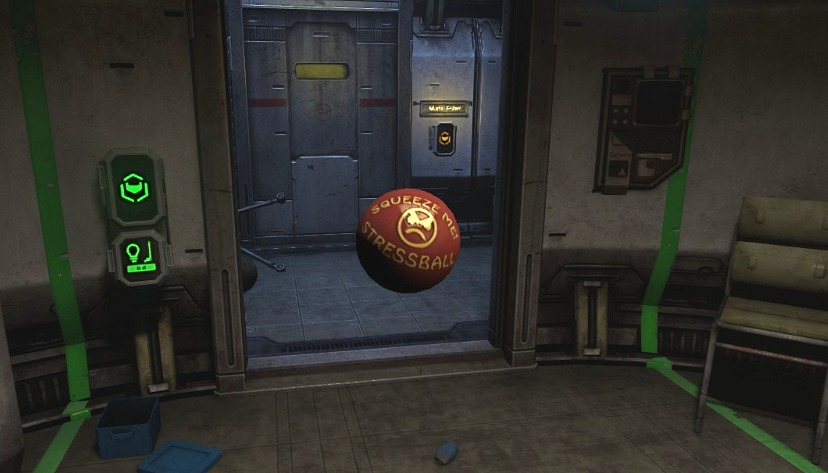
If you do make it, make sure you stick around until after the credits for the very definition of ironic bitter-sweet endings. SOMA is a very troubling game; you don’t want to say good bye to Simon and Cat, but you’re not sure you want to experience that again. If you do, you’ll spend forever trying to force a different outcome. But it was never going to go any other way.

It’s been weeks since I finished SOMA but Simon and Cat are still in my head, arguing over the definition of life – and death. And as a testament to that narrative, Frictional released an update called ‘safe mode’ that stops WAU from killing you. You’d think a God Mode would remove all the intensity but it doesn’t – it makes it worse because all you’re focused on is what Simon has to go through. A new entry in my all-time great games, SOMA might not reinvent the gaming wheel but as a thought-provoking experience, it’s as close to Cinema as gaming has gotten; SOMA is the game Stanley Kubrick would have made.
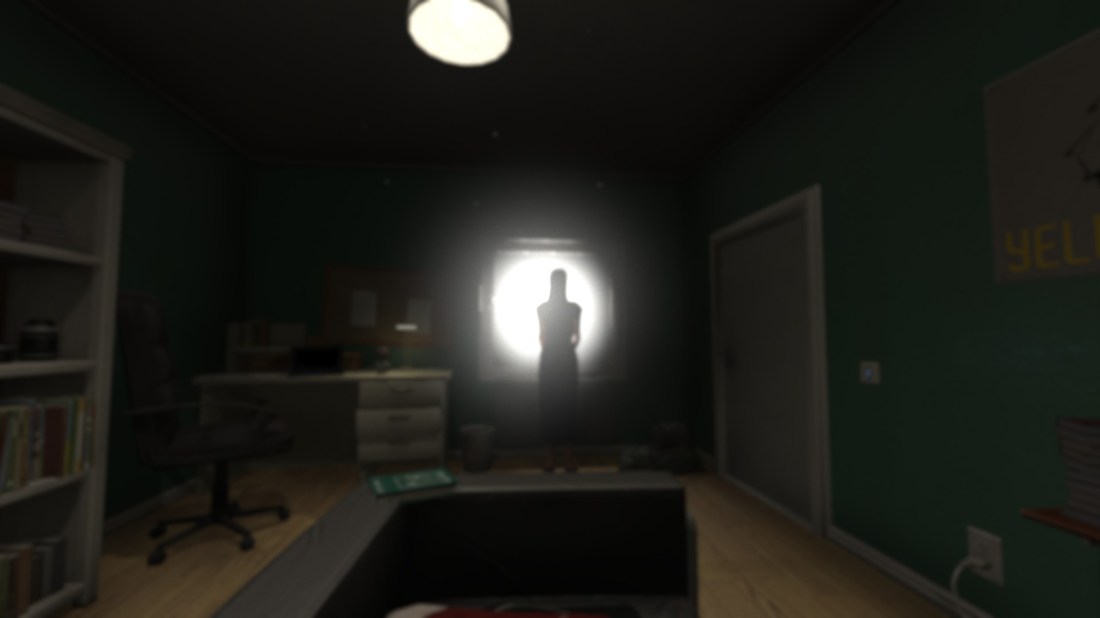
2015 | Developer/ Publisher, Frictional Games

Platforms; Win, X0, PS4
The 11th Hour

A Blast from the Past review

Little FBT visits uncle Stauf’s mansion, and has a tantrum.

The Past

What I remember best about The 11th Hour was that it stomped on everything that made The 7Th Guest awesome – none of the classic horror tone or style, it was a mini-movie with puzzles, set in present-day melodrama instead of goth camp. It was smutty, sleazy and a bit unpleasant – it had more in common with the other infamous FMV game from the nineties, Night Trap instead of The 7th Guest’s classic House on Haunted Hill groove – that drew from the best of horror literature and film; tragedy, regret and ghosties. The 11th Hour is prime Tommy Wiseau.

When T11H was released, it was long overdue and past it’s prime. Gaming had already moved on and the dodgy plotting, am-dram movie and bizarre ending turned T11H into a curiosity rather than classic. Briefly though, developers Trilobyte were the intellectual id; they helped PC gaming shift from Floppy Disks to CD-Rom, popularised FMV and the interactive movie genre. T11H can’t be as bad as I remember. I loved The 7th Guest. I can love The 11th Hour.

Still a Blast?

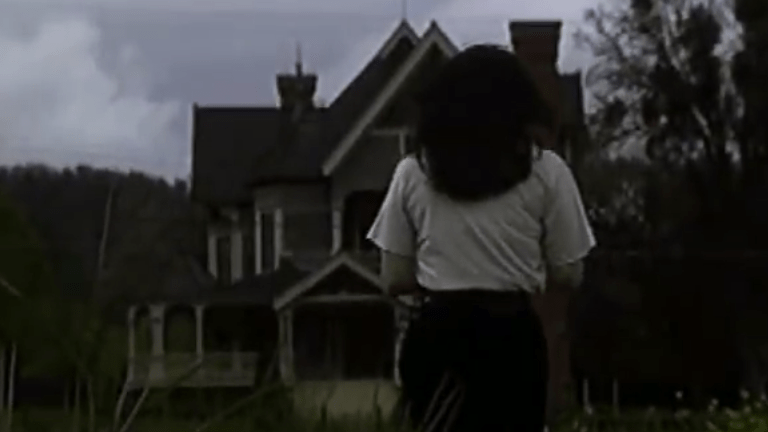
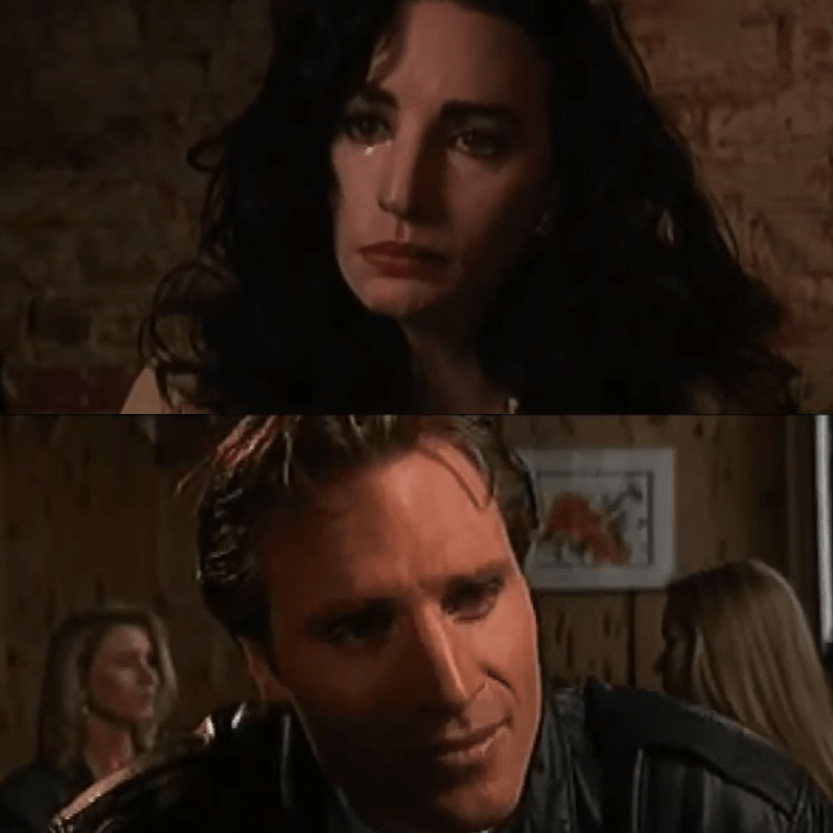
It’s now the 90s, and unlike The 7th Guest, we know who we’re playing – TV Presenter, Idiot and Bad Actor Carl Denning, who hosts an unexplained mysteries tv show.

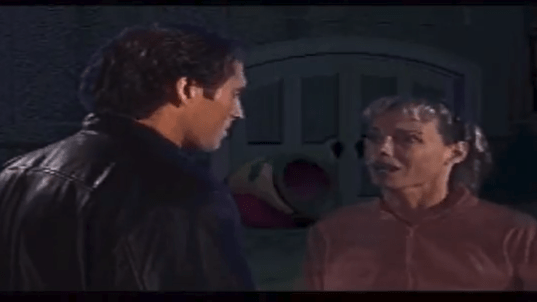
Robin, his producer and lover, loses both jobs when Carl decides on an unexplained whim to dump her. Robin, seeing something in Carl that we can’t, decides to prove both her love and professional worth by solving the biggest unexplained case yet; Stauf Mansion. And promptly disappears. Carl moodily moods about until her PDA turns up containing a video of Robin begging for help, trapped in the Mansion. Oh-ho. Carl moods some more then moodily rocks up to the mansion and becomes trapped inside, forced to solve puzzles to unlock the secret of Robin’s fate and what Stauf’s been up to in the intervening years.

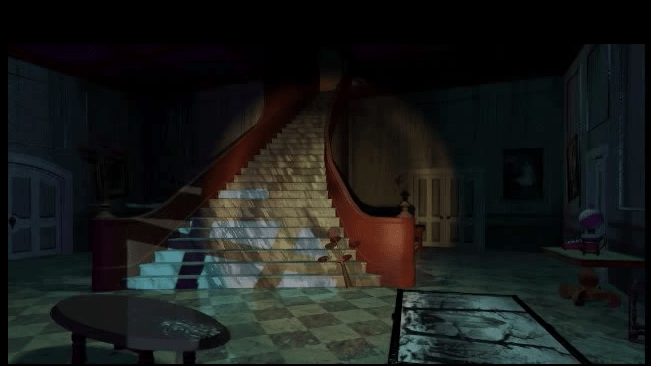
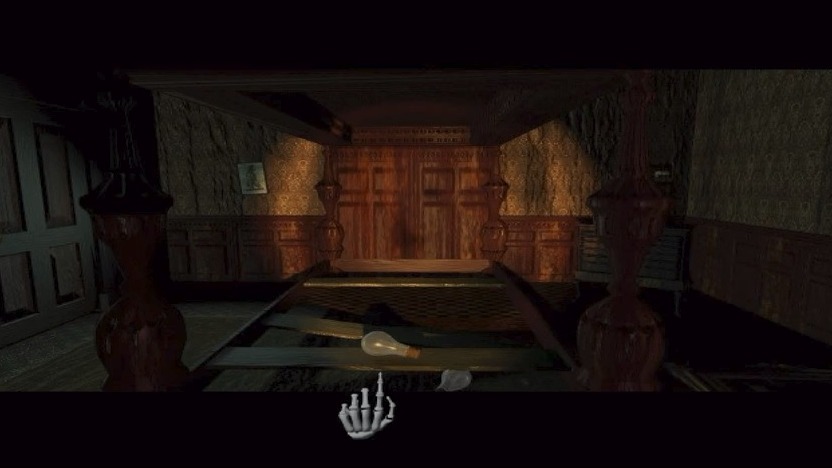
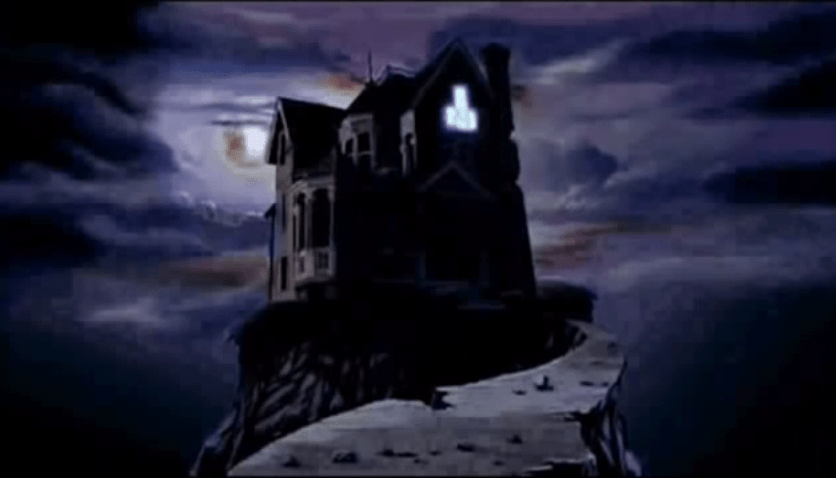
At first, the old mansion is a welcoming sight. It’s the same layout but past it’s prime, decrepit and falling apart. As we wander, there’s various nods to the original’s puzzles and moments and that old 7th Guest magic starts to creep in. And then creeps back out, apologising for what’s about to happen.

T11H is shockingly bad. Worse than I remembered. First, the house has lost that subtle eerie charm in favour of a dark, dank, rotten look; that could be good, but it’s so dingy and dull it’s no fun to click around and while T7G kept the interaction to a minimum, in T11H almost everything can be clicked on which reveals nothing but a chance for Stauf to make some terrible joke. Here we go.

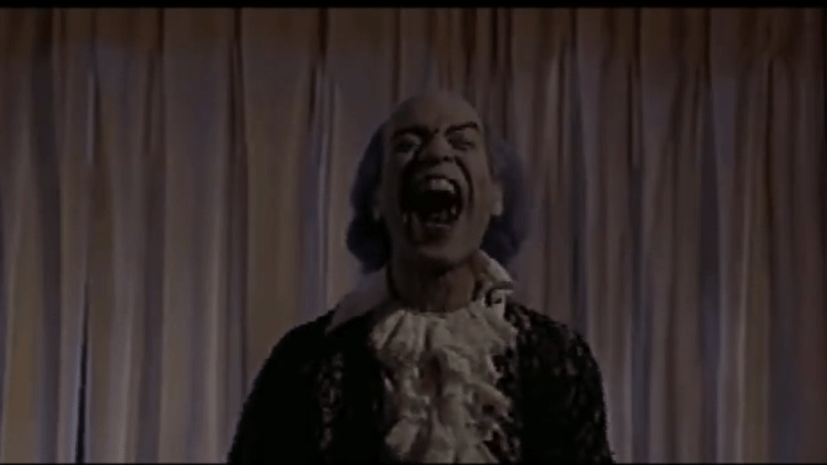
In T7G Stauf was always a test of the gamer’s patience, but at least he had a good line in black humour. This time, Stauf is just an end-of-the-pier comedian. Zingers like ‘I took a picture of your brain … but it hasn’t developed yet’ might be good but it’s not exactly a creepy, disembodied voice drawing you to your doom – It’s like being followed about by the ghost of Groucho Marx. It stops you clicking on anything because the game freezes, like it’s pausing for laughter, while you listen to his stupid puns. It’s not scary and this is supposed to be scary, right? He’s evil isn’t he? It just gets worse and worse, and he repeats them endlessly, ruining the moment until … You know the film Clue, where Madeline Khan attempts to explain why she murdered someone but is so frustrated she can’t properly express the rage; “I hated her so much, it … flames, flames, on the sides of my face, breathing … breathless, heaping …” that’s how I feel about Stauf. I just can’t properly explain how much it annoys me, how ruinous it is, how moment spoiling, aggravating … Flames, flames at the side of my face.

But, much of Stauf’s idiocy is drowned out by our old friend, the score. The Fatman’s music is fine in moderation but it’s relentless and becomes a trainers-on-gym-floor, fork-across-plate, nails-down-blackboard, screaming-baby, Go-Compare, pro-Brexit-argument in synth form. It’s so insistent you can’t block it out, refusing to let you concentrate as it fights for space with Stauf; shut up, just shut up the both of you and let me enjoy the atmosphere.

Except there is no atmosphere. The house is lit mostly by Carl’s torch and very little happens as you explore, it’s as scary as fumbling around the attic looking for the Christmas decorations. T7G didn’t demand you hunt around, but you did anyway because you wanted to find cutscenes that explored the history, you wanted to find the ghostly moments and new puzzles. That house was bright but oddly silent like the Marie Celeste; food and drinks, cigars still lit. Creepy. I have to remind myself T11H is creepy. There’s nothing scary about it and when we do find a puzzle, while they’re suitability macabre and gothy (and insanely difficult) they’re made insufferable by the Cannon & Ball jokes of Stauf (who comments after every move and taunts after every mistake) and The Fatman’s infuriating Richard Stilgoe impression.

T11H can’t let us have nice things, and it even mucks up the satisfaction of beating a puzzle. Carl solves a puzzle, but that then provides a riddle. Solve that, then go looking for the relevant object and that unlocks a cutscene. That means dragging Carl around the house looking for the object, and each click triggers a Stauf joke you’ve heard a million times, and you can’t start another puzzle until it’s found. The entire game is padding, nothing happens in the house, you’re just unlocking cutscenes but rather than have them appear as ghostly shapes like in T7G, you go to the PDA and watch a mini-movie from Robin’s investigation. And then things get really bad.

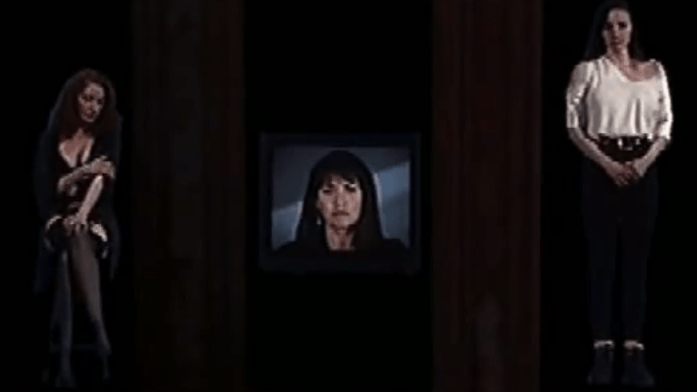
The cutscenes reveal the backstory that led us here; Starting with Robin investigating two girls who were raped by Stauf when they ventured into the house. Nice. One had her hand ripped off while escaping for no reason other than gore, and because two girls being raped isn’t enough horror, one girl gave birth and the child grew into a murderer – or so Robin thinks. We’re basically watching a terrible soap opera trying to be Twin Peaks as Robin uncovers the town’s secrets, and at over an hour long, it’s a slog to sit through something this cheap and cheesy, especially when it could have been wrapped up in a single cutscene like T7G’s original opener. A criticism of T7G was we do puzzles to unlock a story we have no involvement in, but that’s turned all the way up to 12 in The 11th Hour ruining the horror-coolness of the puzzles and most of it takes place outside the house in brightly lit locations; it’s completely removed from the house.

When Carl does find an in-house cutscene, he’s often there too, ruining it by pulling gurning reaction faces to events he clearly can’t see or imagine; T7G worked well by keeping the in-game cutscenes POV and voyeuristic – adding Carl into the set for them to react to ruins the mood, especially when he just blunders about asking ghosts if they’ve seen Robin.

Eventually, Carl runs out of puzzles and Stauf pops up to end this. It’s as distasteful as it is disjointed; We know that Stauf’s power is his Faustian promise to provide your greatest desire – I should be worried; Robin’s desire was Carl and here we are, trapped – are we part of Stauf’s biggest puzzle yet? Naa not even close. That would have been something but instead we get that ending.

The 7th Guest featured babies being sacrificed, children’s souls trapped in dolls and murders all over the place and it still worked – it took Shirley Jackson as inspiration but T11H aspires to nothing and it’s deeply misogynistic – it’s rape (and mutilation) recalls the worst of exploitation films, as does the uneasy idea that the product of rape grows to be a murderer – The other victim suffers a backstreet abortion that leaves her wheelchair-bound. But the ending tops all that by having Carl choose which woman he saves; ex-lover, murderess or victim, based on what Carl’s learned from the cutscenes, but he’s learnt nothing so it’s largely pot-luck; only one ending is the ‘good’ ending which makes no sense at all, and we don’t even get to avenge the girls or punish Stauf at all. There’s no resolution, just a one in three chance Carl survives as if he’s all that matters. The 11th Hour’s ending always appears on those ‘top ten weirdest endings’ lists, but it’s not weird it’s unforgivably offensive and crass.

The puzzles are great looking and mind-crackingly difficult, but they’re ruined by Stauf’s dad-jokes and the game’s slow pauses to trigger them. It’s like form of torture. If I hadn’t finished it out of some sort of sadomasochistic fury, I would have Rage Quit T11H but I wanted to see how far it would go. It went there. I hoped my rediscovered love for T7G would carry into T11H and allow me to forgive its eccentricities. But it’s not eccentric it’s despicable. Flames, flames at the side of my face.

1995 | Developer Trilobyte | Publisher Virgin Interactive Entertainment / Night Dive

platforms; PC, iOS/Android

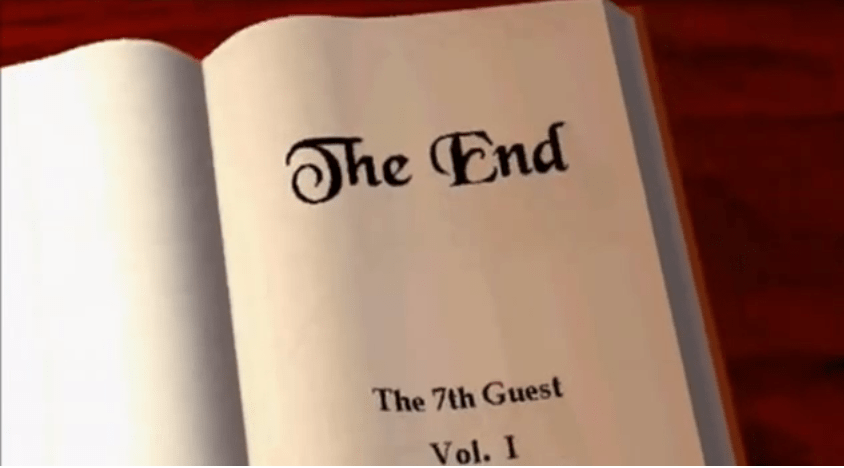
The 7th Guest

A Blast from the Past review

FBT revisits Stauf’s mansion and relives his greatest fear – game music you can’t turn off.

The Past

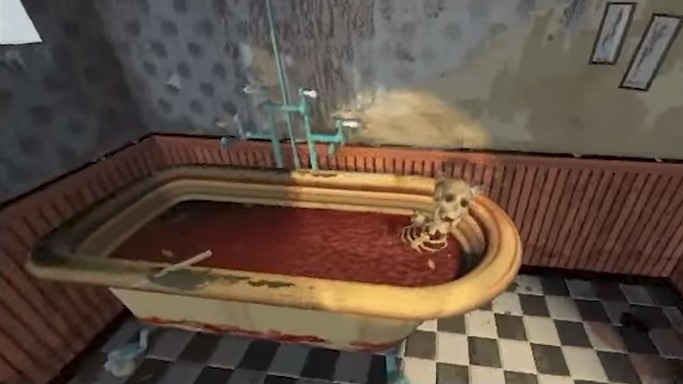
I intensely disliked Myst. It was a vacant slideshow of a game. But Myst had an evil twin; The 7th Guest – it was weird, messed up, with a disembodied villain who taunted you, soul-sucking dolls and dead children all within a house straight out of The Haunting filled with insane puzzles made out of gravestone-decorated cakes, skulls, blood and spiders, while you got to the bottom of a disturbing story that nicked it’s subplot from House on Haunted Hill before going batshit crazy at the end – Who was Tad, what are all those folks up to, where are they now, why am I here? I’m still not sure, but T7G was a macabre, goth-great.

T7G was also watershed moment in gaming; besides being set in a realistic, pre-rendered 3D world, it was one of the first to be released on CD-Rom (a what?) and one of the few games of 1993 not be eclipsed by Doom. It’s the polar opposite of Doom; slow, considered, out of your control. But to me it was a perfect companion – just as dark and innovative, and filled with adult content as its plots unfolded through awesomely cheesy FMV drama while we figured out the kind of puzzles critics like to call ‘fiendish’.

I played it loads but only finished it once. Those puzzles were murder, especially that goddamn microscope. But I just enjoyed being in the house, soaking up the atmosphere and style of it – There was no other game that so perfectly captured the old Hollywood horror feel. It should have been in B&W and narrated by Vincent Price. I’m looking forward to playing T7G again, especially as it’s my retro fave in my bio. I hope it stays there, given my shocking lack of patience and complete idiocy when it comes to even the most basic puzzles – this Blast from the Past may become a Rage Quit…

Still a Blast?

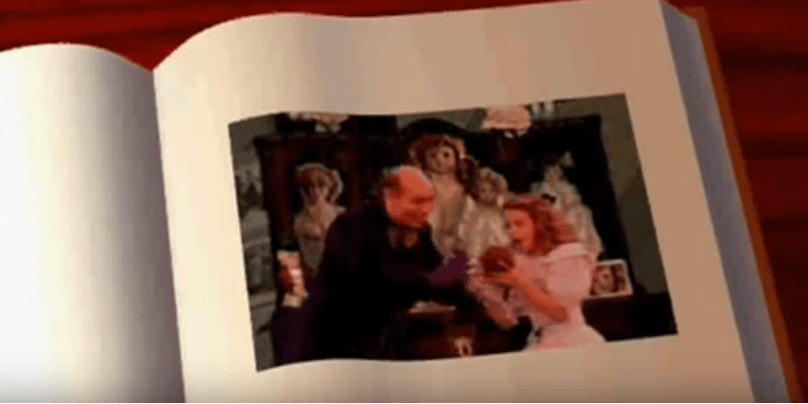
Man that cutscene was long. A drifter called Stauf sees a vision of a doll and is compelled to carve it. He gains a reputation as a toymaker and continues to make his visions, eventually becoming rich and famous until the kids who begged for a Stauf Toy start to get ill and die.

Years later, various folks get invitations to his home and told the puzzles he’s left will lead one of them to their greatest desire.

While it was retro-great to watch, less great to listen to; the music by renowned game composer The Fatman plays consistently through the game, and just hearing it brings back conflicted memories. I suddenly remember staring at puzzles for hours while it played repeatedly, slowly wearing me down like the Barney theme being played endlessly to break terrorists. I still have my original T7G disc and the entire soundtrack is on it.

Continuing the audio torture is our antagonist. Stauf, the now disembodied botherer, is constantly on at you as you explore the mansion. Goading, teasing, mumbling some dad joke every time you do something – anything. He only has one or two comments per puzzle or event so they lose their charm very quickly, and “We’ll all be dead by the time you solve this” every time you get a puzzle wrong becomes a wish not a threat. At first his ghostly voice gives the house an ominous personality but his constant jeering, commenting, cackling as you try to make sense of things gets infuriating. Meanwhile, you’ve got The Fatman going do-do-do, do-do-doddododo do … do do do do. This isn’t a puzzler it’s a test of my patience. I ended up, via some clever chap’s mod, managing to disable the music but Stauf just got louder. ‘feeeeeeeeeling lonelyyyyyyyyyyyyy?’ No, but I wish I was; even I won’t shut up, my character also has some glib comments on the state of play – it’s sometimes a hint but every time I or Stauf crack wise, I lose control until the quote is over – and some aren’t exactly pithy. I thought haunted houses were supposed to be silent and whispery, this is like an episode of Loose Women.

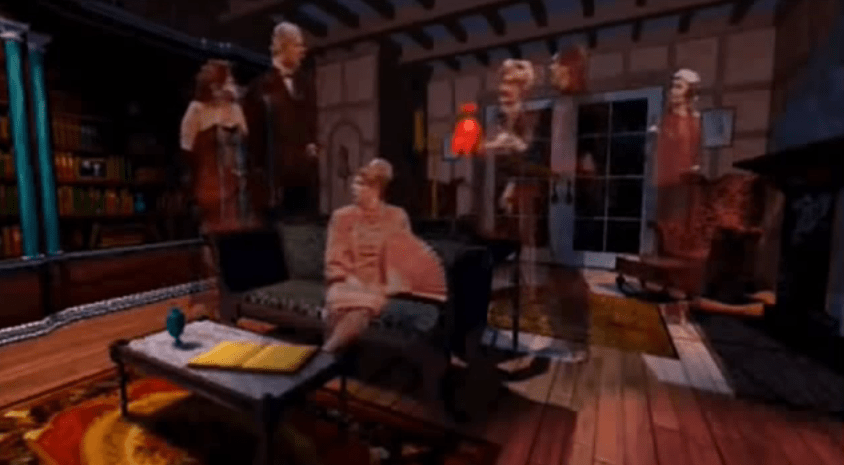
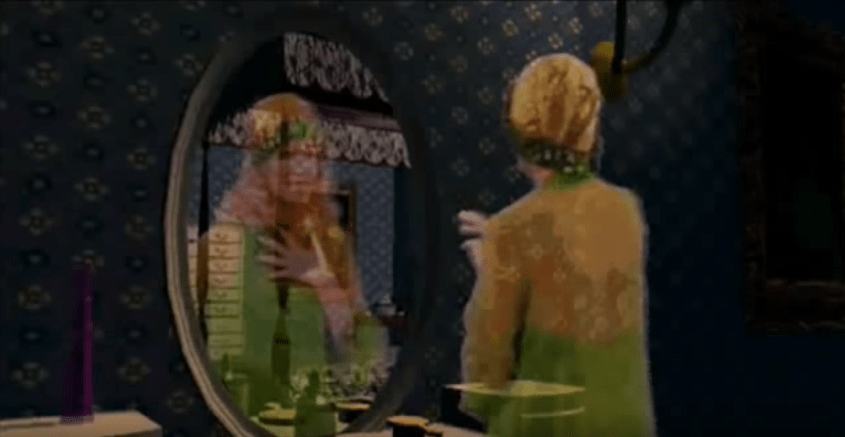
Audio mood spoilers aside, The 7th Guest looks really good – not just good for it’s age, it’s a great looking game, period. The CGI is 90s MTV but it’s solid and shadowy, and the mansion’s layout is great – it’s not a haunted house at the end of the pier, it’s just creepy, eerie and while there’s standard spider webs, blood and ghosts, it’s clear of scare-jumps and rug-pulls, relying instead on corner of the eye movement and interactions with warping pictures and things moving. It’s a classic ghost story as much in the tradition of Blithe Spirit or Dead of Night as The Haunting, almost a love poem to the classic era before CGI and jittery editors forced you to jump. But it’s not all warm and cuddly. You know the folks trapped here turned on each other, is that what’s in store for us? Are we alone? There’s one scene where a Guest picks up a doll and it starts crying for it’s mum … but not in that Chatty Cathy way, it’s a real girl’s voice, really crying for her mother. Shivers. This is a house filled with restless spirits and unease and it has an oppressiveness, you’re trapped there and being toyed with – the game doesn’t pull you out of the moment with a typical cut scene; instead, you wander into a Stone Tape style replay of some horror or event that the house never forgot; FMV fades in over the CGI room and while it’s not very well rendered, it’s effective and a great little story unfolds as each of Stauf’s guests fall victim to their desires and each other. It’s a little ham-acted but that just adds to the ghost-story charm.

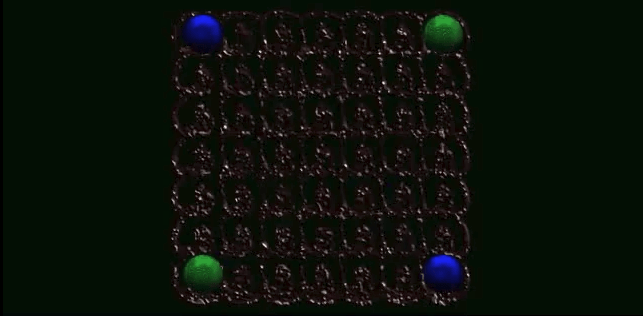
While it’s easy to get lost in the game and the story, you’re rarely lost in the house; the layout isn’t maze-like (apart from a maze puzzle) and there’s a map, and unlike most puzzle games, there’s no inventory or random things that become critical later; you’re purely solving Stauf’s conundrums to unlock the secrets. It could be disconnecting, like you’re unlocking a straight-to-video movie, but you never know what’ll happen when the shot glides around and it feels like you’re being drawn further in and become part of it. As a puzzle game, it’s clean and effective; you’re not missing a tiny clue because your character is standing on it or stuck trying to get past a goat. The cursor changes to flag cinematics or puzzles which keeps you focused as you walk the corridors and discover previously locked doors now open … The mansion is split across two main floors for the most part, with a brief journey into the cellar before ascending to the attic for the finale, discovering your own connection to the house and who the 7th Guest is before it all goes FMV-meets-WTF crazy.

The 7th Guest is a real accomplishment; many critics complained it was either a puzzle game with cut-scene filler or a ghost story constantly interrupted by puzzles, but I see it as the puzzles -like Stauf’s toys- were possessed and as the guests played they became corrupted, and lost themselves to the games, so unlocking them revealed the character’s fate and in turn, revealed our own. One, the toy bricks in the playroom, reveals Stauf’s plan – I thought it worked perfectly then, and still do now. It feels aged but not old and just like Doom, playing it now, decades later you feel a sense of achievement, that this is something special – it’s not a flash in the pan or of its time, The 7th Guest is a classic and still packs a punch (to the ear).

For all of T7G’s innovations and progress, its inventors Trilobyte never capitalised. The sequel, 11th Hour was as overdue as it was bad, and they closed in 1999. Good old Night Dive helped Trilobyte resurrect Stauf and his bants though, including an iOS release – which is great and works even better than on PC; mostly because the microscope puzzle is missing – not even Apple could solve it.

Over the years various reboots and second sequels have been rumoured, but nothing’s come of them. It’s a shame but then, a modern-day 7th Guest wouldn’t have the original’s charm or invention. It would be like a crappy modern day shlock-scare, missing the class of a good old horror movie. Sure they’re old, a bit silly in places, but they’re great and The 7th Guest is the gamer’s equivalent. The end …

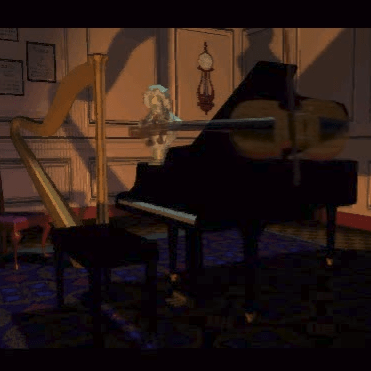
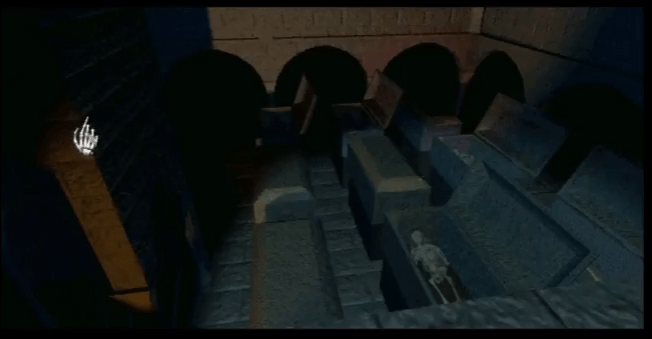
What? Oh yeah, the puzzles. Okay, I admit I might have, on occasion, used YouTube and The Book Of Secrets, a hint app released alongside the iOS version to beat the puzzles. But I had a lot of fun trying. The puzzles work well, you know they’re beatable if you could just concentrate and the Horror-Halloween design makes them interesting, as does the 3D CGI rendering. Once you figure them out they’re satisfying to beat, while others I just blundered into the solution and quickly saved before the game realised I’d got lucky. The cake puzzle, one of the first you encounter is a great warm-up brain-tickler, while others (the Coffins) nearly caused a rage quit. But I stuck with it. There is a cheat; in the sitting room a book will give hints and if used enough the puzzle will be solved although you’ll be denied the cut scene. I never knew what cut-scene happens after solving the Microscope puzzle, and I don’t care. No cutscene is worth that horror but overall I think I did myself proud. It’s a testament to the game that the puzzles rarely drag; infuriate yes (I’m looking at you, piano puzzle, like we needed more noise in this game) but they follow a logic and you know the answer’s there. Do-do-do, do-do-doddododo do … do do do damnit.

1993 | Developer Trilobyte | Publisher Virgin Interactive / Night Dive

platforms; PC | iOS/Android

Day of the Tentacle

A Blast from the Past review

Well, what possible harm could one insane, mutant tentacle do?

The Past

You can’t seriously call yourself a gamer if you’re yet to embark on a LucasArts adventure. Experimenting without fear of failure, the team behind Indiana Jones and the Last Crusade revolutionised DOS gaming back in the late 80s and early 90s, creating signature point-and-click titles that would go on to inspire generations of developers. George’s development arm wasn’t the flashiest, nor was it the wealthiest but it singlehandedly defined the Adventure genre of games producing expertly written comedy and highly addictive titles that had kids across the world breaking bedtime and gaming curfews for that extra fix. Be it taking down the Nazis, guiding a dead soul to the afterlife or solving crimes as a wacky Rabbit and Dog, the imaginative creators have always been ahead of the curve with their inventive plot ideas. While the classics are often nostalgically the best, I was determined to discover whether their adventure set across 400 years in the home of Fred, Ted, Red, Ved, Zed, Weird Ed and any other rhyming member of the Edison family would hold up as I had so sentimentally remembered; as the craziest and best of the lot.

Still a Blast?

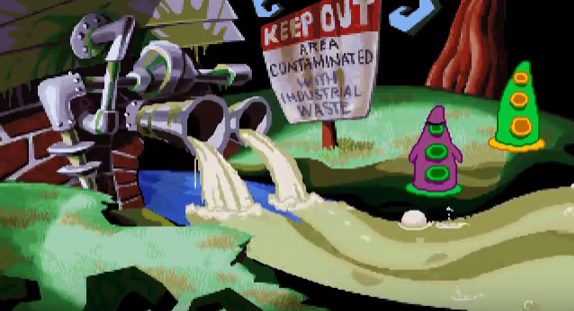
As the MIDI version of Ranz de Vaches from the William Tell Overture sounds irritatingly from my tinny inbuilt PC speaker, I’m greeted with a wonderful life lesson – Don’t drink water that’s been contaminated by industrial waste if you don’t want to turn evil and attempt to take over the world! Alas, Purple Tentacle (that’s right, the games antagonist is a life-size reptilian appendage of a violet blush) didn’t heed the written warnings and is now malevolently intent on enslaving all Earthlings.

While most heroes would crumble at the thought, our three stooge-protagonists are hapless in their pursuit of punishment and need no invite to stick their schnoz exactly where it isn’t wanted. So, when a pet hamster arrives at your door with a note for Bernard from his old pal Green Tentacle (Obviously, because Purple tentacle must have holier-than-thou a brother), nerdy Bernie misinterprets the note and believes Dr Fred is going to kill them both. As Bernard and his band of intellectually challenged helpers head back to the Mansion to save the tentacles from their impending doom, little do we know that Bernard’s act of heroism is about to right, royally balls everything up…

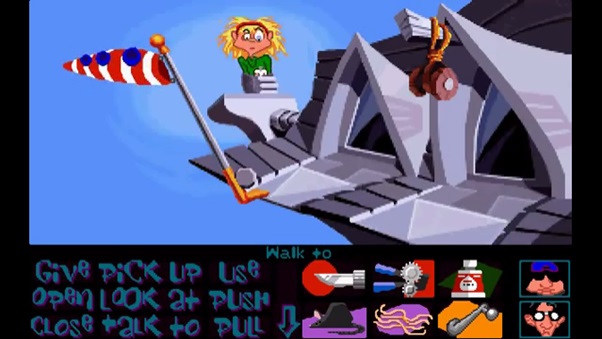
Daft opening cut scene aside, the game holds up well and there’s a real sense of familiarity in operating the point-and-click controls that were synonymous with adventure games in simpler times. While incredibly unsophisticated in style (text based options of Look At, Pick Up, Push etc…) the controls maintain a moderate level of complexity. There’s no modern-day cop-out of just pressing ‘X’ whenever you get near to an object of interest, instead you’ve got to choose your interaction. Millennials may hate it and at first even seasoned gamers might think this is going to get tedious very quickly, but after a while you realise this serves as an excellent vehicle for a major part of the games comedy. I mean, in the real world if you go to pull a door and it doesn’t open, would you just abandon it and walk away or would you try pushing it? In Day of the Tentacle (DoTT from here on out to save the R.S.I.), getting it wrong often rewards you with a condescending one-liner kin to “I’m pretty sure it doesn’t swing that way”, making you want to get more things wrong on purpose in future before you attempt to get it right.

Another aspect of the games controls that has aged very well is the character selection. Over 20 years before the “revolutionary” GTA V was released, we have an original switching mechanism that allows you to shift between 3 very different, insanely funny and unstable characters as you try to work together and get individual aspects of the job done. Prior to Trevor, Franklin and Michael, you have Hoagie the Metal-head, Bernard the computer nerd and Laverne the ditzy student and each are as hilariously stupid as their designs suggest.

After you’ve gotten used to the controls, had a wander around the foyer of Dr. Fred’s mansion and finally discovered the secret passage to the hidden laboratory, Bernard frees the tentacles and the mischievous Purple sets out to try and conquer the planet. Now, you might think there’s a very easy solution to this. Purple Tentacle is very slow, has T-Rex sized arms and no legs. So, we can just run after him, tie him up again and be done with it. Problem solved…. Right? Well no, because obviously the only logical way to fix this is to go back in time and turn off the Sludge O’Matic and stop Purple Tentacle from drinking the raw sewage in the first place. Not my preferred method, but I guess there wouldn’t be much of a game without it. Crazed inventor Dr. Fred has just the thing to help us bend the space and time continuum…

As Back to the Future had the iconic DeLorean and Bill & Ted had the distinguishable San Dimas Phone Booth, DoTT has opted rather hilariously for The Chron o’John – a time-travelling toilet. This game is getting sillier by the minute and I’m beginning to remember just why I recalled it so fondly. The terrible plan goes exactly as expected – terribly wrong! Leaving the three characters stranded in completely different eras. Hoagie 200 years in the past, Laverne 200 years in the future and typically for hapless Bernard – back exactly where he started. Their only method of communication is by shouting into the Port-a-Loo’s bowl and by flushing small, inanimate objects down the pan. So now we have two goals – stopping the tentacle and bringing back our friends! So, with the characters established, the tasks defined and the raw comedy blasting you in the face like the salesman’s exploding cigar, the fun can really begin…

Bernard sets out on his quest to find a new diamond to power the Chron o’John and bring back his friends to the present. As with any adventure game, we set out by exploring our surroundings. In this case, we have the Edison mansion – mind, mansion is a bit of an exaggeration. It’s pretty much just a 5-bedroom Victorian Townhouse, but I’m no snob, so mansion will do. We enter a few rooms and do exactly what any good adventure game tells us – click on everything and pick up any seemingly useless item you can find – even if it is just chewed bubble-gum or fake barf. After doing the rounds and chatting to a few of the games comic acquaintances a hidden gem appears. We stumble upon a room with a big oaf behind a desk – it’s Weird Ed, Dr. Fred and Edna’s son. Weird Ed’s a former member of the Army and is clearly suffering from a severe case of PTSD. He now has two passions in life – his hamster and his stamp collecting (whatever you do, make sure you’re fully prepared for the consequences if you damage his precious stamps!)

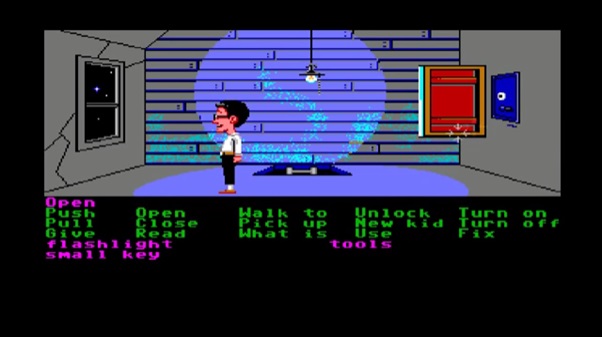
In Ed’s room, there’s a computer in the corner and, if used, you can find a neat little Easter Egg. His Desktop contains the fully loaded and original prequel to the game we’re in – 1987’s ‘Maniac Mansion’. It’s such a brilliant and unique moment of in-game inception, as you find yourself playing a game within a game where all the characters are the same. It makes purchasing DoTT almost like a buy-one-get-one-free offer as this delightful throwback allows you to get completely lost and forget exactly what you were playing in the first place. If it wasn’t for the distinguishingly terrible 8-bit graphics, you’d be crying out for Dom Cobb and his totem to know what the hell is and isn’t real. It’s completely opt-in, but you could easily spend hours in this sublime surprise which helps you understand the character backstories – most importantly why Bernard is so painfully untrusting of Dr. Fred.

Now, the difference between Maniac Mansion and DoTT goes deeper than just the aged quality and lack of voice-artistry. The former is brutally unforgiving and a wrong move could be a game ender, so while it’s good fun, you may need to quit out and come back a few times if you want to try and complete it – I learned this the hard way the first time I played wasting 30 minutes in a futile attempt to bust all three of my characters out of an inescapable jail! While the game ending nature can be annoying, playing it gives you a nice reality check and makes you appreciate just how much adventure gaming has improved in such a short space of time. The sequel can be equally frustrating but for the opposite reason – you can’t die. Unlike the remastered Broken Sword, Double Fine have elected not to have an in-game hint system, so if you’re playing the iOS or PSN version – be prepared to be wandering around until that lightbulb moment hits you (or until you lose patience and look up the walkthrough on YouTube).

Unlike other time-travelling games, such as Quantum Break or Bioshock Infinite, there is no deadly Butterfly Effect. If Hoagie steps on a cockroach, then instantly the present isn’t transformed into a ‘planet of the roaches’ where Bernard must lead an uprising against his 10-foot tall insectoid overlords. There are also no worries about meeting your younger selves, your parents or your ancestors and disappearing from existence as the game adopts a less thought-intensive approach to travel where only minor details of each puzzle change through time. Laverne needs a disguise to help her break out of a futuristic prison? Easy. Steal the Doctors tentacle chart, flush it to Hoagie and get him to switch it with the plans for the American flag – hey presto – the star-spangled banner 400 years later is tentacle shaped and perfect to aid Laverne in her escape. While it’s hilarious, the keen sci-fi nerd or historian playing would have to put aside their logic and accept that this has all happened without changing any of the history that would come with such a careless distortion to the fabric of time.

Another thing that I’d forgotten is how purposefully inaccurate the antiquity of the game is. So, don’t play this game directly before a school exam because the game will undoubtedly cloud and reduce your knowledge of history and culture of 1700s America. What… you mean, George Washington didn’t cut down a Kumquat tree by mistake because someone had painted the fruit red with lead paint found in Ned Edison’s bedroom? You must forget the history books and just switch off and enjoy the ride. It’s the fashion in gaming now to see interactions with historical figures – something we see constantly in the Assassins Creed series – and you can never be too sure how well these references have been researched or how true to life the games are that are portraying them. Unlike Connor’s battlefield run in with the 1st President of the United States, Hoagies meeting is so satirical that it wouldn’t be out of place in a stand-up routine. Would Benjamin Franklin have discovered electricity without you? Who knows, but helping you save the world from an Evil Purple appendage was certainly something left out of the American History books. Either way, it’s a brilliant mechanism to fuse familiarity with the creator’s wit and drive the plot forward.

The entire game doesn’t take itself seriously in this respect and the more I switched between the characters the more I remembered just how fun it was solving puzzles through time. Cryogenically freezing a hamster in an ice box and tumble drying a jumper for 200 years to help it thaw was a nice little touch on my quest to gather electricity and as the game progresses, the level of invention in the puzzles increased. However, the game’s greatest strength is also its biggest weakness. I found that it was so enjoyable first time around that most of the solutions were as memorable now as the day of the original playthrough. I remembered the Dirty Harry/Travis Bickle monologue with the inflatable clown and laughing at how Bernard eventually got so annoyed at being bested that he had to stab it in anger. So, when I saw Laverne had the opportunity to collect the scalpel in the futuristic doctor’s office, I instantly remembered its purpose. Not counting the Maniac Mansion Easter Egg, I nailed this playthrough in just over 2 hours which might not be bad value for the price of a pint, but I certainly wouldn’t be rushing back to play it again any time soon. The game has such limited re-play value particularly when you compare it to other remastered adventure games, such as Broken Sword, Monkey Island or Grim Fandango, where after a month or two you could dive back in and enjoy it all over again.

Playthrough value aside, the comedy alone is well worth a punt for first timers or those longing for childhood nostalgia – I mean, which other set of writers would predict an evil genius ready to take over the world would make this their first act of evil…

…Hey, I guess even Hitler had to start somewhere! With complex puzzles, a satisfying ending and the original prequel embedded, this personality exuding, time-travelling title still holds up today as one of the best adventure games on the market. It hands down beats other remastered games of the same genre and for any LucasFilm fan, you can spend hours upon hours picking our Star Wars or Indiana Jones References.

Comedy, simplicity and even a great pause value (where you can make a coffee or smoke a cig without the world ending or being robbed blind) are things sorely missed in the modern, multiplayer generation of gaming. With a re-mastered version available on the market for less than a fiver, it’s well worth getting your tentacles on!

1993 | Developer LucasArts | Remastered by Double Fine Productions

Platforms; Win | PS4 | iOS