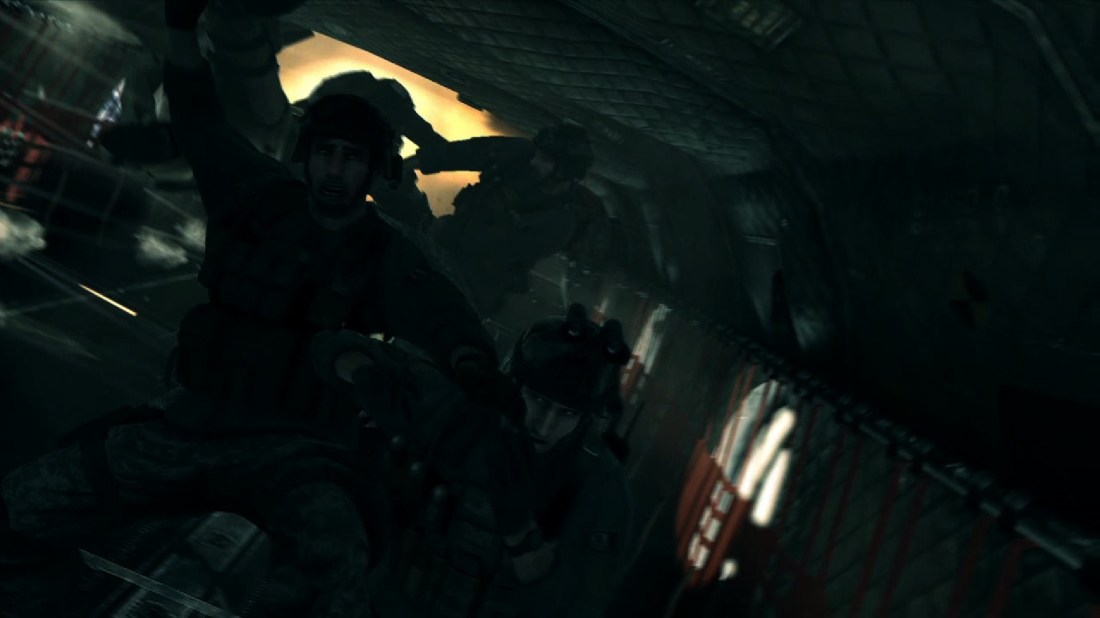
Call of Duty Playthrough Pt8 – WWII

A second wind special review – Call of Duty

Part eight, WWII

This is it, the final part of FBT’s epic run n’ gun through CoD.
So, full circle. We began in the trenches and that’s where we’ve returned. It’s been an odd playthrough. I always described CoD as a by-the-numbers series, a story-less slog of samey retreads. But I was wrong. Mostly. There are compelling narratives in the series; it’s what drove the MW trilogy just as much as the light-speed firefights, while Black Ops was a master-class in twisting, compelling stories.

Still, later entries like Ghosts and Black Ops II were exactly what I complained about; if you missed the opening titles you’d struggle to say which game you were playing. With the outstanding exception of Advanced Warfare, recent CoD has been exactly what I thought it was – repetitive retreads that only served as multiplayer tutorials. Story matters.

Really though, I originally disliked the modern era because it’s not what we signed up for. I loved the original WW-set CoDs and I’ve been looking forward to WWII all along. WWII must be perfect – modern graphics, classic setting and a more up-to-date handling of the events. This is the game that got me through those reskins – just a few more CoDs and it’s WWII-time I’d tell myself. Here we go! Except … this playthrough is ending on a Rage Quit. Goddamnit Activision.
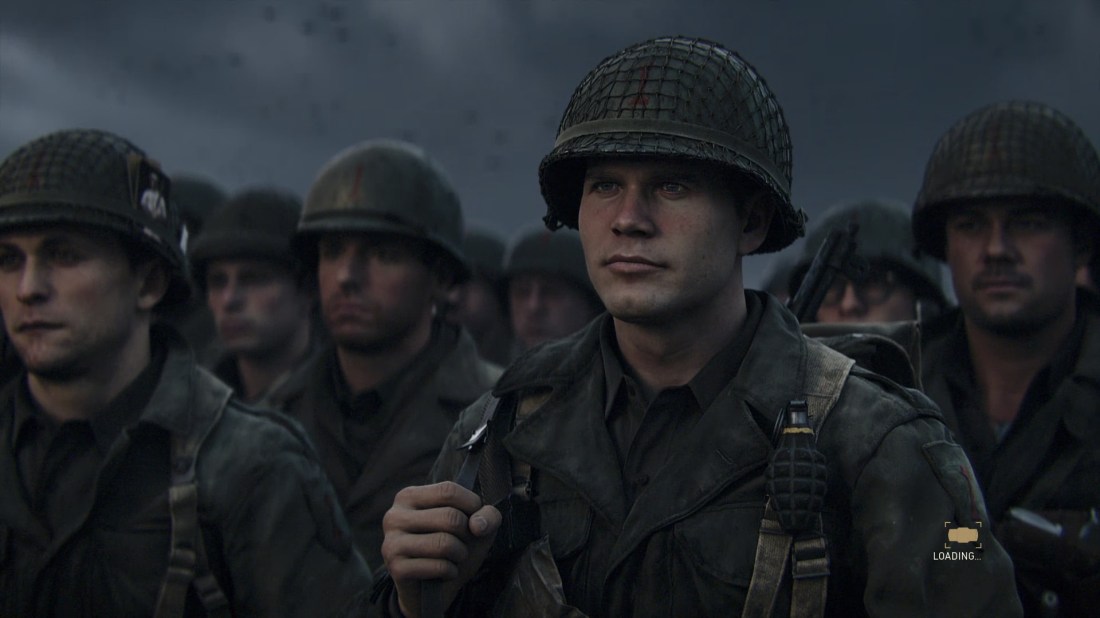
Private “Red” Daniels signs up for the war to live up to his big brother. Embodying America, Red talks with a farmboy accent and through letters he writes to a sweetheart, we get to hear choice lines like “I hope I make it home for Christmas” and other heavy-hearted and heavy-handed lines about life on the frontlines.
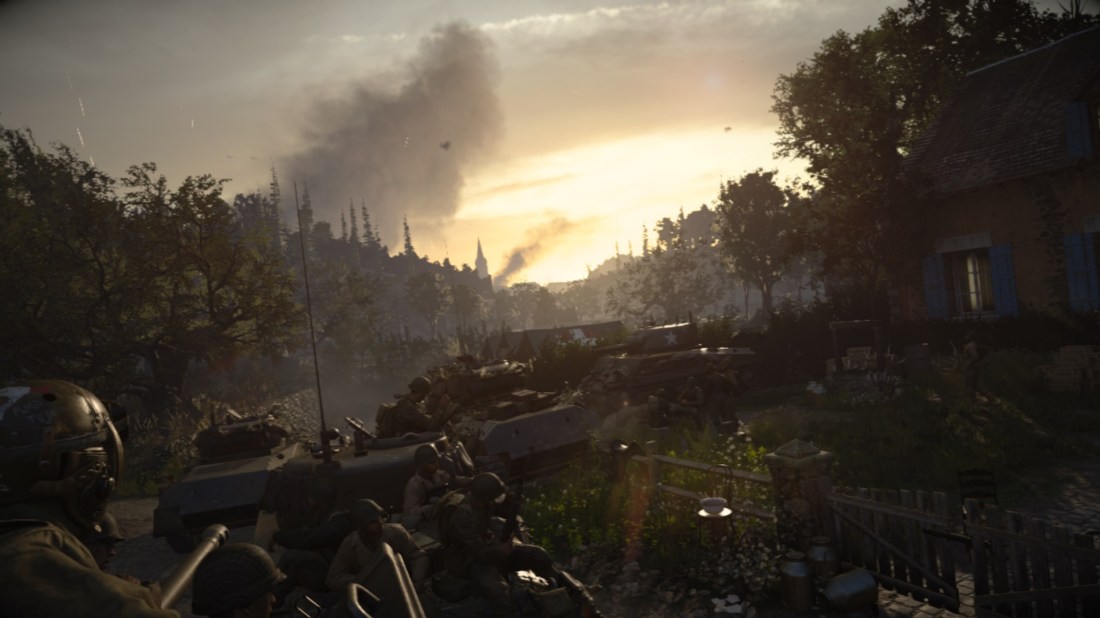
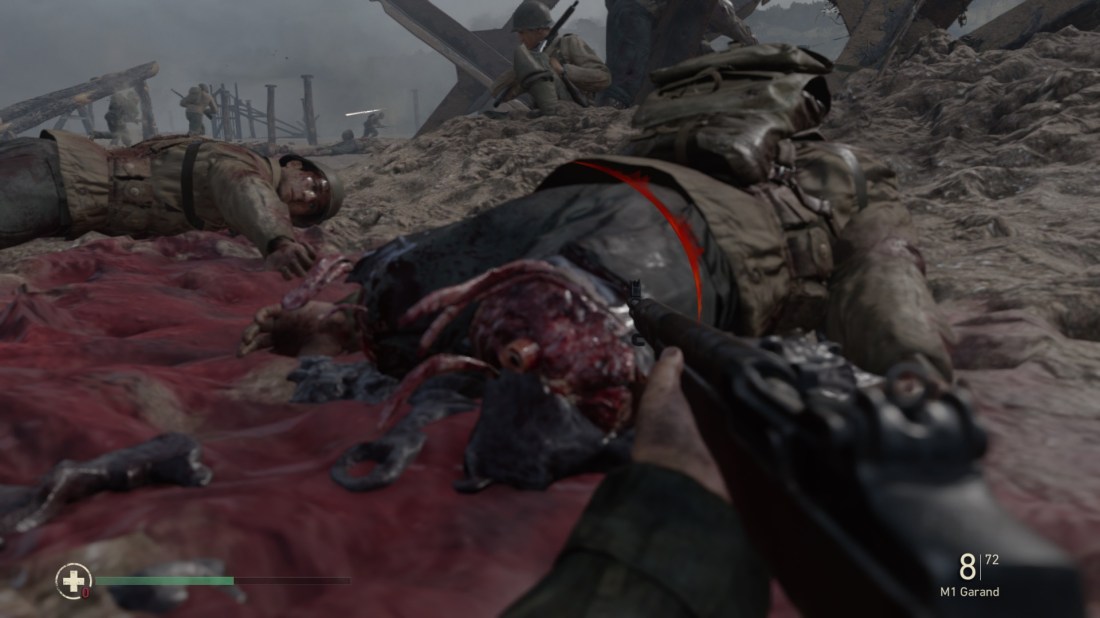
Life on the frontlines is staggeringly uninspired. Every level ends with either ‘we gotta defend this x’ or ‘watch my back while I do y’ and of course, we have to keep back two or three waves before they retreat or someone saves us or they get the engine running or some other prime 2000-era event happens. That’s when you finally reach the end of the levels. They’re not just unfair, they’re not fun. The first, a re-enactment of the opening of Private Ryan (rather than an actual D-Day level) is a misstep – rather than being dumbstruck by the ‘spectacle of war’ we just get killed over and over, the game is gleeful about how impossible it is to survive. For sure, this is what actually happened but since we don’t actually die, just just pop back to our last autosave you end up doing repetitive learning like you did playing games 30 years ago – move here, cross there, die. Okay, move here, cross there, duck here. Yep I’m okay, now … dead. Okay, move here, cross there, duck here … It tries very hard to show the event in intense detail, but you’re not looking at all the work that’s gone into it, you’re just looking for the next auto-save. We’ve already did this 20 years ago, in earlier CoD games, it immediately makes the game feel familiar instead of fresh.
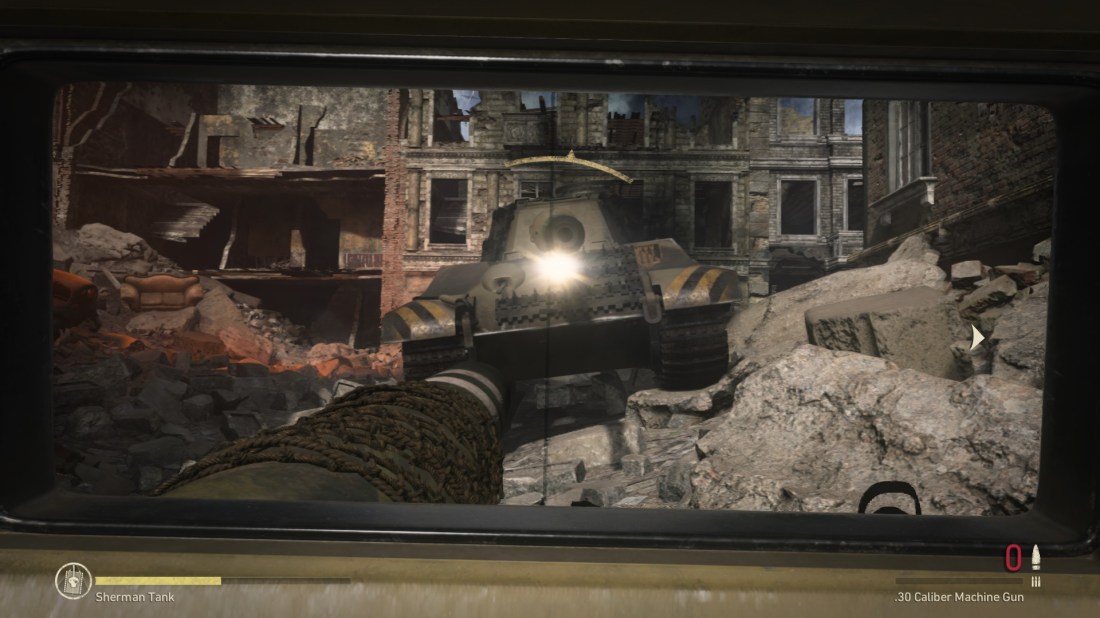
And that sets the tone for the entire game. WWII rehashes the levels, setting, objectives, the entire gameplay from the original. Yet it’s not a reboot it’s a reskin; we’re still doing crappy dated stuff like jumping into a tank and … I’m the driver as well as the gunner? Why am I the only one winning this war?! Okay, but wait, why can’t I turn the turret independently of the tank? That’s basic controls, I’m playing cat and mouse with two Panzer tanks by driving into walls while trying to aim and just getting stuck and killed. This pissed me off 20 years ago, why am I doing it now?
It’s just so old-school; when we face off against Germans with dogs, the woofers only target me, running past my fellow soldiers, and why am I the only one with the explosives to stick on a passing tank, the only one who can collect explosives to take out a pill-box, the only one to use a sniper rifle, the only one who can take out gun emplacements? I get that I’m the player/hero but a little help here chaps? There’s hundreds of G.I.s knocking about, if this is supposed to be about the men of war, the pals at your side as the game demands I consider, why am I winning WWII alone? This is so dated, so tired. The only help comes from fellow soldiers reminding me every two seconds what the mission objective is. I know to shoot the fricking ammo dump, STFU! At least the original CoD has a sense of adventure, of heroism; war really is hell in WWII.
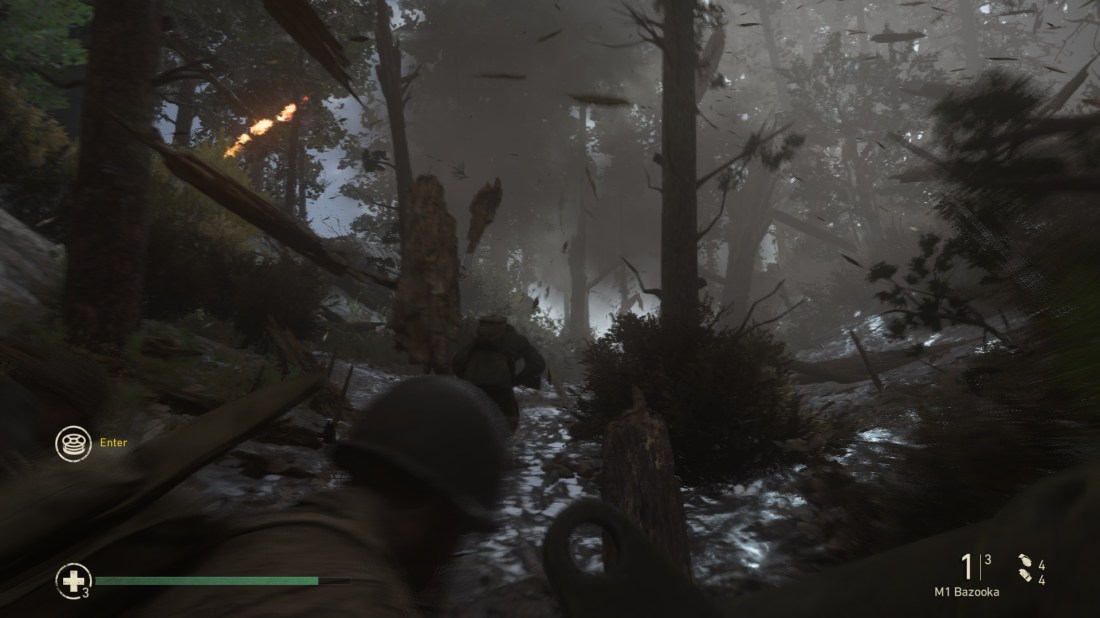
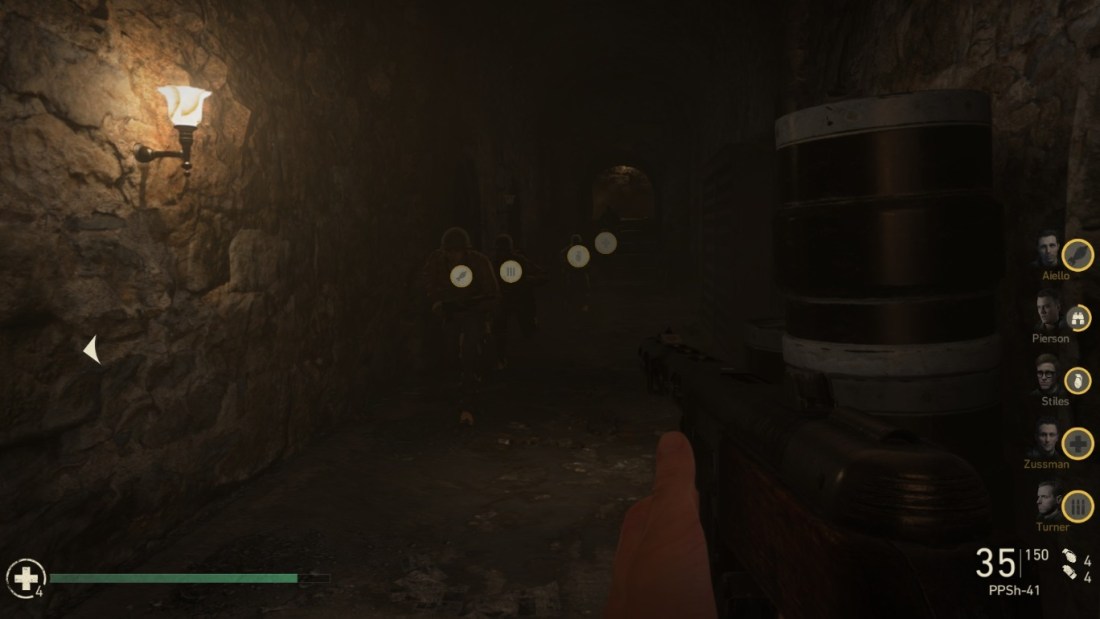
On top of that, health packs return. Very retro and also very annoying because you have to chose to use it, which causes a short QTE of Red self-administering which breaks the action – and he can die while doing it. If you’re going for realism I’m either wounded or critical; if I’m wounded I’d ignore it, if critical I’d just fall down. The replenishing health concept does not suggest our hero is Wolverine, it just takes it as read he’s patching himself up when he can. And since two or three shots puts Red down, you can’t use the old trick of tactically taking hits then recover; you become scared to stick your head out; again, realistic, but boring to play and Red loves a QTE; a nasty Nazi will get the drop on you and you’re furiously mashing a key, then lining up the mouse then hitting a random button to pull out a knife then another to kill him. What the hell? Why? That’s not realistic. No one consciously makes considered decisions in life-or-death situations, it’s automatic or dead. Why am I looking for the Q key?! It completely undermines the supposed realism.
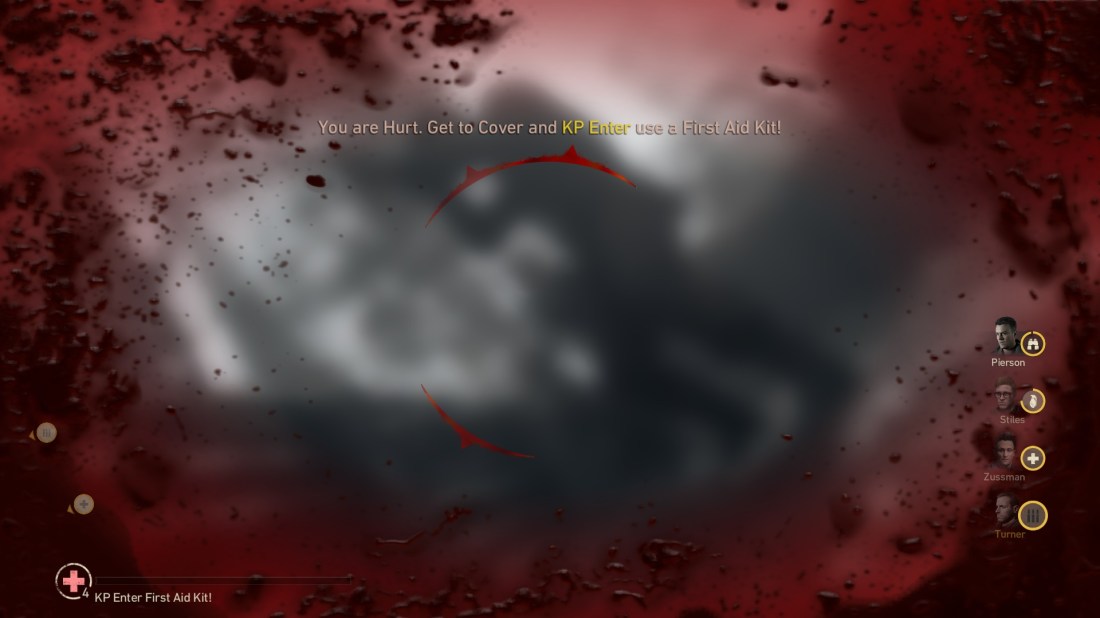
There’s more real-ruining elements; Red’s buddies carry supplies. Health, Ammo, Grenades, etc., which is a nice bros-in-arms thing, but since you need to activate them up close, they have big markers over their heads to spot them and stay in your POV, completely ruining the look. It’s like your squad is running around with balloons. It’s a genuinely beautiful game; there’s not a pixel out of place in the battlefield, it’s unnervingly realistic and the cut-scenes are just extraordinary looking – but what happens in them is very ordinary.
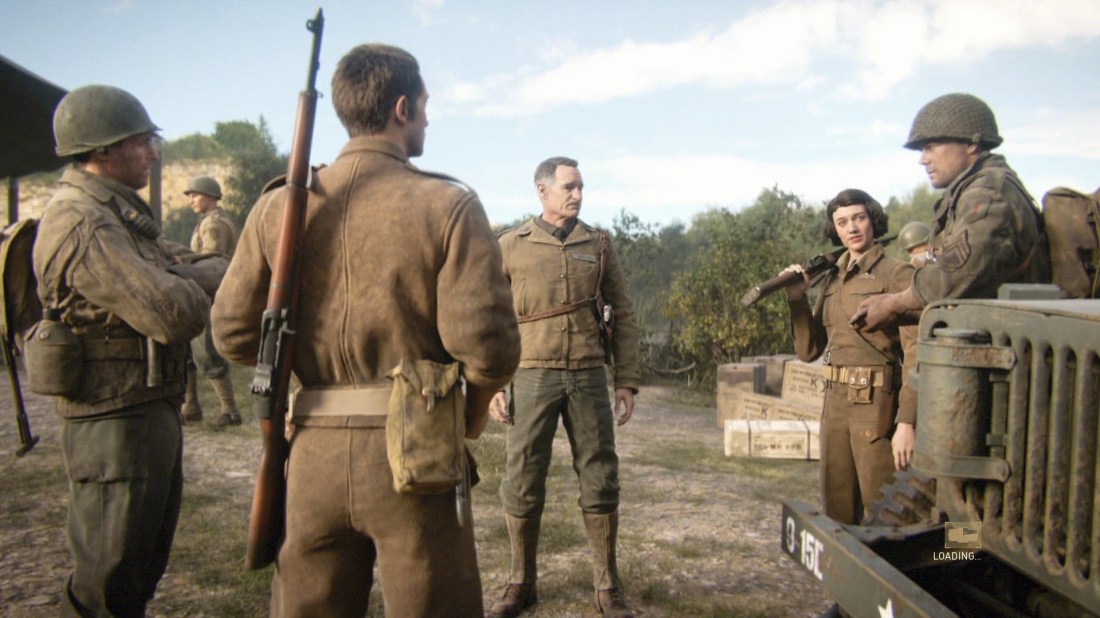
Red is caught between two commanding officers – Lieutenant Turner who believes the men come first, and Sergeant Pierson who thinks only the mission matters. Except, Red’s not really caught between them; this isn’t channelling Platoon, and Red doesn’t get to chose which CO he follows, have his own war experience; he just mumbles something to his sweetheart. We have zero impact and so as a story we just observe it and it’s incredibly derivative of Spielberg’s war era – if it’s not riffing on Private Ryan, it’s wholesale lifting from Band of Brothers. The key element to those men-in-war stories was that those men all had a voice, an opinion, a personal experience; a choice. Red is just an NPC in the cut-scenes – he, and by extension us, isn’t experiencing war, he’s not making decisions he’ll have to live with – he’s just watching it.
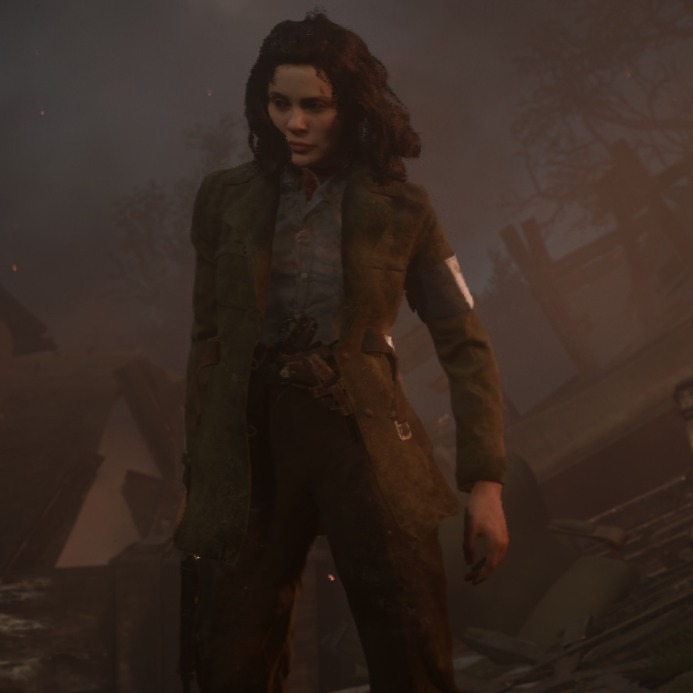
Further reducing the emotional impact of Red’s journey is us jumping out of his boots and into others; or in one case, High Heels. As French Resistance soldier Rousseau, we wander a German garrison. It might be grand that we’re playing as a female for a change, but she doesn’t do anything other than sneak and the level is little more than filler – most insultingly, it transpires Rousseau watched her family slaughtered by a Nazi who happens to run this garrison and she gets to kill him in revenge. It would have been far more interesting to see her realise he’s here and you chose to jeopardise the mission to exact her revenge – or not. But, WWII is just by the numbers.
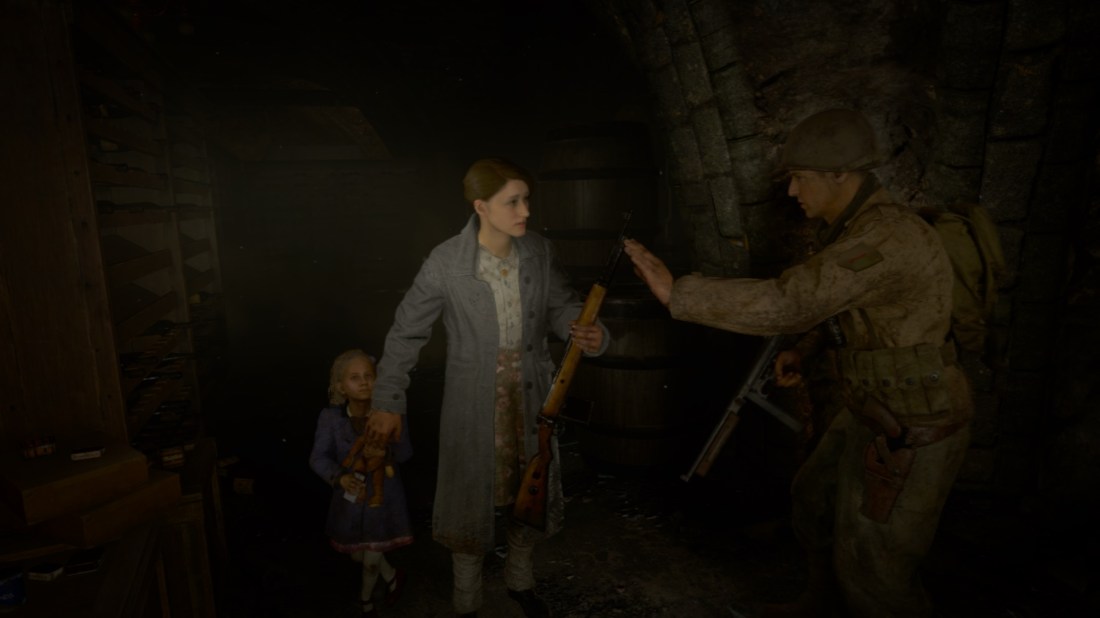
Another missed moment comes when we find German civilians hiding in a hotel we’re supposed to defend. The COs get into an argument about what to do with them and does Red have an opinion? Nope. The decision is made without our input and all Red does is write to his sweetie that tension between the COs is rising. If I was her, my reply would be ‘Dear John … I’m rage quitting you’.
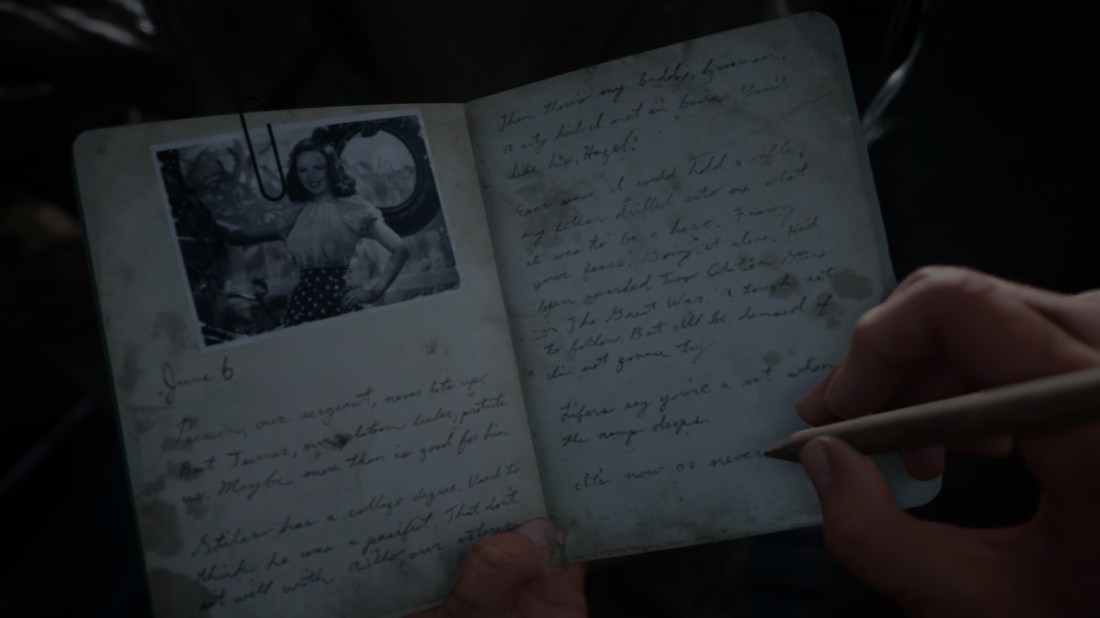
And that Rage Quit eventually arrives. I really wanted to see this through but when I’m bounced into a pilot I just lose it. Everything in WWII has been a frustration up to this point; the tired missions, the lack of interaction or influence, Red’s lack of character, the whole cliche of it all, but this …
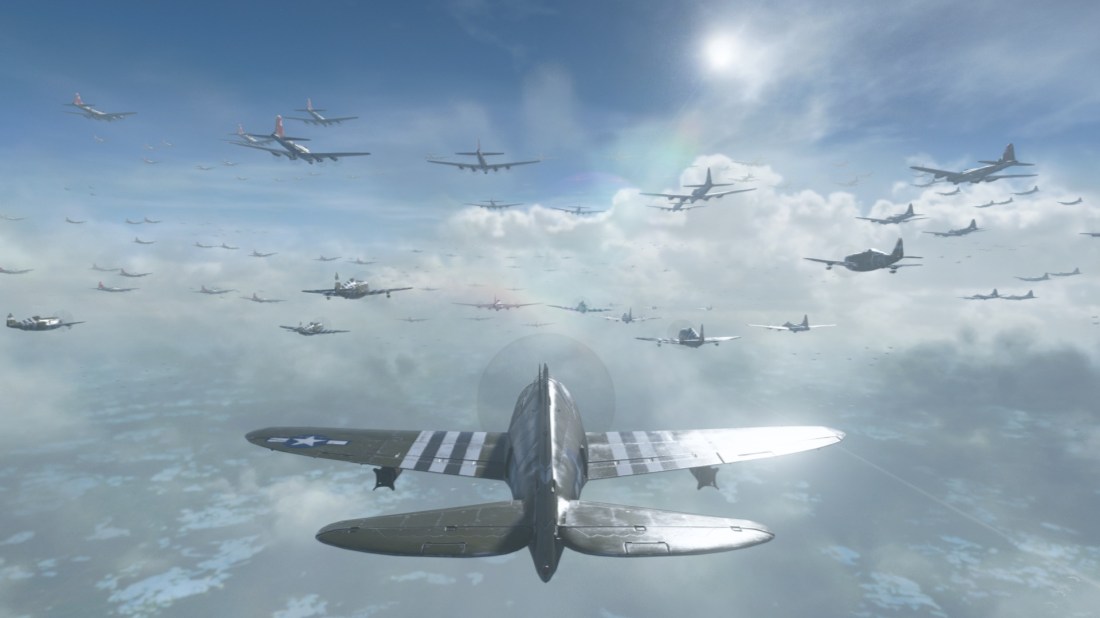
It looks fantastic and really tries to bring home to intensity of a dogfight. Except, whereas other CoD games kept flying simple and effective, this is infuriatingly haphazard and fraught. This should be exciting not aggravating. Even if I master the plane, which has the aerodynamics of a 5-year old’s paper plane, I have to avoid hitting our planes, of which there are dozens. And none of them are doing anything to help. Protect the bomber the mission guy yells. Everyone else just pisses off or gets in the way. After hours of struggling I get through it, only to discover yet another squadron approaching. On top of which, this is to provide support to Red’s squad, essentially a reheat of the tank mission. I just hate this game. Rage Quit.
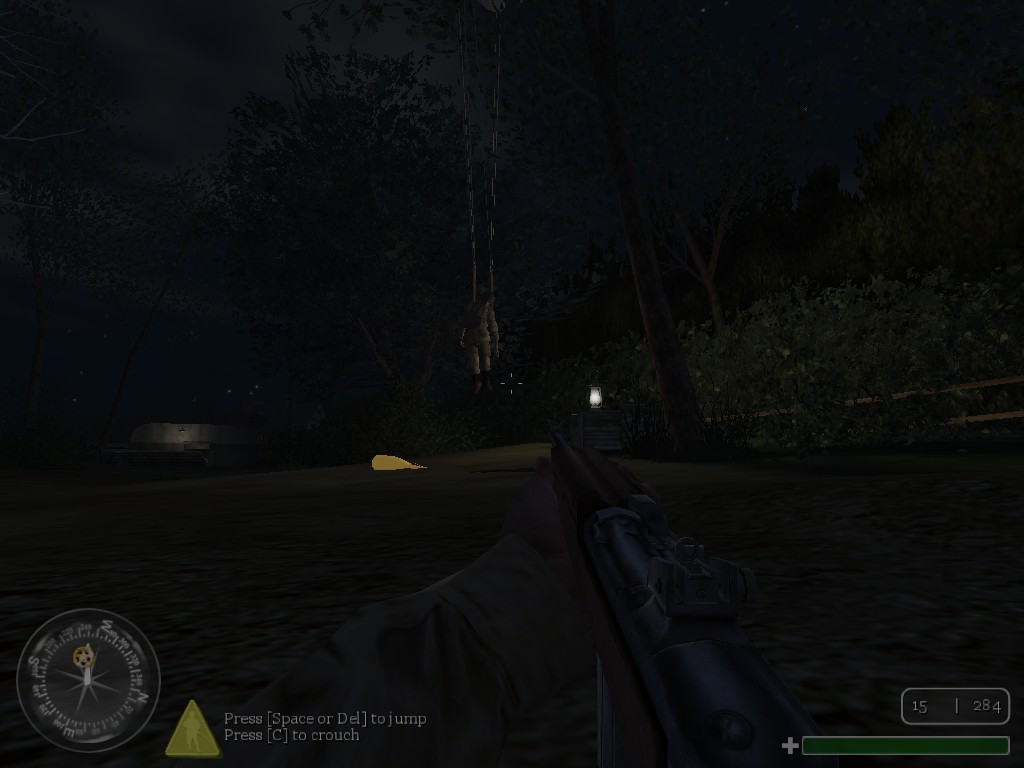
WWII is just a flashy, hollow, lazy game filled with completely outdated levels and basic gameplay; to play it is to be totally at odds with the mini-series cutscenes. I didn’t think it was possible to get WWII so wrong. But the biggest let-down with raging quitting at this stage is I know what follows; a sequence where one of my buddies is captured and taken to a concentration camp. I don’t know if that would wind up coming across as a No Russian moment, but I do know games have matured enough to tackle such troubling subjects. I also know WWII isn’t the game to do it. It’s far too generic to really do such an experience justice; if Red had been involved, if we’d actually had our own war to fight, I might have applauded such a moment. I’ll never know, because I have no intention of playing this again. If CoD wants to step foot in a concentration camp, it needs to put every foot right leading to that moment, and WWII just followed in CoD1’s footsteps.
And so ends my CoD playthrough. It’s been eye-opening, rage-quitting mayhem. I was wrong about much of the modern era; MW as a trilogy is absolutely fantastic; the first Black Ops is one of my new all-time greats, and Advanced Warfare is an absolute blinder. But what marked them out was the story, the reasons for shooting. Whenever CoD slipped into the generic, it was when the story wasn’t compelling enough to drive you forward. With Black Ops IIII multiplayer only, it does seem if as Activision has finally dropped any pretence of the storymode meaning anything to them. I always thought story didn’t matter in CoD either, but this playthrough has proved it’s not a war without a reason.
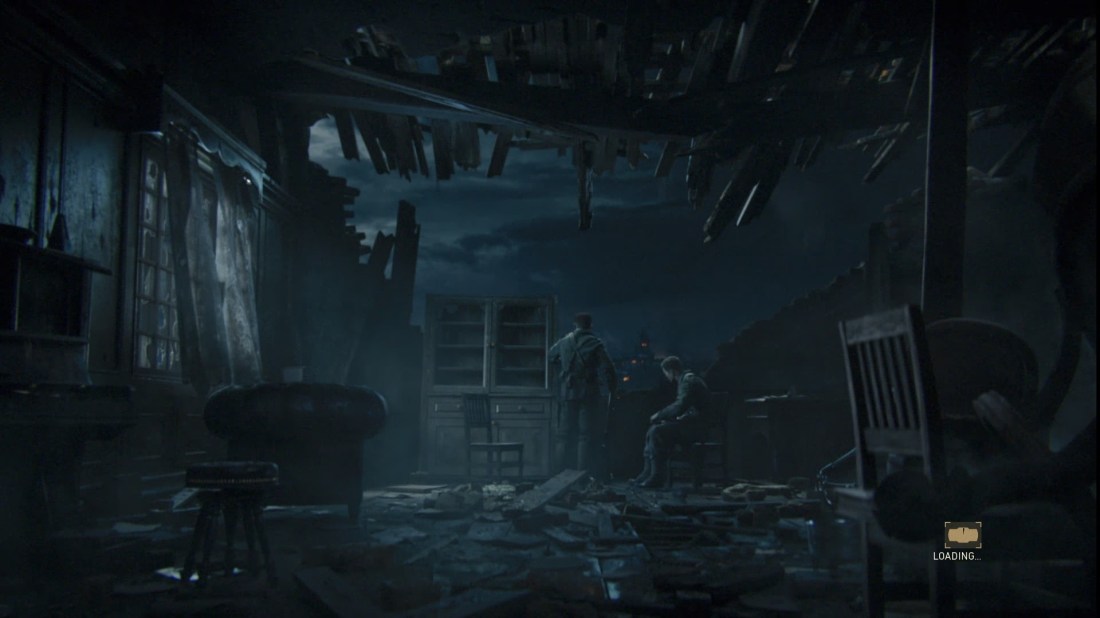
We’ve answered the call enough times now though. Activision’s duty should be to let Treyarch, Infinity Ward and Sledgehammer loose to create their own franchises; in those later games you get the sense that they want to be doing something else; IW was a prime example. I’d love to see what those devs can do when their tour of duty is up.

After all this, the original still reins in my eyes. It’s one of the exceptions that proves the rule; CoD 1 has no story to speak of, but it’s just a great shooter filled with exciting missions, clear objectives and lets you be a war hero. I know games can’t come close but they can channel the most heroic, selfless elements of war and despite its age, CoD1 came closest to that.
Call of Duty Playthrough Pt7 – Infinite Warfare

A second wind special review – Call of Duty

Part seven, infinite warfare

FBT is in space, in the future and infuriated. In space no one can hear you rage quit

So far we’ve beaten Germans, Russians, Japanese, Koreans, Chinese, South and Latin America, Africa and the Middle East plus an AI, technophobes, traitors and miscellaneous; now we’re at war with people who are just unsociable. Getting desperate aren’t we.

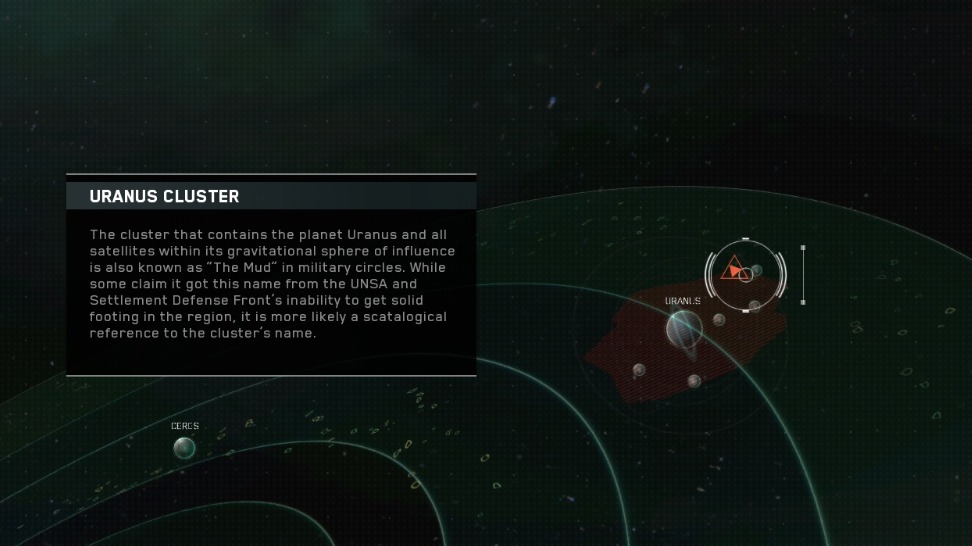
In some future or other, humans have colonised the solar system. But the outer planets secede, forming the Settlement Defence Front and become isolationists before declaring war on Earth. I can’t wait for the Battle of Uranus. So who’s going to stop the SDF? Captain Nick Reyes of the United Nations Space Alliance. Unfortunately.

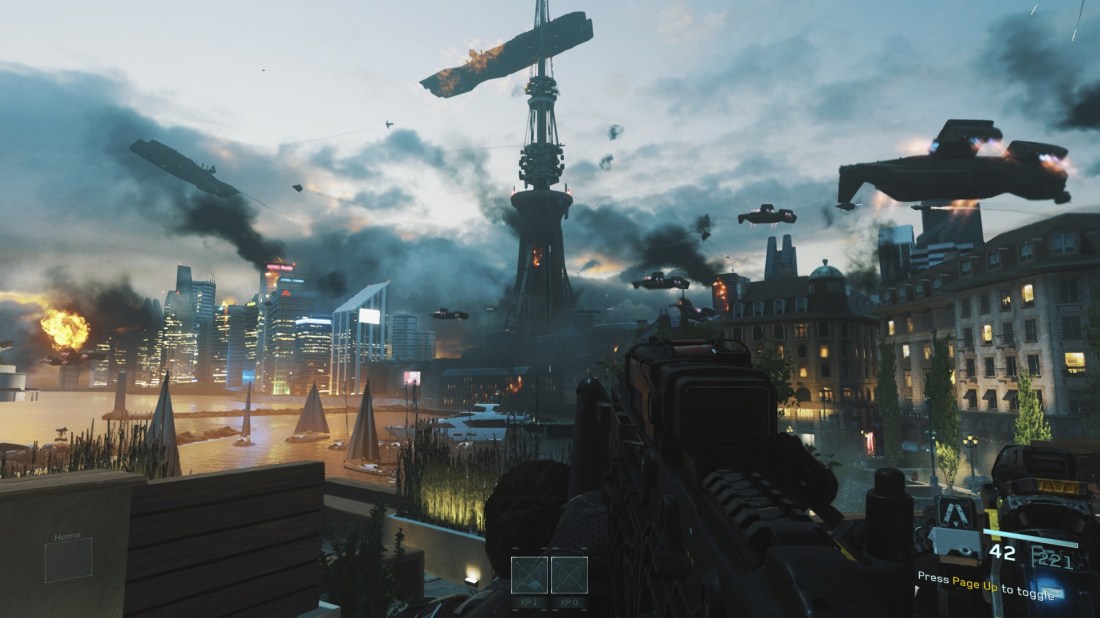
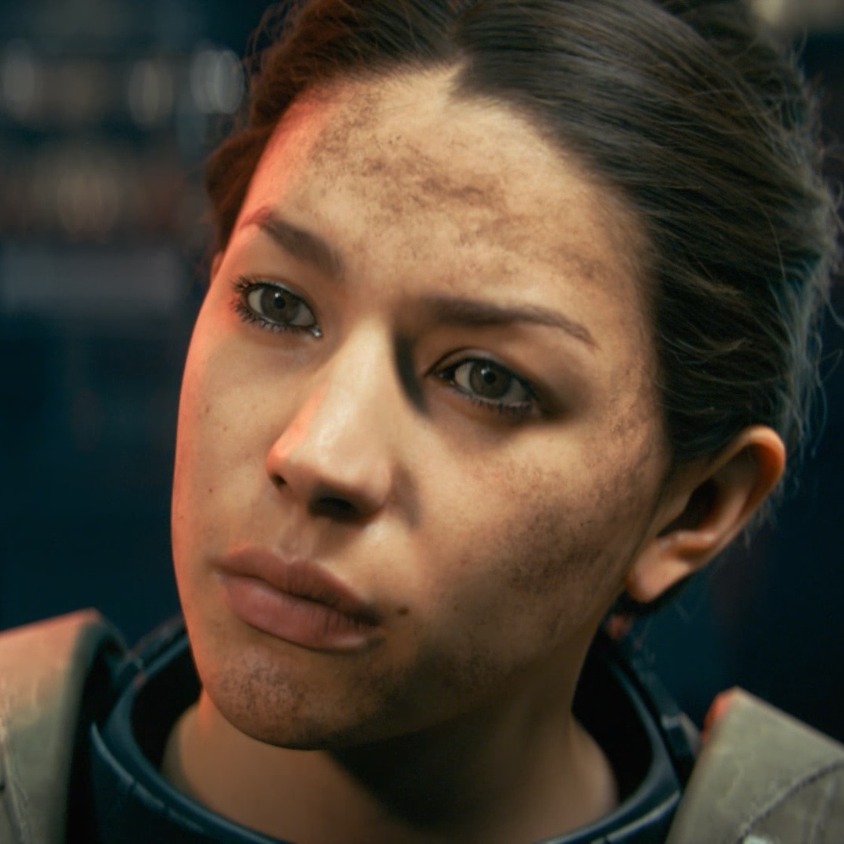
At a 4th July-style celebration, the UNSA decides to put ALL their navy on display. The SDF launches a surprise attack – surprising to everyone but us – and Reyes is forced to assume command of the last Battlestar or something. Dutifully followed about by the far more interesting Lt. Nora Salter, Reyes is a Poundland Shepard; he worries about choices, about losing men, about Earth yet isn’t decisive or a leader; he refuses to accept sacrifice, which surely is the basic understanding of any soldier, even though he’s reminded of it constantly; Nora claims he’s changed since he became captain but literally nothing about him changes. There’s no moral choices that would help Reyes understand and the game removes any responsibility anyway, so anyone who gets killed is someone else’s fault.

If there was ever a CoD crying out for character shifting it’s this one – and not just because of how boring Reyes is; it would make sense for once. We should command as Reyes to get intel and pick missions then play who he sends, letting you decide the tone of the mission and have to accept the risk of sending them. That’s the burden of command. Instead, he insists on leading missions so men don’t die for him – except all the NPCs that is – which makes no sense. Come on, you’re already ripping off Mass Effect 2, just build on it, make it logical. Nora is an Ash knock-off anyway, and we have a Legion.

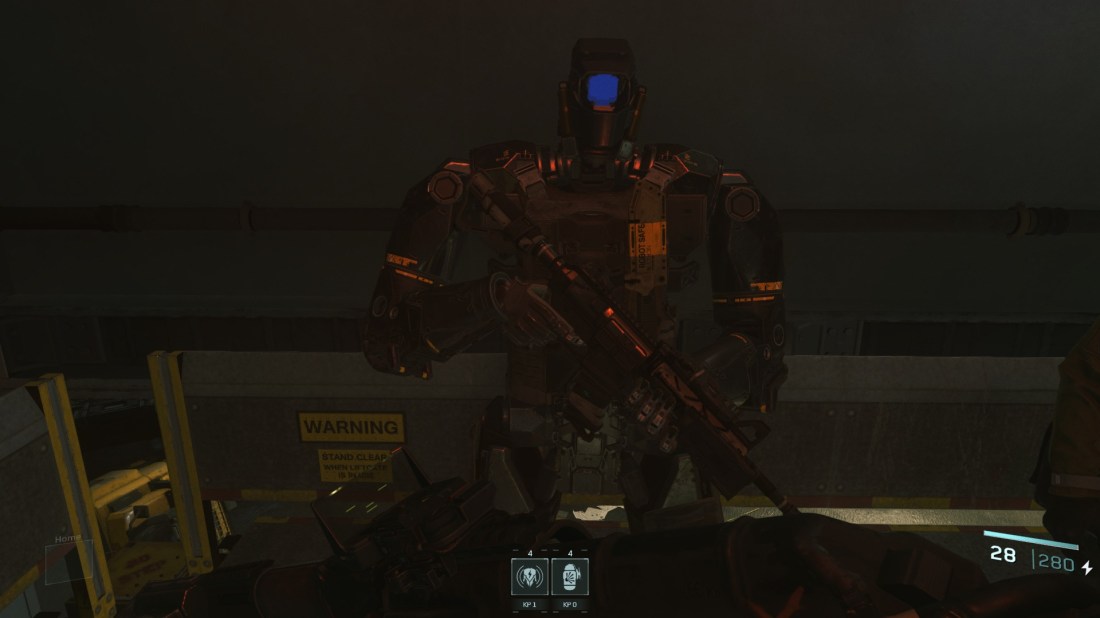
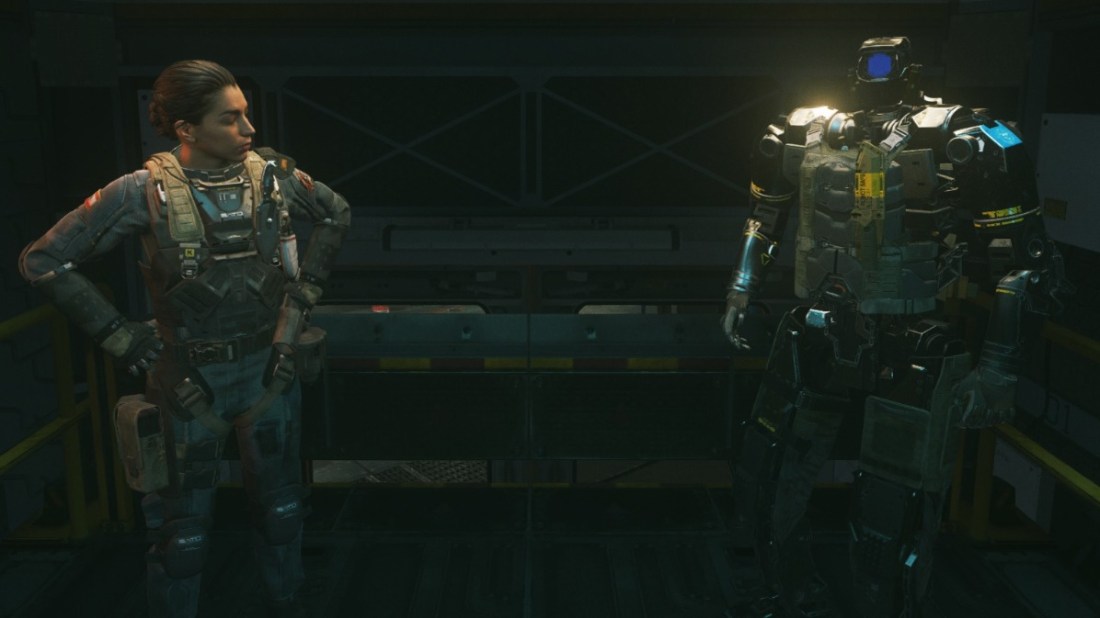
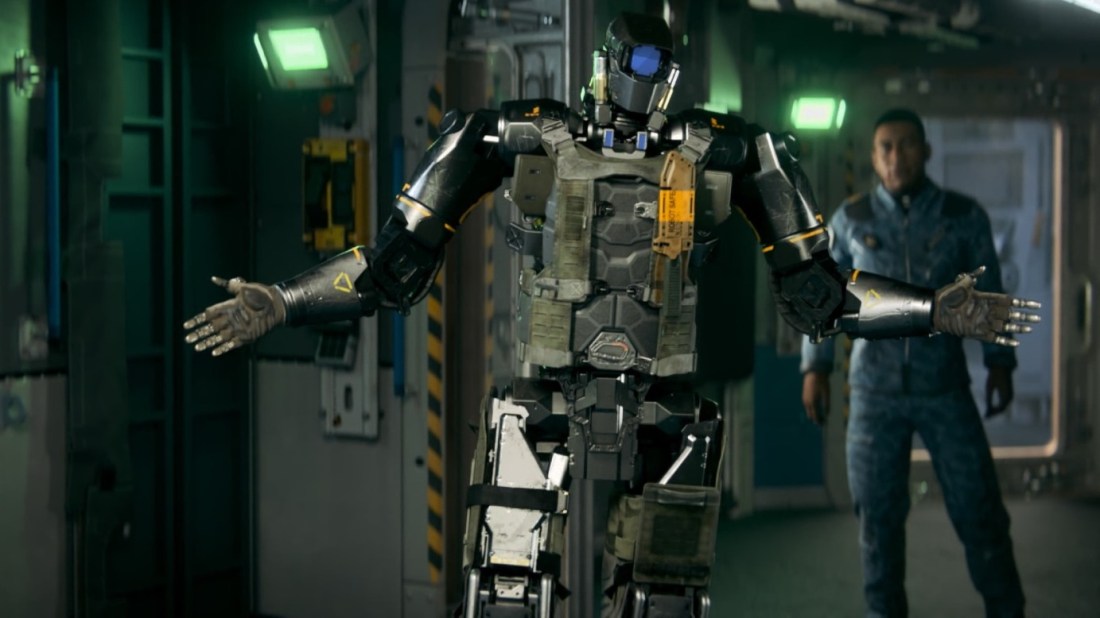
Ethan, an AI Robot with a mischievous streak; conning Nora into thinking he has a human brain (a simple farmer’s brain at that), convincing Marines he’ll overthrow humanity one day, he’s beyond the call of duty brilliant and the one bright spot in this otherwise dour, dull game; a scene where he and Reyes are ‘spaced’ and there’s no hope for survival is affecting – that I’m sad to see the robot go and not Reyes says everything. I’m gonna be Nora now? Nope, they’re saved! Wait, how?! Anyway, there’s a great recovery in a comment that Ethan had to be prised off Reyes’ body, having protected his captain until he shut down – but Ethan’s only awesome in the cut-scenes and in-game dialogue. He’s criminally underused within the gameplay, just another NPC – at one point he gets described as a ‘stiff metal motherfucker’ but we never see him motherfucking. Half the time I don’t even notice him. How do you rip off every other awesome metal motherfucker in gaming then not utilise them? D0g took down a strider in Episode Two, what does Ethan do in-game? Nothing. I’m joining the geth.

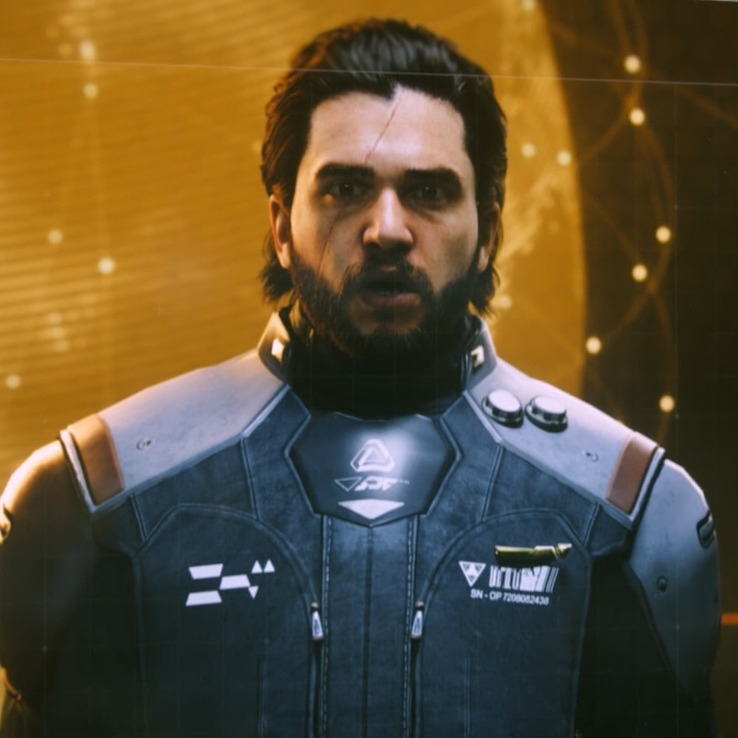
Actually, that’s an insult to the Geth. At least they were sentient. Here, more often than not we’re fighting bland robots programmed by a CoD Zombie. Boring. But then, look who they have for a boss. The SFD is led by a general who is so panto evil he makes Lord Dark Helmet look like a credible threat. Spewing lines like “it’s not enough we break free, we must break them!” it’s hard to imagine the outer planets take him seriously let alone us; he’s played by Kit Harrington so on top of his tantrums, he constantly looks like he’s about to burst into tears. If the SDF are extremists then that needs to be explored, why must they break us? All we get is a laughable, boo-hiss kids tv villain?
So, not wanting to upset anyone, Reyes instigates lots of small, forgettable campaigns; I’m sure they’re effective but I’m bored. Although there’s multiple approaches within the levels, SDF always have all the exits covered so you never feel like you’ve outsmarted them. You’re just going through the motions. Where’s the hail-mary passes, the desperate chances? I thought this was a losing war, most of the time it feels like business as usual. There’s no pressure, no momentum and we have side-missions to further dilute the desperation plus loads of zero-g and flying missions which somehow the game makes mundane. I only do one side mission and that’s because it was set on Uranus. Most of this game feels like padding, and the rest is just watching.

We endlessly watch Reyes open and close doors, get in and out of space ships, travel up and down in elevators; anything to avoid a decision. There’s hours of cut-scenes. The biggest irony here is I wanted a story, and this time I’ve got too much story. The writing, especially around Ethan and Reyes is good but there’s no connection; it falls into the same trap as ME Andromeda, which it’s clearly trying to ape; interesting set-up but no follow-through, missions that don’t mean anything, personal drama you can’t connect to. It does feel like a pilot episode, leaving a lot unsaid so new games can pick up the threads, but there’s nothing to do here, in the now.

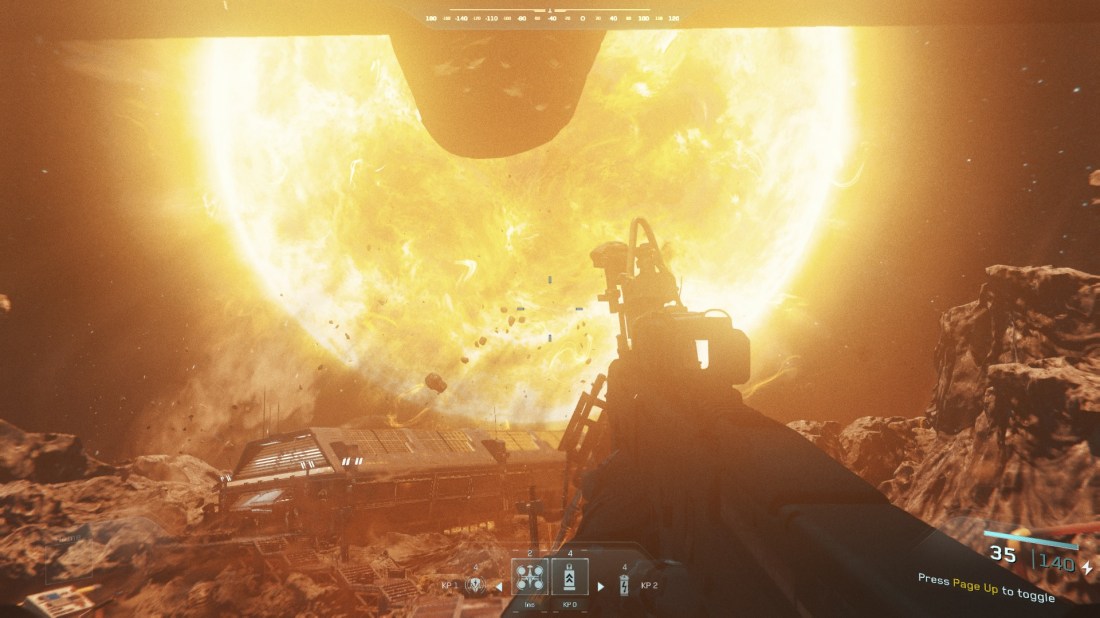
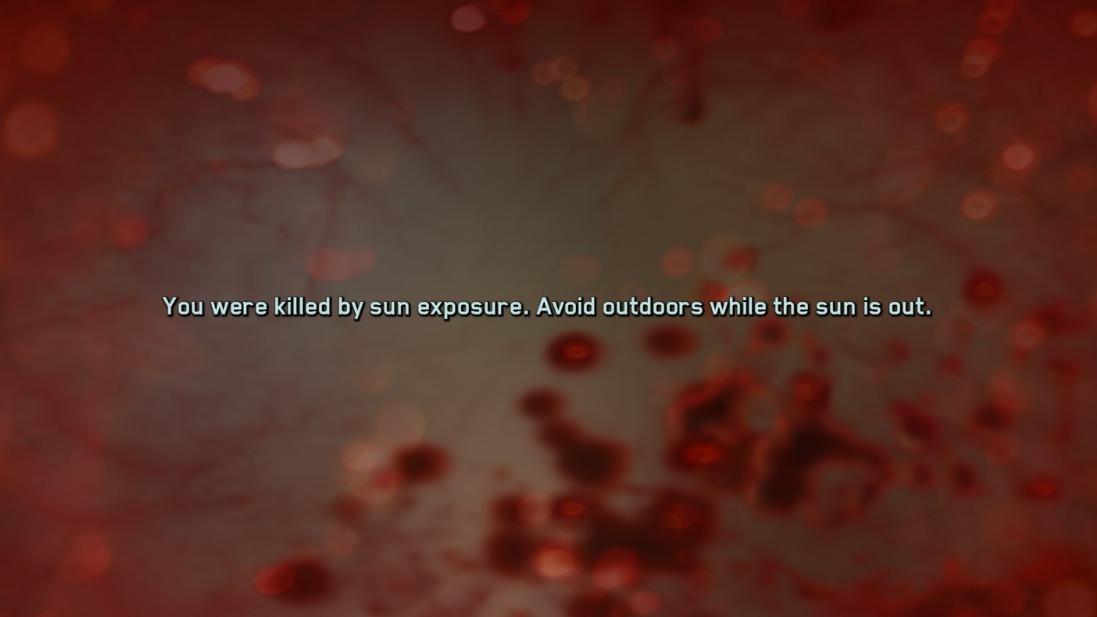
There’s huge action moments but they’re all background noise or so derivative you’re taken out of it, shocked at how shameless it is … there is a sequence on an robot-controlled asteroid that’s headed for the sun which is dizzily spinning above our heads. Cool, but … you can only move in the shadows or the sun will burn you … I’m here for Tali, right?

When it’s not ripping off better games it’s stealing from stable-mates. It lifts so much from earlier CoD entries I keep expecting to see Riley float by. This is not how you start a franchise, by cannibalising your own games and stealing from others, and it feels budget and technologically old; NCPs salute the door when I’m already 20 feet into the room, they talk to nothing, get trapped in doorways or ignore enemies in front of them. Reyes often gets stuck or blocked and it crashed regularly, which just made playing it more laborious.

Finally, Reyes puts in motion a plan that fails spectacularly and gets loads more people killed; still, wasn’t his fault and it all worked out so mission accomplished. What a hero. Reyes then watches Rogue One and gets an idea for a one-way mission; problem is we’re not invested in any of the characters – save Ethan – so when Reyes does a sub-Shepard speech about how they have no way out but must succeed for Earth, we’re relieved instead of worried; that means it’s ending soon. As the crew dwindles (mostly via less than subtle examples of sacrifice; will you just learn it already?!) I realise I got all the way through without rage quitting. But I get my moment when it ends on a survivor staring at a memorial wall with all our lost crew names on it. Skip scene, rage quit.
This should be called Derivative Warfare. But the real issue is we’re a spaceman not a soldier and by focusing on command, CoD lost its niche – it’s brilliance wasn’t in the epic setting that a space drama requires or the burden of command, it was the regular grunt in the shit, doing his bit. CoD is a genre unto itself, and this isn’t a CoD game.

It’s almost sad that IW completely failed; this much-vaunted new era of CoD was quietly dropped and the series returned to its roots with WWII. It’s sad because no one else was doing modern warfare anywhere near as well – even games I despised like Black Ops III were still cracking shooters ultimately. Infinite Warfare ruined Modern CoD for everyone.

So the only way forward now is back. With all those advancements, a return to a WWII setting could be the best CoD game since CoD. They can’t mess up WWII can they?

Read FBT’s final CoD review as he plays WWII and ends this mega playthrough.

Daikatana

a second wind review

FBT is about to make Daikatana his bitch. But can’t without his buddy Superfly.

Daikatana is shorthand for “gaming fail”, but that’s as much it’s pained development as the actual game. It never had a chance; reviewers were gleeful in their takedowns after all the hype and baiting that came out of Ion Storm – 18 years on and contemporary reviews still include clumsy rewrites of Masters of Doom’s final chapters. It’s true, the development and the game are so linked it’s like playing Ion’s self-destruction but does it need that context now? Can you ignore all that baggage and play Daikatana purely on its own merits?

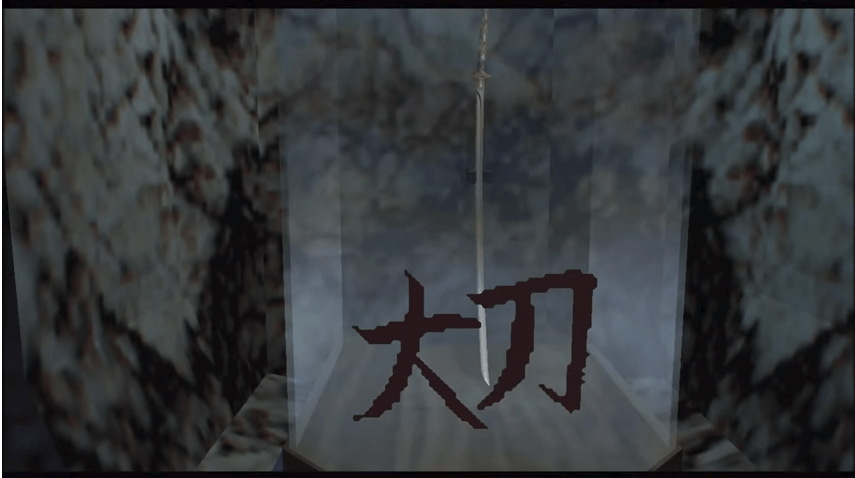
In the 25th Century the world is a disease-ridden place run by a single dictator, Mishima. Our hero, Hiro, is a sword-master (they still need swords in the Buck Rogers era?) is visited by an old man who explains Mishima wields a magical Daikatana and has been using it to alter history to his advantage. Why didn’t he just go back and buy a load of Apple shares if he wanted to rule the world? Hiro our hero is one of the few who could wield the Daikatana, so it’s off to fix the past and save the future, and maybe end up killing his own grandfather or something equally paradoxical.

At its core, Daikatana is great. The characters, twisting time-travel plot and the changing locations make for a great situation to find yourself shooting through. It does bear a resemblance to Quake; the changing time-zones and situations, but whereas Quake had only a quick “why we’re here” pep-talk for a narrative, Daikatana has a rich story experience; it really works as one of those post Half-Life era transitional shooters where we left Doom’s “find the red key” behind in favour of a story you wanted to see through.

Hiro must recover Mikiko, the old man’s daughter who disappeared in Mishima’s offices while searching for the Daikatana herself – problem is, Hiro has no idea where she is – but there is a guy who does, and he is one bad mother -*shut yo mouth*- talkin’ about Superfly.

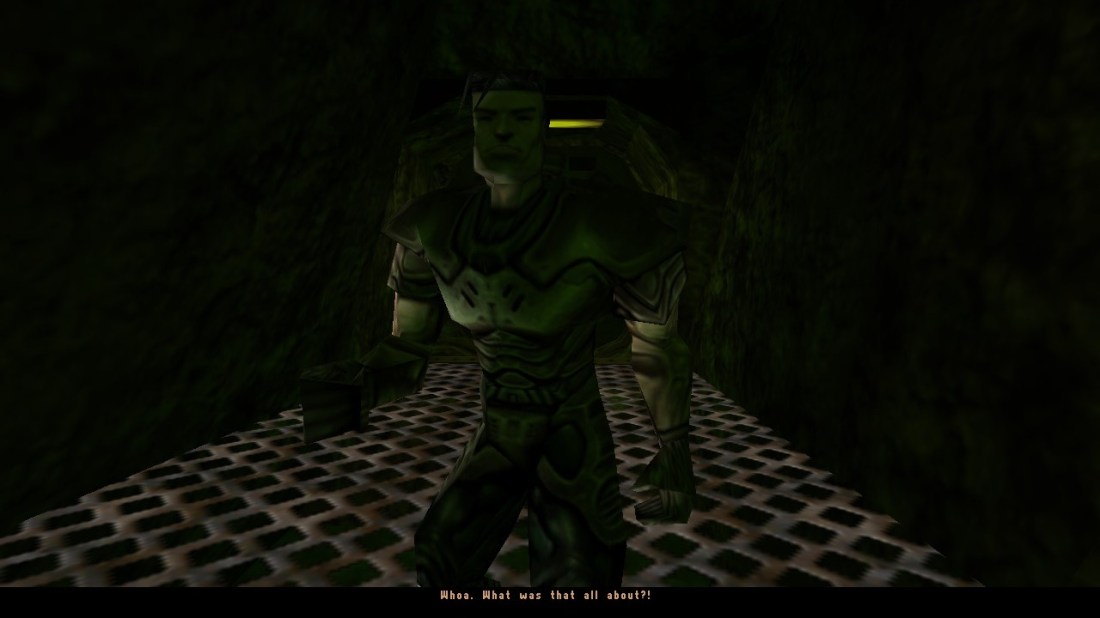
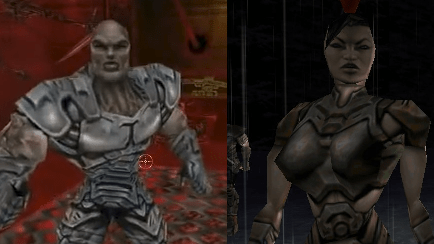
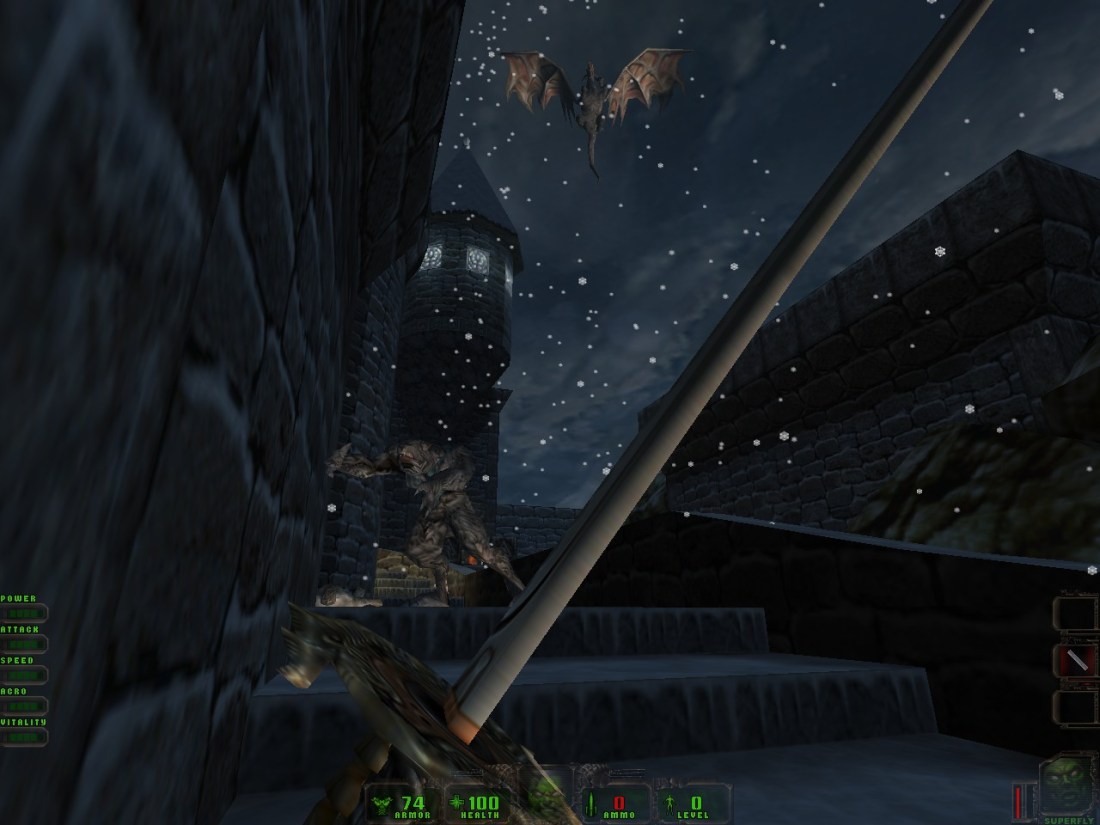
Superfly Johnson is basically Isaac Hayes with a shotgun. His voice is so bass it vibrated my speakers. And that’s not a euphemism. He is the ultra-cool, hip, honeyed-voice of reason, the ‘heart’ of the gang and the first to point out “what the hell” when things happen. And a lot happens. Once we recover the more taciturn Mikiko, who’s all business, it’s Daikatana time – but no sooner have we recovered it when Mishima rocks up and has it too, from an alternate timeline. Because both swords existing in the same timeline could cause the universe to implode if they touched (just like that Van Damme movie), Mishima can’t risk battling Hiro so uses his sword to bounce them around time, while Hiro learns how to wield its power.

Our first stop is Ancient Greece to battle Medusa before heading to the Dark Ages, where curing a plague is in order, before Mishima’s stronghold in the 2030s for a final showdown because, presumably, Mishima ran out of time-periods. Oh there’s also the ghost of that old man knocking about who helps Hiro master the Daikatana. Or maybe it’s not him; I was distracted looking for my buddy Superfly.

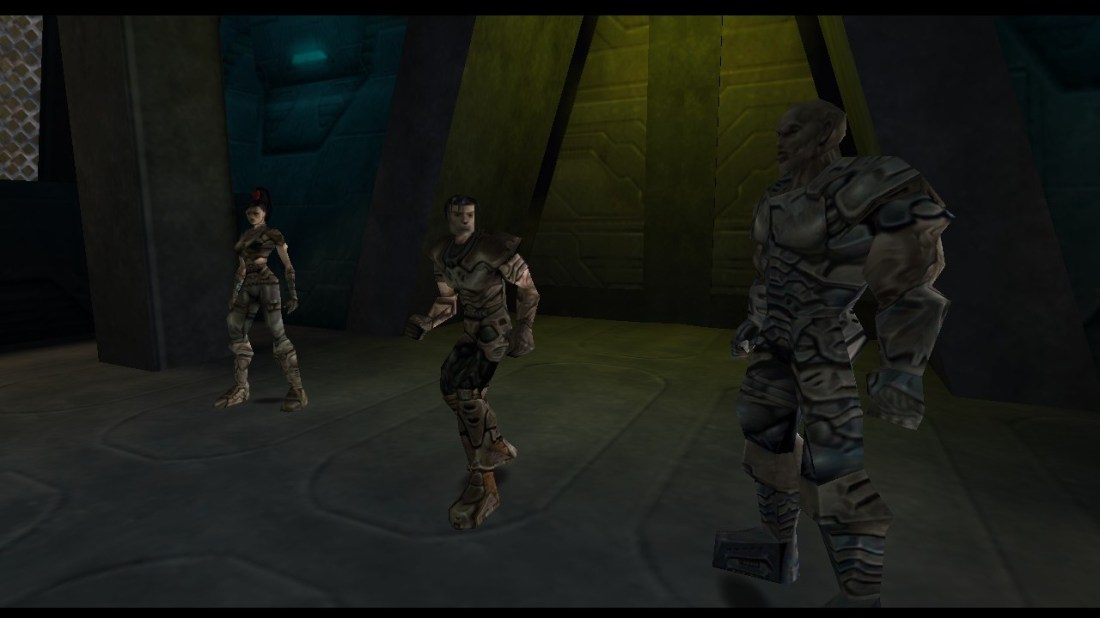
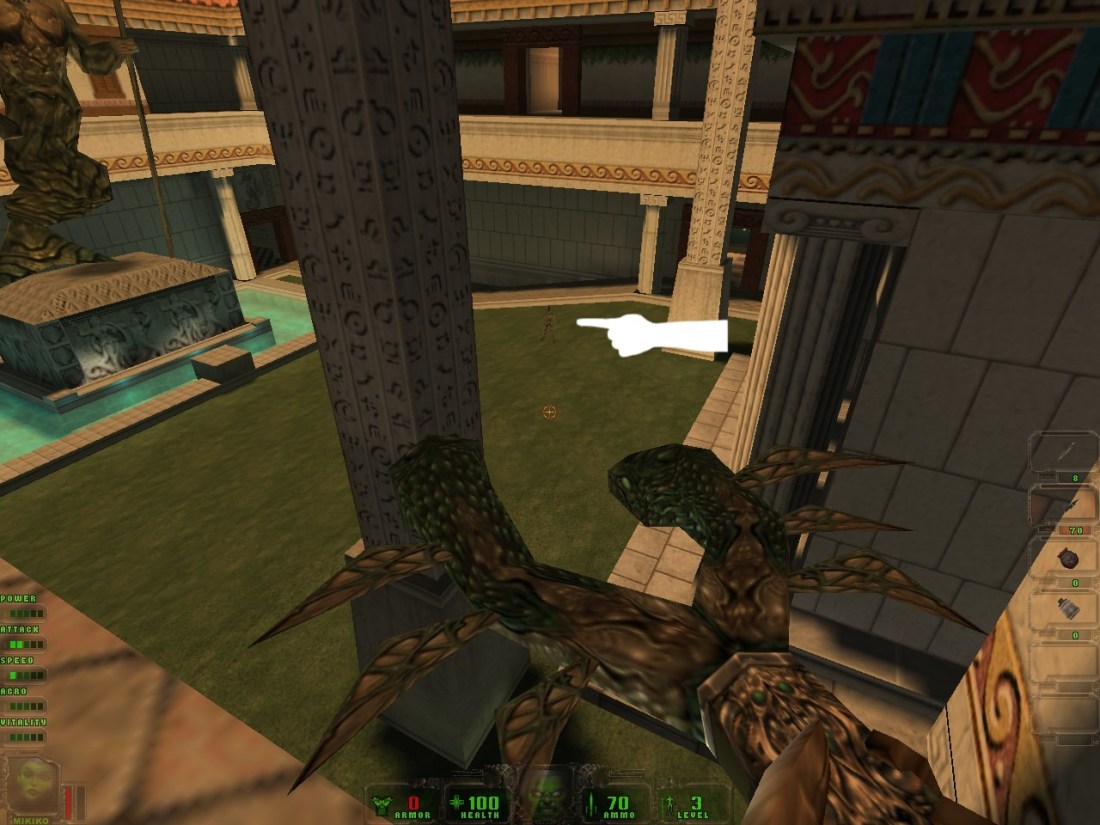
Superfly and Mikiko are perhaps the most derided sidekicks in gaming, more so than bloody Natalya. Yet, they have their own backstories, impact and presence; the way they and their motivations are threaded into the plot is better done than most modern games where sidekicks just tag along or act as our Hypeman; those guys are invested – Superfly to deliver a can of whoopass to those who wronged him, and Mikiko to avenge her father and put right her ancestor’s legacy. A tremendous amount of effort has gone into them, into making them a critical part of this adventure. And then the cut-scenes end and …

Once Superfly and Mikiko are free it all goes to hell. If we could get there. They pay you no attention, wander off, stop moving, get lost, fall off things or get stuck in them, walk into obvious dangers, refuse to take orders and even take off when the fighting starts. Then they come skulking back when the coast is clear. Having one errant sidekick is bad enough, but two? It’s impossible to corral them. You have four basic commands but they don’t really work and you have to switch between sidekicks so by the time you’ve stopped Superfly walking off a cliff, Mikiko’s disappeared. If anything, this game has given me a new appreciation of games like Mass Effect and how they managed sidekicks. Mikiko? Stay there, I’m just gonna go look for …

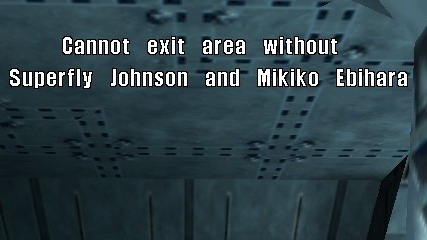
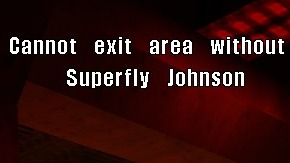
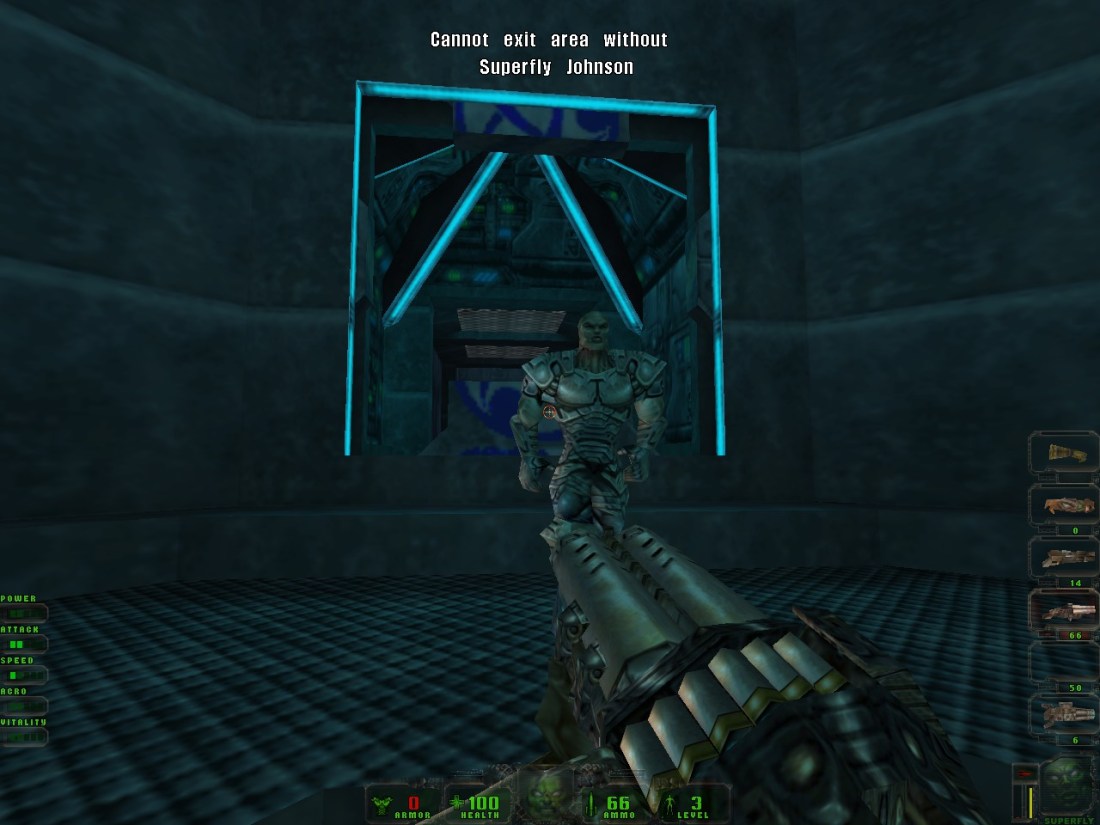
… you don’t even get a warning they’re under attack, just a Game Over (not that you’d be able to find them in time…) They misbehave too; they’ll promise “I’ll wait here” and when you return – they’ve gone. And they can go for miles – which leads to the biggest issue and one that surely must have occurred to the Devs at the time. You can’t pass through a loading screen without them, getting “I can’t leave without my buddy Superfly/Mikiko”. If they’re there, they’ll take their sweet-ass time to reach the exit, but if not … it’s backtrack time; it’s not an overstatement to say a quarter of my time was spent trying to find them. Daikatana is like a FPS Hide and Seek. Worse, you might have Superfly but not Mikiko so you go look for her, get lost, find her, walk her back only to find Superfly’s now gone … Shooters rely on quick thinking and quick moving. You can’t be in shooter mode and protect mode; I have a new-found respect for parents with toddlers, you look away for a second and they’re gone. Daikatana is one long escort mission and that overwhelms the fun. Fan-made mods remove or alter them to make it easier but come on, they’re ruinous. Oh, this level looks interesting, let’s …

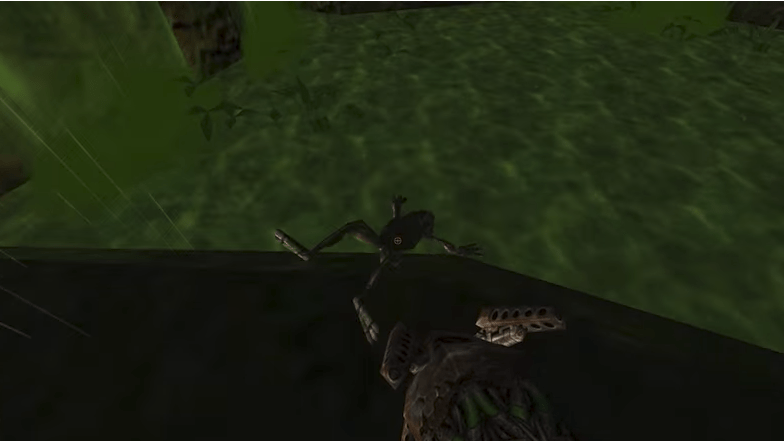
So the sidekicks are a major, game-breaking problem. But the huge variations of creatures, weapons and time-periods make up for it, right? Sure, but first we have to deal with frogs. Frogs!? What were they thinking? But they’re cyber-frogs. Okay. Cyber-frogs?! What were they thinking?! Why would a super-villain even think about wasting R&D time inventing Borgified Frogs? And then it’s mozzies dive-bombing you. Those things are worse than Fallout’s Botflies. Why is the first level just looking up at the sky or down at the ground?! To hide the fact that the opening levels are a murky brown, green, yellow as we push through a … I don’t even know where we are. I thought we were headed for Mishima’s building? You went via a swamp and the sewers? Can’t just find a side entrance Hiro?

Mishima’s building is fairly standard corridor shooter stuff, but throughout there’s NCPs that do nothing but blurt nonsensical lines and run screaming. There’s so many it’s like Serious Sam in reverse and the noise of their collective shrieking is deafening. Plus we meet scientists doing horrible experiments but they disregard Hiro even when I shoot a couple. Why do the janitors run screaming but the guys we’re more likely to be interested in ignore us? Then there’s the level design. It’s incredibly uneven. Some levels work quite nicely, others are a complete mess of backtracking and illogical layouts. And it doesn’t look great either. The art design is basic like you’re on low settings and the cut-scenes are jerky and ugly; I was never a fan of the Quake engines, finding the 3D actually made the world less vibrant than Doom or fluid like the Build Engine, but Daikatana is a game I imagined would have an energy to it, detail, but it’s often got a ‘fuck it’ look to it.

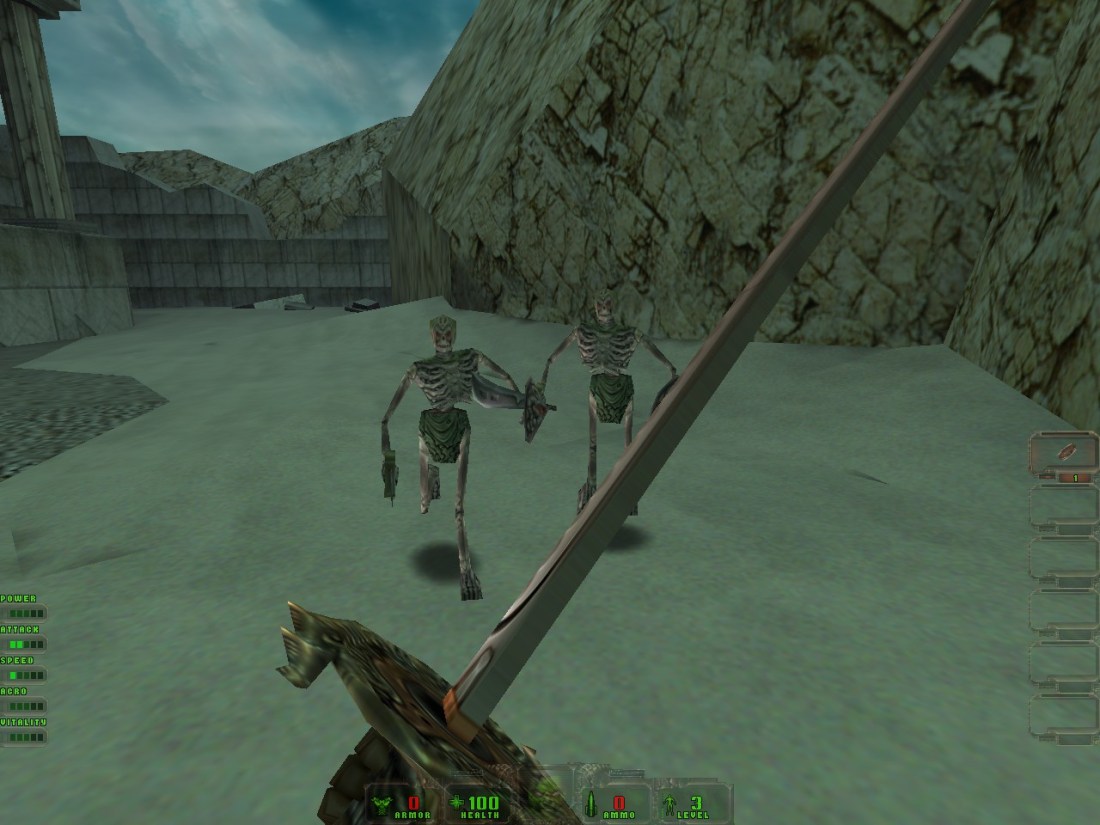
Ancient Greece is more like Ray Harryhausen’s Ancient Greece. We battle giant spiders, skeletons, iron gladiators – it’s by far the best episode, more open, interesting and experimental, and while Dark Ages is bleak and fantastical, the final sequence is largely a reheat of the first with more repeating NCPs and similar fights. The game had 24 levels all in, split between those 4 locations but they all outstay their welcome by 2-3 levels. If Mishima had just managed to squeeze in one more trip it might have flowed better. The main problem is they’re effectively reskins. While each is a different look and has its own set of weapons and nasties, your experience never varies – had Greece seen us doing swords only, Dark Ages had a bit of magic and the final base all sci-fi or facing the horrors that were implied in Mishima’s first headquarters it might have gotten interesting; or have the areas impact Hiro in some way so he’s prepared for his Shogun Showdown – not that it would matter, yo’re too busy looking for Laurel and Hardy anyway.

Like the Daikatana, I’m split on how I feel about this game. It’s both brilliant and frustrating. From a distance, Daikatana is pure genius; but when you get into it, nothing works; the cutscenes reveal a great story but go on for huge amounts of time draining any drama. The trio of heroes develop dynamics but never really build on them, the creatures are interesting but because of the level-sizes they get repetitive and each time-period is great to get into then dull mid-way through. And as a shooter, it’s effective but spoilt by the brats wandering off or getting their skulls split.

As much as I hate to admit it, Daikatana just isn’t very good. It reminds me of SiN – a well-intentioned failure that tried but didn’t quite land it, but Daikatana just crashes.

Although I said I’d ignore the development (and not rip off Masters of Doom) there are elements to Daikatana’s background that should be repeated more often; the game was made by kids Romero hired after playing their Doom WADs; for a Triple-A Development Studio to hire kids whose only skillset was killing it at Doom is huge (okay, maybe it was a folly, they had no idea what they were getting into, but neither did Romero when he made Doom) and many of those guys went onto great game careers. But most importantly, it shows that Romeo’s Ion Storm was all about the gamer in a time when the tech was becoming the most important thing. We care how it looks and how it plays, but what we remember is why we were there and what we did; one of my fave games is Indy and the Last Crusade (1989) and it’s not because of how it renders the fine leather jackets I’m selling. It’s the soul of a game you get, and that’s what Romero shot for – maybe we’d have less reskins and reheats if more Devs took his lead.

Daikatana, if I’m honest, is an awful game, but it’s heart was in the right place – and nowadays it seems there’s no place for heart in gaming. Ironically, games could do with more Superfly.

2000 | Developer Ion Storm, Publisher, Square Enix

Platform; Win (Steam)

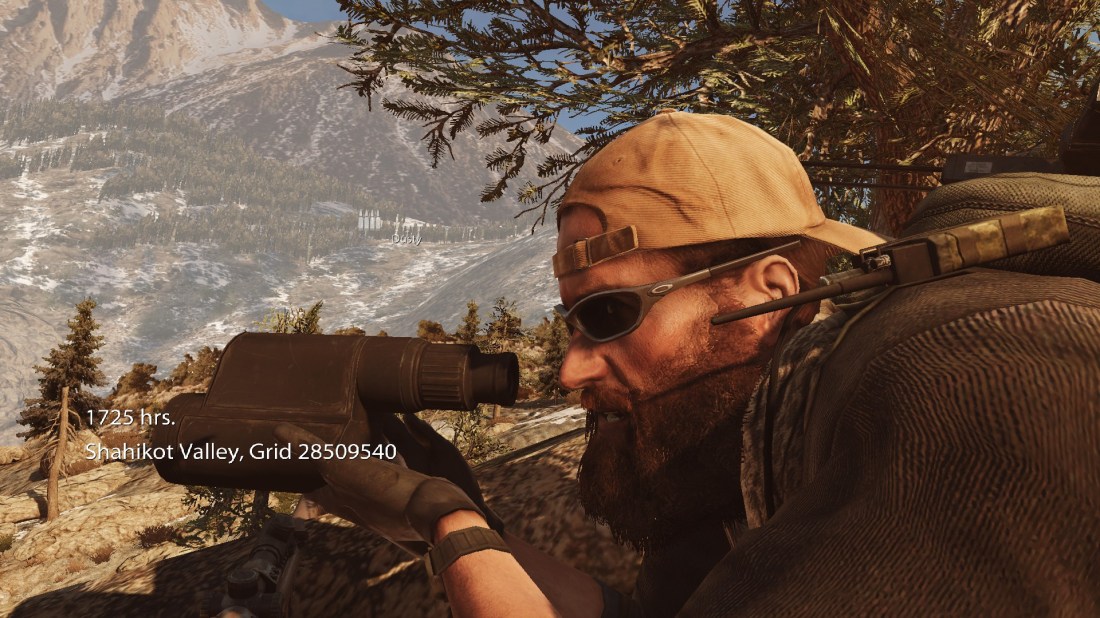
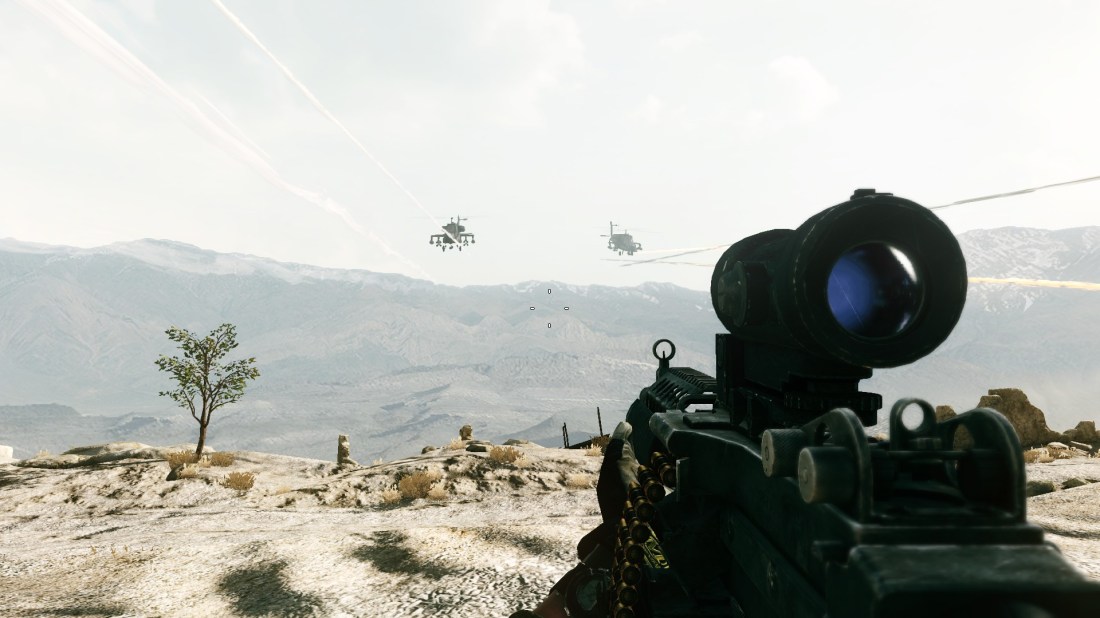
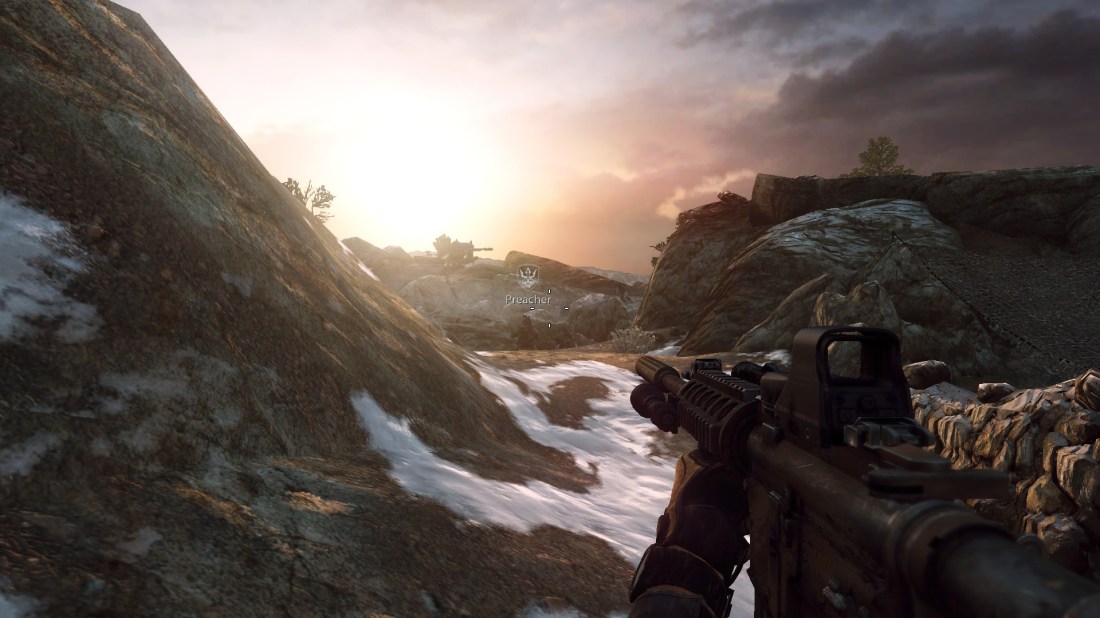
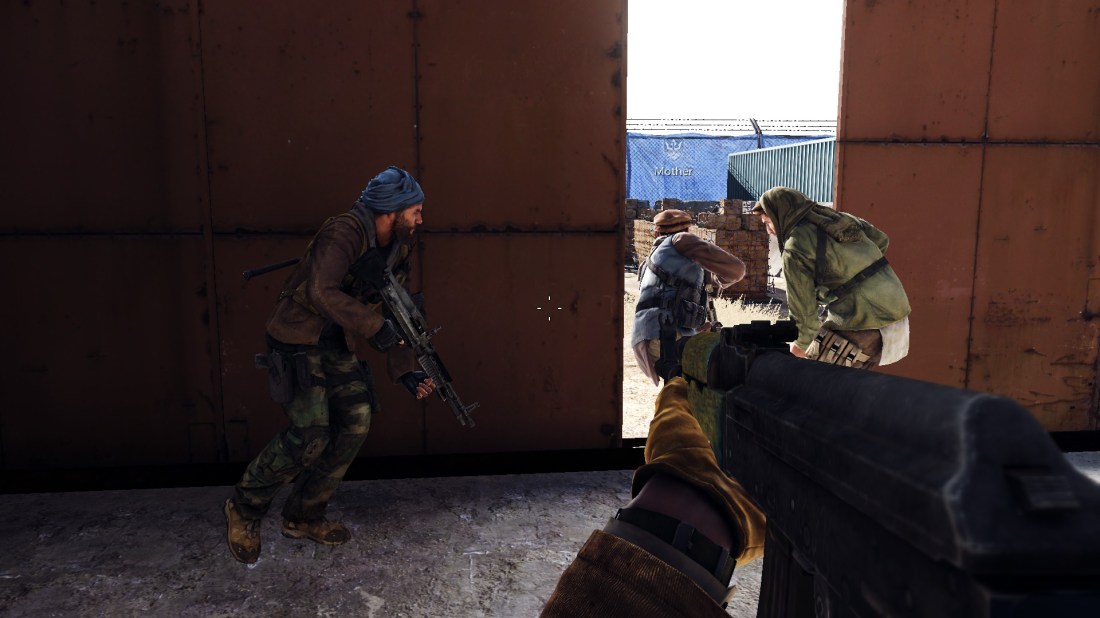
Medal of Honor 2010

a second wind review

FBT earns his Medal of Honor; by doing what he’s told

Every generation makes a choice; The Stones or the Beatles, Blur or Oasis, Beethoven or Salieri, Coke or Pepsi, Marmite or … not. In gaming, it was Medal of Honor or Call of Duty. For me, it was the MoH series. Unfortunately, that didn’t last. MoH got more outlandish as the series tried to keep up with CoD and when they went all modern in 2007, MoH followed with this 2010 contemporary reimagining – did it overtake CoD or chase it over a cliff?

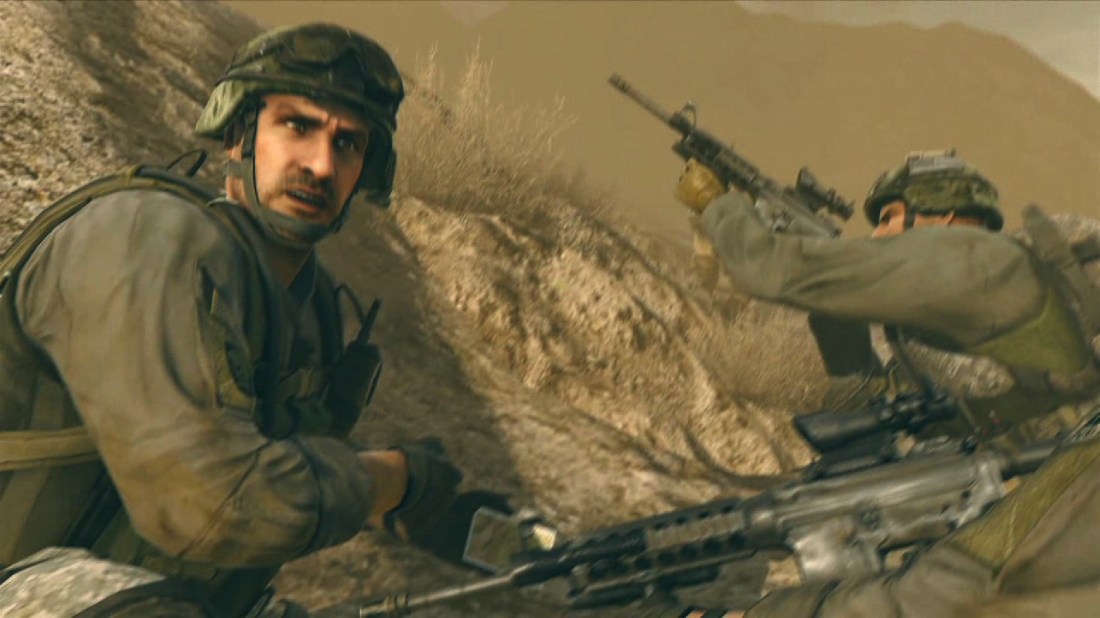
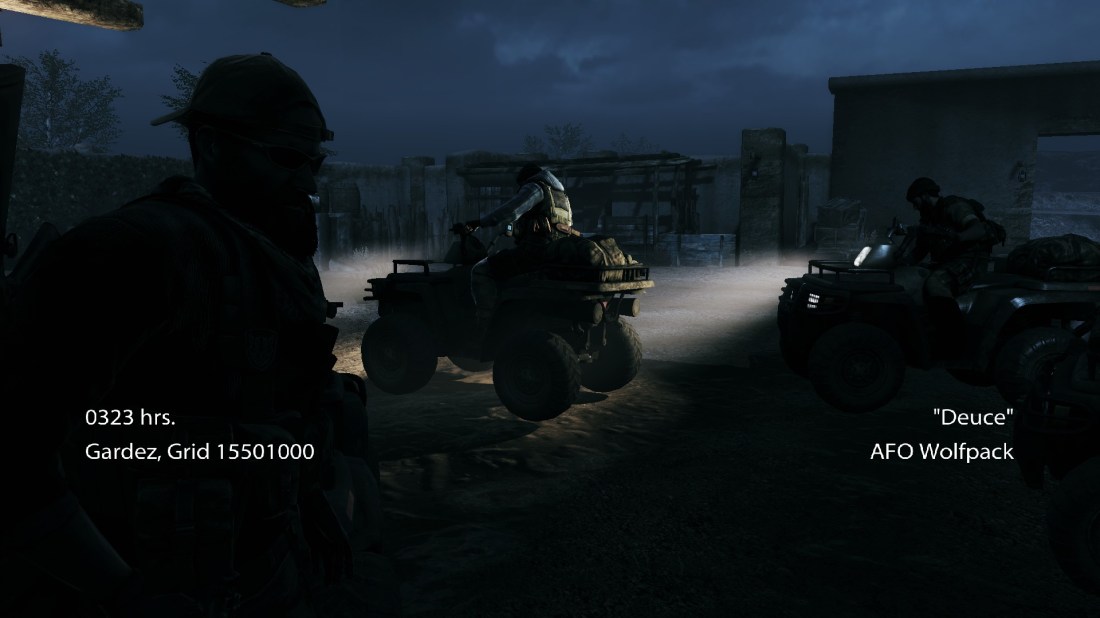
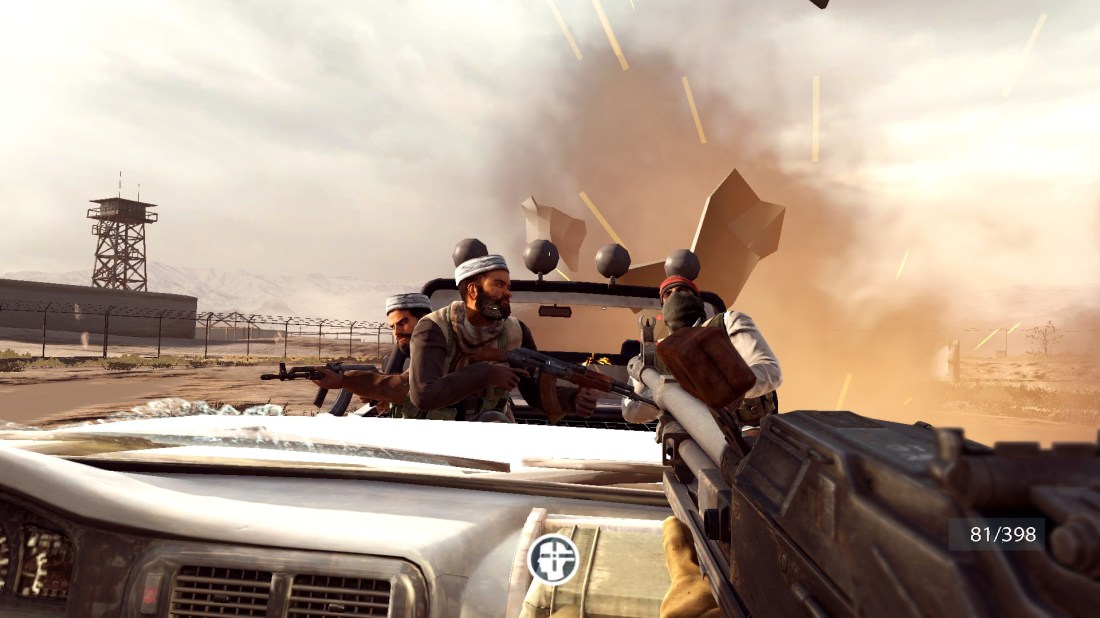
Immediately calling CoD to mind, MoH 2010 has three different characters we bounce between; “Rabbit”, an ‘operator’ collecting intelligence; “Deuce” a Delta Force commando disrupting enemy movements and “Adams” an Army Ranger, part of the US’s invasion of Afghanistan; those guys directly and indirectly affect each other as they carry out missions in the months following 9/11. Split across two days, MoH aims for a serious and realistic look at the war on terror and it seems like an epic story; the Operators discover a Taliban force the Rangers are on-route to mop up, has been grossly under-estimated. The power-that-be demand some good old-fashioned American Shock & Awe and force the unprepared Rangers into a shooting gallery. Thrilling stuff, as we cut between the Deltas disrupting Al Qaeda while the Operators thin out the Taliban and Adams and his team get cut to ribbons except … that doesn’t really happen.

Every game ever has objectives, mission markers and parameters, but in Medal of Honor you’re so locked down to specific orders and actions you never feel like it gets past tutorial stage; ‘move over there’, ‘shoot him’, ‘do that’ – constantly nagged by your teammates, you’re just their assistant; ‘snipe that guy then go get me a latté.’ I’m the sidekick? But HoM is also flat because the three characters have no character; they’re silent heroes of course, but based on the way they’re barked orders at, I’m guessing they can’t be trusted to do anything. Doesn’t feel very heroic. That might be realistic, wars aren’t won by Duke Nukem-types, it’s teamwork and precise objectives, but some investment in what’s unravelling around them, some personality, grit, ingenuity … excitement would go a long way. It’s a war-sim game. Rabbit’s missions tend to be close-quarter fights and Deuce’s are sniper and stealth based, but they are interchangeable and if it wasn’t for the NCPs round you, you’d never tell which squad you’re in. Adams’ missions are much more exciting, since he’s been deployed directly into FUBAR but it’s just agonising to never be let off the leash.

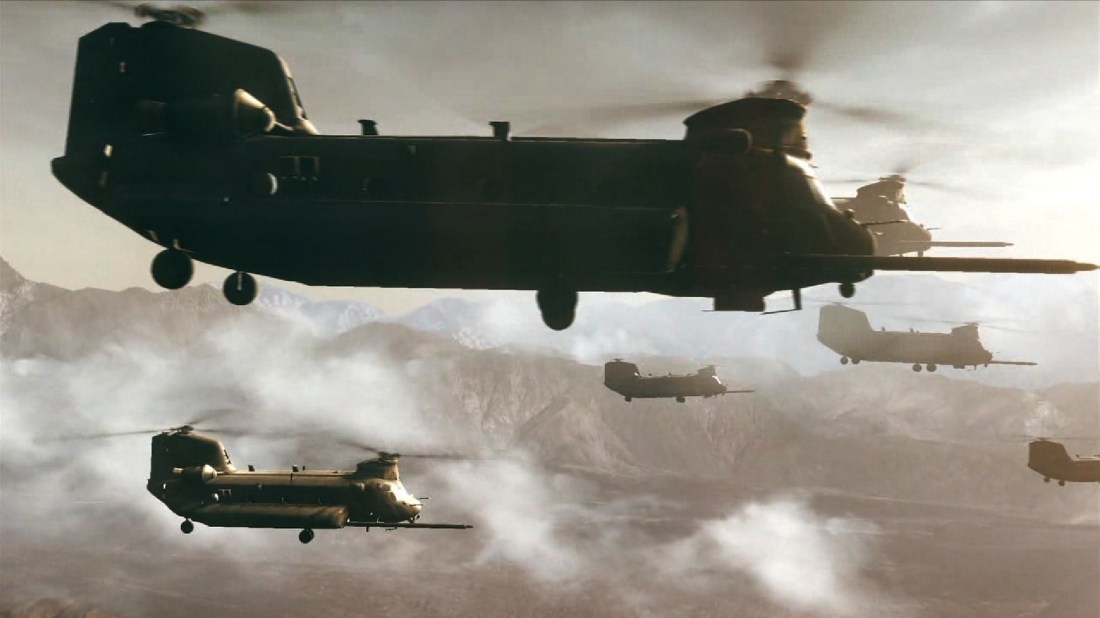
There are some great set-pieces, trying to secure an airfield (ending on the quote from Generation Kill; “that was pretty fucking Ninja”), Adams’ overrun and out of ammo moment, and a running firefight towards a Chinook that’s about to leave, but you’re never free – even running for your life is tightly controlled. Adding to that frustration, there’s moments where no one moves until you perform an action. Sometimes it’s easy to miss under the gunfire or because you’ve tuned-out the nagging, but often the game just doesn’t trigger the next action. They just keep telling you to do the thing you’re doing. So its restart at the checkpoint time and hope it works. Great, more nagging. As a shooter it’s unforgiving and realistic once the bullets start flying but it takes a lot of orders to get there.

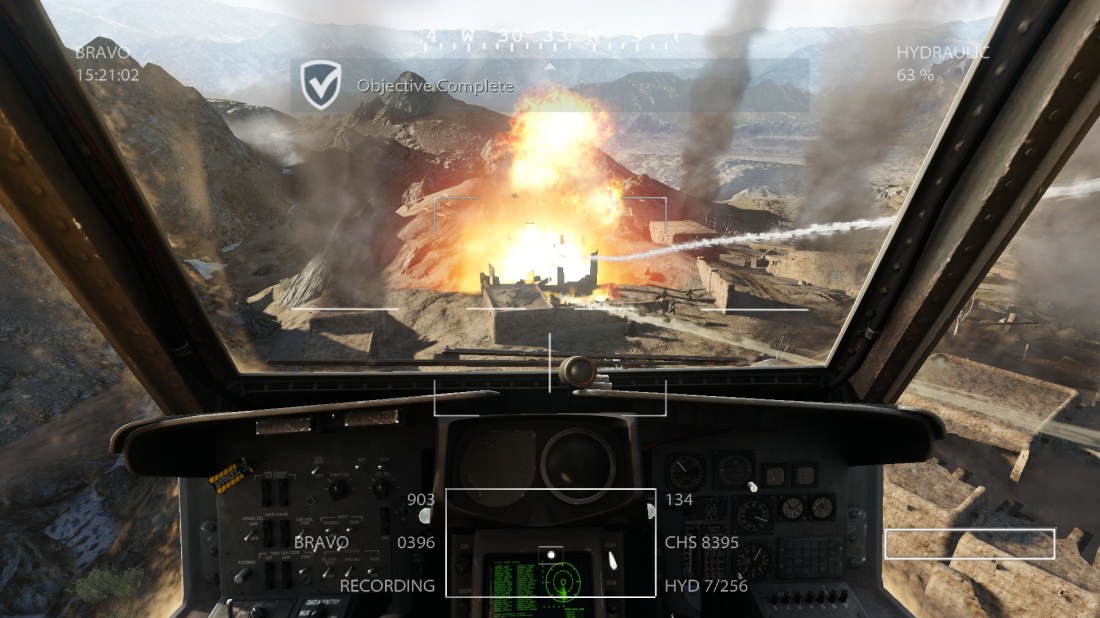
The game does try to maintain some consistency, to show it’s all happening at once; there’s a great sequence with Adams’ team suddenly saved by an Apache Helicopter; we switch to the chopper’s gunner (since we’re not the pilot we don’t even get to choose where we go, literally a Rail-Shooter). After the chopper has cut through some enemy lines, it’s saved from AA guns by a sniper – Deuce, of course, and we slide into his mission. That’s cool, and although we see the effects of what each team is doing, since we have to complete a mission objective before it moves on, it’s not like we can fail or exceed and make this better or worst for the next lot.

Our on-the-ground CO is forced by a back-in-Washington General to get ‘boots on the ground’ and that should be our cue to get to work, Deuce and Rabbit desperately trying to even the odds while the clock ticks down to Adams’ deployment – even make it Non-Linear; if it had cut between Adams’ mission, then back to Deuce or Rabbit’s impact on it earlier in the day making it about what it took to get him there it could have been incredible; make Adams’ missions easier or harder depending on how well we did as the support teams. In fact, we don’t really get to play any hero – it’s actually Dusty, Deuce’s nagger on the box art and he, along with Adams and Rabbit’s bosses are the heroes. We just do what they tell us to.

Nagging and script trigger-issues aside, MoH does have some great moments – rushing out of a chopper into blinding sun and sand unable to see anything is an unnerving moment as is a cut-scene inside a crashing Chinook where Adams’ team goes zero-g as it spins out. Those aren’t just good game moments, those are throwbacks to prime MoH; perfectly balanced gamer experience with true depictions of war.

In the end, the three characters do converge, with Deuce providing one final support act as the Operators draw away Al Qaeda and Adams’ winds up helping them recover a captured Operator; but it’s misjudged to end on a personal mission, a ‘we never leave a man behind’ finale undoes much of what came before. Until now, it was about how small actions have huge consequences elsewhere, now everyone’s up for saving that guy no one knows? It should have stuck to its original promise, ended with Deuce and Rabbit, the unknown soldiers, watching from afar as the Rangers take the hill then report for their next assignments, our actions forever unknown and disavowed.

It’s not that MoH couldn’t step out of CoD:MW’s atomic shadow, but it didn’t want to. MoH seems to invite comparison to Modern Warfare; there are the multiple characters, the satellite images during load screens, the occasional extra character to play, taking control of drones, directing air-strikes and slow-mo kill-shots. Most of those are necessary in a military shooter, and would be fine if there was more to it; what’s maddening is MoH 2010 is dedicated to not sensationalising or trivialising war but it’s so flat and unfinished, like a beta-test. And you can’t help but feel it’s all about the Multiplayer – and that caused a ruckus because you could play as the Taliban. Cue lots of point-scoring politicians and media outrage that a game lets you ‘shoot our brave boys’. It does seem like EA was inviting controversy; they tried to argue ‘someone has to be the cops and someone has to be the robbers’ but that doesn’t ring true as half the time you’re fighting Chechen mercenaries; and reducing the war on terror to school playtime is insulting and as an explanation of the multiplayer it undermines the tone of the story-mission; does anyone in EA’s marketing team game?

EA followed MoH with Warfighter, which was so bad it caused the cancellation of the franchise. Which is a shame. I have very fond memories of arguing MoH was better than CoD (It is. Was.) Playing the D-Day mission it struck me that this really happened, and the game was respectful about it. My opinion of military shooters was forever influenced by Allied Assault, and MoH 2010 had the opportunity to do the same, pitting us against Al-Qaeda but it seems to get caught up in its own politics and by refusing to sensationalise the events, it ironically ends up hollow; maybe there is something to said for CoD’s bombastic heroics. Yet it does come close to commentating on the War on Terror; towards the end, Rabbit’s team happens across a village they’d captured the previous day, only to see it full of Taliban again. That’s the War on Terror in a microcosm; shame we don’t get to play in it.

2010| Developers; Danger Close / DICE | Publisher; Electronic Arts
Platform Win, PS3, X360

Train Simulator

A SECOND WIND REVIEW

FBT got Train Simulator from Secret Santa. All you had to do was follow the damn train, FBT.

Secret Santa. The frustration of trying to work out who in the hell Barbra is. Getting the guy who no one knows what they’re into. Or getting the boss. Then opening the tat you were given, realising no one at work knows you – or worse, something so on-the-nose they know you too well. This year I got Train Simulator: London to Brighton – my daily commute. I guess all I talk about in the office is gaming and Southern Fail. Well played Barbra.

I’ve always avoided those games like a plague sim. I don’t understand why anyone would want to play something real. I get realism, but I game to be better than I am in the real world (and avoid it); why would I spend my free time doing someone else’s job? I can’t imagine a worse game to play. But … I have suffered at the hands of Southern Rail for a decade now; I know the announcements, the excuses, the world-weary sigh in the conductor’s – sorry, On-Board Supervisor’s voice as they announce the train is no longer in service. I am a Southern Fail ninja, leaping from platform to platform, hopping trains as the service crashes to its knees at the sight of a falling leaf. I’ve been cancelled, delayed, abandoned at places I’ve never heard of. I’ve missed connecting trains, parties, birthdays, films, gigs, restaurant bookings. I can’t plan anything when Southern are involved; my homepage is their delay-repay. I have a “I survived the Southern strikes” t-shirt. Southern is so bad they have to be some sort of Government sociological test like MK Ultra or the Tuskegee Syphilis Experiment. To actually spend free time playing as Southern is an insult, like the FIVE THOUSAND POUNDS A YEAR I PAY FOR THE PRIVILEGE OF TRAVELLING ON – And yet … what I have here is a chance to prove Southern can’t run a rail network; that it is as easy as it looks. I was once delayed for a total of 48 hours over a single month; enough to claim I was a missing person.

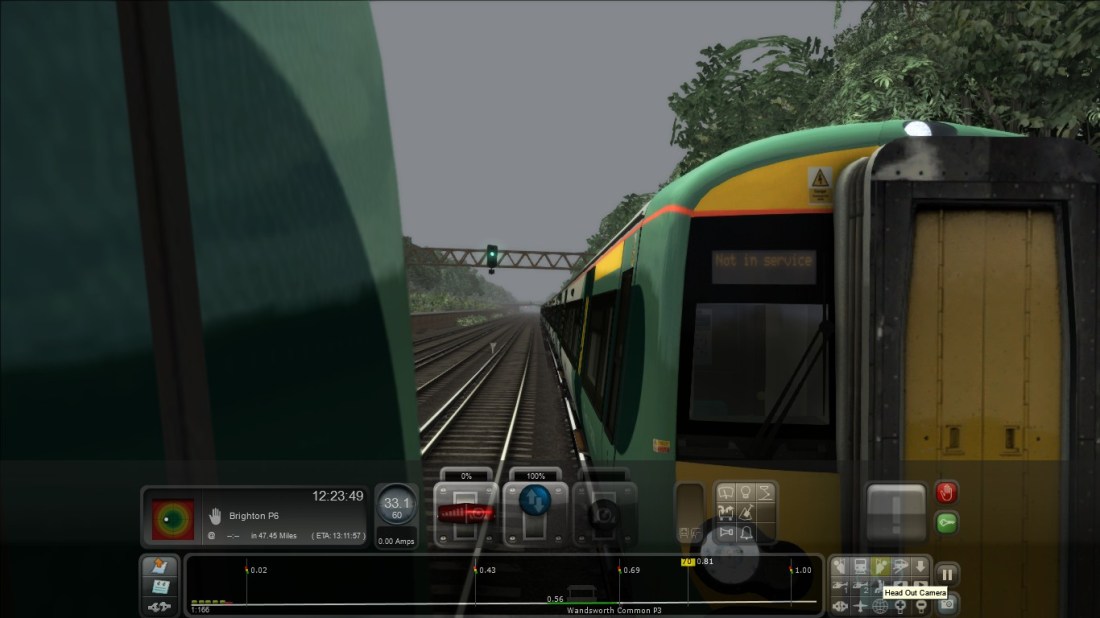
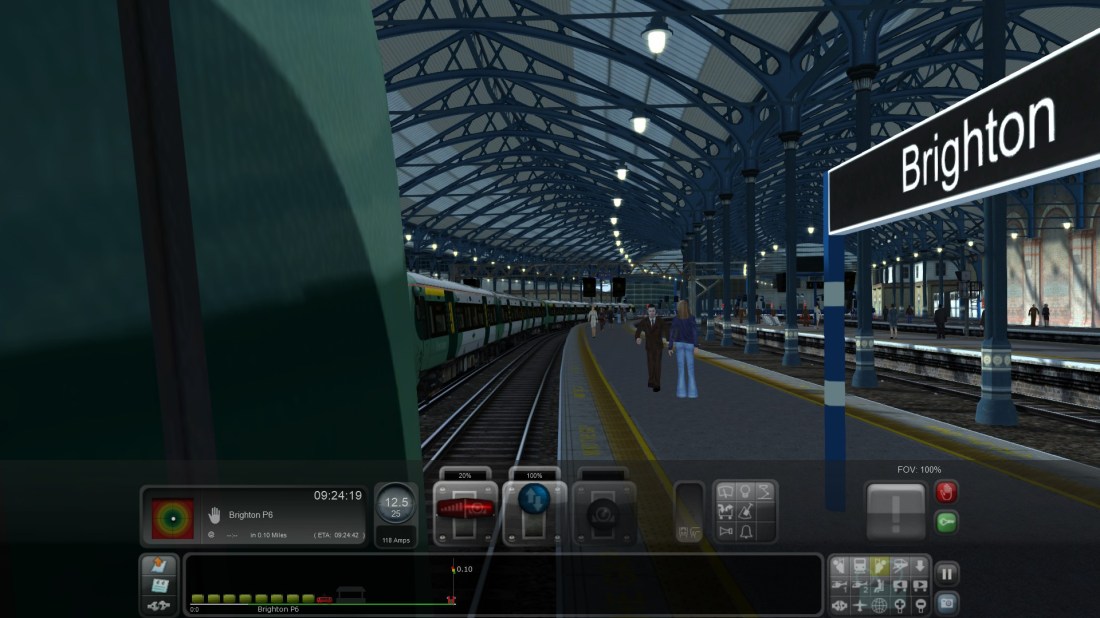
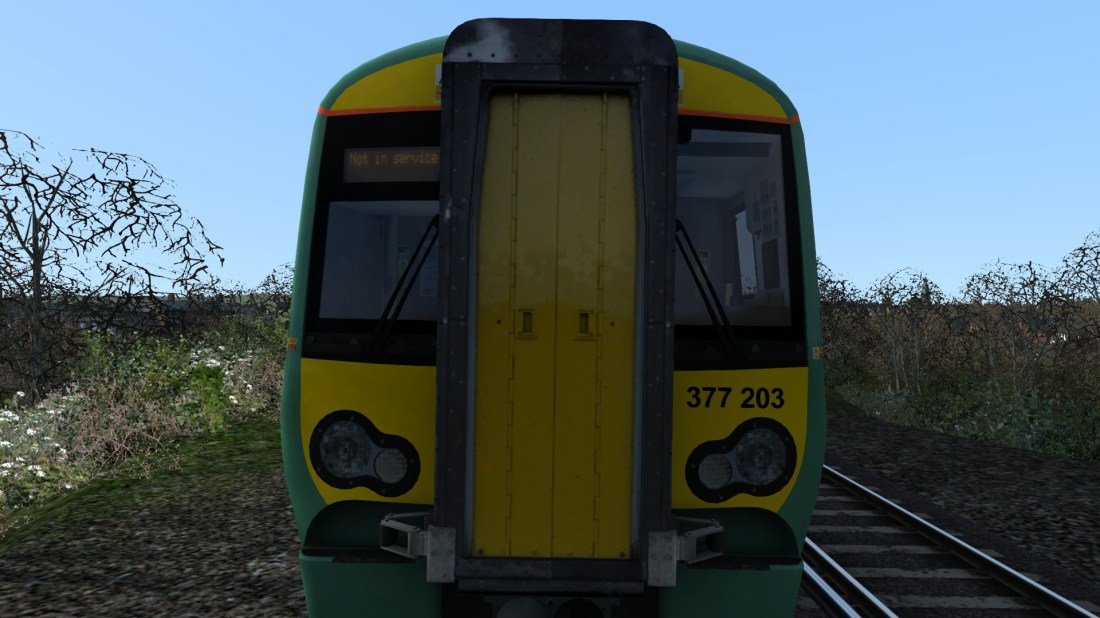
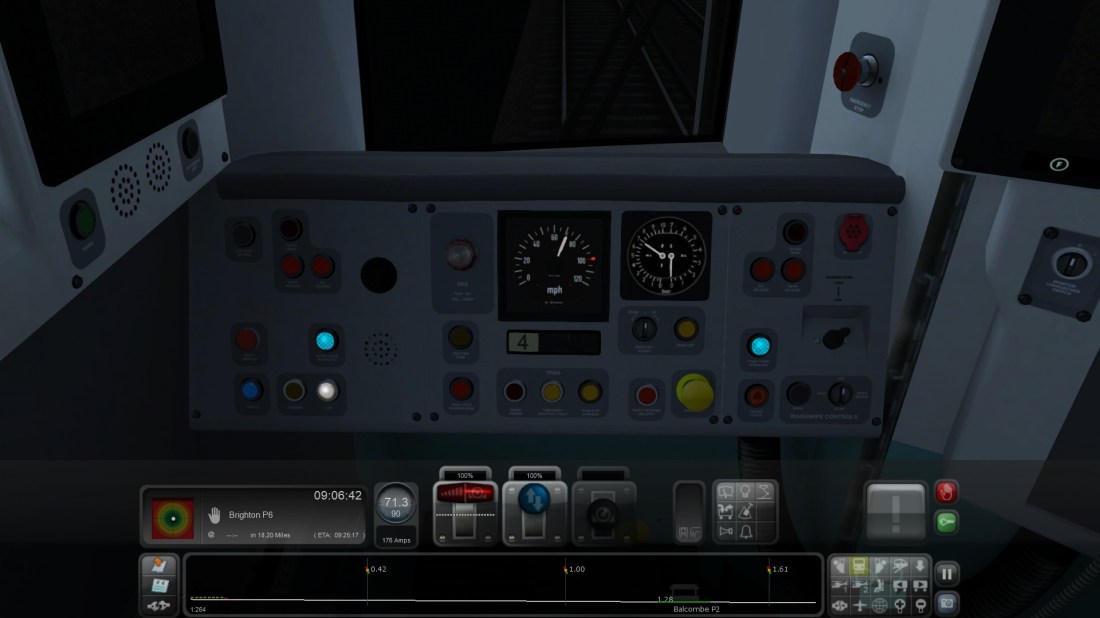
I am instantly in the mindset of Southern; I have no idea what I’m doing. There’s a HUD and the actual controls, but once past the tutorial (okay, I may have skipped most of the tutorial) and realising I can’t re-bind the keys, Driver FBT is just pressing everything to see what happens. Ohh train whistle! Toot Toot! I got this. I find the button to change view and lean out the window. The platform is basic, and there’s nowhere near the number of passengers usually at Victoria; aggravated commuters mixed with flight-missing tourists who have no idea what “cancelled due to train displacement” means. It’s a fairly accurate representation of Victoria though, even down to the lack of platform staff or helpful info. My train is announced and my passengers saunter up to the doors; boarding a Southern train is usually like a scene from World War Z but here they hang around passively. Oh yeah, the doors. Which key is it? One Google later and I have it. It’s the T key. Not D for doors. This being Southern I expected it to be C for ‘Cattle’ or some other C word. I check in on the passengers. There’s seats to spare! This isn’t realistic of Southern at all. Normally you’re so crushed together someone’s pregnant by Three Bridges. After lots of knob twiddling and pressing things, we rumble out the station. We’re off!

Southern commuters have a Bingo game; will it be congestion, ‘overrunning engineering works’, an ‘earlier incident’, ‘operator error’, a vague ‘disruption’ or the dog-ate-my-homework classic, ‘signal failure’? Yesterday it was the two-year-old announcement of Temporary Staff Shortages. Not on this train buster, this train will not be delayed. Even if it briefly starts going backwards and I get an emergency break alert. All right, we all make mistakes. Or ‘Operator Error’ as it’s called. So that’s what that means. Scary stuff. This game is giving me Siderodromophobia. AKA Southernphobia.

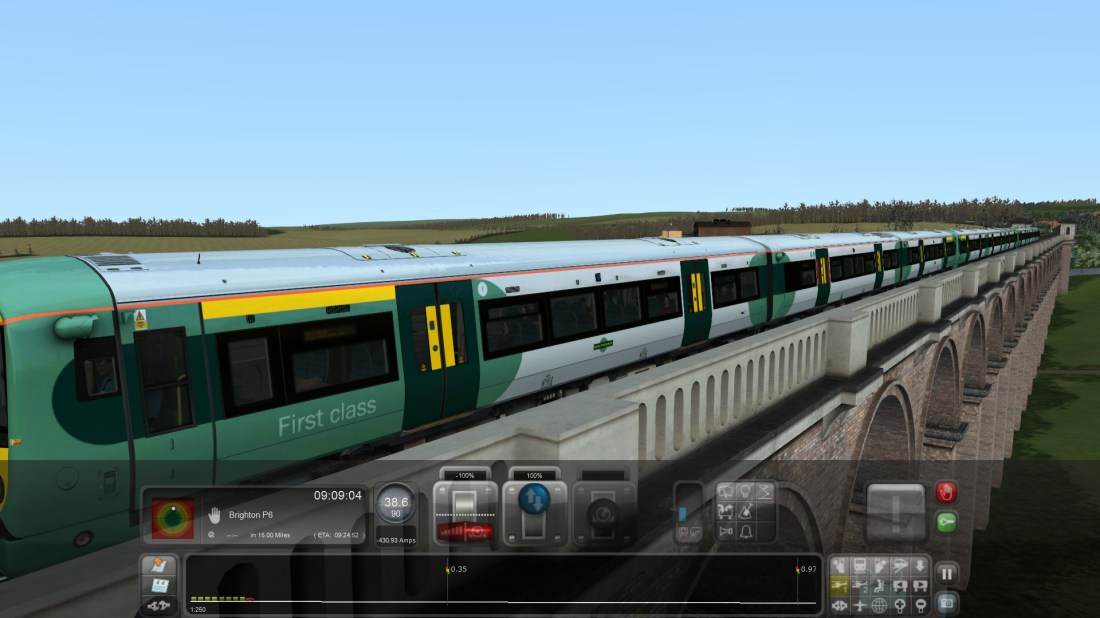
The game does reconstruct the journey incredibly well; the view from the windows is spot on, although it’s very 2002 graphically – fitting, that’s the last time Southern had a train on time. I’m kidding; they never had a train on time. I wonder if my real fellow passengers are confused by my laptop screen showing their commute – nope, they have the same listless, thousand-yard stare of my digital passengers; this is your life, and it’s ending one Southern delay at a time. Developers Dovetail Games got the Southern experience spot on.

My real train is delayed because we’re behind a ‘stopping service’. I on the other hand am blasting through the route. I’m ahead of myself. Wait, was I supposed to stop at Clapham? I hunt for a skip mission or speed up button, but this is real life. Real time. Real boring. There’s nothing to do. Oh East Croydon! As I slow down I realise it’s not going to happen. We screech past and I’m warned I’ve missed a station. Minutes later, while searching for the button to turn on the lights I run a red signal; Another Operator Fail – I’m fired. The union takes up my case, the whole network goes on strike. I’m reinstated. Bless the Union.

After several more operator errors, including trying to back the train up after I miss East Croydon again (it creeps up on you), I’m still determined to get to Brighton. I realise this is the first gaming experience where I have to behave and that’s hard to do, but after a while I start to get into it; there are challenges, there’s a lot to being a driver. Actually, there isn’t, the biggest challenge is not mucking about. Really, it’s stop in time and stay within the speed limit – which is interesting; on Southern’s Brighton route you get bounced about so much it’s like being on the Vomit Comet; I have gone Zero-G around Hayward’s Heath, but they insist it’s within speed limits; I was told not to sit ‘over the wheels’ if I wanted a comfier ride. What the hell kind of advice is that?! But here, whenever I get above 80 the train lurches and I get a speed warning. Suspect. I trust a computer game more than Southern.

“‘Do not lean out of the window’. I wonder why?”

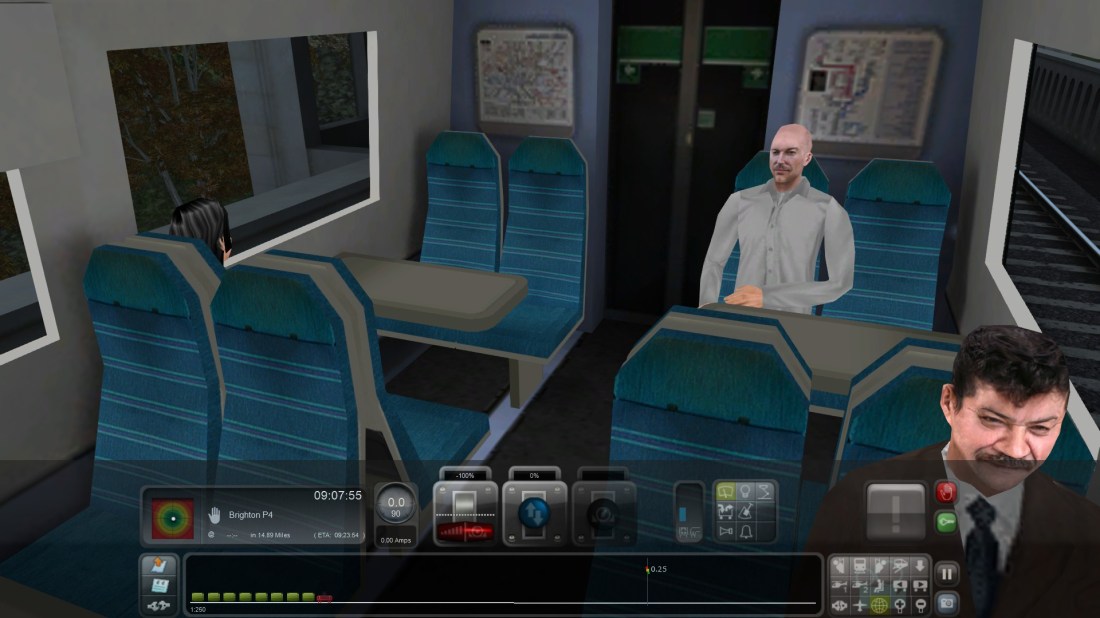
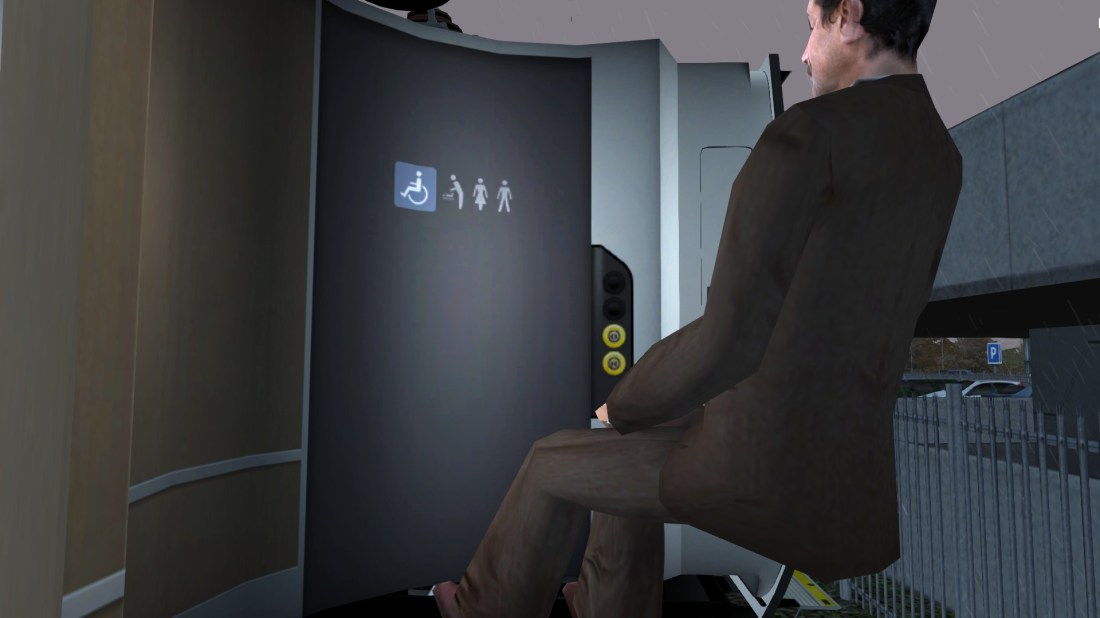
It’s fair to say that some of my befuddlement and red-light running is caused by the confusing controls; at times it’s maddening. I spent most of the time with my head stuck out the window like a dog. V is for Window Wipers; what was wrong with W? But, ignoring the messy control system and basic design, Train Sim is surprisingly realistic – except the toilets, where I find a fully clothed man sat on the loo; weird – like any of the toilets work on Southern. But it’s strangely compelling, after a while I find myself totally into it; it becomes a point of pride to hit the stations bang on time, keep on schedule. Once I’m out of the city and barrelling along I enjoy myself. It’s not fun in the traditional gaming sense and I’m not a sim convert – I still try to crash it and misbehave, closing the doors before the passengers can board, but that’s me gaining a Southern attitude, not the GTA in me – when I reach Brighton I honestly feel like I accomplished something. I’m weirdly proud to watch my passengers disembark, headed for the heavily guarded ‘Meet The Manager’ stall. Some of that enjoyment might be down to the familiarity of the route, and the fact that unlike Southern, I actually want to get me home.

Dovetail could have made a Sim based purely on Southern’s management; choosing when to blame Network Rail or Thameslink, timing cancelling a service just after the next one leaves, or once it’s full, claiming it was wrong kind of rain on the track, or the wrong kind of track, last minute alterations, diverting trains, not assigning a driver, sending people to the wrong platform; as a Southern Sim it would be more realistic to stop passengers reaching their destination, but Train Sim isn’t a Passenger sim, it’s genuinely trying to give you the train driver experience. It may be a budget game, but there’s a lot of options, including events that cause changes to the route, weather, seasons, journey options and trains other than Southern’s Cattlecarts, as well as challenges and an editor.

I appreciate what Sims do now; the same as any other game – let people experience something they admire or may never get to do in the real world. For some, that’s driving a train not beating a Boss. I did get a train from London to Brighton and it wasn’t delayed. It really isn’t that hard Southern. I actually learnt a thing or two about trains, tracks and train management too; I’ll be using those in my next Delay Repay claim. Thanks Barbra.

2015 | Developer, Dovetail Games | Publisher Dovetail Games

Platforms; Win

Homefront

A SECOND WIND REVIEW

FBT joins the resistance in Kaos Studios’ Red Dawn-like shooter. Wolverines!

Homefront was Kaos Studio’s do-over after Frontline. More mature than that game’s overwrought gameplay and undercooked war study, the strictly linear Homefront was released in 2011, the year of the open-world sequel; Assassin’s Creed Revelations, Batman AC, Crysis 2, Saints Row 3, Witcher 2, Skyrim – it took most of 2011 to complete those, plus there were reboots Deus Ex HR and Duke Nukem Forever, new starters L.A. Noire and Rage and established shooter stalwarts Gears of War 3 and CoD MW 3; Kaos had the worst luck with their release cycles. Homefront got buried as was Kaos soon after. Is it even worth going Home?

In the 2010s, and using real-world events as a back-drop, North and South Korea form the Greater Korean Republic (GKR) as a war in the Middle East triggers a global economic collapse and oil shortage. The USA withdraws from all non-US soil and unchallenged, the GKR expands across the Pacific and eventually invades America, annexing the Western States and leaving the rest of the US in chaos. Years later, the GKR begins to march again, starting with our town on the American-Korean border. Jacobs, a retired US Marine Pilot is bundled onto a bus headed for a ‘re-education’ camp.

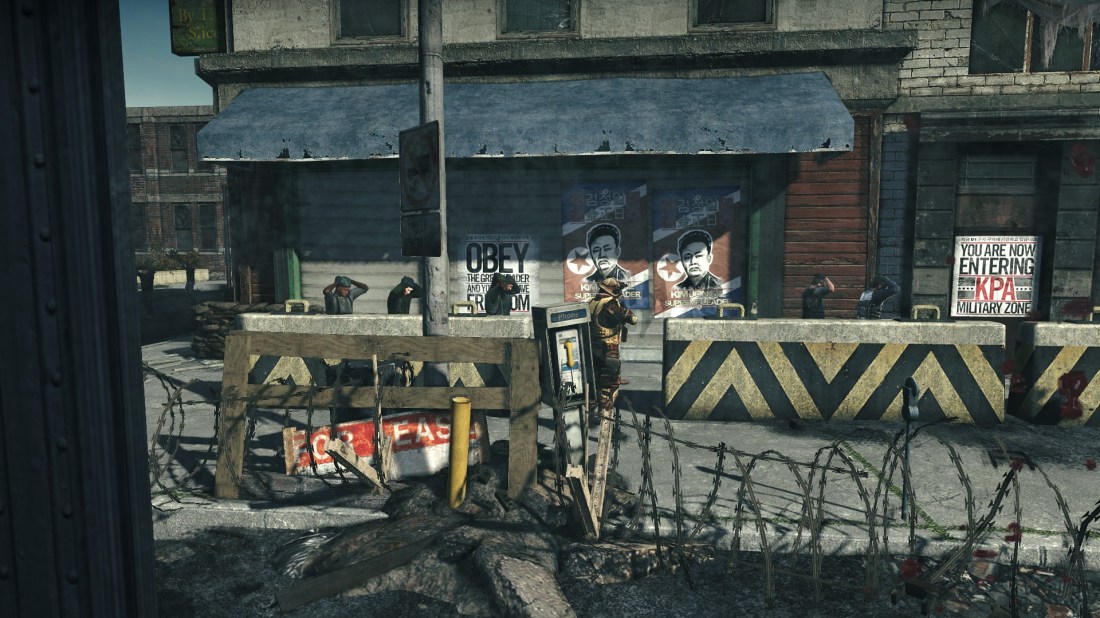
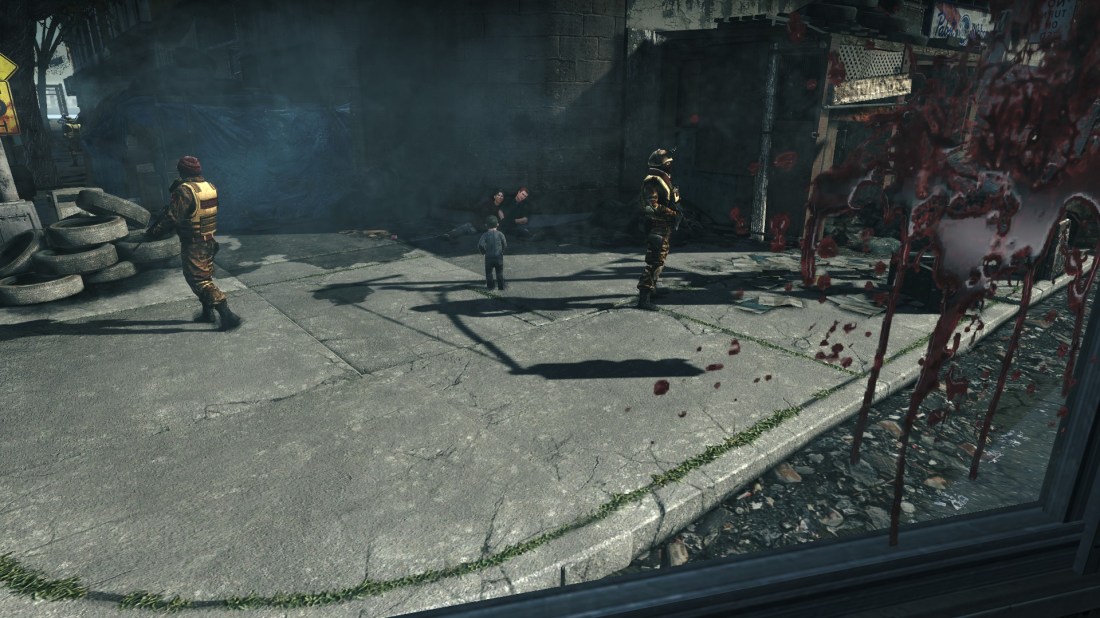
From the bus window we watch the GKR soldiers brutally take apart the town. We see folks beaten and shot – fairly typical for this kind of oppressor storyline and reminiscent of Half-Life 2’s opening scenes, but as the bus corners we hear a woman pleading for her child to close his eyes. We corner just in time to see the tyke’s Mum and Dad lined up and shot, and as he runs to their bodies, the GKR soldiers saunter off. This is going to be a tough one.

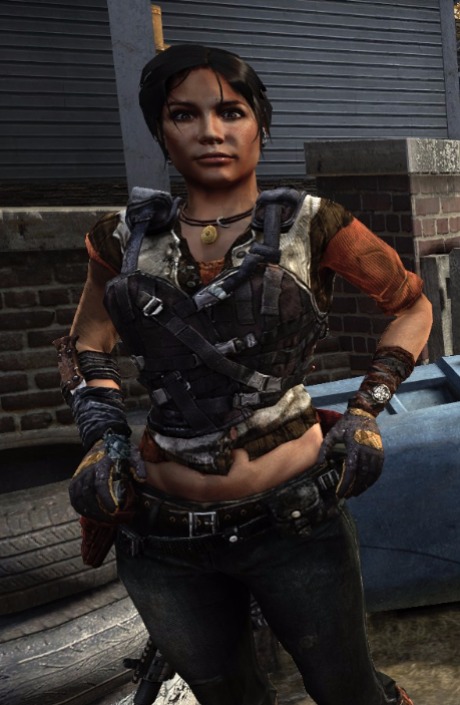
Suddenly, the bus is attacked by ‘Resistance’ members Connor (Another ex-Marine, gleefully in the ‘only good Korean is a dead Korean’ camp) and Rianna (a spunky woman who has managed to maintain her humanity and midriff during the occupation). Conner explains they broke me out because they need a pilot to halt the GKR’s advance. I’d better not tell them how badly I fly ‘copters then.

Homefront is a linear shooter in the CoD mold (Conversely CoD Ghosts owes it a debt) but it tries really hard to be more than a set-up followed by a bulletfest; Kaos found time in between the firefights to remind you what you’re fighting for and our actions cause horrible retaliations by the GKR – it’s not shoot, cutscene, move on; everything has impact in Homefront not just the bullets. It’s a world which presents Connor’s resistance as possibly futile rather than ultra-heroic; at one point, while infiltrating one of the ‘re-education’ camps, we’re betrayed by a collaborator but he only cut a deal with GKR if his kids weren’t sent to the camp – the camp he is in. Connor kills him anyway. He doesn’t really care about collateral damage, seeing his mission as one for the country not the individual; he has no pity for those not taking up arms. The closest he gets to grief is angrier. Although he is an asshole, he’s the asshole we need. During that same infiltration mission, we pass a school playing-field to find it’s now a mass grave – and one we end up hiding in. Connor just couldn’t stand to watch them tractoring bodies into ditches and opened fire, causing a helicopter to investigate; the only place they’d not look is in a ditch filled with rotting corpses. It doesn’t come across as a gratuitous or a No Russian moment though; Connor is just a survivor and when he orders us to hide in the bodies, it’s horribly right; whatever it takes. Later, trying to reach oil tankers which are Connor’s goal he uses White Phosphorous to clear the troops; Rianna is disgusted while Connor gets angry if we put any of the GKR soldiers out of their misery.

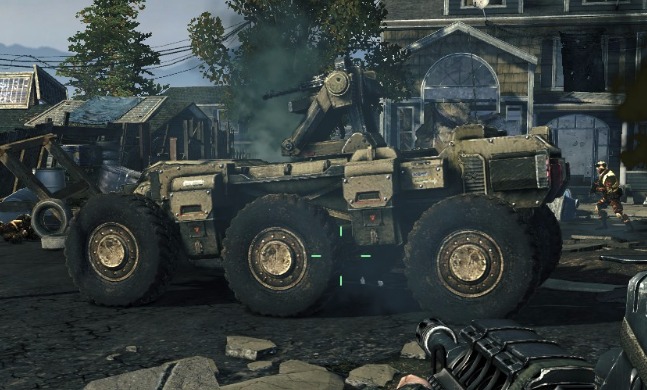
Rounding off our resistance is a Korean-American, Hopper. A techie, this guy controls ‘Goliath’, the coolest bit of mech-tech since the Godzillabot in Bulletstorm. Goliath is an AI controlled Ground Drone, like a monster-truck with a minigun, emulating D0g from HL2 – but without the cuteness. It’s awesome as it crashes through buildings, runs over GKR soldiers and guns them down. You control its rocket systems, but it’s not just a side-kick; while some missions revolve around ‘protecting’ it, Goliath is a kickass thing to have around and actually saved my life a few times, unscripted. It was great having Goliath trundle alongside.

In look and tone, Homefront feels Half-Life 2; replace the Combine with the GKR and it’s pretty close bar the Headcrabs. There’s no cut-scenes, everything is detailed in real-time and while Jacobs is a Gordon-style Silent Hero he has Conner screaming every five minutes to fill in the silence. Homefront is well paced too. It is the usual two weapons load out, duck and cover, getting shot hurts scenarios where the GKR are smart opponents and better shots, but the firefights are very well staged and its skin-of-your-teeth survival rate makes it just the right side of tough. From decimated suburbia and shopping malls to survivalist camps, there’s not an ounce of fat on Homefront; it’s lean and desperate without becoming shallow. It’s one of those games you find yourself caught up in and can’t stop, like a season of 24. Unlike 24 The Game. The Survivalist mission is a nervy standout, and not just because we’re there to negotiate the use of their chopper (yeah, about that piloting thing…). The negotiations don’t go so well, and as we stealth through the compound looking for the chopper there’s sly commentary on Survivalists being right after all and how possibly, we’re not much better than the GKR given the measures we stoop to. Eventually we get to de chopper and as Connor yells at me to get it in the air, I’m all set to rage-quit , bitching about shooter’s terrible piloting missions. But…

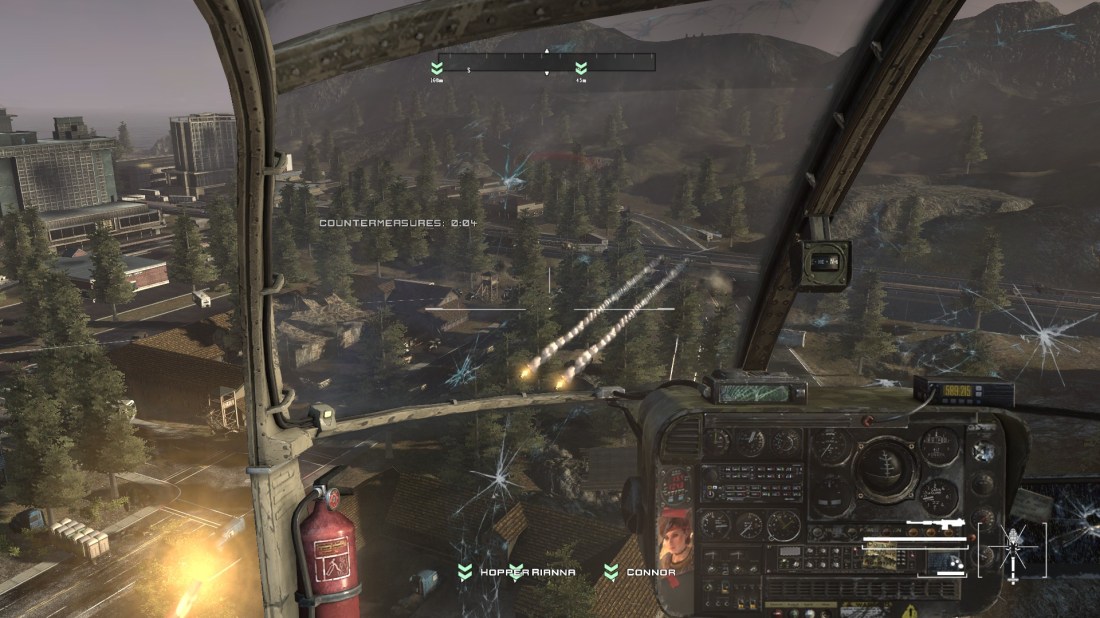
The chopper mission is one of the best flying missions I’ve ever played. It’s like a Fast and the Furious set-piece, completely impossible and insane and I’m finally a Flying Ace. This is what Jacobs is here for, the reason the resistance rescued me and the game makes sure you prove you were worth the trouble. I’m zipping through tunnels, avoiding SAMs and skimming the tarmac as the team jump aboard and hijack the tankers (Hopper and Rianna just throw the drivers out their cabs; Connor stabs and beats his driver). We’re taking out tanks, Humvees – nothing original but the chopper is such fun to fly and fight with as we go through a mountain range, tunnels, freeways, through a town and over/under bridges, defending the tankers and making Connor holler as I blow shit up. I actually miss the chopper once I land. That’s a first.

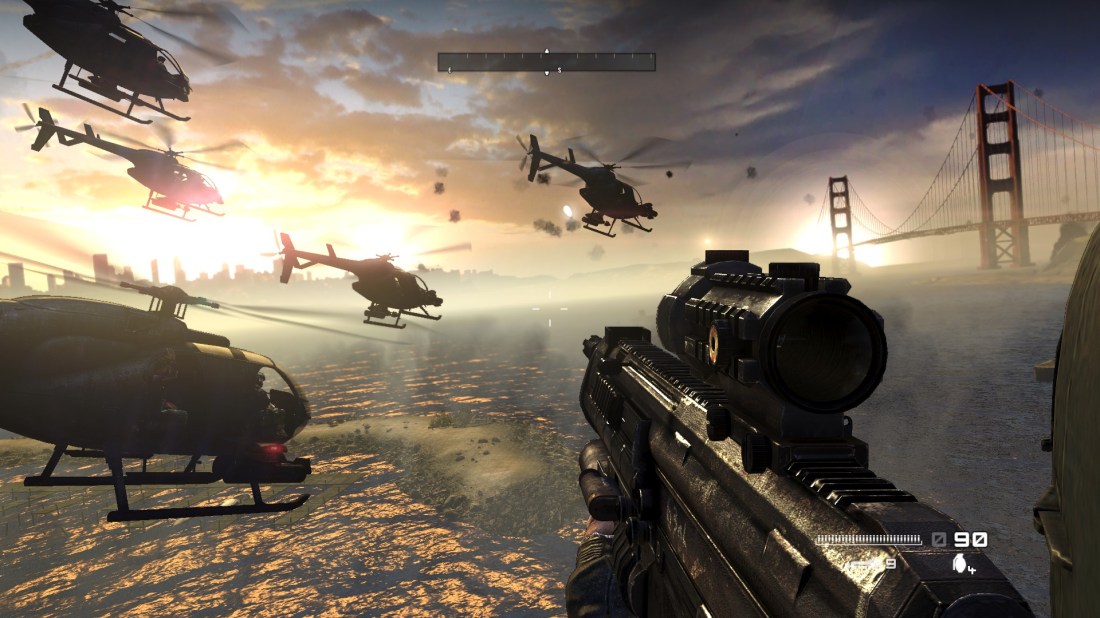
With that, we join the military for their last stand on the Golden Gate Bridge, and what a stand it is. A non-stop fight to the end, worthy of Michael Bay on a good day – Humvee chases, GKR-controlled Goliaths, jets and ‘copters blasting the hell out of everything, it’s insanely heroic. It couldn’t have ended any other way and I’m glad it comes through. I feel … patriotic.

John Milius was involved as a story consultant and it does have his jingoistic Red Dawn paws all over it; it’s a Boys Own adventure with completely outrageous heroism and extreme moments, but there’s commentary on what it means to be a patriot, on unchecked regimes and superpowers’ role as deterrents. As a shooter, Homefront doesn’t add anything new to the genre but it is a rarity; an engrossing CoD era shooter, and one that doesn’t feel like a tutorial for the multiplayer. It’s a great game.

Homefront was Kaos’ swansong after their first, Frontlines. It’s a shame they didn’t get another outing; Homefront shares Frontlines’ DNA but it’s no refined reskin; this game is immeasurably better and Kaos could have come up with something even better third time out. It wasn’t the end for Homefront though, the rights were picked up during THQ’s firesale by Deep Silver, who rebooted it as an open-world game, focusing more on the guerrilla tactics of a resistance. Homefront The Revolution got mixed reviews and missed the all-or-nothing point of the original. Give the reboot a miss and come Home.

2011 | Developer Kaos Studios | Publisher THQ

Platforms Windows | PS 3 | Xbox 360

Frontlines Fuel of War

A SECOND WIND REVIEW

FBT is on the frontline of the fuel war. And he’s not happy about it.

Frontlines, a modern era shooter, didn’t have much competition on release in early 2008 but it was completely missed. Because we were still living in 2007; Bioshock, Halo 3, Witcher, Assassin’s Creed, The Orange Box, Mass Effect – to name a few, but the name on every gamer’s lips was Call of Duty 4 Modern Warfare, the game that rebooted the CoD franchise and pulled it out of the trenches of Normandy and into the now. Pre-release, CoD’s modern setting seemed like a folly but MW destroyed its competitors and made military shooters dangerous again. And that was just the single-player mode. The multi-player changed the way we gamed online, signalled the end to Counter Strike and Smack Talking reached new levels of idiocy. Love or Loathe it, CoD MW was a landmark game that cast a shadow over every other shooter and changed FPS forever. Frontlines could have ridden that wave but instead it drowned after CoD MW atomically dropped, dismissed as a wannabe. Worth a look now CoD is just a clone of CoD?

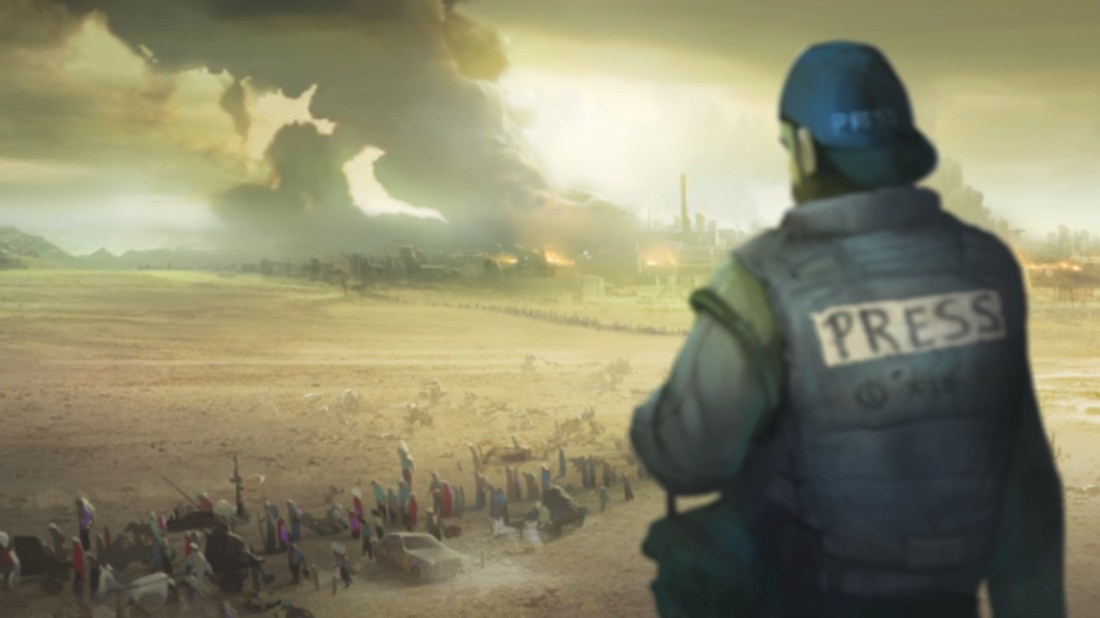
Set in the 2020’s, the world is on a knife-edge as fossil fuels run dangerously low. After a worldwide plague further destabilises nations, two pacts are formed; the Western Coalition (The U.S., various) and the Red Star Alliance (Russia & China). Relationships deteriorate until RS launches a surprise attack after exposing WC was moving to control Turkmenistan’s oil supplies. WWIII begins – and is documented by Photo-journalist Andrews, embedded with ‘Stray Dogs’ – a WC frontline battalion sent to weaken Russian defences as the WC pushes towards the Motherland. Let’s go.

As we’re set down on the ground we’re overwhelmed by RS forces and Andrews is kidnapped. I’m confused; I’d half expected to play him, given he’s the one in the cutscene rambling on about war is hell. Instead, I’m in the boots of … it doesn’t matter. It turns out, despite an opening where I meet every military cliché since Aliens (Jock jerk, the ‘get some’ marine, humourless commander, cocky kid etc.) I’m playing as non-descript members of the Strays. If I get killed, which happens regularly, I reincarnate as another Stray. This kind of interchangeable character only really works in games where the plot doesn’t matter yet the opening tried very hard to make clear freedom rests on my shoulders. We just sat through the fall of society, starving kids and disease-ridden bodies over Andrews’ speech about the futility of war and the Strays’ impossible odds. Hard to care when I just respawned Solider No.9. Had there been say 10 Strays we met and their deaths reflected in Andrews’ reports, brought home how tough this war was, I might have made more effort to not get killed every five minutes, but instead we battle anonymously through doing Capture the X missions over and over. Frontlines’ cutscenes constantly shows the Jock Stray and Andrews gassing about the state of the world after each mission. Does Jock ever actually fight?

Respawn games like Battlefield and Battlefront at least have compelling locations to fight bots in, but not even Frontlines’ maps are exciting enough to care. Visually, it looks like Counter Strike – a game that got respawning right by dropping the reasons and concentrating on the ways to win. Frontlines tries to be involving and distant at the same time and messes up both shooter approaches. The wonderful 2007 also had Medal of Honor Airborne – another nameless respawner, but each location was very different and difficult but most importantly, you could land where you liked, giving you the option to rethink your approach – I once lost 3 Strays in a row after the game constantly respawned me at the wrong end of a RS tank barrel and while you can chose to respawn at claimed objectives, you have to run your Stray all the way back to the battle again.

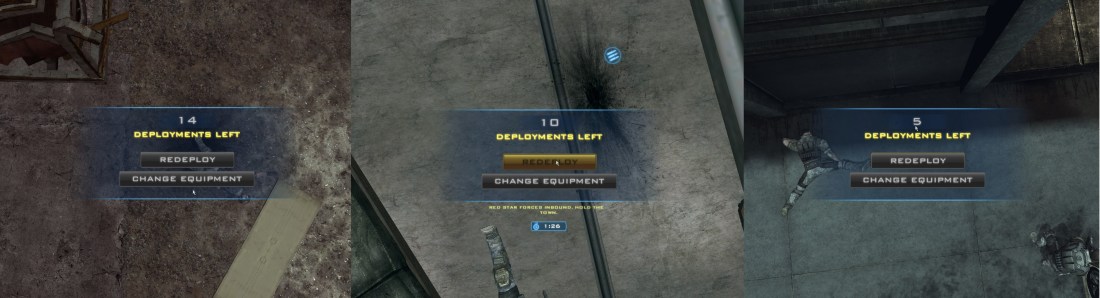
And that battle is unfairly tough. It takes the better part of a full clip to take down a RS solider, sometimes you’ll need several headshots even when he’s not in a helmet, but if they clip you it’s red-screen and ‘redeploy’. Each mission gives you a limited amount Strays to sacrifice so rather than care, you’re just careful because you don’t want to Capture the HQ yet again.

The only area that Frontlines distinguishes itself is in some the tech you can find and use. RC helicopters, c4-packed cars and miniguns allow your solider to weaken enemy lines and they’re a great deal of fun even if they only survive for a few moments. We can also signal for air-drops and drive Humvees and Tanks, along with one helicopter which I crashed instantly – I can fly the RC Copter like I’m Stringfellow Hawke but the grown-up version? Crashed in seconds.

Frontlines was developed by Kaos, a studio created by THQ specifically to build shooters. Both Kaos and THQ are now long gone which shows how well that plan went. It never stood a chance against CoD MW but it could have distinguished itself, gone its own way; instead, it’s the worst example of a single-player mission just being a warm up for the multiplayer – a quick knock-off, a Mockbuster (‘you rented Snakes on a Train?’), Frontlines is what you end up with when you send your Mum into Game (“the man said it’s the same as CoD and it only cost a fiver”).

It was tough to develop modern shooters in the face of CoD’s unstoppable cycle of releases, even rival MoH crashed spectacularly when they tried to compete. But Frontlines isn’t even a good throwback to pre-MW days; Andrews’ dispatches would hardly have made prime time CNN. Stray Dogs as a team could have matched CoD’s narrative-switching had we been given the opportunity to get to know them. If we don’t care about our soldiers dying or what they’re dying for, the experience becomes forgettable; Against the 2007 juggernaut Frontlines didn’t have much of a chance but it didn’t even put up a fight. That’s a fatal mistake for a shooter.

Developer Kaos Studios | Publisher THQ | 2008

Win | X360

Genres; FPS, Shooter, Military