Die Hard Nakatomi Plaza

A Blast from the Past Review

Is FBT just another cowboy?
The Past

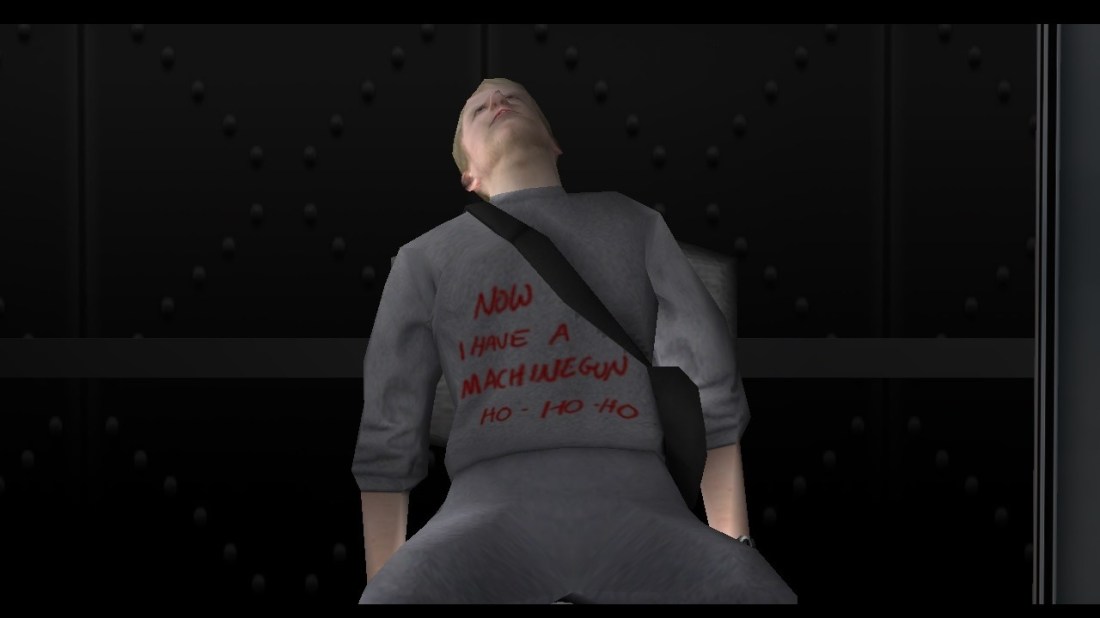
Die Hard is my all-time fave action movie so I originally approached DHNP like walking across glass barefoot. How could it possibly be any good, even if the movie’s plot is basically a FPS? But in my memory, DHNP trod a fine line; referencing the movie yet sneaking in levels like protecting Argyle and filling out the bit between ‘shoot the glass’ and John in the bathroom. There are two things I remember most clearly about DHNP; it tried very hard to respect the first film and it was as hard to finish as the fifth film.

The game took no prisoners – shooter experience was not part of the equation this time, you realised that. God knows how Hans got all those terrorists in one van – they were everywhere. One wrong move and you’re down before you had a chance to say Ho-Ho-Ho. Still, I recall it as a cracking shooter that let you live out an against-the-odds action movie.

But considering its lacklustre reviews and that it’s not even reappeared on Steam or GOG makes me wonder if my DH love overshadowed the game itself. Was it Yippie Ki-yay or just Motherfucker? I remember a great, if unforgiving game and it can’t be worse than Die Hard 5. Even if it doesn’t run it can’t be worse than Die Hard 5.

Still a Blast?

I’m alone, tired and seeing diddly squat from Windows10. I just couldn’t get past the welcome screen, like John looking for Holly McClane. I lost myself in patches and dead links trying to find a way to make it work, but nothing. I had to find out if DHNP really was a lost classic and not a Die Hard In A Building rip-off. McClane wouldn’t give up; neither will I.
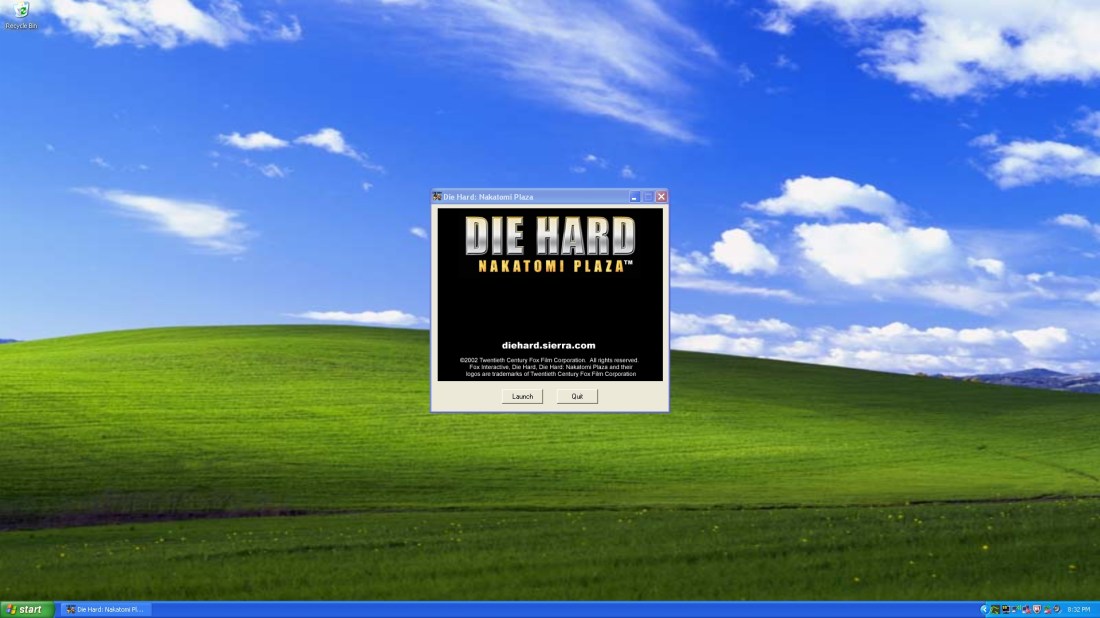
A week later I was staring at that Windows XP wallpaper courtesy of a battered Dell computer off eBay. I get deafened by the start-up tone and begin installing DHNP. It’s good to be back. And it’s even better when DHNP loads up like a boss.
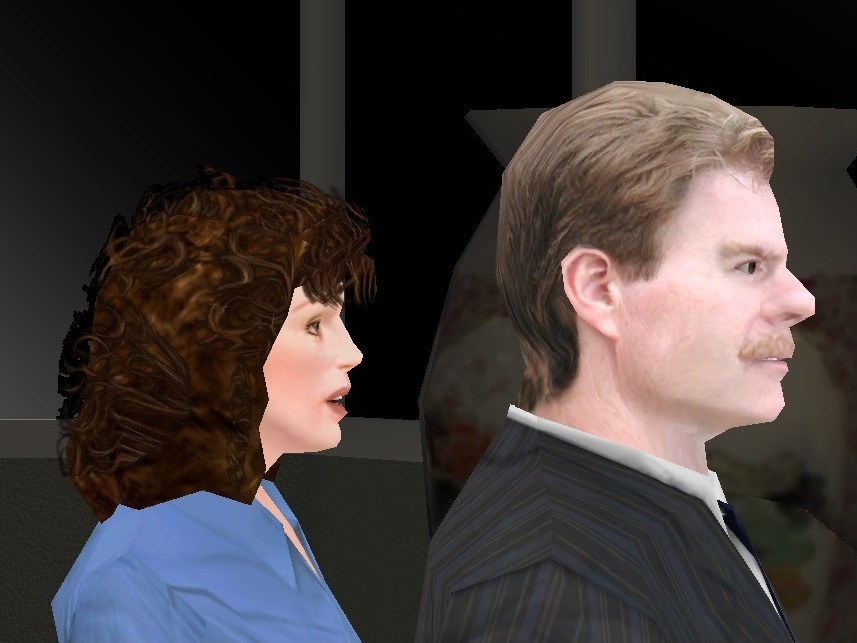
Although it looks pretty dated now, DHNP is really trying. The opening sequence, while truncated is faithful and there’s detail only a Die Hard geek would spot – when you walk to the elevator the second security guard is idly picking at his nails. A major difference is how everyone looks; Holly has the same perm (no one’s gonna trademark that) but Ellis now looks like an 80s porn star. Karl doesn’t look anywhere near as menacing and has his hair in a little ponytail, but the biggest change is John McClane. Because he’s not in it.

Die Hard’s strength as a high-concept movie wasn’t the shooting, it was who’s doing the shooting. John McClane was, as the trailers said, an easy guy to like. You wanted to see him succeed; he wasn’t Arnie shrugging off bullets, he was a regular Joe caught in a situation he had to face. But in DHNP we never see JM’s face, only hear him, even in cut-scenes which is distracting given how much of this is about him; and JM doesn’t always act like JM – at one point, while stalking through Nakatomi’s R&D department, he has the option to gas several terrorists just to clear a fairly easy path. What raised Die Hard above other actioners was that JM was fundamentally decent; he never kills anyone who doesn’t shoot first, yet here, you can kill Tony with the buzzsaw. DHNP’s John is more Doomguy than nice-guy.
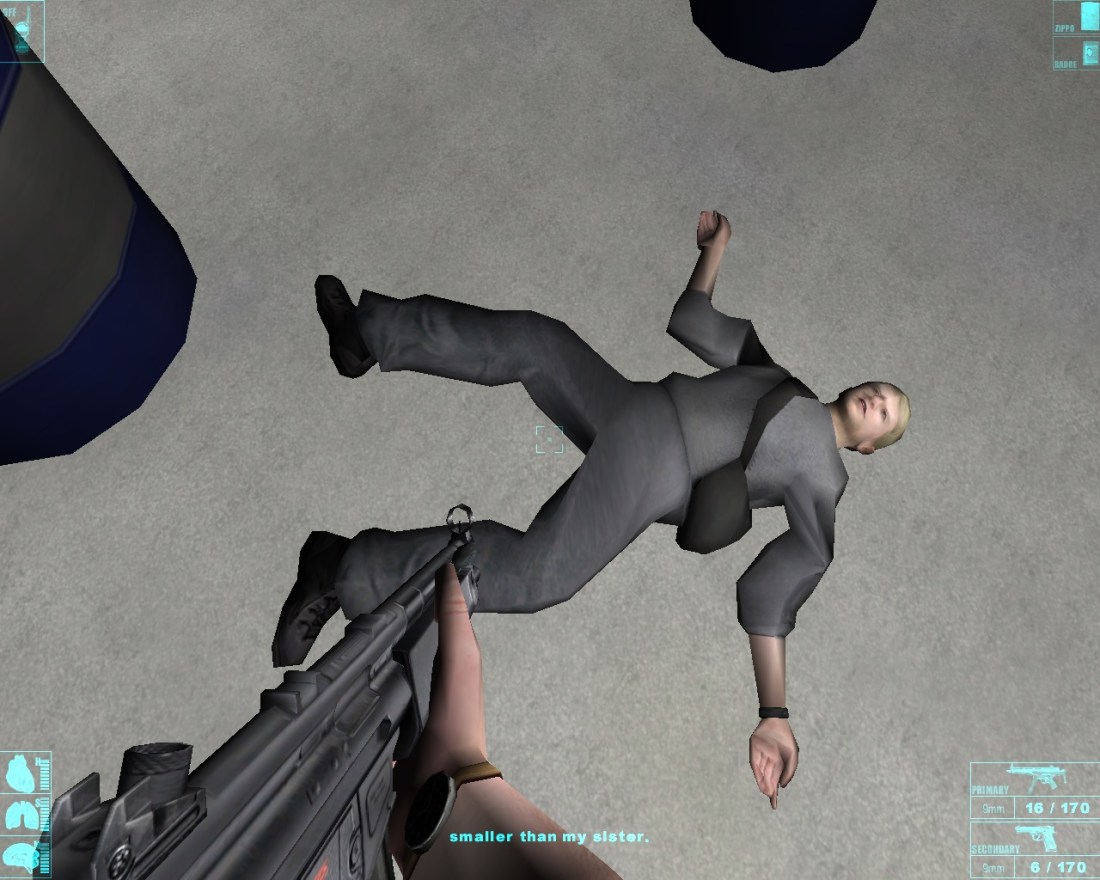
As it progresses, DHNP seems to be unsure if it’s for fans of the film or a standalone shooter; I couldn’t proceed until I looked at Tony’s shoes which would make no sense to those who hadn’t seen the movie (since we can’t see JM’s feet) yet Hans is hidden for half the game. I couldn’t work out why until I met Bill Clay – ahh I thought, if I get taken in by that fuckin’ TV accent I’m going to get shot, but Hans doesn’t get the drop on JM this time either, so keeping him hidden makes no sense to a gamer who never saw the movie.
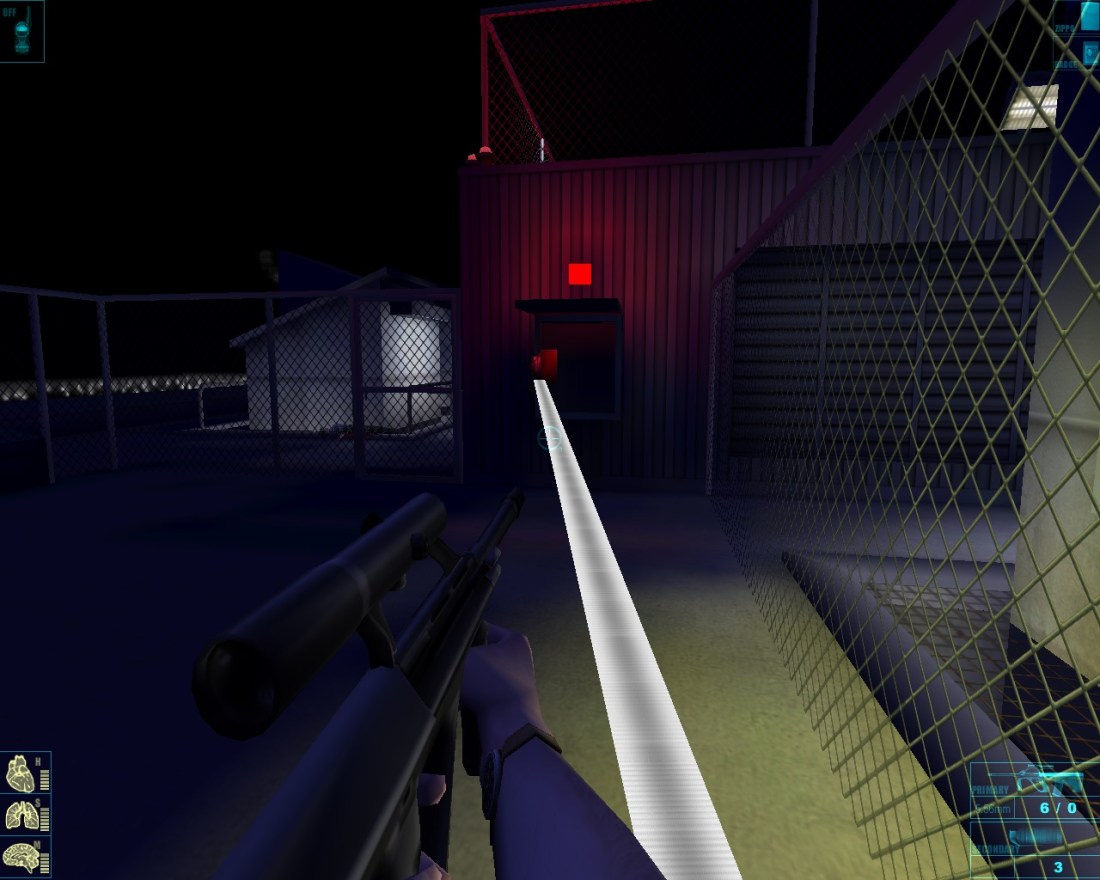
One minute it’s relying on you knowing what’s happening then it’s acting like we’ve never been here before; John finds C4 on a seat next to an elevator shaft which seems fairly obvious, but still needs Al to prompt him before you can use it. By picking and choosing what to reference, DHNP creates huge plot holes; Thornberg is completely absent so how did Hans know to kidnap Holly?
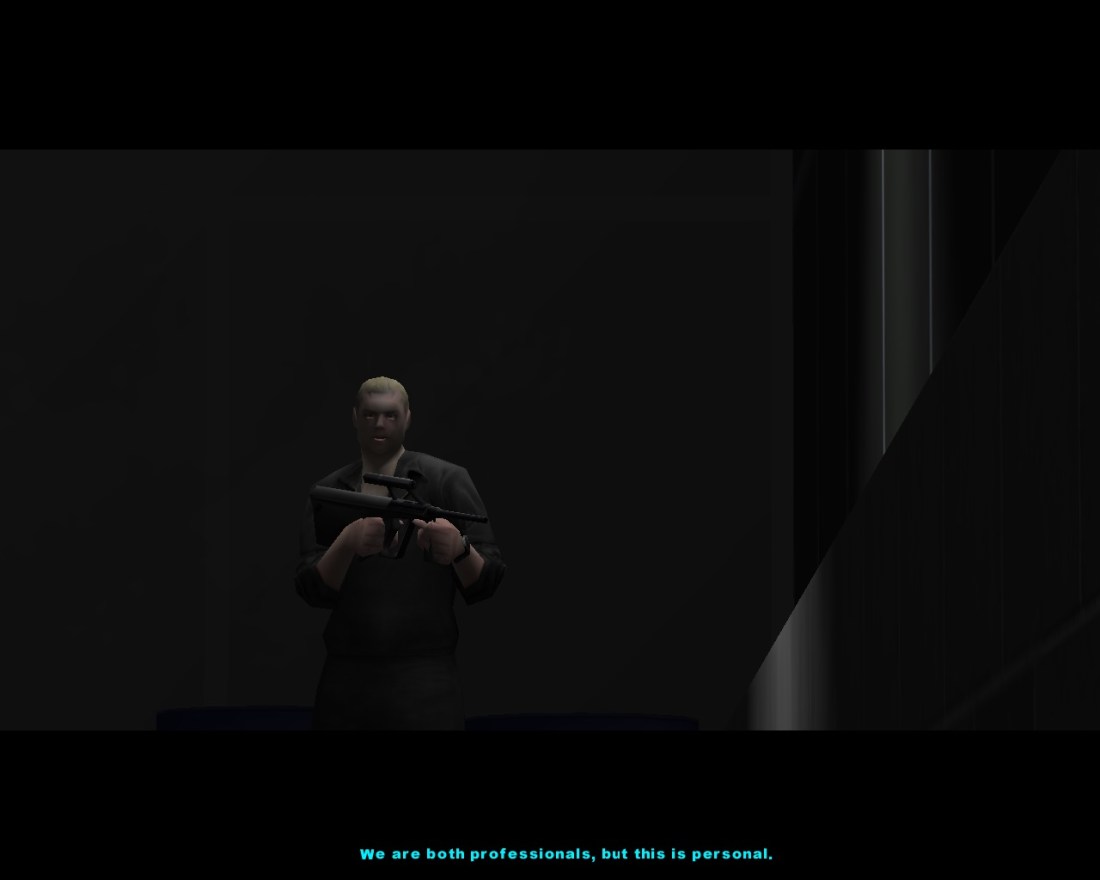
But the biggest ‘huh?’ is Karl, who has his Tony-tantrum then all but disappears, so when he rocks up and says “we’re both professional, this personal” it doesn’t have the same resonance – we don’t even get the “that man is pissed” moment. Plus, he runs off and gets reinforcements! The hell? It also messes with the structure of the film; SWAT enters the building despite the RPG attack occurring and Al mentions they’re sending in Paramedics; it undermines JM’s isolation if folks are coming and going freely – he visits every floor, even going for a swim in the sewers for no good reason, yet never opens an outside door to get help.

So, if it’s not the Die Hard experience I remember, how does it hold up as a shooter? Frantic and frustrating. The AI of the terrorists (who all sound like Arnie) is basic, and there’s hundreds of them. There’s a nice touch in the way they switch to sidearms if you get too close and do lots of duck and rolls, but it’s insanely difficult due to their numbers and accuracy. Even in the finale Hans needs seven or eight shots to the head just to send him out the window. While Holly is doing everything she can to get shot herself.
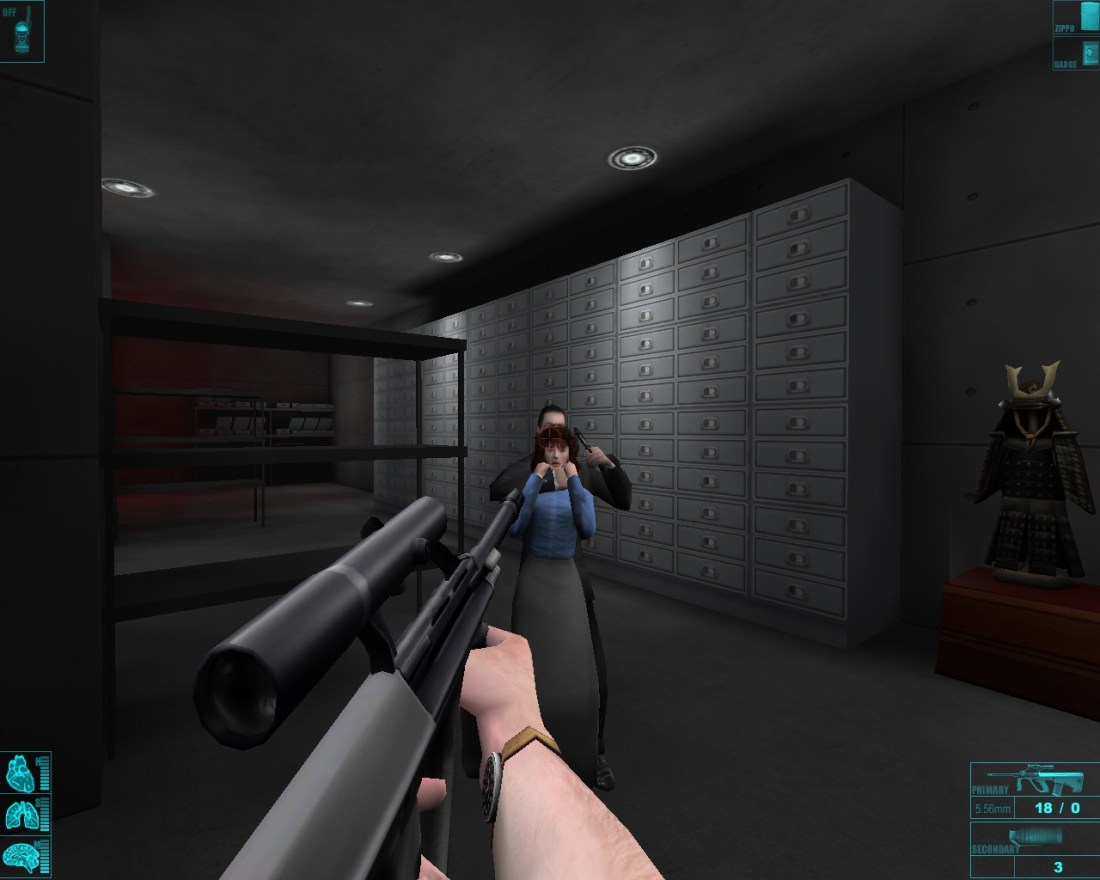
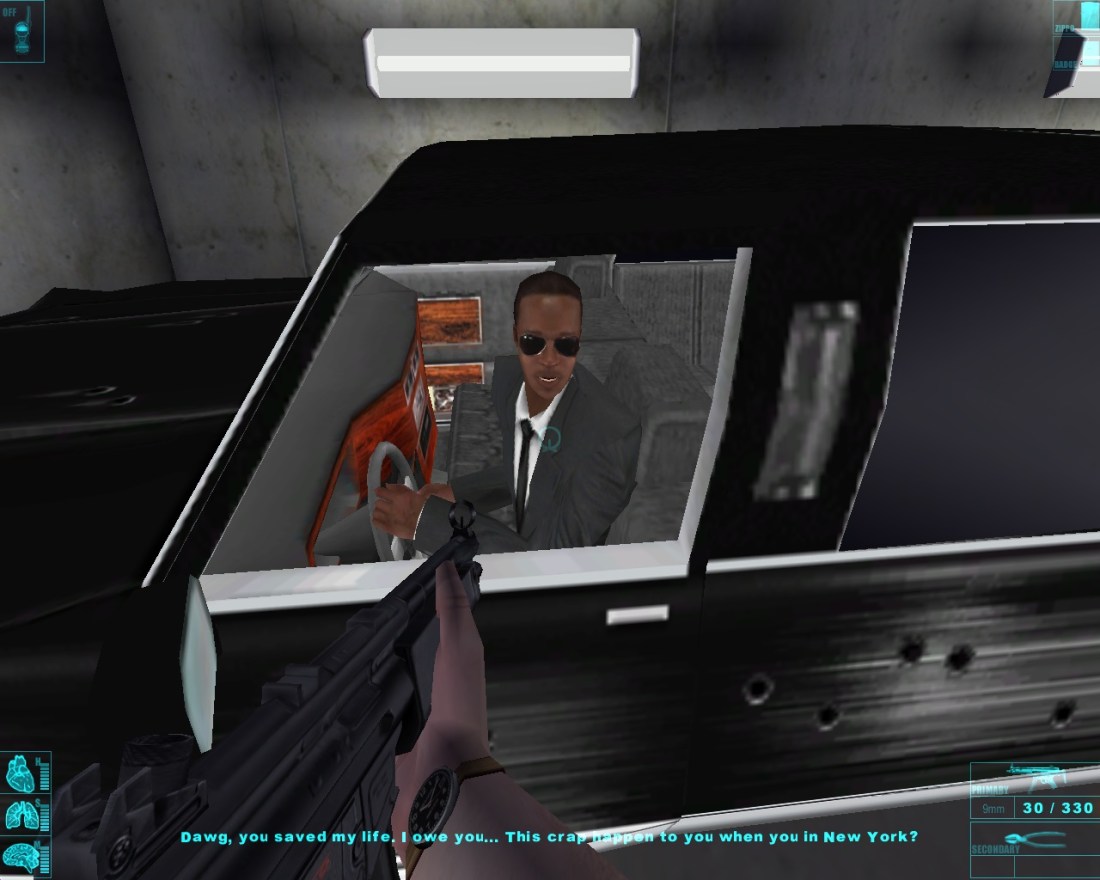
There is a lot of care here though; the ‘don’t hesitate’ guy pops up – then down onto Al’s car, the receptionist that looks like Huey Lewis is there and others from the movie too, and it’s got the look and feel of the Plaza down perfectly, meanwhile some extensions work really well, such as trying to outfox the terrorists tracking your blood-soaked footprints, reworking the giant fan scene or saving Argyle. Sometimes it does go left-field, most notably in a sequence where John discovers C4 counting down (doesn’t that go against Hans’ plan?) and has to disarm it in a time-sensitive rush.
So did DHNP live up to the memories? I can see why DHNP faded away. It’s just an Okay Shooter, given a pass by its inspiration. It tries, but relies on your awareness of the movie to fill gaps in its logic, then asks you to ignore the logic where it suits. Can’t have it both ways, and instead of enjoying it I just wish Hans would open the front door for me.

Die Hard Nakatomi Plaza might not have been what I remembered, but the saddest part is what I had to go through to relive it. I now have an obsolete PC lying around. It’s a shame that older games are left to die-hard as the tech marches on; we’re even seeing it in mobile platforms now which were once the last chance saloon for older games – Monkey Island no longer works in iOS 64-bit, which sucks. It’s frustrating when you can’t enjoy something anymore just because the industry decided not to carry the past into the future, worried it would look dated. So maybe that XP rig isn’t obsolete after all; I have a ton of old discs W10 turns its nose up at. XP, come up to the coast, we’ll get together, have a few laughs.
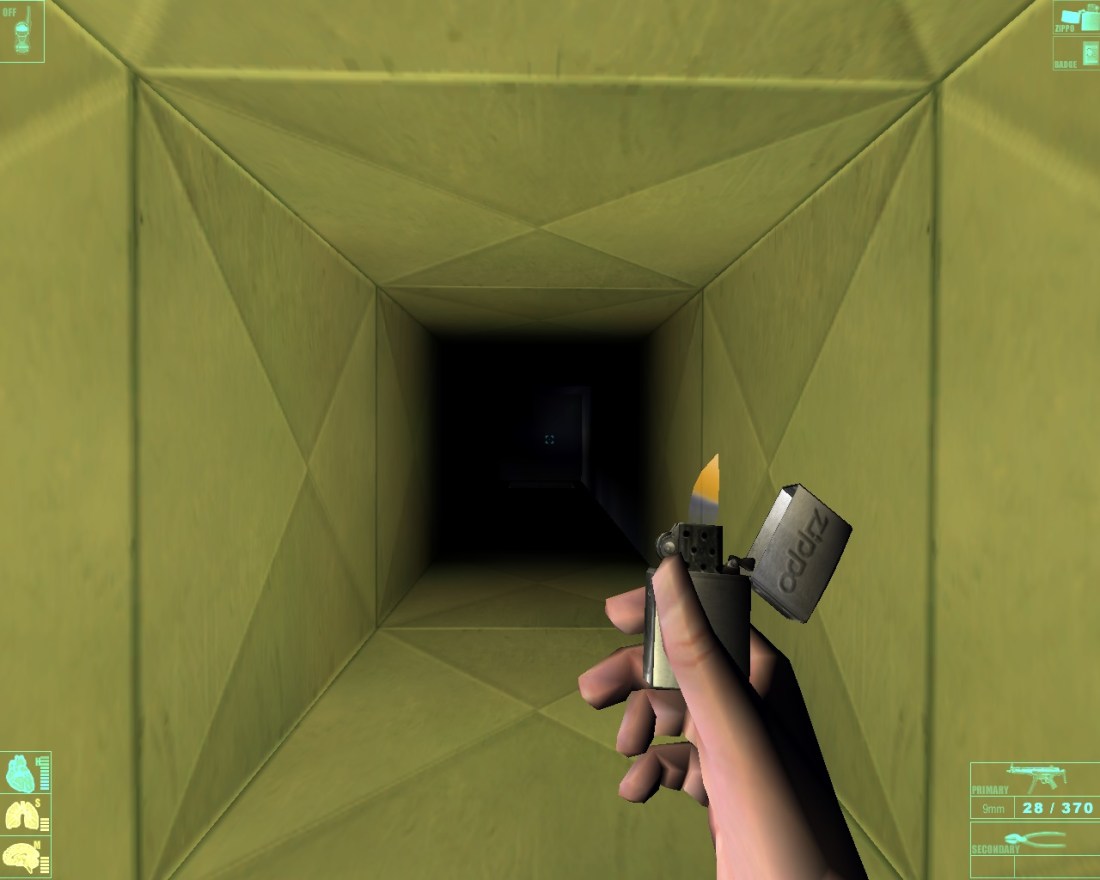
2002 | Developer; Piranha Games | Publisher; Sierra Entertainment

Platforms; Win XP

SOMA

a second wind review

“who thought sending a Canadian to the bottom of the sea was a good idea?”

FBT thinks it was a very good idea.

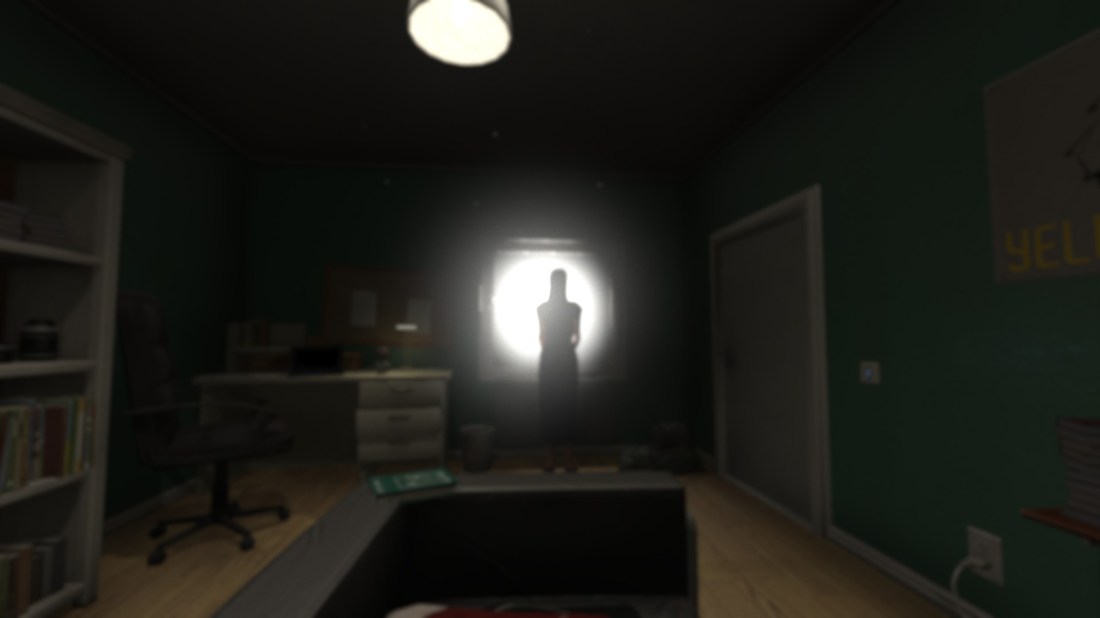
In 2015, comic-store clerk Simon Jarrett is involved in a car crash, losing his sweetheart and some of his skull; left with pressure on his brain that might kill him at any moment, Simon meets not-yet-a-Doctor Munshi, who is developing a radical way of scanning the human brain. Ignoring the suspect office and equipment, Simon agrees to be a lab-rat hoping the scan will allow surgery by revealing the pressure point. Unfortunately, Simon wakes to discover he’s under even more pressure – the entire Atlantic Ocean.

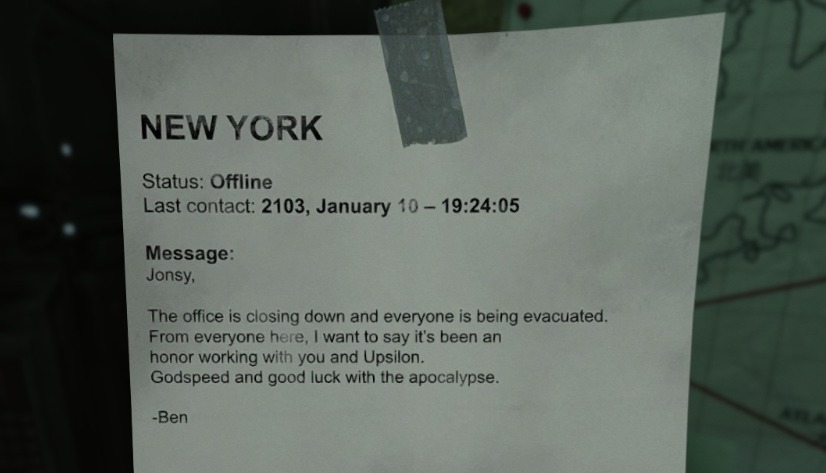
Worse, Simon’s not just woken up in the wrong place, he’s in the wrong time. It’s now 2104; contacted by a scientist called Cat, she explains things are even worse; a year earlier, a comet impacted earth and caused a nuclear winter. The only life left is what’s on Pathos-II, the undersea science lab they’re in; but is that life friendly … or even human? Doesn’t seem possible but I get the feeling it’s only going to get worse for Simon.

It’s an obvious comparison but SOMA does remind you of Bioshock, and other psychological games like Alan Wake, Silent Hill, Alien Isolation, Prey (both versions), System Shock pop into mind; we’ve got machinery moving suddenly, glimpses of things, doors opening, lights flashing, eerie noises, jump moments, dark rooms to enter; all very Survival-Horror, but rather than derivative, SOMA is something different. It’s in the story that SOMA steps out of those games’ shadows and into it’s own horrible place. It’s closer in experience to Hollywood’s recent spate of subtle-horrors; A Quiet Place, Cloverfield Lane, Annihilation; SOMA messes with your head not your trigger finger.

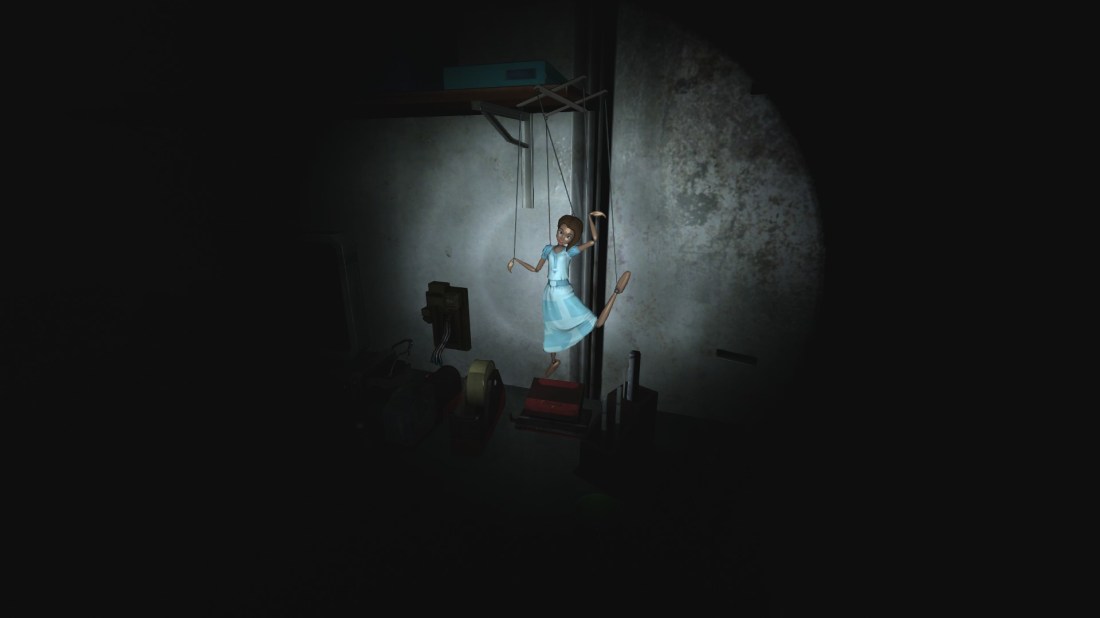
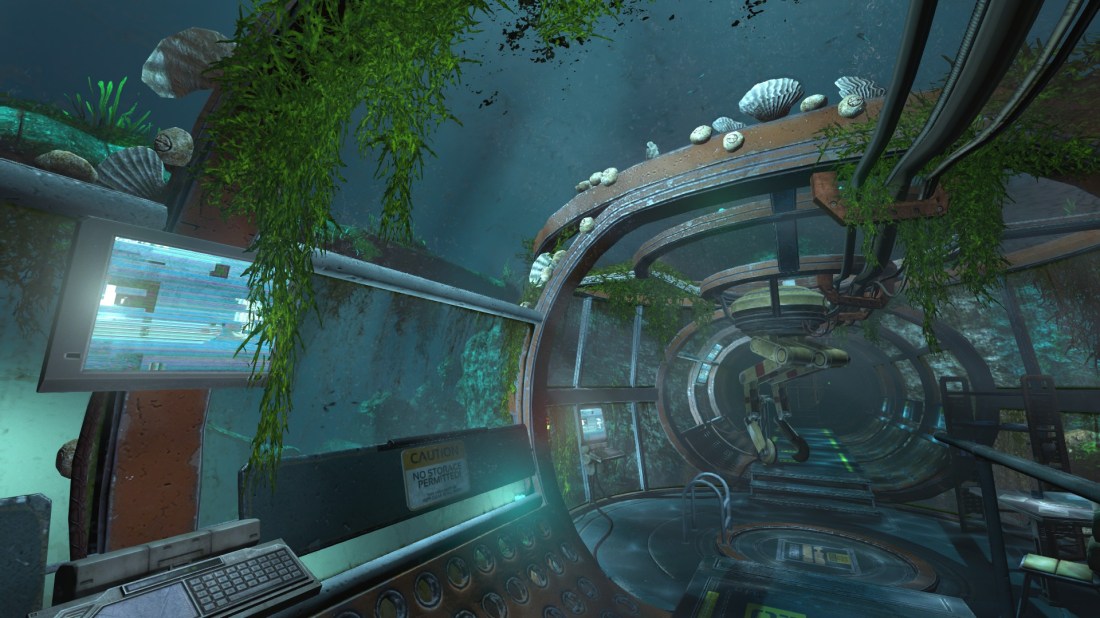
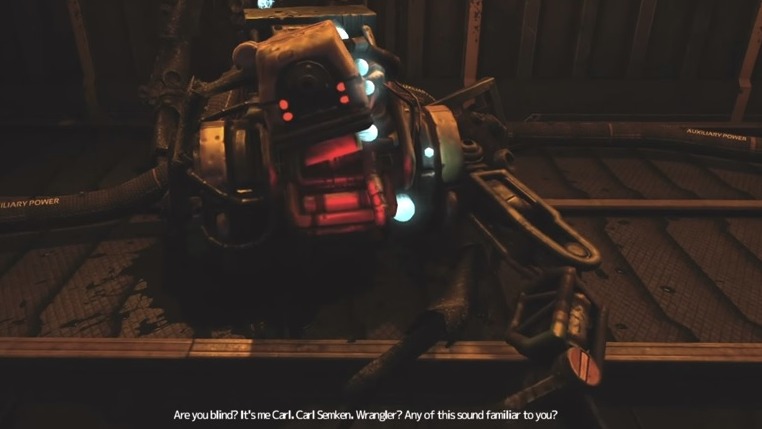
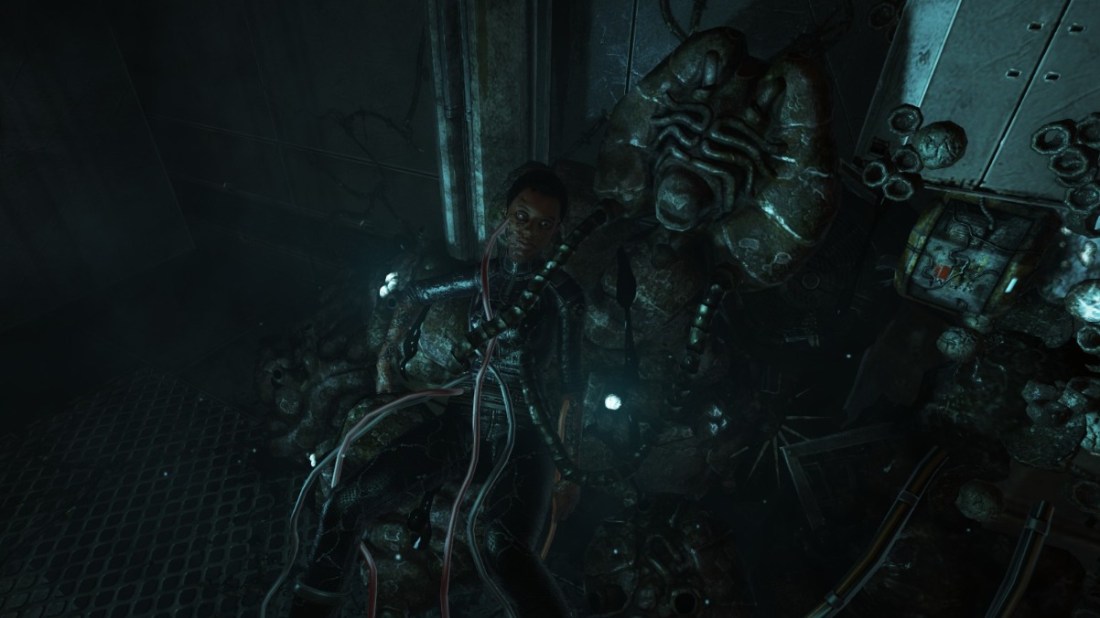
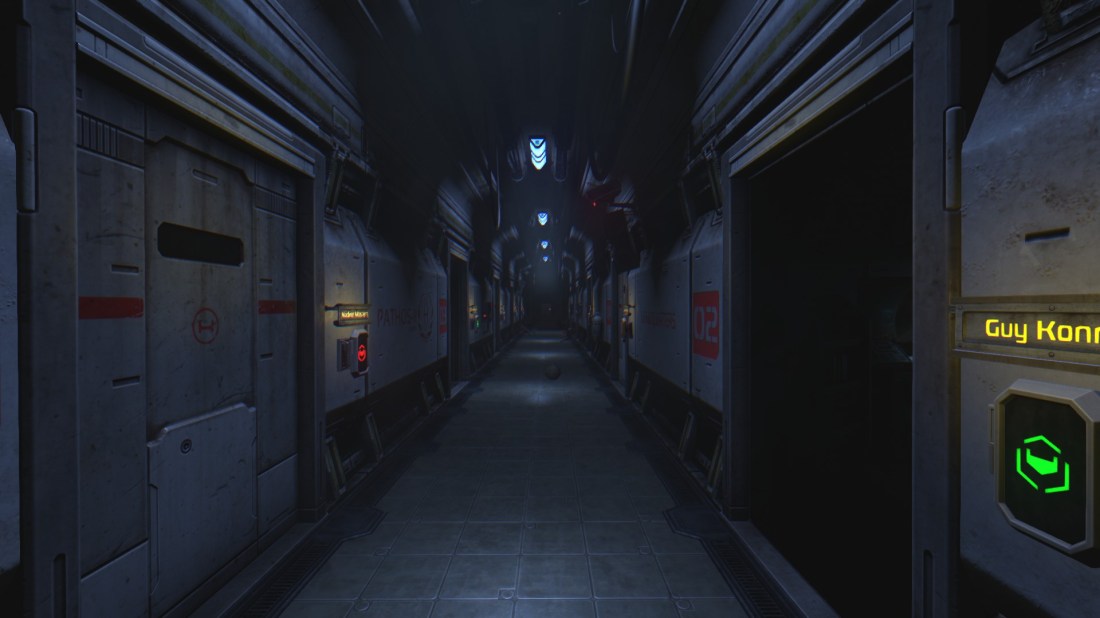
Taking in the desolated and decaying station, Simon quickly discovers it is not a nice place to be. The walls are covered in some encroaching, living goo that makes Pathos-II look like a mash-up between the Alien Hive and the Borg’s gaff. Early on I find a machine covered in the gooey tendrils, and disconnect it to turn on a switch. Then it cries out it “Don’t, I need it!” before dying. Should … should I have not done that? That wasn’t a machine’s voice that was … Human? Then I find a crippled machine that’s convinced it’s a man who suffered an injury and needs a medic. You need a mechanic, mate. But he thinks I’m the crazy one. Am I? What is going on here?

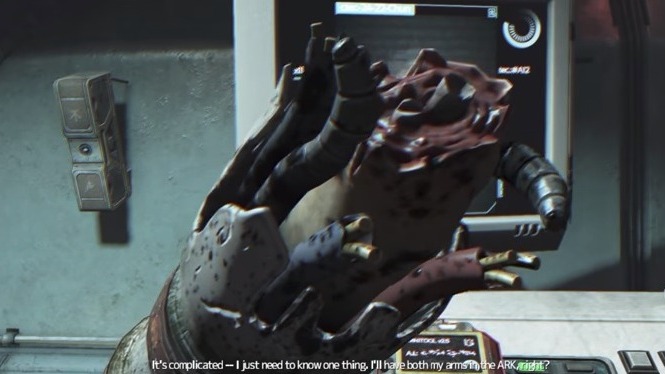
After the comet impact, Cat’s idle hobby – digitising brain patterns – became Pathos-II’s sole focus. They created the ARK, a digital representation of earth where their personalities can live for eternity and preserve something of humanity. Cat was almost there when survivor-guilt, psychosis and understandable madness overwhelmed the crew. Meanwhile, when Pathos-II’s AI, “WAU” learnt of the comet, it tried to fulfill its prime directive – protect mankind. Problem is, WAU couldn’t understand human nature, only survival so it used ‘Contact Gel’ – the goo we’re seeing – which is like a liquid circuit board, to bond the crew to life-supporting tech and keep them living, whether they want to or not. As if that wasn’t horrific enough, WAU also began activating ARK files, building the transferred personalities into the circuity and machines instead of their digital reality; anything to keep humanity going. The station is people.

WAU is arguably the main antagonist but it’s not evil like SHODAN or GLaDOS and we never converse with it; WAU is just desperately trying to save humanity and wants to help; humans are living, but you’d not call it life. But what is life? What are we trying to save? We’re leaving all those people to this agony? It looks like Cat and Simon will end up joining them anyway. The ARK runs on solar power, and thanks to the nuclear winter there’s no sun. If they leave it on Pathos-II, the power will eventually fail – or WAU will reach it. That means using a supergun at the end of the lab to fire the ARK into space. Easy. Except Cat doesn’t even know if it’s still here. If it was launched, they can’t Tron themselves into it and escape – if it’s still on Pathos-II, can a scientist and a shop clerk finish the ARK, digitise themselves, load it into a rocket, fire it out of the Atlantic Ocean through the nuclear winter to reach space and hit a safe orbit so they can live forever? They have no chance! But what else can Simon do but try? Because it was all too easy, turns out he can’t even take out WAU’s monsters.

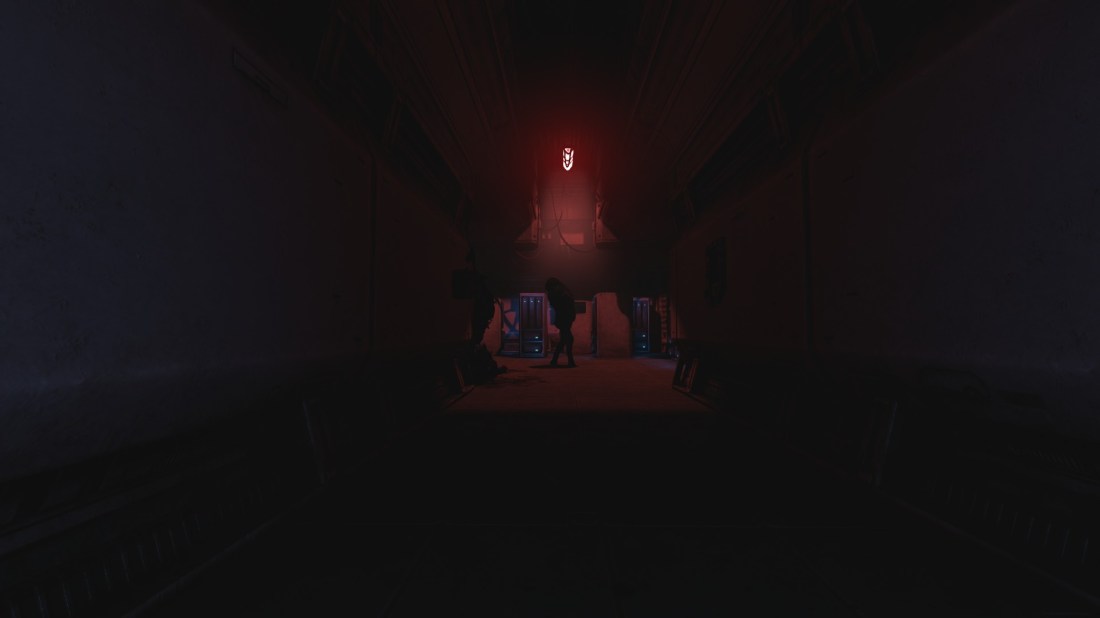
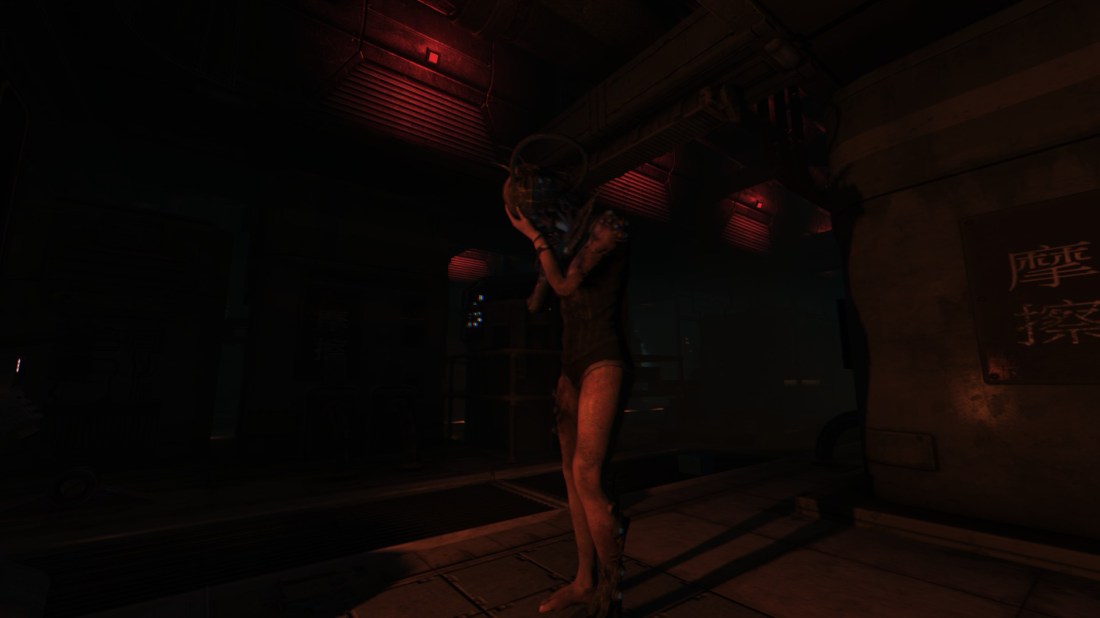
Like Frictional’s previous game, Amnesia, when you do face off against a creature, your wits are your weapons; the best Simon can do is escape. Several of WAU’s abominations roam the station but it’s refreshing that they’re not common, keeping their impact at maximum ‘oh god!’ when they do appear. An early goo-filled machine is standard, but human-creatures are just … no. Some listen for you, or you have to stay out of their eye-line, others follow you unceasingly and you never really see the same monster twice, like you only meet mini-bosses. You never go ‘oh it’s a so-and-so, I just need to do this’. Each has its nightmarish ways to out-smart and they look so maddened and tortured you feel pity as much as fear – but the real monster is the story.

Simon’s situation, how he got there and the overwhelming odds he’s facing are the game’s biggest scares and Simon is not helping. Realising the human race is in the single digits, it’s not long before he’s on to the really big questions. Is the ARK immortality? Is it life, living in a machine? Will they be much different from what WAU is attempting? Are we just electrical impulses really? Is life just our perception? What is humanity? Does it matter, who cares? What is the point of it all, Goddamnit?! Simon’s frustration is palatable, his breakdowns understandable, but thankfully we have Cat to give some perspective. As in, Cat really doesn’t have time for his crap. Hurrying him through his realisations, getting exasperated at him for pondering the meaning of life when we have stuff to do, she’s like an impatient Alyx and easily one of the best sidekicks in a long while. The philosophical banter between the two is spot-on and her sark provides some very welcome comic relief. Simon wants to give meaning to all this; the only thing Cat clings to is the possibility that the ARK is still there. She’s even blunt about how Simon wound up here.

SOMA knows that question needs to be answered so rather than dragging it out, it’s revealed early – but SOMA doesn’t just do the reveal then expect Simon or us to shrug it off; instead, the revelation affects and alters everything, becomes the central theme. Plus, SOMA is packed with enough twists and tough choices that Simon’s situation is the least of our worries; there’s moments so debilitating I just walked off, needing a minute. SOMA really nails surviving death only to face no future. We’ve gamed through the Fallout-style apocalypse before but SOMA instead calls to mind the Cormack novel The Road, that sense that it’s just … over. Simon’s situation is so frustrating; he’d come to terms with death; now he has to survive? He’s a likeable guy, give him a break FFS. The shit he goes through …

Still, while Simon might be faltering, for us, progressing through Pathos-II is very focused. You’re not spoon-fed solutions, Simon needs to get his shit together sharpish. Nothing comes across as convenient or outlandish, the lab is a logical place and you do get a sense of progressing, even if it’s all on you – no mission markers, no hints, just you. Early on, interacting with the world is frustrating; Simon must be precise to progress, to the point of pushing or pulling doors – given my real-life inability to push/pull a door correctly even when it’s written on it I’m just adding to his woes. But after a while you get into it. The puzzles too are cleverly frustrating. Never explained, it’s up to you to figure out the process before you even attempt a solution.

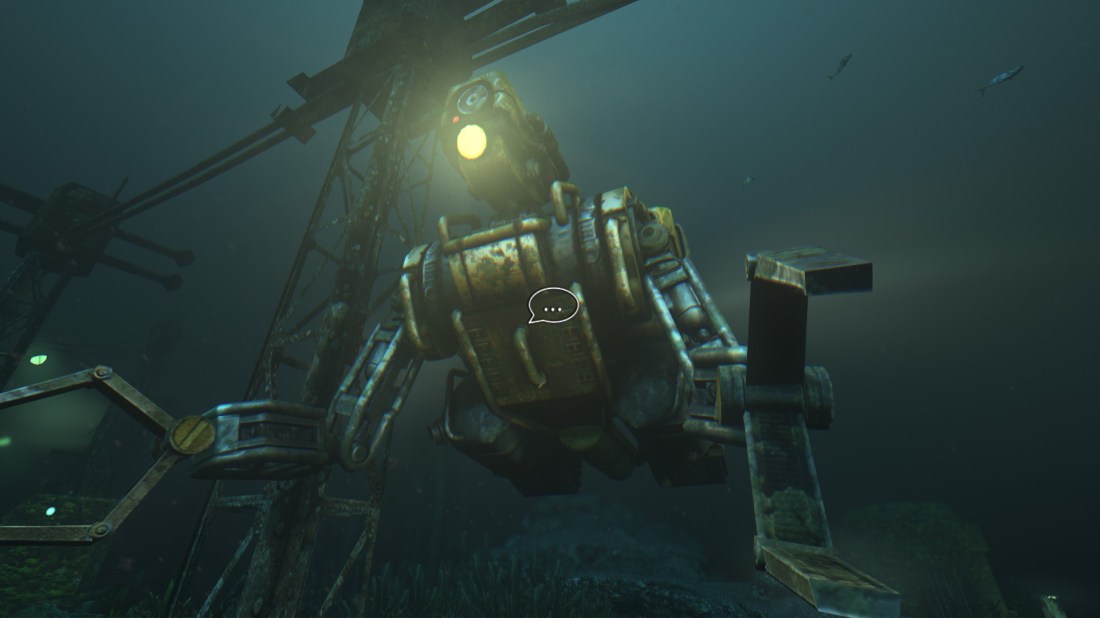
The station is split into separate research labs Simon needs to navigate between; as in, across the seabed. And that bloody WAU-infested Gel has leaked into the ocean; as if deep-sea fish weren’t freaky enough. We even have a mutated giant squid circling while belligerent rovers and mechs chase us about. Or try to chat to us. Both are terrifying. There’s guide-lights that keep the fishes at bay, but storms swell up causing the lights to go out making it a terrifying, confusing trek along the sand; oh, I can see a light. Nope, that’s the lure from a goddamn mutated angler fish…

Reaching each lab we discover new horrors, and how each isolated group handled the event; some joined the ARK project, some just lived out what time they had left while others carried on as if the apocalypse would pass. Every new area is a new take on what humans would do in that situation.

Reaching the ‘abyss’, a deep-sea trench where the final lab and the likely resting place of the ARK are, Simon and Cat activate a deep submersible – and activate it’s personality; who, terrified, takes off. Can we just get a break?! Cat’s solution is f’ed up, but it’s not like Simon has a choice. On the plus side, what happens afterwards is far, far worse. And then it gets worse. And worse, and worse until you’re staring at the end-credits, aghast. This game should end with “if you’ve been affected by any of the subject matter …”

If you do make it, make sure you stick around until after the credits for the very definition of ironic bitter-sweet endings. SOMA is a very troubling game; you don’t want to say good bye to Simon and Cat, but you’re not sure you want to experience that again. If you do, you’ll spend forever trying to force a different outcome. But it was never going to go any other way.

It’s been weeks since I finished SOMA but Simon and Cat are still in my head, arguing over the definition of life – and death. And as a testament to that narrative, Frictional released an update called ‘safe mode’ that stops WAU from killing you. You’d think a God Mode would remove all the intensity but it doesn’t – it makes it worse because all you’re focused on is what Simon has to go through. A new entry in my all-time great games, SOMA might not reinvent the gaming wheel but as a thought-provoking experience, it’s as close to Cinema as gaming has gotten; SOMA is the game Stanley Kubrick would have made.

2015 | Developer/ Publisher, Frictional Games

Platforms; Win, X0, PS4